
Blog
Home / Blog

Loyverse POS Review
- 26th Jan, 2026
- | By Linda Mae
- | Reviews
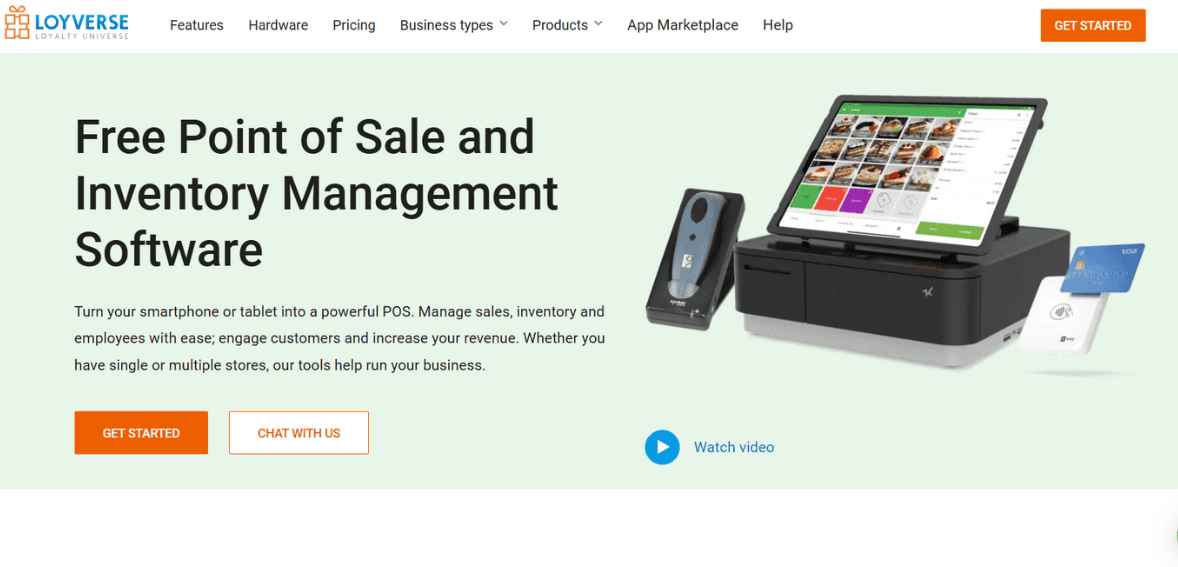
Loyverse POS is a cloud-based POS system positioned primarily for small and micro businesses that want a simple way to handle sales, inventory, and basic customer tracking without committing to high monthly software fees. It is often discussed in the context of “free POS systems,” though in practice its ecosystem includes optional paid extensions and third-party services that influence real-world costs. The platform is app-driven, designed to run on smartphones and tablets rather than proprietary terminals, which immediately lowers the barrier to entry for new or budget-conscious businesses. Lets read more about Loyverse POS Review.
At its core, Loyverse focuses on essential retail and food-service workflows. The system handles transactions, item management, inventory tracking, staff access, and sales reporting through a combination of mobile apps and a web-based back office. For many first-time POS users, especially sole proprietors and small teams, this approach removes much of the complexity associated with traditional POS installations.
However, Loyverse is not designed to replace enterprise-grade systems. Its philosophy leans toward accessibility and ease rather than deep customization or industry-specific compliance. This makes it appealing for certain use cases while limiting its suitability for others. Understanding where the platform excels and where it falls short is critical before adoption, particularly for businesses planning to grow or operate across multiple locations.
Table of Contents
ToggleTypes of Businesses Loyverse POS Is Designed For
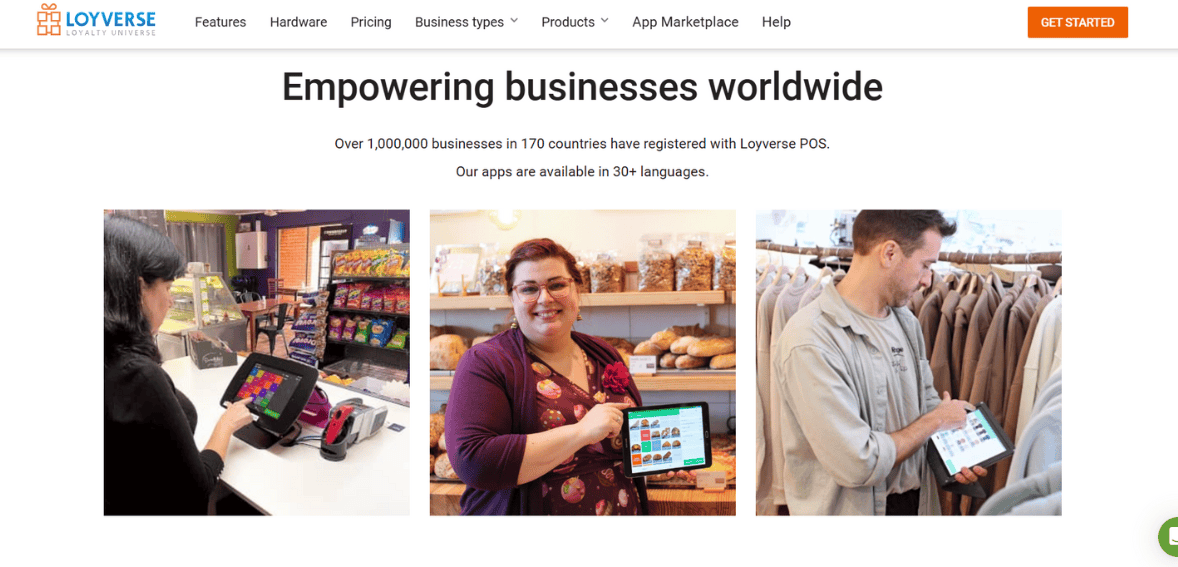
Loyverse POS is best suited for small, transaction-focused businesses that require straightforward sales processing and basic operational visibility. Typical users include small retail stores, cafes, bakeries, coffee shops, food trucks, kiosks, and independent service providers. These businesses often prioritize speed, simplicity, and low upfront costs over advanced integrations or industry-specific workflows.
For retail businesses with a limited product catalogue, Loyverse’s item management and inventory tools are usually sufficient. Similarly, food-service operations with simple menus and limited modifiers tend to find the system workable, especially when table service and kitchen display systems are not required. The app-first design also works well for businesses that operate in non-traditional settings, such as pop-up shops, markets, and mobile vendors.
That said, the platform is less suitable for businesses with complex operational needs. Larger retailers with extensive SKU counts, frequent supplier-based purchasing workflows, or advanced inventory forecasting will likely encounter limitations. Full-service restaurants that rely heavily on table management, coursing, and kitchen coordination may also find the platform restrictive.
Businesses operating in regulated industries or those that require advanced tax handling, invoicing workflows, or region-specific compliance features may need additional systems alongside Loyverse. Similarly, franchises or enterprises with detailed reporting and accounting integration requirements may find the platform too lightweight. Overall, Loyverse is designed for simplicity-first environments. It performs best when transactional volume is moderate, operational complexity is low, and business owners value accessibility and cost control over extensive feature depth.
Core POS Features and Checkout Experience | Loyverse POS Review
The checkout experience in Loyverse POS is intentionally streamlined. The interface prioritizes speed and clarity, allowing users to process transactions with minimal navigation. Items can be added to sales via buttons, search, or barcode scanning, depending on how the catalogue is configured. The system supports common actions such as applying discounts, issuing refunds, splitting bills, and handling basic tax settings.
For businesses with simple transaction flows, this approach works well. The checkout screen is uncluttered, reducing the learning curve for staff and minimizing mistakes during peak hours. Cash handling is straightforward, and receipt generation is supported via email or compatible printers. The system also allows quick switching between staff accounts, which can be helpful in small teams.
Where simplicity is a virtue for Square Apps, the downside is that it is not always suitable for advanced features related to the payment workflow, such as sophisticated rules for discounts or bundle calculations. Another point is that payments using cards can be made with certain integrations but not all, meaning that the payment experience is dependent on the service being used for payments by the merchant.
However, there is another aspect to consider. Though the interface is user-friendly, the layout of the checkout page is quite rigid in terms of functionality. Businesses have very limited options in this regard, as opposed to more sophisticated POS systems, in which customized business processes for different sectors can be set up. In a nutshell, the checkout interface of Loyverse is quite simplistic in terms of ease of usage and the velocity of transactions performed.
Inventory Management Capabilities
Inventory management in Loyverse POS is designed to cover fundamental tracking needs rather than advanced supply-chain workflows. Businesses can create items with SKUs, categories, variants, and cost prices, enabling basic stock-level monitoring. The system automatically updates inventory counts based on sales, helping owners keep track of what is available in real time.
Low-stock alerts are included, which can notify business owners when items reach predefined thresholds. This is particularly useful for small stores that rely on manual restocking and want simple reminders rather than automated purchasing systems. Inventory adjustments can also be made directly through the back office, allowing users to account for shrinkage, spoilage, or manual corrections.
Despite these strengths, Loyverse’s inventory tools have clear limitations. Purchase order management is basic, and supplier-level workflows are minimal compared to more advanced retail systems. There is limited support for batch tracking, expiration dates, or serialized inventory, which can be important in certain industries. Reporting around inventory turnover and forecasting is also relatively shallow.
For businesses operating across multiple locations, inventory synchronization is available, but it lacks the depth required for centralized warehouse management or complex inter-store transfers. As SKU counts grow, the system may feel increasingly manual. Loyverse inventory management is sufficient for small-scale operations that want visibility rather than automation. It supports awareness and control but is not designed to optimize inventory strategy or manage complex retail logistics.
Sales Reporting and Business Analytics
Loyverse provides a suite of built-in reports aimed at giving business owners visibility into daily operations. These include sales summaries, revenue trends, item performance, category breakdowns, and staff sales tracking. Reports can be accessed through the back office and are presented in a straightforward, readable format.
For small business owners, these reports offer useful insights without requiring deep data interpretation skills. Daily and monthly summaries make it easier to monitor performance trends, identify best-selling products, and understand peak sales periods. Employee-related reports can also help track staff activity and basic productivity.
In contrast to more sophisticated POS solutions, these analytics are fairly basic. This means businesses cannot create reports based on their own needs and instead have to use pre-defined views. Exports are available, but if one wants deeper analytics, often that requires more substantial processing in other tools like spreadsheets.
Another limitation is that there are no predictive analytics or comparative analytics. Everything focuses on historical data and not so much on forward-looking insight. Demand forecasting, margin analysis across suppliers, and granular profitability reporting are other areas in which the tools may be unsatisfactory.
This means that multi-location operations are catered for, whereas consolidated reporting is available; customization remains a little limited. This may potentially make it a bit more difficult to derive management-level insight without additional systems. In all, Loyverse reporting is functional and user-friendly. It supports basic decision-making, yet is not intended as a broad business intelligence platform.
Customer Management and Loyalty Tools
Customer management in Loyverse POS centers around a built-in database and basic loyalty functionality. Businesses can create customer profiles, track purchase histories, and associate transactions with individual customers. This allows for a simple form of customer relationship management without the need for external CRM software.
This loyalty program helps business owners reward their customers with points. Customers earn points when they make a purchase. These points help them earn rewards. This feature is easy to use. This feature would perform well in encouraging customers to go back to the business. For example, a café or a small business. However, the current loyalty program offered in the software is quite basic. Not much assistance is provided when a business owner wants to create rewards programs for customers or automatically segment customers. Additionally, the software does not have a marketing tool, which may include emailing customers or sending an SMS.
Customer insights are also restricted. Although it is possible for the business to understand purchase history and visits, deeper behavior analysis is not possible. This makes customer loyalty programs more of a reward for transactions than engagement tools based on insights. For businesses that want easy retention tools without hassle, Loyverse works satisfactorily. Businesses wanting enhanced customer engagement tools or omnichannel customer loyalty solutions might have to integrate other software tools along with the POS.
Employee Management and Permissions
Loyverse offers basic employee management features that allow business owners to create staff accounts, assign roles, and set permissions. This helps control access to sensitive areas such as refunds, discounts, or report viewing. For small teams, this structure is generally sufficient to maintain accountability.
Employee sales tracking is included, enabling businesses to see individual performance metrics tied to transactions. This can be helpful for identifying sales trends, monitoring productivity, and resolving discrepancies at the end of shifts. Shift-based tracking is available, though it is relatively simple compared to dedicated workforce management systems.
However, Loyverse does not provide advanced employee scheduling, time tracking, or payroll integration. Businesses that require detailed labor analytics, overtime tracking, or compliance-based scheduling will need external solutions. The system is designed for operational oversight rather than workforce optimization.
Permissions are fairly broad, which may limit precision in more complex organizational structures. Larger teams with multiple roles may find it difficult to fine-tune access without workarounds. In essence, employee management in Loyverse supports accountability and basic oversight but is not a comprehensive human resource or labor management tool.
Supported Hardware and Device Compatibility
One of Loyverse’s strengths lies in its hardware flexibility. The POS runs on standard Android devices and iPads, allowing businesses to use existing smartphones or tablets instead of purchasing proprietary terminals. This significantly reduces startup costs and makes the platform accessible to new businesses.
This system supports general-purpose peripherals, including receipt printers, barcode scanners, and cash drawers, as long as they are compatible with the device and operating system in use. This makes it possible for businesses to build functional POS systems using general-purpose hardware as opposed to specialized hardware. A business should check for compatibility before setting up hardware that will be used in the POS system. This will ensure that there are no problems when operating the hardware.
At the moment, Loyverse is not concentrating on the development of complex hardware solutions, which may include kitchen display systems, kiosk solutions, or customer displays. This will go well with its target group but may not be as apt in complicated setups. This is very sensible and economical as far as small businesses go because it prioritizes malleability.
Payment Processing and Integrations
Loyverse offers a variety of payment options such as cash and credit payments conducted by third-party payment services. This makes Loyverse quite flexible, unlike most POS solutions, which offer their payment services or solutions in one package or system.
Such flexibility may prove to be an asset, especially for those dealing with different regions where people have different payment preferences. Nevertheless, the fact that it depends on third-party integrations may mean it does not have a uniform payment experience for all configurations. Such things as unified reports are highly reliant upon the processor being used.
Integration possibilities that extend past payment solutions are limited. From the looks of it, Loyverse does not have an extensive infrastructure of native integration with accounting, e-commerce, and marketing software solutions available on the market today. Some businesses would have to make use of exports by hand or third-party solutions to make this possible. It may not be an issue with businesses that are still smaller in size and scale. However, it is likely that this would become an issue with growing businesses with increased complexity and scale. Loyverse’ payment system is adequately integrated but is not deeply integrated because of its focus on simplicity.
Multi-Store and Multi-Location Management
Loyverse allows users to manage multiple stores under a single account. This includes basic inventory tracking and consolidated reporting across locations. For small chains or businesses testing multi-location expansion, this provides a degree of operational visibility.
However, multi-location features are limited compared to enterprise-grade systems. Inventory transfers between locations are manual, and reporting customization is minimal. Centralized pricing control and location-specific rules are also constrained. Businesses with complex supply chains or centralized warehousing will likely outgrow these capabilities quickly. Loyverse is better suited for small networks with similar operational structures across locations. The platform supports oversight rather than optimization, making it a starting point rather than a long-term solution for multi-store expansion.
Ease of Setup, Interface, and Learning Curve
Loyverse is widely regarded as easy to set up. The app installation process is straightforward, and most businesses can configure items, taxes, and staff within a short time. The interface is clean and intuitive, reducing onboarding time for new users.
Training staff is generally simple, especially in environments with basic transaction flows. The back office is logically organized, making it accessible even for users without technical experience. Documentation and support resources are adequate, though not exhaustive. Advanced troubleshooting may require self-guided research rather than real-time assistance. Overall, ease of use is one of Loyverse’s strongest attributes, particularly for first-time POS users.
Pricing Model and Add-Ons
Loyverse is often described as free, and its core POS functionality does not require a subscription. However, certain advanced features are offered as paid add-ons. These include enhanced inventory management and employee management tools. Additionally, businesses must consider indirect costs such as payment processing fees, hardware purchases, and third-party integrations. Over time, these can influence the total cost of ownership. The pricing structure is transparent in terms of software access, but scalability may introduce expenses that are not immediately obvious.
Data Security, Cloud Reliability, and Limitations
Loyverse operates on a cloud-based infrastructure, allowing data to sync across devices and locations. Offline mode is available, enabling basic operations during connectivity interruptions. Security practices are standard for cloud POS systems, though detailed compliance certifications are not always highlighted. Businesses with strict regulatory requirements should evaluate suitability carefully. Customization and extensibility are limited, which may impact long-term adaptability.
Overall Strengths, Weaknesses, and Best-Fit Scenarios
Loyverse POS excels in accessibility, ease of use, and cost control. Its weaknesses lie in scalability, customization, and advanced integrations. It is best suited for small, straightforward businesses that want clarity rather than complexity.
FAQs
Is Loyverse POS completely free to use?
The core system is free, but certain advanced features and external services may incur additional costs.
Can Loyverse support a growing business?
It can support early growth, but businesses with increasing complexity may need more advanced systems.
Does Loyverse work without internet access?
Yes, basic functionality is available offline, with data syncing once connectivity is restored.