
Blog
Home / Blog

Secure Trading Review (Now Trust Payments)
- 12th May, 2026
- | By Linda Mae
- | Reviews
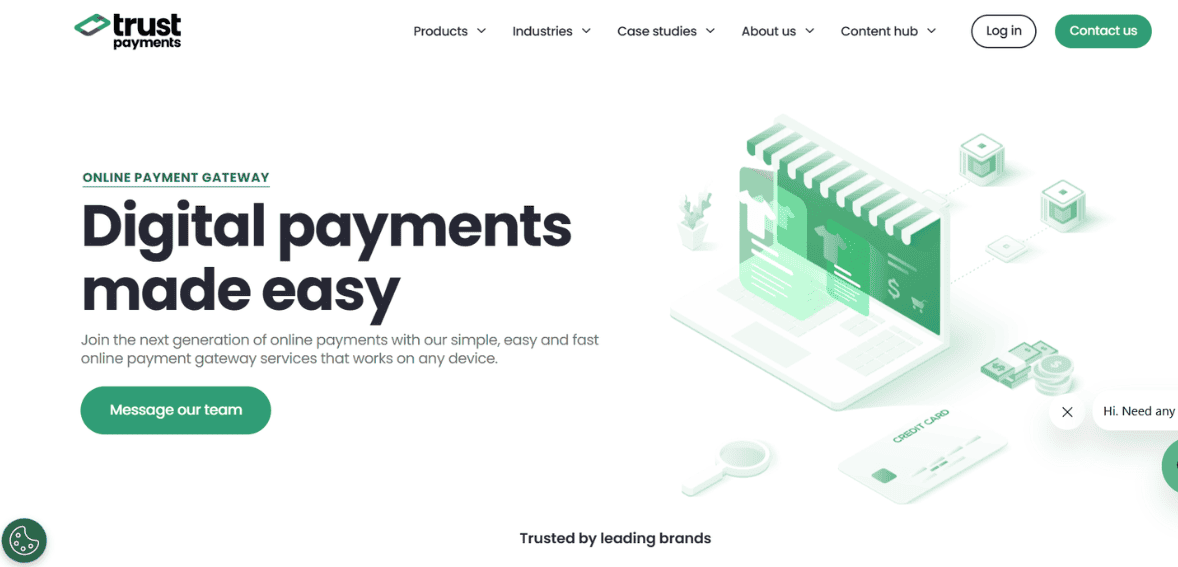
Secure Trading is a name that carries significant history in the UK and European payments industry, but merchants searching for it in 2026 need to understand one important fact upfront: the company rebranded to Trust Payments following its acquisition in 2019 and no longer operates under the Secure Trading name. The platform, the technology, and the team have continued and evolved under the Trust Payments brand, which is the entity merchants will actually be contracting with today. Lets read more about Secure Trading Review.
Founded in 1997 and originally headquartered at Canary Wharf in London, Secure Trading spent over two decades building a reputation as a secure, independent, and technically capable payment gateway and merchant account provider. Its independence from banking groups was a deliberate positioning choice that allowed it to advise clients impartially on acquiring bank relationships, shopping cart partners, and eCommerce platform selection without conflicts of interest. That positioning carried forward into Trust Payments, which today operates from London, Malta, and the United States, serving over 20,000 businesses and processing more than five billion pounds in annualised payment volume.
Table of Contents
ToggleCompany Background and Market Position | Secure Trading Review
Secure Trading was founded in 1997 and became part of the UC Group in 1999, operating as a privately held, independent payments business for two decades. Its Canary Wharf headquarters and its deliberate positioning outside banking group ownership gave it both a credible London financial district presence and genuine independence in client advice, since it had no proprietary banking product to push when recommending acquiring partners.
In 2019, Secure Trading was acquired and relaunched under the Trust Payments brand, a transition that represented more than a name change. The relaunch brought investment in technology infrastructure, product development, and geographic expansion, with Trust Payments describing its mission as creating truly Converged Commerce through unified pay-in, pay-out, and customer journey technologies. The company maintained Secure Trading’s email domain conventions for existing users, but all new merchant relationships are established under the Trust Payments brand.
Laurence Booth was appointed as CEO in March 2025, with Luke Flomo joining as Chief Revenue Officer in May 2025, signaling continued executive investment in commercial growth. The company employs approximately 412 staff across four continents as of early 2026, making it a mid-sized operation relative to global payment giants like Adyen or Worldpay but meaningfully larger than a niche regional provider.
Trust Payments holds an Authorised Payment Institution license from the UK Financial Conduct Authority, Principal Memberships with Visa and Mastercard, money transmission licenses in the US, and gaming vendor licenses in multiple jurisdictions. This regulatory coverage across payment processing, acquiring, and gaming-specific compliance reflects the breadth of sectors the platform serves and the regulatory seriousness with which it approaches its regulated market clients.
Core Payment Processing Capabilities
The payment processing infrastructure at the heart of what was Secure Trading and is now Trust Payments covers the full suite of standard card acceptance alongside a meaningful range of alternative payment methods. Visa, Mastercard, American Express, JCB, and PayPal are all supported, covering the major card networks and one of the most widely used digital wallet ecosystems. The platform accepts transactions in over 160 currencies, with settlement available in 15 like-for-like settlement currencies including GBP, EUR, and USD, making it genuinely functional for international commerce rather than simply claiming multi-currency support while settling everything into a single base currency.
Prepaid vouchers, gift cards, and alternative payment methods are supported alongside traditional credit and debit card transactions, giving merchants the flexibility to accept the payment types their specific customer base prefers. The company has historically been willing to add new payment options for clients who require them, which reflects its roots as a bespoke, service-oriented gateway rather than a rigid platform with fixed payment method support.
The platform acts as a gateway and an acquirer via its acquiring.com feature within the EU, meaning that the merchants do not have to establish two connections; one for the gateway and another for the acquiring bank but only interact with Trust Payments as one entity responsible for both operations. Such an approach saves time and may lead to quicker settlements compared to solutions where the merchant deals with two separate parties. Transaction response times and uptime are highlighted as operational features of the company. The fact that in July 2024 the platform will process more than one billion pounds worth of transactions is indicative of the company’s ability to support high transaction rates without compromising performance.
The Converged Commerce Platform
The Converged Commerce platform is Trust Payments’ flagship strategic concept and the most important thing to understand about what the company has built since the Secure Trading acquisition. Rather than being purely a payment gateway, Trust Payments has invested in building a unified commerce infrastructure that brings together payment processing, in-store POS, online eCommerce, mobile commerce, loyalty programs, digital signage, and customer data management under a single integrated platform.
The concept addresses a genuine and growing merchant challenge: as payment channels multiply, managing separate vendor relationships for in-store POS, online payment gateway, mobile commerce, and loyalty programs creates data fragmentation, operational complexity, and an inconsistent customer experience. Converged Commerce brings these functions together so that transaction data, customer behavior, and loyalty activity are visible in one place and can be managed through a unified interface.
The Trust Retail segment of the platform caters to retail needs by not only focusing on payments but also providing digital signage management and stock management through a cloud-based digital signage solution that is hardware agnostic, enabling retailers to manage their promotions from one single interface across all their stores. Trust Retail was demonstrated during the Retail Technology Show in 2026, highlighting the fact that the company invested heavily in creating commerce technology for retail purposes and not just offering payment solutions along with loyalty programs.
The hospitality sector comprises hotels and food services where the company offers next-day settlements, multi-currency support, deposit/prepayment processing automation, and chargeback management. The company even provided comprehensive information regarding what hotel property management systems require from their payments partner in 2026.

Supported Industries and Sector Specialization
One of Secure Trading’s historical strengths, which has been preserved and extended under Trust Payments, is its willingness and capability to serve a broader range of industry types than many mainstream processors accept. The platform’s risk tolerance is described as medium to high by independent analysts, reflecting its active engagement with regulated and higher-risk sectors that other providers often decline.
Gaming and online gambling is one of the most significant of these sectors. Trust Payments holds gaming vendor licenses in multiple US jurisdictions, and the Secure Trading heritage includes deep expertise in gaming payment processing, where the regulatory complexity, rapid payment velocity, and chargeback exposure require specialized risk management rather than generic fraud tools. For gaming operators seeking a processor with genuine sector knowledge rather than a reluctant exception to standard underwriting policy, the platform’s gaming credentials are a meaningful differentiator.
Travel is yet another area in which Trust Payments has created industry-specific knowledge by catering to specific industry issues such as pre-payment collection, long gaps between booking and travel dates, foreign currency transactions, and high chargeback levels due to disruptions in the travel process. Other industries served include financial services, foreign exchange, and cryptocurrencies, which require an FCA Authorised Payment Institution license in their dealings with regulated entities.
In retail, hospitality, and eCommerce markets, the Converged Commerce platform serves the more traditional customer base, with its omnichannel capability being the main source of its value proposition. For traditional players that do not have complex regulatory requirements, the Converged Commerce platform offers its competitive edge based on technology capability and commerce functionality.
Payment Gateway and Integration Options
The Secure Trading gateway, now operating as Trust Payments’ gateway infrastructure, offers multiple integration paths that accommodate merchants across a wide range of technical sophistication levels. Hosted payment pages allow merchants to redirect customers to a Trust Payments-hosted checkout environment, eliminating the need for the merchant to handle raw card data in their own systems and dramatically reducing their PCI DSS scope. The hosted page can be customized to reflect the merchant’s branding, maintaining visual consistency without compromising the security benefits of off-site card data capture.
API integration provides full customization capability for merchants who want complete control over the payment flow within their own application or website. The TRU Connect gateway is the branded API product that allows businesses to build custom payment experiences while routing transactions through Trust Payments’ processing infrastructure. This suits technically capable merchants, ISVs, and platform businesses that need payment flows embedded within their own product rather than redirecting to a third-party page.
The MYSТ (My Secure Trading) back-office solution offers merchants a website portal for transaction reporting, handling refunds, managing settlements, and conducting account management. The self-service portal has always been a part of the original Secure Trading offering and has evolved alongside the Trust Payments payment platform.
The shopping cart/eCommerce platforms can include many well-known platforms such as X-Cart, WHMCS, among others, with the help of the integration modules that facilitate easier connections from the current store into the payment gateway. The developer sandbox solution allows you to perform the pre-production integration testing, which is a mandatory process when creating any integrations before moving into production with live transactions.
In-Person and Mobile Payments
The Trust Payments platform has extended meaningfully beyond the online gateway heritage of Secure Trading into in-person and mobile payment acceptance. Physical point-of-sale terminals are available for in-store environments, with the SoftPOS by Trust Payments application enabling contactless payment acceptance on Android-powered devices without dedicated hardware. This turn-any-device-into-a-terminal capability reduces hardware costs and operational complexity for merchants whose staff move around a sales floor, restaurant, or event space rather than operating from a fixed checkout point.
The ePOS product delivers an electronic POS solution built specifically for retail and hospitality environments, with mobile-first software, intuitive interface design, and seamless Android compatibility. The cloud-hosted architecture means that software updates are delivered automatically rather than requiring manual terminal updates, which reduces the IT maintenance burden for multi-location merchants managing large terminal estates.
For telephone payment environments, the platform supports MOTO transaction processing through its virtual terminal, enabling staff to enter card details received by phone into a secure web-based interface. This capability is important for businesses that take payment information through non-digital channels and need a secure, compliant way to process those transactions without compromising customer card data.
Payment link generation allows merchants to send customers a secure URL through which they can complete payment on their own device, which is particularly useful for service businesses that invoice after service delivery, travel businesses collecting booking deposits, and any operation where the merchant and customer are not simultaneously present in a payment interaction.
Multi-Currency and International Capabilities
The international payment capabilities of the platform represent one of its clearest strengths relative to processors with primarily domestic or regional focus. Accepting transactions in over 160 currencies while settling in 15 like-for-like currencies gives merchants genuine flexibility to trade internationally without forcing all their global revenue through a single settlement currency that may not match their operating expenses.
The independent, non-bank-affiliated structure that Secure Trading originally built, and that Trust Payments has maintained, means the platform can negotiate banking relationships globally on behalf of clients rather than being constrained to a single acquiring bank’s geographic footprint. The platform connects to more than 50 global banks for multi-acquirer processing, which provides both geographic coverage and the ability to route transactions through the optimal acquiring relationship for a given market or card type.
In terms of merchants who are venturing into new markets, there is a need to have the capacity of taking payments through local payment methods alongside international card networks. This is because the capacity by Trust Payments to take payment in other ways apart from the use of card networks will allow merchants to have payment methods preferred in such markets where the use of cards as payment methods may be minimal, hence avoiding lost opportunities.
Settlement of transactions in different currencies lowers the costs related to foreign exchange for businesses having revenues in multiple currencies as it eliminates the need to convert all revenues to one currency before settlement.
Fraud Prevention and Risk Management
Security and fraud prevention sit at the core of what Secure Trading was built around, and Trust Payments has invested in extending that heritage with modern fraud management tools. The infrastructure uses AES256 encryption, SSL certificates with a minimum TLS 1.2 standard for all data in transit, and quarterly security scanning through the Qualys PCI platform with independent Qualified Security Assessors in both the UK and US. Continuous perimeter monitoring, dark web monitoring, and CIA triad maintenance protocols reflect a security posture that goes beyond checkbox compliance into active operational security management.
3D Secure 2.0 is supported for online transactions, providing the modern authentication framework that shifts fraud liability away from the merchant for authenticated transactions while delivering a smoother authentication experience than the original 3D Secure standard. The improved authentication flow reduces the friction associated with strong customer authentication requirements under PSD2 regulations in European markets.
For gaming and high-risk sector clients, the fraud management tools available through the platform are more sophisticated than those offered to standard merchants, reflecting the higher velocity and higher risk profile of gaming transactions. Velocity checks, behavioral analysis, and sector-specific risk rules address the specific fraud patterns that gaming operators encounter rather than applying generic retail fraud logic to a fundamentally different transaction environment.
Chargeback management support is available, with the platform publishing guidance and operational support around chargeback prevention and dispute resolution for specific sectors including hospitality and retail. The aim of 90% or higher authorization rates cited in the company’s hospitality sector content reflects the commercial impact of declined transactions and the platform’s investment in maximizing legitimate transaction approval rates.
Pricing Structure and Fees
Pricing at Trust Payments follows the standard pattern for gateway and acquiring providers of its profile: rates are not published publicly and require direct engagement with a sales representative to obtain a quote. This lack of upfront transparency is a consistent criticism from merchants who prefer to benchmark costs before entering a sales conversation, though it is standard practice across the segment of the market in which Trust Payments competes.
Independent analysis indicates that Trust Payments pricing is customized based on business type, transaction volume, industry sector, and geographic processing requirements. The platform’s medium-to-high risk tolerance for sectors like gaming and financial services means that risk premium pricing may apply to merchants in those categories relative to lower-risk retail clients.
For the gateway component, monthly gateway fees and per-transaction charges apply alongside card scheme fees. The specific structure of acquiring fees depends on whether the merchant is using Trust Payments as the acquirer directly, which is possible through the EU acquiring.com capability, or routing to an external acquiring bank through the gateway, in which case the acquiring bank’s fees are separate from the gateway charges.
Merchants should request a fully itemized written quote covering monthly platform fees, per-transaction fees, card scheme fees, currency conversion fees, and any charges specific to the features or integrations they plan to use. Given the breadth of the platform and the number of optional components including Converged Commerce tools, loyalty, and digital signage, the all-in cost of a comprehensive deployment can differ substantially from a basic gateway-only pricing discussion.
Contract Terms and Merchant Agreements
The Trust Payments merchant agreement establishes a one-year contract term that automatically renews for additional one-year periods unless a written cancellation notice is provided 180 days before the end of the current term. This is an important detail that merchants must calendar carefully. A 180-day cancellation notice requirement means that a merchant who decides to switch providers must initiate that process approximately six months before their desired exit date, or they will be committed to another full year of the agreement.
The 180-day notice window is longer than what many competing processors require, and it has practical implications for businesses whose operational or strategic circumstances can change faster than a six-month horizon. Merchants should identify this notice requirement at the point of signing and build a calendar reminder accordingly rather than discovering it when they want to make a change.
Merchants are required to fulfill their financial obligations for monthly and transaction fees for the duration of the contract term if they choose to cancel, which functions similarly to a liquidated damages clause in practical effect. The one-year maximum duration limits the financial exposure relative to three-year contracts with similar provisions, but the 180-day notice requirement effectively extends the commitment period for practical purposes.
No active class action lawsuits or FTC complaints have been identified against Trust Payments as of the research for this review, which is a positive indicator relative to some competitors reviewed in this series. The small number of negative reviews that exist include some complaints about customer service responsiveness, specifically difficulty reaching account managers and slow response to support requests, which is worth noting in the context of evaluating the support model.
Security and PCI Compliance
Trust Payments holds PCI DSS Level 1 certification, the highest tier of compliance available, covering its payment gateway and data handling infrastructure. For merchants using hosted payment pages, the PCI DSS compliance burden on the merchant’s own systems is substantially reduced because cardholder data is captured and processed within Trust Payments’ certified environment rather than within the merchant’s technology stack.
The quarterly security scanning regimen using the Qualys PCI platform and independent QSAs in both the UK and US reflects a compliance process that is operationally integrated rather than performed as an annual checkbox exercise. Continuous dark web monitoring and perimeter monitoring add proactive threat detection alongside the periodic compliance assessments.
For merchants in regulated industries who face their own sector-specific compliance obligations alongside PCI DSS, such as gaming operators under gambling commission requirements or financial services firms under FCA oversight, Trust Payments’ experience serving these sectors means the compliance conversation starts from a position of familiarity rather than requiring extensive education of the payment provider about the merchant’s regulatory environment.
The GDPR-compliant data handling framework, maintained under UK data protection law post-Brexit and under EU GDPR for European merchant clients, is part of the operational infrastructure rather than a separate compliance layer. Merchants operating across UK and EU markets can work with a single provider whose data handling obligations span both regulatory environments without requiring separate agreements for each.
Customer Support
Customer support at Trust Payments is described by the platform as 24/7 multilingual support with phone access for direct assistance. For an international platform serving clients across multiple time zones and language environments, the multilingual capability and round-the-clock availability are baseline requirements rather than premium features, and their presence reflects the operational seriousness of a provider with a genuinely global client base.
Published positive feedback from merchants highlights the responsiveness and technical knowledge of the support team, with one enterprise client specifically noting the flexibility of Trust Payments’ technology paired with the responsiveness of the team at all levels, and the ability to get enhancements signed off and executed quickly without multiple tiers of approvals. This kind of feedback from a named client relationship reflects a high-touch support model that is characteristic of mid-market payment providers competing on service quality against larger, more bureaucratic alternatives.
The negative feedback that exists, primarily on Trustpilot, includes complaints about difficulty reaching account contacts, with one reviewer describing a month-long attempt to resolve issues and an inability to get responses from their assigned account manager or PCI consultant. This pattern of responsive sales and onboarding support followed by harder-to-reach ongoing account management is a common failure mode for growing payment companies and one that prospective merchants should investigate by asking specifically about post-sale support structure, account manager continuity, and escalation paths during the evaluation process.
Strengths, Limitations, and Who It Is Best For
Trust Payments, operating on the foundations that Secure Trading built over nearly three decades, is a platform with genuine technical depth, meaningful international capability, and a credible track record in regulated and complex industry sectors that many mainstream processors do not serve. The Converged Commerce concept is strategically coherent and increasingly relevant as merchants face pressure to unify fragmented payment and commerce data. The FCA authorization, dual Visa and Mastercard principal memberships, EU acquiring capability, gaming and financial services licensing, and multi-acquirer connectivity to over 50 global banks represent a genuinely capable and regulated global payments infrastructure.
The limitations are real. Pricing requires direct engagement and is not benchmarkable without a sales conversation. The 180-day cancellation notice requirement creates a practically longer commitment than the one-year contract term implies. Customer support quality appears uneven, with some merchants experiencing excellent responsiveness and others struggling to reach their account contacts. The platform’s strongest capabilities are most relevant for merchants with multi-channel, international, or regulated sector complexity, and businesses with simple, single-channel, domestic payment needs may find the platform’s breadth exceeds what they need at a cost that does not reflect the value they are actually using.
The merchants best positioned to benefit from Trust Payments are those with international payment requirements across multiple currencies and markets, businesses in gaming, travel, financial services, or other regulated sectors where specialist processor knowledge matters, mid-market and growing businesses that want a Converged Commerce platform rather than a point solution for a single payment channel, and eCommerce businesses operating across UK and EU markets that need a provider with credible compliance coverage in both regulatory environments.
FAQs
Q1. Is Secure Trading still operating, or has it been fully replaced by Trust Payments?
Secure Trading no longer operates as an independent entity or under its original brand. The company was acquired in 2019 and relaunched as Trust Payments, which is now the operating brand for all merchant-facing products, services, and commercial relationships. The underlying technology platform, gateway infrastructure, and team have continued under Trust Payments, and some legacy documentation and integrations still reference Secure Trading in technical materials and platform identifiers.
Merchants who used Secure Trading previously and are evaluating their options should engage directly with Trust Payments, as that is where the platform, the support team, and the contractual relationships sit. New merchant accounts are established exclusively under the Trust Payments brand, and the Secure Trading name is maintained only for historical context and legacy system continuity rather than as an active commercial brand.
Q2. Is Trust Payments suitable for high-risk industries like online gaming, and what specific credentials does it have in that sector?
Trust Payments has genuine credentials in gaming and other regulated higher-risk sectors that go beyond a general willingness to accept applications. The company holds gaming vendor licenses in multiple US jurisdictions, which is a regulatory requirement for payment providers serving licensed gambling operators in those markets. The Secure Trading heritage included extensive gaming sector experience, and this expertise has been maintained and expanded under Trust Payments.
For online gaming operators, the practical implications are meaningful: the platform understands the specific fraud patterns, chargeback dynamics, rapid payment velocity, and regulatory reporting requirements of gaming transactions rather than applying retail payment logic to a fundamentally different environment. Merchants in gaming, online gambling, sports betting, or related regulated sectors should still conduct the full onboarding and underwriting process and cannot assume automatic approval, but the platform’s sector knowledge means the conversation starts from a position of informed engagement rather than institutional unfamiliarity.
Q3. What should merchants know about the cancellation process and the 180-day notice requirement before signing with Trust Payments?
The 180-day written cancellation notice requirement in the Trust Payments merchant agreement is the most operationally significant contract term that merchants should understand before signing. In practical terms, it means that if a merchant decides to change payment processors, they must provide formal written notice approximately six months before their desired exit date, or they will be contractually committed to another full annual term.
Merchants should identify and calendar the cancellation deadline at the point of signing, which means marking the date approximately 180 days before each annual renewal date as a prompt to assess whether the relationship should continue. When the time comes to cancel, the notice should be submitted through the formal written channel specified in the merchant agreement rather than communicated verbally or informally. Merchants should also request written confirmation that the cancellation notice has been received and accepted, and should confirm the specific date on which their account will close and all billing will cease. Monitoring account activity and billing after the confirmed closure date is advisable to ensure that charges do not continue past the agreed exit point.