
Blog
Home / Blog

EVO Payments Review
- 16th Dec, 2025
- | By Linda Mae
- | Reviews
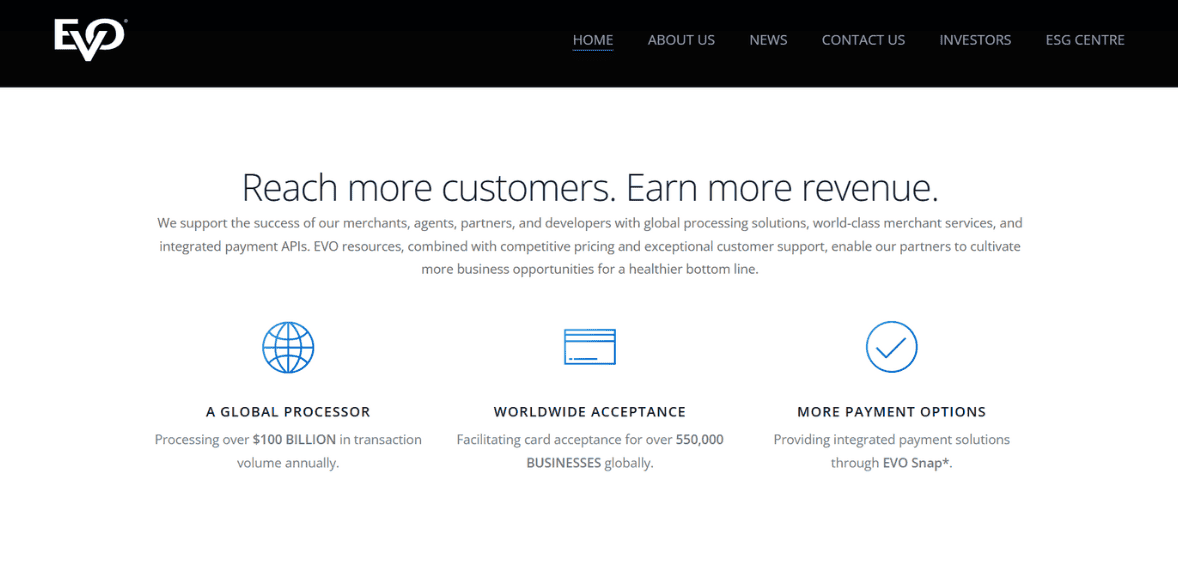
EVO Payments is a global provider of payment technology and service solutions, serving more than 550,000 merchants in retail, hospitality, eCommerce, healthcare, and professional services. It was founded with a simple philosophy-eloquently making digital payments easier in an increasingly complex environment. This organization has gradually expanded into more than 50 markets, empowering businesses to accept in-store, online, mobile, and international transactions. EVO is recognized for its ability to support everything from tiny, one-person operations to giant, multi-continent enterprises, with a broad choice of toolsets designed to ease and expand the acceptance of payments, enhance operation efficiency, and open new avenues for revenue growth. Of course, as a payments company, it has its strengths and limitations, and this review tries to highlight those in detail. Lets read more about EVO Payments Review.
The expectations of security, digital transformation, and omnichannel integrations have grown in the evolving payments industry. EVO, too, operates in such a competitive environment wherein solutions mirror a blend between traditional merchant services and modern digital tools. This review details the assessment of EVO from a number of perspectives, such as features, usability, security, pricing transparency, customer support, and ideal business fits. By evaluating each of these areas independently and objectively, the aim is to assist merchants in concluding whether EVO Payments delivers what they need or if it would be best to find alternative options.
Table of Contents
ToggleCore Payment Processing Capabilities | EVO Payments Review
EVO Payments has its foundation in its core payment processing engine, which allows businesses to accept payments via major debit and credit cards, contactless payments, chip and pin, and mobile wallets. The payment infrastructure of EVO Payments is capable and reliable for handling large volumes of payments with relatively fast times for authorization and settlement. For most businesses, the functionality offered by EVO Payments works as it should without any issues. It supports card-present and card-not-present business setups.
EVO also supports recurrent billing capabilities, stored card profiles, and various payment options that assist merchants in catering to customer demands. These capabilities make it an apt solution for service sectors, subscription businesses, and industries with regular customers. The organization also provides ACH and electronic check acceptance services, thereby expanding payment capabilities.
However, it should be noted that, while EVO’s core processing functionality remains stable and working well, it doesn’t necessarily have a dramatically different profile compared with other competitors within its industry. Several functionalities overlap with what most mature processors have offered. EVO varies itself slightly within the scope of its global presence and scalable infrastructure, which helps businesses expand with minimal technical hassles.
Nonetheless, EVO’s basic processing tools are stable and fully developed, but it remains essential for merchants to review contract agreements and costs, as well as any additional rates that might be applicable. The system is very efficient, but it still depends on which package an organization decides to subscribe to.
Omnichannel Payment Solutions
EVO Payments offers omnichannel capabilities designed to help businesses unify payment acceptance across physical stores, online platforms, and mobile or unattended environments. This approach is increasingly important for merchants operating in hybrid models, where customers expect consistent payment experiences regardless of where a transaction begins or ends. EVO aims to bridge these environments through integrated systems that communicate with each other, allowing merchants to manage data, reporting, and reconciliation from a single ecosystem.
For brick-and-mortar operations, EVO supports traditional terminals and POS setups, while for online businesses, it offers gateways, hosted payment pages, and API-driven checkout solutions. Mobile payment support is also available through dedicated mobile apps or lightweight readers that connect to smartphones or tablets. This flexibility is helpful for on-the-go businesses or field service operations that need portable payment tools.
EVO’s omnichannel structure allows merchants to offer features like curbside payment, order-ahead transactions, and seamless customer journeys between online browsing and in-store pickup. The system is functional, though not as advanced or deeply integrated as some leading omnichannel-first competitors. EVO’s strength lies more in its broad coverage rather than in cutting-edge innovation within any one channel.
Merchants looking for an all-in-one provider across multiple environments may find EVO’s omnichannel approach convenient. However, businesses that require advanced loyalty tools, personalized customer journeys, or sophisticated retail automation may need to assess integrations or third-party partnerships to fill those gaps.

EVO’s eCommerce and Gateway Tools
EVO Payments provides various tools for online merchants and developers who need flexible, secure, and customizable eCommerce solutions. Its payment gateway supports major shopping cart systems, popular eCommerce platforms, and custom website integrations through APIs. Merchants can enable credit card payments, digital wallets, alternative payment methods, and recurring billing without significant technical barriers.
The gateway includes features like hosted payment pages, fraud management settings, real-time reporting, and the ability to configure payment flows. Developers can use EVO’s API documentation to create more tailored checkout experiences or embed payment capabilities into SaaS platforms and custom applications. While EVO’s development tools are practical and reliable, they may not be as modern or feature-rich as some newer gateways that focus heavily on developer experience.
EVO’s eCommerce tools emphasize security, providing tokenization, encryption, and PCI-friendly checkout environments. These protections help reduce compliance burdens for merchants and minimize exposure to customer data. However, the level of fraud prevention varies based on region and plan, so merchants should verify what is included.
Overall, EVO’s online payment capabilities are competent and suitable for most small to mid-sized businesses looking for steady eCommerce support. Companies requiring ultra-fast integration, advanced analytics, or sophisticated checkout personalization may need additional layers or third-party plugins. EVO excels in reliability and breadth rather than cutting-edge digital commerce innovation.
POS and Terminal Solutions
EVO Payments offers a range of POS terminals and hardware options designed for physical businesses. These include traditional countertop terminals, PIN pads, wireless devices, and smart terminals with touchscreen interfaces. EVO works with multiple device manufacturers, so hardware options vary by region and merchant type. Many devices support EMV chip transactions, NFC contactless payments, and digital wallet acceptance, making them suitable for modern retail environments.
EVO also partners with POS software providers across retail, restaurant, hospitality, and service industries. These integrations allow merchants to bundle payment acceptance with inventory tools, scheduling features, reporting modules, and customer management systems. This network of POS partners offers flexibility, although merchants may need to confirm compatibility with their preferred system.
The usability of EVO’s terminals is generally straightforward. Most devices support quick updates, easy troubleshooting steps, and clear display interfaces. However, some merchants report that certain models may require manual configuration during setup or replacement. This is not unusual in the payments industry but worth noting for businesses with limited technical support.
While EVO’s POS offerings provide solid functionality, they do not always deliver the most modern or feature-rich experience compared to providers that build proprietary hardware ecosystems. EVO’s value lies in its wide selection and compatibility rather than a tightly integrated hardware-software suite.
Global Payment Acceptance and Multi-Currency Support
One of EVO Payments’ stronger capabilities is its global payment acceptance framework, which enables merchants to operate across borders more easily. EVO supports multi-currency processing, allowing businesses to accept payments from international customers while settling in their preferred currency. This is especially useful for hospitality businesses, eCommerce brands with international customers, and companies with overseas branches.
EVO offers Dynamic Currency Conversion in certain markets, giving customers the option to pay in their home currency. The company also provides cross-border settlement options and partnerships with acquiring banks in multiple countries. These features make EVO appealing for businesses with international sales channels or expansion plans. Compared to some domestic-focused processors, EVO stands out in its ability to handle European, North American, and Latin American markets with reasonable consistency. This global infrastructure is a defining part of EVO’s identity and is built on years of international merchant acquiring experience.
However, merchants should be aware that cross-border fees, foreign exchange surcharges, and regional pricing differences may apply. Additionally, certain advanced multi-currency features are only available in specific regions. Businesses expecting heavy international traffic should clarify all associated costs and ensure that EVO’s coverage includes their target markets. Overall, EVO performs well for merchants requiring steady international payment processing, though the value depends on fee structures and the merchant’s transaction volume.
Security, Compliance, and Fraud Prevention
EVO Payments incorporates industry-standard security measures to protect payment data and reduce risk for merchants. The company uses encryption, tokenization, and PCI DSS-aligned systems to ensure that sensitive card information is never stored or transmitted in an unprotected form. These features help merchants remain compliant and reduce potential liability in the event of a breach.
Fraud detection tools vary depending on the region and the specific gateway or POS solution in use. EVO offers features such as address verification, CVV checks, velocity controls, and rule-based screening to limit fraudulent transactions. While these tools are adequate for most small and medium businesses, enterprises with more complex fraud patterns may require additional layers or specialized third-party fraud systems.
EVO also provides resources to help merchants maintain PCI compliance, including guidance on completing self-assessment questionnaires and understanding best practices. This support is practical, though not as hands-on as some premium compliance programs offered by other providers.
It is important to note that EVO’s fraud and risk tools may feel more traditional compared to competitors that heavily invest in machine learning or advanced behavioral analysis. EVO’s focus is on reliability and standard protections rather than next-generation, AI-driven fraud prevention. Overall, EVO’s security framework is solid, industry-compliant, and sufficient for most use cases, but businesses facing high fraud exposure should assess whether additional safeguards or integrations are necessary.
Reporting, Analytics, and Merchant Dashboard Tools
EVO Payments offers reporting and analytics tools that allow merchants to monitor transactions, settlements, refunds, chargebacks, and daily batch totals. The merchant portal provides an organized dashboard where users can view transaction histories, filter data, generate statements, and download reconciliation files. For most small to mid-sized businesses, these tools offer enough detail to manage day-to-day financial tracking.
The reporting interface is functional but not the most modern or visually advanced compared to platforms built with real-time analytics and customizable dashboards. EVO tends to focus on accuracy and completeness rather than visual sophistication or predictive insights. For businesses that need straightforward reconciliation and transaction monitoring, EVO’s reporting is more than adequate. Merchants with more complex needs, such as multi-location enterprises or data-heavy operations, may find the system’s customization options somewhat limited. Integration with accounting software or ERP systems may require API connections or partner platforms, depending on the business model.
Although EVO’s reporting tools serve their purpose well, the experience varies depending on which platform or gateway a merchant is assigned. Some portals are more updated, while legacy systems may feel dated. Businesses should ask which interface they will receive before signing a contract. Overall, EVO’s reporting tools offer solid reliability and are suitable for regular financial management, but businesses accustomed to real-time analytics or advanced dashboards may need supplementary tools.
Integrations and Partner Ecosystem
EVO Payments maintains a broad partner ecosystem that includes software companies, ISVs, value-added resellers, and system integrators. This ecosystem allows merchants to connect EVO’s payment processing with various business management systems, such as POS software, ERP solutions, retail platforms, hospitality systems, and niche industry applications.
Through its APIs and developer tools, EVO enables software partners to embed payment acceptance into their platforms. This is beneficial for SaaS companies looking to streamline checkout experiences or offer integrated payments as part of their service. EVO’s integration capabilities support industries ranging from restaurants and retail to healthcare, property management, and professional services.
However, while EVO’s integration network is extensive, the quality of the experience can vary depending on the specific partner. Some integrations are seamless and well-supported, while others may require manual configuration or additional fees. Merchants should also note that EVO’s development tools may feel more traditional when compared with highly modern, developer-first payment companies. The partner ecosystem remains one of EVO’s strengths because it provides flexibility rather than locking merchants into a single proprietary system. Still, businesses should confirm compatibility with their preferred software and test integrations where possible before committing.
Contract Terms, Pricing Structure, and Fees
EVO Payments uses various pricing structures depending on region, reseller, and merchant profile. Pricing may include interchange-plus, tiered, or blended models, with fees for processing, terminals, compliance, refunds, and chargebacks. Some merchants may encounter early termination fees or long-term contractual commitments unless negotiating alternative terms.
One of the criticisms often associated with EVO is the lack of standardized pricing transparency. Because EVO works through a network of sales agents, ISOs, and partners, pricing can differ significantly from one merchant to another. This is common in the payments industry, but it means businesses should carefully review their contract, request a complete fee breakdown, and clarify any monthly, annual, or incidental charges.
EVO markets itself as providing cost-effective solutions, and in some cases, merchants do receive competitive rates. However, others report unexpected fees or difficulties understanding contract terms. The final value ultimately depends on the specific agreement and the merchant’s transaction volume and risk profile. Businesses considering EVO should ensure they receive a clear written quote, ask about PCI fees, statement fees, equipment leases, cancellation policies, and any optional service costs. Thorough due diligence is essential to avoid surprises.
Customer Support and Service Experience
Customer support is a significant factor when evaluating any payments provider, and EVO’s reputation in this area is mixed. The company offers phone, email, and ticket-based support channels, with availability varying by region. Some merchants report timely assistance and helpful troubleshooting, while others mention long wait times or difficulty resolving issues.
Onboarding support is generally sufficient for most businesses, especially those using standard hardware or common POS integrations. EVO provides documentation and guides for basic setup, though more complex integrations may require additional steps or partner involvement. Chargeback assistance and dispute management tools are available, but the effectiveness depends on how proactive the support team is in each case. Some merchants appreciate the structured dispute process, while others feel responses could be more detailed or faster.
Customer experience with EVO varies widely, which may be due in part to the company’s large network of resellers and third-party agents. Businesses working directly with EVO tend to receive more consistent support, whereas those contracted through intermediaries may face communication gaps. Overall, EVO’s customer support is functional but not exceptional. Merchants should clarify their support channel, response expectations, and escalation options before signing.
Merchant Experience: Usability, Reliability, and Performance
From a day-to-day operational perspective, EVO Payments tends to deliver stable performance, reliable processing, and steady uptime. Merchants generally find that transactions run smoothly, terminals operate as intended, and online gateways process payments without major interruptions. Usability across EVO’s platforms is straightforward, though certain dashboards or legacy systems may feel outdated. Merchants who use EVO across physical and online channels appreciate the consistency of payment acceptance. The experience is dependable, even if not particularly innovative or feature-rich. For many small and medium businesses, this level of functionality is entirely sufficient.
However, some merchants note that occasional delays in settlement or reporting access may occur, particularly during gateway maintenance or peak processing periods. Additionally, the user interface of certain portals varies depending on the merchant’s assigned system, leading to inconsistencies in ease of use. Businesses with technical teams or IT staff generally navigate EVO’s systems with ease, while smaller merchants may require additional support during setup or troubleshooting. Despite these variations, EVO remains operationally reliable across most environments.
Pros and Cons of EVO Payments
Pros
Global presence and multi-currency acceptance suitable for international merchants
Wide range of payment methods and omnichannel support
Large partner ecosystem with many integrations
Stable processing infrastructure and reliable uptime
Flexible hardware and software options across industries
Cons
Pricing transparency can vary depending on reseller
Some interfaces and dashboards feel outdated
Mixed customer service experiences
Fraud tools are adequate but not advanced compared to AI-driven competitors
Certain features vary significantly by region
Overall, EVO offers a practical set of merchant services with strong global capabilities, but its value depends heavily on contract details and merchant expectations.
Ideal Business Types for EVO Payments
EVO Payments tends to work well for businesses that operate across multiple channels or require international payment acceptance. Retail stores, restaurants, hospitality providers, service businesses, and mid-sized eCommerce operations can benefit from EVO’s broad toolset. Companies expanding into new markets or serving global customers may find EVO’s cross-border strengths compelling.
Small businesses can also use EVO effectively, though they should pay careful attention to pricing transparency and contract terms. For larger enterprises, EVO’s integrations and partner network may provide flexibility, but organizations requiring advanced analytics or custom-built payment infrastructure might need supplementary tools.
Businesses looking for cutting-edge technology, highly modern interfaces, or next-level fraud prevention may find other providers better suited to those needs. EVO is strongest where breadth, stability, and international reach are more important than innovation or tightly integrated ecosystems. Overall, EVO fits merchants who want dependable payment processing with reasonable flexibility but do not require premium or specialized payment experiences.
Final Verdict
EVO Payments is a well-established processor offering a wide range of payment options, international capabilities, and a flexible partner ecosystem. The company delivers reliable technology and a broad set of tools suitable for many business types. However, it also has areas where merchants should proceed carefully; particularly around pricing transparency, contract details, and customer support consistency. For businesses that value global payment acceptance, stable processing, and diverse integration possibilities, EVO remains a practical option. For those needing highly modern UIs, predictive analytics, or advanced fraud prevention, EVO may feel more traditional than desired. The overall verdict is that EVO Payments provides solid functionality and dependable performance, but merchants must evaluate their contract terms closely and align the platform’s strengths with their specific operational needs. EVO is not a one-size-fits-all solution, but when matched with the right business environment, it can serve as a capable and reliable payment partner.
FAQs
Is EVO Payments suitable for small businesses?
Yes, small businesses can use EVO effectively, though they should review pricing and contract details carefully to avoid unexpected fees.
Does EVO Payments support international merchants and multi-currency payments?
Yes, EVO is strong in global acquiring and supports multi-currency processing across several regions.
How transparent is EVO’s pricing model compared to competitors?
Pricing varies depending on the reseller or contract. Merchants should request a full fee breakdown before signing.