
Blog
Home / Blog

Ingenico Group Review
- 31st Dec, 2025
- | By Linda Mae
- | Reviews
Ingenico Group is widely recognized as one of the longstanding players in the global payment acceptance ecosystem. Its presence across retail counters, hospitality checkouts, transportation hubs, and unattended payment points reflects years of focus on building dependable payment infrastructure rather than chasing short-term trends. For many merchants, Ingenico represents stability and familiarity in an industry that has seen rapid technological shifts. Lets read more about Ingenico Group Review.
The company operates primarily in the background of commerce, enabling transactions rather than branding the consumer-facing experience. This behind-the-scenes role has allowed Ingenico to work closely with banks, acquirers, processors, and large enterprises that prioritize reliability and security over flashy innovation. As digital payments evolve, it has had to balance its hardware-centric legacy with growing expectations for software flexibility, cloud integration, and omnichannel capabilities.
Table of Contents
ToggleCompany Background and Evolution | Ingenico Group Review
The company’s roots are decades old when the use of cards as the medium of payment was in the process of building trust among the masses. With the addition of years, the company grew along with the acceptance of electronic payment systems and attained experience in legal and robust payment terminal systems.
As the payment sector evolved over the years, Ingenico had to adjust to this growth by extending its focus from mere card terminal solutions. They did this by incorporating EMV solutions early and then incorporating contactless and mobile payment solutions to suit changing consumer behaviors. Through acquisitions and collaborations, they extended the scope of solutions to new geographies, including Europe, North America, and Asia.
However, like most mature players out there, it has struggled with adjusting to software-based competitors like Ingenico’s own Ortix and cloud-based payment solution platforms. The company’s transformation is more of a gradual update than a swift paradigm shift, which works for some large organizations but might seem a little tedious for digital-first companies. A knowledge of this context is essential for putting Ingenico into perspective, not as a tech disruptor but rather as a mature player committed to continuity, regulations, and long-term implementations.
Ingenico’s Core Product Ecosystem
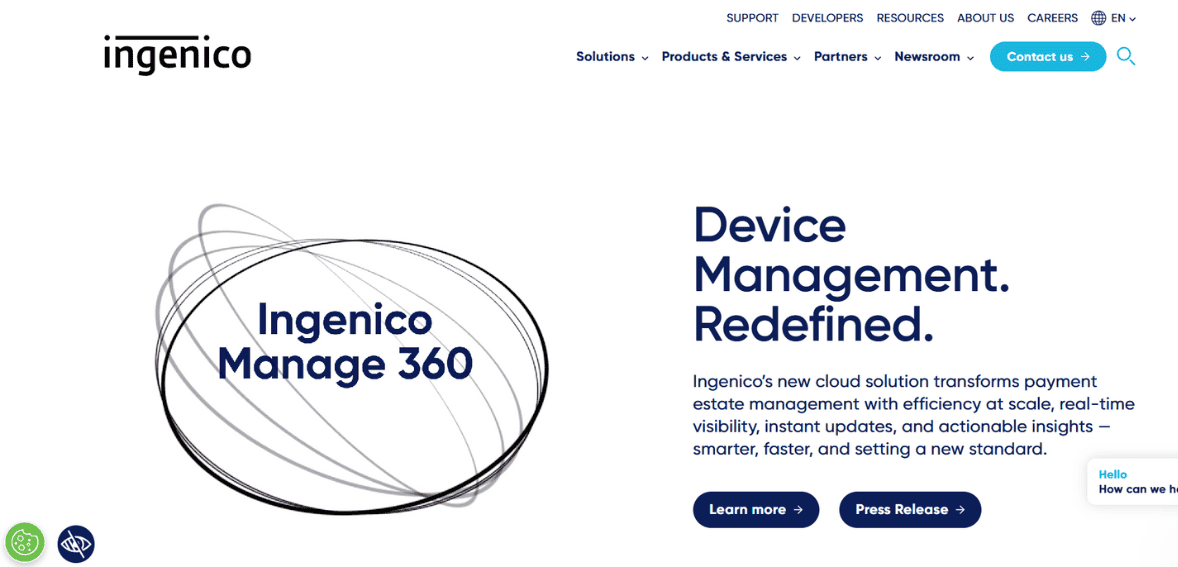
Ingenico’s ecosystem is built around hardware terminals supported by software layers and service integrations. Rather than offering a single all-in-one product, the company provides a broad catalog designed to fit different retail formats and transaction environments. This modular approach allows partners and merchants to select components that align with their operational setup.
At the center are payment terminals, supported by device management tools, security frameworks, and integration options. Ingenico’s ecosystem is often deployed through banks, payment processors, and system integrators rather than sold directly to small merchants. This indirect model helps ensure compatibility with local regulations and acquiring networks but can also add complexity to procurement and support.
The ecosystem favors consistency and standardization over experimentation. Updates and changes are controlled carefully, which benefits compliance-focused industries but may limit rapid customization. Overall, Ingenico’s product ecosystem works best in environments where reliability, uniform deployment, and long device lifecycles matter more than quick feature experimentation.
Payment Terminal Portfolio Overview
Ingenico’s product lines include various payment terminals that cater to a broad array of uses, including countertop, mobile, portable, PIN pad, and unattended models. The countertop terminals are generally seen in the traditional retail environment or hospitality markets, where they would be installed as fixed checkout devices with permanent connectivity. The mobile or portable models are intended for line-busting services, table-side service, and mobile payments.
The unattended category includes payment terminals designed for the vending industry, for parking, self-service kiosks, and transportation systems. These devices are designed with a prime concern for robustness and secure operation with little or no operator user interface. Through its entire line, Ingenico has ensured consistency and familiarity, making it easier for employees working in multiple locations to train on the equipment.
Although there is a lot offered in this portfolio, it can be a little confusing without information from a reseller or integrator that guides a merchant on what models are recommended; this promotes Ingenico’s enterprise and institutional strategy rather than going direct to the merchant.
Hardware Design, Build Quality, and Reliability
Ingenico terminals are known for solid construction and conservative design choices. The devices prioritize durability over aesthetics, which suits high-traffic environments where equipment is handled frequently. Buttons, screens, and card slots are built to withstand repeated use, spills, and minor impacts.
The hardware design reflects practical thinking rather than consumer-device trends. While displays and interfaces are functional, they may not feel as modern as smartphone-inspired competitors. This trade-off often appeals to businesses that value predictability and longevity. Reliability is one of Ingenico’s strongest points. Devices are engineered for long lifecycles, sometimes remaining in service for many years. For large deployments, this consistency helps reduce maintenance costs and downtime, although it may limit access to newer interface innovations.
Supported Payment Methods and Acceptance Capabilities
Ingenico terminals typically support a wide range of payment methods, including chip cards, magnetic stripe where permitted, contactless cards, and mobile wallets. The company has steadily expanded compatibility with NFC-based payments to meet consumer expectations.
Support for international card schemes and regional payment standards varies by model and market, often influenced by local regulations and acquiring partners. This regional adaptability has helped Ingenico maintain a global footprint. While acceptance capabilities are broad, enabling certain payment types may require coordination with processors or additional certifications. As a result, Ingenico’s flexibility is strongest when implemented through experienced partners who manage configuration and compliance.
Software, Operating Systems, and Developer Environment
Ingenico’s environment is designed for stability and security. Currently, the group provides operating systems and application platforms for the support of payment transactions and value-added services such as loyalty programs or electronic receipts. Typically, the applications are accessed through APIs and SDKs.
Compared to the native cloud POS solutions, the software of Ingenico appears more controlled and less flexible. While the possibility of customization exists, it may require professional skills in software development and certified procedures. On one hand, it entails lower risks; on the other hand, it could decrease the pace of innovation. Indeed, the controlled environment works well in favor of enterprises and integrators. For the little merchants who want quick modifications, however, the software could appear overly controlled.
Security Standards and Compliance Framework
Security is a core pillar of Ingenico’s reputation. The company adheres to strict international standards for payment security, including PCI-related requirements. Devices use encryption and secure key management to protect cardholder data during transactions.
Ingenico’s compliance-first mindset benefits industries where regulatory scrutiny is high. Frequent audits and certifications help ensure devices remain approved for use in sensitive payment environments. However, maintaining compliance often means slower update cycles and limited user customization. This trade-off is intentional and aligns with Ingenico’s focus on risk mitigation rather than rapid feature deployment.
Connectivity, Integration, and System Compatibility
Ingenico terminals support multiple connectivity options, including Ethernet, Wi-Fi, Bluetooth, and cellular connections depending on the model. This flexibility allows deployment across fixed and mobile environments. Integration with POS systems and backend platforms is typically handled through processors and system integrators. Ingenico devices are designed to fit into larger ecosystems rather than operate as standalone products. While integration options are broad, setup complexity can vary widely. Businesses without technical partners may find onboarding more involved compared to plug-and-play POS solutions.
Industry Use Cases and Merchant Fit
Ingenico solutions are commonly used in retail chains, hospitality groups, transportation networks, and unattended payment environments. These industries benefit from the company’s emphasis on durability, compliance, and scale. Small independent businesses may find Ingenico less intuitive or more costly compared to lightweight POS alternatives. The platform is best suited to merchants with stable transaction volumes and long-term operational planning. Understanding this fit is key to evaluating Ingenico fairly. It excels in structured environments and may be less appealing for experimental retail concepts.
Global Reach, Scalability, and Enterprise Readiness
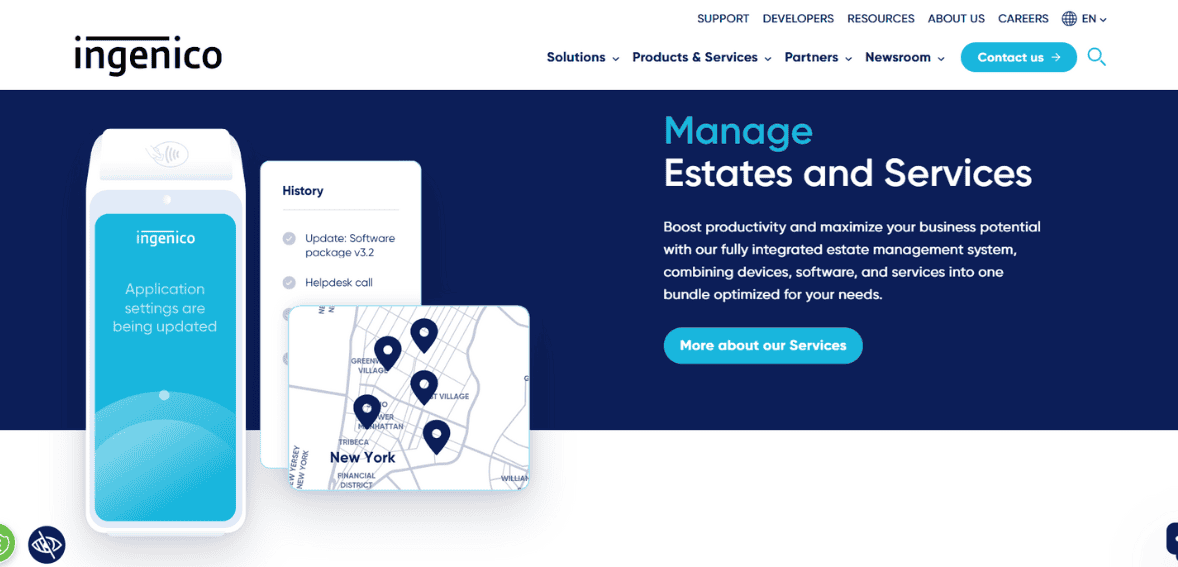
It operates across many regions, supporting localized requirements and currencies. This global presence makes it appealing to multinational businesses seeking standardized payment infrastructure. Scalability is built into the design, with centralized device management and consistent hardware models. Enterprises deploying thousands of terminals benefit from this uniformity. However, global deployments often require coordination across multiple partners, adding administrative overhead. This is manageable for large organizations but less practical for smaller teams.
Pricing Structure and Cost Considerations
Ingenico pricing is typically determined through partners, making direct comparisons difficult. Costs may include hardware, licensing, certifications, and ongoing support. While upfront costs can be higher than consumer-style POS devices, the total cost of ownership may balance out over long lifecycles. Businesses should evaluate pricing in the context of durability and compliance needs. Transparency varies by region and reseller, so careful evaluation is recommended before committing.
Customer Support, Maintenance, and Updates
Support for Ingenico devices is generally delivered through acquiring banks or service partners. This structure ensures localized assistance but can create variation in service quality. Maintenance and firmware updates are carefully managed to preserve compliance. While this reduces risk, updates may arrive less frequently than in cloud-native systems. For enterprises, predictable maintenance schedules are a benefit. For smaller merchants, slower updates may feel limiting.
Pros and Cons of Ingenico Group
Ingenico’s strengths include hardware reliability, security focus, and global scalability. Its conservative approach minimizes operational risk and supports regulated industries effectively. Limitations include slower innovation cycles, indirect sales complexity, and less intuitive onboarding for small businesses. The platform favors structure over flexibility. These pros and cons underline the importance of aligning Ingenico’s strengths with specific business needs rather than assuming it suits every merchant equally.
Final Verdict: Is Ingenico Group the Right Choice for Your Business?
Ingenico Group remains a dependable choice for organizations that value reliability, compliance, and long-term stability. Its solutions shine in environments where payment infrastructure must operate consistently at scale. For digitally agile startups or small merchants seeking rapid customization, alternative platforms may offer greater flexibility. Ingenico is best viewed as a foundational payment provider rather than an experimental one. Ultimately, the right choice depends on transaction volume, regulatory requirements, and tolerance for complexity. Ingenico’s offerings are neither outdated nor cutting-edge, but firmly positioned in the middle ground of dependable, enterprise-grade payments.
FAQs
What types of businesses benefit most from Ingenico solutions?
It is well suited for enterprises, retail chains, hospitality groups, and regulated industries that prioritize reliability and compliance.
Is Ingenico suitable for small businesses?
Small businesses can use Ingenico, but setup complexity and indirect sales models may make simpler POS solutions more attractive.
How future-ready is Ingenico’s technology?
Ingenico focuses on gradual evolution rather than rapid change. This makes it stable for long-term deployments but slower to adopt experimental features.