
Blog
Home / Blog

Moneris Solutions Review
- 12th Feb, 2026
- | By Linda Mae
- | Reviews
Moneris Solutions is one of the most widely recognised payment processors in Canada, serving businesses across retail, hospitality, professional services, and e-commerce. For many merchants, Moneris is often encountered early in the search for payment processing due to its long-standing banking relationships and significant domestic market share. Its visibility has made it a familiar name, particularly for businesses seeking debit and credit card acceptance within Canada. Lets read more about Moneris Solutions Review.
At its core, Moneris provides the infrastructure that allows merchants to accept payments through in-store terminals, online checkout pages, and mobile environments. Alongside transaction processing, it also offers hardware, merchant dashboards, reporting tools, and security features intended to support daily business operations. The service mix is broad, which makes Moneris relevant to both small businesses and larger organisations with more structured payment needs.
Table of Contents
ToggleCompany Background and Market Presence | Moneris Solutions Review
Moneris was formed as a joint venture between two major Canadian financial institutions, which has significantly influenced its role in the country’s payments ecosystem. From its early days, the company positioned itself as a domestic alternative to international processors, with a strong focus on supporting Canadian debit and credit networks. Over time, this emphasis helped Moneris build trust with banks, regulators, and large merchants operating nationwide.
Its market presence is strongest in Canada, where it processes a substantial share of in-store debit transactions. This dominance has made Moneris particularly appealing for brick-and-mortar businesses that rely heavily on Interac debit payments. Many merchants value the stability associated with a processor that is deeply embedded in the national banking infrastructure.
From a scale perspective, Moneris handles hundreds of thousands of merchants from almost every industry. This huge base of merchants allows the company to invest in infrastructure, systems for fraud prevention, and compliance that other, more minor processors can’t afford to maintain. However, size can also bring complexity, especially when it comes to responsiveness to customer support and standardization of contracts.
While Moneris does offer capabilities in cross-border and online payments, its identity remains closely tied to the Canadian market. For operations taking place mainly within Canada, this can be an advantage. To merchants seeking international expansion, though, it raises questions about how well Moneris would fit a global payment strategy compared to more internationally oriented providers.
Types of Businesses Moneris Serves
Moneris caters to a broad spectrum of businesses, ranging from sole proprietors to large enterprise organisations. Small businesses such as independent retailers, cafés, salons, and service providers often turn to Moneris for its straightforward terminal-based payment solutions. These merchants typically value reliability and ease of use over advanced customisation.
Mid-sized businesses, including restaurant chains, multi-location retail stores, and professional services firms, use Moneris for both in-store and online payments. For this segment, features like consolidated reporting, multiple terminal management, and recurring billing become more important. Moneris’ infrastructure is generally capable of supporting these operational requirements, though setup complexity can increase as business needs grow.
Moneris may serve bigger businesses or institutional merchants through customized agreements. Such businesses might require more advanced fraud checks, more elevated transaction limits, integrations with their proprietary systems, etc. Moneris possesses the required scale to cater to such requirements, particularly in a regulated sector or a high-transaction-volume scenario.
E-commerce is also one of the business types that fall within Moneris, though they differ from the first category of expectations. In this case, e-commerce business enterprises have different priorities, including flexible application programming interfaces, plugins, and international payment solutions. Though it serves the needs of e-commerce businesses, Moneris’ core competencies still seem to favor the physical POS.
Thus, it seems more appropriate for businesses that place a strong emphasis on domestic security and traditional payment infrastructure. Sellers who seek rapid scalability, a high degree of customization for digital platforms, and global reach should carefully consider whether it is suitable in the long run.
Payment Processing Services Overview
Moneris’ core offering revolves around debit and credit card payment processing. Merchants can accept major card brands along with Interac debit, which remains a critical payment method for Canadian consumers. Support for contactless transactions, mobile wallets, and tap-to-pay functionality ensures compliance with current consumer payment preferences.
For recurring revenue models, it provides options for scheduled billing and stored payment credentials. These features are useful for subscription-based businesses, professional services, and membership organisations. The functionality is generally reliable, though not as flexible as some dedicated subscription billing platforms.
Moneris also has refund processing, transaction adjustments, and dispute resolution built into its platform. These are basic operation tools, and Moneris has done an excellent job of integrating them into the business operation. When it comes to transaction processes, Moneris is among the best, particularly when it comes to downtime or the frequency of settlement timelines. Even when downtime is an issue, Moneris is rarely affected, making it ideal for businesses with thousands of transactions daily.
Nevertheless, the merchants should bear in mind that when there are extra needs, although Moneris payment gateways guarantee robust payment service, there are extra costs involved. Therefore, knowing what is included in the payment services as a standard and what is not forms an integral part of evaluating the payment service.
POS Systems and Hardware
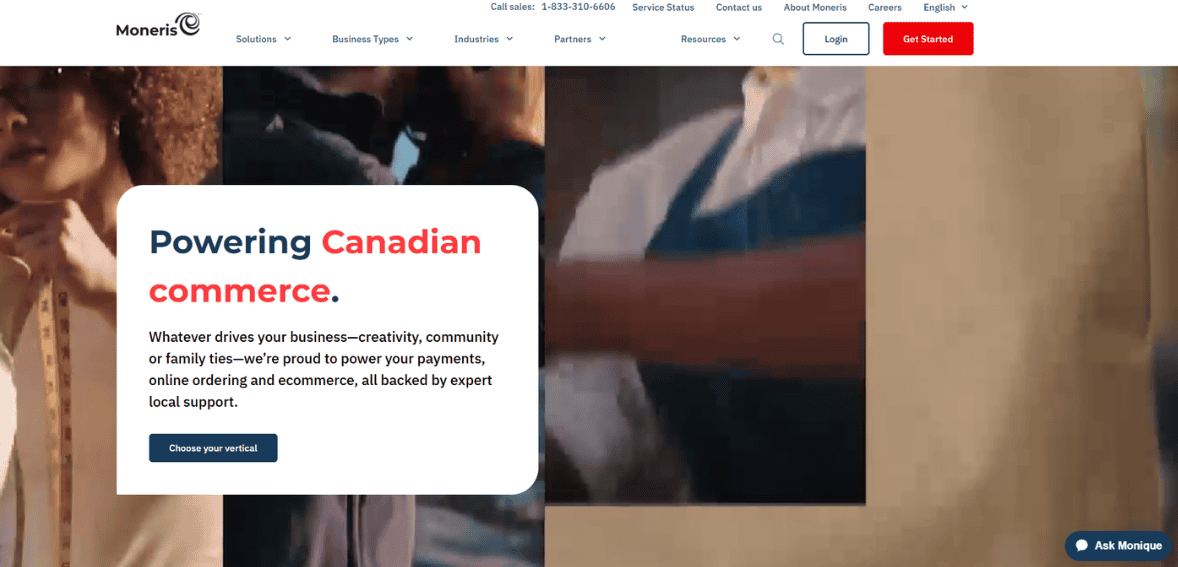
Moneris offers a range of POS hardware designed to suit different business environments. This includes countertop terminals for fixed checkout locations, wireless terminals for table-side or mobile transactions, and integrated POS solutions for more advanced setups. The hardware is generally reliable and designed for durability in high-traffic retail and hospitality environments.
Ease of use is a significant advantage of this terminal. In most cases, Moneris machines use a similar flow process, allowing employees to easily learn to use the terminal. This is great, especially for companies where employees may come and go frequently. Simple tasks such as sales, refunds, and end-of-day reports are easy to perform. Mobile payment is also available for merchants to enable mobile transaction services using mobile devices such as smartphones.
The main disadvantage of using this is the inflexibility. Merchants who need highly customised POS solutions are likely to use third-party products. The hardware of Moneris functions best when used in combination with native software. It is a reliable solution for retailers who need POS hardware. However, some retailers may need to determine whether the POS system of Moneris meets the needs of their complex operations.
E-Commerce and Online Payment Solutions
Moneris provides online payment solutions designed to support basic e-commerce operations. These include hosted checkout pages, payment gateway services, and integrations with popular e-commerce platforms. For businesses entering online sales from a physical retail background, these options offer a relatively straightforward path to digital payments.
All the major shopping carts and website builders are supported at the platform level, which can simplify development for small to mid-sized businesses. While the checkout is functional and secure, the design might lack a fresh look compared to other e-commerce payment providers. API access is available for custom integrations, which might be a bit more complex to deal with from a development perspective. Documentation is adequate, though not very flexible compared to other payment APIs that were created to target the developer as the key user.
Moneris also offers online fraud prevention tools, address verifications, and card security solutions, which are all essential for minimizing chargeback risks, especially for card-present transactions. Though Moneris’ solutions for an online business meet all the essential needs for businesses, they are mostly suitable for small and medium online businesses, while large businesses might find it somewhat wanting, especially in integrating their services into a wider global marketplace.
Pricing Structure and Fee Transparency
Pricing is one of the most important considerations for merchants, and Moneris operates on a structured but often complex fee model. Costs typically include transaction fees, monthly service charges, terminal rental or purchase fees, and additional costs for optional services. Rates may vary depending on business size, transaction volume, and negotiated agreements.
The interchange fee acts as the base price, to which Moneris levies its charge. Although such a structure is standard within the payment industry, the cost structure is quite hard to calculate for the merchant, as some claim they must go through the contract to understand the structure of the fee themselves. They charge monthly fees, even for low-volume merchants. This may be problematic for small businesses that transact small volumes, as they often do so infrequently. Additional fees may be charged for premium support, reporting, and/or online payment options.
From a transparent perspective, pricing discussions are frequently conducted during the onboarding period as opposed to upfront. Thus, such a practice hinders a seller from comparing prices while necessitating inquiries from the merchant prior to the signing of the deal. In conclusion, the price offered by Moneris is competitive for specific business establishments that operate at high volumes of transactions.
Contract Terms, Commitments, and Cancellation Policies
It typically operates on fixed-term contracts, which can include multi-year commitments. These agreements often renew automatically unless terminated within a specified notice period. For merchants unfamiliar with payment processing contracts, these terms can come as a surprise.
Early termination fees may apply if a merchant exits the contract before the agreed term ends. The cost of cancellation varies, depending on the agreement and remaining duration. Hardware rental agreements may also include separate cancellation conditions. This structure provides Moneris with predictable revenue but reduces flexibility for merchants whose business needs change. Startups and seasonal businesses, in particular, may find long-term commitments restrictive.
Onboarding documentation generally outlines contract terms, though some merchants report that key details are easier to overlook during the signup process. Reading contracts carefully and requesting clarification upfront is essential. While Moneris does offer negotiated terms for larger merchants, smaller businesses often have limited ability to modify contract conditions. For merchants prioritising flexibility, this is an important factor to consider.
Security Features and Compliance Standards
The security of the payment process is very important, and Moneris also pays serious attention to the security of the payment process. The payment platform is PCI DSS compliant and provides tools such as encryption and tokenization to secure the payment process. For example, in the case of online payment systems, Moneris provides tools such as address verification and card verification values to merchants, which provide security against fraud. Charge back management tools are also available in the payment platform.
From a legal standpoint, it should be noted that the relationship between Moneris and Canadian financial institutions fosters compliance with Canadian standards. This is particularly pertinent to businesses that operate in a regulated environment. Although the security system is adequate, some advanced fraud prevention may need to have a cost implication. It should be noted that the overall security system at Moneris is adequate and instills confidence in the company.
Reporting, Analytics, and Merchant Tools
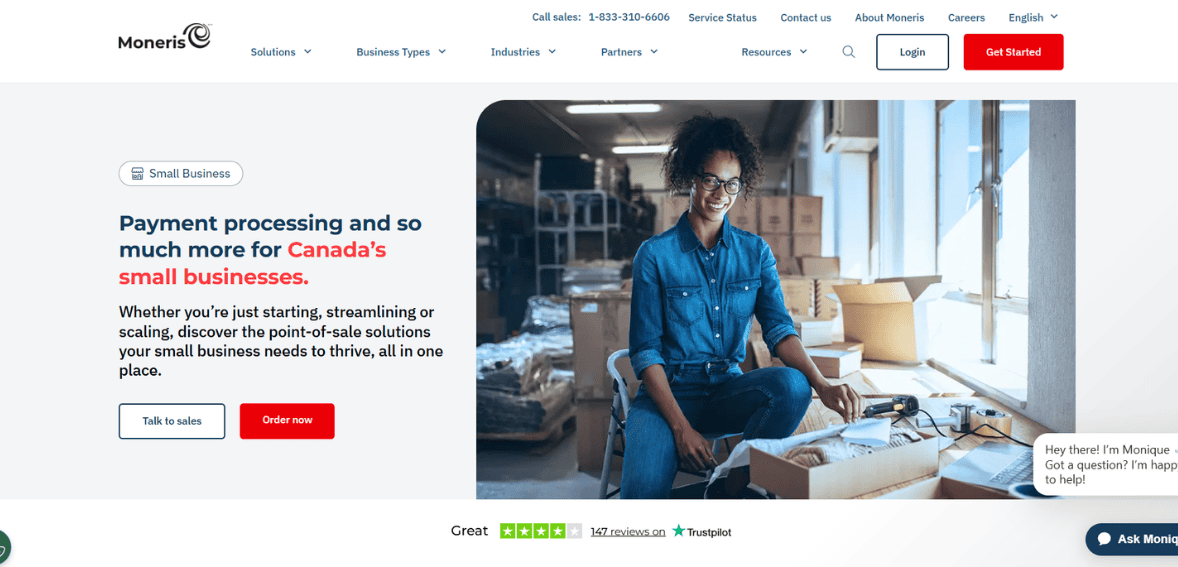
It provides merchants with access to reporting dashboards that summarise transaction data, settlement details, and sales trends. These tools are useful for daily reconciliation and high-level performance tracking. Reports can typically be exported for accounting or tax purposes, though customisation options may be limited. Businesses requiring deep analytics or advanced forecasting often rely on external software.
The interface is functional but prioritises clarity over visual sophistication. For many merchants, this is sufficient, though data-driven businesses may desire more advanced insights. Access to historical data helps merchants identify seasonal patterns and monitor growth. However, real-time analytics capabilities are relatively basic. In general, Moneris reporting tools support operational needs but are not designed to replace dedicated business intelligence platforms.
Customer Support and Service Experience
Customer support is delivered through phone, online resources, and account representatives for larger merchants. Availability is generally reliable, though response times can vary depending on issue complexity and merchant size. Self-service resources such as guides and FAQs help address common questions. However, troubleshooting more technical issues may require escalation. Smaller merchants occasionally report challenges navigating support queues, while larger clients often benefit from dedicated contacts. This disparity reflects Moneris’ enterprise-oriented structure. Support quality is typically professional, though not always personalised. Businesses that value hands-on service may want to factor this into their decision.
Ease of Integration and Third-Party Compatibility
Moneris supports integration with various accounting systems, POS software, and e-commerce platforms. These integrations reduce manual effort and improve workflow efficiency. API access enables custom development, though it may require more technical expertise compared to newer payment platforms. Integration timelines can vary depending on complexity. Compatibility is strongest within commonly used platforms but may be limited for niche software. Overall, Moneris integrations are adequate for standard use cases but may feel restrictive for highly customised environments.
Pros and Cons of Moneris Solutions
Strengths include reliability, strong debit processing, and established infrastructure. Security and compliance are also well-developed. Limitations include rigid contracts, complex pricing, and limited flexibility compared to newer processors. It excels in stability rather than innovation.
Who Should and Should Not Use Moneris Solutions
Moneris is well-suited for Canadian businesses prioritising reliability and in-store payments. Established merchants benefit most. Startups, highly digital businesses, or globally focused companies may find better alignment elsewhere.
FAQs
Is Moneris only available in Canada?
Moneris primarily serves Canadian businesses, though some cross-border capabilities exist.
Does Moneris require long-term contracts?
Most agreements involve fixed terms, though conditions vary.
Is Moneris suitable for online-only businesses?
It can work for moderate volumes, but specialised providers may offer greater flexibility.