
Blog
Home / Blog

Payoneer Review
- 31st Jul, 2026
- | By Linda Mae
- | Reviews
International payments have become an essential part of modern business. Whether you are a freelancer working with overseas clients, an eCommerce seller on international marketplaces, or a company hiring remote talent, moving money across borders is no longer an occasional requirement. However, traditional banking systems often involve lengthy processing times, high transfer fees, and limited support for multiple currencies. As a result, businesses increasingly look for payment platforms that simplify global transactions while remaining reliable and secure. Lets read more about Payoneer Review.
Payoneer has established itself as one of the most recognised names in this space. Since its launch in 2005, the platform has focused on helping businesses and professionals send and receive international payments more efficiently. It offers multi-currency receiving accounts, global payment services, and integrations with numerous online marketplaces, making it a common choice for businesses that operate internationally.
That said, no payment platform is perfect. While Payoneer is praised for its extensive global network and business-friendly tools, some users have also reported concerns regarding account verification, customer support, or certain transaction fees. These experiences often depend on the user’s location, account activity, and business requirements.
Table of Contents
ToggleWhat Is Payoneer and How Does It Work? | Payoneer Review
Payoneer is a financial technology company that specialises in cross-border payment services. Unlike a traditional bank, it does not function as a full-service banking institution. Instead, it provides businesses and professionals with tools that make receiving, holding, converting, and sending international payments much more convenient.
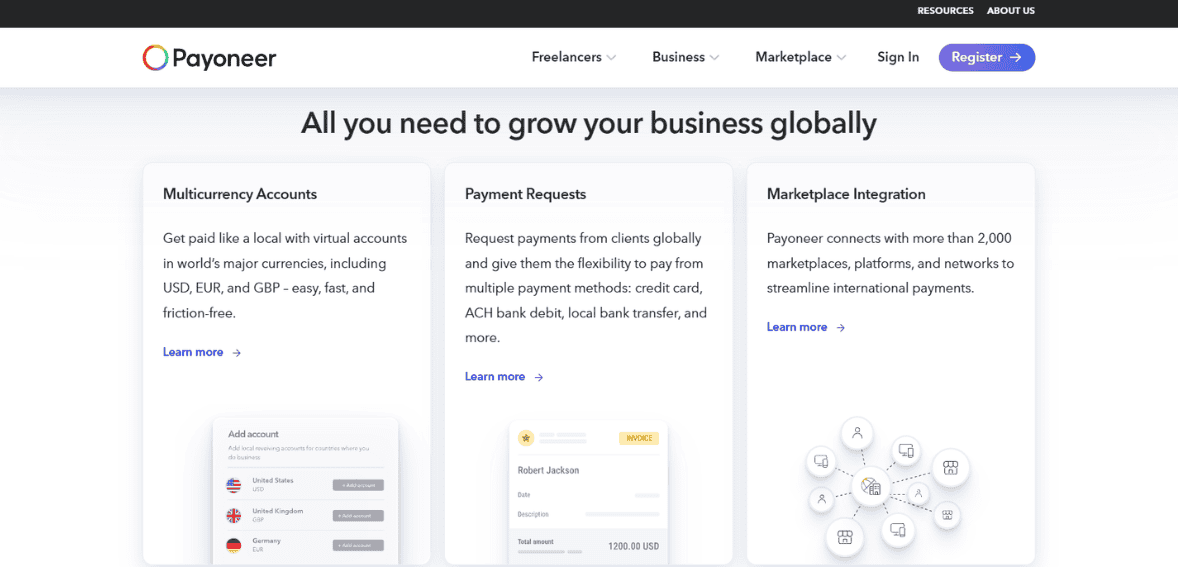
Once an account is created and verified, users can access receiving accounts in several major currencies, including US dollars, euros, British pounds, Canadian dollars, Australian dollars, and others where available. These accounts work like local bank accounts for eligible countries, allowing international clients or marketplaces to send payments without making expensive international wire transfers.
Funds received in Payoneer can either remain in the account, be converted into another supported currency, or be withdrawn to a linked local bank account. Businesses can also use Payoneer to pay suppliers, contractors, and freelancers in supported countries, reducing the complexity of international business payments.
One reason Payoneer has gained popularity is its integration with global marketplaces and platforms. Many online businesses receive payments directly from marketplaces into their Payoneer account, eliminating the need to manage multiple banking relationships across different countries.
Although the platform is relatively straightforward to use, some services and features vary depending on the user’s country, account type, and verification status. Understanding these regional differences is important before deciding whether Payoneer aligns with your business requirements.
Key Features That Make Payoneer Stand Out
Payoneer’s appeal lies in the combination of payment tools it offers within a single platform. Instead of focusing solely on international money transfers, it provides several features designed specifically for businesses operating across borders.
One of its strongest features is the ability to receive payments through local receiving accounts in multiple currencies. This makes it easier for international clients to pay using domestic bank transfers, while users avoid opening bank accounts in several different countries. The platform also supports currency conversion, allowing businesses to manage payments in different currencies without relying on separate financial providers.
Another valuable feature is its marketplace integration. Payoneer works with numerous global eCommerce and freelance platforms, making it convenient for sellers and independent professionals to receive earnings directly into their Payoneer account. For businesses that work with multiple marketplaces, this creates a more centralised payment management experience.
The platform also supports business-to-business payments. Companies can pay suppliers, contractors, and service providers internationally through Payoneer, often simplifying payment processes compared to traditional international bank transfers.
Users also benefit from reporting tools, transaction history, payment requests, and a mobile application that allows them to monitor balances and activity while away from their computers.
While these features make Payoneer highly versatile, not every service is available in every country. Certain payment options, cards, or receiving accounts may depend on local regulations and account eligibility. Prospective users should always verify which services are available in their region before opening an account.
Creating and Verifying a Payoneer Account
Opening a Payoneer account is designed to be a straightforward process, although verification can take longer depending on the information required. Users begin by selecting an account type and providing personal or business details, including their legal name, address, contact information, and banking details for future withdrawals.
After registration, Payoneer requires identity verification to comply with financial regulations and anti-money laundering requirements. Depending on the account type and country, users may need to submit government-issued identification, proof of address, business registration documents, or additional information regarding their business activities.
Verification is one area where user experiences vary considerably. Many applicants complete the process within a few business days, while others may be asked to provide supplementary documentation before approval. In some situations, Payoneer may temporarily limit certain account functions until verification is fully completed.
Although these procedures can feel time-consuming, they are common among regulated financial service providers handling international transactions. The verification process ultimately contributes to fraud prevention and regulatory compliance.
One positive aspect is that Payoneer generally provides guidance on missing documents or incomplete submissions through the account dashboard. However, users who require urgent account activation should allow sufficient time for the verification process rather than expecting immediate approval.
Overall, the account creation process is relatively user-friendly, but patience may be necessary if additional compliance checks are required.
Receiving International Payments Through Payoneer
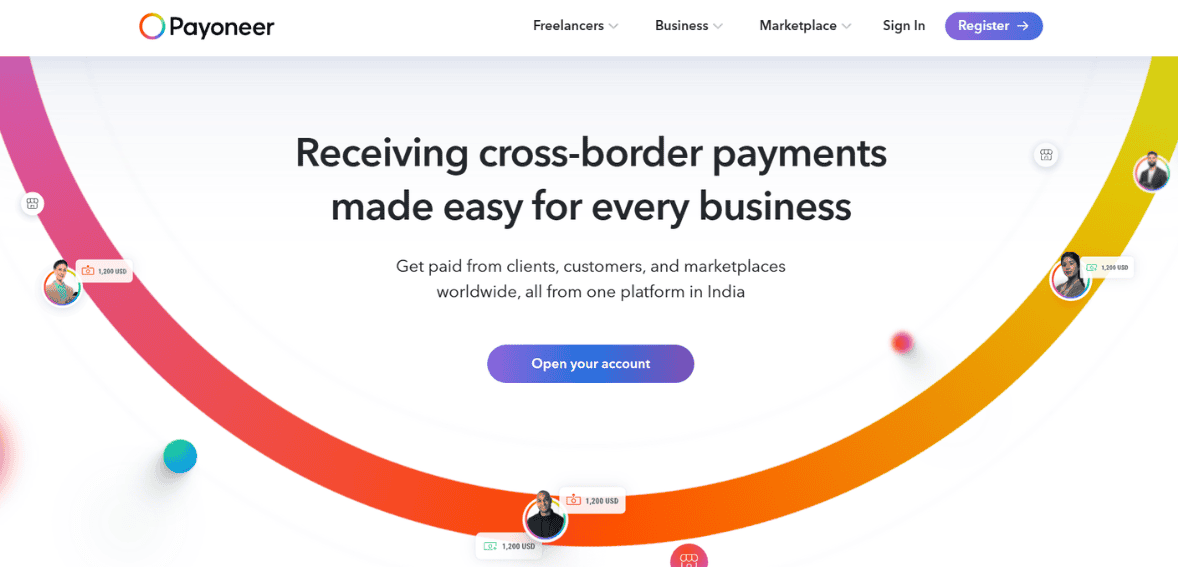
Receiving international payments is arguably the platform’s strongest capability. Instead of asking overseas clients to send costly international wire transfers, Payoneer enables eligible users to receive funds through local receiving accounts in supported currencies. For clients, the payment often feels similar to making a domestic bank transfer, while recipients receive the funds within their Payoneer balance.
This setup is particularly useful for freelancers, consultants, agencies, software companies, exporters, and online sellers who regularly invoice international customers. Rather than maintaining separate foreign bank accounts, businesses can consolidate multiple currencies within a single Payoneer account before deciding when to withdraw or convert funds.
The platform also supports payment requests, allowing businesses to generate professional payment requests that clients can complete online. This adds flexibility for companies that invoice customers directly rather than relying solely on marketplaces.
Payment processing times vary depending on the payment method used by the sender. Transfers between Payoneer accounts are often completed relatively quickly, while bank transfers or card-funded payments may require additional processing time. Businesses should therefore avoid assuming that every transaction will arrive instantly.
Although Payoneer’s international receiving system is one of its biggest strengths, users should also review the applicable receiving fees, currency conversion costs, and withdrawal charges before relying on it as their primary payment solution. Understanding the complete fee structure helps businesses calculate their actual payment costs more accurately.
Sending Payments to Suppliers, Freelancers, and Contractors
Beyond receiving international payments, Payoneer also enables businesses to make cross-border payments to suppliers, freelancers, consultants, and contractors. This feature is particularly useful for companies working with remote teams or international vendors, as it reduces the reliance on traditional wire transfers, which can be both slow and expensive.
Businesses can send payments directly to other Payoneer account holders in supported countries. In many cases, these transfers are processed faster than international bank transfers, allowing recipients to access funds sooner. If the recipient does not use Payoneer, the platform may also support transfers to local bank accounts, depending on the country and available services.
For growing businesses, this functionality helps centralise outgoing and incoming payments within one platform. Instead of managing multiple banking relationships or third-party payment services, finance teams can track transactions from a single dashboard. Payment records and transaction histories are also easy to review, which simplifies bookkeeping and financial reconciliation.
However, businesses should be aware that transaction costs vary depending on the payment method, destination country, and currency involved. Exchange rates and conversion fees may also affect the final amount received by the recipient. Companies making frequent international payments should compare these costs with alternative providers before choosing a long-term solution.
Overall, Payoneer’s payment capabilities make it well suited for businesses with international operations. While it may not replace every banking service, it provides a practical alternative for organisations that regularly work with overseas professionals and suppliers.
Multi-Currency Accounts and Global Banking Features
One of Payoneer’s biggest advantages is its ability to support multiple currencies within a single account. Instead of opening separate bank accounts in different countries, eligible users can receive payments in major currencies such as US dollars, euros, British pounds, Canadian dollars, Australian dollars, and others where available.
These receiving accounts function similarly to local bank accounts. Clients paying from supported countries can transfer funds domestically, which often reduces both transfer costs and payment delays. This arrangement makes international business transactions feel considerably simpler for both parties.
Holding multiple currencies can also be beneficial when exchange rates fluctuate. Rather than converting every payment immediately, users have greater flexibility in deciding when to exchange funds or withdraw them to their local bank account. Businesses that invoice customers in different regions may find this particularly valuable.
The platform’s currency conversion tools are generally easy to use, although users should review the applicable exchange rates and conversion fees before completing transactions. Even relatively small differences in exchange rates can become significant for businesses handling large payment volumes throughout the year.
While the multi-currency system is one of Payoneer’s strongest features, availability differs between countries. Certain receiving accounts or currency options may not be offered everywhere due to local financial regulations. Prospective users should confirm which currencies and services are supported in their country before relying on Payoneer as their primary international payment platform.
Overall, the ability to manage several currencies from one account is a practical feature that simplifies global business operations and reduces the administrative burden associated with international banking.
Payoneer Fees Explained: What Does It Really Cost?
Pricing is one of the most important factors when evaluating any payment platform, and Payoneer’s fee structure deserves careful attention. Unlike subscription-based financial software, Payoneer generally charges users based on the services they use rather than requiring a monthly membership fee. While this approach offers flexibility, it also means costs can vary considerably between users.
Several different charges may apply depending on how an account is used. Receiving payments, withdrawing funds to a local bank account, converting currencies, sending payments, or accepting card-funded transactions may each involve separate fees. The exact amount depends on the payment source, currency, destination country, and account type.
Currency conversion deserves particular attention because exchange rates have a direct impact on the total amount users receive. Even when transfer fees appear reasonable, the effective conversion rate should be considered when comparing Payoneer with competitors.
The platform provides pricing information through its website and user dashboard, but businesses should take the time to understand which fees apply to their specific payment workflow. A freelancer receiving occasional client payments may incur very different costs from an exporter processing hundreds of international transactions each month.
One positive aspect is that Payoneer does not force users into expensive subscription plans simply to access core payment features. However, because several different fees can apply throughout the payment process, calculating the overall cost sometimes requires closer examination than with simpler payment services.
Overall, Payoneer’s pricing is competitive for many international businesses, but its value depends largely on how frequently the platform is used and which payment services are required.
Security, Compliance, and Account Protection
Financial security is naturally one of the biggest concerns when choosing an international payment platform. Businesses trust these services with sensitive financial information, customer payments, and business cash flow, making strong security measures essential rather than optional.
Payoneer employs several layers of security designed to protect user accounts and comply with international financial regulations. These include encrypted data transmission, identity verification procedures, fraud monitoring systems, and optional two-step verification for account access. Together, these measures help reduce the risk of unauthorised account activity.
Like many regulated financial service providers, Payoneer also performs compliance reviews on accounts and transactions. These reviews are intended to prevent fraud, money laundering, and other financial crimes. While such checks are necessary from a regulatory perspective, they can occasionally result in temporary payment delays or requests for additional documentation.
This area has generated mixed user feedback over the years. Some customers report smooth account management with minimal interruptions, while others have experienced temporary account limitations during compliance reviews. In most cases, these reviews require users to provide supporting documents before account access is fully restored.
Businesses that maintain accurate records, provide requested documentation promptly, and follow Payoneer’s terms generally experience fewer compliance-related issues. Nevertheless, companies handling time-sensitive payments should understand that regulatory reviews are a possibility with virtually any international financial platform.
Overall, Payoneer’s security framework aligns with what users would expect from a global payment provider, although compliance procedures may occasionally affect account convenience.
User Experience: Web Platform and Mobile App
Payoneer’s interface focuses on functionality rather than visual complexity. The web dashboard presents account balances, payment history, withdrawal options, currency management, and transaction activity in a relatively organised manner, making it accessible even for users who are new to international payment platforms.
Navigation is generally straightforward. Common tasks such as requesting payments, reviewing transactions, managing bank accounts, or checking verification status can usually be completed without navigating through multiple menus. For businesses handling frequent international payments, this simplicity contributes to greater efficiency during day-to-day financial operations.
The mobile application extends many of the platform’s core features to smartphones and tablets. Users can monitor incoming payments, review balances, receive notifications, and manage certain account functions while away from their computers. For freelancers and business owners who travel regularly, this level of accessibility is particularly useful.
Performance is generally reliable, although user experiences may differ depending on device type, operating system updates, and internet connectivity. As with most financial applications, occasional maintenance periods or feature updates may temporarily affect availability.
Customer support, however, remains one of the more frequently discussed aspects of the overall user experience. While many users receive satisfactory assistance, others report longer response times during complex account or verification issues. This appears to vary based on the nature of the enquiry and regional support availability.
Overall, Payoneer’s platform offers a clean and practical experience that prioritises usability. Although there is room for improvement in customer support responsiveness, the software itself is intuitive enough for both individual professionals and growing businesses.
Who Should Use Payoneer?
Payoneer is not designed for every type of user, but it serves several business segments particularly well. Freelancers who work with international clients, digital agencies, software developers, consultants, exporters, affiliate marketers, and eCommerce sellers are among the users who are most likely to benefit from its services. Businesses that regularly receive payments in foreign currencies or pay overseas contractors can often streamline their financial operations by using a single platform instead of juggling multiple bank accounts.
Online sellers using global marketplaces may also find Payoneer especially useful because of its integrations with many international platforms. Rather than transferring earnings through multiple intermediaries, eligible users can receive marketplace payouts directly into their Payoneer account and withdraw funds to their local bank account when needed.
Small and medium-sized businesses with growing international operations are another good fit. The platform offers enough flexibility to support cross-border payments without requiring the complexity of enterprise-level banking solutions. Multi-currency support and international payment capabilities make expansion into new markets more manageable.
On the other hand, Payoneer may not be the ideal choice for users who deal exclusively with domestic payments or those looking for a full-service banking experience that includes lending, savings accounts, or extensive investment products. Businesses with very specialised financial requirements may also prefer platforms tailored to their specific industry.
Ultimately, Payoneer works best for organisations and professionals that conduct regular international business and value convenience, multi-currency support, and marketplace connectivity over traditional banking features.
Payoneer Pros and Cons
Like any financial platform, Payoneer has strengths as well as limitations. Understanding both sides helps potential users decide whether the platform aligns with their business needs instead of relying solely on promotional claims.
One of Payoneer’s biggest strengths is its global reach. The platform supports users in many countries and offers receiving accounts in several major currencies, making cross-border payments considerably more convenient. Its partnerships with international marketplaces also simplify payment collection for online sellers and freelancers. The platform is generally easy to use, and businesses can manage incoming payments, outgoing transfers, and currency conversions from one account.
Another advantage is flexibility. Rather than charging a monthly subscription for basic account access, Payoneer’s costs are largely transaction-based. Businesses that use only selected services may therefore avoid paying for features they do not need.
However, there are also areas where users should exercise caution. The fee structure can be more complex than expected because different charges may apply depending on the payment source, currency conversion, withdrawal method, or transfer destination. Reviewing the pricing schedule before conducting large transactions is therefore essential.
Account verification and compliance reviews have also been points of discussion among users. While these procedures are important for regulatory compliance and fraud prevention, they can occasionally delay access to funds if additional documentation is requested.
Overall, Payoneer’s advantages outweigh its disadvantages for many international businesses, but understanding both the benefits and the trade-offs leads to more realistic expectations.
Payoneer vs Competitors: How Does It Compare?
Payoneer operates in a competitive market alongside providers such as Wise, PayPal, Airwallex, Skrill, Revolut Business, and several regional payment platforms. Each service has strengths that appeal to different types of users, so choosing the right option depends more on business requirements than on finding a universally “best” platform.
Compared with traditional banks, Payoneer usually offers greater convenience for international business payments. Multi-currency receiving accounts, marketplace integrations, and simplified cross-border transactions are features that many banks still do not provide as efficiently.
Compared with PayPal, Payoneer is often preferred by businesses that receive marketplace payouts or need dedicated receiving accounts in multiple currencies. However, PayPal generally enjoys broader consumer recognition and may be more suitable for businesses accepting direct online customer payments.
Wise is frequently praised for transparent exchange rates and international bank transfers, making it attractive for businesses focused primarily on low-cost currency conversion. Payoneer, meanwhile, offers a broader ecosystem for marketplace payments and business payment management.
Revolut Business and Airwallex provide additional banking-style features in some regions, including corporate expense management and advanced financial tools. However, service availability varies considerably depending on country and business eligibility.
Rather than viewing these platforms as direct replacements for one another, businesses should compare factors such as supported countries, payment methods, integration requirements, customer support, exchange rates, and overall transaction costs. The most suitable platform ultimately depends on how a business receives payments, where its customers are located, and how frequently international transactions occur.
Final Verdict: Is Payoneer Worth It?
Payoneer has earned its reputation as one of the leading international payment platforms by focusing on the needs of businesses that operate across borders. Its ability to receive payments in multiple currencies, integrate with global marketplaces, and simplify international transactions makes it a practical solution for freelancers, agencies, exporters, and growing companies.
The platform performs particularly well for users who regularly receive payments from overseas clients or marketplaces. Instead of opening foreign bank accounts or relying solely on traditional banking systems, businesses can manage much of their international payment activity from one account. The web platform is user-friendly, and the multi-currency functionality adds genuine convenience for businesses working with customers in different regions.
At the same time, Payoneer is not without drawbacks. Users should take the time to understand the fee structure before processing large payment volumes, as transaction costs vary depending on the services used. Compliance reviews and account verification procedures can also require additional documentation, which may occasionally delay access to funds. These experiences are not unique to Payoneer, but they are worth considering before adopting the platform.
Overall, Payoneer delivers solid value for businesses involved in international commerce. It may not replace every banking service, nor will it be the perfect choice for every user, but it provides a reliable set of tools for managing cross-border payments efficiently. Businesses that understand its pricing, comply with verification requirements, and choose the platform for the right use cases are likely to find it a capable and dependable payment solution.
Frequently Asked Questions
Is Payoneer safe for receiving international payments?
Yes. Payoneer uses encryption, identity verification, fraud monitoring, and regulatory compliance procedures to protect accounts and transactions. As with any financial platform, users should also enable two-step verification and follow recommended security practices.
What are the main fees associated with Payoneer?
Fees can vary depending on the type of transaction. Common charges may include receiving certain payments, currency conversion, withdrawals to local bank accounts, and specific international transfers. Reviewing the latest pricing for your country and payment method is recommended before using the platform.
Can individuals and small businesses both use Payoneer?
Yes. Payoneer is used by freelancers, consultants, agencies, online sellers, exporters, and small to medium-sized businesses. The features available may differ depending on the user’s country, account type, and verification status.