

Tag Archives: payment platform

CardConnect Review

CardConnect Review

Founded in 2006, CardConnect has become a recognized name in the payment processing industry, particularly for businesses seeking integrated and secure transaction solutions. Headquartered in Pennsylvania and later acquired by First Data (now part of Fiserv) in 2017, CardConnect has built a reputation for offering innovative payment technologies. Despite its acquisition, CardConnect continues to operate with a distinct identity, maintaining a focus on flexible, secure payment solutions for merchants of various sizes. Lets read more about CardConnect Review.

CardConnect specializes in solutions that are designed not just to process payments but to enhance business operations through integrations with ERP systems and various eCommerce platforms. Its proprietary tools, such as CardPointe, offer merchants a comprehensive view of their transactions and account activities, with an emphasis on data protection through tokenization and encryption technologies.

While CardConnect brings many strengths to the table, it’s not without challenges. Customer feedback highlights both positive experiences and concerns related to pricing transparency and customer support. As with any service provider, businesses should carefully evaluate whether CardConnect’s offerings align with their specific needs. This review will take a closer look at its features, pricing, integrations, customer service, and suitability for different types of businesses to offer a balanced perspective.

Key Features and Services | CardConnect Review

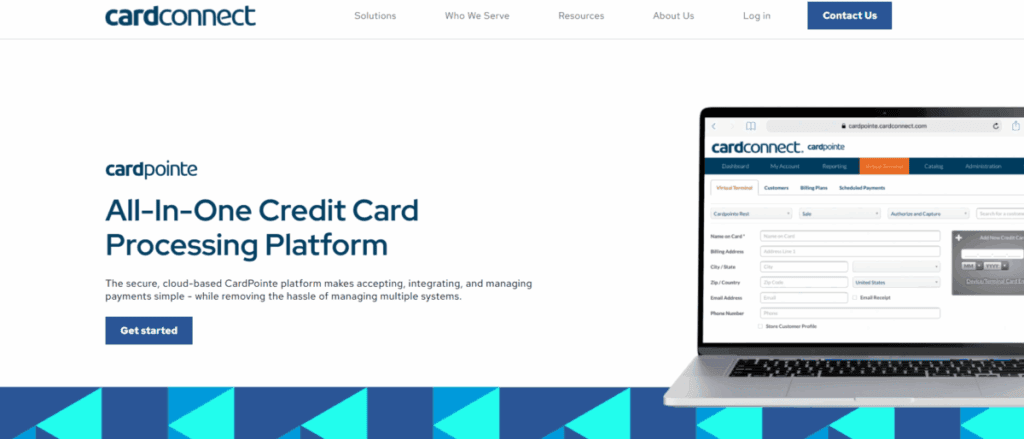
CardConnect offers a robust suite of services aimed at streamlining payment acceptance and improving transaction security. One of its core offerings is the CardPointe platform, which allows businesses to view real-time transactions, manage chargebacks, and generate reports through a user-friendly dashboard. This cloud-based solution supports both desktop and mobile access, helping businesses stay connected wherever they operate.

Another major feature is its Clover POS integration. Through its partnership with Clover, CardConnect provides merchants access to a wide range of point-of-sale systems that cater to retail, food service, and professional service industries. These systems come with customizable software options that allow businesses to tailor functionality to their unique needs.

Security is another cornerstone of CardConnect’s services. They incorporate point-to-point encryption (P2PE) and tokenization to protect sensitive cardholder data. This focus on security is particularly beneficial for industries like healthcare, where regulatory compliance is critical.

In addition to payment processing, CardConnect offers ERP integrations, most notably with SAP, allowing large enterprises to connect payment functions directly with their back-end systems. It also provides APIs for developers who need customized payment solutions.

Overall, CardConnect’s features are designed to serve a wide range of business models, making it a flexible choice. However, smaller businesses may find some features more complex than necessary, depending on their technical capabilities.
CardConnect Review

Pricing and Fees

Understanding CardConnect’s pricing can be a little complex because it varies based on the business size, industry, and specific needs. In general, CardConnect does not openly publish a standard fee schedule on its website, which can make initial cost comparisons challenging for prospective customers.

Typically, CardConnect uses interchange-plus pricing, a model many merchants prefer because of its transparency compared to flat-rate systems. However, the final rates and fees can depend on the negotiations during the contract setup phase. Businesses may also encounter monthly account fees, gateway fees for using the CardPointe platform, PCI compliance fees, and early termination fees if they wish to exit the contract early.

Some users have reported that while CardConnect offers competitive rates, certain ancillary fees can add up over time. These include costs for equipment leasing, particularly when opting for Clover POS hardware, and potential service or maintenance charges.

It’s worth noting that pricing can be significantly better for businesses processing higher volumes of transactions. It representatives often customize quotes based on expected transaction volume, card mix, and industry type.

In summary, while CardConnect may offer good value for businesses that negotiate well and require secure integrations, smaller businesses and startups should carefully review all potential fees to avoid surprises later on.

CardPointe Platform Deep Dive

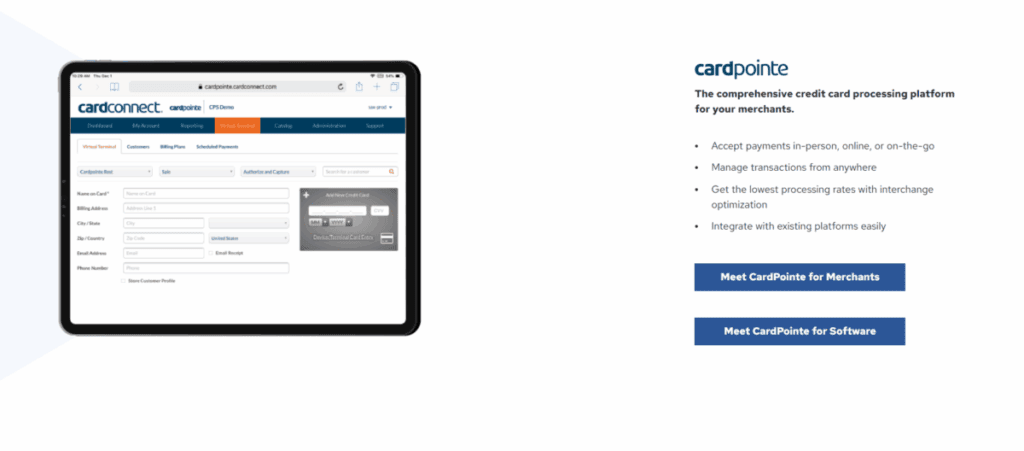
The CardPointe platform is one of CardConnect’s standout offerings. It is a cloud-based payment solution designed to give businesses a centralized location to manage all aspects of their payment processing. Merchants can use it to view real-time transaction activity, generate detailed reporting, and monitor account settlements.

One of the platform’s most useful features is the virtual terminal, which allows businesses to accept card-not-present payments directly through a secure online interface. This is ideal for remote billing, invoicing, and phone orders. Additionally, the CardPointe mobile app enables on-the-go transaction management, making it a strong option for businesses operating outside a traditional storefront.

The platform places a strong emphasis on security, providing built-in tokenization and point-to-point encryption capabilities that safeguard sensitive payment data. These features help businesses remain PCI compliant without needing to handle cardholder data directly.

Another strength of CardPointe is its intuitive user interface. Even businesses without dedicated IT teams often find it relatively easy to navigate. It offers a customizable reporting dashboard, which makes it easier for merchants to track performance and monitor key metrics over time.

While CardPointe offers a wide range of features, businesses that need complex, large-scale reporting or specialized integrations may still require additional support or customization. However, for many small to medium-sized businesses, it covers most operational needs effectively.

Security and Compliance

Security is one of the areas where CardConnect distinguishes itself from many other payment processors. Its solutions are built with data protection in mind, combining point-to-point encryption (P2PE), tokenization, and full PCI compliance support.

Point-to-point encryption ensures that cardholder data is immediately encrypted at the point of entry and remains encrypted until it reaches CardConnect’s secure environment. This significantly reduces the chances of data interception during a transaction.

Tokenization is another important security feature offered. Rather than storing actual card numbers, CardConnect replaces them with unique tokens, minimizing the risk of data breaches. This process not only protects customers but also helps businesses reduce their PCI scope, simplifying compliance efforts.

It also assists merchants in maintaining PCI DSS (Payment Card Industry Data Security Standard) compliance. The company provides tools, resources, and support to help businesses complete their annual PCI assessments, a crucial step for avoiding costly non-compliance penalties.

Moreover, CardConnect’s security features extend to its ERP and eCommerce integrations, meaning businesses can maintain high levels of data protection across multiple platforms.

While CardConnect’s security features are robust, some small businesses may find the PCI compliance process complex initially. However, the added security benefits are well worth the learning curve.
CardConnect Review

Integration and Compatibility

CardConnect shines when it comes to integration and compatibility with various business systems. One of its biggest advantages is its ability to integrate seamlessly with major ERP systems like SAP, Oracle, and Microsoft Dynamics. These integrations allow enterprises to embed payment processing directly within their core business operations, saving time and reducing errors.

In the eCommerce space, CardConnect offers plugins for popular platforms like Magento, WooCommerce, and Shopify. These plugins help merchants quickly add secure checkout capabilities without the need for complex development work.

For businesses needing custom solutions, it provides robust APIs. Developers can access detailed documentation and sandbox environments to build integrations that meet unique business needs.

Another useful aspect of CardConnect’s ecosystem is its compatibility with Clover POS systems. Clover offers a wide range of hardware options, from simple mobile card readers to full-scale countertop terminals, providing merchants with flexible choices.

Despite the strong integration capabilities, it’s important to note that setup and implementation can sometimes require technical support, especially for more complex ERP integrations. CardConnect offers onboarding assistance, but businesses should plan for a potential ramp-up period to ensure a smooth transition.

Overall, it is a strong choice for businesses seeking flexible, future-proof payment integrations across both online and offline environments.

Customer Support and Service

Customer support is a crucial factor in evaluating any payment processor, and CardConnect’s track record here is mixed. The company provides multiple support channels, including phone, email, and live chat. For urgent issues, merchants can contact support 24/7, which is an important consideration for businesses that operate beyond regular hours.

CardConnect also offers a self-service portal with FAQs, documentation, and troubleshooting guides. This can help businesses quickly resolve minor issues without needing to wait for human assistance.

That said, some users report challenges with customer service, particularly around billing disputes, early termination fees, or delays in response time. Experiences vary significantly based on the account manager assigned and the complexity of the support issue.

Businesses that require personalized onboarding or ERP integration assistance typically receive better support, but smaller merchants sometimes feel that their issues are not prioritized. This inconsistency is not unique to CardConnect but is worth noting, particularly for smaller businesses that may not have in-house technical expertise.

In general, businesses that work closely with a dedicated account manager tend to have better experiences. Setting clear expectations during the setup phase and establishing a direct line of communication with a CardConnect representative can help ensure smoother interactions.

Pros and Cons of Using CardConnect

Every payment solution has strengths and weaknesses, and CardConnect is no exception. Among its notable advantages is its strong focus on security, offering tokenization and point-to-point encryption as standard features. Its integration capabilities, particularly with major ERP systems and popular eCommerce platforms, are another significant plus.

CardConnect’s CardPointe platform is user-friendly and packed with useful features for transaction management, reporting, and mobile access. Larger businesses, in particular, can benefit from the platform’s flexibility and scalability.

On the downside, pricing transparency could be improved. Without clear public pricing information, prospective customers must request quotes and be prepared to negotiate fees carefully. Additionally, customer service experiences are inconsistent, with some businesses reporting challenges getting timely support for complex issues.

Equipment costs, especially related to Clover POS leases, can also add up if not carefully managed. Merchants should review contract terms thoroughly before committing.

In conclusion, CardConnect is a powerful, feature-rich solution ideal for businesses that prioritize security and need strong integration capabilities. However, it may require a closer review of pricing and support conditions before signing a contract.

Ideal Businesses for CardConnect

CardConnect’s broad range of features makes it suitable for a variety of businesses, but it particularly shines for mid-sized to large enterprises that require secure transactions, detailed reporting, and integration with back-end systems like SAP or Oracle.

Industries that benefit the most include healthcare, education, retail, and B2B services, where security and compliance are crucial. Healthcare businesses, for instance, need to meet stringent data protection standards, and CardConnect’s tokenization features can simplify this requirement.

eCommerce businesses can also benefit from CardConnect’s secure gateway integrations and mobile processing capabilities. Companies that sell across multiple channels — online, mobile, and in-person — will find the flexibility of CardConnect’s tools particularly valuable.

However, very small businesses and startups with minimal transaction volumes might find CardConnect’s fee structure less competitive compared to simpler, flat-rate processors like Square or PayPal.

Ultimately, it is best suited for growing businesses that can take full advantage of its security features, customization options, and system integrations to scale efficiently.

Final Verdict: Is CardConnect Worth It?

CardConnect offers a strong, secure, and flexible payment processing solution for businesses that need more than just basic transaction support. Its CardPointe platform, security protocols, and integration capabilities stand out in a crowded market, making it an attractive option for businesses seeking long-term, scalable solutions.

However, the lack of transparent pricing, the possibility of miscellaneous fees, and the variability of customer support experiences mean that businesses should conduct careful due diligence before committing. Businesses willing to invest time in understanding their contract terms and leveraging CardConnect’s strengths will likely find it a worthwhile partner.

In summary, it is a good fit for mid-sized to large businesses prioritizing security, ERP integration, and scalable solutions, while smaller merchants might find other processors more immediately accessible and cost-effective.
CardConnect Review

FAQs

1. Is CardConnect suitable for small businesses?

While CardConnect offers robust features, it may be better suited for mid-sized and large businesses. Small businesses might find more value in processors with simpler, flat-rate pricing models unless they need advanced security and integration capabilities.

2. How does CardConnect ensure secure transactions?

CardConnect uses tokenization, point-to-point encryption (P2PE), and PCI DSS compliance measures to protect sensitive payment data during and after transactions, reducing the risk of breaches and simplifying compliance requirements for merchants.

3. What is the CardPointe mobile app, and how can it help merchants?

The CardPointe mobile app enables businesses to monitor transactions, process payments, and manage account activities on the go. It is particularly useful for merchants who need flexible, real-time access to their payment data outside of a traditional office or storefront environment.


Braintree Review

Braintree Review

Braintree is a full-stack payment platform that helps businesses accept, process, and split payments in mobile apps and on websites. Acquired by PayPal in 2013, it operates as an independent service provider, giving merchants access to a wide array of payment methods along with the added credibility and backing of a major fintech brand. Known for its developer-friendly approach and flexible APIs, Braintree is often positioned as a more customizable alternative to plug-and-play services like Square or Stripe. Lets read more about Braintree Review.

What sets Braintree apart is its holistic approach to payments. It combines a payment gateway and a processor, meaning merchants don’t need to find and connect two separate services to handle transactions. Businesses also benefit from native support for PayPal, Venmo (U.S. only), credit/debit cards, and digital wallets, making Braintree particularly appealing for those who operate in omnichannel or global environments.

That said, Braintree isn’t necessarily ideal for every merchant. While it offers rich functionality and customization potential, these same features can result in a steeper learning curve—especially for smaller businesses or those without developer support. The setup process, while streamlined for many, may still require technical input.

Overall, Braintree is best suited for mid-size to enterprise-level businesses, SaaS companies, subscription-based models, and developers seeking deeper control over the checkout experience. With robust capabilities and a trusted brand behind it, Braintree holds its ground as a reliable and scalable payment solution.

Core Features and Services | Braintree Review

Braintree offers a comprehensive suite of tools that cater to modern businesses operating in both online and mobile spaces. At its core, the platform provides payment gateway and payment processor services, eliminating the need for separate providers. This makes it simpler for businesses to manage transactions in one unified system.

One of its standout features is the support for recurring billing. Braintree’s subscription management tools are ideal for SaaS companies or businesses offering monthly plans. Merchants can create and manage plans, handle upgrades or downgrades, and automate billing cycles with minimal effort.

Additionally, Braintree supports advanced features such as split payments for marketplaces, seamless checkout experiences with hosted fields, and tokenization for secure storage of customer payment methods. The platform also includes risk mitigation tools, customizable fraud filters, and support for Level 2 and Level 3 transaction data for B2B merchants.

Its mobile optimization is another key highlight. With SDKs for Android and iOS, Braintree allows merchants to embed secure payment functionality directly into their mobile apps. This enables smoother, faster checkouts and can help reduce cart abandonment.

That said, some features like marketplace capabilities or advanced fraud tools may require more technical configuration than other platforms. Businesses with limited technical expertise may need developer assistance or prefer a more user-friendly solution.

In short, Braintree’s features are robust, making it a great choice for businesses looking to grow or scale globally. However, the depth of features may be more than what a small startup needs right out of the gate.

Braintree Review

Supported Payment Methods

Braintree supports a wide variety of payment methods that help merchants meet the expectations of modern customers. These include standard credit and debit cards, PayPal, Venmo (for U.S. users), Apple Pay, Google Pay, and even local payment options in select countries. This variety allows businesses to cater to different customer preferences and geographies with ease.

One of the strongest benefits of using Braintree is its seamless integration with PayPal, giving merchants immediate access to millions of PayPal and Venmo users. For businesses with a U.S. customer base, Venmo is especially valuable for appealing to a younger demographic accustomed to mobile payments.

Digital wallets like Apple Pay and Google Pay are supported across devices, making Braintree a flexible choice for both desktop and mobile checkout flows. The platform also supports ACH Direct Debit for U.S.-based businesses, which can reduce transaction costs for high-ticket purchases or subscription models.

Braintree’s multi-currency support is particularly helpful for global merchants. It enables businesses to accept payments in over 130 currencies, with automatic currency conversion available. This makes it easier for international customers to pay in their local currency, enhancing the user experience.

However, while Braintree offers wide payment support, some methods like UnionPay or cryptocurrency are not natively integrated. Businesses operating in regions where these methods are more common may need third-party add-ons or choose a processor with broader regional options.

Overall, Braintree covers the vast majority of mainstream payment methods and is particularly strong for companies that want a global, mobile-friendly, and wallet-compatible solution.

Developer Experience and API Tools

Braintree is highly regarded among developers for its clean, well-documented API and SDK offerings. Its RESTful API is designed to be intuitive and flexible, allowing developers to build highly customized payment experiences for web and mobile platforms.

One of the major strengths is Braintree’s sandbox environment, which lets developers simulate various transaction types and test integrations before going live. This is especially helpful for businesses with complex workflows or compliance requirements.

Braintree provides SDKs for major languages and platforms including JavaScript, Python, Ruby, PHP, Java, .NET, iOS, and Android. These libraries are actively maintained and come with clear documentation and example use cases, making it easy for teams to get started quickly.

The platform also offers hosted fields—secure, PCI-compliant input fields that can be styled to match the website’s design while keeping sensitive data off your servers. This strikes a balance between design flexibility and security.

However, Braintree’s developer-centric approach can be a double-edged sword. While it offers great control and customization, it may overwhelm non-technical users or businesses without dedicated engineering resources. Some integrations might take more time compared to out-of-the-box solutions like Stripe Checkout.

Still, for teams that value control and want to deeply integrate payments into their apps or platforms, Braintree is one of the best tools available. It’s especially suitable for developers who need robust, customizable infrastructure and appreciate well-supported documentation.

Braintree Review

Pricing and Fee Structure

Braintree offers a transparent pricing model with competitive rates, especially when considering its range of features and services. For standard transactions, Braintree charges 2.59% + $0.49 per transaction for U.S.-based credit and debit card payments. PayPal and Venmo transactions are also subject to similar fees.

International transactions incur an additional 1% fee, and currency conversion adds another 1%. While these rates are typical for the industry, they can add up for businesses with a global customer base.

ACH Direct Debit transactions are charged at 0.75% per transaction, with a cap of $5. This makes it a cost-effective choice for businesses handling high-value or recurring payments. There are no monthly fees, setup charges, or minimum processing requirements, which is a plus for growing businesses.

However, merchants should be aware of potential chargeback fees (typically $15 per instance) and the fact that advanced fraud protection and reporting tools may come at an additional cost.

Braintree’s pricing is competitive for mid-sized and enterprise businesses but might not offer the lowest rates for micro-merchants or small startups. Unlike some processors, it doesn’t offer flat-rate subscription models, which some small businesses may find easier to budget for.

In summary, Braintree’s pricing is fair and transparent, though businesses must read the fine print and assess whether the added value from advanced tools justifies the overall cost for their specific use case.

Security and Compliance

Braintree places a strong emphasis on security and regulatory compliance, which is critical in today’s digital payment landscape. The platform is PCI DSS Level 1 certified, the highest standard for payment security, and provides built-in tools to help merchants remain compliant without storing sensitive cardholder data themselves.

Tokenization is used to replace actual card details with a unique identifier (token) that can be stored and reused securely for future transactions. This significantly reduces the risk of fraud and data breaches.

Braintree also supports 3D Secure 2.0, Address Verification System (AVS), and Card Verification Value (CVV) checks. These measures help reduce fraudulent transactions and ensure the legitimacy of payments. For merchants seeking even more protection, advanced fraud protection features (powered by Kount) can be added at an additional cost.

Data transmitted through Braintree is encrypted using strong TLS protocols, and the platform offers secure vaulting of payment information to limit the need for businesses to manage sensitive data directly.

Compliance with GDPR, PSD2, and other international data protection laws is also addressed through Braintree’s global infrastructure and policies, making it a suitable choice for international businesses.

However, businesses should still be proactive about their own compliance practices, especially if integrating Braintree into custom platforms. While Braintree covers a significant portion of security needs, ultimate responsibility still lies with the merchant.

Merchant Onboarding and User Experience

Braintree offers a reasonably straightforward onboarding process, though the timeline and requirements can vary based on business type, region, and volume. Most businesses can begin the signup process online, and account approval typically takes a few business days after documentation is reviewed.

Once approved, the merchant dashboard provides an intuitive interface for managing payments, monitoring transactions, issuing refunds, and generating reports. The UI is clean and functional, though some users find it less modern than competing platforms like Stripe.

The onboarding process does include some underwriting steps, which may involve providing business registration documents, bank information, and proof of identity. This is standard for full-service processors and contributes to reduced fraud and regulatory risk.

Braintree’s support is available via email and phone, though some merchants report delays in response times. Priority support is available for larger clients or those using premium services, but small businesses may not always receive quick help during peak times.

Documentation and help resources are strong, with an extensive knowledge base and community support available through GitHub and Stack Overflow. However, compared to PayPal’s mainline services, Braintree’s customer service is slightly more technical in nature.

In all, the merchant experience with Braintree is solid and scalable. It works well for businesses that are prepared for a professional onboarding process and want detailed control over their payment infrastructure.

Integration with E-commerce Platforms and CRMs

Braintree integrates seamlessly with many popular e-commerce platforms, making it a flexible choice for online merchants. Supported platforms include Shopify, WooCommerce, BigCommerce, Magento, Salesforce Commerce Cloud, and more. These integrations are generally straightforward and allow merchants to begin accepting payments with minimal friction.

For businesses using custom-built websites, Braintree’s SDKs and APIs make integration relatively easy, especially with hosted fields or drop-in UI options that handle the heavy lifting for payment form security and design.

CRM and ERP compatibility is another strength. Braintree can integrate with platforms like Salesforce, NetSuite, and HubSpot through third-party connectors or APIs. This allows for streamlined workflows across sales, inventory, and finance teams.

For subscription billing, Braintree’s recurring billing features work well with platforms like Recurly and Chargify, providing enhanced flexibility for SaaS companies or membership-based businesses.

However, some integrations may require additional development work or reliance on third-party plugins. While many integrations are plug-and-play, businesses with custom requirements may need developer support to ensure smooth functionality.

Overall, Braintree’s integration capabilities are extensive and well-suited to modern commerce environments, especially for businesses already using mainstream e-commerce or CRM platforms and looking to scale seamlessly.

Global Reach and Scalability

Braintree offers a strong global infrastructure, making it a viable choice for businesses looking to expand across borders. It operates in over 45 countries and supports payments in more than 130 currencies, which helps merchants provide localized shopping experiences without needing separate payment processors for each region.

Its global features extend to settlement capabilities in multiple currencies and localized payment options, such as SEPA Direct Debit and local wallets in certain regions. This global flexibility makes Braintree particularly attractive to e-commerce stores, marketplaces, and SaaS companies targeting international users.

In terms of scalability, Braintree is built for growth. Its architecture supports high-volume transactions and enterprise-level customization, with robust reporting and analytics tools that can scale with the business. Businesses also benefit from Braintree’s affiliation with PayPal, which brings added reliability and network stability.

However, not all features are available in every region, and some businesses outside the U.S. may face stricter onboarding requirements. Additionally, local tax handling, payout methods, or payment regulations may require integration with regional service providers.

Still, for most international use cases—especially in North America and Europe—Braintree delivers the flexibility and performance needed to support multi-region expansion and large-scale operations.

Pros and Cons of Using Braintree

Pros:

Comprehensive payment platform: Includes gateway and processor in one solution

Developer-friendly: Well-documented APIs and SDKs

Wide payment support: Cards, PayPal, Venmo, wallets, ACH, etc.

Global capabilities: Multi-currency and regional payments

Recurring billing and advanced fraud tools

Cons:

Technical learning curve: Not ideal for non-developers

Customer support can be slow for smaller merchants

Limited native support for some regional or niche payment types

More setup time compared to plug-and-play processors

No flat-rate or low-volume pricing tiers

In conclusion, Braintree is a highly capable and flexible platform best suited to growing or enterprise-level businesses, particularly those needing advanced features and international scalability. It may not be the fastest or simplest solution for beginners but excels in long-term performance and customization.

Braintree Review

FAQs

Q1: Can I use Braintree without a PayPal account?

Yes. While Braintree is a PayPal-owned service, you can use it independently for credit cards and other payment methods without requiring a PayPal account.

Q2: How long does it take to receive payouts with Braintree?

Payouts typically take 2–3 business days to reach your bank account after a transaction is processed. Timing may vary based on country and bank.

Q3: Is Braintree suitable for small businesses?

It can be, but smaller businesses may find simpler platforms easier to set up. Braintree’s strength lies in flexibility, scale, and developer tools, which may be more than some small operations need.

Boku Review

Boku Review

In an increasingly mobile-first world, the way people pay for goods and services has dramatically shifted. Boku is one of the pioneers in that shift, offering a payment platform that allows users to charge purchases directly to their mobile phone bill or prepaid balance. Founded in 2009 and headquartered in San Francisco, Boku operates globally and partners with mobile network operators (MNOs) to simplify digital payments, especially in regions where credit card use is low or banking access is limited. Lets read more about Boku Review.

At its core, Boku helps bridge the digital payment gap, especially for users who may not have traditional financial tools. The company became particularly well-known in industries like gaming, app stores, and digital subscriptions, where ease and speed of transaction are crucial. With its “pay by mobile” approach, it eliminates the need for a credit card or bank account, making transactions as simple as confirming a mobile prompt.

Boku has grown steadily through strategic acquisitions, such as its 2020 purchase of Fortumo, another mobile payment company, which expanded its market reach and product capabilities. In addition to carrier billing, it also supports mobile wallets, making it a broader mobile payment ecosystem player.

That said, while Boku offers convenience, it’s not necessarily the perfect fit for every business. The platform shines where microtransactions and fast user approvals are key, but there are nuances around transaction fees, integration, and regional availability that are worth exploring in the sections ahead.

How Boku Works | Boku Review

Boku’s technology simplifies the checkout process by enabling consumers to make purchases using their mobile number. Instead of entering credit card or bank details, users approve a transaction via SMS, app-based prompts, or other telecom-approved methods. This charge then appears either on their monthly mobile bill or is deducted from their prepaid mobile balance.

The process begins when a user selects “Pay by Mobile” at checkout. It identifies the user’s carrier and routes the transaction through its infrastructure, ensuring authentication via carrier-based validation. This can be either one-click, PIN, or OTP (one-time password) based. Once approved, the payment is instantly processed, making it ideal for mobile-first and digital purchases.

On the backend, it acts as a bridge between merchants and telecom carriers. It aggregates carrier connections so that merchants don’t have to negotiate with each one individually. This makes integration significantly more manageable for businesses that operate globally or across multiple regions.

For merchants, this means lower friction during checkout and potentially higher conversion rates, especially in markets with lower credit card penetration. For users, it’s a seamless way to pay, especially if they don’t have access to a bank account or credit line.

However, the system is not without limitations. Purchase amounts are often capped due to carrier restrictions, which may limit Boku’s usefulness for high-ticket items. Moreover, chargebacks or refunds can be complex since transactions are routed through telecom infrastructure rather than traditional banking channels.

Boku Review

Global Coverage and Market Reach

One of Boku’s strongest advantages lies in its global reach. The company operates in over 90 countries and partners with more than 200 mobile network operators. This expansive coverage makes it a go-to solution for digital merchants aiming to tap into emerging markets where smartphone usage is high, but traditional banking access is limited.

Boku’s model fits especially well in Asia, Latin America, Africa, and parts of Eastern Europe, regions where large segments of the population are unbanked but heavily reliant on mobile phones. By enabling mobile payments, it provides a way for users in these markets to engage with global digital ecosystems, whether it’s purchasing in-game currency, streaming subscriptions, or digital services.

In recent years, it has expanded beyond carrier billing to include mobile wallet integration. Countries with popular wallets like GoPay (Indonesia), GCash (Philippines), and M-Pesa (Africa) are now part of Boku’s network, enabling even broader consumer access and merchant appeal.

For merchants looking to expand globally, this coverage allows them to operate in markets that would otherwise be difficult to access due to fragmented payment systems. Instead of developing localized payment infrastructure for each country, they can leverage Boku’s consolidated network.

Still, it’s important to recognize that despite this reach, performance and availability may vary by region and telecom partner. Not all carriers support the same features, and not all services are live in every country. That makes it important for businesses to evaluate Boku’s regional performance before full-scale implementation.

Key Features and Technology

Boku is more than just a basic carrier billing platform. Its features have evolved over time to support various use cases and industries, offering flexibility and security for merchants and consumers alike.

Direct Carrier Billing (DCB) remains the platform’s flagship feature. It allows consumers to charge payments directly to their mobile bills without needing a credit card. DCB is widely used for digital goods, especially in app stores, gaming platforms, and online entertainment.

Another growing area for Boku is mobile wallet support. Through integrations with popular wallets worldwide, it enables payments via stored digital funds, making it more versatile than carrier billing alone. This is critical in markets where mobile wallets are more widely used than cards or bank transfers.

Additionally, Boku offers identity verification services. This helps merchants meet regulatory requirements and reduce fraud by confirming the identity of users via telecom records. This feature is especially relevant for financial services, online gambling, and adult content platforms.

Subscription-based businesses also benefit from Boku’s subscription management tools. These allow for recurring billing through carrier networks or wallets, ensuring a smooth renewal process and better user retention.

Technologically, Boku emphasizes low-latency APIs, robust documentation, and integration support for popular commerce platforms. However, it still relies on the technical cooperation of telecom providers, which means some features may not function uniformly across all carriers and countries.

Integration and Developer Support

One of the deciding factors in choosing a payment provider is how easy it is to integrate and maintain the service. Boku has taken notable steps to make this process as seamless as possible for developers and merchants.

Boku provides access to well-documented APIs and SDKs that cover a wide range of implementation needs. These include transaction handling, user authentication, error codes, and webhook management. The documentation is geared toward both small businesses with basic coding knowledge and enterprise developers who need advanced customization.

The platform also supports popular commerce environments, including mobile apps, desktop web platforms, and even connected devices. Its plug-and-play modules and integration partners help businesses get started without needing a dedicated dev team for extensive custom coding.

Moreover, Boku’s merchant dashboard offers real-time insights, transaction history, customer data, and payment reconciliation tools. This interface gives businesses better visibility and control over their payment flow, even across multiple regions and carriers.

However, as with most carrier billing platforms, integration complexity can vary by region. Some mobile network operators may have different protocols or latency issues that developers need to account for. And while Boku provides support, businesses may still face delays or require technical assistance when working with lesser-known telecom providers.

Overall, it provides robust tools and support, but businesses should still allocate time for thorough testing and QA during deployment, especially for cross-border rollouts.

Security and Compliance Standards

Security is a major concern in the world of digital payments, and Boku takes this aspect seriously. The company complies with GDPR (General Data Protection Regulation), PSD2 (Revised Payment Services Directive), and other global data privacy standards, ensuring that both user and transaction data are securely handled.

For authentication, Boku uses multi-layered verification mechanisms, including SMS codes, PINs, and mobile carrier identity validation. These methods help reduce fraudulent activity, especially in markets with high digital fraud risks.

Additionally, Boku has invested in fraud detection systems and real-time risk scoring to flag suspicious behavior during transactions. These checks happen behind the scenes and don’t interfere with the user experience but provide merchants with a safety net against chargebacks and account takeovers.

Since Boku operates through mobile network operators, it benefits from the built-in security infrastructure of telecom providers. User data and billing credentials are not shared with merchants, reducing the chances of data breaches on merchant platforms.

That said, carrier billing systems are not entirely immune to threats. There have been instances in the industry where users faced unexpected charges due to misleading subscriptions or third-party fraud. Boku mitigates this risk through transparent opt-in processes and strict adherence to mobile carrier guidelines.

Ultimately, while no payment system is 100% immune to threats, it maintains high standards of security and compliance that are in line with industry expectations.

Boku Review

Boku Pricing and Transaction Fees

One of the more complex aspects of Boku’s offering is its pricing model. While it does not publicly disclose flat-rate fees on its website, businesses generally pay a percentage of each transaction, which can vary significantly depending on the market, carrier, and volume.

Compared to credit card processors, Boku’s fees can appear higher, ranging from 5% to even 15% or more in some markets. This is primarily because Boku shares revenue with telecom operators, who take a sizable cut. As a result, it is generally not suited for high-margin, low-cost items unless the speed and reach justify the cost.

There are also setup costs and monthly fees for enterprise clients, depending on the features used, such as wallet integrations, fraud tools, or subscription management services. These fees are typically negotiated on a case-by-case basis.

While this pricing may seem steep, it reflects the value of accessing unbanked users and new geographies without the overhead of local payment integrations. For businesses targeting digital goods, small transactions, or subscription models, the trade-off can make sense.

However, businesses dealing with physical goods, low margins, or price-sensitive segments may find Boku’s costs harder to justify. It’s crucial to perform a cost-benefit analysis based on your average order value, refund rates, and user conversion before committing.

User and Merchant Experience

From a user experience perspective, Boku excels in simplicity. The ability to make a purchase with just a phone number and a simple confirmation prompt is incredibly convenient—especially for users who aren’t comfortable entering card details or don’t have bank accounts.

There’s no need for app downloads, extra logins, or registration hurdles. This frictionless experience can significantly boost conversion rates for merchants, particularly in mobile-heavy verticals like gaming, entertainment, and social media.

From the merchant side, the experience is mostly positive as well. Boku provides a comprehensive dashboard, support tools, and access to real-time reporting. The platform handles the complexity of telecom integrations in the background, allowing businesses to focus on growth and sales.

However, support response times and refund processing are two areas where feedback has been mixed. Since Boku operates through third-party carriers, refund timelines can be slower than with credit card processors. Additionally, resolving technical issues or disputes may require coordination with telecom partners, which can delay merchant response.

Some users have also reported issues with unexpected charges, although these tend to be related to service opt-ins rather than billing glitches. Boku has implemented stricter opt-in flows to prevent such issues, but transparency is always a concern in mobile billing.

Overall, it offers a strong experience when implemented correctly, but merchants must remain proactive in monitoring user feedback and compliance.

Boku vs. Other Mobile Payment Platforms

When compared to other mobile payment solutions like Fortumo, Centili, or Payvia, Boku distinguishes itself with its global scale and growing ecosystem that includes both carrier billing and mobile wallets.

Fortumo (now part of Boku) was once its main competitor in the carrier billing space, but the acquisition helped Boku consolidate market share and expand carrier partnerships. Centili offers similar solutions but lacks the same global footprint or breadth of wallet support.

Meanwhile, digital wallets like PayPal, Google Pay, or Apple Pay cater more to banked users and require account setup. These services offer better fee transparency and richer features but are limited in unbanked markets.

Boku stands out where traditional infrastructure falls short. It’s particularly strong in regions where internet access is mobile-first, and users prefer to transact via telecom services rather than banks or apps.

However, Boku falls behind in terms of transaction speed, refund handling, and feature richness compared to card processors or mature wallet providers. Businesses that require detailed customer analytics, instant refunds, or advanced loyalty features may find these missing in Boku’s current offering.

Ultimately, choosing Boku over alternatives depends on your business model and target market. If your goal is to reach underserved mobile-first users and maximize ease of payment, it holds strong appeal.

Boku Review

Final Verdict: Is Boku the Right Choice for You?

Boku is a highly specialized payment solution that plays a unique role in the global payments ecosystem. Its value lies in accessibility, simplicity, and reach, especially in regions where credit card use is low and mobile phone penetration is high.

For businesses focused on digital content, gaming, entertainment, or app-based subscriptions, Boku can offer real advantages. It reduces friction at checkout, expands market access, and allows consumers to pay using methods already familiar to them.

However, it may not be the ideal fit for every business. Its higher transaction fees, regional performance variability, and less robust analytics make it less attractive for businesses operating in low-margin environments or looking for advanced payment features.

Merchants should carefully evaluate their average order value, target audience, and geographical footprint before adopting Boku. While it can unlock access to new users and drive mobile conversions, it may require operational adjustments and technical coordination with telecoms.

In summary, Boku delivers on its promise of mobile-first simplicity. It’s best suited for businesses that prioritize reach and accessibility over detailed control and margin efficiency.

FAQs

Q1. Is Boku safe for online payments?

Yes. Boku uses telecom-level security and complies with global regulations like GDPR and PSD2. Transactions are verified using mobile authentication, making it a secure alternative for digital payments.

Q2. Can Boku handle recurring billing?

Yes. Boku supports subscription billing for both carrier payments and mobile wallets. This is particularly useful for services like streaming, games, and digital memberships.

Q3. How can a business start accepting payments through Boku?

Businesses can contact Boku directly via its website to request integration. Boku provides APIs, developer tools, and onboarding support. Approval from telecom carriers may be needed based on the region.

Alipay Review

Alipay Review

Alipay, launched in 2004 by Alibaba Group, has evolved from a simple payment platform into one of the world’s most powerful mobile and online financial ecosystems. It was initially created to support transactions on Alibaba’s Taobao marketplace, offering escrow services to boost buyer confidence. Over time, Alipay became an independent entity under Ant Financial (now Ant Group), the financial arm of Alibaba. Lets read more about Alipay Review.

Alipay’s scale and integration in daily life, particularly in China, are unparalleled when compared to other digital wallets like PayPal, Apple Pay, or WeChat Pay. With more than a billion users worldwide, it has established itself as a standard payment method for both online and offline transactions, including retail purchases, utility bill payments, travel, and even medical care.

Its success is rooted in China’s rapid digital transformation and the government’s push toward cashless payments. Alipay capitalized on this momentum by offering not just payments but also services like wealth management, credit scoring (Zhima Credit), and insurance; turning it into a super app.

While Alipay started as a domestic solution, the company has made substantial efforts to go global, especially by targeting Chinese tourists and expanding merchant acceptance in foreign markets. Through strategic partnerships and its Alipay+ initiative, the platform now aims to become a bridge between Chinese consumers and international businesses.

Despite its success, Alipay faces challenges such as regulatory scrutiny, global competition, and privacy concerns. Yet, its innovation, scale, and convenience continue to make it a major player in the digital payments space.

How Alipay Works | Alipay Review

Alipay is a mobile-first digital wallet that allows users to link their bank accounts, credit cards, or top up balances to make secure transactions. The platform supports both online and offline payments, enabling purchases at physical stores via QR codes, as well as seamless payments for online shopping, utilities, and more.

First, users download the Alipay app and enter their phone number to register. Users can start transacting once their identities have been verified and linked to a bank account. Usually, customers pay by scanning a merchant’s QR code or by presenting their own code to be scanned. This simple method has gained popularity in China and other countries.

On the backend, Alipay functions as a real-time settlement system. When a transaction occurs, the funds are deducted from the user’s linked account or wallet balance and deposited into the merchant’s account within seconds. Alipay also provides escrow services for certain online transactions, holding payments until the buyer confirms satisfaction with the goods.

The app also supports peer-to-peer transfers, bill splitting, and recurring payments. For international use, Alipay integrates foreign currency conversion automatically, allowing users to pay in local currency without carrying cash or using international credit cards.

The experience is designed to be fast, low-friction, and secure. With features like biometric login, facial recognition, and transaction alerts, Alipay prioritizes both usability and safety. While some features are region-specific or tailored to Chinese regulations, the core functionalities are accessible to a growing number of users worldwide.

Alipay Review

Alipay for Consumers

Alipay offers an all-in-one digital experience for consumers. Beyond just handling payments, it serves as a gateway to daily life management, from hailing taxis to booking medical appointments. This “super app” status makes it more than just a wallet; it’s an ecosystem.

One of the key benefits for consumers is convenience. With Alipay, users can buy movie tickets, pay bills, order food, send money, and even invest in financial products; all within a single platform. For users in China, Alipay is deeply embedded in their routines, often eliminating the need for cash or even physical cards.

Users can pin their most-used services on the app’s customizable dashboard, which adds to its user-friendly design. Integrated rewards programs that include cashback offers based on spending patterns, loyalty points, and discount coupons are advantageous to regular customers.

Alipay offers transaction transparency as well. Instant spending alerts and a thorough monthly summary are sent to users. Better financial management is possible with the help of budgeting tools, spending caps, and parental controls.

For international users, Alipay has become a travel companion. Many stores, especially in tourist hotspots, accept Alipay through partnerships with global payment gateways. This allows travelers to pay in Chinese yuan while the merchant receives payment in local currency.

That said, consumers outside China may find the app less useful unless in supported regions or traveling to Asia. Language barriers and limited merchant acceptance can also be issues. However, with the Alipay+ rollout, global accessibility is steadily improving.

Alipay for Merchants

Alipay presents a powerful proposition for merchants, especially those aiming to attract Chinese customers or embrace mobile-first payments. With minimal infrastructure requirements, businesses can start accepting Alipay simply by displaying a QR code at checkout. This low-cost entry point makes it appealing for small vendors and large retailers alike.

For domestic merchants in China, Alipay integrates seamlessly with POS systems and offers robust tools for transaction monitoring, customer engagement, and inventory management. Outside China, the platform works with local partners and payment processors to ensure compatibility with regional payment standards.

The marketing assistance offered by Alipay is one noteworthy feature. Within the app’s ecosystem, merchants can design digital loyalty cards, discount campaigns, and even customized advertisements. This degree of integration enables companies to maintain real-time communication with their customers.

Real-time settlements in local currencies and currency conversion help cross-border merchants by lowering friction and enhancing cash flow. This is especially helpful in tourist-heavy areas where Chinese tourists favor using Alipay instead of conventional card-based payments.

However, there are limitations. Merchant support may vary by region, and some small businesses might find the onboarding process complicated due to language or regulatory issues. Additionally, integration with Alipay’s full suite of tools might require third-party assistance or API development.

Still, for businesses seeking to broaden their customer base and streamline transactions, Alipay offers a compelling blend of affordability, global reach, and consumer engagement tools.

Key Features of Alipay

Alipay distinguishes itself through a diverse set of features that extend beyond digital payments. As a “super app,” it bundles financial services, retail tools, and personal productivity features into one user-friendly interface.

The app’s core function remains mobile payments. Users can pay merchants via QR code, split bills, or transfer money to friends in seconds. It also supports recurring payments, utility bill management, and transport fare integration in many Chinese cities.

Beyond payments, Alipay includes robust financial services. Users can invest in mutual funds, purchase insurance, or access credit products like Huabei (a buy-now-pay-later service). These offerings are powered by Ant Group and designed to democratize financial access.

Security is another strength. Alipay uses advanced encryption, real-time fraud detection, and biometric authentication, including facial recognition and fingerprint scans. Users can also activate payment limits and get immediate alerts for any suspicious activity.

Gamification is further enhanced by Alipay’s loyalty program and rewards. By participating in eco-friendly initiatives like “Ant Forest,” users can earn points that can be exchanged for donations to plant trees, increasing both user engagement and social impact.

The Alipay+ initiative is progressively expanding these features to other regions, even though the majority of them are customized for the Chinese market. However, regulatory restrictions may prevent users outside of China from accessing certain advanced tools such as credit scoring or investing.

Overall, Alipay’s features make it more than a wallet; it’s a lifestyle tool designed to simplify and enrich the user’s daily experience.

Alipay Review

Global Reach and Expansion

Alipay’s global expansion has been strategic, targeting both Chinese travelers and international markets. Initially focused on domestic users, Alipay began expanding internationally by enabling cross-border payments for Chinese tourists. This move helped retailers and hospitality businesses in places like Japan, South Korea, and parts of Europe cater to this demographic without needing to overhaul their payment infrastructure.

In recent years, Alipay has gone beyond simply serving Chinese tourists. The introduction of Alipay+, a suite of global digital payment and marketing solutions, marked a significant shift. This initiative enables merchants to accept payments from multiple Asian e-wallets; including GCash, Kakao Pay, and Touch ‘n Go, via Alipay’s platform. It effectively creates a bridge between regional wallets and international merchants.

Alipay has partnered with thousands of global businesses, from luxury boutiques to airports and online platforms. It also works with local financial institutions and fintech providers to gain compliance and trust in various countries.

Its reach, however, is not without difficulties. Data privacy and regulatory compliance have been issues for Western markets, particularly the U.S. Consequently, it is difficult for Alipay to attain the same degree of market share that it has in Asia.

Its capacity to localize solutions, work with regional partners, and adjust to various market demands, however, puts it in a strong position for sustained international expansion. Alipay is expected to grow in popularity as digital payments become more prevalent globally.

Cross-Border Payments and Currency Support

Alipay excels in cross-border transactions, a key feature that appeals to both travelers and international merchants. For Chinese users abroad, Alipay allows seamless payments in local currencies by automatically converting RMB to the merchant’s local currency at real-time exchange rates. This eliminates the need for physical cash or foreign transaction cards.

For merchants, this system offers the advantage of instant settlement in their native currency, with no need to handle currency conversions manually. This greatly simplifies operations for businesses in tourist hotspots or those selling to international customers online.

Alipay also facilitates online cross-border commerce through partnerships with global e-commerce platforms and logistics providers. This makes it a preferred choice for Chinese consumers shopping internationally. Buyers benefit from transparent pricing, buyer protection policies, and an easy refund process.

Through Alipay+, Ant Group extends cross-border capabilities to other e-wallets across Asia, offering a more inclusive experience for users outside China. As a result, businesses only need to integrate with Alipay+ to accept payments from a broad range of wallets in the region.

But there are factors to take into account. Despite being generally competitive, currency exchange fees can differ based on the financial institution that is associated with Alipay. Furthermore, certain features might be restricted or delayed in areas with strict laws governing money transfers and anti-money laundering compliance.

Alipay’s cross-border payment system is essentially a strength, providing ease of use, real-time exchange, and broad merchant support; however, it must constantly adjust to the intricacies of global financial regulations.

Integration with E-Commerce and Retail

Alipay’s integration with e-commerce and retail is one of the pillars of its dominance. Initially designed to support Alibaba’s platforms—Taobao and Tmall—Alipay quickly expanded to become the preferred payment method for millions of online retailers in China.

On these platforms, Alipay handles transactions with features like escrow payments, automatic refunds, and fraud detection. Buyers’ funds are held by Alipay until the goods are delivered and approved, boosting consumer confidence. This model has since influenced many other marketplaces globally.

Beyond Alibaba, Alipay offers APIs and SDKs for third-party integration, making it easy for online retailers to embed it into their payment systems. E-commerce platforms like Shopify and WooCommerce support Alipay plugins to enable international businesses to reach Chinese customers.

Offline retail has also benefited. From convenience stores to luxury boutiques, Alipay enables merchants to integrate payment terminals or use simple QR code displays. The integration often includes value-added services like electronic receipts, membership programs, and tailored discounts based on user behavior.

Moreover, Alipay gives retailers access to marketing tools like in-app coupons, push alerts, and banner ads. These tools enable more accurate campaigns because they are powered by AI-driven targeting and user data.

Nevertheless, retailers still have to deal with language barriers, integration costs, and figuring out Chinese consumers’ preferences. Additionally, collaborations with third-party platforms or local Alipay representatives might be necessary to access the entire toolkit.

Despite these challenges, Alipay’s seamless e-commerce and retail integration makes it a top choice for businesses wanting to engage a mobile-first, digital-savvy audience.

Fees and Pricing Structure

One of the most appealing aspects of Alipay for businesses is its relatively transparent and competitive fee structure. Domestic transactions within China often incur little to no fees for users. Merchants, depending on their size and industry, typically pay a small percentage per transaction; generally between 0.5% and 1%.

For cross-border payments, the fees can be slightly higher. These may include currency conversion charges and transaction fees, which vary by country and integration method. However, Alipay tends to offer better rates compared to international credit card processors, making it an economical choice for many retailers.

Alipay’s structure is also scalable. Small vendors using basic QR codes pay minimal fees, while larger enterprises using integrated POS systems or e-commerce plugins may have negotiated terms with Alipay or its partners.

For consumers, most services such as money transfers, bill payments, and in-app purchases are free. Premium features like wealth management tools or loan services might come with service fees, but they’re usually disclosed transparently.

International merchants should carefully examine the terms of local processing partners, even though the costs are usually fair, because intermediaries may impose hidden fees. Additionally, it is advisable to negotiate or confirm terms prior to onboarding, as Alipay’s pricing is occasionally linked to volume or usage tiers.

All things considered, Alipay’s pricing strategy is reasonable and competitive. Despite not always being the most affordable choice, it offers good value given its features and dependability. Alipay is a compelling choice for companies that prioritize efficient, low-cost mobile payments.

Security and Compliance

Security is central to Alipay’s operations. The platform uses advanced encryption protocols, biometric verification, and AI-powered fraud detection systems to protect user data and transaction integrity. Users can opt for facial recognition, fingerprint ID, or device-based PINs to authorize payments, adding a layer of convenience and safety.

Risk control systems are also used by Alipay, which keep an eye out for odd activity and promptly notify users. Real-time transaction logs are available, and if any suspicious activity is found, users can use the app to freeze accounts, block cards, and set daily limits.

In terms of compliance, Alipay has taken major steps to follow regional laws in the markets it works in. While it collaborates with authorized payment processors to adhere to KYC and anti-money laundering standards in international markets, it complies with People’s Bank of China regulations in China.

That said, concerns have been raised in some Western countries about data privacy and the potential for state access to financial records, given Alipay’s Chinese origin. These concerns have led to increased scrutiny and regulatory barriers in some jurisdictions.

Nonetheless, Alipay continues to evolve its security posture, working with international standards like PCI-DSS and ISO certifications. For users and merchants alike, the platform remains one of the more secure and trustworthy options in the mobile payments space; provided they operate within the regulatory frameworks of their region.

Limitations and Challenges

While Alipay offers a wealth of features and global appeal, it’s not without limitations. One major challenge is its regional focus. Many of Alipay’s most powerful features such as its credit services, insurance products, and in-app ecosystem, are largely limited to users in China. International users may find the app functional but stripped-down compared to its domestic counterpart.

Another barrier may be language. Although some regions of Alipay have English versions, many merchant and customer interfaces are still tailored for Chinese users. For non-Chinese users or companies, this may make onboarding, integration, and usage challenging.

Regulatory scrutiny presents an additional obstacle. Alipay’s growth has been constrained in nations like the U.S. and India by concerns about data security and foreign control over financial platforms. Its capacity to directly compete with regional digital wallets is thereby limited.

For merchants, integration might require third-party assistance, especially if they want to access Alipay’s advanced features like loyalty programs or data analytics. Smaller businesses may lack the technical expertise or resources to implement these tools effectively.

Alipay’s dependence on the Chinese ecosystem also limits its flexibility. For example, users without a Chinese bank account may not be able to access certain features, such as top-ups or withdrawals.

In summary, while Alipay is a powerhouse in digital payments, its full potential is sometimes curtailed by geographic, regulatory, and technical barriers, especially outside China. Businesses and users must weigh these limitations against the platform’s strengths.

Comparison with Other Mobile Wallets

Alipay operates in a competitive digital wallet space, and comparing it with platforms like WeChat Pay, PayPal, Apple Pay, and Google Pay highlights both its strengths and drawbacks.

Compared to WeChat Pay, Alipay offers more robust financial services and business tools, while WeChat excels in social integration. Both dominate China, but Alipay has a stronger foothold in retail and cross-border transactions.

Alipay is more feature-rich and localized than PayPal in terms of daily customer activities. Because of its established reputation and wider linguistic and regulatory support, PayPal continues to be the go-to choice for international online transactions, particularly in Western nations.

With contactless NFC payments and card integration, Apple Pay and Google Pay have experienced rapid growth in markets such as the United States, the United Kingdom, and India. They usually don’t, however, offer the super-app model that Alipay does, which includes integrated wealth management, insurance, and lifestyle services.

Alipay stands out for its QR-based payment system, which works even without internet connectivity, making it more accessible in developing regions or for low-tech merchants.

On the downside, Alipay can feel limiting outside of China. Where other wallets focus on simplicity and card-based usage, Alipay’s feature-heavy approach may overwhelm or confuse users unfamiliar with the Chinese digital ecosystem.

Overall, Alipay’s greatest advantage lies in its comprehensive functionality and integration. But for users in regions where it lacks local partnerships or language support, alternatives may offer a smoother experience.

Customer Support and Dispute Resolution

Customer support plays a vital role in user satisfaction, and Alipay offers multiple channels to help users and merchants resolve issues. In-app help centers, AI-powered chatbots, and live customer service options provide assistance for problems like failed transactions, account recovery, and refund requests.

The app’s chatbot handles most basic queries efficiently. Users can also escalate to live agents, although response times may vary depending on location and issue complexity. For users in China, support is relatively fast and responsive. International users, however, may face delays or language barriers when navigating the system.

Dispute resolution within Alipay is relatively streamlined, especially for e-commerce transactions. Through its escrow system, funds are held until the buyer confirms satisfactory delivery. If a dispute arises, users can initiate a claims process with documentation. The system favors transparency and is usually resolved within a few days.

During API or POS integration, merchants can benefit from a variety of support channels, such as technical teams, developer resources, and documentation portals.

Notwithstanding these advantages, Alipay can still do better. Finding resources in English or receiving individualized assistance are frequently encountered challenges mentioned by non-Chinese users. The success of global expansion will depend on improving multilingual support and setting up localized help centers.

In summary, Alipay’s customer support is functional and offers automated efficiency, but international users may find it less comprehensive compared to more established global players like PayPal or Stripe.

Who Should Use Alipay?

Alipay caters to a wide audience but isn’t universally ideal for everyone. For Chinese consumers, especially those living in urban areas, Alipay is practically indispensable. It integrates with every aspect of life, from grocery shopping and utility bills to credit scoring and health insurance; making it the ultimate all-in-one financial tool.

Chinese tourists also gain a lot from this. They can pay easily in their local currency when traveling to countries where merchants accept Alipay, and the merchant will receive their native currency; no cards, no hassles with currency exchange.

Foreign retailers hoping to draw in Chinese customers should seriously think about taking Alipay. With additional marketing tools, Alipay provides dependable, quick, and secure payment collection for both physical stores located in popular tourist destinations and online stores that offer international shipping.

Small businesses in Asia may find Alipay+ useful, especially if they wish to accept payments from other regional wallets (like GCash or Touch ’n Go) without managing separate integrations.

However, for users and businesses outside of Asia, Alipay might feel limited. Local wallets like Apple Pay, Google Pay, or PayPal may offer better regional support, regulatory compatibility, and simpler interfaces.

Alipay Review

FAQs

1. Can non-Chinese users and businesses use Alipay?

Yes, non-Chinese users and businesses can use Alipay, particularly through Alipay+ for cross-border transactions. However, access to features may be limited outside China, and onboarding can be more complex for non-Chinese merchants.

2. What currencies does Alipay support for cross-border transactions?

Alipay supports multiple currencies through automatic conversion during cross-border transactions. Merchants receive payments in their local currency, while users pay in their home currency, making it convenient for both parties.

3. Is Alipay safe for storing money and making payments?

Yes, Alipay is considered secure. It employs encryption, real-time fraud monitoring, biometric authentication, and regulatory compliance to safeguard user data and transactions. However, users should still follow best practices like enabling two-factor authentication.