
Author Archives: Linda Mae

Moneris Solutions Review

Moneris Solutions Review

Moneris Solutions is one of the most widely recognised payment processors in Canada, serving businesses across retail, hospitality, professional services, and e-commerce. For many merchants, Moneris is often encountered early in the search for payment processing due to its long-standing banking relationships and significant domestic market share. Its visibility has made it a familiar name, particularly for businesses seeking debit and credit card acceptance within Canada. Lets read more about Moneris Solutions Review.

At its core, Moneris provides the infrastructure that allows merchants to accept payments through in-store terminals, online checkout pages, and mobile environments. Alongside transaction processing, it also offers hardware, merchant dashboards, reporting tools, and security features intended to support daily business operations. The service mix is broad, which makes Moneris relevant to both small businesses and larger organisations with more structured payment needs.

Company Background and Market Presence | Moneris Solutions Review

Moneris was formed as a joint venture between two major Canadian financial institutions, which has significantly influenced its role in the country’s payments ecosystem. From its early days, the company positioned itself as a domestic alternative to international processors, with a strong focus on supporting Canadian debit and credit networks. Over time, this emphasis helped Moneris build trust with banks, regulators, and large merchants operating nationwide.

Its market presence is strongest in Canada, where it processes a substantial share of in-store debit transactions. This dominance has made Moneris particularly appealing for brick-and-mortar businesses that rely heavily on Interac debit payments. Many merchants value the stability associated with a processor that is deeply embedded in the national banking infrastructure.

From a scale perspective, Moneris handles hundreds of thousands of merchants from almost every industry. This huge base of merchants allows the company to invest in infrastructure, systems for fraud prevention, and compliance that other, more minor processors can’t afford to maintain. However, size can also bring complexity, especially when it comes to responsiveness to customer support and standardization of contracts.

While Moneris does offer capabilities in cross-border and online payments, its identity remains closely tied to the Canadian market. For operations taking place mainly within Canada, this can be an advantage. To merchants seeking international expansion, though, it raises questions about how well Moneris would fit a global payment strategy compared to more internationally oriented providers.

Types of Businesses Moneris Serves

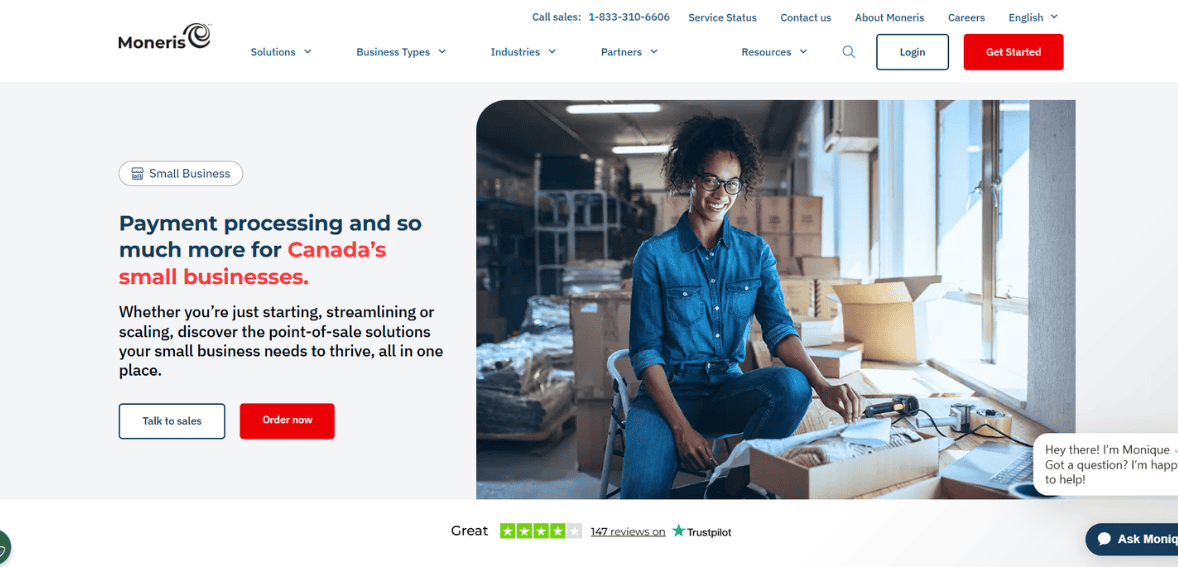
Moneris caters to a broad spectrum of businesses, ranging from sole proprietors to large enterprise organisations. Small businesses such as independent retailers, cafés, salons, and service providers often turn to Moneris for its straightforward terminal-based payment solutions. These merchants typically value reliability and ease of use over advanced customisation.

Mid-sized businesses, including restaurant chains, multi-location retail stores, and professional services firms, use Moneris for both in-store and online payments. For this segment, features like consolidated reporting, multiple terminal management, and recurring billing become more important. Moneris’ infrastructure is generally capable of supporting these operational requirements, though setup complexity can increase as business needs grow.

Moneris may serve bigger businesses or institutional merchants through customized agreements. Such businesses might require more advanced fraud checks, more elevated transaction limits, integrations with their proprietary systems, etc. Moneris possesses the required scale to cater to such requirements, particularly in a regulated sector or a high-transaction-volume scenario.

E-commerce is also one of the business types that fall within Moneris, though they differ from the first category of expectations. In this case, e-commerce business enterprises have different priorities, including flexible application programming interfaces, plugins, and international payment solutions. Though it serves the needs of e-commerce businesses, Moneris’ core competencies still seem to favor the physical POS.

Thus, it seems more appropriate for businesses that place a strong emphasis on domestic security and traditional payment infrastructure. Sellers who seek rapid scalability, a high degree of customization for digital platforms, and global reach should carefully consider whether it is suitable in the long run.

Payment Processing Services Overview

Moneris’ core offering revolves around debit and credit card payment processing. Merchants can accept major card brands along with Interac debit, which remains a critical payment method for Canadian consumers. Support for contactless transactions, mobile wallets, and tap-to-pay functionality ensures compliance with current consumer payment preferences.

For recurring revenue models, it provides options for scheduled billing and stored payment credentials. These features are useful for subscription-based businesses, professional services, and membership organisations. The functionality is generally reliable, though not as flexible as some dedicated subscription billing platforms.

Moneris also has refund processing, transaction adjustments, and dispute resolution built into its platform. These are basic operation tools, and Moneris has done an excellent job of integrating them into the business operation. When it comes to transaction processes, Moneris is among the best, particularly when it comes to downtime or the frequency of settlement timelines. Even when downtime is an issue, Moneris is rarely affected, making it ideal for businesses with thousands of transactions daily.

Nevertheless, the merchants should bear in mind that when there are extra needs, although Moneris payment gateways guarantee robust payment service, there are extra costs involved. Therefore, knowing what is included in the payment services as a standard and what is not forms an integral part of evaluating the payment service.

Moneris Solutions Review

POS Systems and Hardware

Moneris offers a range of POS hardware designed to suit different business environments. This includes countertop terminals for fixed checkout locations, wireless terminals for table-side or mobile transactions, and integrated POS solutions for more advanced setups. The hardware is generally reliable and designed for durability in high-traffic retail and hospitality environments.

Ease of use is a significant advantage of this terminal. In most cases, Moneris machines use a similar flow process, allowing employees to easily learn to use the terminal. This is great, especially for companies where employees may come and go frequently. Simple tasks such as sales, refunds, and end-of-day reports are easy to perform. Mobile payment is also available for merchants to enable mobile transaction services using mobile devices such as smartphones.

The main disadvantage of using this is the inflexibility. Merchants who need highly customised POS solutions are likely to use third-party products. The hardware of Moneris functions best when used in combination with native software. It is a reliable solution for retailers who need POS hardware. However, some retailers may need to determine whether the POS system of Moneris meets the needs of their complex operations.

E-Commerce and Online Payment Solutions

Moneris provides online payment solutions designed to support basic e-commerce operations. These include hosted checkout pages, payment gateway services, and integrations with popular e-commerce platforms. For businesses entering online sales from a physical retail background, these options offer a relatively straightforward path to digital payments.

All the major shopping carts and website builders are supported at the platform level, which can simplify development for small to mid-sized businesses. While the checkout is functional and secure, the design might lack a fresh look compared to other e-commerce payment providers. API access is available for custom integrations, which might be a bit more complex to deal with from a development perspective. Documentation is adequate, though not very flexible compared to other payment APIs that were created to target the developer as the key user.

Moneris also offers online fraud prevention tools, address verifications, and card security solutions, which are all essential for minimizing chargeback risks, especially for card-present transactions. Though Moneris’ solutions for an online business meet all the essential needs for businesses, they are mostly suitable for small and medium online businesses, while large businesses might find it somewhat wanting, especially in integrating their services into a wider global marketplace.

Pricing Structure and Fee Transparency

Pricing is one of the most important considerations for merchants, and Moneris operates on a structured but often complex fee model. Costs typically include transaction fees, monthly service charges, terminal rental or purchase fees, and additional costs for optional services. Rates may vary depending on business size, transaction volume, and negotiated agreements.

The interchange fee acts as the base price, to which Moneris levies its charge. Although such a structure is standard within the payment industry, the cost structure is quite hard to calculate for the merchant, as some claim they must go through the contract to understand the structure of the fee themselves. They charge monthly fees, even for low-volume merchants. This may be problematic for small businesses that transact small volumes, as they often do so infrequently. Additional fees may be charged for premium support, reporting, and/or online payment options.

From a transparent perspective, pricing discussions are frequently conducted during the onboarding period as opposed to upfront. Thus, such a practice hinders a seller from comparing prices while necessitating inquiries from the merchant prior to the signing of the deal. In conclusion, the price offered by Moneris is competitive for specific business establishments that operate at high volumes of transactions.

Contract Terms, Commitments, and Cancellation Policies

It typically operates on fixed-term contracts, which can include multi-year commitments. These agreements often renew automatically unless terminated within a specified notice period. For merchants unfamiliar with payment processing contracts, these terms can come as a surprise.

Early termination fees may apply if a merchant exits the contract before the agreed term ends. The cost of cancellation varies, depending on the agreement and remaining duration. Hardware rental agreements may also include separate cancellation conditions. This structure provides Moneris with predictable revenue but reduces flexibility for merchants whose business needs change. Startups and seasonal businesses, in particular, may find long-term commitments restrictive.

Onboarding documentation generally outlines contract terms, though some merchants report that key details are easier to overlook during the signup process. Reading contracts carefully and requesting clarification upfront is essential. While Moneris does offer negotiated terms for larger merchants, smaller businesses often have limited ability to modify contract conditions. For merchants prioritising flexibility, this is an important factor to consider.

Security Features and Compliance Standards

The security of the payment process is very important, and Moneris also pays serious attention to the security of the payment process. The payment platform is PCI DSS compliant and provides tools such as encryption and tokenization to secure the payment process. For example, in the case of online payment systems, Moneris provides tools such as address verification and card verification values to merchants, which provide security against fraud. Charge back management tools are also available in the payment platform.

From a legal standpoint, it should be noted that the relationship between Moneris and Canadian financial institutions fosters compliance with Canadian standards. This is particularly pertinent to businesses that operate in a regulated environment. Although the security system is adequate, some advanced fraud prevention may need to have a cost implication. It should be noted that the overall security system at Moneris is adequate and instills confidence in the company.
Moneris Solutions Review

Reporting, Analytics, and Merchant Tools

It provides merchants with access to reporting dashboards that summarise transaction data, settlement details, and sales trends. These tools are useful for daily reconciliation and high-level performance tracking. Reports can typically be exported for accounting or tax purposes, though customisation options may be limited. Businesses requiring deep analytics or advanced forecasting often rely on external software.

The interface is functional but prioritises clarity over visual sophistication. For many merchants, this is sufficient, though data-driven businesses may desire more advanced insights. Access to historical data helps merchants identify seasonal patterns and monitor growth. However, real-time analytics capabilities are relatively basic. In general, Moneris reporting tools support operational needs but are not designed to replace dedicated business intelligence platforms.

Customer Support and Service Experience

Customer support is delivered through phone, online resources, and account representatives for larger merchants. Availability is generally reliable, though response times can vary depending on issue complexity and merchant size. Self-service resources such as guides and FAQs help address common questions. However, troubleshooting more technical issues may require escalation. Smaller merchants occasionally report challenges navigating support queues, while larger clients often benefit from dedicated contacts. This disparity reflects Moneris’ enterprise-oriented structure. Support quality is typically professional, though not always personalised. Businesses that value hands-on service may want to factor this into their decision.

Ease of Integration and Third-Party Compatibility

Moneris supports integration with various accounting systems, POS software, and e-commerce platforms. These integrations reduce manual effort and improve workflow efficiency. API access enables custom development, though it may require more technical expertise compared to newer payment platforms. Integration timelines can vary depending on complexity. Compatibility is strongest within commonly used platforms but may be limited for niche software. Overall, Moneris integrations are adequate for standard use cases but may feel restrictive for highly customised environments.

Pros and Cons of Moneris Solutions

Strengths include reliability, strong debit processing, and established infrastructure. Security and compliance are also well-developed. Limitations include rigid contracts, complex pricing, and limited flexibility compared to newer processors. It excels in stability rather than innovation.

Who Should and Should Not Use Moneris Solutions

Moneris is well-suited for Canadian businesses prioritising reliability and in-store payments. Established merchants benefit most. Startups, highly digital businesses, or globally focused companies may find better alignment elsewhere.

FAQs

Is Moneris only available in Canada?

Moneris primarily serves Canadian businesses, though some cross-border capabilities exist.

Does Moneris require long-term contracts?

Most agreements involve fixed terms, though conditions vary.

Is Moneris suitable for online-only businesses?

It can work for moderate volumes, but specialised providers may offer greater flexibility.

Merchant Warrior Review

Merchant Warrior Review

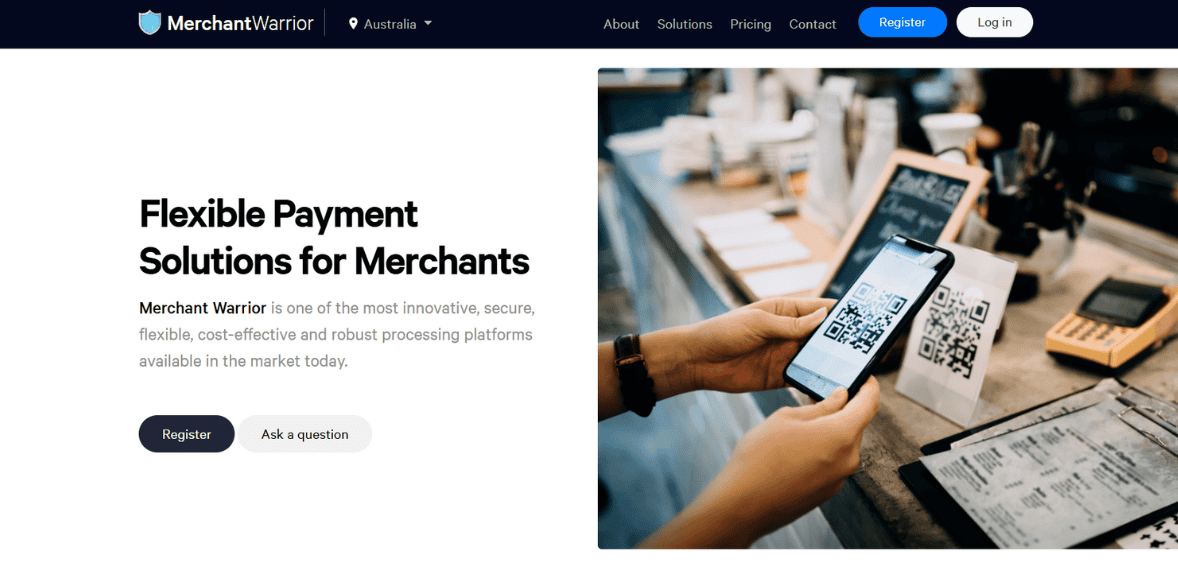
Merchant Warrior is a payment processing provider focused primarily on online and card-not-present transactions. It operates in a space where businesses increasingly demand flexible payment gateways, secure transaction handling, and the ability to scale without rebuilding their payment infrastructure. The company is often evaluated by merchants who prioritize control over integration and transaction flows rather than turnkey POS solutions. Lets read more about Merchant Warrior Review.

In the current digital economy, payment processing is directly related to the stability of revenue, customer trust, and efficiency. The reliability of a provider impacts all aspects of payment processing, from success rates to dispute resolution and readiness. For this reason, businesses tend to go beyond the surface level when evaluating a payment processor. They tend to evaluate the performance of the provider over time, the transparency of the fees, and the reliability of the support team when problems occur.

Merchant Warrior is a solution for businesses that need advanced online payment processing but not necessarily highly integrated services. Its services are likely to benefit ecommerce businesses, subscription-based businesses, and merchants with global customers. It falls between the traditional merchant account providers and the newer gateway-based platforms.

Company Background and Market Presence | Merchant Warrior Review

Merchant Warrior was formed to meet the increasing demand for secure and adaptable online payment processing. Over the years, it has established itself mainly in Australia and also supports international merchants who conduct business across multiple regions. Its longevity in the payment processing sector appears to be aimed at maintaining stability rather than aggressively expanding through acquisitions.

The company operates in a regulatory framework that demands strict compliance with standards, especially in data protection and card security. This context has informed its focus on security measures, compliance, and controlled onboarding processes. Merchant Warrior does not claim to be a one-click signup service, which can be considered both a positive and negative factor depending on the merchant’s perspective.

Its presence in the sector is more evident in supporting businesses that require direct gateway connectivity and customizable payment routing. It may lack the same level of consumer recognition as some of the global online payment services, but it has established itself as a trusted service among merchants who prioritize technical functionality over consumer branding.

Merchant Warrior’s approach appears to prioritize long-term merchant relationships over rapid merchant acquisition. This can be beneficial for businesses that seek consistency and a more tailored setup, though it may not appeal to merchants looking for instant deployment with minimal documentation. Understanding this context helps set realistic expectations about how the platform fits within the wider payments ecosystem.

Core Payment Processing Features

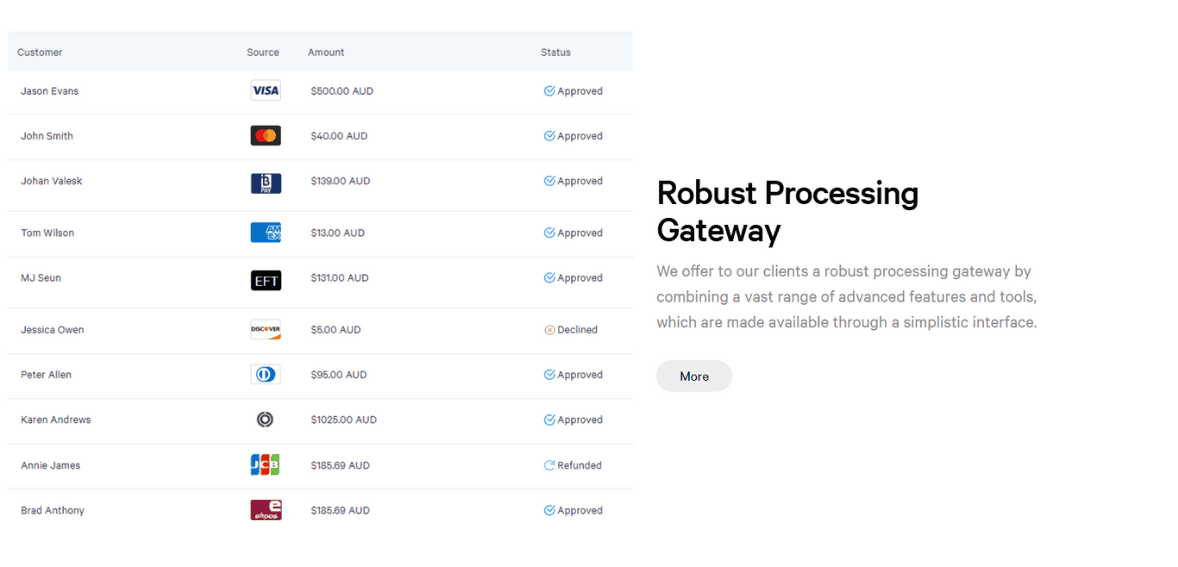
At its core, Merchant Warrior provides standard card payment processing designed for online transactions. This includes the ability to accept payments through merchant accounts that route transactions securely between customers, acquiring banks, and card networks. The platform focuses on reliability and transaction accuracy rather than layered feature bundling.

Merchants using Merchant Warrior can process transactions in real time, manage settlements, and monitor payment activity through reporting tools. The processing flow is designed to support consistent uptime and predictable settlement cycles, which are critical for cash flow management. While the core processing functions are standard across the industry, execution and stability are what distinguish one provider from another.

The Merchant Warrior service includes payment authorization, capture, refund, and void functionality. This allows merchants to have control over the payment process. This is particularly important for merchants who use delayed fulfillment or subscription payment models. The service also has the ability to process recurring payments. This allows merchants to process payments while still following the rules of the credit card companies.

The functionality of the service does not try to burden the user with too many features. The service instead tries to provide reliable payment processing and integration with business systems. This service can be beneficial for merchants who need a simple but reliable payment processing service. It may be less useful for merchants who need many value-added services like marketing and consumer wallets.

Supported Payment Methods and Card Networks

Merchant Warrior supports major card networks that are essential for online commerce, enabling businesses to accept credit and debit card payments from domestic and international customers. This includes widely used card brands that form the backbone of global card-based transactions. For many merchants, reliable access to these networks is more important than niche payment methods.

The platform’s focus remains on card payments rather than an extensive range of alternative payment methods. This can be advantageous for businesses whose customers primarily transact via cards, particularly in regions where card usage is dominant. At the same time, businesses operating in markets where digital wallets or bank transfers are preferred may need to assess whether Merchant Warrior aligns with customer expectations.

International card acceptance is a key consideration for businesses with cross-border customers. Merchant Warrior supports international transactions, though merchants should be aware of potential additional fees, currency conversion costs, and risk controls associated with cross-border payments. These factors are common across the industry and are not unique to this provider.

Rather than positioning itself as an all-in-one payment aggregator, Merchant Warrior maintains a focused approach. This allows for greater reliability within its core offering, though it places responsibility on merchants to evaluate whether additional payment methods are required through integrations or alternative providers.

Online Payment Gateway Capabilities

Merchant Warrior’s payment gateway is a central component of its service offering. It provides businesses with the infrastructure needed to securely accept payments through websites and online applications. The gateway supports both hosted payment pages and more customized integrations via APIs, giving merchants flexibility based on technical capability and user experience goals.

For companies that require faster implementation, hosted payment solutions simplify compliance complexity by not having to handle sensitive card information. This can make PCI compliance easier while still offering a sound checkout solution. Companies with in-house development teams can implement API-based solutions to retain complete control over the experience.

The gateway focuses on security, availability, and consistency rather than aesthetic design features. Although customization is possible, the primary focus is on functionality and compliance. The reporting feature enables merchants to monitor payment activity, view failed payments, and administer refunds.

The gateway provided by Merchant Warrior is appropriate for companies that value control and reliability. This gateway solution may require more setup work compared to simplified gateway solutions. However, this often leads to increased flexibility in the long run. Companies must determine whether they value ease of use or customization when assessing this aspect of the solution.

Merchant Warrior Review

Integration Options and Platform Compatibility

Integration flexibility is one of Merchant Warrior’s notable strengths. The platform supports integration with a range of ecommerce systems, custom-built websites, and backend business tools. Merchants with in-house development teams can leverage APIs to create tailored payment workflows aligned with their operational requirements.

For ecommerce businesses using established platforms, integration options can vary depending on the system in use. Some integrations may require third-party plugins or developer assistance. This makes Merchant Warrior more suitable for businesses that are comfortable managing technical setups rather than those seeking drag-and-drop simplicity.

Accounting and reconciliation processes are an important consideration. Merchant Warrior provides transaction data that can be exported or integrated with accounting systems, helping businesses track revenue and settlements accurately. This is particularly valuable for merchants handling high transaction volumes or multiple currencies.

The integration experience depends heavily on merchant expectations. Businesses looking for instant platform compatibility may encounter additional setup steps, while those prioritizing flexibility and customization may find the available tools sufficient. Understanding internal technical capacity is key when evaluating Merchant Warrior’s integration model.

Pricing Structure, Fees, and Cost Transparency

Pricing is one of the most critical factors when choosing a payment processor. Merchant Warrior typically operates on a merchant account model, which can involve transaction fees, monthly charges, and potential setup costs. Unlike flat-rate aggregators, pricing may vary based on business type, transaction volume, and risk profile.

This approach can benefit established businesses with predictable volumes, as negotiated rates may be more competitive over time. However, it also requires merchants to carefully review fee schedules and understand how different transaction types are priced. Cross-border transactions, chargebacks, and refunds may incur additional costs.

Transparency largely depends on how clearly terms are communicated during onboarding. Merchants should request detailed breakdowns of all potential fees, including monthly minimums and compliance-related charges. While this level of due diligence is standard in the industry, it is particularly important when working with customized pricing models. Merchant Warrior’s pricing may not be ideal for very small businesses seeking simplicity. However, for merchants who value tailored rates and long-term stability, the structure can make sense when aligned with business scale and transaction patterns.

Contract Terms and Merchant Agreements

Merchant agreements define the long-term relationship between a business and its payment provider. Merchant Warrior’s contracts typically outline service terms, pricing structures, and termination conditions. These agreements are standard in the merchant account space but differ from rolling, no-commitment models offered by some modern platforms.

Businesses should pay close attention to contract length, renewal terms, and early termination provisions. Understanding these details helps avoid unexpected costs if business needs change. Contractual clarity is especially important for startups and rapidly scaling companies that may reassess providers as they grow.

Merchant Warrior’s structured onboarding process often includes underwriting and documentation reviews. While this can slow initial setup, it contributes to risk management and account stability. For some merchants, this formality signals reliability. For others, it may feel restrictive. Evaluating contract terms in advance ensures alignment between operational flexibility and long-term commitments. This step is essential regardless of provider, but particularly relevant when working with traditional merchant account models.

Security Standards and Compliance Measures

Security is a foundational requirement in payment processing. Merchant Warrior emphasizes compliance with PCI DSS standards, ensuring that cardholder data is handled according to established industry rules. This helps reduce the risk of data breaches and regulatory penalties. Encryption and secure data transmission are core elements of the platform’s infrastructure. By supporting tokenization and secure checkout methods, Merchant Warrior minimizes the exposure of sensitive information. Merchants using hosted payment pages further reduce compliance scope.

Ongoing compliance responsibilities still apply to merchants. Merchant Warrior provides tools and guidance, but businesses must maintain secure environments on their own systems. This shared responsibility model is standard across the payments industry. For merchants operating in regulated or higher-risk sectors, strong security controls are not optional. Merchant Warrior’s focus on compliance may appeal to businesses that prioritize risk mitigation over rapid deployment.

Fraud Prevention and Risk Management Tools

Fraud prevention is a critical concern for online merchants. Merchant Warrior offers tools designed to help identify suspicious transactions and reduce exposure to chargebacks. These measures can include velocity checks, transaction monitoring, and rule-based filters.

Effective fraud management requires balancing security with customer experience. Overly restrictive controls can block legitimate transactions, while lenient settings increase risk. Merchant Warrior provides merchants with configurable options, allowing them to tailor risk settings based on their business model.

Chargeback management is another important consideration. While no provider can eliminate disputes entirely, proactive monitoring and clear transaction records can support merchants during resolution processes. Merchant Warrior’s reporting tools assist in tracking dispute-related activity. For businesses in higher-risk categories, fraud tools are particularly relevant. Merchant Warrior’s approach is functional rather than automated through artificial intelligence marketing claims. This can be effective for merchants who prefer transparency and manual control.

Merchant Warrior Review

Customer Support and Merchant Assistance

Customer support quality can significantly influence a merchant’s experience with a payment provider. Merchant Warrior offers support channels designed to assist with onboarding, technical issues, and account management. Availability and responsiveness may vary depending on merchant location and service tier.

The onboarding process often involves direct communication, which can help set up accounts correctly from the start. This reduces the likelihood of configuration errors and compliance issues later. Merchants with technical questions may benefit from this guided approach.

Ongoing support is critical when issues arise such as failed transactions or disputes. Merchant Warrior’s support model leans toward structured assistance rather than instant self-service. Businesses should assess whether this aligns with their expectations for resolution speed. For merchants who value knowledgeable support and accountability, this model can be reassuring. Those seeking instant chat-based assistance may find the experience more traditional.

Scalability for Growing Businesses

Scalability is a key consideration for any payment solution. Merchant Warrior supports businesses as transaction volumes increase, provided that account structures and risk profiles are managed appropriately. This makes it suitable for companies planning steady, controlled growth. The ability to handle higher volumes, recurring billing, and international transactions allows merchants to expand without immediately switching providers. However, scaling often involves account reviews and potential fee adjustments, which is standard for merchant account providers.

Businesses experiencing rapid growth should proactively communicate with Merchant Warrior to ensure infrastructure and limits align with future needs. Planning ahead helps avoid payment disruptions during peak periods. Merchant Warrior’s scalability favors businesses with long-term growth strategies rather than rapid experimentation. This makes it a more suitable option for companies with defined operating models.

Advantages of Using Merchant Warrior

Merchant Warrior offers a reliable payment processing framework suited to businesses that value control, security, and structured support. Its focus on card-based payments, compliance, and customization appeals to merchants with technical resources. The ability to tailor integrations and fraud controls provides flexibility for varied business models. Long-term stability and regulatory alignment can be advantageous for established or international operations. These strengths make Merchant Warrior a practical choice for businesses prioritizing dependable infrastructure over simplified onboarding.

Limitations and Considerations Before Choosing

Merchant Warrior may not suit all businesses. Smaller merchants seeking instant setup and flat pricing may find the onboarding process complex. Limited alternative payment methods may also be a consideration in certain markets. Understanding internal capabilities and customer preferences is essential before committing. A detailed review of fees, contracts, and technical requirements helps ensure alignment.

Frequently Asked Questions

Is Merchant Warrior suitable for small businesses and startups?

Merchant Warrior may be better suited to established businesses with predictable transaction volumes and technical support, rather than very small startups seeking simplicity.

Does Merchant Warrior support international and cross-border payments?

Yes, it supports international card payments, though merchants should review associated fees and compliance considerations.

How secure is Merchant Warrior for online payments?

Merchant Warrior follows PCI DSS standards and provides security tools designed to protect cardholder data and reduce fraud risk.

Merchant e-Solutions Review

Merchant e-Solutions Review

Merchant e-Solutions is a U.S.-based payment processing company that primarily serves mid-sized to enterprise-level businesses looking for reliable, backend-focused payment infrastructure. Unlike some consumer-facing processors that position themselves around ease of setup or visual dashboards, Merchant e-Solutions tends to emphasize stability, security, and custom payment workflows. Lets read more about Merchant e-Solutions Review.

The company is often chosen by businesses that already have some technical maturity or payment experience and need more control over transaction handling, integrations, and risk management. This includes ecommerce brands, SaaS platforms, subscription-based services, and companies with recurring billing requirements. Merchant e-Solutions does not position itself as a plug-and-play solution for very small merchants, which is an important distinction when evaluating fit.

From an overall perspective, Merchant e-Solutions operates more like a traditional payment processor combined with a technology-driven gateway provider. Its value proposition centers on customizable solutions rather than standardized packages. This approach can be beneficial for businesses with specific needs but may feel complex for merchants looking for quick onboarding.

Company Background and Industry Position | Merchant e-Solutions Review

Merchant e-Solutions has been operating in the payments space for several decades, giving it a longer track record than many newer fintech-first processors. Over time, the company has built its reputation around backend payment reliability and direct relationships with banks and card networks, rather than focusing heavily on branding or consumer-facing tools.

The company is often described as a “full-service” processor, indicating that it offers merchant accounts, gateways, and risk management solutions all under one roof. This positioning strategy puts Merchant e-Solutions more in line with traditional processors than app-based competitors, although it has updated many of its systems to accommodate APIs and sophisticated integrations.

Within the larger merchant services industry, Merchant e-Solutions usually finds itself competing against other enterprise-oriented processors rather than flat-rate aggregators. Its solutions are often customized rather than standardized, which is attractive to merchants processing larger volumes or operating within regulated or complex verticals.

That said, this enterprise orientation can also be a limitation for smaller merchants. Merchant e-Solutions does not heavily market simplified pricing, instant approvals, or startup-friendly onboarding. Its sales and underwriting processes may feel more traditional, which can be a positive or negative depending on expectations.

Overall, Merchant e-Solutions occupies a steady, infrastructure-focused position in the payment ecosystem. It may not be the most visible brand, but it is generally viewed as a stable option for businesses that prioritize long-term reliability over rapid deployment.

Core Payment Processing Capabilities

At its core, Merchant e-Solutions provides standard payment processing services expected from a full merchant account provider. These include credit and debit card processing, electronic check acceptance, ACH transactions, and support for card-not-present payments. The company supports both online and recurring transaction models, making it suitable for digital-first businesses.

Transaction processing is designed to handle moderate to high volumes, and the platform emphasizes uptime and reliability. Businesses processing large batches of payments or operating subscription models may benefit from this infrastructure-oriented approach. Merchant e-Solutions also supports authorization, capture, settlement, and refund workflows that can be customized through its systems.

One notable aspect is that Merchant e-Solutions tends to focus more on backend payment logic than front-end user experience. While it delivers the essential processing tools, it does not attempt to replace ecommerce platforms or accounting systems. Instead, it integrates into existing stacks rather than functioning as an all-in-one solution.

This structure works well for businesses with in-house development resources or existing integrations. However, merchants expecting visual dashboards with extensive analytics may need to rely on third-party tools or custom reporting setups.

Overall, Merchant e-Solutions delivers dependable payment fundamentals but leans toward functional depth rather than surface simplicity. Businesses evaluating it should be comfortable managing payments as an operational system rather than a consumer-style app.

Supported Payment Methods and Card Networks

Merchant e-Solutions supports all major U.S. card networks, including Visa, Mastercard, American Express, and Discover. This coverage meets standard merchant expectations and ensures compatibility with most customer payment preferences. In addition to traditional card payments, the platform also supports ACH transfers and electronic checks.

The inclusion of ACH and eCheck options can be particularly useful for businesses with B2B customers or subscription services looking to reduce interchange costs. These alternative payment methods provide flexibility in billing models and can improve payment acceptance in certain verticals.

However, Merchant e-Solutions does not aggressively promote emerging payment options such as digital wallets or region-specific alternative methods in the same way newer fintech providers do. While some wallet and tokenized card functionality may be supported through integrations, the platform is not positioned as cutting-edge in consumer payment trends.

This conservative approach reflects Merchant e-Solutions’ focus on reliability rather than experimentation. For businesses primarily serving U.S. customers using cards and bank transfers, the available payment methods are typically sufficient. International or consumer-brand businesses seeking aggressive adoption of alternative payment methods may need to evaluate compatibility carefully.

In summary, Merchant e-Solutions offers solid, conventional payment method support with practical alternatives like ACH, but it is not designed as a showcase platform for emerging payment innovations.

Merchant e-Solutions Review

Point-of-Sale and Payment Acceptance Options

Merchant e-Solutions is primarily designed for card-not-present and online payment environments rather than in-person retail. While it can support point-of-sale setups through compatible terminals and integrations, its core strength lies in ecommerce and backend payment processing.

For physical acceptance, Merchant e-Solutions partners with approved hardware and third-party POS providers instead of having its own proprietary POS system. This provides businesses with flexibility to choose hardware that suits their requirements but may need more coordination during the setup process. Virtual terminals are provided for manually entered transactions, which can be helpful for phone orders, invoicing, or billing for customer support. These features are functional but not very modern in design, which aligns with the platform’s focus on functionality over design.

Mobile payment functionality is available through integrations, but Merchant e-Solutions does not market itself as a mobile-centric payment solution. Businesses operating pop-up shops or sales operations that are mobile-intensive may need to look elsewhere for more tailored solutions.

Overall, payment acceptance options are flexible but best suited for businesses that primarily operate online or through recurring billing. Merchant e-Solutions works well as part of a broader payment stack rather than as a standalone retail solution.

Gateway and API Functionality

Merchant e-Solutions offers a proprietary payment gateway that serves as the foundation for transaction routing, authorization, and settlement. The gateway is built to support custom workflows, making it appealing for businesses that require granular control over how payments are handled.

APIs are available for developers to integrate payments directly into websites, applications, and platforms. These APIs support common payment functions such as tokenization, recurring billing setup, transaction reporting, and fraud controls. Documentation is functional and aimed at technical audiences rather than beginners.

The gateway is not designed as a drag-and-drop tool. Instead, it assumes some level of technical involvement or third-party development support. For businesses with engineering resources, this flexibility can be an advantage. For smaller teams, it may represent a learning curve. Integrations with ecommerce platforms and backend systems are possible, but Merchant e-Solutions does not offer the same plug-and-play marketplace of integrations found in newer platforms. Customization often replaces convenience.

In essence, the gateway and API capabilities are one of Merchant e-Solutions’ strongest areas, provided the business has the technical capacity to leverage them effectively.

Recurring Billing and Subscription Management

Recurring billing is a notable strength of Merchant e-Solutions. The platform supports scheduled payments, subscription billing, and installment-based transaction models. This makes it suitable for SaaS businesses, membership platforms, and service providers with recurring revenue streams.

Billing schedules can be customized based on frequency, amount, and duration. Payment tokens help ensure customer data is stored securely while enabling seamless recurring transactions. This reduces friction for both merchants and customers over time.

However, subscription management tools are operational rather than customer-experience focused. Businesses may need external systems for customer-facing subscription changes, invoices, or plan management.

While the recurring billing engine is reliable, it lacks visual subscription dashboards or built-in lifecycle analytics. These gaps are not necessarily deal breakers but should be noted when comparing Merchant e-Solutions to subscription-first platforms. Overall, Merchant e-Solutions handles the mechanics of recurring billing well, but businesses looking for polished subscription management interfaces may need supplemental tools.

Security Features and PCI Compliance

Security is one of Merchant e-Solutions’ core selling points. The platform supports PCI DSS compliance through tokenization, encryption, and secure payment environments designed to minimize merchants’ exposure to sensitive card data. Tokenization ensures that actual card numbers are not stored within merchant systems, reducing breach risks. Secure transmission protocols help protect data in transit during authorization and settlement.

Merchant e-Solutions also offers PCI compliance guidance, but it is ultimately the responsibility of the merchant. This is not unusual for a full-service processor but is different from more contemporary solutions that can automate more of the process.

Fraud monitoring solutions and secure vaults are additional layers of security. This type of infrastructure-centric approach to security is very reassuring for businesses that must comply with regulations or process large volumes of transactions.

Although the security options are very good, they can also be complex and require management. Merchant e-Solutions values control over automation, which is very helpful for experienced staff but may be too much for smaller merchants.

Fraud Prevention and Chargeback Management

Merchant e-Solutions provides a suite of tools designed to help merchants detect suspicious activity and reduce chargeback exposure. These include transaction monitoring, velocity checks, and customizable rules for flagging potentially risky payments.

Chargeback management tools help merchants track disputes and respond within required timeframes. Access to transaction data and reporting supports evidence collection during chargeback challenges. That said, the platform does not completely automate chargeback resolution. Merchants remain actively involved in managing disputes, which may require internal resources or third-party services.

The fraud tools are flexible but not heavily automated. Businesses seeking AI-driven fraud scoring or real-time adaptive models may find Merchant e-Solutions more manual in comparison to newer solutions. Overall, the fraud and dispute tools are solid and functional, but they work best when paired with active oversight rather than hands-off automation.

Pricing Structure and Fee Transparency

Merchant e-Solutions does not advertise flat-rate pricing. Instead, pricing is typically customized based on business type, volume, risk profile, and transaction mix. This model can result in competitive rates for larger or established merchants but may lack transparency upfront.

Fees may include monthly account charges, gateway fees, per-transaction costs, and additional charges for certain services. Because pricing is quote-based, merchants should carefully review agreements and ask detailed questions.

Smaller businesses may find the pricing structure difficult to evaluate without negotiation. However, larger merchants often benefit from tailored pricing aligned with their processing volume. Merchant e-Solutions’ pricing approach reflects its traditional processor roots rather than a modern flat-rate model. This can be advantageous for some businesses but requires diligence during onboarding.

Merchant e-Solutions Review

Contract Terms and Merchant Commitments

Contracts with Merchant e-Solutions may include minimum terms, early termination fees, or volume commitments depending on the agreement. This is consistent with traditional merchant account providers but contrasts with month-to-month fintech platforms.

Merchants should carefully review contract length, cancellation policies, and fee schedules. Flexibility may be negotiable but should not be assumed. These contractual elements reinforce Merchant e-Solutions’ positioning as a long-term processing partner rather than a short-term solution. Businesses looking for stability may appreciate this structure, while startups may prefer greater flexibility.

Customer Support and Service Experience

Customer support in Merchant e-Solutions is usually reached by phone and email support. Customer support is more inclined to technical and account issues, rather than business inquiries. Customer support can be provided for account assistance, especially for complicated integrations. However, the experience may be more procedural than concierge-level.

Customer support may vary depending on the account size and management. Larger accounts may get more hands-on support than smaller ones. Customer support is competent but not necessarily very personalized.

Ideal Business Types and Use Cases

Merchant e-Solutions is best suited for ecommerce businesses, SaaS platforms, subscription services, and established companies with technical resources. Businesses processing higher volumes or requiring custom workflows may find strong alignment.

Startups, solo entrepreneurs, and micro-merchants may find the platform complex or costly relative to simpler solutions. Its strengths lie in backend reliability rather than ease of use.

Pros, Cons, and Overall Assessment

Merchant e-Solutions offers a stable, secure, and customizable payment processing environment designed for businesses that treat payments as infrastructure rather than a convenience layer. Its strengths include reliability, security, and flexible backend control. However, it lacks the simplicity, visual tools, and upfront transparency of newer platforms. The platform rewards preparation and technical capability. For the right business, Merchant e-Solutions can be a dependable long-term partner. For others, it may feel heavier than necessary.

FAQs

1. Is Merchant e-Solutions good for small businesses?

Merchant e-Solutions can work for small businesses, but it is generally better suited for established companies with steady transaction volumes and technical resources.

2. Does Merchant e-Solutions support subscriptions?

Yes, it supports recurring billing and subscription payment models with flexible scheduling and secure tokenization.

3. Is Merchant e-Solutions pricing transparent?

Pricing is custom-quoted and not publicly listed, so merchants should clarify all fees and terms before signing.

Loyverse POS Review

Loyverse POS is a cloud-based POS system positioned primarily for small and micro businesses that want a simple way to handle sales, inventory, and basic customer tracking without committing to high monthly software fees. It is often discussed in the context of “free POS systems,” though in practice its ecosystem includes optional paid extensions and third-party services that influence real-world costs. The platform is app-driven, designed to run on smartphones and tablets rather than proprietary terminals, which immediately lowers the barrier to entry for new or budget-conscious businesses. Lets read more about Loyverse POS Review.

At its core, Loyverse focuses on essential retail and food-service workflows. The system handles transactions, item management, inventory tracking, staff access, and sales reporting through a combination of mobile apps and a web-based back office. For many first-time POS users, especially sole proprietors and small teams, this approach removes much of the complexity associated with traditional POS installations.

However, Loyverse is not designed to replace enterprise-grade systems. Its philosophy leans toward accessibility and ease rather than deep customization or industry-specific compliance. This makes it appealing for certain use cases while limiting its suitability for others. Understanding where the platform excels and where it falls short is critical before adoption, particularly for businesses planning to grow or operate across multiple locations.

Types of Businesses Loyverse POS Is Designed For

Loyverse POS is best suited for small, transaction-focused businesses that require straightforward sales processing and basic operational visibility. Typical users include small retail stores, cafes, bakeries, coffee shops, food trucks, kiosks, and independent service providers. These businesses often prioritize speed, simplicity, and low upfront costs over advanced integrations or industry-specific workflows.

For retail businesses with a limited product catalogue, Loyverse’s item management and inventory tools are usually sufficient. Similarly, food-service operations with simple menus and limited modifiers tend to find the system workable, especially when table service and kitchen display systems are not required. The app-first design also works well for businesses that operate in non-traditional settings, such as pop-up shops, markets, and mobile vendors.

That said, the platform is less suitable for businesses with complex operational needs. Larger retailers with extensive SKU counts, frequent supplier-based purchasing workflows, or advanced inventory forecasting will likely encounter limitations. Full-service restaurants that rely heavily on table management, coursing, and kitchen coordination may also find the platform restrictive.

Businesses operating in regulated industries or those that require advanced tax handling, invoicing workflows, or region-specific compliance features may need additional systems alongside Loyverse. Similarly, franchises or enterprises with detailed reporting and accounting integration requirements may find the platform too lightweight. Overall, Loyverse is designed for simplicity-first environments. It performs best when transactional volume is moderate, operational complexity is low, and business owners value accessibility and cost control over extensive feature depth.

Core POS Features and Checkout Experience | Loyverse POS Review

The checkout experience in Loyverse POS is intentionally streamlined. The interface prioritizes speed and clarity, allowing users to process transactions with minimal navigation. Items can be added to sales via buttons, search, or barcode scanning, depending on how the catalogue is configured. The system supports common actions such as applying discounts, issuing refunds, splitting bills, and handling basic tax settings.

For businesses with simple transaction flows, this approach works well. The checkout screen is uncluttered, reducing the learning curve for staff and minimizing mistakes during peak hours. Cash handling is straightforward, and receipt generation is supported via email or compatible printers. The system also allows quick switching between staff accounts, which can be helpful in small teams.

Where simplicity is a virtue for Square Apps, the downside is that it is not always suitable for advanced features related to the payment workflow, such as sophisticated rules for discounts or bundle calculations. Another point is that payments using cards can be made with certain integrations but not all, meaning that the payment experience is dependent on the service being used for payments by the merchant.

However, there is another aspect to consider. Though the interface is user-friendly, the layout of the checkout page is quite rigid in terms of functionality. Businesses have very limited options in this regard, as opposed to more sophisticated POS systems, in which customized business processes for different sectors can be set up. In a nutshell, the checkout interface of Loyverse is quite simplistic in terms of ease of usage and the velocity of transactions performed.

Inventory Management Capabilities

Inventory management in Loyverse POS is designed to cover fundamental tracking needs rather than advanced supply-chain workflows. Businesses can create items with SKUs, categories, variants, and cost prices, enabling basic stock-level monitoring. The system automatically updates inventory counts based on sales, helping owners keep track of what is available in real time.

Low-stock alerts are included, which can notify business owners when items reach predefined thresholds. This is particularly useful for small stores that rely on manual restocking and want simple reminders rather than automated purchasing systems. Inventory adjustments can also be made directly through the back office, allowing users to account for shrinkage, spoilage, or manual corrections.

Despite these strengths, Loyverse’s inventory tools have clear limitations. Purchase order management is basic, and supplier-level workflows are minimal compared to more advanced retail systems. There is limited support for batch tracking, expiration dates, or serialized inventory, which can be important in certain industries. Reporting around inventory turnover and forecasting is also relatively shallow.

For businesses operating across multiple locations, inventory synchronization is available, but it lacks the depth required for centralized warehouse management or complex inter-store transfers. As SKU counts grow, the system may feel increasingly manual. Loyverse inventory management is sufficient for small-scale operations that want visibility rather than automation. It supports awareness and control but is not designed to optimize inventory strategy or manage complex retail logistics.

Loyverse POS Review

Sales Reporting and Business Analytics

Loyverse provides a suite of built-in reports aimed at giving business owners visibility into daily operations. These include sales summaries, revenue trends, item performance, category breakdowns, and staff sales tracking. Reports can be accessed through the back office and are presented in a straightforward, readable format.

For small business owners, these reports offer useful insights without requiring deep data interpretation skills. Daily and monthly summaries make it easier to monitor performance trends, identify best-selling products, and understand peak sales periods. Employee-related reports can also help track staff activity and basic productivity.

In contrast to more sophisticated POS solutions, these analytics are fairly basic. This means businesses cannot create reports based on their own needs and instead have to use pre-defined views. Exports are available, but if one wants deeper analytics, often that requires more substantial processing in other tools like spreadsheets.

Another limitation is that there are no predictive analytics or comparative analytics. Everything focuses on historical data and not so much on forward-looking insight. Demand forecasting, margin analysis across suppliers, and granular profitability reporting are other areas in which the tools may be unsatisfactory.

This means that multi-location operations are catered for, whereas consolidated reporting is available; customization remains a little limited. This may potentially make it a bit more difficult to derive management-level insight without additional systems. In all, Loyverse reporting is functional and user-friendly. It supports basic decision-making, yet is not intended as a broad business intelligence platform.

Customer Management and Loyalty Tools

Customer management in Loyverse POS centers around a built-in database and basic loyalty functionality. Businesses can create customer profiles, track purchase histories, and associate transactions with individual customers. This allows for a simple form of customer relationship management without the need for external CRM software.

This loyalty program helps business owners reward their customers with points. Customers earn points when they make a purchase. These points help them earn rewards. This feature is easy to use. This feature would perform well in encouraging customers to go back to the business. For example, a café or a small business. However, the current loyalty program offered in the software is quite basic. Not much assistance is provided when a business owner wants to create rewards programs for customers or automatically segment customers. Additionally, the software does not have a marketing tool, which may include emailing customers or sending an SMS.

Customer insights are also restricted. Although it is possible for the business to understand purchase history and visits, deeper behavior analysis is not possible. This makes customer loyalty programs more of a reward for transactions than engagement tools based on insights. For businesses that want easy retention tools without hassle, Loyverse works satisfactorily. Businesses wanting enhanced customer engagement tools or omnichannel customer loyalty solutions might have to integrate other software tools along with the POS.

Employee Management and Permissions

Loyverse offers basic employee management features that allow business owners to create staff accounts, assign roles, and set permissions. This helps control access to sensitive areas such as refunds, discounts, or report viewing. For small teams, this structure is generally sufficient to maintain accountability.

Employee sales tracking is included, enabling businesses to see individual performance metrics tied to transactions. This can be helpful for identifying sales trends, monitoring productivity, and resolving discrepancies at the end of shifts. Shift-based tracking is available, though it is relatively simple compared to dedicated workforce management systems.

However, Loyverse does not provide advanced employee scheduling, time tracking, or payroll integration. Businesses that require detailed labor analytics, overtime tracking, or compliance-based scheduling will need external solutions. The system is designed for operational oversight rather than workforce optimization.

Permissions are fairly broad, which may limit precision in more complex organizational structures. Larger teams with multiple roles may find it difficult to fine-tune access without workarounds. In essence, employee management in Loyverse supports accountability and basic oversight but is not a comprehensive human resource or labor management tool.

Loyverse POS Review

Supported Hardware and Device Compatibility

One of Loyverse’s strengths lies in its hardware flexibility. The POS runs on standard Android devices and iPads, allowing businesses to use existing smartphones or tablets instead of purchasing proprietary terminals. This significantly reduces startup costs and makes the platform accessible to new businesses.

This system supports general-purpose peripherals, including receipt printers, barcode scanners, and cash drawers, as long as they are compatible with the device and operating system in use. This makes it possible for businesses to build functional POS systems using general-purpose hardware as opposed to specialized hardware. A business should check for compatibility before setting up hardware that will be used in the POS system. This will ensure that there are no problems when operating the hardware.

At the moment, Loyverse is not concentrating on the development of complex hardware solutions, which may include kitchen display systems, kiosk solutions, or customer displays. This will go well with its target group but may not be as apt in complicated setups. This is very sensible and economical as far as small businesses go because it prioritizes malleability.

Payment Processing and Integrations

Loyverse offers a variety of payment options such as cash and credit payments conducted by third-party payment services. This makes Loyverse quite flexible, unlike most POS solutions, which offer their payment services or solutions in one package or system.

Such flexibility may prove to be an asset, especially for those dealing with different regions where people have different payment preferences. Nevertheless, the fact that it depends on third-party integrations may mean it does not have a uniform payment experience for all configurations. Such things as unified reports are highly reliant upon the processor being used.

Integration possibilities that extend past payment solutions are limited. From the looks of it, Loyverse does not have an extensive infrastructure of native integration with accounting, e-commerce, and marketing software solutions available on the market today. Some businesses would have to make use of exports by hand or third-party solutions to make this possible. It may not be an issue with businesses that are still smaller in size and scale. However, it is likely that this would become an issue with growing businesses with increased complexity and scale. Loyverse’ payment system is adequately integrated but is not deeply integrated because of its focus on simplicity.

Multi-Store and Multi-Location Management

Loyverse allows users to manage multiple stores under a single account. This includes basic inventory tracking and consolidated reporting across locations. For small chains or businesses testing multi-location expansion, this provides a degree of operational visibility.

However, multi-location features are limited compared to enterprise-grade systems. Inventory transfers between locations are manual, and reporting customization is minimal. Centralized pricing control and location-specific rules are also constrained. Businesses with complex supply chains or centralized warehousing will likely outgrow these capabilities quickly. Loyverse is better suited for small networks with similar operational structures across locations. The platform supports oversight rather than optimization, making it a starting point rather than a long-term solution for multi-store expansion.

Ease of Setup, Interface, and Learning Curve

Loyverse is widely regarded as easy to set up. The app installation process is straightforward, and most businesses can configure items, taxes, and staff within a short time. The interface is clean and intuitive, reducing onboarding time for new users.

Training staff is generally simple, especially in environments with basic transaction flows. The back office is logically organized, making it accessible even for users without technical experience. Documentation and support resources are adequate, though not exhaustive. Advanced troubleshooting may require self-guided research rather than real-time assistance. Overall, ease of use is one of Loyverse’s strongest attributes, particularly for first-time POS users.

Pricing Model and Add-Ons

Loyverse is often described as free, and its core POS functionality does not require a subscription. However, certain advanced features are offered as paid add-ons. These include enhanced inventory management and employee management tools. Additionally, businesses must consider indirect costs such as payment processing fees, hardware purchases, and third-party integrations. Over time, these can influence the total cost of ownership. The pricing structure is transparent in terms of software access, but scalability may introduce expenses that are not immediately obvious.

Data Security, Cloud Reliability, and Limitations

Loyverse operates on a cloud-based infrastructure, allowing data to sync across devices and locations. Offline mode is available, enabling basic operations during connectivity interruptions. Security practices are standard for cloud POS systems, though detailed compliance certifications are not always highlighted. Businesses with strict regulatory requirements should evaluate suitability carefully. Customization and extensibility are limited, which may impact long-term adaptability.

Overall Strengths, Weaknesses, and Best-Fit Scenarios

Loyverse POS excels in accessibility, ease of use, and cost control. Its weaknesses lie in scalability, customization, and advanced integrations. It is best suited for small, straightforward businesses that want clarity rather than complexity.

FAQs

Is Loyverse POS completely free to use?

The core system is free, but certain advanced features and external services may incur additional costs.

Can Loyverse support a growing business?

It can support early growth, but businesses with increasing complexity may need more advanced systems.

Does Loyverse work without internet access?

Yes, basic functionality is available offline, with data syncing once connectivity is restored.

Lightspeed Payments Review

Lightspeed Payments Review

Lightspeed Payments is the in-house payment processing solution developed to work directly within the broader Lightspeed POS ecosystem. Rather than functioning as a standalone merchant processor, it is designed to be an embedded layer that connects transactions, reporting, and settlement closely with the point-of-sale software itself. This approach reflects a wider industry shift toward unified commerce platforms where software and payments are managed under one system rather than through multiple vendors. Lets read more about Lightspeed Payments Review.

In the case of already-existing Lightspeed POS businesses, the payments solution is marketed as a convenience functionality that lessens the need for third-party integrations. The payments are channeled through a single dashboard system where payment information is linked with inventory management tools, sales insights, and accounting functions. Even though the functionality provides a convenient operation solution for businesses, it provides flexibility and price transparency that is of importance for merchants who are price-sensitive.

Lightspeed Payments is usually preferred for use in retail, restaurant, and hospitality-related businesses that focus on the aspects of speed, reliability, and convenience of payment transactions. Lightspeed Payments does not promote itself as a payment solution service that has the capability of catering to the demands of a variety of merchants, including different types of businesses. Here, the importance of an early comprehension of the difference has to be considered, as the use of Lightspeed Payments gets optimal with the broader structure of a payment solution service when used independently.

Company Background and Market Position | Lightspeed Payments Review

Lightspeed started out by developing software that is primarily used by retail and hospitality establishments who wish to manage inventory, consumer, or sales data. However, over time, it began providing payment processing options as an in-house solution, instead of partnering exclusively with a payment processor. Such an approach can be generalized in the sense that there are POS system providers who wish to control the entire payment process, from entry to payoffs.

Market wise, Lightspeed competes in the market as a competitor in the integrated POS market, where it competes with other providers of integrated POS solutions comprising payment systems. However, the brand awareness of Lightspeed is higher in the medium-scale retail chains as well as hospitality establishments than in the micro-merchants or large-scale merchants. Additionally, the payment solution of Lightspeed is generally preferred by merchants who utilize Lightspeed’s POS solutions than by merchants seeking payment solutions beforehand.

From a positioning standpoint, Lightspeed Payments sits between simplicity and structure. It offers fewer customisations than independent merchant accounts but more cohesion than loosely integrated third-party processors. This makes it appealing to operators who value predictable workflows over granular cost optimisation. However, it also means the product may feel restrictive to merchants who are accustomed to negotiating processing rates independently or switching providers frequently. Lightspeed’s market strength lies in offering a controlled, integrated environment rather than maximum flexibility.

How Lightspeed Payments Works

Lightspeed Payments is essentially an integrated payment layer that is a part of Lightspeed POS. After signing up for a merchant service, Lightspeed Payments enables merchants to handle their entire payment transactions with Lightspeed POS, be it at a physical point of sale terminal or via any supported sales method. There is no need for a merchant to handle a payments dashboard.

Onboarding entails business validation, bank account setup, and hardware installation, where necessary. However, because the payment solution is an integral part of the POS, most of this process takes place within the same management interface that merchants are familiar with regarding inventory, employee access, and reporting. While this eases training requirements, it integrates payment experience strongly with Lightspeed’s system design processes.

Once live, transactions appear in real time within the Lightspeed backend, allowing merchants to track sales, refunds, and payment statuses in one place. Settlements are generally batched automatically, with funds deposited into the merchant’s bank account based on predefined payout schedules. While this simplifies daily reconciliation, it also means merchants must rely on Lightspeed’s reporting formats rather than importing data from an external processor. Overall, the system prioritises operational cohesion over modularity.

Supported Businesses and Industry Fit

Lightspeed Payments is usually implemented by retail and hospitality merchants who are already utilizing Lightspeed POS on a day-to-day basis. This encompasses retail operations, restaurants, cafes, and hospitality groups operating multiple locations, taking advantage of uniform systems to manage their operations. The payment system is not industry-agnostic and functions better in a situation wherein the POS functionality by Lightspeed is already optimized to suit their requirements.

Small businesses may benefit from simplicity in having all their POS and payments streamlined with one company, especially if they do not already have accounting or IT support in-house. These businesses will see a benefit in having all payments streamlined in one interface, with reduced concerns for management to focus on from different vendors. Medium-sized businesses will benefit from having all payments visible from different locations in one interface.

However, businesses with highly specialised payment requirements, such as custom billing logic, advanced subscription billing, or niche compliance needs, may find Lightspeed Payments limiting. Similarly, merchants that operate in industries not well supported by Lightspeed POS may struggle to justify adopting the payments product. In practice, Lightspeed Payments is best viewed as an extension of a retail- and hospitality-focused POS system rather than a universal payments platform.

Payment Methods and Supported Transactions

Lightspeed Payments accepts a number of popular payment types that are well-suited to a current retail or hospitality setting. These will generally include the most popular credit and debit card types, contact payments, and mobile payments. The aim is for quick card-present payments, but additional types may become available depending on the Lightspeed plan.

Card payments in-store represent the primary functionality, where the transactions are processed directly from compatible terminals connected to the point of sales. The process is seamless and efficient with the least interruptions at the point of sales. For establishments providing mixed models in the serving of clients, the solution accommodates flexible transaction processes without the need for additional payment solutions.

Though Lightspeed Payments is competent when it comes to handling day-to-day payment requirements, it is not marketed as a dedicated omnichannel/e-commerce payment solution by itself. When it comes to handling complicated e-commerce operations, it might be necessary to evaluate payment integration competency across various channels in the Lightspeed environment. When it comes to payment options, it is not an area where there is some novel payment experimentation under way.

Hardware Compatibility and POS Integration

Hardware compatibility is tightly linked to the Lightspeed ecosystem. Payment terminals and card readers supported by Lightspeed Payments are selected to work seamlessly with the POS software, ensuring stable communication and consistent transaction flows. This integration reduces setup issues and technical troubleshooting for merchants but does limit hardware choice.

Because payments and POS are designed as a unified system, transaction details such as totals, tips, and refunds remain synchronised without manual intervention. This is particularly useful in high-volume environments where accuracy and speed are critical. Staff typically interact with a single screen rather than juggling separate payment devices and systems.

The downside of this tightly integrated approach is reduced flexibility. Merchants cannot freely mix and match third-party terminals without losing native integration benefits. For businesses that already own payment hardware or prefer vendor neutrality, this can be a consideration. Lightspeed’s hardware model prioritises reliability and simplicity over open compatibility.

Pricing Structure and Processing Fees

Lightspeed Payments pricing is typically structured around transaction fees rather than publicly listed flat rates. Merchants are often quoted rates based on business type, transaction volume, and region. This approach aligns with many integrated payment systems but can make upfront cost comparisons more difficult.

Processing fees usually cover card transactions and include both interchange and processing margins. Additional costs may apply depending on hardware, plan tiers, or optional features within the Lightspeed ecosystem. While this pricing model offers convenience, it may not always deliver the lowest possible rates for high-volume merchants who actively negotiate payment contracts.

Transparency varies, and businesses considering Lightspeed Payments should review contract terms carefully. The main advantage is predictability and integration rather than aggressive cost optimisation. For merchants who value simplicity over line-item cost control, the pricing structure may feel reasonable. Cost-focused operators may want to evaluate alternatives carefully.

Lightspeed Payments Review

Payout Speed and Fund Settlement

Payout speed is a critical factor for cash flow management, and Lightspeed Payments generally follows standard settlement timelines. Transactions are batched and deposited according to the provider’s payout schedule, often within a few business days depending on region and banking arrangements.

Merchants can monitor payout status directly within the Lightspeed dashboard, which provides visibility into pending and completed settlements. This integrated reporting simplifies reconciliation and reduces the need to cross-check external processor statements. While settlements are reliable, weekend or holiday delays can still occur, as with most payment processors. Businesses that rely on daily cash flow access should factor this into planning. Lightspeed Payments focuses more on consistency than ultra-fast payouts, making it suitable for businesses with predictable revenue cycles.

Reporting, Analytics, and Payment Insights

One of the main strengths of Lightspeed Payments lies in its integration with Lightspeed’s reporting and analytics tools. Payment data flows directly into sales reports, inventory analytics, and performance dashboards, allowing merchants to view financial performance in context rather than isolation.

This unified reporting can be particularly valuable for multi-location businesses tracking trends across stores. Managers can analyse payment volumes, average transaction values, and refund patterns without exporting data between systems. For operational oversight, this level of integration improves clarity. However, merchants accustomed to the advanced analytics offered by standalone processors may find some limitations in customisation. Reports are designed to align with POS workflows rather than provide deep payment-only analysis. The trade-off is ease of use versus analytical depth.

Lightspeed Payments Review

Chargebacks, Refunds, and Dispute Management

Lightspeed Payments handles refunds and chargebacks directly within its platform, allowing merchants to manage disputes without involving external systems. Refunds can be processed from the POS interface, maintaining transaction history consistency across records.

Chargeback notifications and responses are typically managed through the Lightspeed backend, with guidance provided on submission timelines and documentation requirements. While this centralisation simplifies the process, merchants still bear responsibility for responding promptly and accurately. The system provides basic visibility into dispute status, but it does not eliminate the operational effort required to manage chargebacks. As with most processors, prevention through clear policies and accurate transactions remains essential. Lightspeed Payments offers tools rather than guarantees in dispute management.

Security, Compliance, and Fraud Prevention

Security and compliance are foundational to any payment processor, and Lightspeed Payments follows industry-standard practices. This includes PCI compliance, encrypted transactions, and secure handling of cardholder data. By embedding payments within its POS, Lightspeed reduces the risk of data fragmentation across systems.

Fraud monitoring tools are present but generally focused on standard retail risk patterns rather than advanced custom rules. For most small to mid-sized merchants, this level of protection is sufficient. Businesses operating in higher-risk segments may require additional safeguards. Lightspeed’s approach prioritises compliance and baseline security rather than complex fraud customisation. This keeps the system approachable for typical retail operators while meeting regulatory requirements.

Ease of Use and Merchant Experience

Ease of use is one of the most noticeable benefits of Lightspeed Payments. Merchants interact with a single interface for sales, payments, and reporting, reducing training time and daily friction. Staff can process transactions quickly without navigating separate payment terminals or systems. The dashboard layout is designed around operational workflows rather than technical configuration. This makes it accessible for non-technical users but may frustrate advanced users seeking deeper control. Overall usability reflects Lightspeed’s focus on practical business operations. For growing teams, consistency across locations helps standardise processes. The trade-off is reduced flexibility, which some merchants may find limiting over time.

Customer Support and Account Management

Customer support for Lightspeed Payments is typically provided alongside POS support, creating a single point of contact for technical and billing issues. This unified support structure can be helpful when payments and POS functionality overlap. Response quality and speed vary based on region and support plan. Merchants with complex payment issues may find resolution times depend on internal escalation processes rather than immediate fixes. Account management tends to be structured rather than personalised. This works well for standardised operations but may feel impersonal to businesses seeking tailored advice. Support is functional but not heavily consultative.

Pros and Cons of Lightspeed Payments

Lightspeed Payments offers strong integration, unified reporting, and operational simplicity. It reduces vendor complexity and aligns payments tightly with POS workflows, which suits many retail and hospitality businesses. On the downside, limited hardware flexibility, pricing opacity, and constrained customisation may deter more cost-sensitive or technically advanced merchants. The system prioritises cohesion over freedom. Understanding these trade-offs is key to assessing suitability.

Who Should Consider and Who Should Avoid Lightspeed Payments

Businesses already using Lightspeed POS and valuing simplicity are the strongest candidates. Retailers and hospitality operators with stable transaction volumes and predictable workflows often benefit most. Merchants seeking rate negotiation flexibility, advanced payment customisation, or standalone processing independence may prefer alternatives. Lightspeed Payments is best when used as intended, not adapted beyond its design.

Final Verdict

Lightspeed Payments is a practical, integrated solution rather than a highly competitive standalone processor. Its strengths lie in simplicity, consistency, and system cohesion. For businesses aligned with the Lightspeed ecosystem, it can reduce operational friction. For others, its limitations may outweigh its convenience.

FAQs

Is Lightspeed Payments mandatory with Lightspeed POS?

Lightspeed Payments is often encouraged but not always mandatory. Availability of third-party processors varies by plan and region.

How quickly are funds deposited?

Payouts typically occur within a few business days, depending on banking schedules and region.

Is Lightspeed Payments suitable for multi-location businesses?

Yes, particularly for businesses that value unified reporting and standardised workflows across locations.

Kounta Review

Kounta Review

Kounta is a cloud-based point-of-sale system built primarily for hospitality and retail businesses that operate in fast-paced, transaction-heavy environments. Its core appeal lies in offering more operational control than entry-level POS tools, without reaching the complexity or cost of enterprise platforms. Rather than positioning itself as a one-size-fits-all solution, Kounta focuses on providing a flexible foundation that can scale with a business as it grows in size, volume, or locations. Lets read more about Kounta Review.

In the overall POS market, Kounta finds itself in a competitive second tier. It is not a solution for very small businesses that lack checkout processing ability, nor is it a solution for large enterprises that have very customized processes. It is for businesses that wish to track sales, inventory, and employee performance, but with a very simple and intuitive user experience. This would be most useful for hospitality businesses that have a need for both speed at checkout and reporting.

The fact that Kounta is cloud-based indicates that the trend of having access to the system remotely and viewing information in real time is a trend that the industry is embracing. As a business owner, the fact that the system can be tracked remotely is very important because one may not necessarily have to be there to gauge how the system is performing. On the other hand, this positioning indicates that the system’s utility is contingent on how well the standard tools offered by the system will meet the business’s needs.

Core Functionality and Day-to-Day POS Operations | Kounta Review

At its core, Kounta handles standard point-of-sale tasks such as order entry, billing, and receipt generation with a focus on speed and simplicity. The interface is designed to support quick transactions, which is essential in hospitality settings where delays directly affect customer experience. Menu navigation, product selection, and modifiers are structured to reduce the number of steps staff need to complete a sale.

In terms of day-to-day functionality, Kounta functions well with the standard transactions found in dining in, take away, and retail. It also accommodates split transactions, returns, and other standard alterations to orders. These are common needs of busy operations. These functions are fairly intuitive, but the flexibility offered may not be what an operation with unique needs requires.

In the aspect of consistency across devices, Kounta seems to perform well. Employees are able to switch from one terminal or tablet to the other with little or no retraining necessary. This is quite ideal for companies with frequent employee turnover or for those with peaks during certain times of the year. In this respect, companies with orders requiring much flexibility from the system may find the software to be quite inflexible.

As far as the day-to-day use of a point of sale goes, overall, it’s well done but not particularly revolutionary. This is because it plays it safe and doesn’t introduce anything new, whereas, for a number of small to mid-range businesses, as well as those in the hospitality and retail industries, it’s possibly a little too conservative for its own good.

Cloud-Based Architecture and System Accessibility

Kounta’s cloud-based architecture is central to how the platform operates and how businesses interact with it. All transaction data, reports, and settings are stored and synced through the cloud, allowing owners and managers to access information remotely. This setup is particularly useful for those who oversee multiple locations or need visibility outside of operating hours.

The remote accessibility function allows for the monitoring of sales performance, employee, and inventory at any time from any computer with internet access. This works well with today’s operational requirements where decision-making relies heavily on data and does not necessarily require being at the location. This can be quite beneficial for owners who have multiple outlets and have to travel frequently.

However, as a cloud infrastructure solution, it also has its dependencies. The internet stability plays an important part in the performance, especially during peak trading hours. The system also has offline functionality, but as expected, its functionality is reduced when it goes offline. The businesses located in areas with unstable internet connectivity should take note of these points.

As far as security is concerned, cloud hosting is almost always scalable and update-efficient without requiring intervention on the part of the user. As far as scalability is concerned, KountaCloud is scalable via the cloud platform. The fact that it is based on the cloud means it is scalable to the extent that it is compatible in networks where there is always connectivity and the user is comfortable with the platform’s updates.

Ease of Setup and Initial Onboarding Experience

Getting started with Kounta is relatively straightforward compared to more complex POS systems. Initial setup typically involves configuring products, prices, taxes, staff access, and hardware connections. The platform is designed to guide users through these steps without requiring advanced technical knowledge, which lowers the barrier to entry for first-time POS adopters.

For businesses transitioning from another system, setup time depends largely on data migration needs. Basic product lists and menus can be uploaded without excessive effort, but more detailed configurations may require additional time and manual validation. This is common across most POS platforms and not unique to Kounta, but it is still an important consideration during onboarding.

Staff onboarding tends to be efficient due to the system’s visual layout and logical menu structure. New hires can usually learn basic functions quickly, reducing operational downtime during rollout. However, more advanced features like reporting and integrations often require dedicated time to fully understand, particularly for managers.

While the overall onboarding experience is smooth, it is not entirely hands-off. Businesses should expect to invest time in testing configurations before going live. Those who approach setup methodically tend to have fewer issues post-launch. Kounta’s onboarding process is well-suited for organised teams but may feel less forgiving for businesses seeking instant, plug-and-play deployment.

Inventory and Product Management Features

Inventory management in Kounta is designed to support both retail stock tracking and hospitality-style menu items. Businesses can define products, variants, and modifiers, which is particularly useful for cafés and restaurants with customisable offerings. Stock levels update based on sales activity, providing a basic level of inventory visibility.

For smaller businesses, these features are usually sufficient to prevent stockouts and maintain awareness of high-performing items. The system allows users to set alerts for low stock, which helps with proactive replenishment. However, inventory tracking tends to be more transactional than analytical, meaning deeper forecasting or supplier-based insights may require external tools.

In hospitality settings, ingredient-level tracking can be limited depending on configuration. Businesses with complex recipes or detailed cost-of-goods analysis may find Kounta’s native inventory tools too high-level. In these cases, integrations with specialised inventory systems become important.

Overall, Kounta’s inventory features strike a balance between usability and depth. They work well for straightforward operations but may feel restrictive for businesses with complex stock requirements. The system assumes a moderate level of inventory complexity, which aligns with its target market but may not satisfy advanced inventory management needs without third-party support.

Sales Reporting and Business Insights

Kounta provides a range of standard reports covering sales performance, transaction volumes, and product popularity. These reports give operators a clear snapshot of how the business is performing across different time frames. For many owners, this level of insight is adequate for daily monitoring and short-term decision-making.

The reporting interface is generally easy to navigate, with filters that allow users to break down data by date, location, or staff member. This is particularly helpful for identifying trends such as peak trading hours or underperforming menu items. However, the depth of analysis remains fairly surface-level compared to specialised analytics platforms.

Businesses seeking advanced forecasting, predictive analytics, or custom reporting may find the built-in tools limiting. While the data is accessible, deeper interpretation often requires exporting reports for external analysis. This adds an extra step but provides flexibility for businesses that rely on custom dashboards.

Kounta’s reporting works best as an operational overview rather than a strategic analytics engine. It supports informed decisions but does not automate them. For many small to mid-sized businesses, this balance is appropriate, but data-driven organisations may expect more sophistication from a core reporting module.

Kounta Review

Staff Management and User Permissions

Staff management features in Kounta focus on access control and accountability. User permissions can be configured to restrict access based on role, which helps maintain operational security. This is particularly important in environments with multiple employees handling transactions. Managers can assign different permission levels to cashiers, supervisors, and administrators, reducing the risk of unauthorised actions. This structure supports internal controls without creating unnecessary complexity for staff. The system also tracks transaction history by user, which can help identify training needs or irregular activity.

However, staff management is primarily operational rather than workforce-oriented. Scheduling, payroll, and performance reviews are not deeply integrated, meaning businesses often rely on external systems for these tasks. For many operators, this separation is acceptable, but it does require additional integration planning. Overall, Kounta’s staff management tools are functional and reliable. They address core access and accountability needs but do not attempt to replace full human resource systems. This keeps the platform focused while acknowledging its operational boundaries.

Multi-Location and Scalability Capabilities

Kounta supports multi-location operations by allowing centralised oversight of multiple outlets. This includes visibility into sales data, product pricing consistency, and staff permissions across locations. For growing businesses, this capability is one of Kounta’s more practical strengths. Centralised control helps maintain operational consistency while still allowing some local flexibility. Business owners can monitor performance across locations without needing separate systems. This simplifies reporting and reduces administrative overhead as the business grows.

However, scaling introduces complexity, particularly when locations have different operational needs. While Kounta handles standardisation well, highly customised workflows across locations may require workarounds or additional integrations. This can limit flexibility for businesses with diverse formats under one brand. Kounta scales effectively for businesses that expand within a similar operating model. Rapid growth with consistent processes fits the platform well, whereas highly fragmented operations may encounter limitations.

Integrations and Third-Party Ecosystem

Kounta relies heavily on integrations to extend its functionality beyond core POS features. It connects with accounting software, payment providers, and other operational tools. This approach allows businesses to build a customised tech stack rather than relying on a single monolithic system. The availability of integrations is a strength, but it also introduces dependency. Businesses may need multiple third-party services to achieve a complete operational setup, which can increase overall costs and complexity. Integration setup also requires careful configuration to ensure data flows correctly.

Not all integrations deliver the same depth of functionality, and some may feel loosely connected rather than fully embedded. Businesses should evaluate integrations carefully rather than assuming seamless compatibility. Overall, Kounta’s ecosystem approach provides flexibility but shifts some responsibility to the business. Successful use depends on thoughtful integration planning rather than expecting everything to work out-of-the-box.

Payment Processing and Transaction Handling

Payment handling in Kounta supports common methods such as card payments and digital transactions. Checkout performance is generally reliable, with transaction processing designed to minimise delays. This is crucial in high-volume hospitality environments where speed directly impacts customer satisfaction.

Reconciliation features help align transaction records with sales data, reducing manual effort. However, the depth of reconciliation tools may feel basic for businesses handling complex payment structures or multiple providers. While payment functionality meets standard needs, businesses with specialised payment requirements may need additional solutions. Kounta focuses on transaction flow rather than advanced financial processing. Overall, payment processing within Kounta is dependable but not exceptional. It performs its role without unnecessary complexity, aligning with the platform’s practical, operations-first approach.

Hardware Compatibility and Device Flexibility

Kounta’s hardware compatibility is one of its more flexible aspects. It supports commonly available tablets and peripherals, reducing dependence on proprietary equipment. This allows businesses to choose hardware based on budget and preference. Compatibility with standard printers and cash drawers further enhances flexibility. However, businesses must ensure that chosen hardware meets recommended specifications to avoid performance issues. The downside of flexibility is responsibility. Hardware selection and setup require careful planning, as unsupported configurations can lead to operational challenges. Overall, Kounta’s hardware approach supports cost control and adaptability but places greater responsibility on the business to make informed choices.

Performance, Reliability, and Offline Functionality

Under normal operating conditions, Kounta performs reliably with minimal lag. The system is built to handle steady transaction volumes without degradation in speed. Offline functionality allows limited operation during connectivity disruptions, which is critical for maintaining service continuity. However, offline mode comes with constraints, and full functionality is restored only after reconnection. Businesses operating in areas with unreliable internet should test offline performance thoroughly. While the feature is valuable, it is not a substitute for stable connectivity. Overall performance meets expectations for a cloud-based POS, provided environmental conditions are suitable.

Pricing Structure and Value for Money

Kounta’s pricing reflects its mid-market positioning. Subscription costs align with feature offerings, but additional expenses can arise from integrations and hardware. For businesses using a majority of core features, pricing can represent fair value. However, costs increase as additional tools are layered in. Transparency around total cost is important. Businesses should evaluate both base pricing and ecosystem expenses. Value ultimately depends on how effectively the system aligns with operational needs.

Customer Support, Documentation, and Ongoing Updates

Customer support is accessible through standard channels, with documentation available for common issues. Response quality can vary depending on issue complexity. Self-service resources help with routine setup and troubleshooting. However, complex configuration issues may take longer to resolve. Regular updates improve functionality but require adaptation. Businesses must balance improvements with operational consistency. Support quality is adequate but may not meet expectations for businesses requiring immediate, high-touch assistance.

FAQs

Is Kounta suitable for small businesses just starting out?

It can work, but simpler POS systems may be more cost-effective for very small operations.

Does Kounta require constant internet access?

Internet is required for full functionality, though limited offline operation is available.

Can Kounta support long-term business growth?

Yes, particularly for businesses scaling within a consistent operating model.

Inovio Payments Review

Inovio Payments Review

Inovio Payments positions itself as a full-service payment processor focused on supporting businesses that need reliable transaction handling across multiple payment channels. The company operates within the broader merchant services ecosystem, providing infrastructure that enables businesses to accept card payments, electronic transfers, and recurring transactions. Rather than targeting only one type of merchant, Inovio Payments appears to work with a range of business models, from smaller service providers to growing ecommerce operations and more complex transaction environments. Lets read more about Inovio Payments Review.

At its core, the company functions as a facilitator between merchants, card networks, and banking institutions. This means its primary value lies not in a single proprietary feature but in how smoothly it connects these components and manages compliance, settlement, and reporting. Merchants typically evaluate such providers based on consistency, clarity of terms, and how well the services align with operational needs rather than surface-level marketing promises.

Inovio Payments does not position itself as a consumer-facing brand, which is common in the payments industry. Its relevance is mostly felt in backend operations such as approvals, deposits, and transaction visibility. This makes transparency and predictability especially important, as merchants rely on uninterrupted processing to maintain cash flow and customer trust. Overall, the company can be viewed as part of the established payment processing landscape rather than a disruptive or experimental platform.

Core Payment Processing Services | Inovio Payments Review

Inovio Payments offers a suite of core processing services designed to cover the most common transaction requirements for businesses. These typically include credit and debit card processing for in-person and online transactions, along with ACH payments that allow for direct bank transfers. For businesses that operate on subscription models or recurring billing cycles, recurring payment functionality is also available, helping automate collections and reduce manual invoicing.

From an operational standpoint, these services are structured to support daily transaction flows rather than specialized edge cases. Authorization, settlement, and funding timelines follow standard industry practices, which means merchants can generally anticipate when funds will be deposited. Refunds, voids, and chargeback handling are integrated into the broader processing system, allowing merchants to manage issues as they arise rather than relying on external tools.

What matters most with these services is not novelty but reliability. Merchants tend to value processing stability, reasonable approval rates, and predictable deposit schedules more than niche payment options. Inovio Payments appears to focus on meeting these foundational expectations. While advanced payment methods may be supported depending on the setup, the core offering is clearly built around traditional card and bank-based payments. For businesses with straightforward transaction needs, these services can cover the majority of day-to-day payment requirements without unnecessary complexity.

Supported Industries and Merchant Profiles

Inovio Payments caters to various types of merchants that together represent the different facets of the modern payments market. The mainstay of its merchant base are retail businesses, service providers, and ecommerce sellers. These are the kind of businesses that usually only require regular transaction processing without deep customizations. However, the platform seems to be sufficiently adaptable to allow merchants with more specialized requirements, subject to underwriting and risk assessment.

Whether a merchant is suitable is often determined less by their industry labels and more by their transaction patterns, ticket sizes, and chargeback exposure. Businesses with predictable sales volumes and solid operating histories usually experience a smoother onboarding process. New businesses or those in regulated or higher risk sectors may have to go through a more stringent approval process, which is a standard practice in the industry, and that includes providing additional documentation and undergoing ongoing monitoring.

Inovio Payments is seemingly not a company that only targets micro, merchants or enterprise clients. Rather, it takes a middle position that is capable of supporting businesses that are on the rise and need to be able to scale. This is, therefore, a potential level of access for merchants who are making a transition from entry level processors to more structured payment arrangements.

The key consideration for merchants evaluating fit is alignment with business complexity. Companies with highly customized workflows or unusual payment structures may require clarification on capabilities upfront, while those operating within conventional transaction models are more likely to integrate smoothly.

Payment Technology and Platform Capabilities

The technology layer behind Inovio Payments is designed to support everyday payment operations rather than acting as a standalone software product. Merchants typically access processing tools through web-based dashboards that offer transaction management, reporting, and administrative controls. These systems prioritize usability over advanced customization, making them accessible to users without technical backgrounds.

Common platform capabilities include virtual terminals for manual card entry, gateway integrations for ecommerce sites, and API access for businesses that need deeper system connectivity. Reporting tools allow merchants to track sales activity, settlements, refunds, and disputes in one place. While these features are now standard in the industry, execution quality varies, and merchants often judge platforms by speed and clarity rather than feature lists.

Inovio Payments seems to emphasize functional stability rather than aggressive innovation. This approach can appeal to merchants who prefer systems that work consistently with minimal learning curves. However, businesses seeking advanced analytics or highly tailored user experiences may need to assess whether existing tools meet those expectations. Overall, the platform capabilities appear designed to reduce friction in daily payment management rather than transform how merchants operate.

Inovio Payments Review

Point-of-Sale and Hardware Options

Hardware compatibility remains a significant factor for businesses accepting payments at physical locations. Inovio Payments enables POS configurations that can support both traditional countertop terminals and mobile payment solutions. With this, merchants can accept chip cards, magnetic stripe cards, and contactless payments in places where the same are supported. 

Typically, hardware provisions are through partnerships rather than through proprietary devices, thus giving merchants the liberty of choosing equipment. This can be great for businesses that have already equipped themselves with compatible terminals or have intentions to branch out to other locations. There can also be mobile readers for businesses that are in environments such as events or service visits and want to operate in a flexible manner. 

One point to consider with hardware is the pricing model. The equipment may be bought outright or leased depending on the agreement, and merchants should keenly examine these terms. Leasing arrangements that are long term can lead to increased total costs over time, which is a major issue in the industry. The supported hardware is generally in line with industry standards from a usability perspective. Merchants should not expect groundbreaking innovations in this field but rather reliable tools that make everyday transactions smooth and without interruptions.

Pricing Structure and Fee Transparency

Pricing remains one of the most closely scrutinized aspects of any payment processor. Inovio Payments typically offers pricing models that align with standard industry approaches, such as interchange-plus or tiered pricing structures. These models affect how costs are calculated per transaction and how predictable monthly expenses appear to merchants.

Interchange-plus pricing tends to offer greater transparency, as it separates network fees from processor margins. Tiered pricing can appear simpler but may obscure actual costs depending on transaction types. Merchants should clarify which model applies to their account and how rates adjust based on card categories and transaction methods.

Beyond per-transaction fees, additional charges may apply. These can include monthly service fees, gateway fees, statement fees, PCI compliance fees, and costs related to chargebacks or refunds. None of these fees are unusual, but clarity upfront is essential to avoid misunderstandings. Fee transparency varies based on how well terms are communicated during onboarding. Merchants are advised to review agreements closely and request written confirmation of pricing components to ensure long-term cost alignment.

Contract Lengths and Termination Policies

Contract terms significantly influence overall merchant satisfaction. Inovio Payments generally engages in agreements that specify the duration of the service, renewal, and termination conditions. Such agreements may have automatic renewal clauses that can prolong the contract if it is not canceled within a certain notice period. Most merchants consider early termination fees as a source of worry. These fees serve as a compensation to processors for the costs of onboarding and setup, but they can become a heavy burden if the business changes. 

Merchants should check if termination fees are applicable and how they will be calculated before signing the agreement. The flexibility of contract terms depends on the merchant’s profile and the negotiated arrangements. Some merchants may be allowed to have shorter commitments or a lower termination penalty depending on their transaction volume or risk profile. Knowing these policies in advance is a way of avoiding disputes later. Being fully aware of the cancellation procedures, notice requirements, and fee structures enables merchants to make plans strategically rather than being forced to react.

Onboarding and Account Setup Process

The onboarding process sets the tone for a merchant’s relationship with a payment provider. Inovio Payments follows a structured application process that includes business verification, underwriting, and compliance checks. Required documentation usually includes business registration details, banking information, and transaction estimates.

Approval timelines depend on business complexity. Straightforward businesses with clear operating histories may experience faster approvals, while businesses in regulated sectors may face longer review periods. This is standard practice across the industry and reflects risk management requirements rather than inefficiency.

Once approved, account setup involves configuring payment methods, access credentials, and reporting preferences. Support during this phase can influence overall satisfaction, particularly for merchants unfamiliar with payment systems. While the process may feel administrative, it serves an important role in ensuring regulatory compliance and processing stability. Merchants who prepare documentation in advance often experience smoother onboarding.

Customer Support and Account Management

Ongoing support is critical when payment issues arise. Inovio Payments provides customer assistance through standard channels such as phone and email, with availability depending on service agreements. Some merchants may also have access to dedicated account representatives, especially at higher processing volumes.

Support responsiveness varies based on issue severity and complexity. Technical problems related to processing outages or funding delays typically receive priority, while administrative requests may take longer to resolve. Clear escalation paths help reduce frustration during time-sensitive situations.

Account management quality influences long-term relationships. Merchants value proactive communication regarding changes in regulations, pricing updates, or system maintenance. Consistency in support contact can also improve problem resolution efficiency. While no support model is flawless, merchants benefit from understanding available channels and expected response times early in the relationship.

Inovio Payments Review

Security, Compliance, and Risk Management

Payment security underpins trust in any processing arrangement. Inovio Payments adheres to PCI DSS requirements, which govern how card data is handled and stored. Compliance with these standards helps reduce exposure to data breaches and fraud.

Additional risk management tools may include transaction monitoring, fraud detection rules, and chargeback management processes. These systems aim to identify unusual activity before it escalates into financial loss. However, merchants remain responsible for operational practices that affect risk levels.

Chargeback handling is a shared responsibility. Merchants must provide documentation promptly to dispute invalid claims, while processors facilitate communication with card networks. Clear reporting tools can simplify this process. Security practices evolve alongside regulatory changes, making ongoing compliance education important. Merchants should stay informed about requirements to avoid penalties or processing interruptions.

Reporting, Analytics, and Business Insights

Access to accurate transaction data supports informed decision making. Inovio Payments provides reporting features that cover daily sales, settlement activity, refunds, and chargebacks. These reports help merchants reconcile accounts and monitor trends over time. While analytics tools are functional, they are generally designed for operational clarity rather than advanced business intelligence. Merchants seeking deep data modeling may need external tools to supplement reporting.

The value of reporting lies in reliability. Consistent data presentation and timely updates reduce administrative workload. Merchants can use this information to identify seasonal patterns, monitor processing costs, and manage cash flow expectations. Clear export options support accounting integration, which is an important consideration for businesses with structured financial operations.

Pros and Limitations of Inovio Payments

The primary strengths of Inovio Payments include a comprehensive set of standard payment services and alignment with industry norms. The platform focuses on stability, compliance, and functional usability rather than experimental features. This appeals to merchants who prioritize operational consistency.

Limitations may arise for businesses seeking highly customized solutions or advanced analytics. Pricing transparency depends on communication quality during onboarding, which places responsibility on merchants to ask detailed questions. Overall, the balance of pros and limitations reflects a service designed for mainstream payment needs rather than niche specialization.

How Inovio Payments Compares to Other Processors

Compared to similar processors, Inovio Payments operates within expected industry ranges for features, pricing models, and support structures. It does not attempt to differentiate through aggressive branding or consumer-facing tools. Merchants comparing options should focus on contract terms, fee clarity, and service responsiveness rather than surface-level feature lists. In that context, Inovio Payments represents a conventional and stable choice.

Who Should Consider Inovio Payments

Inovio Payments may suit businesses seeking a dependable processing partner without unnecessary complexity. Companies with conventional transaction models, moderate growth plans, and standard compliance needs are likely to find alignment. Businesses with highly specialized requirements should evaluate capabilities carefully before committing. As with any processor, fit matters more than features.

FAQs

Is Inovio Payments suitable for small businesses?

It can be suitable for small businesses with stable transaction profiles, provided pricing and contract terms align with budget expectations.

Does Inovio Payments support ecommerce and recurring billing?

Yes, ecommerce processing and recurring billing capabilities are typically supported depending on account setup.

Are there long-term contracts or cancellation fees?

Contract terms may include set durations and potential termination fees, which should be reviewed carefully before signing.

Ingenico Group Review

Ingenico Group Review

Ingenico Group is widely recognized as one of the longstanding players in the global payment acceptance ecosystem. Its presence across retail counters, hospitality checkouts, transportation hubs, and unattended payment points reflects years of focus on building dependable payment infrastructure rather than chasing short-term trends. For many merchants, Ingenico represents stability and familiarity in an industry that has seen rapid technological shifts. Lets read more about Ingenico Group Review.

The company operates primarily in the background of commerce, enabling transactions rather than branding the consumer-facing experience. This behind-the-scenes role has allowed Ingenico to work closely with banks, acquirers, processors, and large enterprises that prioritize reliability and security over flashy innovation. As digital payments evolve, it has had to balance its hardware-centric legacy with growing expectations for software flexibility, cloud integration, and omnichannel capabilities.

Company Background and Evolution | Ingenico Group Review

The company’s roots are decades old when the use of cards as the medium of payment was in the process of building trust among the masses. With the addition of years, the company grew along with the acceptance of electronic payment systems and attained experience in legal and robust payment terminal systems.

As the payment sector evolved over the years, Ingenico had to adjust to this growth by extending its focus from mere card terminal solutions. They did this by incorporating EMV solutions early and then incorporating contactless and mobile payment solutions to suit changing consumer behaviors. Through acquisitions and collaborations, they extended the scope of solutions to new geographies, including Europe, North America, and Asia.

However, like most mature players out there, it has struggled with adjusting to software-based competitors like Ingenico’s own Ortix and cloud-based payment solution platforms. The company’s transformation is more of a gradual update than a swift paradigm shift, which works for some large organizations but might seem a little tedious for digital-first companies. A knowledge of this context is essential for putting Ingenico into perspective, not as a tech disruptor but rather as a mature player committed to continuity, regulations, and long-term implementations.

Ingenico’s Core Product Ecosystem

Ingenico’s ecosystem is built around hardware terminals supported by software layers and service integrations. Rather than offering a single all-in-one product, the company provides a broad catalog designed to fit different retail formats and transaction environments. This modular approach allows partners and merchants to select components that align with their operational setup.

At the center are payment terminals, supported by device management tools, security frameworks, and integration options. Ingenico’s ecosystem is often deployed through banks, payment processors, and system integrators rather than sold directly to small merchants. This indirect model helps ensure compatibility with local regulations and acquiring networks but can also add complexity to procurement and support.

The ecosystem favors consistency and standardization over experimentation. Updates and changes are controlled carefully, which benefits compliance-focused industries but may limit rapid customization. Overall, Ingenico’s product ecosystem works best in environments where reliability, uniform deployment, and long device lifecycles matter more than quick feature experimentation.

Payment Terminal Portfolio Overview

Ingenico’s product lines include various payment terminals that cater to a broad array of uses, including countertop, mobile, portable, PIN pad, and unattended models. The countertop terminals are generally seen in the traditional retail environment or hospitality markets, where they would be installed as fixed checkout devices with permanent connectivity. The mobile or portable models are intended for line-busting services, table-side service, and mobile payments.

The unattended category includes payment terminals designed for the vending industry, for parking, self-service kiosks, and transportation systems. These devices are designed with a prime concern for robustness and secure operation with little or no operator user interface. Through its entire line, Ingenico has ensured consistency and familiarity, making it easier for employees working in multiple locations to train on the equipment.

Although there is a lot offered in this portfolio, it can be a little confusing without information from a reseller or integrator that guides a merchant on what models are recommended; this promotes Ingenico’s enterprise and institutional strategy rather than going direct to the merchant.

Ingenico Group Review

Hardware Design, Build Quality, and Reliability

Ingenico terminals are known for solid construction and conservative design choices. The devices prioritize durability over aesthetics, which suits high-traffic environments where equipment is handled frequently. Buttons, screens, and card slots are built to withstand repeated use, spills, and minor impacts.

The hardware design reflects practical thinking rather than consumer-device trends. While displays and interfaces are functional, they may not feel as modern as smartphone-inspired competitors. This trade-off often appeals to businesses that value predictability and longevity. Reliability is one of Ingenico’s strongest points. Devices are engineered for long lifecycles, sometimes remaining in service for many years. For large deployments, this consistency helps reduce maintenance costs and downtime, although it may limit access to newer interface innovations.

Supported Payment Methods and Acceptance Capabilities

Ingenico terminals typically support a wide range of payment methods, including chip cards, magnetic stripe where permitted, contactless cards, and mobile wallets. The company has steadily expanded compatibility with NFC-based payments to meet consumer expectations.

Support for international card schemes and regional payment standards varies by model and market, often influenced by local regulations and acquiring partners. This regional adaptability has helped Ingenico maintain a global footprint. While acceptance capabilities are broad, enabling certain payment types may require coordination with processors or additional certifications. As a result, Ingenico’s flexibility is strongest when implemented through experienced partners who manage configuration and compliance.

Software, Operating Systems, and Developer Environment

Ingenico’s environment is designed for stability and security. Currently, the group provides operating systems and application platforms for the support of payment transactions and value-added services such as loyalty programs or electronic receipts. Typically, the applications are accessed through APIs and SDKs.

Compared to the native cloud POS solutions, the software of Ingenico appears more controlled and less flexible. While the possibility of customization exists, it may require professional skills in software development and certified procedures. On one hand, it entails lower risks; on the other hand, it could decrease the pace of innovation. Indeed, the controlled environment works well in favor of enterprises and integrators. For the little merchants who want quick modifications, however, the software could appear overly controlled.

Security Standards and Compliance Framework

Security is a core pillar of Ingenico’s reputation. The company adheres to strict international standards for payment security, including PCI-related requirements. Devices use encryption and secure key management to protect cardholder data during transactions.

Ingenico’s compliance-first mindset benefits industries where regulatory scrutiny is high. Frequent audits and certifications help ensure devices remain approved for use in sensitive payment environments. However, maintaining compliance often means slower update cycles and limited user customization. This trade-off is intentional and aligns with Ingenico’s focus on risk mitigation rather than rapid feature deployment.

Connectivity, Integration, and System Compatibility

Ingenico terminals support multiple connectivity options, including Ethernet, Wi-Fi, Bluetooth, and cellular connections depending on the model. This flexibility allows deployment across fixed and mobile environments. Integration with POS systems and backend platforms is typically handled through processors and system integrators. Ingenico devices are designed to fit into larger ecosystems rather than operate as standalone products. While integration options are broad, setup complexity can vary widely. Businesses without technical partners may find onboarding more involved compared to plug-and-play POS solutions.

Ingenico Group Review

Industry Use Cases and Merchant Fit

Ingenico solutions are commonly used in retail chains, hospitality groups, transportation networks, and unattended payment environments. These industries benefit from the company’s emphasis on durability, compliance, and scale. Small independent businesses may find Ingenico less intuitive or more costly compared to lightweight POS alternatives. The platform is best suited to merchants with stable transaction volumes and long-term operational planning. Understanding this fit is key to evaluating Ingenico fairly. It excels in structured environments and may be less appealing for experimental retail concepts.

Global Reach, Scalability, and Enterprise Readiness

It operates across many regions, supporting localized requirements and currencies. This global presence makes it appealing to multinational businesses seeking standardized payment infrastructure. Scalability is built into the design, with centralized device management and consistent hardware models. Enterprises deploying thousands of terminals benefit from this uniformity. However, global deployments often require coordination across multiple partners, adding administrative overhead. This is manageable for large organizations but less practical for smaller teams.

Pricing Structure and Cost Considerations

Ingenico pricing is typically determined through partners, making direct comparisons difficult. Costs may include hardware, licensing, certifications, and ongoing support. While upfront costs can be higher than consumer-style POS devices, the total cost of ownership may balance out over long lifecycles. Businesses should evaluate pricing in the context of durability and compliance needs. Transparency varies by region and reseller, so careful evaluation is recommended before committing.

Customer Support, Maintenance, and Updates

Support for Ingenico devices is generally delivered through acquiring banks or service partners. This structure ensures localized assistance but can create variation in service quality. Maintenance and firmware updates are carefully managed to preserve compliance. While this reduces risk, updates may arrive less frequently than in cloud-native systems. For enterprises, predictable maintenance schedules are a benefit. For smaller merchants, slower updates may feel limiting.

Pros and Cons of Ingenico Group

Ingenico’s strengths include hardware reliability, security focus, and global scalability. Its conservative approach minimizes operational risk and supports regulated industries effectively. Limitations include slower innovation cycles, indirect sales complexity, and less intuitive onboarding for small businesses. The platform favors structure over flexibility. These pros and cons underline the importance of aligning Ingenico’s strengths with specific business needs rather than assuming it suits every merchant equally.

Final Verdict: Is Ingenico Group the Right Choice for Your Business?

Ingenico Group remains a dependable choice for organizations that value reliability, compliance, and long-term stability. Its solutions shine in environments where payment infrastructure must operate consistently at scale. For digitally agile startups or small merchants seeking rapid customization, alternative platforms may offer greater flexibility. Ingenico is best viewed as a foundational payment provider rather than an experimental one. Ultimately, the right choice depends on transaction volume, regulatory requirements, and tolerance for complexity. Ingenico’s offerings are neither outdated nor cutting-edge, but firmly positioned in the middle ground of dependable, enterprise-grade payments.
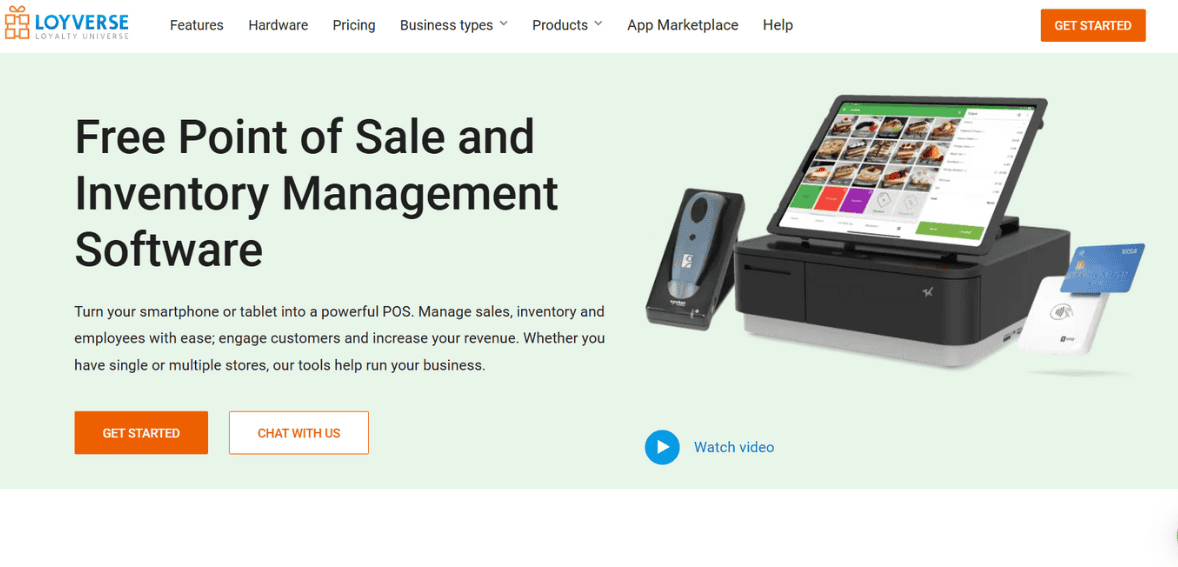
FAQs

What types of businesses benefit most from Ingenico solutions?

It is well suited for enterprises, retail chains, hospitality groups, and regulated industries that prioritize reliability and compliance.

Is Ingenico suitable for small businesses?

Small businesses can use Ingenico, but setup complexity and indirect sales models may make simpler POS solutions more attractive.

How future-ready is Ingenico’s technology?

Ingenico focuses on gradual evolution rather than rapid change. This makes it stable for long-term deployments but slower to adopt experimental features.

FortisPay Review

FortisPay markets itself as a full-service payment processing solution intended to accommodate businesses with flexibility in mind, from physical, e-commerce, and subscription payments. Like most contemporary payment processing solutions, the promised benefit lies in the ability to simplify payment processing methodologies for businesses in addition to being equipped with features and services not typically associated with payment agreements. Businesses choosing FortisPay would be seeking consistency in their operations. Lets read more about FortisPay Review.

The reason to review FortisPay in-depth is because it offers solutions that are centered on operational reliability rather than just being a solutions-oriented processor that businesses might not necessarily need. Rather, this processor seems to focus on businesses that are in need of reliable processing services, standard onboarding services, and those that require extended payment solutions in one provider rather than several.

However, FortisPay competes in an area where there are many options. It is important to understand how companies such as FortisPay deal with issues of price, compliance, risk, and integrations before making a decision. It’s worth taking the time to review FinTech companies and how they address the above issues to find the best solution.

Overview of FortisPay’s Core Payment Processing Capabilities | FortisPay Review

At its core, FortisPay provides standard merchant account services that allow businesses to accept card-present and card-not-present payments. Transactions are routed through established payment networks, with settlement handled on a regular funding schedule. From an operational standpoint, FortisPay functions much like a traditional processor rather than a lightweight payment facilitator, which can influence underwriting depth and account stability.

Merchants using FortisPay typically gain access to tools for authorizing payments, managing refunds, and handling charge adjustments through a centralized system. The platform focuses on maintaining consistent uptime and transaction reliability, which is often more important to established businesses than experimental features. Processing speeds and authorization flows are generally aligned with industry norms, meaning FortisPay does not reinvent payment mechanics but aims to execute them reliably.

One aspect worth noting is that FortisPay’s processing environment is designed to support multiple business models. Whether payments occur in a physical location, through remote orders, or via recurring billing, the underlying infrastructure remains unified. This reduces fragmentation for businesses operating across channels. However, merchants should understand that with this structure often comes more formal underwriting and compliance expectations compared to plug-and-play platforms. For businesses prepared for that level of structure, FortisPay’s core processing capabilities can offer consistency and control rather than shortcuts.

Supported Payment Methods and Card Networks

FortisPay supports the major credit and debit card networks that most businesses expect, ensuring compatibility with common consumer payment habits. This includes standard card-present transactions as well as card-not-present payments for phone, mail, and online orders. For many merchants, this baseline coverage is sufficient and aligns with daily transaction needs.

Beyond cards, FortisPay also supports ACH payments, which can be valuable for businesses handling recurring invoices, large ticket transactions, or B2B payments where bank transfers are preferred. ACH acceptance can help reduce processing costs compared to card payments, though it also introduces different settlement timelines and return risks that businesses must manage.

The platform’s approach to payment methods emphasizes reliability over experimentation. While some processors aggressively push newer digital wallets or alternative payment methods, FortisPay appears to prioritize stable, widely adopted options. This may feel conservative to merchants seeking cutting-edge payment trends, but it can be reassuring for businesses that value predictability and lower operational risk.

It is important for merchants to confirm which payment methods are enabled by default and which may require additional setup or underwriting approval. Not every account configuration is identical, and supported payment methods can vary based on business type and risk profile. Overall, FortisPay covers the essentials well, but businesses seeking extensive alternative payment ecosystems should review compatibility carefully.

Pricing Structure and Fee Transparency

Pricing is one of the most critical factors when evaluating FortisPay, and like many traditional processors, its structure may not be immediately visible upfront. Fees typically include processing rates, transaction fees, monthly account costs, and potential compliance-related charges. This layered pricing approach is common in the industry but requires careful review to avoid surprises.

FortisPay does not position itself as a flat-rate or instant-signup provider. Instead, pricing is often customized based on business volume, transaction types, and risk considerations. This can work in a merchant’s favor if rates are negotiated properly, especially for businesses with consistent processing volumes. However, smaller merchants or those unfamiliar with payment pricing should take time to understand how rates are calculated and where additional fees may apply.

Transparency largely depends on how clearly terms are communicated during onboarding. Merchants should review statements, contracts, and fee schedules closely before signing. Questions around early termination fees, monthly minimums, and PCI compliance charges should be addressed upfront. FortisPay’s pricing model is not inherently problematic, but it does require attention and due diligence.

For businesses that value tailored pricing and are willing to engage in negotiation, FortisPay’s approach can be reasonable. For those seeking instant clarity without conversation, the pricing structure may feel less accessible.

FortisPay Review

Hardware and POS Compatibility

FortisPay also supports different payment terminals and point-of-sale solutions to suit the business environment of the clients. There are countertop terminals for retail businesses, wireless readers for businesses that operate while on the move, and virtual terminals for offsite businesses. This is crucial for organizations that conduct operations in different environments.

Instead of binding merchants to devices that are only available from their own companies, FortisPay usually partners with already existing terminal providers. This can help solve the hardware issues that were prevalent with old solutions. Also, the ability to integrate with third-party POS solutions means that existing business processes are not discarded.

However, not all other hardware configurations are universal, so merchants need to check compatibility with providers. Additionally, certain point-of-sale systems might need other forms of integration or do not necessarily offer all of the universal features of FortisPay. Even hardware purchases or leases might vary, such as for devices, which would affect long-term budgets. In general, FortisPay’s hardware and point-of-sale solution is functional as opposed to restrictive. It can handle various business requirements without being overly complicated, though one ought to confirm whether their configuration supports FortisPay’s compatible system.

Virtual Terminal and Online Payment Tools

FortisPay offers virtual terminal functionality that allows merchants to process payments through a web-based interface. This is especially useful for businesses that accept phone or email orders, manage invoices, or operate without a traditional storefront. The virtual terminal typically supports card entry, transaction history access, and basic reporting.

Online payment tools extend this functionality to ecommerce and remote payment acceptance. Depending on configuration, businesses can integrate FortisPay into websites or use hosted payment pages to reduce compliance burdens. These tools are designed to balance usability with security, making them suitable for businesses that want online payments without building custom systems.

While FortisPay’s online tools are functional, they are not necessarily designed to compete with developer-centric platforms focused on deep customization. Instead, they aim to provide reliable payment acceptance with straightforward setup. This approach suits businesses that prioritize operational stability over advanced frontend control.

Merchants should evaluate whether FortisPay’s online tools align with their growth plans. For basic ecommerce and remote payments, they are generally sufficient. For highly customized online experiences, additional development resources or integrations may be required.

Recurring Billing and Subscription Management

Recurring billing is highly important in subscription models, membership, and service-based business. FortisPay enables you to set up recurring payments; it allows merchants to automate billing schedules and securely store payment credentials. This can reduce a lot of manual work and might improve cash flow consistency.

Billing schedules, customer profiles, and failed payments in most instances are also managed by the recurring billing tools. Operationally, this level of automation can seriously reduce administrative overhead. It minimizes missed payments when appropriately set up.

However, recurring billing also means more responsibility for customer communication and regulatory compliance. Merchants are supposed to make sure customers understand how they will handle the terms of the bills and that stored payment information is securely handled. FortisPay tools support these needs, but success depends on how well businesses manage setup and ongoing monitoring.

Businesses dependent on subscriptions will need to test the workflows for recurring billings in detail prior to scaling. While FortisPay provides the infrastructure for this, the merchant is still responsible regarding customer experience and accuracy of billing.

FortisPay Review

Security Standards and Compliance Support

Security and compliance are central to FortisPay’s value proposition. The platform supports PCI compliance requirements and uses encryption to protect sensitive payment data. These measures are essential for reducing exposure to data breaches and fraud.

FortisPay typically provides guidance on compliance responsibilities, but merchants should understand that compliance is a shared obligation. Tools and support can simplify the process, but businesses must still follow best practices and complete required validations. Failure to do so can result in additional fees or account issues.

Fraud prevention tools may include basic monitoring and transaction controls, though these features vary by account type. Businesses operating in higher-risk environments should clarify what protections are included and whether additional services are available. Overall, FortisPay’s security approach aligns with industry expectations. It is neither minimal nor overly complex, but merchants must engage actively with compliance requirements to maintain account health.

Reporting, Dashboards, and Transaction Insights

FortisPay provides reporting tools that allow merchants to view transaction history, settlements, and basic performance metrics. These dashboards are designed to support day-to-day reconciliation rather than advanced analytics. For many businesses, this level of reporting is sufficient to track revenue and identify issues.

Reports typically include transaction summaries, batch details, and funding information. Access to this data helps merchants resolve disputes, manage refunds, and understand cash flow timing. The interface focuses on clarity and function rather than visual complexity. Businesses seeking deep analytics or predictive insights may find reporting somewhat limited. However, for operational management and accounting alignment, FortisPay’s reporting tools perform their role effectively. Integration with external accounting systems can further extend reporting capabilities.

Integration Options and API Accessibility

FortisPay supports integrations with select ecommerce platforms, accounting tools, and POS systems. These integrations reduce manual data entry and help maintain consistency across systems. For many merchants, prebuilt integrations are sufficient and simplify implementation.

API access may be available for businesses that require custom workflows. This allows developers to connect FortisPay to proprietary systems or unique operational setups. However, API-based integration requires technical resources and should be evaluated carefully. FortisPay’s integration strategy emphasizes stability over experimentation. Businesses with standard integration needs will likely find adequate support, while highly customized environments may require additional planning.

Customer Support and Merchant Onboarding Experience

Onboarding and support can significantly influence a merchant’s long-term experience. FortisPay typically offers guided onboarding, which can help reduce setup errors and ensure compliance requirements are met. This structured approach may feel slower than instant signup platforms but can improve account stability.

Customer support responsiveness varies by account configuration, but access to knowledgeable representatives is a key expectation. Merchants should clarify support channels, response times, and escalation processes before onboarding. A structured onboarding process can be a strength for businesses that value guidance. However, those seeking immediate activation may need to adjust expectations.

Contract Terms, Account Stability, and Risk Policies

FortisPay operates with formal contracts that outline terms, fees, and termination conditions. Merchants should review these documents carefully, paying attention to contract length, early termination fees, and reserve policies. Account stability is influenced by underwriting and ongoing monitoring. FortisPay’s risk management approach aims to reduce sudden disruptions, but merchants must maintain transparent operations and communication. Understanding risk policies upfront can help prevent surprises. FortisPay’s structure favors businesses that value predictability and compliance.

Pros of Using FortisPay

It offers reliable processing, multi-channel support, and structured onboarding. Its focus on stability and compliance can benefit established businesses seeking consistency.

Potential Limitations and Considerations

Pricing complexity, formal contracts, and limited cutting-edge features may not suit every business. Merchants should weigh these factors carefully.

Ideal Business Types for FortisPay

It is best suited for small to mid-sized businesses, service providers, and merchants seeking dependable, long-term payment infrastructure.

FAQs

Is FortisPay suitable for small and growing businesses?

Yes, particularly for businesses prepared for structured onboarding and formal contracts.

Does FortisPay support both in-person and online payments?

Yes, it supports card-present, online, and recurring payment environments.

How transparent is FortisPay when it comes to fees and contracts?

Transparency depends on careful review and clear communication during onboarding.

Exact Payments Review

Exact Payments Review

Exact Payments operates in a crowded and competitive payment processing market where businesses expect reliability, clarity, and flexibility rather than novelty alone. For many merchants, choosing a processor is less about chasing the newest technology and more about finding a dependable system that supports everyday transactions without unnecessary friction. Exact Payments positions itself as a provider focused on delivering essential payment services across both physical and digital sales environments. Lets read more about Exact Payments Review.

This review takes a practical look at Exact Payments, examining how it functions as a payment processor rather than evaluating it through promotional claims. The goal is to assess whether its services align with the operational needs of modern businesses, including small companies, growing enterprises, and established merchants seeking consistency in payment handling.

Rather than focusing on individual success stories or marketing narratives, this review breaks down core features, pricing considerations, contracts, security practices, and support structures. Payment processing directly impacts cash flow, customer experience, and operational efficiency, making it important to evaluate providers based on transparency and long-term suitability.

Exact Payments offers a range of standard merchant services that most businesses require to accept payments confidently. Understanding how these services are structured, what flexibility they offer, and where limitations may exist helps merchants make informed decisions. This introduction sets the stage for a deeper, section-by-section analysis of how Exact Payments fits into the broader merchant services landscape.

Company Background and Market Position | Exact Payments Review

Exact Payments operates as a merchant services provider focused on enabling businesses to accept electronic payments efficiently. Like many processors in this space, it serves as an intermediary between merchants, card networks, issuing banks, and settlement systems. Its role is primarily operational, ensuring transactions are authorized, processed, and deposited correctly.

Within the broader payments market, Exact Payments competes with both large national processors and smaller regional providers. Its market position appears centered on offering accessible payment solutions without positioning itself as a niche or industry-exclusive platform. This approach can appeal to businesses that value straightforward processing rather than specialized or heavily customized systems.

The payment processing industry continues to evolve due to regulatory requirements, security expectations, and changes in consumer behavior. Exact Payments functions within these constraints by offering services that align with standard compliance and operational expectations rather than attempting to disrupt the space through unconventional models.

Rather than targeting only enterprise-level merchants, Exact Payments appears to serve a wide range of business sizes. This generalist positioning may benefit merchants who want a processor that supports both in-person and online transactions without introducing unnecessary complexity. Understanding Exact Payments’ background helps frame expectations. It operates within established industry norms, which can be reassuring for businesses that prioritize stability. However, this also means merchants should evaluate whether the platform’s offerings align with their specific operational needs rather than expecting extensive customization by default.

Core Payment Processing Capabilities

Essentially,​‍​‌‍​‍‌​‍​‌‍​‍‌ Exact Payments is the company that provides the basic services, which other businesses require to be able to accept electronic payments. Usually, these include credit card and debit card processing, which means that the transactions are allowed through the major card networks. For a great number of merchants, these elementary possibilities are their daily operations, thus they make the most reliability and consistency and not feature depth.

Exact Payments is a reliable partner for transaction authorization, clearing, and settlement, which are the stages where money moves from customers to merchants with minimal intervention. The main point seems to be an easy transaction to process operations in different payment environments, be it in-store or online. Besides card payments, a few processors like Exact Payments are also able to support ACH transactions. These can be handy if you want to do recurring billing, invoicing, or B2B payments. In general, ACH provides lower charges for the transactions than card payments, thus it is quite attractive for certain business models.

Such processing functions as the platform performs are simply capable of accepting the regular payment workflows and not extremely complicated transaction requirements. This strategy fits those businesses, which focus on the advantages of a simple and predictable payment system. Merchants, who are looking forward to taking the services of Exact Payments, should evaluate how these core capabilities fit into their sales channels and transaction volumes. Although advanced features may not be the company’s main priority, it still remains a primary expectation that the processing will be dependable. For businesses, which are in favor of stability and against experimentation, these core payment services can effectively meet their everyday ​‍​‌‍​‍‌​‍​‌‍​‍‌needs.

Supported Business Types and Industries

Exact Payments appears to support a broad range of business types rather than focusing exclusively on a single industry. This includes retail stores, service-based businesses, ecommerce merchants, and companies operating in mixed sales environments. Such flexibility allows the platform to cater to businesses with varied transaction patterns.

For small and mid-sized businesses, having a processor that accommodates multiple industries can be advantageous. It suggests that the system is adaptable to different transaction sizes, customer interactions, and payment frequencies. Businesses that operate both in-person and online may find value in a single processor supporting both channels. However, businesses operating in highly regulated or high-risk industries should carefully review eligibility requirements. Like most processors, Exact Payments is likely to follow standard underwriting practices, which may limit access for certain business categories.

The platform’s industry-agnostic approach means it may not offer industry-specific tools out of the box. Instead, it focuses on providing general payment functionality that can be applied across multiple sectors. Merchants should evaluate whether their industry requires specialized integrations or compliance features beyond standard payment processing. For businesses with straightforward payment needs, Exact Payments’ broad support can be sufficient. For those with niche requirements, additional evaluation may be necessary.

In-Person Payment Solutions

Exact Payments supports in-person transactions through traditional payment terminals and point-of-sale setups. These solutions are designed for businesses that rely on face-to-face customer interactions, such as retail shops, restaurants, or service providers. Payment terminals typically support chip cards, contactless payments, and magnetic stripe transactions. This coverage ensures compatibility with modern consumer payment preferences while maintaining backward compatibility for older cards.

Ease of use is an important factor for in-person payment systems. Staff members should be able to complete transactions quickly without extensive training. Exact Payments’ hardware options appear to focus on standard functionality rather than advanced customization. For mobile or on-the-go businesses, in-person payment solutions may also include portable or wireless devices. These can be useful for events, pop-up shops, or service professionals who operate outside fixed locations.

Merchants should consider hardware costs, replacement policies, and compatibility with existing equipment. Some processors allow merchants to reuse previously purchased terminals, while others require proprietary devices. In-person payment solutions from Exact Payments aim to cover essential requirements without introducing unnecessary complexity. Businesses seeking dependable face-to-face payment processing may find these tools adequate for daily operations.

Online and Ecommerce Payment Tools

Exact​‍​‌‍​‍‌​‍​‌‍​‍‌ Payments provides online payment tools that are designed to support ecommerce transactions as well as remote payments. These tools are a must for businesses that sell through websites, digital platforms, or invoice-based systems. Online payment features usually have hosted payment pages, checkout integrations, or payment gateways that connect with ecommerce platforms. These methods let customers carry out transactions in a secure way without the risk of sensitive payment data being exposed.

For merchants, the main point of concern is how easily the system can be integrated. Online payment tools should be compatible with the most commonly used ecommerce platforms or offer APIs for custom configurations. Although Exact Payments may not be heavy on advanced developer features, standard integration options are enough to help businesses start efficiently. Security is the most important factor when it comes to online payments. Tokenization, encryption, and secure data handling are the ways through which the rights of both merchants and customers are preserved. It is expected that the online tools of Exact Payments are in line with the set industry standards for payment security.

Merchants need to evaluate the extent to which online payments contribute to achieving their customer experience goals. Checkout processes that are simple can be one of the ways to lower cart abandonment and increase conversion rates. The ecommerce tools of Exact Payments are good enough for businesses that want to have reliable online payment acceptance without necessarily having to customize extensively. In the case of simple online selling, these tools are enough in terms of functional ​‍​‌‍​‍‌​‍​‌‍​‍‌coverage.

POS Systems and Hardware Options

Point-of-sale systems offered through Exact Payments are designed to support transaction processing while integrating basic business operations. These systems may include hardware and software components that manage sales, receipts, and payment acceptance.

Hardware options can range from countertop terminals to integrated POS systems with touchscreens. Businesses should evaluate whether these systems align with their operational workflow and physical setup. Flexibility is an important factor when selecting POS hardware. Some merchants prefer modular systems that allow them to add components as their business grows. Others value simplicity and minimal setup.

Exact Payments’ approach to POS systems appears focused on functionality rather than advanced retail management features. This suits businesses that prioritize payment acceptance over inventory or analytics depth. Merchants should also consider whether they can use existing hardware. Compatibility with third-party devices can reduce upfront costs and simplify transitions. POS systems play a central role in daily operations. Businesses evaluating Exact Payments should consider whether its hardware options meet current needs while allowing room for future growth.

Pricing Structure and Fees

Pricing is often one of the most critical factors when choosing a payment processor. Exact Payments may offer different pricing models, such as interchange-plus or tiered pricing, depending on merchant profile and transaction volume. Interchange-plus pricing is generally considered more transparent, as it separates card network fees from processor markup. Tiered pricing can be simpler to understand initially but may result in higher costs over time.

Merchants should review monthly fees, transaction fees, gateway charges, and any additional costs associated with equipment or compliance. Understanding the full cost structure helps avoid unexpected expenses. Exact Payments’ pricing structure should be evaluated based on individual business needs rather than headline rates. Processing costs can vary significantly depending on card types, transaction methods, and volume. Transparency is key. Merchants should request clear explanations of fees and review statements regularly. Comparing pricing with other providers can help determine overall competitiveness.

Contract Terms and Merchant Agreements

Contract terms define the long-term relationship between merchants and processors. Exact Payments may require agreements that specify service duration, renewal terms, and termination conditions. Merchants should review contract length carefully. Some agreements automatically renew unless canceled within a specific timeframe. Early termination fees may apply if a merchant exits the contract prematurely. Understanding these terms helps businesses avoid unexpected penalties. Flexibility in contracts can be particularly important for startups or seasonal businesses. Exact Payments’ agreements should be reviewed with attention to fee changes, service obligations, and dispute resolution processes. Clear communication during onboarding can help reduce misunderstandings. Merchants should consider whether contract terms align with their business plans. A shorter commitment may provide flexibility, while longer contracts may offer stability.

Security, Compliance, and Fraud Prevention

Security is a foundational requirement for payment processing. Exact Payments operates within industry standards designed to protect sensitive payment data. PCI DSS compliance ensures that merchants follow best practices for handling cardholder information. Processors typically provide guidance or tools to help merchants meet these requirements. Encryption and tokenization reduce the risk of data breaches by ensuring sensitive information is not stored in plain text. These measures are especially important for online and recurring payments. Fraud prevention tools may include transaction monitoring and risk assessment features. While not always highly customizable, these tools help identify suspicious activity. Merchants should understand their responsibilities in maintaining security. Even with a secure processor, internal practices play a critical role.

Reporting, Analytics, and Dashboard Features

Reporting tools help merchants track transactions, settlements, and performance. Exact Payments provides dashboards that offer visibility into payment activity. Standard reports may include daily transaction summaries, settlement reports, and chargeback tracking. These insights support accounting and reconciliation processes. Ease of use is important. Reports should be accessible without requiring technical expertise. Clear presentation helps merchants identify trends and issues quickly. Advanced analytics may not be a primary focus. Instead, reporting tools aim to deliver practical insights rather than deep business intelligence. Merchants should assess whether reporting meets their operational needs. For basic tracking and financial oversight, standard dashboards are often sufficient.

Customer Support and Account Management

Customer support plays a significant role in merchant satisfaction. Exact Payments offers support channels that may include phone, email, or online assistance. Availability and responsiveness can impact how quickly issues are resolved. Merchants should understand support hours and escalation processes. Account management services may be available for larger merchants or those with complex needs. Smaller businesses may rely primarily on general support. Clear communication during onboarding and ongoing support helps prevent operational disruptions. Merchants should evaluate whether support meets their expectations.

Strengths and Potential Limitations

Exact Payments’ strengths lie in providing reliable, standard payment processing services. Its broad industry support and straightforward offerings can suit many businesses. Potential limitations may include limited customization or advanced features compared to specialized platforms. Businesses with niche requirements should assess fit carefully. Understanding both strengths and limitations helps merchants make balanced decisions based on actual needs rather than assumptions.

Who Exact Payments Is Best Suited For

Exact Payments is well-suited for businesses seeking dependable payment processing without excessive complexity. Small to mid-sized businesses with standard payment needs may find it practical. Merchants prioritizing stability, clear workflows, and general payment acceptance may benefit most. Businesses requiring advanced integrations or industry-specific tools may need additional evaluation.

FAQs

Is Exact Payments suitable for small and growing businesses?

Exact Payments can support small and growing businesses by offering standard payment processing tools that scale with transaction volume.

Does Exact Payments support both in-person and online payments?

Yes, the platform supports both physical and online payment environments, allowing businesses to manage multiple sales channels.

What should merchants review before signing up with Exact Payments?

Merchants should carefully review pricing details, contract terms, support availability, and long-term business compatibility before committing.