
Author Archives: Linda Mae

Planet Payment Review

In today’s globalised economy, businesses increasingly serve customers across borders, making international payment acceptance a necessity rather than an option. Whether it is a tourist paying at a hotel, a shopper purchasing luxury goods abroad, or an online customer ordering from another country, seamless cross-border payments play a critical role in customer experience. This is where specialised payment providers like Planet Payment come into the picture. Lets read more about Planet Payment Review.

Planet Payment is a company that provides payment services globally by ensuring that the organizations are able to accept payment in different currencies. As opposed to other payment processors that process domestic transactions, Planet Payment is meant to provide better international payment processing capabilities. With the system, businesses can give their clients an opportunity to make payments in their own currencies for increased transparency.

The system has features that include dynamic currency conversion and international retail services. The system is designed to provide easier handling of foreign currency in various situations such as tourism and border towns. At the same time, Planet Payment is also more than just a payment processor because it offers tax free shopping and optimization of the payment process.

It is worth noting that Planet Payment cannot be said to have been designed for all types of businesses. Its unique features make it suitable for some situations only. This requires an evaluation of the capabilities of the company in order to determine if it fits a particular organization.

Company Background and Global Presence | Planet Payment Review

Planet Payment has evolved over the years as part of a broader global payments ecosystem, eventually becoming part of the larger Planet group. The company has built its reputation by focusing on cross-border commerce and providing payment solutions tailored to international customers.

The platform operates across multiple regions, including Europe, Asia, and North America, supporting businesses that cater to international travellers and global consumers. Its presence is particularly strong in sectors such as hospitality, luxury retail, and travel, where foreign currency transactions are common. This global footprint allows Planet Payment to support transactions in a wide range of currencies and payment methods.

One of the key aspects of its growth has been its partnerships with banks, acquirers, and merchants. Rather than positioning itself as a standalone payment gateway, Planet Payment often integrates into existing payment ecosystems. This approach allows it to extend its services without requiring businesses to completely replace their current payment infrastructure.

Over time, the company has expanded its offerings beyond basic currency conversion. It now includes services like tax-free shopping and integrated payment solutions for physical and digital environments. This evolution reflects a broader shift in the payments industry, where providers are expected to deliver end-to-end solutions rather than just transaction processing. Despite its global reach, the platform’s effectiveness still depends on how well its services align with specific business needs and customer demographics.

Core Services Offered by Planet Payment

Planet Payment offers a range of services designed to simplify international transactions and enhance customer experience. Its core offerings go beyond standard payment processing and focus heavily on cross-border optimisation.

One of its primary services is multi-currency payment processing. This allows businesses to accept payments from customers in different currencies while managing settlement in their preferred currency. For merchants dealing with international clientele, this reduces friction and simplifies financial operations.

Dynamic Currency Conversion is another valuable feature offered by Planet Payment. This means that people can view prices and make purchases in their own currencies. However, this convenience implies other issues connected with foreign currency exchange.

The company can help merchants implement a system of tax-free purchases in the cases when the local tax laws allow people from abroad to get a VAT refund. Such service would be useful in places where many international tourists visit.

Other useful options provided by Planet Payment are payment solutions for the retail and hospitality industries. These options imply in-store, online purchases, and various reports. Despite the variety of the services offered, it should be said that the importance of each solution varies depending on business strategies. Thus, companies that have little or no international clientele will hardly need certain services.

Multi-Currency Payment Processing Capabilities

Multi-currency payment processing is one of the core strengths of Planet Payment. As businesses increasingly cater to international customers, the ability to accept payments in multiple currencies becomes a critical requirement rather than a luxury.

Planet Payment enables merchants to process transactions in various currencies while maintaining control over settlement preferences. This means businesses can accept payments in a customer’s local currency while receiving funds in their own operating currency. This flexibility helps reduce operational complexity and eliminates the need for separate currency handling systems.

As for customers, it adds transparency. There is no need to deal with fluctuating exchange rates that will be calculated and used by the customer’s bank after purchasing. This can add an element of security and increase customer comfort during purchases, especially for high-end products.

Nevertheless, there are several aspects to consider regarding exchange rates and margins in multi-currency payments. Despite the obvious advantages of using such a payment method, it is important for companies to learn how exchange rates work and what effect they have on their revenue. To sum up, this option will be perfect for any company working in foreign markets. It will be very helpful if there are a lot of international customers within your industry.
Planet Payment Review

Dynamic Currency Conversion Explained

Dynamic Currency Conversion is one of the most distinctive features offered by Planet Payment. It allows international customers to choose whether they want to pay in the merchant’s local currency or their own home currency at the POS. From a customer perspective, this feature provides immediate clarity. Instead of waiting for their bank to convert the transaction later, they can see the final amount in their own currency before completing the purchase. This can reduce uncertainty and improve confidence during payment.

The use of DCC technology for merchants can help generate extra income for them. Some percentage of the currency exchange margin is allocated for the merchant in return, thus rendering DCC financially viable in large volumes. Hotels and places where a great number of tourists shop are examples of where DCC technology can work successfully.

Despite all its advantages, DCC still faces some criticism. The rates used in currency exchange transactions carried out via DCC are usually inferior to those offered by banks and financial card companies. Consequently, consumers may find themselves paying more in case they opt to pay using foreign currency rather than local money. In that respect, DCC technology might become unpopular among customers.

Transparency is the key here. As long as customers are properly informed about their options, DCC can be helpful. Otherwise, the experience of customers may deteriorate. Planet Payment’s use of DCC technology is sound enough but the efficiency of its application largely relies on its responsible use.

Payment Methods Supported

Planet Payment supports a wide range of payment methods, making it adaptable to different markets and customer preferences. In today’s payment landscape, offering multiple payment options is essential, especially for businesses serving international customers. The platform primarily supports major card networks such as Visa, Mastercard, and other globally recognised providers. These remain the most widely used payment methods for cross-border transactions, particularly in retail and hospitality environments.

Apart from traditional card payments, Planet Payment is capable of handling digital wallets and other non-traditional means of payments in some geographic areas. This is important as consumer behavior shifts toward mobile and contactless payments. Using them can help achieve higher conversion rates and greater client satisfaction.

The capability of Planet Payment to manage various kinds of payments in one payment system will make business operation easier for companies since there would be no need to use several different payment systems provided by other organizations.

It should be noted, however, that different regions may have access to a different range of payment methods offered by the company. The business organization should find out whether the particular payment method is available in their region. In general, Planet Payment is a good choice concerning payment options, although their efficiency largely depends on their compatibility with the intended audience.

Integration and Technology Infrastructure

Planet Payment is designed to integrate into existing payment ecosystems rather than replace them entirely. This makes it particularly useful for businesses that already have established payment systems but want to add cross-border capabilities. The platform offers integration through APIs and partnerships with payment acquirers, POS systems, and e-commerce platforms. This allows businesses to incorporate features like multi-currency processing and Dynamic Currency Conversion without overhauling their entire payment infrastructure.

For physical retail and hospitality businesses, integration with POS systems is a key advantage. It enables seamless in-store transactions without requiring major changes to existing workflows. For online businesses, API-based integration allows for flexibility in customising the checkout experience. However, the complexity of integration can vary. Larger enterprises with dedicated technical teams may find it easier to implement, while smaller businesses may face challenges if they lack technical resources. The level of support provided during integration also plays a significant role in the overall experience.

In general, Planet Payment’s technology infrastructure is built to support scalability and global operations. Its ability to integrate into different environments is a strength, but the ease of implementation depends on the specific setup and business requirements.

Solutions for Retail, Hospitality, and Travel

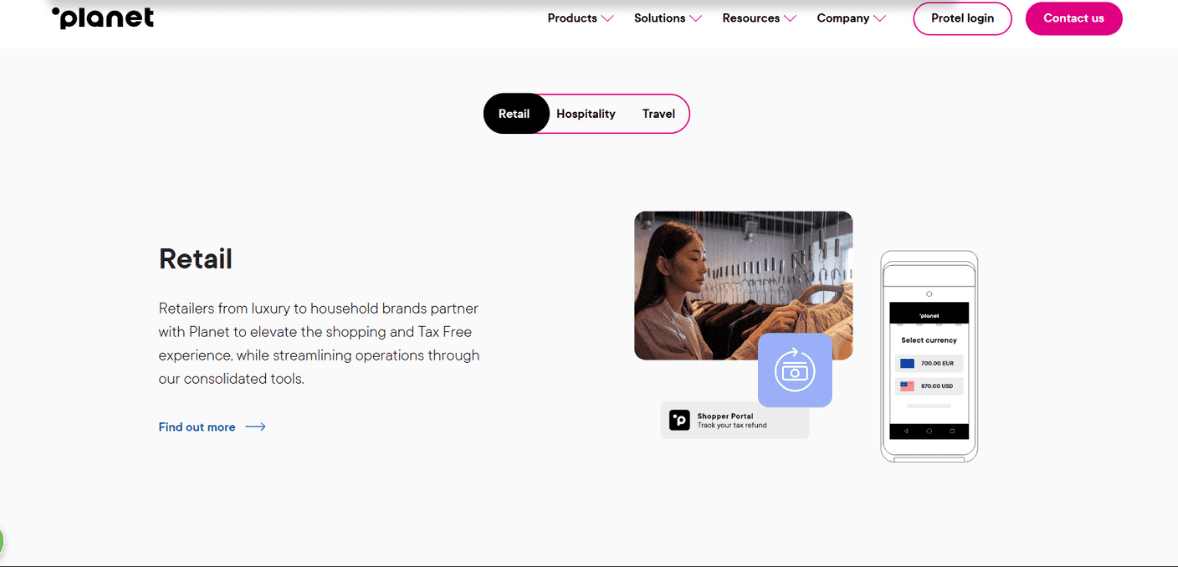
Planet Payment’s solutions are particularly tailored for industries that deal with international customers on a regular basis. Retail, hospitality, and travel are the primary sectors where the platform delivers the most value. In retail environments, especially luxury and tourist-focused stores, the ability to offer multi-currency pricing and tax-free shopping is highly relevant. These features enhance the shopping experience for international customers and can encourage higher spending.

In the hospitality sector, hotels benefit from features such as currency conversion at the time of booking or checkout. This can simplify billing for international guests and reduce confusion around final charges. The travel industry also benefits from Planet Payment’s capabilities, particularly in areas such as airport retail and international ticketing. In these environments, speed and clarity of transactions are critical.

What makes Planet Payment effective in these sectors is its focus on customer experience. By addressing common pain points in cross-border transactions, it helps businesses serve international customers more efficiently. However, businesses outside these sectors may not find the same level of value. The platform’s strengths are closely tied to environments where foreign currency transactions are frequent and significant.

User Experience for Merchants and Customers

User experience is a critical factor in any payment solution, and Planet Payment approaches this from both the merchant and customer perspectives. For customers, the experience is generally straightforward. Features like Dynamic Currency Conversion provide clarity at the point of payment, allowing them to understand exactly what they are being charged. This can reduce uncertainty, especially in unfamiliar environments such as foreign countries.

For merchants, the experience depends largely on the integration and interface provided. The platform aims to simplify transaction management through consolidated systems, but the actual usability can vary based on implementation. Businesses with well-integrated systems are likely to have a smoother experience compared to those with more complex setups.

Another aspect of user experience is speed. Transactions need to be processed quickly to avoid delays, particularly in high-traffic environments like retail stores or hotels. Planet Payment generally performs well in this area, but performance can depend on network conditions and system configuration. Overall, the user experience is functional and focused on practicality. It may not be the most advanced interface in the market, but it delivers the essential features needed for cross-border transactions.

Pricing Structure and Fees

Pricing is one of the more complex aspects of Planet Payment. Unlike simple flat-rate payment processors, its pricing structure involves multiple components, particularly when currency conversion is involved.

The primary cost elements include transaction fees, currency conversion margins, and potential service charges for additional features. Dynamic Currency Conversion, for example, includes a margin on exchange rates, which is shared between the provider and the merchant. One challenge for businesses is the lack of complete transparency in some cases. Exchange rate margins and revenue-sharing structures may not always be clearly visible to end customers, which can create confusion or dissatisfaction if not properly communicated.

For merchants, the financial benefit often comes from the revenue share generated through DCC. However, this needs to be balanced against customer perception. If customers feel they are being charged higher rates, it could impact trust and repeat business. Compared to standard payment processors, Planet Payment may appear more complex in terms of pricing. Businesses need to carefully evaluate the total cost, including hidden margins, rather than focusing only on headline transaction fees.
Planet Payment Review

Security, Compliance, and Risk Management

Security is a fundamental requirement in payment processing, and Planet Payment adheres to industry standards to ensure safe transactions. This includes compliance with PCI DSS, which governs how payment data is handled and stored.

The platform incorporates encryption and secure data transmission to protect sensitive information during transactions. These measures are essential in preventing fraud and maintaining customer trust. In addition to basic security protocols, Planet Payment also addresses risk management through monitoring and compliance frameworks. This is particularly important in cross-border transactions, where regulatory requirements can vary across regions.

However, as with any payment provider, security is not solely dependent on the platform itself. Businesses must also follow best practices in handling payment data and maintaining secure systems. Overall, Planet Payment meets standard security requirements expected in the industry. While it does not necessarily stand out as a leader in advanced fraud prevention, it provides the necessary safeguards for most business use cases.

Reporting, Analytics, and Insights

Reporting and analytics are essential for businesses to understand their payment performance, and Planet Payment provides tools to track transaction data and trends. The platform offers dashboards and reporting features that allow merchants to monitor sales, currency usage, and transaction volumes. This can be useful for identifying patterns, particularly in businesses with international customers.

For example, businesses can analyse which currencies are most commonly used or how often customers opt for Dynamic Currency Conversion. These insights can help in making operational and pricing decisions. However, the depth of analytics may not be as advanced as specialised data platforms. While the available reports are functional, businesses looking for highly detailed insights may need to integrate additional tools.

Another consideration is ease of access. The usability of reporting features depends on how the system is configured and how intuitive the interface is for users. Overall, Planet Payment provides sufficient reporting capabilities for most operational needs, but it may not fully replace dedicated analytics solutions for data-heavy businesses.

Pros and Cons of Planet Payment

Planet Payment offers several advantages, particularly for businesses dealing with international customers. Its ability to handle multi-currency transactions and provide Dynamic Currency Conversion makes it a strong option for cross-border commerce.

One of its main strengths is its focus on enhancing customer experience through transparent pricing and localised payment options. The integration with existing systems is another advantage, allowing businesses to adopt its features without major infrastructure changes. However, there are also limitations. Pricing complexity is one of the most notable concerns, as currency conversion margins can make transactions more expensive for customers. Transparency around these costs is not always clear, which can impact trust.

The platform is also more suited to specific industries such as retail and hospitality. Businesses with primarily domestic transactions may not find significant value in its features. Additionally, while the technology is reliable, it may not offer the most advanced interface or analytics capabilities compared to newer payment solutions.

Final Verdict: Is Planet Payment Worth It?

Planet Payment is a specialised solution designed for businesses that operate in international environments. Its strengths lie in handling cross-border transactions, offering multi-currency support, and enhancing payment experiences for global customers. For businesses in sectors like hospitality, luxury retail, and travel, the platform can provide tangible benefits. Features like Dynamic Currency Conversion and tax-free shopping can improve customer convenience and generate additional revenue. However, it is not a universal solution.

Businesses with limited international exposure may find its features unnecessary or overly complex. Pricing considerations, particularly around currency conversion, also need to be carefully evaluated. Ultimately, Planet Payment is best suited for businesses that prioritise international customer experience and have the transaction volume to justify its features. For others, simpler payment solutions may be more appropriate.

FAQs

1. What is Planet Payment mainly used for?

Planet Payment is primarily used to enable businesses to accept international payments, offer multi-currency pricing, and provide services like Dynamic Currency Conversion.

2. How does Dynamic Currency Conversion impact customers?

It allows customers to see and pay in their home currency, but the exchange rates may be higher than standard bank rates.

3. Is Planet Payment suitable for small businesses?

It can be used by small businesses, but it is generally more beneficial for companies with frequent international transactions.


Pivotal Payments Review

Pivotal Payments Review

Pivotal Payments operates as a payment processing provider that supports businesses across retail, e-commerce, and service industries. In a market that includes both legacy processors and newer fintech platforms, it positions itself as a full-service solution that combines payment acceptance with supporting infrastructure. The company focuses on helping businesses manage transactions across physical, online, and mobile environments. Lets read more about Pivotal Payments Review.

Selecting a payment processor today involves more than just the ability to accept card payments. Businesses are increasingly looking for reliability, transparent pricing, and systems that integrate smoothly into their operations. This review takes a practical and unbiased look at how Pivotal Payments performs across these expectations, without assuming it is the right choice for every business.

Company Background and Market Position | Pivotal Payments Review

Pivotal Payments has managed to establish itself over time in the North American payment industry, which is an industry that has undergone tremendous transformation. The industry’s transformation from conventional POS systems to integrated and cloud-based payment solutions has influenced how companies like Pivotal Payments position themselves. The company has gradually expanded its capacity beyond transaction processing to include payment technology and business solutions.

Pivotal Payments is in that category that is neither too big as a global processor nor too small as a niche player. This means that it serves a wide array of businesses that include independent retailers and mid-sized businesses that require more comprehensive solutions. However, it faces stiff competition from other companies that have simpler solutions and more transparent pricing models.

Although it is not always at the forefront as a brand in the industry, it is still an option for businesses that need conventional merchant solutions and innovative payment solutions. The fact that it has been in business for a long time means that it is stable in terms of operations, although this does not automatically qualify it as better than other solutions.

Core Payment Processing Services

At its core, Pivotal Payments is simply a provider of standard payment processing solutions that allow businesses to accept credit and debit card transactions. These solutions include in-person and remote transaction processing, making it possible for businesses to conduct their activities without having to rely on different service providers for different transaction channels. The platform supports standard card brands and allows for transaction processing in line with industry standards.

Beyond the core transaction processing solutions, Pivotal Payments offers other solutions that it claims will make it easier for businesses to conduct payment processing. This includes solutions for recurring billing, transaction reporting, and settlement. These solutions are particularly useful for businesses that operate in service-related industries and subscription models.

While it is true that Pivotal Payments offers reliable core transaction processing solutions, it is also true that these solutions are not particularly differentiated from what other competitors in the industry are offering. This is because most modern payment processing companies today offer standard transaction processing solutions. This means that, in terms of core solutions alone, Pivotal Payments is simply meeting expectations.

Supported Payment Methods and Technologies

Pivotal Payments offers a number of payment types that are currently popular. This includes chip cards, contactless payments, and mobile payments. All of these are currently standard within the industry, and it is necessary for a business to have them if they are to meet the expectations of customers. The inclusion of contactless payments and mobile payments is especially important if the business is operating in a situation where speed of payment is important. Customers are increasingly looking for the option of paying through a smartphone or a contactless card, and this option is available without any significant modifications required from the business.

Pivotal Payments does not stop at in-person payments but also allows for online payments. This allows a business to extend its operations to the online world without needing to acquire a separate system. Although the support for technology is comprehensive, it does not go beyond what is currently standard within the industry. The platform allows for a number of payment types, but it does not necessarily go beyond what is standard within the industry.

POS Systems and Hardware Offerings

Pivotal Payments provides POS hardware that is used for in-person transactions. The hardware is suitable for various business types. It includes card terminals, mobile readers, and POS systems. The hardware is designed to integrate seamlessly with Pivotal’s payment processing infrastructure. The hardware is suitable for businesses that need complete in-store solutions. It provides an effective solution for businesses that need to manage transactions, record sales, and interact with customers. The hardware is also beneficial for businesses that need mobile readers. 

The mobile readers allow businesses with flexible operations or small businesses to make transactions. However, businesses may not find the hardware system flexible or customized. The hardware system may not be suitable for businesses that have unique requirements. Some businesses may also need POS features. Therefore, businesses that have unique requirements may not find Pivotal’s hardware system effective. The hardware system is effective for businesses that need standard solutions. However, it may not be effective for businesses that have unique requirements.

E-commerce and Online Payment Capabilities

For businesses operating online, Pivotal Payments provides tools to accept digital transactions through websites and e-commerce platforms. This includes payment gateway functionality, which enables secure processing of online payments. The system is designed to integrate with various e-commerce platforms, allowing businesses to connect their storefronts with payment processing.

The platform supports common online payment scenarios such as one-time purchases, recurring billing, and subscription-based models. This makes it suitable for businesses that rely on digital sales channels as part of their revenue strategy. Security measures are also built into the online payment process to protect customer data.

While these capabilities are necessary for modern businesses, they are not particularly unique. Many payment providers offer similar integrations and features, often with more developer-friendly tools or simplified onboarding processes. As a result, businesses with complex e-commerce needs may want to compare options before deciding. Overall, the online payment capabilities are solid and reliable, but they follow established industry standards rather than redefining them.

Pricing Structure and Fees

Pricing is one of the most important factors when evaluating a payment processor, and Pivotal Payments follows a model that includes transaction fees, monthly charges, and potential additional costs. Like many providers, the exact pricing structure may vary depending on the type of business, transaction volume, and negotiated terms.

This variability can make it difficult for businesses to get a clear picture of costs upfront. While some merchants may benefit from customized pricing, others may find the lack of standardised transparency challenging. Additional fees, such as setup charges or hardware costs, can also impact the overall expense.

Compared to newer fintech platforms that emphasise straightforward pricing, this model may feel less predictable. Businesses need to carefully review agreements and understand all associated costs before committing. In summary, while the pricing structure is typical of traditional payment processors, it may require more due diligence from merchants to fully understand its implications.

Contract Terms and Cancellation Policy

Contract terms with Pivotal Payments can include fixed agreements that outline the duration of service and conditions for cancellation. In some cases, businesses may encounter early termination fees if they choose to end the contract before its completion. This approach is common among traditional merchant service providers, but it can be a drawback for businesses that prefer flexibility. Companies that anticipate changes in their operations or want the ability to switch providers easily may find such terms restrictive.

It is important for businesses to review contract details carefully before signing. Understanding the length of the agreement, renewal conditions, and any associated penalties can prevent unexpected costs later on. While the structured contracts provide stability, they may not align with the expectations of businesses that prefer more adaptable arrangements.

Security Features and PCI Compliance

Security is a critical aspect of payment processing, and Pivotal Payments incorporates standard measures to protect transaction data. This includes encryption, secure data transmission, and adherence to PCI compliance requirements. These features are essential for maintaining trust and preventing fraud. The platform also supports tokenization, which reduces the risk of sensitive data being exposed during transactions. This is particularly important for businesses that handle recurring payments or store customer information.

While these security features are necessary and effective, they are also widely implemented across the industry. Most payment processors offer similar protections as part of their core services. Overall, the security framework is solid and meets expected standards, but it does not provide a distinct competitive advantage.

Integration and Compatibility

Pivotal Payments offers integration capabilities that allow businesses to connect their payment systems with other tools such as accounting software and business management platforms. This helps streamline operations and reduce manual work. The ability to integrate with third-party systems is important for businesses that rely on multiple tools to manage their workflows. It ensures that payment data can be synchronised with other systems, improving accuracy and efficiency.

However, the ease of integration can vary depending on the specific tools being used. Some businesses may find the process straightforward, while others may require additional support or technical expertise. In general, the platform provides the necessary compatibility, but it may not be as developer-friendly or flexible as some modern alternatives.

Pivotal Payments Review

Customer Support and Service Quality

Customer support plays a key role in the overall experience of using a payment processor. Pivotal Payments provides support through various channels, including phone and online communication. This allows businesses to seek assistance when issues arise. The quality of support can vary based on factors such as response time and the complexity of the issue. Some businesses may find the support adequate, while others may experience delays or challenges in resolving problems.

Consistent and reliable support is particularly important for payment systems, as any downtime or issue can directly impact revenue. Businesses should consider this factor carefully when evaluating the platform. Overall, the support offering is functional, but experiences may differ depending on individual circumstances.

Pros of Using Pivotal Payments

One of the main advantages of Pivotal Payments is its ability to provide a comprehensive payment solution that covers multiple channels. Businesses can manage in-store, online, and mobile transactions through a single provider, which simplifies operations. The platform also offers a range of hardware and integration options, allowing businesses to build a system that fits their needs. Its established presence in the market suggests a level of reliability and operational stability.

Another benefit is the availability of features such as recurring billing and reporting tools, which can support business growth and efficiency. These features make it suitable for a variety of business models. While these advantages are valuable, they are not unique to Pivotal Payments, which means businesses should still compare options before making a decision.

Cons and Potential Drawbacks

One of the key drawbacks of Pivotal Payments is the lack of clear and standardised pricing. Businesses may need to go through a sales process to fully understand costs, which can create uncertainty. Contract terms, including potential early termination fees, can also be a concern for businesses that prefer flexibility. These conditions may limit the ability to switch providers without incurring additional costs.

Another limitation is that the platform does not stand out significantly in terms of innovation. Many of its features are comparable to what competitors offer, which means it may not provide a strong differentiating advantage. These factors do not make it a poor choice, but they highlight areas where businesses should evaluate their priorities carefully.

How Pivotal Payments Compares to Competitors

When compared to other payment processors, Pivotal Payments falls into the category of traditional merchant service providers that have adapted to modern requirements. It offers a comprehensive set of features, but it does not always match the simplicity or transparency of newer fintech platforms. Some competitors provide more straightforward pricing models and faster onboarding processes, which can be appealing to small businesses. Others offer more advanced integrations or developer tools for complex use cases.

At the same time, Pivotal Payments provides a level of consistency and experience that can be reassuring for businesses that prefer established providers. The choice ultimately depends on whether a business values flexibility and simplicity over traditional service structures.

Who Should Use Pivotal Payments

Pivotal Payments is best suited for businesses that need a stable and comprehensive payment processing solution without requiring highly specialised features. This includes retail stores, service providers, and businesses with both physical and online sales channels. It may also appeal to businesses that are comfortable with traditional contract structures and prefer working with established providers. Companies that value reliability over cutting-edge innovation may find it a suitable option. However, businesses that prioritise transparent pricing, flexibility, or advanced integrations may want to explore alternatives before making a decision.

Final Verdict

Pivotal Payments delivers a reliable and well-rounded payment processing solution that meets the needs of many businesses. It covers essential features, supports multiple payment methods, and provides the infrastructure required for both in-person and online transactions. At the same time, it does not clearly stand out in a competitive market where many providers offer similar or more advanced capabilities. Factors such as pricing transparency and contract flexibility may influence whether it is the right fit. For businesses seeking a traditional and stable payment processor, it remains a viable option. For those looking for simplicity, innovation, or greater flexibility, comparing alternatives is recommended before making a final decision.

Frequently Asked Questions

Is Pivotal Payments suitable for small businesses?

Pivotal Payments can work for small businesses, especially those that need both in-store and online payment capabilities, but pricing and contract terms should be reviewed carefully.

Does Pivotal Payments charge early termination fees?

In some cases, early termination fees may apply depending on the contract, so businesses should check agreement details before signing.

What payment methods does Pivotal Payments support?

The platform supports credit cards, debit cards, contactless payments, and mobile wallets, along with online payment options.

Payscout Review

Payscout Review

Businesses have more options than ever when it comes to choosing a payment processor. From traditional merchant account providers to newer fintech platforms, the market is filled with solutions that promise flexibility, speed, and competitive pricing. This abundance of choice can make decision making more complex, especially when each provider presents similar claims but delivers different real world outcomes. Lets read more about Payscout Review.

Payscout is one such payment processor that positions itself as a global payment solutions provider catering to a wide range of businesses. It offers services that go beyond basic transaction processing, including international payment capabilities, risk management tools, and support for specialised industries. For businesses that operate across borders or deal with complex payment environments, such offerings can be particularly relevant.

Company Background and Market Position | Payscout Review

Payscout operates as a payment processing company with a focus on delivering both domestic and international payment solutions. Over time, it has positioned itself as a provider that bridges traditional merchant services with more global and technology driven payment requirements. This positioning places it somewhere between conventional processors and modern fintech platforms.

The company is known for working with businesses that require more than basic card acceptance. This includes companies that operate in multiple countries or those that need support for complex transaction types. By offering a combination of acquiring services, payment gateway integrations, and risk management tools, Payscout attempts to differentiate itself in a competitive market.

In terms of market presence, Payscout does not operate at the scale of some of the largest global processors, but it maintains relevance through its focus on tailored solutions. This can be appealing for businesses that do not want a one size fits all approach. However, a smaller market footprint may also mean less publicly available information compared to larger competitors. Understanding where Payscout fits in the broader payment ecosystem helps set realistic expectations. It is not positioned as a basic low cost processor, nor as a purely technology driven platform. Instead, it operates in a middle ground that combines service, flexibility, and global reach.

Core Payment Processing Services

Payscout’s core offering revolves around merchant account services that enable businesses to accept card payments both online and in person. These services typically include credit and debit card processing, payment gateway access, and settlement capabilities. For most businesses, these features form the foundation of their payment operations.

One of the key aspects of Payscout’s service is its ability to support multiple transaction environments. Businesses can process payments through physical POS systems, eCommerce platforms, or virtual terminals. This flexibility allows merchants to manage payments across different sales channels without relying on multiple providers.

The platform also supports recurring billing and subscription based payment models, which are increasingly common in industries such as SaaS and digital services. This makes Payscout suitable for businesses that require automated billing and ongoing payment management.

In addition to basic processing, Payscout includes tools for reporting and transaction tracking. These tools help businesses monitor payment activity, reconcile accounts, and identify trends in customer behaviour. While these features are expected in most modern payment systems, their effectiveness depends on usability and data accuracy. Overall, Payscout’s core services align with industry standards, offering the essential functionality needed to run day to day payment operations.

International Payment Capabilities

One of the areas where Payscout aims to differentiate itself is in its international payment capabilities. Businesses that operate across borders often face challenges related to currency conversion, regulatory compliance, and varying payment preferences. Payscout attempts to address these challenges by offering solutions designed for global commerce.

The platform supports multi currency transactions, allowing businesses to accept payments in different currencies without requiring separate accounts for each region. This can simplify operations for companies that sell to international customers. It also helps improve the customer experience by enabling payments in local currencies.

Payscout’s approach to international payments also includes support for cross border acquiring. This means businesses can process transactions in different regions while managing settlements through a centralised system. For companies expanding into new markets, this can reduce the complexity of setting up local payment infrastructure.

However, international payment capabilities often come with additional costs and regulatory requirements. Businesses need to carefully evaluate how Payscout handles exchange rates, transaction fees, and compliance obligations in different regions. While the platform offers global reach, the actual effectiveness of these features depends on the specific markets a business operates in. A detailed assessment of regional support is essential before relying on these capabilities.

Supported Payment Methods and Integrations

Payscout supports a variety of payment methods to accommodate different customer preferences. This typically includes major credit and debit cards, which remain the most widely used payment options. In addition to card payments, the platform may also support digital wallets and alternative payment methods depending on the integration setup.

For businesses operating online, integration capabilities play a critical role. Payscout provides access to payment gateways and APIs that allow businesses to connect their websites or applications to the processing system. This enables seamless payment acceptance without requiring extensive technical development.

The platform is also designed to work with existing POS systems and eCommerce platforms. This compatibility helps businesses integrate Payscout into their current operations without major disruptions. However, the ease of integration can vary depending on the specific system being used.

Customisation options are another important aspect of integrations. Businesses with unique requirements may need tailored solutions that go beyond standard setups. Payscout appears to offer some flexibility in this area, although the extent of customisation may depend on the level of support provided. Overall, the range of supported payment methods and integrations makes Payscout adaptable to different business models, but implementation may require careful planning.

Pricing Structure and Fee Transparency

Pricing is one of the most important factors when evaluating a payment processor, and it is also one of the most complex. Payscout, like many traditional processors, does not always present its pricing in a simple or fully transparent manner. Instead, pricing may vary based on factors such as business type, transaction volume, and risk profile.

Typically, payment processors charge a combination of transaction fees, monthly fees, and additional costs for services such as chargeback handling or international payments. Payscout is likely to follow a similar structure, although exact rates may not be clearly disclosed upfront. This can make it difficult for businesses to compare costs without engaging directly with the provider.

Another consideration is the potential for variable fees depending on card types or transaction methods. For example, international transactions or premium cards may incur higher charges. Businesses need to understand these variations to accurately estimate their processing costs.

Transparency in pricing is an area where some merchants may have concerns. Without clear documentation of all fees, it becomes challenging to identify hidden costs or unexpected charges. Reviewing contracts carefully and requesting detailed fee breakdowns is essential. A thorough understanding of pricing is critical before committing to any payment processor, and Payscout is no exception.

Payscout Review

Setup Process and Onboarding Experience

The setup process for a payment processor can significantly impact how quickly a business can start accepting payments. Payscout’s onboarding experience typically involves account approval, documentation verification, and system configuration. These steps are standard across the industry, but the efficiency of the process can vary.

Businesses are usually required to provide financial information, business details, and compliance related documents during onboarding. This is particularly important for processors that support international transactions or higher risk industries. While these requirements ensure security and compliance, they can also extend the approval timeline.

Once approved, merchants need to integrate the payment system into their operations. This may involve setting up payment gateways, configuring POS systems, or connecting APIs. The level of technical support available during this stage can influence how smooth the process is.

Some businesses may find the onboarding process straightforward, especially if they have prior experience with payment systems. Others may require more guidance, particularly when dealing with complex integrations or international setups. Overall, Payscout’s onboarding experience appears to align with industry norms, with the actual experience depending on the complexity of the business and the level of support provided.

Security Standards and Compliance

Security is a critical aspect of any payment processing system, as it directly affects both businesses and their customers. Payscout operates within the framework of industry security standards, including compliance with PCI requirements. These standards are designed to protect sensitive payment data and reduce the risk of fraud.

In addition to compliance, payment processors typically implement encryption and tokenisation to secure transactions. These technologies help ensure that card information is not exposed during processing. While Payscout is expected to follow these practices, the effectiveness of implementation is what ultimately matters.

Fraud prevention tools are another important component of security. These tools can include transaction monitoring, risk scoring, and chargeback management features. For businesses operating in higher risk environments, such tools are essential for maintaining operational stability.

Regulatory compliance is particularly important for companies handling international payments. Different regions have specific requirements related to data protection and financial transactions. Payscout’s ability to navigate these regulations is a key factor in its global offering. While the platform appears to meet standard security expectations, businesses should always verify compliance details and ensure that security measures align with their specific needs.

Payscout Review

User Experience and Technology Platform

The usability of a payment platform plays a major role in day to day operations. Payscout provides access to dashboards and reporting tools that allow businesses to monitor transactions and manage accounts. The effectiveness of these tools depends on how intuitive and responsive the interface is. A well designed platform should allow users to access key information quickly, such as transaction history, settlement reports, and chargeback details. If the interface is complex or difficult to navigate, it can slow down operations and increase the likelihood of errors.

Technology reliability is another important factor. Payment systems need to operate consistently without downtime or performance issues. Even short disruptions can impact sales and customer experience. Payscout’s platform is expected to meet industry reliability standards, but real world performance may vary.

For businesses that rely on integrations, the stability of APIs and compatibility with existing systems is equally important. Technical issues in these areas can create operational challenges. Overall, Payscout offers the core technology expected from a payment processor, but the actual user experience may depend on the specific implementation and business requirements.

Customer Support and Service Quality

Customer support is often a deciding factor when choosing a payment processor, especially when issues arise. Payscout provides support through various channels, which may include phone, email, and account management services. The quality of this support can significantly affect the overall experience. Responsive support is essential for resolving transaction issues, handling chargebacks, or addressing technical problems. Delays in support can lead to financial losses or operational disruptions. Businesses need to evaluate how quickly and effectively Payscout responds to queries.

Some payment processors offer dedicated account managers for larger clients. This can improve communication and provide more personalised assistance. It is important to understand whether such services are included or come at an additional cost.

Customer feedback on support quality can vary, as experiences often depend on the nature of the issue and the level of service required. While some users may report positive experiences, others may face challenges in getting timely assistance. A reliable support system is critical for long term satisfaction, making this an important area to assess before choosing Payscout.

Industry Specialisation and High Risk Merchant Support

Payscout appears to be dedicated to serving businesses with unique and possibly complex payment needs. This would include those industries that may be considered ‘higher risk’ by traditional payment processors. These types of businesses tend to struggle with finding reliable payment solutions. This makes them an attractive target for industry specialists.

High risk merchant services require additional scrutiny during the onboarding process and monitoring of transactions. This is to mitigate potential risks of chargeback and/or regulatory compliance. Payscout’s willingness to work with these types of businesses may be seen as an advantage. Industry specialists tend to offer additional support to businesses within their industry. This would be especially beneficial for those businesses operating within a niche market.

High risk services tend to come with higher fees and possibly harsher terms. Businesses must weigh these two factors against the potential benefits of working with a processor who understands their industry. Payscout appears to be flexible with industry specialisation. However, they do require businesses to carefully consider fees and terms.

Pros of Using Payscout

Payscout has a number of advantages that may be beneficial to a business with particular requirements. First off, Payscout’s concentration on global payments may be beneficial to a business that operates in multiple areas. The ability to process multiple currencies is always a bonus. Another advantage that Payscout has is its adaptability to different business requirements. By accepting a range of payment methods, Payscout may adapt to different business types. This makes Payscout a great option for both online and offline businesses.

The fact that Payscout is willing to work with high-risk industries is also a great advantage for a business. Businesses that have struggled to find a reliable payment processor may find Payscout a great option. Lastly, the fact that Payscout offers payment processing coupled with risk management may help a business manage its transactions better than a processor that does not have this feature. Although Payscout has a number of advantages that may prove beneficial to a business, one should also consider the disadvantages that a business may encounter with Payscout’s services.

Cons and Potential Limitations

Despite all the good things about Payscout, there are some limitations that businesses should take into consideration before using the service. First off, one of the limitations that businesses may find is that Payscout does not have transparent pricing information. This may limit businesses because they may not have adequate information to help them decide whether or not to use the service. Secondly, another limitation that may exist with Payscout is that customer support may vary for different users. Even though some users may have a good customer support experience with Payscout, some may have a bad time.

Lastly, the sign-up process may take a little longer for some businesses than anticipated, especially for high-risk businesses. In addition, when it comes to technology, Payscout may have some limitations in that it may not have the most innovative technology compared to other payment processors that are relatively new in the industry. Therefore, it is imperative that a business understands both the advantages and disadvantages of using Payscout in order to make a well-informed decision. No payment processor is perfect; therefore, it is crucial that a business understands both the advantages and disadvantages before making a decision.

Final Verdict: Is Payscout the Right Choice for Your Business

Payscout is a payment processing system that is specifically designed for businesses that have complex needs, especially those businesses that operate on a global scale or fall under a high-risk category.

Among the advantages offered by the system are the fact that it can cater to the needs of merchants who may not meet the requirements for other providers; however, the system may not be the best option for a business that needs a simplistic pricing system, complete transparency, and a high level of intuitiveness, especially considering the fact that the system does not offer a clear upfront pricing system and the fact that the quality of customer support may vary;

However, for a business that is willing to work closely with the provider to understand the system and negotiate the prices, the system can offer a lot of benefits to the business through the customized solutions offered by the system and the fact that the system is able to offer a high level of risk management.

FAQs

Is Payscout suitable for small businesses?

Payscout can work for small businesses, but it may be more suitable for those with growth plans or complex payment needs rather than very simple setups.

Does Payscout support international payments?

Yes, Payscout offers multi currency and cross border payment capabilities, making it suitable for businesses operating in multiple regions.

How transparent are Payscout’s fees?

Pricing details are not always clearly disclosed upfront, so businesses should request a detailed breakdown to understand all potential costs.

Payfirma Review

Payfirma Review

Payfirma is a payment processing platform designed to help businesses accept and manage transactions across multiple channels. In today’s fast-moving digital economy, businesses need reliable systems that can handle both in-store and online payments without friction. Payfirma positions itself as a unified solution that combines POS, mobile payments, and eCommerce transactions into one streamlined ecosystem, making it easier for merchants to manage their finances from a single interface. Lets read more about Payfirma Review.

One of the key appeals of Payfirma is its multi-channel approach. Businesses can accept payments through physical terminals, mobile devices, and online platforms without needing separate providers for each. This flexibility can be especially valuable for small and medium-sized businesses that want to maintain consistency across different sales channels while keeping operations simple.

However, in a crowded market filled with competitors offering similar services, the real question is how well Payfirma performs in practical use. Factors like pricing transparency, ease of use, reliability, and customer support often determine whether a payment processor truly adds value. 

Company Background and Market Position | Payfirma Review

Payfirma, a company that was initially set up in Canada, has primarily targeted small to medium-sized businesses that require versatile payment solutions for their operations. Gradually, by emphasizing the transformation of payment acceptance into a streamlined process through a single platform, it has made a name for itself as a contemporary replacement to conventional merchant service providers. The company’s advancement is an indication of the general trend among businesses, becoming digitally inclined and demanding integrated tools rather than isolated systems. 

Regarding its position in the market, Payfirma is up against a variety of payment processors, both the longstanding ones and the fresh fintech entrants. Deferring the big, globally recognized players that mainly cater to enterprise-level solutions, Payfirma seems to be honing its accessibility and simplicity of usage. Consequently, it wants to serve those businesses that do not have a lot of technical resources but still desire dependable payment functionalities. 

Nonetheless, Payfirma is functioning in a very competitive environment, and the ways to distinguish itself are not very clear. Nowadays, most platforms provide features such as multi-channel payments, reporting tools, and various integrations. Hence, to a good extent, the market position of Payfirma is decided not so much by its unique features but more by the extent to which it is able to deliver its services in everyday situations. Companies looking at Payfirma frequently measure it against not just the features but also the total experience, transparency of pricing, and dependability over time.

Core Features and Capabilities

Payfirma offers a range of features designed to simplify payment processing across different business environments. At its core, the platform focuses on unifying transactions from various channels into a single dashboard, allowing merchants to manage payments, track performance, and access reports without switching between systems. This centralized approach is one of its main selling points.

The platform supports credit and debit card processing, recurring payments, invoicing, and virtual terminal services. These services are significant for businesses that require both online and offline operations, as they allow for a smooth transition from one payment type to another. The company’s services also include support for managing customer-related information, which could be helpful for businesses.

Another significant feature of Payfirma is its ability to generate reports for businesses. This feature is helpful as it allows businesses to have a record of their sales and transactions. Although not as sophisticated as some other platforms, it is sufficient for most small and mid-sized operations. The company’s services also include support for integrating other business-related services, but it is not as extensive as some of its bigger competitors.

Overall, the feature set is useful and more oriented toward ease of use rather than complexity. The services provided by Payfirma meet most of the requirements and do not overwhelm, but for some businesses, it could be considered limited.

Payment Processing Options

Payfirma provides businesses with multiple payment options, enabling them to accept transactions from various channels. Besides allowing the use of major credit and debit cards, this is the primary mode of payment for most customers. With the flexibility to support both card-present and card-not-present transactions, the platform is perfect for retail stores and online businesses. Besides traditional card payments, Payfirma offers businesses the option of using virtual terminals to process transactions. In fact, this feature can be a great boon for phone or mail orders where the physical card cannot be swiped. The manual payment details entry feature, while providing a great deal of flexibility, needs to be handled carefully for security reasons. 

Payfirma also supports recurring billing, which is one of the payment processing features that differentiates it from others. Payments can be scheduled automatically for businesses that operate on subscription models or offer installment-based services, thereby enabling them to reduce the administrative burden. 

This feature, for instance, can be a good fit for service-based businesses such as gyms, consultants, or membership platforms. It is true that Payfirma meets the needs of the most common payment situations, but it might not have the same capacity as some other larger platforms in terms of global payment support or alternative payment methods. Therefore, businesses with international customers or those requiring very specific payment methods should give these aspects due consideration prior to committing.

POS Solutions

Payfirma provides POS solutions that allow businesses to accept in-store payments using compatible hardware. These systems are designed to integrate directly with the Payfirma platform, ensuring that transactions made at physical locations are automatically reflected in the central dashboard. This helps maintain consistency across sales channels.

The POS offering focuses on simplicity rather than advanced customization. Businesses can process transactions, manage basic inventory, and generate receipts without needing extensive setup. For small retail stores or service providers, this straightforward approach can be an advantage, as it reduces the learning curve and allows for quick implementation.

However, compared to more specialized POS systems, Payfirma’s offering may feel somewhat limited in terms of advanced features. Businesses that require detailed inventory management, complex reporting, or extensive customization might need additional tools or integrations. This can add to operational complexity if not planned properly.

Overall, the POS solution works well for businesses with basic to moderate requirements. It aligns with Payfirma’s broader philosophy of providing essential functionality without overwhelming users, though it may not fully meet the needs of larger or more complex retail operations.

Online Payment and eCommerce Integration

Payfirma supports online payments through integrations with websites and eCommerce platforms. This allows businesses to accept payments directly from customers without requiring a separate payment gateway. The integration process is generally straightforward, making it accessible even for businesses with limited technical expertise.

For eCommerce businesses, the ability to connect Payfirma with shopping carts and online stores is a key advantage. It enables a smooth checkout experience, which is essential for reducing cart abandonment and improving customer satisfaction. The platform also supports secure payment processing, ensuring that sensitive customer data is handled appropriately.

However, the range of integrations may not be as extensive as some larger payment processors that offer plug-and-play compatibility with a wide variety of platforms. Businesses using less common eCommerce systems might need custom solutions, which can increase setup time and cost.

Despite these limitations, Payfirma’s online payment capabilities are sufficient for most standard use cases. It provides the essential tools needed to run an online business, though companies with more advanced requirements may need to explore additional customization options.

Cardknox Review

Mobile Payment Experience

Payfirma offers mobile payment solutions that enable businesses to accept payments on the go. This is particularly useful for service providers, freelancers, and businesses that operate outside traditional retail environments. By using mobile devices, merchants can process transactions anywhere, providing greater flexibility and convenience.

The mobile payment system typically involves a card reader that connects to a smartphone or tablet. This setup allows businesses to accept card payments without needing a full POS system. The associated app provides access to transaction history, reporting, and basic account management features.

One of the strengths of Payfirma’s mobile offering is its ease of use. The setup process is relatively simple, and the interface is designed to be intuitive. This makes it accessible even for users who are not particularly tech-savvy. However, the feature set may be somewhat limited compared to more advanced mobile payment solutions that offer deeper integrations and customization.

Overall, the mobile payment experience is reliable and practical for everyday use. It meets the needs of businesses that require mobility, though it may not stand out in terms of innovation or advanced functionality.

User Interface and Ease of Use

The user interface of Payfirma is designed with simplicity in mind. The dashboard provides a clear overview of transactions, sales data, and account activity, making it easy for users to navigate without extensive training. This is particularly beneficial for small business owners who may not have dedicated staff for managing payment systems.

Navigation within the platform is straightforward, with key features accessible from the main menu. Users can quickly switch between transaction history, reporting tools, and account settings. This reduces the time required to perform routine tasks and helps maintain operational efficiency.

While the interface is functional, it may not feel as modern or polished as some newer fintech platforms. Businesses that prioritize aesthetics and advanced user experience features might find it somewhat basic. However, this simplicity can also be an advantage, as it minimizes distractions and focuses on core functionality.

Overall, Payfirma strikes a balance between usability and functionality. It is easy to learn and use, though it may not offer the same level of refinement as more design-focused platforms.

Reporting and Analytics Tools

Payfirma includes reporting tools that allow businesses to track transactions and analyze sales performance. These tools provide insights into daily, weekly, and monthly activity, helping merchants understand how their business is performing over time. This level of visibility is essential for making informed decisions.

The reporting features cover basic metrics such as transaction volume, revenue, and payment methods. Users can generate reports to review trends and identify patterns, which can be useful for planning and optimization. The data is presented in a straightforward manner, making it accessible even for users without advanced analytical skills.

However, the analytics capabilities may not be as comprehensive as those offered by more specialized platforms. Businesses that require detailed data analysis, forecasting, or advanced reporting may find the tools somewhat limited. In such cases, additional software may be needed to complement Payfirma’s reporting features.

Despite these limitations, the reporting tools are sufficient for most small to medium-sized businesses. They provide the necessary information without adding unnecessary complexity, aligning with the platform’s overall approach.

Security and Compliance Standards

Security is a critical aspect of any payment processing platform, and Payfirma incorporates standard measures to protect transactions and customer data. This includes encryption protocols that ensure sensitive information is transmitted securely. These safeguards are essential for maintaining trust and preventing data breaches.

Payfirma is also designed to comply with industry standards such as PCI DSS, which governs how payment data is handled. Compliance with these standards helps businesses meet regulatory requirements and reduces the risk of penalties. It also provides reassurance to customers that their payment information is being managed responsibly.

In addition to basic security measures, Payfirma may offer tools for fraud prevention and risk management. These features help detect suspicious activity and minimize the likelihood of fraudulent transactions. While not necessarily as advanced as enterprise-level solutions, they provide a reasonable level of protection for most businesses.

Overall, Payfirma meets the expected standards for security and compliance. It provides the necessary protections without introducing unnecessary complexity, though businesses with higher risk profiles may need additional safeguards.

Pricing Structure and Fees

Pricing is one of the most important factors when evaluating a payment processor, and Payfirma’s structure can vary depending on the business and transaction volume. Typically, it includes transaction fees, which are charged as a percentage of each sale, along with possible monthly or setup fees.

One of the challenges with Payfirma is that pricing details are not always fully transparent upfront. Businesses may need to contact the company directly to receive a customized quote. While this allows for tailored pricing, it can make it difficult to compare options quickly with other providers.

Transaction fees are generally in line with industry standards, though they can vary based on factors such as card type and transaction method. Additional costs may include hardware, chargebacks, and other service-related fees. It is important for businesses to review these details carefully to avoid unexpected expenses.

Overall, Payfirma’s pricing is competitive but not necessarily the most straightforward. Businesses should take the time to understand the full cost structure before committing, especially if they process a high volume of transactions.

Customer Support and Service Quality

Customer support plays a crucial role in the overall experience of using a payment processor. Payfirma offers support through various channels, including phone, email, and online resources. This ensures that businesses can access assistance when needed.

The quality of support can vary depending on the issue and response time. Some users report positive experiences with helpful and responsive service, while others mention delays or challenges in resolving complex problems. This inconsistency is not uncommon in the payment processing industry.

Payfirma also provides documentation and resources that help users troubleshoot common issues independently. This can be useful for resolving minor problems without needing direct support. However, businesses dealing with critical issues may still require prompt assistance from the support team.

Overall, Payfirma’s customer support is adequate but not exceptional. It meets basic expectations, though there may be room for improvement in terms of consistency and responsiveness.

Pros and Cons of Payfirma

Payfirma offers several advantages that make it appealing to certain types of businesses. Its multi-channel payment capabilities allow for flexibility, enabling businesses to accept payments in-store, online, and on mobile devices. The unified dashboard simplifies management, while the straightforward interface makes it easy to use.

At the same time, there are some limitations to consider. The platform’s feature set, while practical, may not be as advanced as some competitors. Businesses with complex requirements might need additional tools or integrations. Pricing transparency can also be a concern, as it may require direct communication to fully understand costs.

Another factor is the level of customization available. While Payfirma covers essential needs, it may not offer the same degree of flexibility as more specialized platforms. This can be a limitation for businesses with unique workflows or advanced operational requirements.

Overall, Payfirma presents a balanced mix of strengths and weaknesses. It performs well in core areas but may not stand out in more advanced or specialized use cases.

Final Verdict: Is Payfirma Worth It?

Payfirma is a solid payment processing solution that caters primarily to small and medium-sized businesses. Its strength lies in its ability to unify multiple payment channels into a single platform, making it easier to manage transactions and maintain consistency across operations. For businesses looking for a straightforward and reliable system, this can be a significant advantage. However, it is not without its limitations. The platform’s feature set is functional but not particularly advanced, and pricing transparency could be improved.

Businesses with more complex needs or those looking for extensive customization may find other platforms more suitable. Ultimately, whether Payfirma is worth it depends on the specific requirements of the business. For those seeking simplicity, flexibility, and ease of use, it can be a good fit. For others who prioritize advanced features or global capabilities, it may be worth exploring alternatives before making a decision.

FAQs

1. What types of businesses can benefit most from Payfirma?

Payfirma is best suited for small to medium-sized businesses that need a flexible and easy-to-use payment processing solution. Retail stores, service providers, and businesses that operate across multiple channels can benefit from its unified approach.

2. Does Payfirma support international payments?

Payfirma primarily focuses on North American markets, and while it may support some international transactions, its capabilities in this area are more limited compared to global payment processors.

3. How transparent is Payfirma’s pricing compared to other payment processors?

Payfirma’s pricing can vary depending on the business, and full details are often provided through customized quotes. This makes it less transparent than some competitors that publish clear pricing structures upfront.

Payeezy Review

Payeezy Review

Digital payments have become an essential component of modern commerce. Businesses of all sizes rely on payment processing platforms to accept transactions, manage funds, and ensure secure financial interactions with their customers. Whether a company operates an online store, subscription service, or physical retail location, a reliable payment gateway is necessary to support smooth and secure transactions. As the volume of online commerce continues to grow globally, payment infrastructure providers play a key role in enabling businesses to operate efficiently. Lets read more about Payeezy Review.

Payeezy is a payment gateway tool specifically created to assist businesses in handling the processing of electronic payments through one comprehensive platform. It facilitates merchants in accepting card payments, integrating payment processing into their websites or applications, and handling transactions through a centralized system. For those enterprises that need digital payment solutions, tools like Payeezy are the ones that connect the merchants, banks, and card networks to carry out transaction completions. 

The goal of the platform is to offer adaptability across various payment settings such as online stores, mobile apps, and POS systems. Via developer tools and integration methods, Payeezy enables businesses to incorporate payment features into their current systems. Besides transaction processing, the platform offers payment monitoring, administration of payment refunds, and transaction data visualization tools. Knowing the way Payeezy works and its comparison to other payment gateways is a must for businesses deciding on payment technologies. This article sheds light on the platform’s history, offerings, methods of integration, pricing factors, as well as its strengths and weaknesses to give potential Payeezy users a well-rounded understanding.

Company Background and Platform Evolution | Payeezy Review

The Payeezy platform is associated with the broader payment technology ecosystem that has evolved rapidly over the past two decades. As digital commerce expanded and consumers began making more purchases online, payment processors developed platforms designed to securely handle electronic transactions across various channels. Payment gateways such as Payeezy emerged as tools that enable merchants to transmit payment information securely between customers, payment networks, and financial institutions.

Payeezy was developed as part of a larger payment infrastructure aimed at simplifying payment acceptance for businesses. Over time, the platform has adapted to changes in the payments industry, including the growth of e-commerce, the rise of mobile transactions, and increasing security requirements for handling sensitive financial data. Payment technology providers have had to continuously upgrade their systems to meet compliance standards, integrate new payment methods, and support higher transaction volumes.

The evolution of platforms like Payeezy reflects the broader transformation of the payments sector. Traditional card processing systems were once limited to physical retail environments, but modern payment gateways now support a wide range of digital use cases. Businesses today expect payment platforms to integrate with websites, mobile applications, enterprise software, and third-party commerce tools.

As payment technology advanced, the focus also shifted toward developer-friendly systems. Platforms increasingly provide APIs and documentation that allow businesses to build custom payment experiences rather than relying solely on fixed solutions. Payeezy’s development reflects this trend, offering tools that allow organizations to embed payment processing within their existing digital infrastructure while maintaining compliance with payment industry standards.

Key Features of the Payeezy Payment Platform

Payment gateways typically differentiate themselves based on the range of features they offer and how easily those features can be integrated into business operations. Payeezy provides a set of capabilities designed to support transaction processing, payment management, and system integration for businesses accepting digital payments.

One of the central features of the platform is its ability to process card payments through online and mobile environments. Businesses can integrate payment functionality into their websites or applications using the platform’s available tools. This allows merchants to collect payments from customers without redirecting them to external systems, which can improve the checkout experience in certain scenarios.

Payeezy also provides transaction management features, letting merchants follow payments, refunds, and chargebacks using a unified console. Such functionalities aid enterprises in tracking payment operations and storing transaction logs for accounting or auditing. For entities making hundreds of transactions, the centralized reporting system is a great tool to simplify supervision of operations. The platform’s other important function is to use security methods that shield payment information when making money transfers. 

Generally, a payment gateway is secured with encryption and tokenization to make sure that the clients’ card details are securely transmitted and only made accessible to authorized people. Also, by using these safeguards, companies lower their chances of experiencing a data breach as well as maintain their compliance with the regulations of the payment industry. Besides major payment processing features, the platform provides integration tools allowing businesses to connect their Payeezy accounts with e-commerce sites, enterprise systems, or their own tailor-made software. These integration points

provide customers with the ability to embed payment functionality throughout their complete digital workflows, as opposed to considering payment processing as a standalone system.

Payment Methods Supported by Payeezy

Modern payment systems must support a variety of payment methods to accommodate changing consumer preferences. Customers today expect flexibility in how they complete transactions, whether they are shopping online, paying through mobile devices, or making purchases in physical locations. Payment gateways therefore need to support multiple payment types to ensure businesses can serve a wide range of customers.

Payeezy primarily supports traditional card-based payments, including credit and debit card transactions. Card payments remain one of the most widely used payment methods globally, making this functionality a fundamental requirement for most businesses. By supporting major card networks, payment gateways enable merchants to process transactions from customers using widely accepted payment cards.

In addition to standard card transactions, payment platforms may also support other digital payment options depending on integration setups and merchant requirements. For example, some businesses use payment gateways to process recurring billing for subscription services, enabling automated payments on a scheduled basis. Recurring payment support can be useful for membership-based platforms, software services, and subscription commerce models.

Payment gateways may also support mobile-based payment transactions when integrated with compatible systems. Mobile commerce continues to grow rapidly as consumers increasingly shop through smartphones and mobile applications. Platforms capable of supporting mobile-friendly payment flows help businesses adapt to these changing purchasing behaviors.

For merchants operating across different sales channels, having a payment system capable of processing transactions consistently across web, mobile, and in-person environments can simplify payment operations. Payeezy’s payment support is designed to function within this broader multi-channel payment environment.

Integration and Developer Tools

Integration flexibility is an important factor when businesses evaluate payment gateways. Many companies operate complex digital environments that include websites, mobile applications, enterprise software systems, and third-party commerce platforms. Payment processing platforms therefore need to offer integration options that allow businesses to embed payment functionality within their existing technology stack.

Payeezy provides APIs and developer resources that allow businesses to integrate payment processing into custom applications and websites. APIs enable developers to connect the payment gateway with front-end user interfaces, checkout pages, or backend systems responsible for managing transactions. This approach allows organizations to design payment flows that align with their brand experience and operational requirements.

Developer tools are particularly valuable for companies that operate custom-built digital platforms rather than relying solely on standard e-commerce systems. With API-based integration, developers can configure payment functionality that works seamlessly within their applications. This may include building checkout pages, processing refunds programmatically, or integrating payment data into internal reporting systems.

Documentation and development resources typically play a critical role in determining how easily a platform can be implemented. Clear integration guides, sample code, and testing environments can help developers build payment integrations more efficiently while reducing the likelihood of implementation errors.

In addition to direct API integration, some payment gateways offer compatibility with third-party platforms such as e-commerce frameworks, shopping cart systems, or payment orchestration tools. These integrations allow businesses to implement payment processing without developing custom solutions from scratch.

Security and Compliance Standards

Security is one of the most important aspects of any payment processing platform. Payment gateways handle sensitive financial information, including card numbers and transaction details, which makes them a critical component of financial security infrastructure. Businesses selecting a payment platform must ensure that it follows industry standards designed to protect payment data and prevent unauthorized access.

Payeezy incorporates security technologies that help safeguard payment transactions during processing. Encryption is commonly used to protect payment data as it travels between the customer, merchant system, and financial institutions. By encrypting sensitive information, payment gateways reduce the risk that payment details could be intercepted during transmission.

Tokenization is another security measure often used in payment processing systems. This technique replaces sensitive payment information with a randomly generated token that has no exploitable value outside the payment system. Tokenization allows businesses to store transaction references without retaining the actual card details, reducing exposure to potential data breaches.

Payment platforms must also comply with PCI DSS. These standards establish guidelines for how businesses and payment processors must handle cardholder data. Compliance with these regulations helps ensure that payment systems maintain appropriate security practices.

Fraud prevention tools may also be included within payment platforms. These systems analyze transaction patterns and detect potentially suspicious activity. By identifying unusual payment behavior, fraud detection mechanisms help businesses reduce the risk of fraudulent transactions.

Transaction Processing and Performance

The efficiency of a payment gateway is often measured by how quickly and reliably it processes transactions. For businesses handling frequent payments, delays or disruptions in payment processing can negatively affect customer experience and operational performance. Payment platforms therefore need to provide stable infrastructure capable of handling transaction volumes consistently.

Payeezy is designed to process transactions by connecting merchants with acquiring banks and payment networks. When a customer initiates a payment, the platform transmits transaction data through these networks to verify the payment method and authorize the transaction. Once approval is received, the payment is completed and recorded within the merchant’s system.

Transaction speed is influenced by several factors, including network connectivity, bank authorization systems, and payment gateway infrastructure. While payment authorization typically occurs within seconds, maintaining reliable uptime and stable processing capabilities is essential for businesses that rely heavily on digital payments.

Scalability is another important aspect of transaction processing systems. Businesses experiencing growth may see significant increases in transaction volume, particularly during seasonal sales or promotional events. Payment platforms must be capable of handling spikes in transaction activity without compromising performance.

Reliable payment processing infrastructure allows businesses to maintain smooth checkout experiences for customers. Consistent performance also helps merchants avoid disruptions that could affect revenue or customer satisfaction.

User Interface and Merchant Dashboard Experience

Payment platforms typically provide merchant dashboards that allow businesses to monitor transactions and manage payment operations. A well-designed dashboard can make it easier for merchants to track payment activity, review transaction history, and handle administrative tasks such as issuing refunds or resolving chargebacks.

Payeezy offers a merchant interface that allows businesses to access transaction data and payment management tools. Through the dashboard, merchants can review payment activity, identify completed or pending transactions, and analyze payment records. Access to this information is important for businesses managing daily financial operations.

Reporting features often form a central part of payment dashboards. Merchants may use reporting tools to analyze transaction volume, revenue patterns, and payment method usage. These insights can support financial planning, accounting reconciliation, and operational decision making.

Ease of use is another important consideration when evaluating payment dashboards. Businesses often rely on multiple employees to manage financial systems, so a clear and intuitive interface can help reduce training requirements and minimize errors in transaction management.

Some payment platforms also offer customizable reporting options that allow merchants to generate specific reports based on transaction dates, payment methods, or other criteria. These reporting capabilities can be particularly useful for businesses that require detailed financial records for compliance or internal analysis.

Credorax Review

Pricing Structure and Processing Fees

Pricing is a critical factor when businesses select a payment gateway. Payment processing platforms typically charge fees for each transaction processed through their system, along with potential monthly or setup fees depending on the service model. Understanding the cost structure of a payment platform is important for businesses evaluating the financial impact of payment processing.

Payeezy’s pricing structure generally includes transaction-based fees associated with card processing. These fees may involve a percentage of the transaction value combined with a fixed fee per transaction. Payment processing costs can vary depending on factors such as card type, transaction volume, and merchant agreements with acquiring banks.

Besides the transaction fees, some payment systems may also charge the merchant a gateway fee for the use of the payment system infrastructure. These fees may include the cost of services such as transaction routing, security monitoring, and reporting services provided by the payment system.

Businesses should also be aware of other possible fees that may be incurred in the course of the business. These may include chargeback fees, cross-border transaction fees, and fees for services such as the use of the system’s recurring billing feature. These fees may vary depending on the merchant’s agreement and the services provided by the payment system.

In evaluating the cost of a given payment system, businesses are required to consider the direct transaction fees and other possible operational costs associated with the system. By comparing the cost of the system with other possible payment processing options, businesses may determine the feasibility of the system in meeting the business’s financial and operational requirements.

Customer Support and Merchant Assistance

Customer support plays an important role in the payment processing ecosystem. Businesses relying on payment gateways may occasionally encounter technical issues, integration challenges, or transaction disputes that require assistance from the platform provider. Access to responsive support services can help merchants resolve issues quickly and maintain uninterrupted payment operations.

Payeezy offers support resources that may be helpful in managing payment processing activities. These support resources may include documentation and technical guides that may be helpful to developers in integrating payments into a business application.

Support services may be important in managing business operations that are impacted by issues such as failed transactions, refund-related issues, and chargebacks. Payment gateways may offer support in helping merchants manage these issues within a transaction management system.

Some payment gateways may offer various support mechanisms such as online support, email support, and phone support. The availability of these support mechanisms may impact the speed at which a business may be able to resolve issues that may arise in managing payments.

For a business that may be conducting a large volume of transactions, support services may be important in helping resolve issues that may arise in managing payments efficiently. Efficient support mechanisms may be important in ensuring that a business may be able to conduct financial operations efficiently.

Advantages of Using Payeezy

Payment platforms often provide benefits that make them attractive to certain types of businesses. Payeezy offers several features that may appeal to merchants looking for flexible payment processing capabilities. One of the key advantages of the platform is its ability to integrate payment processing into custom digital environments through developer tools and APIs.

This level of integration flexibility enables businesses to create unique payment experiences within their business sites or applications. Companies that use custom software systems or complex digital environments may benefit from payment gateways that offer integration with their current technological infrastructure.

Another advantage of using Payeezy is related to its ability to function within multiple payment environments. Companies that have both online and brick-and-mortar payment environments may benefit from using payment gateways that offer multiple payment environments while providing consistent payment management tools.

Another aspect of payment gateways that contributes to their popularity is related to their security infrastructures. Payment gateways that offer encryption, tokenization, and industry-standard security protocols enable merchants to have confidence in their ability to process payment transactions securely.

Another aspect of payment gateways is related to their ability to provide merchants with tools to manage transactions while providing analytics tools to help manage business transactions. Having access to payment analytics and transaction history within a single platform enables businesses to have a level of visibility related to their payment activities.

Potential Limitations or Considerations

While payment platforms provide many benefits, businesses should also consider potential limitations when evaluating payment processing systems. One factor that organizations often examine is the complexity of integration, particularly for companies without in-house technical expertise. API-based payment gateways may require developer involvement during implementation.

Pricing structures may also have certain aspects based on the volume of transactions and payment patterns for a business. Processing fees may add up for certain businesses that have high volumes of small transactions. When a merchant is considering a payment platform, they may need to compare the pricing structures to find the platform that meets their cost requirements.

Another factor that may be considered is the compatibility of the payment platform with existing business infrastructure. A business may be using certain platforms for their e-commerce or enterprise applications. They may need to consider whether the payment platform is integrated with the existing infrastructure. This may also be a limitation for certain payment platforms.

For certain businesses that have operations in multiple countries, they may also need to consider whether the payment platform is able to support international payments. The payment patterns may vary in different countries. A business may need to choose a payment platform that supports payment options in the region they are operating in.

Considering these factors may help a business have a balanced perspective while choosing a payment platform. Evaluating the pros and cons may help organizations choose a payment platform that meets their requirements.

Payeezy for Different Types of Businesses

Payment processing requirements can vary significantly depending on the type of business involved. Small businesses, e-commerce retailers, subscription services, and large enterprises all have different expectations when it comes to payment infrastructure. Platforms like Payeezy are designed to support a range of business models by providing flexible payment processing tools.

Small businesses entering digital commerce often require payment gateways that are relatively straightforward to integrate with their online storefronts. For these merchants, payment platforms that provide clear integration documentation and manageable transaction reporting tools can help simplify payment management.

E-commerce businesses processing higher volumes of transactions may prioritize scalability and integration capabilities. These organizations often rely on payment systems that can handle large numbers of transactions while maintaining consistent performance during peak shopping periods.

Subscription-based businesses may require payment gateways capable of managing recurring billing cycles. Automated billing systems allow companies to charge customers at scheduled intervals without requiring manual payment processing.

Enterprise organizations typically require payment systems capable of integrating with broader financial infrastructure, including accounting platforms and enterprise resource planning systems. For these businesses, payment gateways that offer robust APIs and customizable integration options can support complex operational workflows.

By accommodating different business models, payment platforms attempt to serve a broad merchant base. Businesses evaluating Payeezy should consider how well the platform aligns with their specific payment processing needs.

Final Verdict: Is Payeezy the Right Payment Solution?

Selecting a payment gateway is an important decision for businesses operating in digital commerce environments. Payment processing platforms serve as the backbone of financial transactions between merchants and customers, making reliability, security, and integration flexibility essential considerations.

Payeezy provides a payment processing system that can facilitate electronic transactions in various environments. This includes integration, transaction management, and security features that can help merchants conduct digital transactions. However, a business that needs to customize their payment integration can use Payeezy’s features as a viable solution.

Businesses looking to use a payment gateway should also consider their needs before selecting a payment system. This includes factors such as transaction volume, integration complexity, cost models, and geographic payment support, which can affect their selection of a payment system.

Payment technology is continually changing due to new payment options, security measures, and digital business models. A business needs to select a payment system that meets their current payment needs as well as their future growth needs.

Payeezy can help a business that needs a payment gateway to integrate their payment system into a custom digital environment while also facilitating standard card payment transactions. However, a business needs to compare several payment systems to determine which system is best to meet their needs.

FAQs

What is Payeezy used for?

Payeezy is a payment gateway that allows businesses to accept and process electronic payments such as credit and debit card transactions through websites, mobile applications, or integrated payment systems.

Does Payeezy support online payment integration?

Yes, Payeezy provides APIs and developer tools that allow businesses to integrate payment processing into websites, applications, and other digital platforms.

Is Payeezy secure for processing payments?

Payeezy incorporates security measures such as encryption, tokenization, and compliance with payment industry standards designed to protect sensitive payment information during transactions.

Paya Review

Paya Review

Digital payments have become a central part of modern business operations. Organizations today expect payment platforms that can handle transactions smoothly while integrating with the systems they already use for accounting, billing, and customer management. As businesses grow and adopt more digital processes, the need for reliable payment processing infrastructure becomes even more important. Companies often look for solutions that not only accept payments but also streamline financial workflows and reduce administrative complexity. Lets read more about Paya Review.

Paya is one such payment processing platform that focuses on integrated payments and payment automation. The platform is designed to support organizations that rely on software systems to manage operations and financial processes. Rather than functioning only as a standalone payment gateway, Paya works alongside business management systems to allow payments to be accepted and tracked within existing workflows.

Many organizations across industries such as healthcare, education, nonprofit services, and government agencies use platforms like Paya to manage payment collection more efficiently. By embedding payment functionality into software platforms and operational tools, businesses can reduce manual tasks and improve transaction visibility.

What Is Paya and How Does It Work? | Paya Review

Paya is a payment technology platform that provides integrated payment processing solutions for businesses and organizations. Its primary focus is enabling payments within business software systems rather than requiring companies to rely on separate payment tools. This approach allows transactions to become part of everyday operational workflows such as billing, invoicing, or customer account management.

The platform supports multiple payment types, including credit card transactions, debit card payments, and ACH bank transfers. Businesses can accept payments through several channels, including online portals, point of sale systems, and integrated applications used for managing customers and financial records.

Paya typically works through partnerships with software providers and industry specific platforms. Many businesses encounter Paya through the software systems they already use rather than adopting it independently. In these cases, the payment processing functionality is embedded within the software interface, allowing users to collect payments without switching between different tools.

Once a transaction is initiated, the platform processes the payment through secure financial networks and transfers funds to the merchant’s account according to the agreed settlement schedule. The system also records transaction data and provides reporting tools that help businesses monitor payment activity. Because of this integration based approach, Paya is commonly used in environments where organizations rely heavily on specialized software platforms to manage operations.

Key Payment Processing Services Offered by Paya

Paya offers a range of payment processing services designed to support both in person and digital payment acceptance. One of its core capabilities is credit and debit card processing, which allows businesses to accept card payments through online systems, integrated applications, or physical payment terminals.

Another major service offered by the platform is ACH payment processing. ACH payments allow businesses to collect funds directly from customer bank accounts, which is often preferred for recurring payments, invoices, or larger transactions. Many organizations choose ACH options because the transaction costs are typically lower compared to card payments.

The platform also supports recurring billing functionality. Businesses that operate subscription based services or installment payment plans can use automated billing tools to collect payments on scheduled intervals. This reduces the need for manual invoicing and simplifies payment management for both businesses and their customers.

Paya also enables payment acceptance through multiple channels such as online portals, mobile devices, and integrated business software systems. This flexibility allows businesses to offer different payment options depending on how customers prefer to pay.

Reporting and transaction management tools are another part of the service offering. Businesses can review payment histories, monitor transaction performance, and generate financial reports that support accounting and operational decisions. Together, these services create a payment ecosystem that helps organizations manage payment collection more efficiently.

Industries That Commonly Use Paya

Paya is often used in industries where payment processing needs to be integrated with specialized software platforms. Many of these industries rely on operational systems to manage customer data, billing processes, and service delivery. Integrating payments directly into these systems allows organizations to simplify financial workflows.

Healthcare is one sector where integrated payments are widely used. Medical practices and healthcare providers often rely on management systems for patient records, scheduling, and billing. Payment platforms like Paya allow these organizations to collect payments directly through their existing healthcare software systems.

The education sector also uses integrated payment systems for collecting tuition fees, program payments, and administrative charges. Schools, training institutions, and educational service providers benefit from payment solutions that connect with their student management systems.

Nonprofit organizations frequently use platforms like Paya to process donations and membership payments. Integrated payment tools allow nonprofits to track contributions and manage donor records within their existing systems.

Government agencies and municipalities also use integrated payment solutions for services such as permit payments, licensing fees, and public service charges. These organizations often require payment tools that support compliance requirements and secure transaction processing. Because Paya focuses on integration rather than standalone payment tools, it tends to be most effective in industries that already rely heavily on specialized software platforms.

Paya Features That Support Modern Payment Processing

Modern payment platforms are expected to provide more than basic transaction processing. Businesses often require tools that simplify financial management, automate payment collection, and provide insights into transaction data. Paya offers several features that support these needs.

One important feature is recurring payment automation. Businesses can schedule regular billing cycles for subscriptions, installment plans, or ongoing service agreements. Automated billing reduces administrative workload and helps ensure that payments are collected on time.

Another key feature is tokenization, which allows payment information to be securely stored in encrypted form. This enables businesses to process repeat transactions without requiring customers to re enter their payment details each time.

Paya also provides payment reporting and transaction tracking tools. These features allow businesses to monitor payment performance, review transaction histories, and generate reports that support financial reconciliation.

Digital payment acceptance is another feature offered by the platform. Customers can make payments through online portals or integrated applications, which increases convenience and improves the overall payment experience. These features help businesses move beyond simple transaction processing and create a more streamlined payment management environment.

Paya Integration Capabilities with Business Software

One of the defining characteristics of Paya is its focus on integrated payments. Rather than functioning as a standalone payment gateway, the platform is designed to connect directly with business software systems. This integration approach allows payments to become part of everyday operational processes.

Many businesses rely on software platforms such as customer relationship management systems, accounting tools, and industry specific applications. Integrating payments with these systems allows organizations to manage transactions, invoices, and financial records within a single environment.

For example, a business using accounting software may be able to send invoices and accept payments directly through the same system. Once a payment is processed, the transaction details are automatically recorded within the financial records.

Integration also reduces the need for manual data entry. When payment information is automatically synchronized with operational systems, businesses can reduce administrative errors and improve efficiency.

Software providers often integrate Paya directly into their platforms so that payment processing becomes a built-in capability for users. This model is particularly useful for industries where specialized software platforms manage daily operations. Because of this integration driven approach, Paya is often selected by organizations that want payments to function seamlessly within their existing digital infrastructure.

Security, Compliance, and Fraud Protection Measures

Security is a critical consideration for any payment processing platform. Businesses handling financial transactions must ensure that customer payment information is protected and that transactions comply with industry regulations. Paya incorporates several security measures to address these requirements.

One of the primary standards followed by payment platforms is PCI DSS compliance. PCI DSS is a set of security standards designed to protect cardholder data during payment processing. Platforms like Paya implement security controls that help businesses meet these compliance requirements.

Encryption technology is used to protect payment information during transmission. When a customer submits payment details, encryption helps ensure that the data cannot be easily intercepted or accessed by unauthorized parties.

Tokenization is another security method used to reduce the exposure of sensitive payment information. Instead of storing full card details, tokenization replaces them with encrypted tokens that can be used for future transactions.

Fraud detection systems may also be implemented to identify unusual transaction patterns or suspicious payment activity. These systems help reduce the risk of unauthorized transactions and financial losses. Together, these security measures help create a safer environment for both businesses and customers when processing digital payments.

Paya Pricing Structure and Fee Transparency

Pricing is often one of the most important factors businesses evaluate when selecting a payment processor. Payment platforms typically charge fees based on transaction types, payment methods, and processing volumes. Paya follows a pricing model that is generally structured around transaction processing costs.

Credit and debit card transactions usually involve a percentage based fee combined with a fixed transaction charge. These fees are influenced by factors such as card networks, payment types, and merchant agreements. ACH payments often have a different pricing structure and may be less expensive for certain types of transactions.

Businesses that use integrated payment solutions may encounter pricing through the software platforms they use. In some cases, the payment processing fees are bundled into the software provider’s service agreement. Additional costs may apply depending on the services used. For example, businesses might pay fees related to payment terminals, software integrations, or specialized reporting tools.

As with most payment processors, pricing details can vary depending on the merchant account setup and the volume of transactions processed. Businesses considering Paya should review their specific pricing structure carefully and compare it with other payment processing options to determine whether it aligns with their financial expectations.

Credorax Review

User Experience and Platform Interface

The usability of a payment platform can significantly influence how effectively businesses manage their financial processes. A system that is difficult to navigate or overly complex may create operational challenges, especially for teams that handle large volumes of transactions.

Paya is usually accessed through the interface of various software systems and not the interface of the payment solution. Because of this, the user experience of the payment solution will greatly depend on the software system that integrates the payment solution.

Under the payment solution interface, businesses have the ability to access the transaction history, payment reports, and settlement reports. These tools help businesses track the payment activities and ensure that the payment processes are going on correctly.

The online payment portal is another payment solution that businesses use in the payment process. This payment solution allows the customer to make payments while the business receives instant notifications of the payment transaction. The ease of use of the payment solution depends on the level of customization of the payment solution that the business integrates. Most businesses find the payment processing within the same environment as a positive attribute of the payment solution.

Customer Support and Merchant Assistance

Customer support plays an important role in the overall experience of using a payment processing platform. Businesses rely on payment systems to manage critical financial transactions, so reliable support services can be valuable when technical issues or account questions arise.

Payment platforms like Paya usually provide support resources that help merchants overcome their operational challenges. This can include documentation, support centers, and channels that help merchants overcome technical issues. In most cases, merchants usually deal with customer support provided by the software provider that has integrated the payment solution. This implies that the customer support experience might vary depending on the software used by the merchant.

Another area where customer support services might play an important role is in the onboarding process. For merchants that are new to a payment processor, it might not be easy to set up the payment configuration. A good support infrastructure is important in ensuring that payment operations continue to run smoothly despite the technical issues that might arise. For merchants looking to set up a payment solution, customer support is an important consideration.

Benefits of Using Paya for Businesses

Integrated payment platforms provide various benefits for businesses that depend on software applications for their operations. The first benefit associated with the use of Paya is the integration of payment processing into the application. This integration allows businesses to make payments without the need for other payment systems. The integration of payment processing into the application simplifies the operations of businesses.

The second benefit is the use of automated features. The automated features of the integrated payment system allow businesses to enhance their financial management. For example, the use of recurring billing, automated payment processing, and digital payment acceptance simplifies the financial management of businesses.

The second benefit associated with the use of integrated payment platforms is the provision of multiple payment options. Businesses provide various payment options for their customers because the customers have different payment options that suit their convenience. For example, some customers prefer using credit cards for their transactions, while others prefer using cash or other forms of payment. The provision of multiple payment options simplifies the customer experience for businesses that depend on software applications for their financial management.

Potential Limitations Businesses Should Consider

While there are a number of benefits to using an integrated payment solution, it is also important to consider the possible limitations that a business might face when considering a specific payment processor. Not all payment systems will be appropriate for a given business.

One such limitation that a business might face when considering Paya is that it might only be accessible to the business through third-party software platforms. This could mean that the payment processor is only as good as the software provider.

Additionally, the transparency that a business might experience when it comes to the pricing of the payment processor could be affected by the way in which it is made available to the business through integrated platforms. Some businesses might also be looking for a payment processor that will allow them to have greater control over their merchant accounts. These factors will help a business to determine whether Paya is the right solution for their business.

How Paya Compares with Other Payment Processing Platforms

The payment processing industry comprises various platforms that facilitate digital transactions for businesses. Each of these platforms has its own way of managing payments. Paya differentiates itself from other platforms primarily by its emphasis on integrated payments. Unlike other platforms, Paya doesn’t market itself as a payment gateway but as a partner with software vendors that offer integrated payment systems. Other payment processors may offer more direct merchant accounts for individual businesses. These platforms offer standalone payment systems and account management.

Paya is often used in scenarios where payment processing is closely integrated with software platforms. This is beneficial for organizations that require specialized software systems to run their operations. The choice between different payment platforms depends on the business and its operations. When selecting a payment system, businesses should consider their needs and requirements.

Final Verdict: Is Paya the Right Payment Solution for Your Business?

Selecting a payment processing platform requires careful consideration of both operational needs and technical capabilities. Businesses must evaluate how well a payment system integrates with their existing tools and whether it supports their transaction volumes and payment methods. Paya offers a payment solution that prioritizes integration with business software systems. This approach can be beneficial for organizations that want payment processing embedded directly within their operational platforms.

Industries such as healthcare, education, nonprofit services, and government organizations often benefit from integrated payment tools because they rely on specialized management systems. At the same time, businesses should review pricing structures, integration requirements, and platform limitations before making a decision. Payment processing needs vary widely depending on business models and customer expectations. Overall, Paya can be a suitable option for organizations that prefer payment processing to function seamlessly within their existing software environment rather than operating as a standalone payment platform.

FAQs

What types of payments can businesses accept through Paya?

Businesses can accept credit card payments, debit card transactions, and ACH bank transfers through the platform. Payment acceptance may occur through integrated applications, online portals, or physical payment terminals depending on the implementation.

Is Paya suitable for small businesses?

Paya can support businesses of different sizes, particularly those that rely on industry specific software systems. However, the platform is often most effective when integrated into existing operational software.

Does Paya support recurring billing?

Yes, the platform includes recurring billing features that allow businesses to automate subscription payments, installment plans, and scheduled billing cycles. This helps reduce manual invoicing and simplifies payment collection.

OrbitalPay Review

OrbitalPay Review

OrbitalPay is a digital payment infrastructure company that has been developed to meet the needs of businesses that are increasingly operating in a global and digital environment. With the rise of online commerce moving beyond the traditional boundaries of nations, payment systems are not just expected to facilitate card payments. They are also expected to facilitate multi-currency payments, subscription billing, fraud management, and regulatory compliance. OrbitalPay seems to have positioned itself in the broader fintech space as an organization that is capable of meeting these requirements. Lets read more about OrbitalPay Review.

Unlike other payment systems, OrbitalPay seems to have been developed as an overall payment platform. It has provided merchants with the facilities they need for managing online payments, subscription billing, and currency conversion through a central platform. This would be beneficial for merchants who operate across multiple markets.

In order to assess the overall payment platform, one has to look beyond the facilities provided by the payment platform. The real value of the payment platform is based on the overall quality of the payment platform. It is possible for any payment platform to claim the ability to operate across the globe. However, the real question is the overall quality of the payment platform.

Company Background and Market Position | OrbitalPay Review

OrbitalPay operates within a highly competitive fintech payments environment, where established global processors, regional acquirers, and technology driven startups compete for merchant adoption. Although detailed corporate history may vary, the platform’s positioning suggests a focus on serving digital first companies that require cross border capabilities rather than purely domestic merchants. This orientation places it closer to modern global payment providers than to traditional bank backed merchant acquiring solutions.

The payment landscape has changed considerably over the past decade or so. Businesses now expect API-driven integrations, flexible currency handling, faster onboarding, and reporting. Orbital Pay seems to be a company that meets these expectations for a more contemporary payment solution. Its use case might be more applicable for scaling e-commerce brands, SaaS companies, and digitally distributed international businesses.

The company’s market standing, however, is dependent upon the ecosystem that it operates in. Larger companies might have more integrations with third parties, brand recognition, and capital backing. Orbital Pay’s strength might be its focus on a globally distributed infrastructure and service expertise, rather than outright market dominance. The effectiveness of its market standing and dominance will be dependent upon its internal execution, regulatory strength, and the quality of support services that it offers its clients. Businesses that use Orbital Pay must consider its agility and expertise in contrast with the security and legacy that larger legacy payment companies offer.

Core Features and Capabilities

OrbitalPay presents a comprehensive suite of payment related tools that extend beyond basic transaction processing. At its core, the platform enables merchants to accept digital payments, manage recurring billing, process multiple currencies, and monitor transaction activity through centralized reporting interfaces. These capabilities are supported by compliance frameworks and fraud management systems intended to reduce financial and operational risk.

A key strength of modern payment platforms lies in integration and automation. OrbitalPay appears to support consolidated dashboards where businesses can track payment flows, view settlements, reconcile data, and manage subscriptions. By centralizing these functions, it reduces fragmentation that can occur when merchants rely on multiple financial providers across different countries.

The effectiveness of these core capabilities depends on system interoperability. For example, recurring billing functions must align with reporting modules, and fraud detection must integrate seamlessly with authorization workflows. If these systems operate cohesively, they can improve operational efficiency and financial oversight. If they are compartmentalized, administrative complexity increases.

From a feature perspective, OrbitalPay competes within the standard expectations of global fintech platforms. It offers the tools required for online commerce and subscription businesses, but real differentiation emerges through usability, cost structure clarity, approval optimization, and regulatory support. These deeper dimensions determine whether the feature set translates into meaningful business value.

Payment Processing Capabilities

Payment processing is the foundational service of any digital payment platform. OrbitalPay supports online transaction acceptance, including card based payments and other electronic methods depending on jurisdiction. The ability to route payments efficiently through acquiring networks impacts authorization rates, customer experience, and ultimately revenue performance.

For businesses operating internationally, intelligent routing can significantly reduce decline rates. Different issuing banks and regions may respond differently to transaction requests. Platforms that optimize routing across jurisdictions often achieve higher approval percentages, which directly affects merchant profitability. OrbitalPay’s ability to handle these complexities will be a key factor for global merchants.

Settlement timelines are another essential component. Some platforms offer accelerated settlements, while others maintain longer holding cycles based on industry risk profiles. Companies with sensitive cash flow requirements should carefully examine settlement structures, reserve policies, and potential rolling reserves for higher risk verticals.

Scalability is important for growing businesses. A platform must accommodate increased transaction volumes without operational instability. This requires robust infrastructure, consistent uptime, and strong fraud controls to mitigate increased exposure. OrbitalPay appears to support scaling merchants, though performance benchmarking relative to competitors would determine its practical reliability in high volume scenarios.

OrbitalPay Review

Recurring Billing and Subscription Management

Recurring billing functionality is essential for subscription based businesses, SaaS platforms, and membership models. OrbitalPay includes automation tools that allow merchants to schedule recurring payments, manage billing cycles, and handle subscription renewals without manual intervention. This type of automation reduces administrative overhead and enhances revenue predictability.

An effective recurring billing system must manage several operational realities. Customers may update cards, miss payments, or request modifications to subscription tiers. Smart retry logic and card update mechanisms can reduce involuntary churn. If OrbitalPay includes configurable retry schedules and notification systems, it strengthens its value for subscription merchants.

Subscription analytics also play a vital role. Data on churn rates, renewal success, lifetime value, and billing performance supports financial planning. Without comprehensive subscription reporting, businesses may struggle to forecast recurring revenue accurately.

However, subscription models also increase chargeback risk, especially in industries with longer billing cycles. Payment providers must offer efficient dispute management processes to mitigate potential losses. OrbitalPay’s recurring billing feature appears competitive on functionality, though businesses with highly customized billing logic should evaluate how deeply these systems can be tailored before onboarding.

Multi Currency and Cross Border Support

OrbitalPay seems to focus on the acceptance of multiple currencies as an integral part of its offering. The ability to process local currencies helps instill trust within customers and may improve conversion rates for merchants. Customers tend to feel more comfortable making transactions in local currencies rather than facing currency conversion surprises.

The ability to process currency conversion is equally critical for any payment platform. Most platforms charge foreign exchange fees in addition to transaction fees. Merchants should consider how transparent and competitive foreign exchange fees are, especially if international transactions contribute significantly to overall revenue.

Cross-border transactions pose another layer of complexity related to regulatory requirements. Anti-money laundering laws and sanctions screening vary across countries and jurisdictions. A payment solution that helps merchants navigate regulatory requirements can save significant operational overhead.

Consolidated reporting across multiple currencies provides operational visibility. Companies dealing with multiple payment partners across countries face difficulties in consolidating reconciliation reports. The centralized structure of OrbitalPay may help address this issue. However, international merchants should consider currencies used for settlements and conversion timelines before investing in OrbitalPay to ensure predictable cash flow planning.

Security, Compliance, and Risk Management

Security underpins trust in payment infrastructure. OrbitalPay incorporates encryption standards, compliance frameworks, and monitoring systems intended to safeguard transaction data and prevent unauthorized access. For card based transactions, PCI compliance is typically mandatory, and merchants should verify applicable certification levels before integration.

Fraud management tools may include transaction scoring, rule based filtering, and real time monitoring. The challenge lies in balancing fraud prevention with customer experience. Excessively rigid controls can generate false declines, reducing conversion rates. Effective systems maintain this balance without exposing merchants to excessive chargeback risk.

Risk management policies extend beyond fraud detection. Payment platforms often evaluate merchant industry classification, business model sustainability, and transaction volume when establishing reserve requirements. Higher risk industries may encounter rolling reserves or delayed settlement structures.

Chargeback handling infrastructure also affects profitability. Clear dispute submission processes, representment tools, and transparent timelines can reduce revenue losses. OrbitalPay appears aligned with modern compliance and security standards, though merchants operating in highly regulated sectors should conduct thorough due diligence on jurisdictional licensing and reporting practices before commitment.

User Interface and Dashboard Experience

The usability of a payment platform significantly affects day to day operations. OrbitalPay provides merchants with a centralized dashboard for tracking transactions, settlements, subscription data, and risk metrics. A well organized interface can reduce reliance on external spreadsheets and manual reconciliation workflows.

An effective dashboard should allow filtering by currency, date range, payment method, and geographic region. Exportable reporting features improve integration with accounting systems and finance teams. Real time data visibility is also essential for operational decision making. Customization capabilities are valuable for larger businesses managing multiple brands or regional entities. If OrbitalPay enables account segmentation and user role permissions, it strengthens its appeal for multi department organizations.

User experience is not solely aesthetic. Interface stability, reporting accuracy, and response speed directly impact productivity. Even feature rich platforms can become inefficient if reporting delays or navigation complexity hinder workflow. OrbitalPay’s dashboard appears functional and comprehensive, though long term merchant satisfaction will depend on data reliability and ease of training for new users.

Integrations and API Capabilities

In the current digital landscape, flexibility in terms of integrations is key. OrbitalPay provides API connectivity that is compatible with e-commerce platforms, subscription services, enterprise resource planning systems, and bespoke systems. The quality of API documentation is a key factor that affects the adoption and integration rates for developers. Integration with popular e-commerce and accounting systems can greatly simplify the process. However, for smaller businesses, development costs for basic integrations might be a problem. Developer support is essential for scalability.

Reliable webhook systems and real time payment notifications allow businesses to automate order confirmation, subscription updates, and risk assessments. Without seamless synchronization, operational inconsistencies may arise. OrbitalPay’s integration capabilities appear aligned with modern fintech standards. However, technical teams evaluating the platform should conduct direct API testing and review documentation thoroughly before large scale deployment.

OrbitalPay Review

Pricing Structure and Fee Transparency

Pricing transparency often determines merchant trust. OrbitalPay’s structure may involve transaction fees, cross border charges, currency conversion margins, and possible onboarding or compliance costs. Businesses must request detailed fee schedules to evaluate overall affordability. Custom quoted pricing can provide flexibility for large merchants but may reduce predictability for smaller companies comparing alternatives. Clear documentation of foreign exchange margins and dispute fees is essential.

Unexpected reserve requirements or settlement delays can affect financial planning. Transparent communication during onboarding reduces the risk of later dissatisfaction. Compared with global processors offering standardized rates, customized pricing may benefit high volume merchants but complicate comparisons for others. Evaluating net effective cost per transaction across all included fees remains the most reliable metric.

Customer Support and Account Management

Payment infrastructure failures can directly impact revenue. Therefore, responsive support is essential. OrbitalPay appears to offer structured customer service channels, potentially including onboarding assistance and account management support. Dedicated account managers can be especially valuable for international merchants managing regulatory or technical complexities. Prompt resolution of disputes and settlement queries improves operational confidence. Knowledge base documentation and clear compliance guidance also reduce reliance on reactive support. Businesses should assess average response times and escalation procedures before committing long term.

Advantages of Using OrbitalPay

OrbitalPay’s advantages appear concentrated in cross border capability, recurring billing automation, and centralized reporting. Its infrastructure may be particularly beneficial for scaling businesses expanding into multiple markets. Automation reduces administrative tasks and subscription management complexity. Consolidated reporting enhances financial clarity across currencies. Security and compliance alignment strengthen operational reliability in regulated environments.

Potential Drawbacks and Limitations

Custom pricing and complex onboarding may present challenges for smaller merchants. High risk verticals may face stricter reserves. Integration may require technical resources. Settlement timing differences across regions can impact liquidity planning.

How OrbitalPay Compares to Competitors

OrbitalPay competes with established global processors and fintech innovators. It appears more specialized toward cross border digital merchants rather than purely domestic micro businesses. Larger competitors may offer broader ecosystems, while OrbitalPay may provide focused flexibility. Choosing between providers depends on geographic scope, volume scale, and cost predictability priorities.

FAQs

1. Is OrbitalPay suitable for small businesses or startups?

It may suit startups targeting international markets, though smaller domestic businesses might prefer simpler flat rate providers.

2. Does OrbitalPay support international payments and multiple currencies?

Yes, multi currency acceptance and cross border processing are central features, though conversion margins should be reviewed carefully.

3. How secure is OrbitalPay for high volume transactions?

It incorporates encryption and compliance standards, but businesses should review risk policies and dispute handling structures before scaling.

OmniFund Review

OmniFund Review

OmniFund is marketed as a financial services platform that seeks to offer users structured trading or investment opportunities via a centralized digital platform. Like most contemporary financial platforms, OmniFund markets itself as a technology-driven solution that seeks to make it easier for users to access financial markets. Depending on the platform’s model, it may target traders, investors, or individuals looking for alternative funding or investment solutions. Lets read more about OmniFund Review.

In the current competitive financial environment, most financial platforms that use similar models tend to focus on speed, accessibility, and scalable returns. However, in assessing such platforms, it is important to go beyond a review of their marketing features. Some of the key factors that should be considered include transparency, operational model, fee dynamics, withdrawal integrity, regulatory model, and actual user experience. The value of OmniFund, therefore, should be assessed based on its ability to clearly articulate its processes and deliver on its stated model.

Like most financial platforms, users should approach OmniFund with a balanced perspective. By understanding the mechanics, risk profile, and cost dynamics, users can gain a clear insight into whether OmniFund is suitable for their financial objectives.

Company Background and Founding Vision | OmniFund Review

Understanding a financial platform requires insight into its corporate structure and purpose. OmniFund presents itself as a modern financial service entity that leverages digital infrastructure to connect participants with structured financial opportunities. The company’s stated mission appears centered around accessibility, capital efficiency, and streamlined user onboarding.

One of the key areas that need to be investigated is corporate transparency. In this industry, the platforms usually provide information regarding the founding teams, headquarters, and regions of operation. When this information is not clear or is generalized, users should be even more cautious.

Most of the contemporary platforms in the finance industry focus on technology-driven models of growth, which serve as an alternative to the traditional brokerage or capital allocation model. OmniFund appears to be part of this larger fintech trend. However, the key to differentiation usually lies in the clarity of the compliance structure and business sustainability.

In terms of functionality, it is important to determine the length of time the business has been in operation and whether it has changed its policies over time. When this happens, it is usually a sign of maturity. However, without public documentation or filings, users should not make too many assumptions.

How OmniFund Works

OmniFund appears to function through a structured digital model where users create an account, meet specific eligibility requirements, and gain access to either funding programs or trading opportunities. The onboarding process typically involves registration, identity verification, and payment of applicable fees if the platform operates under an evaluation or subscription model.

Once accepted, participants are usually given set parameters within which they must operate. These parameters may include risk thresholds, performance criteria, or capital allocation strategies. In platforms that have a similar structure to proprietary funding models, participants are usually required to meet performance criteria before being given wider access to capital.

The internal system typically monitors parameters such as drawdown amounts, profit percentages, trade frequency, and leverage usage. These parameters are used to determine account status and possible scaling advantages. Participants are required to strictly follow set parameters since failure may lead to account closure or loss of eligibility.

Familiarity with the rulebook is essential. Platforms may have profit-sharing structures instead of investment returns. This difference has important implications. Participants may not actually own the capital they are working with, and earnings are based on rulebook adherence. As such, potential participants are advised to take a keen look at set guidelines.

Account Types and Eligibility Requirements

OmniFund generally provides structured account options designed to accommodate different levels of capital allocation. These tiers typically vary by deposit requirement, profit targets, or funding size. Entry-level accounts tend to have lower capital thresholds, while higher-tier accounts offer expanded limits with corresponding conditions.

The criteria for eligibility may include age verification, identity documentation, and geographical restrictions based on local financial rules. Some regions might be excluded based on limitations in compliance. The user should check if their region is eligible before continuing. Such platforms may include requirements for participants to go through evaluation levels before gaining full access to funding. Evaluation accounts are usually subject to predetermined limits on drawdowns and risk controls. Achievement of predetermined performance criteria within a specified time period may grant access to higher levels.

It is essential to have clear definitions regarding the rules of eligibility. Criteria such as maximum daily loss, metrics of consistency, and trading frequency may significantly influence the results for participants. Persons without prior experience in structured trading platforms may find such conditions difficult to comply with. It is recommended that one determine if the account structure is appropriate for their risk level and trading plan. Such tiered structures may provide a structured approach but are also subject to rules-based restrictions that may not be ideal for all participants.

OmniFund Review

nvestment Products and Asset Coverage

The asset coverage of OmniFund may include commonly traded financial assets like foreign exchange pairs, stock market indices, commodities, or cryptocurrencies. The variety of assets available affects the flexibility of trading strategies and risk diversification. Trading platforms with multiple asset categories allow users to adjust their strategies according to market volatility. However, broader asset coverage is usually associated with different leverage requirements and margin levels. It is necessary to examine the leverage treatment for each asset.

Another key consideration is the liquidity access and order processing environment. If the platform is connected with reputable trading infrastructure vendors, this can help ensure consistency in execution. Openness about trading conditions can help build trust.

Diversification of risk potential should not be equated with risk avoidance. The availability of multiple assets does not necessarily mean the absence of market volatility risk. Risk management is still the participant’s concern within the framework of platform-imposed restrictions. Persons considering OmniFund should examine whether the spreads, speeds, and assets available match their trading strategy types. Scalpers, swing traders, and position traders usually need different infrastructure support. Asset diversity is useful only when accompanied by structural transparency.

Platform Interface and User Experience

User interface design directly affects operational efficiency. OmniFund’s platform likely offers a dashboard containing account metrics, performance tracking indicators, and compliance monitoring tools. Clear visualization of drawdown status and risk levels is particularly critical in structured trading environments.

A well-designed interface should display real-time updates and concise summaries of rule compliance. Delayed updates can increase uncertainty and elevate risk exposure. Therefore, data transparency and reliability are crucial usability components. Many financial platforms integrate mobile accessibility or browser-based interfaces to accommodate remote management. Stability across devices improves reliability. However, advanced traders may prefer third-party integrations with established trading terminals.

Ease of navigation should not overshadow policy clarity. Even well-designed dashboards require participants to understand all rule parameters outside the platform interface. Documentation availability significantly affects usability quality. Overall, user experience depends not only on visual design but also on structural consistency. Clear metrics, intuitive layout, and transparent communication of violations contribute positively. Without these, even technically strong platforms can generate confusion.

Trading Tools, Technology, and Advanced Features

OmniFund may provide technical analysis tools, data analytics dashboards, and potentially algorithmic execution compatibility. The availability of charting indicators, customizable layouts, and automated trade monitoring impacts user efficiency.

Advanced features such as API integrations or support for trading bots can benefit experienced participants. However, automated strategies must still comply with platform rules. Some funding platforms restrict high-frequency or arbitrage techniques, which users must confirm beforehand. Execution infrastructure quality also matters. Slippage control, order matching speed, and connection stability influence strategy performance. Reliable backend systems reduce unnecessary friction.

Transparency around technological frameworks is essential. Participants should verify whether OmniFund operates through established brokerage partnerships or maintains proprietary infrastructure. Independent confirmation strengthens confidence in operational continuity. Technology alone does not guarantee success. It enhances efficiency only when aligned with participant discipline and rule adherence.

Risk Management Framework

Risk control appears central to OmniFund’s operational structure. Participants are typically bound by maximum daily loss thresholds, overall drawdown limits, and leverage caps. These mechanisms are designed to preserve allocated capital while maintaining structured discipline. While such guardrails protect platform capital, they can create psychological pressure for participants. Even minor market fluctuations may result in rule breaches. Understanding drawdown calculation methods is essential before engagement.

Stop-loss enforcement policies and margin monitoring systems should be clearly documented. Some platforms implement automatic closures when thresholds are met. Transparency about such triggers is critical. Structured risk frameworks support responsible trading but demand high discipline. Users lacking consistent strategy testing may encounter difficulty sustaining compliance over longer durations. Ultimately, the risk management design must be carefully examined to ensure it aligns with one’s personal tolerance and trading methodology.

OmniFund Review

Funding and Withdrawal Process

Funding methods typically include bank transfers, credit cards, or digital payment gateways. Processing times vary depending on region and payment provider. Clear guidance on transaction fees improves transparency. Withdrawal procedures require particular scrutiny. Platforms operating under profit-share models typically distribute earnings after verifying compliance. Payout frequency, minimum withdrawal thresholds, and approval timelines should be clearly outlined.

Users should investigate whether withdrawal delays have been reported publicly. Consistent and timely payouts serve as an important trust indicator. Understanding currency conversion impacts and processing charges is also important. Without clear documentation, unexpected fees may reduce realized profits. Reliable withdrawal operations represent one of the strongest indicators of platform stability.

Fee Structure and Potential Costs

OmniFund’s costs may include evaluation fees, subscription charges, or account activation fees. In profit-sharing models, the platform typically retains a percentage of generated gains. Participants must carefully distinguish between refundable and non-refundable fees. Evaluation fees are often retained regardless of success. Additional costs such as inactivity penalties or reset fees should be evaluated. Fee clarity directly affects long-term viability. Comparing OmniFund’s pricing to industry averages provides useful context. A lower upfront fee does not necessarily equate to better value if profit splits are less favorable. Transparent cost breakdowns are essential to informed participation.

Regulatory Compliance and Security Measures

Regulatory oversight significantly influences platform credibility. Users should confirm jurisdictional registration and legal status independently. Security features may include encryption protocols, two-factor authentication, and segregated account practices. Strong cybersecurity infrastructure protects sensitive user data. Platforms lacking disclosed licensing details warrant additional caution. Verification through independent regulatory databases is recommended. Compliance transparency enhances legitimacy and reduces operational uncertainty. Participants should prioritize security clarity before committing capital.

Customer Support and Educational Resources

Accessible support channels strengthen user confidence. Email, live chat, and ticket systems are common. Response time consistency is an important service quality indicator. Educational content such as webinars, written guides, and rule explanations can support new participants. Clear dispute resolution pathways also demonstrate operational maturity. Platforms providing structured assistance tend to foster stronger long-term engagement.

Performance Insights and Market Reputation

Market reputation develops through consistent service delivery and user feedback. Independent review platforms often highlight payout reliability, rule fairness, and customer support responsiveness. Balanced analysis requires reviewing both positive and negative commentary. Patterns of recurring complaints deserve careful attention. Transparency in reporting profit distribution and operational updates improves credibility. Reputation remains a practical indicator but should be supplemented with personal due diligence.

Pros and Cons Summary

Strengths often include structured risk controls, scalable account tiers, and digital accessibility. Limitations may involve strict rule enforcement, evaluation fees, and limited regulatory disclosure depending on jurisdiction. OmniFund may suit disciplined traders comfortable operating within defined constraints. Participants seeking passive investment returns should reassess expectations, as structured funding platforms require active engagement. Careful self-assessment remains essential.

Frequently Asked Questions

Is OmniFund suitable for beginners?

It may not be ideal for complete beginners without prior trading discipline. Structured rules demand consistent strategy control.

Are profits guaranteed?

No. Returns depend entirely on performance and compliance with platform-defined parameters.

How important is regulatory verification?

Extremely important. Independent confirmation of legal and operational status should precede any financial commitment.

Nuvei Review

Nuvei Review

Nuvei is a global payments technology company that provides end-to-end payment processing solutions for businesses operating across digital and physical channels. Headquartered in Canada, the company enables merchants to accept payments, manage risk, optimize approval rates, and process payouts across multiple currencies and regions. Its positioning centers around serving mid-sized to enterprise-level businesses that require scalability, international coverage, and customization beyond what entry-level processors typically offer. Lets read more about Nuvei Review.

In today’s commerce landscape, payment processing is no longer just about accepting credit cards. Businesses must handle local payment methods, cross-border regulations, fraud prevention, data security, and evolving consumer expectations. Nuvei attempts to unify these components into a single platform that covers payment acceptance, fraud management, and settlement capabilities. The company promotes itself as a full-stack provider capable of supporting global expansion with localized infrastructure.

Unlike plug-and-play solutions designed primarily for startups, Nuvei generally works with businesses that have more complex operational requirements. This includes industries such as online gaming, fintech, marketplaces, SaaS platforms, and international ecommerce brands. Its appeal lies in flexibility and global reach, though this may also introduce additional complexity in setup and pricing.

Company Background and Market Position | Nuvei Review

Nuvei has evolved significantly since its early days, expanding through acquisitions and international growth initiatives. The company has positioned itself as a global payments partner rather than a simple merchant account provider. It has invested heavily in expanding its global footprint, acquiring technologies that strengthen fraud prevention, alternative payments, and cross-border settlement capabilities.

Over time, Nuvei has grown its presence across multiple regions, including North America, Europe, Latin America, and Asia-Pacific. This expansion has helped it compete with other enterprise-grade processors that focus on international commerce and specialized verticals. Rather than competing directly with consumer-first solutions like simple online checkout providers, Nuvei tends to focus on businesses needing deeper customization and higher transaction throughput.

Its market position is particularly strong within industries that require complex payment orchestration, including gaming, financial services, marketplaces, and high-risk sectors. These areas often demand higher fraud monitoring standards, multi-currency settlement, and regulatory awareness. Nuvei has developed its tools with these requirements in mind.

However, its enterprise-oriented approach means it may not always be the most straightforward option for smaller merchants. While it offers extensive capabilities, some competitors provide simpler user experiences for businesses with basic processing needs. Overall, Nuvei occupies a middle ground between traditional merchant account providers and modern API-driven payment platforms, with a clear emphasis on global scale.

Core Products and Payment Solutions

Nuvei offers a broad portfolio of payment products designed to serve both online and offline businesses. At its core, the platform enables card processing for major networks, including Visa, Mastercard, American Express, and others. However, its offerings extend well beyond traditional card payments.

The payment solution also offers alternative payment methods like digital wallets, bank transfers, local payment methods, and region-specific payment methods that enable businesses to serve global customers. In addition, Nuvei also offers recurring billing and subscription management services, making it a viable option for SaaS businesses and subscription-based businesses.

One of the key strengths of Nuvei is its unified commerce offering. This enables merchants to manage payments, fraud tools, reporting, and settlement from a single dashboard. The company also offers payout services, which enable platforms and marketplaces to pay sellers or partners worldwide. The pay-in and pay-out functionality of the payment solution makes it an attractive option for marketplaces and fintech companies.

Although the product offering is robust, businesses need to assess the components of their agreement, as the product offering and pricing may vary based on volume and risk level. The capabilities offered by Nuvei are extensive, but small businesses may not need all the capabilities offered by the company. Nuvei’s product offering is geared towards flexibility and scalability rather than simplicity.

Global Reach and Supported Payment Methods

One of Nuvei’s defining features is its global reach. The company supports transactions in numerous countries and currencies, enabling merchants to operate internationally without relying on multiple processors. This can simplify reporting and reconciliation for businesses expanding into new markets.

Nuvei also offers support for hundreds of alternative payment methods, which is becoming more important as regional preferences are quite different. In Europe, for instance, bank transfers and e-wallets are popular, while in the Asia-Pacific region, local payment methods are the most popular for online transactions. Offering customers payment methods they are familiar with can increase conversion rates.

Multi-currency pricing and settlement enable merchants to accept payments in local currencies while making payouts in their preferred currency. This is especially important for online merchants and digital businesses with a global customer base.

But expanded functionality can also mean new regulatory and compliance issues. Merchants operating in highly regulated sectors must make sure that local licensing and approval requirements are met. While Nuvei provides the technical solution, merchants are still responsible for ensuring that they are in compliance with local regulations in their target markets. In any case, Nuvei’s global functionality is definitely one of its biggest strengths, especially for merchants who are focused on cross-border expansion and providing a localized payment experience.

Nuvei Review

Merchant Onboarding and Account Setup

The onboarding process of Nuvei is expected to reflect the enterprise-oriented nature of the company. Unlike instant approval platforms offered by other companies, Nuvei is expected to perform a more comprehensive underwriting process. Companies are expected to submit business documents, financial information, and processing history before approval.

For companies that are already well-established and have a well-defined business structure, this should not be a problem. But for startups that do not have processing history, this may take longer. The risk evaluation process is also more comprehensive for high-risk businesses such as gaming and financial services. Integration starts after the underwriting process is finished. Merchants can then access developer information and account management options. The initial setup process may involve coordination between in-house development teams and Nuvei’s technical support staff.

Although this onboarding process is more enterprise-friendly and risk-secure, it may also be more formalized compared to self-service platforms. Companies that look for instant approval and quick activation may find the less formal options more convenient. Overall, the onboarding process of Nuvei is consistent with its enterprise-friendly positioning.

Integration Options and Developer Experience

Nuvei provides APIs, SDKs, and plugins to integrate with websites, ecommerce platforms, and mobile applications. Documentation quality is generally detailed, which can benefit development teams building customized checkout experiences.

The company offers RESTful APIs that support payment authorization, refunds, subscriptions, and tokenization. It also provides pre-built integrations for certain ecommerce platforms, though custom integration is often required for advanced use cases. For enterprises with dedicated technical teams, Nuvei’s flexibility can be an advantage. Developers can configure payment flows, fraud rules, and routing logic according to business needs.

However, non-technical merchants may find the integration process more complex compared to providers offering simplified dashboard-based setups. While support is available, integration typically requires technical expertise. Overall, the developer experience is robust and scalable, particularly suited for companies prioritizing customization and advanced payment orchestration.

Pricing Structure and Transaction Fees

Nuvei generally operates on a customized pricing model rather than fixed published rates. Pricing may be based on transaction volume, business type, processing region, and risk category. This approach allows negotiation but reduces transparency for those seeking quick comparisons. Transaction fees may follow interchange-plus or blended pricing structures. Additional costs such as chargeback fees, cross-border fees, or currency conversion markups should be reviewed carefully in contracts.

Enterprise merchants with high volume may secure favorable rates. Smaller businesses, however, might not receive the most competitive pricing unless processing volumes justify negotiation. Since pricing is tailored, potential merchants should request full fee breakdowns before signing. Understanding settlement timelines and minimum commitments is also important. Nuvei’s pricing flexibility benefits larger merchants, but transparency requires proactive evaluation.

Nuvei Review

Security, Compliance, and Fraud Prevention

Security is central to Nuvei’s value proposition. The platform supports PCI compliance, encryption, tokenization, and fraud detection tools to protect transactions. Nuvei integrates fraud management systems that use data analytics to assess transaction risk. Merchants can configure rules and thresholds to balance fraud prevention with approval rates.

For industries prone to chargebacks, built-in dispute management tools are important. Reducing false declines while limiting fraud can directly impact revenue. Compliance standards vary by country and industry. Nuvei assists with technical compliance, but businesses must maintain operational compliance independently. Overall, Nuvei’s security infrastructure aligns with enterprise expectations, offering strong tools for risk mitigation.

Platform Features and Business Tools

Nuvei provides centralized dashboards for reporting, analytics, and transaction monitoring. Merchants can review approval rates, chargeback activity, and revenue trends. Subscription management tools support recurring billing cycles. Marketplace operators can manage payouts through integrated features. Reporting tools offer granular data, though mastering advanced analytics may require internal expertise. While powerful, the interface may feel more enterprise-focused than beginner-friendly.

Specialized Industry Solutions

Nuvei supports high-risk industries, including gaming, forex, and fintech. These sectors often require custom routing, fraud mitigation, and regulatory awareness. By supporting complex industries, Nuvei differentiates itself from risk-averse providers. However, approvals are subject to strict evaluation. This specialization benefits mature businesses but may not suit new ventures without proven compliance structures.

Performance, Speed, and Reliability

Transaction processing speed and uptime are critical. Nuvei emphasizes stable infrastructure and global data centers to reduce latency. Multi-acquirer connections can improve authorization rates by routing transactions intelligently. While performance metrics are strong, actual results depend on region and integration quality.

Customer Support and Merchant Experience

Nuvei offers account managers and support channels for merchants. Enterprise clients often receive dedicated support. Smaller merchants may rely more on ticket systems. Experiences vary, as with most large processors. Response times depend on the contract tier.

Pros and Cons of Nuvei

Pros include global reach, strong fraud tools, enterprise customization, and support for complex industries. Cons include pricing opacity, potentially complex onboarding, and integration effort.

Who Should Consider Nuvei?

Nuvei is best suited for mid-size to enterprise businesses with international ambitions. Marketplaces, gaming companies, fintech startups, and cross-border ecommerce brands may benefit most. Small domestic-only businesses might prefer simpler alternatives.

FAQs

Is Nuvei suitable for small businesses?

It can work for small businesses, but its enterprise focus may make simpler processors more practical for very small operations.

Does Nuvei support high-risk industries?

Yes, but approval depends on compliance documentation and risk assessment.

How does Nuvei compare to Stripe or PayPal?

Nuvei focuses more on enterprise customization and global payment orchestration, while Stripe and PayPal prioritize ease of use and developer simplicity.

NCR Corporation Review

NCR Corporation Review

NCR Corporation was founded in 1884 as the National Cash Register Company, which makes it one of the oldest companies still actively engaged in technology development and provision today. Historically, the company has been based in the business of cash registers, which revolutionized business transactional integrity and accountability. Today, the company has transitioned from a hardware development company to one offering technological services, having transformed with the shift from electronic and then information technology infrastructure. Lets read more about NCR Corporation Review.

NCR Corporation, in particular, has earned global recognition over the course of the twentieth century as the developer of automated teller machines, which were a major innovation in the convenience of banking services. The digitization of various sectors prompted the corporation to expand its services into software-based solutions, payment systems, and cloud infrastructure. Over time, the corporation restructured its businesses in the recent past in an attempt to refocus on banking, retail, and hospitality. The organization has managed to operate for an extended period, thus creating brand awareness in the industry in which it currently competes.

Core Business Segments | NCR Corporation Review

NCR operates primarily across banking, retail, and hospitality sectors. Each segment combines hardware, software, and services to form integrated solutions tailored to enterprise environments. Rather than offering isolated products, it typically positions itself as a full technology ecosystem partner.

The banking division focuses on ATMs, interactive teller machines, and digital banking platforms. The retail segment centers on POS systems, self-checkout machines, and store management software. Meanwhile, the hospitality division delivers restaurant POS systems, drive-thru technology, and back-office management tools. This diversified structure spreads risk across industries, but it also requires ongoing investment to remain competitive in fast-changing technology landscapes.

Banking Solutions and ATM Technology

NCR has long been associated with ATM manufacturing. Its machines are used globally by banks to provide cash dispensing, deposits, and other self-service transactions. Over time, these ATMs evolved into interactive teller systems capable of video assistance and expanded services.

Beyond physical machines, it offers software platforms that manage ATM networks, security updates, and transaction analytics. Banks often rely on NCR for both deployment and maintenance. While its ATM technology remains widely trusted, the growth of digital-only banks and mobile payments has shifted attention toward software capabilities. NCR has responded by investing more heavily in digital banking tools, though traditional ATM hardware still accounts for a meaningful portion of its banking portfolio.

Retail Technology and POS Systems

In retail, NCR provides POS systems designed for supermarkets, convenience stores, and large-scale chains. These solutions often include self-checkout terminals, inventory control systems, and centralized management dashboards. The focus is typically on efficiency, scalability, and integration across large store networks.

NCR’s retail platforms are generally suited for enterprise operations rather than small independent shops. They emphasize transaction speed, security compliance, and real-time reporting. While the systems are robust, implementation can be complex, especially for businesses transitioning from legacy infrastructure. Retailers considering NCR often weigh reliability and scale against upfront investment and integration effort.

Restaurant and Hospitality Solutions

NCR also serves restaurants and hospitality businesses with POS systems that manage ordering, payment processing, kitchen communications, and reporting. These solutions are used by quick-service restaurants, full-service dining establishments, and multi-location brands.

Modern restaurant offerings include online ordering integration, mobile payment support, and drive-thru optimization tools. It aims to deliver unified workflows that connect front-of-house operations with back-office management. However, the restaurant technology space is highly competitive, with several cloud-native providers offering simpler subscription models. NCR’s strength often lies in enterprise restaurant chains that require advanced integrations and centralized oversight.

Digital Banking and Software Platforms

In recent years, NCR has shifted greater attention toward software-based digital banking tools. These platforms enable financial institutions to provide online account management, mobile banking, bill payments, and customer engagement features.

The move toward software-as-a-service reflects broader industry trends. Instead of focusing solely on hardware installations, NCR is positioning itself as a digital transformation partner. This transition is important because transaction volumes increasingly flow through mobile apps rather than physical terminals. While NCR has made progress in expanding its digital footprint, it competes with fintech startups built entirely around cloud-native infrastructure, which may offer faster innovation cycles.

Hardware Quality and Reliability

One area where NCR benefits from its long history is hardware engineering. Its ATMs, POS terminals, and self-checkout units are designed for durability in high-traffic environments. Many financial institutions continue to rely on NCR machines because of established service networks and spare-part availability. Reliability is particularly important in banking and retail, where downtime directly affects revenue and customer satisfaction. NCR’s hardware typically meets enterprise standards, but hardware-centric solutions can require significant maintenance planning. Businesses evaluating NCR often consider long-term service contracts as part of total ownership costs.

Software Capabilities and Integration

NCR’s software ecosystem supports transaction processing, data analytics, reporting, and device management. Integration is a central component, as banking and retail environments require compatibility with payment networks, accounting systems, and customer relationship tools.

API flexibility and cloud deployment options have become increasingly relevant. NCR has expanded its support for open integrations, though customization may still require technical consultation. For large enterprises with complex infrastructure, NCR’s integration expertise can be an advantage. For smaller businesses, implementation complexity might feel more demanding compared to plug-and-play SaaS solutions.

Payment Processing and Fintech Capabilities

It participates in payment processing through integrated systems embedded within its POS and banking platforms. This allows businesses to accept card payments, digital wallets, and other electronic transactions within a unified infrastructure. The payment landscape continues to evolve with contactless payments and digital wallets becoming standard expectations. NCR’s embedded payment solutions aim to streamline transaction management across platforms. While not solely a fintech startup, NCR’s role in the payments ecosystem supports its broader strategy of managing end-to-end commerce interactions.

Credorax Review

Pricing Structure and Cost Considerations

Pricing for NCR solutions typically varies depending on the industry, hardware configuration, and service level agreements. Enterprise deployments often involve hardware purchases, subscription software fees, transaction processing rates, and support contracts. Because of its scale and customization, it is generally positioned toward mid-size and enterprise organizations rather than small startups. Initial implementation costs may be higher compared to lightweight POS providers. However, for organizations requiring extensive integrations and global service infrastructure, the pricing may reflect the breadth of services offered.

Customer Support and Service Network

One of NCR’s advantages is its global service network. Financial institutions and large retailers often require around-the-clock technical support and field service teams capable of maintaining equipment across multiple locations. It offers installation services, remote monitoring, and ongoing maintenance programs. The scale of its operations allows for international coverage, which is critical for multinational corporations. However, as with any large organization, service experiences can vary depending on region and contract terms.

Strengths of NCR Corporation

NCR’s primary strengths include its long industry history, established client relationships, and enterprise-grade infrastructure. The company understands the operational demands of banking and retail environments and designs its systems accordingly. Its integrated approach allows businesses to combine hardware, software, and payment systems under a single provider. For large organizations, this consolidation can simplify vendor management. The company’s experience also means it has deep knowledge of regulatory compliance and transaction security.

Limitations and Potential Drawbacks

Despite its strengths, NCR faces challenges in competing with agile, cloud-native providers that focus exclusively on software. Implementation complexity and pricing structure may not be ideal for smaller businesses or startups seeking rapid deployment. Additionally, legacy infrastructure can sometimes slow product iteration. While it is investing in modernization, newer competitors may innovate faster in specific niches such as mobile-first POS systems or fintech applications.

Is NCR Corporation the Right Choice for Your Business?

Whether NCR is suitable depends largely on business size, infrastructure needs, and integration requirements. Large financial institutions, supermarket chains, and multi-location restaurant brands may benefit from NCR’s comprehensive solutions and global service coverage. Smaller businesses with limited budgets or straightforward POS needs may find simpler alternatives more cost-effective. Ultimately, it appeals most strongly to enterprises seeking long-term reliability, integrated ecosystems, and established industry expertise rather than minimal upfront investment or highly simplified deployment.

Competitive Position in the Financial and Retail Technology Market

NCR Corporation is an organization operating in a highly competitive environment with rapid innovation and customer demand evolutions. In the banking tech industry, the company competes with worldwide ATM manufacturers, core banking software solution providers, and fintech companies offering digital-only banking platforms. In contrast, the company competes with the providers of cloud-based POS systems, which are known for simplicity, subscription models, and associated mobile applications.

However, what essentially differentiates NCR is its depth of experience gained from being an enterprise. Typically, it wins contracts that are those with the highest requirements for dependability, the capacity to handle transaction volumes, regulatory adherence, and international service levels. With the competition, it is always obliged to innovate its current stack of software to ensure that the firm does not become the perception of a legacy or outdated hardware company. The balance of legacy stability with its capacity for modern digital delivery becomes quite instrumental towards keeping the firm at the forefront of the competition.

Innovation Strategy and Product Development

Innovation at NCR has been increasingly focusing on software platforms, cloud technologies, and digital transformation solutions. The company, which was traditionally known for its hardware expertise, has shifted focus to strengthening customer-facing applications as well as backend analytics tools.

Investments in digital banking platforms, data analytics, and self-service automation seem to be part of a larger industry trend. Instead of separating hardware and software as exclusive solutions, NCR has sought to create comprehensive solutions where devices and cloud management solutions are woven together seamlessly. NCR’s problem may lie in effectively managing the pace of innovation in an environment where enterprises may be slower to adopt new ideas than new startups, yet may also have greater financial and technological resources at their disposal. Their long-term play is building up their recurring revenues through SaaS while continuing to support their installed base with their hardware solutions.

Global Reach and Geographic Presence

It operates on multiple continents, serving various financial institutions as well as retailers across various emerging and developed countries. Its presence across the globe ensures it has access to various infrastructure in the form of manufacturing facilities, along with service teams in various countries.

For multinational companies, it may prove good for NCR, as multinational companies like banks and retailing establishments require technology and service standards across international operations. NCR can help these companies in efficiently managing the technology and service requirements. However, the company faces the challenges of regional regulatory changes and currency fluctuation risks due to its operations across international boundaries. NCR is the best company in providing the required technology due to its global presence.

Long-Term Outlook and Strategic Direction

The future path of NCR will depend on the company’s ability to further accelerate the transition from a traditional hardware-related revenue stream to software-based and recurring revenues. This is because transaction services, digital banking subscriptions, and platforms have higher growth potential.

At the same time, the installed base of ATMs and retail terminals it has provides it with a long-term source of revenue as it continues to maintain and upgrade the terminals. The strategic balance is therefore one of exploiting this installed base while broadening digital capabilities. The direction of payments technology in terms of contactless payments, mobile payments, and automated retail is consistent with NCR’s vision for self-serve technology. The firm has a long history of adapting to change, which suggests it has adapted to change well over time; whether it can continue to do so at a pace required by fintech remains to be seen.

FAQs

What industries does NCR Corporation primarily serve?

It mainly serves banking, retail, and hospitality industries, offering a mix of hardware, software, and payment solutions.

Is NCR Corporation better suited for enterprise businesses or small businesses?

NCR’s solutions are generally more aligned with mid-size and enterprise organizations that require scalability and complex integrations.

Does NCR Corporation provide both hardware and software solutions?

Yes, it provides integrated systems that combine hardware devices such as ATMs and POS terminals with software platforms and transaction processing services.