
Author Archives: Linda Mae

TransNational Payments Review

TransNational Payments Review

TransNational Payments has been a merchant services provider for years and serves businesses of all sizes. They offer more than just credit card processing. They operate in a competitive space where reliability, cost and adaptability are key for business owners choosing a partner. With the shift to digital commerce, mobile wallets and contactless payments the ability of a provider to support both old and new payment types has never been more important. Lets read more about TransNational Payments Review.

What sets TransNational apart is their integrated suite of services that includes point of sale systems, e-commerce payment gateways and mobile solutions. This broad approach makes them a one stop shop for many merchants trying to simplify the often complex task of managing multiple payment channels. A small business can swipe in person and accept online transactions all under one roof.

Despite their comprehensive service offering no one is perfect. Many merchants love the company but others have concerns about contract structures and pricing transparency. For businesses evaluating their options it’s important to understand both the pros and cons of TransNational before committing.

Company Background and History | TransNational Payments Review

TransNational Payments was founded in 1999 and has built its reputation on merchant-centric solutions and customer service. From the beginning its mission has been to provide payment processing services to small and mid-sized businesses, an often underserved segment of the market. Over the years it has grown to thousands of merchants across the US and has expanded its product offerings to keep up with industry trends.

The company has remained relatively steady in the payments space as the industry has gone through waves of consolidation and innovation. While some providers have been acquired or merged into larger companies, TransNational has kept its independent brand. Its ability to do so is a testament to its ability to adapt and provide reliable merchant solutions.

One of the notable aspects of the company’s history is its focus on customer relationships. Unlike some providers that rely heavily on automation, TransNational has made personalized service a differentiator. This appeals to business owners who prefer a more consultative style of support when setting up or troubleshooting their payment systems.

At the same time the company’s history also shows the challenges of keeping up with rapid change. While it has evolved with new tools like mobile payment acceptance and online gateways, some competitors in the space have moved faster with innovation. So TransNational is a solid option but one that needs to be compared to newer entrants with highly agile platforms.

Core Services Offered

TransNational Payments offers a variety of services to help businesses accept and manage payments. Their core product is merchant accounts that allow businesses to process major credit and debit cards. Beyond that they offer point-of-sale systems, mobile payment solutions, e-commerce gateways and recurring billing tools. By covering multiple types of transactions TransNational wants to appeal to businesses in both physical and digital spaces.

The POS solutions are one of their most visible offerings. These include hardware such as card readers, countertop terminals and full POS stations that integrate with inventory and reporting. For retailers and restaurants these systems can manage not only transactions but operational details like order tracking and staff management.

E-commerce support is another key service. TransNational offers payment gateway solutions that integrate with online shopping carts so businesses can accept payments directly on their websites. Features like recurring billing and secure checkout options support subscription based businesses and digital services.

Mobile payment acceptance is important today and TransNational offers mobile card readers and apps so merchants can process transactions on the go. This makes the platform good for businesses like food trucks, service providers or vendors at events. Overall TransNational offers a solid set of core services. While these cover a lot of business needs some merchants may find the options are similar to what other established processors offer and the decision will come down to pricing, support and contract terms.

Payment Processing Features

The backbone of TransNational Payments is its payment processing system, which allows merchants to handle credit cards, debit cards, and ACH payments. The company supports transactions from major card networks, ensuring compatibility with the most widely used payment methods. This includes both traditional magstripe and chip card transactions, as well as contactless options such as Apple Pay and Google Pay.

For merchants seeking flexibility, the processing features extend to recurring billing, invoice management, and tokenization for secure storage of payment details. These features are particularly useful for service-based businesses or those offering subscription models, as they reduce the need for manual intervention in billing cycles.

One area where TransNational aligns with industry expectations is in its omnichannel support. Merchants can accept payments in-store, online, and via mobile devices, all connected under a single account. This unified approach can simplify reporting and reconciliation for businesses operating across multiple channels.

Security is another focus, with the company offering fraud detection tools and PCI DSS compliance assistance. Merchants can also access tools to manage chargebacks, which remain a significant concern for many businesses.

While the features are solid, it is worth noting that they do not necessarily push the boundaries of innovation compared to some newer fintech competitors. However, the reliability of the processing and the breadth of accepted payment methods make it a dependable option for businesses seeking stability rather than cutting-edge technology.

TransNational Payments Review

POS Solutions

Point-of-sale systems are a central component of TransNational Payments’ offerings. The company provides a range of POS hardware and software solutions, designed to support various business environments such as retail, hospitality, and service-based industries. These systems can handle basic payment acceptance while also integrating with functions like inventory management, sales reporting, and employee tracking.

For small businesses, countertop terminals and portable card readers offer affordable entry points. These devices allow straightforward acceptance of chip, swipe, and tap transactions. For larger businesses, TransNational partners with established POS providers to offer more advanced systems that include touchscreen registers, receipt printers, and software integrations tailored to industry-specific needs.

One advantage of the POS solutions is their scalability. Businesses can start with simple hardware and expand to more comprehensive systems as their needs grow. Additionally, the POS systems can integrate with customer relationship management tools and back-office software, creating a more streamlined workflow.

Despite these strengths, the company’s POS solutions may not be as innovative as some all-in-one systems offered by newer providers that focus heavily on user experience and sleek design. Merchants evaluating TransNational should weigh whether its POS offerings align with their industry-specific requirements or whether a more specialized POS vendor might be a better fit.

In summary, TransNational provides reliable and functional POS systems that cover essential business needs, but they may appeal more to merchants prioritizing stability and compatibility over cutting-edge technology.

E-commerce and Online Payment Capabilities

As online sales have grown, TransNational Payments has expanded its e-commerce offerings to support merchants in digital environments. The company provides payment gateway services that enable secure transactions on websites, along with integration options for popular shopping carts and e-commerce platforms. This ensures that businesses can create a smooth checkout process for customers without extensive technical expertise.

Recurring billing and subscription management are also part of the company’s online capabilities. These features are particularly valuable for service providers, membership-based organizations, or digital businesses where automated billing reduces administrative work. Secure invoicing allows merchants to send electronic invoices that customers can pay directly online, improving efficiency for both sides.

Fraud prevention tools are integrated into the e-commerce platform, including encryption and tokenization to protect sensitive customer data. PCI compliance support is also provided, giving businesses a framework for meeting industry security requirements. On the downside, TransNational’s e-commerce tools may not be as advanced or customizable as those offered by some newer payment technology companies. While the integrations cover major platforms, businesses seeking extensive customization or global e-commerce capabilities may find the options limited.

Nevertheless, for small to mid-sized businesses looking for reliable and straightforward online payment solutions, TransNational provides a practical set of tools. The company’s offerings allow merchants to expand into digital sales channels while maintaining consistency with their in-store payment processing.

Security and Compliance Standards

Security is a critical factor in payment processing, and TransNational Payments emphasizes compliance with industry standards. The company adheres to PCI DSS requirements, ensuring that merchants who use its services are aligned with the protocols necessary to safeguard cardholder data.

In addition to PCI compliance, the company offers encryption and tokenization services. Encryption protects transaction data during transmission, while tokenization replaces sensitive card information with secure tokens, reducing the risk of breaches. These features are now standard in the industry, but they remain vital for maintaining trust with customers.

TransNational also provides tools to help merchants manage fraud and chargebacks. By monitoring transactions for suspicious activity, these tools can reduce the likelihood of fraudulent charges slipping through. While no system can eliminate fraud entirely, proactive measures can limit exposure. For businesses concerned about regulatory compliance, TransNational provides guidance and support. This can be particularly helpful for smaller merchants who may not have the resources to manage compliance independently.

The company’s security measures are robust, but they are largely in line with what is expected in the payments industry rather than groundbreaking. Merchants seeking advanced artificial intelligence-driven fraud detection or biometric verification may need to look toward more technologically aggressive providers. Nonetheless, TransNational covers the essential bases effectively, offering peace of mind for businesses that prioritize compliance and customer security.

Pricing and Fee Structure

Pricing is one of the most scrutinized aspects of any payment processor, and TransNational Payments is no exception. The company generally offers interchange-plus pricing, which is considered one of the more transparent models in the industry. Under this structure, merchants pay the actual interchange rate set by the card networks plus a fixed markup. This allows for more visibility into costs compared to tiered pricing, which can obscure fees.

However, not all merchants report the same level of clarity. Some have noted that contracts may include additional fees such as monthly service charges, PCI compliance fees, or early termination penalties. These costs can add up, particularly for small businesses operating on tight margins. As with many processors, the exact pricing often depends on factors such as industry type, transaction volume, and risk profile.

One advantage of TransNational’s pricing is the potential cost savings for businesses with higher volumes, as interchange-plus can become more economical compared to flat-rate pricing models used by competitors. On the other hand, very small businesses with lower transaction counts might find flat-rate providers simpler and more predictable.

Overall, TransNational offers competitive pricing for certain business profiles, but merchants should carefully review contracts and request detailed breakdowns before committing. Transparency is key, and businesses should weigh the potential for hidden fees against the benefits of interchange-plus pricing.

Integrations and API Capabilities

Modern businesses often require their payment systems to integrate seamlessly with other tools, and TransNational Payments provides a range of integration options. Its solutions can connect with accounting platforms, customer relationship management systems, and e-commerce shopping carts. This creates smoother workflows by reducing the need for manual data entry and ensuring that financial records stay up to date.

For developers and businesses with custom needs, TransNational offers APIs that enable tailored payment solutions. These APIs allow businesses to embed payment functionality directly into their websites or applications, creating a more seamless experience for customers. While the APIs are functional, they may not be as developer-friendly or as richly documented as those from some technology-first providers.

Third-party integrations are another key area. TransNational supports connections with widely used software such as QuickBooks, which is critical for many small businesses managing their finances. Integration with POS systems and e-commerce platforms broadens its appeal to both physical and online merchants.

The strength of the company’s integration capabilities lies in their breadth rather than their depth. While businesses can connect TransNational with many tools, the level of customization may be limited compared to newer fintech companies that prioritize developer ecosystems. Nonetheless, the company provides practical solutions that meet the majority of standard business needs.

Customer Support and Service Quality

Customer service is a differentiating factor among payment processors, and TransNational Payments emphasizes personalized support. The company provides multiple channels of assistance, including phone, email, and live chat. Merchants often cite the availability of knowledgeable representatives as a positive aspect, particularly when setting up accounts or resolving issues.

One area where TransNational distinguishes itself is through its focus on relationship-based service. Instead of relying solely on automated systems, the company maintains account managers and support teams who work directly with businesses. This can be especially valuable for merchants who prefer a hands-on approach when navigating complex issues such as chargeback disputes or compliance requirements.

However, customer experiences are not universally positive. Some merchants report longer response times or difficulty resolving billing-related questions. Like many providers, service quality can vary depending on the specific representative or team assigned. The company’s support resources also extend to educational materials, including guides on payment security and compliance. For small businesses lacking technical expertise, these resources can provide valuable guidance.

In summary, TransNational offers solid customer support with an emphasis on personalized service. While experiences may vary, the availability of direct human assistance sets it apart from providers that rely more heavily on self-service or limited support options.

Mobile Payment Solutions

Mobile payment acceptance has become a vital requirement for many businesses, and TransNational Payments offers tools to meet this demand. The company provides mobile card readers that connect to smartphones or tablets, allowing merchants to process payments anywhere with an internet connection. These solutions are particularly well-suited for service providers, event vendors, and small retailers who need flexibility.

The mobile app integrates with the broader TransNational ecosystem, enabling transactions to be tracked alongside in-store and online sales. This unified reporting can simplify financial management and provide a clearer picture of overall business performance. The app supports both chip and contactless transactions, aligning with consumer expectations for modern payment experiences.

Another advantage of the mobile solution is its affordability. For small businesses or startups, the ability to accept payments without investing in a full POS system can be attractive. The portability of the devices also enhances convenience for businesses that operate outside traditional storefronts.

On the downside, the mobile offerings may not have the advanced features found in specialized mobile POS systems from technology-first companies. While they cover the essentials, businesses seeking deeper analytics, loyalty program integration, or advanced customization may find the tools somewhat limited. Overall, TransNational’s mobile solutions provide a practical and accessible way for businesses to expand payment acceptance beyond fixed locations, supporting the growing need for mobility in commerce.

TransNational Payments Review

Strengths and Competitive Advantages

TransNational Payments has several strengths that make it appealing to a wide range of businesses. One of the most significant is its breadth of services. By offering in-store, online, and mobile payment options under a single provider, the company reduces the complexity of managing multiple vendors. This integration is particularly beneficial for businesses with diverse sales channels.

Another advantage is the company’s focus on customer service. Personalized support and account management provide value for businesses that need assistance navigating payment complexities. Many merchants appreciate having a reliable point of contact, especially when dealing with issues like compliance or chargebacks.

Pricing flexibility is also a strength. The availability of interchange-plus pricing can be cost-effective for certain businesses, particularly those with higher transaction volumes. Combined with support for recurring billing, invoicing, and fraud prevention, the platform covers most standard merchant needs. Additionally, TransNational’s long-standing presence in the payments industry provides reassurance of stability. While some newer companies may offer innovative technology, longevity can signal reliability and experience in handling merchant challenges.

That said, these advantages must be weighed against potential drawbacks, particularly for businesses prioritizing the most cutting-edge features or global scalability. Still, for businesses seeking a dependable, full-service provider, TransNational’s competitive advantages are clear.

Limitations and Potential Drawbacks

No payment processor is without weaknesses, and TransNational Payments has its share of potential drawbacks that businesses should consider. One of the most commonly cited issues is pricing transparency. While interchange-plus pricing is available, some merchants report encountering unexpected fees, such as PCI compliance costs or monthly service charges. This can make budgeting more challenging for smaller businesses.

Contract terms are another concern. Some agreements may include early termination fees, which can be a significant drawback for businesses that want the flexibility to switch providers if better options arise. Merchants should carefully review contract language before committing. In terms of technology, TransNational’s solutions may lag behind competitors that focus heavily on innovation. While the company covers essential features, businesses seeking advanced analytics, deep customization, or international support may find the offerings limited.

Customer experiences also vary. While many report positive interactions with support staff, others cite difficulties in resolving billing disputes or receiving timely assistance. As with many providers, consistency in service remains a challenge. Ultimately, these drawbacks do not necessarily overshadow the company’s strengths, but they do highlight the importance of due diligence. Businesses considering TransNational should weigh these limitations against their specific needs and explore alternatives to ensure they are making an informed decision.

Ideal Business Types for TransNational Payments

TransNational Payments is best suited for small to mid-sized businesses that require dependable payment processing across multiple channels. Retailers and restaurants can benefit from its point-of-sale solutions, while service providers and event vendors may find value in its mobile offerings. E-commerce businesses also stand to gain from the company’s gateway and recurring billing features, which streamline online transactions.

Nonprofits and membership-based organizations may also find TransNational appealing, thanks to its recurring billing and invoicing tools. These features support regular contributions and simplify donor management. The company’s emphasis on compliance and security can be reassuring for organizations handling sensitive payment data.

Businesses with higher transaction volumes may appreciate the cost savings potential of interchange-plus pricing. However, very small businesses or startups with limited sales may prefer flat-rate providers for simplicity and predictability. On the other hand, businesses seeking advanced customization, global reach, or cutting-edge fintech features might find TransNational less appealing. Competitors that focus heavily on developer ecosystems or international payment capabilities may provide a better fit for those needs.

Overall, TransNational is well-aligned with businesses looking for stability, breadth of services, and reliable customer support rather than those seeking the most innovative or highly customizable solutions.

Conclusion

TransNational Payments is a well-established merchant services provider offering in-store POS, online gateways, and mobile payment solutions. It emphasizes security, compliance, and customer support, making it appealing to small and mid-sized businesses seeking dependable service. While its technology is reliable, it may lack the innovation and customization newer fintech providers deliver. Some merchants report concerns over pricing transparency, unexpected fees, or rigid contract terms. Overall, TransNational suits businesses prioritizing stability, security, and comprehensive support. However, those seeking cutting-edge features or highly flexible terms may find better options elsewhere, making careful evaluation of priorities essential before choosing.

FAQs

Q1. Is TransNational Payments suitable for small businesses?

Yes, TransNational can be a good fit for small businesses thanks to its accessible POS systems, mobile readers, and customer support. However, owners should review contracts closely to ensure pricing and fees align with their budget.

Q2. How transparent is TransNational Payments’ pricing?

TransNational offers interchange-plus pricing, which is generally transparent, but some merchants report additional fees. It is important to request a full fee breakdown before signing an agreement.

Q3. Does TransNational Payments support international transactions?

TransNational primarily focuses on U.S.-based businesses. While it supports transactions from major card networks that may include international cards, its services are not as globally focused as some competitors offering cross-border payment solutions.

Total System Services Review

Total System Services Review

TSYS is a big name in the payments industry. Founded in 1959 and based in Columbus, Georgia, TSYS grew from a regional credit card processor into a payment solutions provider before merging with Global Payments in 2019. They have a global presence serving merchants, financial institutions and consumers across multiple continents. Over the decades TSYS has built their reputation on transaction processing, supporting banks with card issuing services and enabling merchants to accept many payment methods. Their evolution mirrors the broader payments landscape where cashless transactions and digital first experiences are the norm. Lets read more about Total System Services Review.

It offers a full suite of services including merchant acquiring, card issuing, fraud prevention, risk management and digital payment tools. Unlike niche players they have historically served both consumers and businesses and played a key role in bridging financial institutions and end users. Today as part of Global Payments TSYS operates in a highly competitive market with big players like Fiserv, Worldpay and PayPal and others. Their ability to adapt to technological changes, regulatory demands and evolving consumer behaviour has been key to their relevance. This review looks at TSYS’s offerings, strengths, weaknesses and position in the fast changing world of payments.

TSYS and Global Payments Merger

In 2019 It merged with Global Payments in an all-stock deal worth around $21.5 billion to create one of the largest payment technology companies in the world. This was more than just a financial consolidation; it was a strategic move to stay competitive in a crowded market. Global Payments got TSYS’s card issuing and consumer account management expertise and TSYS got Global Payments’ merchant acquiring network. Together they created a payments powerhouse with solutions across the entire value chain.

The merger was also a response to industry consolidation. Fiserv’s acquisition of First Data and FIS’s purchase of Worldpay showed the race to scale and integrate services. TSYS and Global Payments wanted to be able to compete on global reach and technology. Since the merger the combined company has focused on innovation in digital commerce, mobile-first payments and cross-border solutions. Some critics argue that consolidation creates service inefficiencies but the integration seems to have strengthened the company’s financials and market position. For clients the merger gave them access to a broader portfolio of tools but some businesses found the transition complex. Ultimately the merger showed the need for scale and agility in payments as smaller providers struggle to compete with the resources of large diversified companies like TSYS-Global Payments.

Core Payment Processing Services | Total System Services Review

At the end of the day TSYS is a payment processor. The company’s infrastructure processes billions of transactions every year for merchants, banks and fintechs. This includes authorization, clearing and settlement of transactions across credit, debit and prepaid cards. One of it’s strengths has always been reliability; uptime and accuracy are key and TSYS has always positioned stability as a differentiator.

TSYS’s merchant acquiring solutions allow businesses to accept payments in-store, online and through mobile. For banks and financial institutions It provides back-end processing that allows them to issue branded cards and manage customer accounts. By handling complex transaction routing, dispute resolution and settlement TSYS lets organizations focus on customer facing activities.

Another nice feature of TSYS’s processing is scalability. They have always served both small businesses and large enterprises, tailoring solutions to transaction volume and industry needs. They also support cross border payments which is increasingly important for eCommerce merchants who sell internationally. However some clients note that pricing and transparency around processing fees can be less competitive than smaller fintech players. While nimble startups often tout user friendly dashboards and lower costs TSYS leans on its history, compliance and global reach. For businesses that prioritize reliability and security over low cost disruption TSYS’s processing is still a safe bet.

Credit and Debit Card Issuing Solutions

It has been a major player in card issuing services, supporting banks and credit unions with the infrastructure needed to launch and manage card programs. This includes credit cards, debit cards, and prepaid options. Its issuing platform enables institutions to design custom programs, handle authorization, manage account data, and integrate loyalty features. By offering a turnkey solution, it allows financial institutions to focus on branding and customer experience while it manages the technical back-end.

A notable advantage of TSYS’s issuing capabilities is flexibility. It serves traditional banks, regional institutions, and fintechs looking to quickly bring new card products to market. The company also supports global payment brands such as Visa, Mastercard, and American Express, ensuring wide compatibility. In addition, it has invested in digital card issuance, enabling instant card provisioning into mobile wallets, which aligns with consumer expectations for speed and convenience.

From a risk management perspective, it integrates fraud detection tools into its issuing services, helping issuers safeguard customer accounts. However, one limitation often mentioned is that TSYS’s systems, while reliable, can feel less agile compared to fintech platforms that specialize in rapid iteration and innovation. In an era where challenger banks are rolling out new card features monthly, traditional providers like TSYS may struggle to keep pace. Still, for institutions that value compliance, stability, and global reach, TSYS’s card issuing services remain a strong foundation for financial product development.

Total System Services Review

Merchant Services and POS Solutions

It offers merchants a range of services to support payment acceptance, whether through physical POS terminals, mobile devices, or integrated eCommerce systems. The company has partnered with various hardware providers to deliver terminals capable of processing EMV chip cards, contactless payments, and mobile wallet transactions. For small businesses, it provides plug-and-play solutions that make it easy to start accepting payments without heavy upfront investment.

In addition to hardware, it emphasizes omnichannel commerce. Businesses can integrate in-store and online transactions, creating a unified experience for customers. This is particularly important for retailers and service providers adapting to consumer preferences for seamless shopping journeys. TSYS’s reporting tools allow merchants to track sales, manage refunds, and analyze performance across channels.

However, merchant feedback on TSYS’s POS solutions is mixed. While some praise the reliability and breadth of features, others point to pricing structures that can feel opaque compared to newer competitors. Fintech startups often emphasize simple, flat-rate pricing and sleek interfaces, while TSYS’s traditional model may be harder for small businesses to navigate. On the other hand, TSYS provides features that appeal to larger enterprises, including advanced reconciliation and multi-location support. Overall, its merchant services underscore TSYS’s dual focus on breadth and scalability, but its competitive positioning depends on whether businesses prioritize feature depth or cost transparency.

Digital Wallets and Contactless Payments

The rise of digital wallets has reshaped consumer expectations, and TSYS has worked to ensure compatibility with platforms like Apple Pay, Google Pay, and Samsung Pay. Its infrastructure supports tokenization, which replaces card numbers with digital tokens, enhancing security while enabling mobile transactions. This makes it easier for consumers to store cards on their smartphones or wearables and pay with a tap.

TSYS has also invested in enabling merchants to accept contactless payments, a trend that accelerated during the COVID-19 pandemic as consumers sought touch-free options. By supporting NFC technology across its terminals, TSYS helps businesses accommodate these preferences without requiring additional integrations.

That said, TSYS is not always viewed as an innovator in this space. Competitors like Square and Stripe often capture headlines for pioneering new consumer payment experiences, while TSYS tends to focus on ensuring stability and broad adoption. For some businesses, this conservative approach is reassuring, as it minimizes risk. For others, especially in tech-forward industries, it may feel like TSYS is lagging behind the curve. Still, the company’s role in making contactless and wallet payments mainstream should not be overlooked. By leveraging its global partnerships with card networks and device manufacturers, it ensures that merchants and consumers can adopt new payment methods without major disruptions.

Risk Management and Fraud Prevention

Security remains a cornerstone of TSYS’s value proposition. With billions of transactions passing through its systems annually, the company invests heavily in fraud prevention, encryption, and risk management tools. One of its key offerings is tokenization, which substitutes sensitive card data with randomized tokens, reducing the likelihood of exposure in the event of a breach. Additionally, it employs real-time fraud monitoring systems that detect unusual transaction patterns and alert issuers or merchants before losses escalate.

Another important aspect of TSYS’s security framework is compliance. The company aligns with PCI DSS requirements, providing merchants with resources to achieve and maintain certification. Its systems also integrate machine learning to improve detection accuracy, adapting to new fraud tactics as they emerge. For issuers, TSYS provides advanced authentication tools, helping them verify customer identity during high-risk transactions.

Despite these strengths, some clients report that fraud management tools can be expensive and complex to configure. Smaller businesses may find the process intimidating, particularly if they lack in-house IT resources. Additionally, as cybercriminals become more sophisticated, even the best systems require constant upgrades. While TSYS is considered reliable, it must continually invest in innovation to keep pace with evolving threats. In an environment where consumer trust hinges on security, TSYS’s commitment to fraud prevention remains both a strength and an ongoing challenge.

Payment Gateway and eCommerce Tools

It provides payment gateway solutions that allow online businesses to accept and manage digital transactions. These gateways are compatible with major shopping carts and eCommerce platforms, offering secure integration for retailers, subscription services, and digital marketplaces. The gateway includes tools for recurring billing, customer vaults, and fraud detection, making it suitable for businesses that rely on subscription models or repeat transactions.

For developers, TSYS gateways offer flexibility through APIs and SDKs, which allow businesses to customize checkout experiences and integrate payments into apps or websites. This flexibility helps TSYS compete with newer fintech providers that emphasize developer-friendliness. Businesses can also access analytics dashboards that track transaction trends and chargeback activity, which aids in financial decision-making.

On the downside, TSYS’s eCommerce solutions are sometimes criticized for being less user-friendly than those offered by companies like Stripe or Shopify. The onboarding process can feel more technical, and smaller merchants may prefer simpler plug-and-play alternatives. Pricing transparency is another issue, as gateway fees can add to already complex processing costs. Nonetheless, TSYS’s long-standing reliability, combined with its ability to handle high transaction volumes, makes its gateways a viable choice for enterprises and businesses that prioritize stability and compliance over sleek design. For merchants expanding globally, TSYS’s ability to process multiple currencies is also a valuable advantage.

Developer Tools and API Integration

Modern payment systems increasingly rely on developer-friendly tools, and TSYS has invested in APIs that allow businesses to integrate payments into custom applications. These APIs cover transaction authorization, card tokenization, recurring billing, and reporting. By offering a modular approach, TSYS enables developers to build solutions tailored to specific industries, whether retail, healthcare, or education.

While TSYS’s developer resources are functional, they often lack the simplicity and community-driven support that fintech startups like Stripe have popularized. Documentation may not always be as intuitive, and developers occasionally report a steeper learning curve compared to newer platforms. However, for enterprises with technical teams capable of handling complex integrations, TSYS’s APIs provide the flexibility needed to customize payment workflows.

In addition to APIs, TSYS supports SDKs for mobile integration, enabling in-app payment acceptance. This is particularly relevant as consumers shift toward mobile-first experiences. The company also maintains developer portals that provide test environments for experimentation before deployment. The main advantage here is stability; once integrated, TSYS’s APIs are known to perform reliably at scale. Still, the lack of emphasis on developer experience can be a drawback for startups or small firms with limited engineering capacity. Overall, it offers the tools necessary for advanced integrations but remains better suited to businesses with established technical resources.

Pricing Models and Fees

Pricing transparency is one of the most debated aspects of TSYS’s services. Like many traditional processors, it uses a variety of pricing models, including interchange-plus, tiered pricing, and flat rates. Interchange-plus is often preferred for its clarity, as it directly passes interchange fees plus a markup. Tiered pricing, however, can make it difficult for merchants to predict costs, as rates vary depending on how transactions are categorized.

Some businesses appreciate that TSYS offers options, allowing them to negotiate based on volume or industry. Larger enterprises with bargaining power often secure competitive rates, while smaller merchants may find themselves paying more than expected. Gateway fees, statement fees, and compliance charges can further complicate cost structures. This lack of transparency is a common critique, particularly when compared to fintech providers that advertise simple, flat-rate pricing.

On the positive side, TSYS’s scale allows it to handle large transaction volumes at relatively low costs for enterprise clients. Its compliance tools and fraud prevention features may justify higher fees for businesses that prioritize security. Still, for startups or small retailers, navigating the pricing structure can be frustrating. In today’s market, where cost transparency is increasingly valued, TSYS’s traditional approach may feel outdated to some customers, even though it remains competitive for those willing to negotiate.

Total System Services Review

Customer Support and Service Quality

Customer support is another key factor in evaluating payment providers, and TSYS’s performance here is mixed. The company offers support channels including phone, email, and online resources. For enterprise clients, it provides dedicated account managers, which can make a significant difference in addressing complex issues quickly. Its global presence also allows it to offer support across different time zones, which is valuable for multinational clients.

However, smaller businesses sometimes report less satisfactory experiences, noting long wait times and inconsistent quality of responses. Some have criticized TSYS for lacking the responsiveness and personalized touch of newer providers that emphasize customer experience as a differentiator. The size and complexity of the organization can sometimes make it harder for clients to navigate support, especially if they are unfamiliar with industry terminology or technical requirements.

To its credit, TSYS maintains extensive knowledge bases and training resources that can help businesses self-serve. But the effectiveness of these tools depends on a client’s willingness to invest time in learning. Overall, TSYS’s customer support aligns with its image as a reliable but traditional provider: dependable for large clients with structured needs, but potentially less flexible for smaller merchants who expect faster, more intuitive assistance.

Compliance and Regulatory Alignment

Compliance is critical in the payments industry, and TSYS has long emphasized adherence to global and regional standards. The company ensures that its systems comply with PCI DSS requirements, protecting sensitive cardholder data during processing. It also works to align with GDPR and other regional data protection laws, which is vital for businesses operating internationally.

For merchants, it provides tools and resources to maintain compliance, such as assistance with PCI certification and security audits. Its systems incorporate encryption, tokenization, and multifactor authentication to reduce the risks of non-compliance. This level of support is particularly valuable for businesses in highly regulated sectors like healthcare or financial services, where data protection standards are strict.

One limitation, however, is that compliance can add layers of complexity and cost for smaller businesses. Some merchants feel burdened by the administrative tasks required to stay compliant, even when TSYS provides guidance. Additionally, regulatory landscapes evolve quickly, and while TSYS has the resources to adapt, smaller firms may struggle to keep up with implementation. Overall, TSYS’s commitment to compliance is a strength, offering reassurance to businesses that value regulatory alignment, though it may come with additional costs and complexity.

Pros and Cons of TSYS

Like any provider, It comes with advantages and drawbacks. On the positive side, it offers a comprehensive suite of services spanning issuing, acquiring, fraud prevention, and compliance. Its global reach, partnerships with major card networks, and reputation for reliability make it a trusted partner for large enterprises and financial institutions. Scalability is another benefit, as TSYS supports everything from small merchants to high-volume international businesses.

On the downside, TSYS is sometimes criticized for complex pricing structures and less-than-transparent fees. Customer support quality varies, with small merchants often feeling underserved compared to larger clients. In terms of innovation, it is seen as more conservative, focusing on stability rather than pioneering new features. This can make it less appealing to startups and tech-savvy businesses that value agility. Additionally, while its developer tools are robust, they may not offer the user-friendly experience associated with newer fintech platforms.

Ultimately, the choice to work with TSYS depends on a business’s priorities. Enterprises seeking compliance, reliability, and scale may find it a strong fit, while smaller businesses that prioritize simplicity and cost transparency may prefer newer entrants in the payments space.

Ideal Business Types for TSYS

It’s broad offerings make it suitable for a variety of business types, but its strengths align particularly well with medium to large enterprises. Companies that process high volumes of transactions benefit from TSYS’s scalability and ability to negotiate competitive rates. Multinational businesses also find value in its global reach, with support for multiple currencies and cross-border transactions.

Financial institutions, including banks and credit unions, rely on TSYS for card issuing services, account management, and fraud prevention. These organizations benefit from TSYS’s regulatory compliance and risk management expertise. Similarly, industries with stringent security needs; such as healthcare, insurance, or government contracting; often prefer TSYS for its emphasis on compliance and data protection.

For small businesses, it offers solutions, but the complexity of its pricing and support may be a challenge compared to simpler alternatives. Startups and digital-native companies often lean toward providers that emphasize fast onboarding, transparent pricing, and developer-friendly integrations. That said, small businesses willing to navigate TSYS’s learning curve may still benefit from its reliability and comprehensive features. In essence, it is best suited to organizations that value stability, compliance, and scale over low-cost simplicity.

Conclusion

TSYS, a longstanding leader in the payments industry, has grown from a regional processor into a global powerhouse, further strengthened by its merger with Global Payments. Its services cover card issuing, merchant acquiring, fraud prevention, and compliance, offering stability and scale that appeal to large enterprises and regulated industries. However, challenges remain in pricing transparency, customer support consistency, and innovation compared to newer fintech competitors. While it provides reassurance through its breadth and regulatory alignment, smaller businesses may find its complexity and costs less attractive. Ultimately, it exemplifies the trade-off between reliability and agility in payment solutions.
FAQs

Q1. What types of businesses benefit most from TSYS?

It is best suited for medium to large enterprises, financial institutions, and regulated industries that prioritize compliance, stability, and scalability.

Q2. How does TSYS handle fraud prevention?

It uses tools like tokenization, real-time fraud monitoring, and encryption to detect and mitigate risks, ensuring secure transactions for merchants and issuers.

Q3. Is TSYS suitable for eCommerce businesses?

Yes, it offers robust eCommerce solutions including payment gateways, recurring billing support, and API integrations, though its systems may feel less user-friendly compared to newer fintech providers.

SecurionPay Review

SecurionPay Review

In today’s fast-paced digital world, businesses rely on payment platforms that can keep up with customer expectations. SecurionPay is one of those platforms that has caught attention for simplifying online payments while still giving merchants and customers flexibility. Unlike traditional processors that impose rigid systems, SecurionPay presents itself as a solution built for customization and scalability. E-commerce brands, subscription services and SaaS companies want more control over the checkout experience. SecurionPay is fast integration, secure payments and user friendly design, a strong player in the European and global fintech market. Lets read more about SecurionPay Review.

But like any payment solution it’s not without limitations. While it has many advanced features it also competes in a crowded space where businesses need to evaluate costs, integrations and regional support before committing. This review takes a closer look at its features, performance and overall value proposition to help you decide if it’s the right fit for your payment processing needs.

Company Background and Market Position | SecurionPay Review

SecurionPay was founded to address the common frustrations in online payments: long integration times, rigid checkout flows and hidden fees. By designing the platform for developers and businesses in mind the company has established itself as flexible and reliable. Based in Europe it has expanded its reach to support global merchants while remaining focused on providing a secure and adaptable infrastructure.

The platform’s market position is unique. Unlike the biggest payment processors that serve enterprises with massive infrastructure, SecurionPay targets the middle ground. It serves small to medium sized businesses and growing enterprises, giving them tools that are advanced but not overwhelming. This makes it very attractive to digital first companies that prioritize customer experience and want to optimize conversions without over complicating their setup.

In the fintech landscape SecurionPay is a challenger brand not a global giant. Its strategy is to deliver specific value – clean APIs, customisable checkouts and strong compliance – rather than be everything to everyone. For businesses evaluating processors this makes SecurionPay a platform worth considering if you value balance between simplicity and advanced features.

Key Features of the Platform

SecurionPay brings together all the features to cover the most important aspects of digital payments. At the core it has seamless credit and debit card processing so merchants can accept payments across multiple currencies. Its API-first approach means developers can integrate the system into existing websites or apps without any disruption.

Beyond basic processing SecurionPay focuses on conversion tools. One-click payments, mobile optimized checkout and custom design allows businesses to create a smooth customer journey. Fraud prevention is also built in to reduce chargebacks and keep security strong. Recurring billing is another feature for subscription based businesses to automate payments and minimize failed transactions.

The platform also supports advanced features like customer data tokenization, flexible checkout options and local payment methods. This makes it appealing for merchants who operate across regions and need more than just basic card acceptance. While some of these features are common in modern processors, the way SecurionPay bundles them together shows its commitment to giving businesses practical tools that can be deployed with minimal friction.

Payment Methods and Global Reach

A modern payment processor must go beyond simple credit card acceptance and SecurionPay delivers in this area. It supports major card networks so Visa, Mastercard and other global brands are fully covered. It also integrates with local payment methods and alternative options like mobile wallets which are becoming increasingly important in regions where card usage is not the dominant form of payment.

For businesses with international ambitions SecurionPay has multi-currency support so you can serve customers across borders without forcing them to do an inconvenient conversion. This feature combined with recurring billing is particularly useful for subscription services with a global audience.

But its global footprint is smaller than some of the biggest payment providers. While SecurionPay is expanding its reach, some local methods may not be as widely supported as they are with larger competitors. Businesses focused on niche markets may need to check availability before committing fully. But the platform is clearly committed to supporting a global customer base and for many merchants its current range of payment methods is enough to operate successfully.

SecurionPay Review

Integration and Developer Experience

Integration is often a pain point for businesses adopting new payment systems, but SecurionPay has made this one of its strengths. Its API is designed with developers in mind, offering clear documentation and straightforward implementation paths. The platform also provides SDKs and pre-built tools that reduce setup time and lower technical barriers.

Merchants who want a fast solution can take advantage of hosted checkout pages, which can be deployed quickly while still maintaining a level of customization. For businesses with more complex requirements, the API allows for deeper integration into apps and platforms, ensuring the payment flow matches their brand experience.

Feedback from developers often highlights the clean structure of SecurionPay’s documentation and the responsiveness of its support team. While it may not have the vast ecosystem of plugins and integrations offered by global giants, it provides enough flexibility for most businesses to launch and operate smoothly. In particular, companies that value control over their checkout process find its developer-friendly design to be a key selling point.

Checkout Experience and User Interface

Customer experience is critical in online payments, and SecurionPay recognizes this by focusing heavily on its checkout design. The platform allows merchants to fully customize the checkout flow to match their branding, which can have a direct impact on conversion rates. Instead of a generic payment page, businesses can present customers with a seamless transition from browsing to purchase.

Mobile optimization is another standout element. With a large share of transactions now happening on smartphones, SecurionPay’s checkout adapts to smaller screens without compromising usability. This helps reduce abandoned carts, especially in industries like e-commerce where speed and convenience drive purchasing decisions.

The user interface is intentionally streamlined, reducing unnecessary steps that might slow down customers. While some competitors also provide customizable checkouts, SecurionPay’s emphasis on simplicity combined with flexibility makes it especially attractive for businesses that view checkout as a key part of customer experience. For merchants who want to fine-tune every detail of their payment flow, this is a meaningful advantage.

Security, Compliance, and Fraud Prevention

Security is one of the most important aspects of any payment platform, and SecurionPay takes this responsibility seriously. The company is PCI DSS compliant, ensuring that all payment data is processed within the highest industry standards. Sensitive customer information is protected through tokenization and encryption, minimizing risks of exposure.

Fraud prevention tools are integrated into the system, providing merchants with safeguards against chargebacks and fraudulent activity. These include automated monitoring, risk scoring, and customizable rules that can be adapted depending on the business model. Such features are vital for companies that operate internationally and face diverse fraud risks.

Compliance extends beyond security. SecurionPay ensures its tools align with regulatory frameworks, offering businesses peace of mind when expanding into new markets. While no system can completely eliminate fraud, SecurionPay’s layered approach demonstrates a strong commitment to protecting both merchants and customers. For many businesses, this assurance is as valuable as the platform’s technical features.

Recurring Payments and Subscription Management

For businesses that rely on recurring billing, such as SaaS companies and subscription services, SecurionPay offers tailored features. The platform enables automatic recurring payments, helping reduce churn caused by failed transactions. Customers can be billed on flexible cycles, giving businesses the ability to structure their subscription models in ways that best fit their services.

Dynamic pricing is also supported, allowing adjustments to be made without disrupting the billing cycle. This is useful for companies that experiment with different pricing strategies or offer tiered subscription models. SecurionPay’s tools also make it possible to handle upgrades, downgrades, and cancellations efficiently, ensuring customers have a smooth experience even when managing their subscriptions.

Compared to dedicated subscription management platforms, SecurionPay may not offer every advanced feature. However, for businesses that want recurring billing built directly into their payment processor without adding another layer of software, it provides a well-rounded solution. This makes it particularly appealing for small and medium-sized businesses that value simplicity alongside flexibility.

Fees and Pricing Structure

Pricing transparency is often a challenge in the payment industry, where hidden costs and complex fee models can frustrate merchants. SecurionPay markets itself as offering clear and competitive pricing. Typically, fees are structured around a percentage per transaction plus a small fixed cost, which aligns with industry norms.

For businesses with lower transaction volumes, this model can be straightforward and manageable. Larger enterprises processing higher volumes may need to negotiate tailored pricing, which is a standard practice across most payment platforms. Importantly, SecurionPay avoids locking merchants into long-term contracts, giving them flexibility if their needs change.

That being said, SecurionPay may not always be the cheapest option available. Some competitors offer volume discounts or flat-rate models that could be more cost-effective for specific types of businesses. Merchants should carefully evaluate their transaction sizes and frequency to determine whether SecurionPay’s pricing aligns with their budget. Still, the absence of hidden fees and the platform’s transparent approach remain significant positives.

SecurionPay Review

Customer Support and Service Quality

Reliable support is an important part of any payment platform, particularly when issues directly affect revenue. SecurionPay provides merchants with access to customer service through various channels, including direct support and comprehensive documentation. The platform’s knowledge base helps businesses troubleshoot common problems without requiring immediate intervention.

Feedback on support quality suggests that SecurionPay is responsive and generally efficient in resolving queries. Its developer-friendly approach extends into its support structure, where technical questions receive clear and practical guidance. For businesses integrating the platform into complex systems, this kind of assistance is crucial.

While its support network may not be as large as that of multinational payment giants, the focused and specialized assistance offered by SecurionPay often meets merchant expectations. For companies that prioritize direct and knowledgeable support over massive call centers, this can actually be an advantage. Still, global merchants with 24/7 requirements may need to evaluate whether SecurionPay’s current setup covers all their operational needs.

Pros of Choosing SecurionPay

SecurionPay’s main advantages lie in its flexibility, user-friendly design, and strong developer tools. The customizable checkout experience allows businesses to align payment flows with their branding, which can lead to higher conversions. Its security features and PCI compliance offer peace of mind, especially for companies handling sensitive data.

Another benefit is its global orientation. Multi-currency support and local payment options make it easier for merchants to serve international audiences. For subscription-based companies, built-in recurring billing adds convenience without the need for external systems. Developers also appreciate the clear API documentation, which reduces integration hurdles and speeds up deployment.

Additionally, SecurionPay avoids unnecessary complexity by focusing on delivering core features effectively rather than overloading businesses with options they may not use. For many merchants, this balance between sophistication and usability is exactly what they are looking for in a payment processor.

Limitations and Areas for Improvement

Despite its many strengths, SecurionPay is not without drawbacks. Its global reach, while improving, is still more limited than some of the largest processors in the industry. Businesses operating in very specific regions may find certain local payment methods unsupported, requiring them to consider alternative providers.

The pricing model, though transparent, may not always be the most competitive for high-volume merchants who benefit from flat-rate or heavily discounted structures elsewhere. Similarly, while recurring billing features are effective, they may not match the depth of specialized subscription management platforms that offer more advanced analytics and automation.

Another limitation is ecosystem size. Larger players often provide broader networks of plugins, third-party integrations, and partnerships that can simplify operations for businesses using multiple systems. SecurionPay’s ecosystem is smaller, meaning companies may need additional development work to achieve the same level of connectivity. For businesses evaluating processors, these trade-offs should be carefully considered.

Ideal Business Use Cases

SecurionPay is particularly well-suited to digital-first companies that prioritize customer experience and need flexible payment options. E-commerce retailers benefit from its customizable checkout and mobile optimization, which can improve sales conversions. Subscription-based businesses such as SaaS platforms find its recurring billing tools especially valuable.

It is also a strong option for merchants seeking global reach without excessive complexity. Startups and small businesses often appreciate the clear pricing and relatively easy integration, while mid-sized companies find the scalability suitable for growth. Developers and technically inclined businesses may prefer SecurionPay over more rigid processors because of its clean API structure.

However, companies requiring highly specialized subscription management, or those operating in markets with very specific local payment needs, may find it necessary to look at additional solutions. Overall, SecurionPay serves as a versatile option for businesses that want a balance of usability, flexibility, and security in their payment infrastructure.

Final Verdict: Is SecurionPay Right for You?

SecurionPay is a payment platform designed to simplify digital transactions while offering advanced features like customizable checkouts, recurring billing, strong security, and global payment support. It appeals to startups and mid-sized businesses seeking growth with flexible, conversion-friendly solutions. However, it has limitations: its regional reach is still expanding, subscription tools may lack depth for complex needs, and pricing, though transparent, isn’t always the most competitive. While not a universal solution, SecurionPay’s balance of usability and sophistication makes it a strong contender for businesses prioritizing security, flexibility, and seamless payment flows. Its suitability ultimately depends on specific needs and growth goals.

FAQs

Q1. Is SecurionPay suitable for small businesses as well as large enterprises?

Yes, SecurionPay is designed to accommodate both small businesses and larger enterprises. Startups often benefit from its straightforward integration and transparent fees, while growing companies appreciate its scalability and customizable features.

Q2. How does SecurionPay handle compliance and fraud protection?

SecurionPay is PCI DSS compliant and uses tokenization and encryption to protect sensitive payment data. It also includes fraud detection tools such as automated monitoring and customizable rules, helping merchants reduce chargebacks and safeguard customer trust.

Q3. What kind of businesses benefit most from SecurionPay?

SaaS companies, e-commerce retailers, and subscription platforms often benefit the most from SecurionPay’s recurring billing and checkout customization. Businesses with international customers also gain value from its multi-currency and local payment support, making it well-suited for cross-border operations.

QuickPay Review

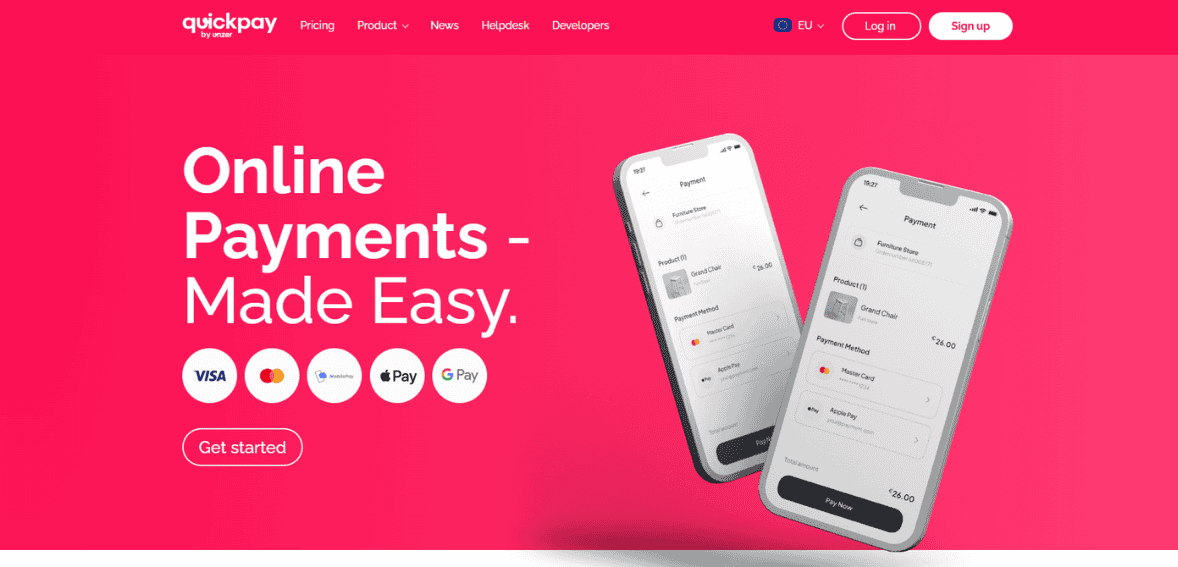
QuickPay is a payment service provider that allows businesses to accept online payments through multiple payment channels. In a digital world where speed and security are key, solutions like QuickPay are the bridge between merchants and customers. It’s used in e-commerce, SaaS, subscription-based industries and service-based companies that need streamlined billing and invoicing. Lets read more about QuickPay Review.

The platform aims to simplify payment collection by supporting different payment methods, currencies and integration options. Merchants can link it to popular e-commerce platforms, accounting tools or use its APIs for custom solutions. For many businesses QuickPay helps to reduce the complexity of handling multiple banks, gateways and fraud prevention by consolidating them into one solution.

But like any payment platform QuickPay is not without its pros and cons. While it delivers reliable transaction processing and many features, businesses need to weigh costs, ease of integration, customer support and global accessibility before adopting it. This review will go deep into QuickPay’s features, usability and overall value for businesses considering to adopt it. The goal is to give a clear picture of what QuickPay does well, where it falls short and which type of businesses will benefit the most.

Company Background and Evolution | QuickPay Review

QuickPay was founded as a payment service provider with the mission to simplify online payment for merchants. Over time the platform has evolved to address the growing demands of online commerce and cross-border trade. Initially it focused on providing a flexible payment gateway solution to small and medium sized businesses but later expanded to serve larger enterprises and platforms that required robust transaction handling.

In its journey QuickPay has kept pace with industry changes such as mobile payments, wallet integrations and stricter compliance frameworks. The ability to adapt quickly has been key to its survival in a market filled with established players and new fintech challengers. QuickPay’s presence today is marked by partnerships with various acquiring banks and technology providers making it relevant and competitive in different markets.

The company also invests in its developer ecosystem as businesses increasingly rely on APIs and automation to scale their operations. Its reputation is built on providing a balance of accessibility for non-technical users and customization for developers. While it may not be as global as some of the industry giants, QuickPay has built credibility in its markets by emphasizing reliability, compliance and transparency. Understanding its background will give context to evaluate if QuickPay fits the needs of different business types and industries.

Core Features and Capabilities

QuickPay has many features to make online transactions and business more efficient. At its core it’s a payment gateway that can handle multiple payment methods and currencies. Features like subscription billing, recurring payments and invoicing tools makes it especially suitable for SaaS and e-commerce businesses that need flexibility in billing cycles.

The platform also integrates with popular e-commerce platforms like Shopify, WooCommerce and Magento so merchants can connect payments without much development work. For businesses with more complex needs QuickPay’s API suite provides advanced customization options like automation of payment flows, real-time transaction updates and custom reporting.

One of the notable features is multi-currency support, businesses can accept payments from global customers and settle transactions in their preferred currency. This reduces conversion costs and makes cross-border sales more accessible. QuickPay also has security features like tokenization, fraud monitoring and strong authentication to protect both merchants and customers.

While the feature set is robust, businesses must assess if all the features align with their operational needs. Some advanced tools may require extra configuration or technical expertise. Overall QuickPay is a versatile solution for businesses that need both ready-made integrations and deeper customization options.

Payment Methods Supported

One of QuickPay’s strengths is the support for many payment methods. In addition to credit and debit cards, the platform allows merchants to accept mobile wallets, direct bank transfers and region-specific payment solutions. This is crucial for businesses that operate across borders where customer preferences can vary greatly.

For example, customers in Europe may prefer direct bank transfers while others rely heavily on digital wallets like Apple Pay or Google Pay. By offering these options QuickPay allows merchants to cater to diverse customer bases without needing separate integrations for each method. Subscription-based businesses can also benefit from features like recurring billing tied to cards or accounts, reducing the friction of repeat payments.

QuickPay also supports alternative payment solutions which are becoming more important in markets with low card penetration. This includes local banking solutions and alternative online transfer options, making it easier for businesses to expand into new regions.

However, availability of certain methods may depend on the merchant’s location or the acquiring banks involved. Businesses must check which methods are available in their operating region. While QuickPay does a good job of covering the most common global options, it may not be as exhaustive as larger providers with deeper global networks. But for most small to medium businesses the range offered is sufficient to meet customer expectations.

QuickPay Review

Integration and Developer Tools

Integration flexibility is a major factor for merchants choosing a payment provider, and QuickPay performs reasonably well in this area. For non-technical users, the platform provides pre-built plugins for widely used e-commerce platforms such as Shopify, WooCommerce, and Magento. These plugins simplify setup, enabling merchants to start accepting payments quickly with minimal effort.

For businesses with more complex requirements, QuickPay offers a comprehensive API suite. These APIs allow developers to build customized payment flows, integrate with accounting or ERP systems, and manage transactions programmatically. Documentation is generally detailed and accessible, providing examples for different programming environments. QuickPay also supports webhook functionality, which ensures real-time updates on transaction events such as successful payments, refunds, or chargebacks.

Another advantage is its compatibility with multiple programming languages, giving developers flexibility in how they implement the solution. This makes QuickPay suitable not only for small businesses but also for larger enterprises looking to build tailored solutions around their payment systems.

While integration is relatively smooth, some merchants may find the learning curve steep if they lack technical expertise. In such cases, reliance on external developers or QuickPay’s support may be necessary. Overall, QuickPay strikes a balance between plug-and-play convenience for smaller merchants and robust developer tools for businesses requiring customization.

User Interface and Dashboard Experience

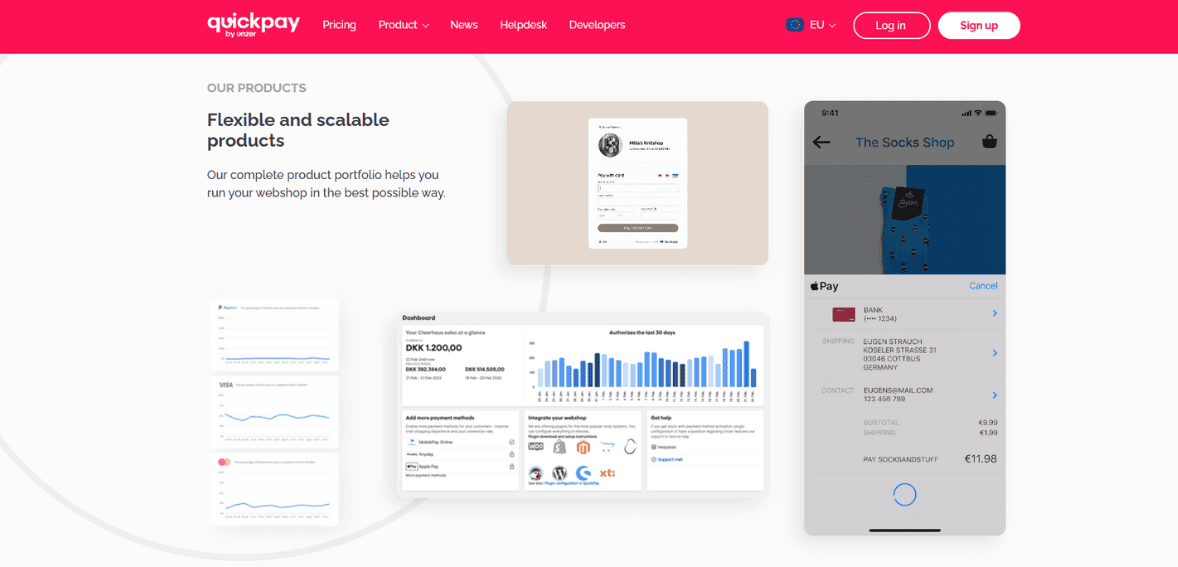
QuickPay’s dashboard is designed to provide merchants with a centralized view of their transactions, payouts, and customer activity. The interface is straightforward, offering easy navigation for daily tasks such as viewing payment history, generating invoices, and managing subscriptions. For businesses with frequent transactions, the dashboard’s clear layout helps reduce administrative burden.

Reports and analytics are integrated into the dashboard, giving merchants visibility into sales trends, chargebacks, and settlement times. Export functions allow this data to be transferred into accounting systems for reconciliation. The design emphasizes usability, making it possible for merchants without technical expertise to manage essential tasks effectively.

Customizable notifications and alerts further enhance the experience, ensuring that merchants are immediately informed of payment issues or unusual activity. This can be particularly useful for businesses handling high transaction volumes, where timely responses are critical.

That said, while the dashboard is functional and reliable, it may lack the advanced analytics or visually rich interfaces offered by some larger competitors. For businesses seeking in-depth data visualization or predictive insights, additional tools may be required. Nevertheless, the interface is sufficient for most small to mid-sized businesses, providing an intuitive environment that balances simplicity with essential functionality.

Security and Compliance Measures

Security is a top priority in payment processing, and QuickPay incorporates several measures to ensure transactions remain secure. The platform complies with PCI DSS standards, which are mandatory for handling cardholder data. By maintaining this compliance, QuickPay provides assurance that sensitive information is encrypted and processed securely.

Tokenization is another layer of protection, replacing sensitive card details with tokens during transactions. This reduces the risk of data exposure in the event of a breach. QuickPay also uses SSL encryption for data in transit, safeguarding customer information during online transactions.

Fraud detection and monitoring tools are built into the platform, enabling merchants to identify suspicious activity before it escalates. Features such as velocity checks, IP monitoring, and strong customer authentication help mitigate risks. Compliance with regulations such as PSD2 in Europe further strengthens its security framework, particularly around authentication for online payments.

However, merchants must remember that security is a shared responsibility. While QuickPay provides the infrastructure, businesses must also implement best practices such as updating software, securing accounts, and educating staff. Overall, QuickPay delivers a robust set of compliance and security measures that align with industry standards, making it a trustworthy option for businesses seeking reliable protection for customer data.

Pricing and Fee Structure

QuickPay’s pricing model is designed to be transparent, though costs can vary depending on the payment methods used and the merchant’s geographic location. Typically, fees include a fixed transaction charge plus a percentage of the transaction value. This structure is common across the industry, making it easier for businesses to compare QuickPay with other providers.

Merchants may also encounter additional fees for specific services such as chargebacks, refunds, or international transactions. These costs should be factored into financial planning, particularly for businesses operating with thin margins. Subscription-based pricing plans may also be available, offering businesses a predictable monthly fee in exchange for lower per-transaction costs.

One advantage of QuickPay is its relatively straightforward pricing transparency compared to some competitors that bundle hidden fees into their agreements. Clear breakdowns help merchants anticipate expenses without unwelcome surprises. That said, businesses with high transaction volumes should negotiate carefully to ensure favorable rates.

While QuickPay may not always offer the lowest fees, its balance of functionality and pricing makes it competitive for small to medium-sized businesses. Larger enterprises processing significant volumes may find better rates with bigger providers, but for many merchants, QuickPay delivers a fair and manageable pricing structure.

Merchant Support and Customer Service

Customer support is an essential factor for businesses managing critical payment infrastructure. QuickPay provides multiple support channels, including email, live chat, and documentation resources. Response times are generally prompt, with support staff available to guide merchants through both technical and operational queries.

The platform also offers a detailed knowledge base with documentation, FAQs, and integration guides. This self-service option is valuable for merchants who prefer to troubleshoot independently or need immediate assistance outside support hours.

That said, the quality of support can vary based on plan tiers or geographic location. Businesses operating in regions with limited support coverage may find response times slower. In addition, while QuickPay offers competent technical support, it may not provide the same level of consultative assistance as larger providers with dedicated account managers.

For small and medium-sized businesses, QuickPay’s support is generally sufficient, covering both initial setup and ongoing issues. Enterprises requiring hands-on account management may need to assess whether the support framework meets their expectations. Overall, QuickPay strikes a balance between accessibility and responsiveness, offering merchants reliable assistance when needed.

QuickPay Review

Performance and Reliability

Performance and uptime are critical in payment processing, as downtime can directly impact sales and customer trust. QuickPay emphasizes reliability, with its infrastructure designed to handle high transaction volumes and maintain consistent availability. Merchants report generally stable performance, with minimal service interruptions.

Transaction processing speeds are competitive, ensuring payments are confirmed quickly and customers experience minimal delays during checkout. This is particularly important for e-commerce businesses, where slow transaction approvals can lead to abandoned carts.

QuickPay also supports scalable infrastructure, meaning businesses can continue using the platform as their transaction volumes grow. This scalability makes it suitable not only for startups but also for established businesses expecting future expansion.

Despite these strengths, no provider is entirely immune to outages or technical glitches. Businesses relying on QuickPay should have contingency plans, such as backup gateways, to minimize risks. Overall, QuickPay’s performance is strong, with stability and speed that meet industry standards. For most merchants, its reliability will be more than adequate, though larger enterprises may still prefer providers with global-scale redundancy.

Pros of Using QuickPay

QuickPay offers several advantages that make it attractive to businesses across different industries. Its support for multiple payment methods ensures customers can pay through their preferred channels, reducing friction at checkout. Multi-currency functionality further broadens its appeal for businesses operating internationally.

Integration options are another major strength, with both plug-and-play solutions for popular platforms and robust APIs for custom needs. This makes QuickPay versatile enough to cater to both small businesses with limited technical expertise and larger enterprises seeking advanced customization. Security and compliance are strong points, with adherence to PCI DSS and features like tokenization and fraud detection tools. The platform also maintains a reputation for reliability, with stable transaction processing and scalable infrastructure that grows with business demands.

Transparent pricing and accessible customer support further enhance its appeal, particularly for small to mid-sized businesses seeking a dependable solution without excessive complexity. While it may not have the brand recognition of some global giants, QuickPay has carved out a niche as a flexible, reliable, and merchant-friendly option in the payment solutions market.

Cons and Limitations

While QuickPay has many strengths, it also comes with certain limitations that businesses must consider. One of the primary drawbacks is its limited global reach compared to larger providers like Stripe or PayPal. While QuickPay supports multiple currencies and payment methods, some region-specific options may not be available.

Another limitation is pricing competitiveness for high-volume enterprises. While its fees are reasonable for small to mid-sized businesses, larger companies processing millions in transactions might secure better rates with global providers offering economies of scale.

The user dashboard, while functional, may lack the advanced analytics and visualization features some businesses need for data-driven decision-making. Merchants seeking deep insights into customer behavior may need to supplement with third-party analytics tools.

Customer support, although generally responsive, may not provide the same level of dedicated account management that larger enterprises expect. Businesses requiring tailored support may find QuickPay’s service more transactional than consultative.

Finally, QuickPay’s brand recognition is limited outside its core markets, which may affect its perceived reliability for businesses aiming to build customer trust in new regions. These limitations do not diminish its value for many businesses but highlight areas where merchants must align expectations before adoption.

Best Use Cases and Ideal Business Types

QuickPay is best suited for small to medium-sized businesses looking for a flexible and straightforward payment processing solution. E-commerce stores benefit from its wide range of integrations with popular platforms, enabling them to quickly launch and manage online sales. Subscription-based businesses, including SaaS providers, can take advantage of recurring billing and invoicing features to simplify customer payments.

Service-based businesses also find QuickPay useful for managing invoices and accepting payments through multiple methods. Its support for alternative payment solutions and multi-currency transactions makes it particularly appealing for businesses expanding internationally without investing heavily in infrastructure.

While large enterprises may find limitations in pricing competitiveness and global scale, QuickPay still serves as a reliable secondary gateway or niche provider for specific markets. Startups and SMEs, in particular, value QuickPay’s balance between affordability, flexibility, and ease of use. Ultimately, QuickPay is an ideal choice for businesses that prioritize straightforward setup, reliable performance, and a balance between plug-and-play functionality and customizable integration options. It is not the most advanced global provider, but it delivers consistent value within its target market.

Final Verdict

QuickPay is a dependable payment service provider offering flexibility, security, and ease of use. With support for multiple currencies and payment methods, it suits businesses serving diverse customers, while developer tools and API integrations support advanced needs. Its transparent pricing, scalable infrastructure, and compliance with security standards add value. Reliable dashboards and customer support meet most merchant needs, though large enterprises may find its analytics and tailored services lacking. QuickPay’s main limitations are global reach and competitiveness for high-volume businesses. Still, its accessibility and consistent performance make it a strong choice for small to mid-sized businesses seeking affordable payment processing.

FAQs

Q1. Is QuickPay suitable for small businesses as well as large enterprises?

Yes, QuickPay is designed to cater to businesses of different sizes. While small businesses can benefit from its plug-and-play integrations, larger enterprises may leverage its advanced APIs and multi-currency support.

Q2. How does QuickPay ensure transaction security?

QuickPay follows strict PCI DSS compliance standards, uses advanced encryption methods, and includes fraud monitoring tools to keep transactions and customer data safe.

Q3. What industries benefit the most from QuickPay?

QuickPay is well-suited for e-commerce retailers, subscription-based SaaS providers, marketplaces, and businesses that require global payment acceptance across different currencies.

PayAnywhere Review

PayAnywhere Review

PayAnywhere has become a player in the payment processing space, offering solutions for small to medium sized businesses that want affordable and flexible ways to accept payments. At its core it’s built around mobile and smart payment technology so merchants can accept payments on the go, whether they’re running a food truck, offering home services or managing a small retail store. This mobile first design is one of its biggest selling points especially in an environment where customers expect businesses to accept credit cards, debit cards and contactless payments. Lets read more about PayAnywhere Review.

Over time PayAnywhere has evolved from just a mobile card reader to a full suite of hardware and software tools that compete with bigger platforms. It may not have the feature set of an enterprise level processor but it positions itself as an entry point for businesses that need a simple way to accept payments and track sales. Merchants look at it as a low barrier to entry into digital transactions, with the appeal of affordability and simplicity. But as with any payment solution, its effectiveness depends on the business. Some see it as a practical everyday tool, others think it lacks advanced customization and support compared to bigger competitors.

Getting Started with PayAnywhere | PayAnywhere Review

One of the first things to consider when looking at a payment service is how easy it is to get started. PayAnywhere is pretty simple when it comes to onboarding, with a simple application process and quick access to hardware. Business owners can order card readers and set them up with no technical expertise, often just by pairing them with a smartphone or tablet. This is perfect for smaller businesses that can’t afford IT support or long setup times. The app is available on iOS and Android so it’s compatible with most devices.

The setup process involves linking a bank account, downloading the app and connecting the card reader. If you opt for the company’s smart terminals or POS systems, the process is a bit more involved but still user friendly. These devices are preconfigured so the biggest step is connecting to Wi-Fi and customizing business settings. PayAnywhere’s focus is clearly on reducing friction during setup so you can start taking payments quickly. However some users have reported delays in approval or issues with verifying business documents which can be frustrating if you need to get activated right away. Overall the process is designed to be simple and while it’s not perfect it’s accessible enough for businesses without technical backgrounds. For many the ease of getting started outweighs the minor inconveniences especially when compared to traditional payment processors that require a lot of onboarding steps.

PayAnywhere Payment Processing Features

When looking at PayAnywhere’s features, its strongest suit is payment acceptance. The platform supports most common transaction types: credit cards, debit cards, EMV chip cards and contactless options like Apple Pay and Google Pay. This means merchants can accommodate modern consumer payment preferences. Mobile wallets and contactless transactions have grown in popularity and PayAnywhere’s compatibility with these methods makes it more relevant today.

Beyond basic card acceptance, PayAnywhere also has a virtual terminal for keyed-in payments which is great for phone or mail orders. Online payments are available too but not as advanced as dedicated eCommerce platforms. Recurring billing is also supported for subscription based businesses or those that bill clients on a regular schedule. Batch processing and digital receipts make transactions easier for both merchants and clients.

One limitation is that PayAnywhere’s advanced features are more limited compared to larger competitors. For example, online integrations may not be as extensive and businesses with complex invoicing or international needs may find it restrictive. But PayAnywhere gets the essentials right without the complexity. For many small to medium sized businesses, having a tool that does the basics well is more valuable than having advanced features that are never used. That’s why PayAnywhere appeals to merchants who prioritize practicality and affordability over customization.

Hardware and Equipment Options

PayAnywhere has moved beyond its original card reader to offer a range of equipment that gives merchants flexibility in how they process transactions. The simplest option is the mobile card reader that connects via Bluetooth to a smartphone or tablet. This is lightweight and portable making it perfect for service providers or businesses that operate in non-traditional locations. Despite its simplicity it accepts chip and contactless payments, which is modern.

For merchants who need more robust hardware PayAnywhere offers smart terminals and countertop POS systems. These devices have built-in touchscreens, receipt printers and can manage multiple aspects of the business from one device. The smart terminal for example is often highlighted for its sleek design and all-in-one functionality, perfect for retail shops, cafes and restaurants. Hardware reliability is a big consideration here as downtime in processing can quickly add up to lost revenue. While the devices generally work well some merchants have mentioned occasional connectivity issues with the mobile readers especially in areas with weak internet.

Cost of hardware is another factor to consider. Some devices are very affordable while others require a bigger investment. Unlike some competitors that heavily subsidize equipment, PayAnywhere balances affordability with the expectation that merchants will invest in professional-grade equipment. This works for those who value owning their equipment but may not be for businesses that want lower upfront costs. Overall the hardware lineup is versatile enough to meet different needs but not always the cheapest option.

PayAnywhere Review

Software and Dashboard Usability

The software is where merchants interact with PayAnywhere. The mobile app and web based dashboard is designed to make daily operations simple. The interface is clean and intuitive, merchants can view sales data, track transactions and manage customer info with little to no training. Inventory management is included in the software, merchants can add products, adjust stock levels and organize categories. For small retail businesses this integrated feature eliminates the need for extra tools.

The dashboard also has employee management features, sales performance tracking and user permissions. This is great for businesses with multiple employees handling transactions. Reporting tools give insights into sales trends, peak hours and customer activity. Not as advanced as enterprise level analytics but enough to help small business owners make informed decisions.

But the software has its limitations. Some users have noted that the reporting features lack customization and depth and exporting data into external accounting software requires extra steps. And while the app is user friendly, occasional glitches or connectivity issues have been reported especially when syncing data across devices. These can be frustrating but for many businesses the balance of usability and features still makes the software appealing. PayAnywhere has clearly invested in making a tool that simplifies operations even if it doesn’t deliver full flexibility of higher end systems. For their target market, ease of use often outweighs missing advanced features.

Security and Compliance

Security is a non-negotiable factor in payment processing, and PayAnywhere places emphasis on compliance and data protection. The platform is PCI DSS compliant, meaning it adheres to industry standards for securely handling cardholder information. It also uses encryption and tokenization to protect sensitive data during and after transactions, reducing the risk of breaches or unauthorized access. This ensures that customers’ payment details are not stored in vulnerable formats.

Fraud protection tools are built into the service, offering merchants some level of protection against chargebacks and suspicious activity. While these features are valuable, they may not be as robust as the fraud prevention systems offered by larger processors with advanced machine learning models. Merchants in high-risk industries or those with significant transaction volumes may find that PayAnywhere’s protections are adequate but not extensive.

Compliance is simplified for merchants, as PayAnywhere manages most of the technical requirements behind the scenes. This is a major advantage for small businesses that cannot dedicate resources to complex security management. Still, it is worth noting that ultimate responsibility for compliance remains with the merchant, meaning proper training and awareness are still necessary. Overall, PayAnywhere’s security and compliance framework meets industry expectations for small business processors. While it may not offer advanced fraud detection tools, it provides enough safeguards to give merchants confidence that their customer data is handled responsibly.

Pricing and Fees

Pricing is often one of the deciding factors for businesses choosing a payment processor. PayAnywhere promotes competitive transaction rates that are straightforward compared to traditional processors. Merchants typically pay a flat-rate fee per transaction, which simplifies cost tracking and helps avoid surprises. For small businesses, this clarity is appealing because it makes budgeting easier.

The hardware costs can vary, with basic card readers being relatively inexpensive while smart terminals and POS systems come at higher prices. Unlike some competitors that bundle equipment with processing contracts, PayAnywhere often requires an upfront purchase. This approach may be seen as an investment in durable hardware, but it could also deter businesses that prefer subsidized or free options.

One area where merchants sometimes raise concerns is hidden fees. Some report unexpected charges for account maintenance, chargebacks, or early termination depending on their agreement. These issues highlight the importance of carefully reading the terms and conditions before signing up. Overall, PayAnywhere’s pricing structure is competitive for small to mid-sized businesses but may not be the cheapest option for high-volume merchants. Its straightforward transaction fees and lack of long-term contracts are attractive, but potential additional charges can affect overall value. The service is best suited for businesses comfortable with paying upfront for hardware and who prioritize predictability in transaction costs over rock-bottom pricing.

Integrations and Compatibility

For many businesses, the ability of a payment processor to integrate with other systems is just as important as its core features. PayAnywhere offers integrations with several eCommerce platforms, though the list is not as extensive as that of larger competitors. It supports virtual terminals and online payments, but merchants with advanced online stores may find that it lacks some flexibility.

Compatibility with accounting software is another factor. PayAnywhere provides some level of integration, but exporting data into platforms like QuickBooks may require manual effort. For small businesses managing fewer transactions, this may not be a significant issue, but larger businesses with more complex bookkeeping needs might prefer processors with seamless accounting connections.

PayAnywhere’s focus seems to remain on providing a standalone solution rather than building a broad integration ecosystem. While this works for businesses using it primarily for in-person transactions, it can be restrictive for those with hybrid or advanced digital needs. On the positive side, the mobile app’s compatibility across devices ensures merchants can access core features without needing specialized hardware. This balance makes it a good fit for merchants who value simplicity and mobility, but less ideal for those seeking a highly customizable, integrated solution.

Customer Support and Resources

Reliable customer support is critical for any payment processor, as downtime or unresolved issues can directly impact revenue. PayAnywhere offers multiple support channels, including phone, email, and live chat. The company also provides a knowledge base with FAQs, setup guides, and troubleshooting steps. For many small businesses, these resources are enough to handle common problems.

However, user experiences with support quality vary widely. Some merchants report fast and helpful responses, while others mention long wait times or difficulty resolving more complex issues. Availability can also be inconsistent depending on the time of day or channel used. This inconsistency is not unique to PayAnywhere, but it is an area where larger competitors often provide more consistent service.

On the positive side, the company’s online resources are useful for self-service. Many common setup and troubleshooting questions can be answered through their documentation, which saves time. That said, businesses that rely heavily on direct support may find the experience hit or miss. For merchants who value having immediate and reliable access to support, this may be a drawback. In short, PayAnywhere provides a functional level of support, but it may not always deliver the high-touch experience that some businesses expect.

PayAnywhere Review

Strengths of PayAnywhere

PayAnywhere’s main strength lies in its accessibility. It provides an affordable entry point for small and medium-sized businesses that want to accept digital payments without complicated contracts or advanced technical knowledge. Its mobile-first design and compatibility with smartphones and tablets make it particularly attractive for service providers, food trucks, and mobile vendors. The range of hardware options, from simple card readers to smart terminals, ensures that businesses can scale their equipment as their needs evolve.

Another strength is its straightforward transaction pricing. Many businesses appreciate the transparency of flat-rate fees, which make it easier to predict costs. The inclusion of useful software features like inventory management, sales tracking, and employee monitoring adds further value, reducing the need for additional tools. Security and compliance are also handled well enough for its target market, giving merchants confidence in handling customer data.

While PayAnywhere may not lead the industry in advanced features or integrations, it delivers a reliable, easy-to-use solution that works well for businesses seeking practical tools rather than complex systems. Its ability to combine affordability, mobility, and basic functionality makes it a solid choice for businesses that want simplicity without sacrificing essential payment processing capabilities.

Limitations and Drawbacks

Despite its strengths, PayAnywhere is not without limitations. One of the main drawbacks is its relatively limited set of advanced features compared to competitors like Square or Stripe. Businesses with complex online sales, international transactions, or advanced reporting needs may find the platform insufficient. Integration options are also somewhat limited, which can frustrate merchants who want seamless connectivity with accounting, CRM, or eCommerce systems.

Another concern raised by some merchants is inconsistent customer support. While some issues are resolved quickly, others face delays or unclear communication. This can be particularly challenging when technical issues prevent payment acceptance, as every minute of downtime translates into lost revenue.

Pricing transparency is also an area of mixed reviews. While the flat-rate fees are simple, additional charges such as account fees, chargeback fees, or hardware costs can surprise merchants who did not fully review the fine print. Finally, hardware reliability, particularly with mobile card readers, can be inconsistent depending on network connectivity. These drawbacks do not necessarily disqualify PayAnywhere as a viable option, but they highlight that it may not suit all businesses. Merchants should carefully consider their needs and weigh these limitations against the service’s strengths.

Best Fit for Business Types

PayAnywhere is best suited for small to medium-sized businesses that prioritize simplicity, affordability, and mobility. Service-based providers, such as contractors, repair services, or delivery businesses, benefit from the portable card readers that make payment collection straightforward. Food trucks, market vendors, and other mobile businesses also find value in its mobile-first approach, which allows them to accept payments without a fixed location.

Retail shops and cafes with modest needs can also benefit from PayAnywhere’s smart terminals and POS systems, which combine payment acceptance with basic inventory and reporting tools. The system is less suitable for businesses with high-volume, enterprise-level needs or those requiring extensive online integrations. For example, eCommerce-driven companies may find its online payment features too limited compared to competitors with broader integrations.

Ultimately, PayAnywhere’s best fit is businesses that want an affordable and functional solution without needing advanced customization. It provides the essential tools in a user-friendly package, making it appealing to merchants who value practicality and predictability over complex features. By focusing on core needs, it manages to serve its target audience effectively.

Comparison with Competitors

When comparing PayAnywhere with competitors, Square often comes up as the most direct alternative. Square offers a broader range of integrations and more advanced analytics, but its pricing can sometimes be higher depending on transaction volumes. Clover is another competitor, known for its hardware variety and app marketplace, which provides greater customization than PayAnywhere. However, Clover systems can be more expensive and require longer-term commitments.

Stripe focuses heavily on online payments and offers a powerful API for custom integrations, making it more appealing for eCommerce and tech-driven businesses. In comparison, PayAnywhere lacks the same depth for online transactions but provides a stronger in-person mobile payment experience.

Where PayAnywhere differentiates itself is in offering a balance of affordability and accessibility. It may not excel in any one area, but it provides enough functionality to serve small to medium-sized merchants without overwhelming them with unnecessary features. For businesses that value simplicity and affordability, it stands as a practical alternative to larger, more complex systems. Still, those with advanced needs may find greater value in competitors that specialize in specific areas.

Final Verdict on PayAnywhere

PayAnywhere is a practical payment processing solution for small and medium-sized businesses seeking affordability and simplicity. It offers mobile-first hardware, easy-to-use software, and competitive transaction rates, making it ideal for service providers, mobile vendors, and small retailers. While it supports daily operations well, it falls short on advanced features, seamless integrations, and consistent customer support. Merchants should also watch for potential extra fees and hardware concerns. Overall, PayAnywhere is best for businesses with basic to moderate needs that prioritize mobility and cost-effectiveness, while larger or more complex operations may benefit from exploring alternative payment processors.

FAQs

Q1. Is PayAnywhere suitable for high-volume businesses?

PayAnywhere can handle steady transaction flows, but it is generally designed for small to medium-sized businesses. High-volume merchants may find its reporting and support less robust than enterprise-level solutions, making it less ideal for their scale.

Q2. Does PayAnywhere require long-term contracts?

PayAnywhere is often marketed with flexible terms, and many merchants operate without strict long-term commitments. However, some agreements tied to hardware purchases or specific pricing plans may include contract clauses, so it is important to review terms carefully.

Q3. Can PayAnywhere process online payments as well as in-person transactions?

Yes, PayAnywhere supports both in-person card processing and online transactions through virtual terminals and limited eCommerce integrations. While online functionality is not as advanced as some competitors, it provides a workable solution for hybrid business models.

North American Bancard Review

North American Bancard has become a major player in the payment processing industry in the United States. Founded in 1992 and based in Troy, Michigan, the company supports hundreds of thousands of merchants with a wide range of payment solutions. NAB operates in a competitive space where providers must be flexible, reliable and innovative to keep up with changing consumer behavior and merchant needs. Lets read more about North American Bancard Review.
One of NAB’s key strengths is its ability to serve both small businesses and larger enterprises, with scalable solutions for in-person, online and mobile payments. The company has extensive partnerships and a broad distribution network that allows it to reach many sectors, from retail to restaurants, healthcare and professional services.

Over the years NAB has built a reputation for combining traditional merchant account services with new financial technologies. This has helped it stay relevant in a rapidly changing payments landscape where digital-first solutions dominate. But like any payment processor, NAB’s offerings have pros and cons. For some businesses the solutions will provide what they need to operate efficiently, for others certain fees or contract terms may not be so appealing.

Core Payment Processing Services | North American Bancard Review

At its core North American Bancard provides payment processing services to handle all types of transactions. Merchants can accept all major credit and debit cards, ACH and electronic check payments. These core services are the foundation of NAB’s offerings and allow businesses to operate in both physical and digital environments.

The processing is designed to be fast and reliable, with a focus on minimizing downtime and getting transactions done. NAB supports businesses with varying transaction volumes, from low-ticket quick-service merchants to high-volume retailers. This flexibility is important as it allows NAB to work with many different types of businesses without requiring them to adapt to a rigid structure.

NAB also supports recurring billing, subscription models and invoicing which makes it good for service-based businesses that need to bill clients on an ongoing basis. The company also offers electronic benefit transfer acceptance which makes it good for grocery and convenience stores.

Where NAB differentiates itself is in providing businesses with tools to manage transactions better, such as batch settlement and customizable payment acceptance methods. But like many processors businesses must weigh the processing fees and contract terms against what’s offered by competitors. While NAB offers a wide range of acceptance options the complexity of its pricing structure may require a close review before committing.Bottom line.

POS Solutions

North American Bancard’s POS solutions are more than just card acceptance. Through its partnership with Payanywhere, NAB offers modern POS systems for retailers, restaurants and service providers. These include countertop terminals, handheld devices and full-featured POS stations.

The POS solutions combine hardware and software so you can process payments and manage sales, track inventory and analyze performance. For small businesses handheld mobile readers are an affordable entry point to digital transactions, while larger businesses can invest in multi-station setups with advanced management tools. NAB’s POS systems also support contactless and EMV chip technology so you’re compliant with current payment security standards.

One of the strengths of NAB’s POS portfolio is its scalability. You can start with a basic setup and add more hardware or software features as you grow. The systems are also cloud-based so you have access to your data and reports in real time.

But some merchants have reported that NAB’s POS solutions require ongoing updates and can be more expensive than standalone POS providers. Hardware leases can also add to the cost so be sure to review the terms before committing. Overall NAB’s POS solutions are competitive and offer the essentials of modern commerce. They offer functionality and flexibility but pricing and long term commitments should be reviewed by potential users.

Mobile and Contactless Payments

As mobile and contactless payments become mainstream NAB has made sure merchants are equipped to handle these technologies. NAB’s mobile solutions allow you to accept payments via smartphones and tablets with card readers and dedicated apps. This is perfect for on-the-go businesses like contractors, food trucks or delivery services.

NAB supports tap-to-pay, Apple Pay, Google Wallet and other mobile wallet services. So you can cater to customers who prefer digital-first payment methods. NAB’s systems also support QR-based transactions which is a growing trend in industries like quick-service dining and retail. The convenience of mobile and contactless payments is speed and reduced friction at checkout. For merchants offering these options can improve customer satisfaction and potentially increase sales. NAB’s mobile solutions also offer basic reporting so you can track transactions without additional software.

But merchants should consider the cost of mobile transactions. While convenient processing fees may vary depending on the type of card or wallet used. In some cases hardware compatibility or internet connectivity may limit usability.So NAB’s mobile and contactless payments are on par with industry. They allow you to accept modern payment methods but effectiveness depends on how well they fit your business and customer. For businesses looking for flexibility in customer engagement these are a part of NAB’s offerings.

E-Commerce and Online Payment Gateways

For businesses operating online, North American Bancard provides payment gateway solutions that enable secure digital transactions. Merchants can integrate NAB’s gateway with their websites or e-commerce platforms to accept credit cards, debit cards, and digital wallet payments. The gateway also supports recurring billing, invoicing, and customizable checkout experiences.

NAB’s gateway is designed with API access, which allows developers to integrate payment functionality into custom websites or applications. This level of flexibility is valuable for businesses seeking tailored solutions rather than relying solely on out-of-the-box plugins. Popular e-commerce platforms like Shopify, WooCommerce, and Magento can also be connected, enabling a seamless online store experience.

Security is a major focus, with the gateway offering tokenization and fraud prevention tools. These features help protect customer data while reducing the risk of chargebacks. For subscription-based businesses, automated billing simplifies customer retention while ensuring revenue consistency. While the gateway is feature-rich, some businesses may find it less intuitive compared to leading third-party providers such as Stripe or PayPal. Additionally, integration support may require additional costs or technical expertise, depending on the complexity of the system.

Overall, NAB’s e-commerce and gateway solutions provide a reliable path for businesses to enter or expand in the online market. They are best suited for merchants who want flexibility in setup and access to advanced tools, though usability and learning curves should be carefully considered during implementation.

North American Bancard Review

Security, Compliance, and Fraud Prevention

Security is a cornerstone of North American Bancard’s services, as payment processing involves handling sensitive customer data. NAB maintains PCI DSS compliance across its systems, ensuring merchants meet industry standards for data protection. Encryption and tokenization are built into its solutions to protect cardholder information during transmission and storage.

NAB also offers fraud detection tools that monitor transactions for suspicious activity. These tools can flag unusual patterns and help businesses reduce the risk of chargebacks or fraudulent payments. For industries with higher risk profiles, NAB provides additional safeguards and compliance assistance to ensure regulatory standards are met.

Merchants benefit from features like secure login protocols, role-based access controls, and real-time transaction monitoring. These measures help businesses maintain trust with customers while minimizing exposure to potential threats.

Despite these protections, no system is entirely immune to fraud. NAB’s fraud prevention tools may add extra costs, and merchants must take responsibility for implementing best practices, such as staff training and consistent monitoring. Some users have noted that navigating compliance requirements can be complex without dedicated support.

Overall, NAB provides a solid foundation of security and compliance features. Businesses that prioritize data protection and customer trust will find these measures beneficial, although the learning curve and costs may require careful planning. NAB’s commitment to maintaining industry standards ensures it remains competitive in a market where security expectations continue to rise.

Pricing and Fee Structure

Pricing remains one of the most critical factors when evaluating a payment processor, and North American Bancard’s fee structure requires careful review. Like many providers, NAB’s pricing can vary depending on business type, transaction volume, and contract agreements. The company generally offers interchange-plus and tiered pricing models, but specifics may not always be transparent upfront.

Interchange-plus pricing is often considered more transparent, as merchants pay the interchange rate set by card networks plus a fixed markup. Tiered pricing, on the other hand, groups transactions into categories with varying rates, which can sometimes lead to higher costs for certain card types. NAB also charges additional fees for services such as chargebacks, PCI compliance, and monthly account maintenance.

Merchants should be aware of potential early termination fees if they choose to cancel contracts before the agreed period. Equipment leasing may also add significant costs, and businesses should weigh the benefits of purchasing hardware outright versus entering into long-term lease agreements. While some merchants may benefit from NAB’s pricing flexibility, others have reported unexpected fees or difficulty understanding their statements. To avoid surprises, it is important for businesses to request a clear breakdown of all fees before signing agreements.

Overall, NAB’s pricing is competitive but not necessarily the most straightforward in the industry. Transparency can be improved, and businesses should approach contracts with diligence to ensure the pricing model suits their needs.

Merchant Account Features

A merchant account is essential for processing card payments, and NAB provides businesses with the infrastructure needed to establish these accounts. The setup process includes underwriting, during which NAB evaluates business type, risk level, and expected transaction volume. This process ensures compliance and minimizes financial risks.

One benefit of NAB’s merchant accounts is the flexibility to support various business models, from brick-and-mortar stores to online-only operations. Accounts can be configured for recurring billing, high-volume processing, or specialized needs like EBT acceptance. This makes NAB a versatile choice for a wide range of industries.

Approval times can vary, with some accounts being set up quickly, while higher-risk businesses may face longer reviews. NAB does accept certain high-risk industries, but acceptance depends on underwriting guidelines, which may not always be favorable for all businesses.

Account features also include reporting dashboards, settlement management, and access to customer support for account-related issues. Merchants should, however, review contract terms carefully, as conditions such as early termination fees or reserve requirements may be applied depending on the risk assessment. Overall, NAB’s merchant account features are standard for the industry, offering flexibility and functionality for diverse business needs. While the approval process and contractual obligations may be challenging for some, NAB provides a solid foundation for businesses seeking a reliable payment partner.

Reporting, Analytics, and Business Insights

Data plays an important role in business decision-making, and NAB provides reporting tools that help merchants track and analyze their transactions. Through dashboards and online portals, businesses can view real-time payment data, generate sales reports, and identify trends across locations or time periods.

These analytics tools allow merchants to monitor performance, manage inventory, and detect irregularities in sales patterns. Customizable reporting options help businesses tailor insights to their specific needs, whether tracking daily sales, employee performance, or customer purchasing behavior. For larger businesses, multi-location reporting provides visibility across different outlets, which is valuable for centralized management. The reports are designed to be user-friendly, offering both high-level summaries and detailed transaction breakdowns.

However, the sophistication of NAB’s reporting may not match that of specialized business intelligence platforms. While the tools provide sufficient insights for many small and medium-sized businesses, advanced analytics or integration with external software may require additional resources.

Overall, NAB’s reporting and analytics offerings provide merchants with practical tools to understand their business performance. They support informed decision-making without overwhelming users with complexity, though businesses seeking advanced forecasting or deep data integration may need supplemental solutions.

Customer Support and Service Experience

Customer support is often a deciding factor when choosing a payment processor, and NAB offers multiple channels for assistance. Merchants can access support through phone lines, online portals, and email. Resources such as FAQs and documentation are also available for self-service troubleshooting.

The availability of 24/7 support is an advantage for businesses that operate outside traditional hours. Prompt response times and knowledgeable staff are important for resolving urgent issues, such as technical failures or transaction errors. NAB has invested in maintaining a broad support network, which helps ensure merchants can access help when needed.

That said, feedback from merchants regarding NAB’s customer support is mixed. While some report satisfactory experiences with quick resolutions, others cite challenges with long wait times, inconsistent responses, or difficulty resolving billing-related issues. These variations are not uncommon in the payment processing industry, but they highlight the importance of setting clear expectations.

Ultimately, NAB’s customer support is comprehensive in scope but may vary in quality depending on the issue at hand. Businesses that value consistent, responsive service should review merchant feedback and confirm support commitments before partnering with NAB.

Integrations and Third-Party Compatibility

In today’s business landscape, seamless integrations with third-party software are critical. NAB offers compatibility with a wide range of tools, including e-commerce platforms, accounting systems, and CRM applications. This allows merchants to unify payment processing with other operational systems, reducing manual data entry and improving efficiency.

Popular integrations include QuickBooks for accounting, as well as platforms like WooCommerce and Shopify for e-commerce. NAB’s payment gateway also provides API access, enabling developers to build custom connections where needed. This flexibility is useful for businesses with unique workflows or specialized software requirements.

However, while NAB offers strong integration options, the setup may require technical expertise, especially for custom implementations. Some merchants may also find that certain integrations come with additional costs or require third-party support.

Overall, NAB’s compatibility with third-party platforms enhances its value proposition, giving businesses the ability to streamline operations and centralize data. While setup complexity may be a consideration, the range of supported integrations ensures businesses have the tools needed to operate efficiently in diverse industries.

North American Bancard Review

Advantages of Choosing North American Bancard

North American Bancard offers several strengths that make it attractive to many merchants. Its wide range of services; from in-person POS systems to online gateways; ensures businesses can find solutions tailored to their needs. The scalability of NAB’s offerings means businesses can start small and expand their capabilities as they grow.

Another advantage is the company’s focus on security and compliance, which provides merchants with confidence in handling sensitive payment data. NAB’s fraud prevention and PCI DSS adherence help mitigate risks, which is essential in a landscape where data breaches remain a concern. NAB’s mobile and contactless payment options also position it well for the future, as consumer demand for these technologies continues to grow. Additionally, the availability of reporting and analytics tools supports data-driven decision-making for businesses of all sizes.

Despite mixed reviews of customer support, NAB’s 24/7 availability provides reassurance for businesses that need immediate assistance. Its partnerships and integration capabilities also extend its utility across industries. Overall, NAB’s advantages lie in its versatility, scalability, and security. For businesses seeking an all-in-one solution that covers multiple payment channels, NAB offers a comprehensive package, though careful attention to pricing and contractual terms remains essential.

Limitations and Considerations

While North American Bancard provides many strengths, there are also limitations that businesses should carefully consider. One of the most significant concerns relates to pricing transparency. Some merchants report difficulty understanding statements or discovering additional fees that were not clear at the outset.

Contractual terms may also present challenges. Early termination fees and equipment leases can create financial commitments that may not align with every business’s needs. Merchants should review all agreements closely before signing to avoid unexpected obligations. Another consideration is customer support consistency. While it offers 24/7 availability, experiences vary widely, with some merchants reporting challenges in resolving billing or technical issues. This inconsistency may be problematic for businesses that rely on rapid resolutions.

Additionally, NAB’s tools, while robust, may not match the user-friendliness or advanced analytics capabilities of some competitors. Businesses that require highly intuitive systems or deep data insights may find NAB’s offerings somewhat limited. In summary, NAB’s limitations revolve around pricing clarity, contractual obligations, and support experiences. These are not uncommon challenges in the payment industry, but they underscore the need for businesses to conduct thorough due diligence before selecting NAB as their processor.

Who Should Use North American Bancard?

North American Bancard is well-suited for businesses seeking a comprehensive payment processor that can handle in-person, online, and mobile transactions. Its scalability makes it a good fit for small businesses aiming to expand, as well as larger enterprises needing robust multi-channel support. Industries that benefit most include retail, restaurants, healthcare, and professional services; sectors where payment flexibility and security are vital. NAB’s support for mobile and contactless payments also makes it appealing to businesses that prioritize customer convenience.

Service-based companies with recurring billing models may find NAB’s features for invoicing and subscription management especially useful. Similarly, multi-location businesses can leverage its reporting and analytics tools for better oversight. However, businesses that prioritize ultra-transparent pricing or minimal contractual obligations may find NAB less suitable. Companies in high-risk industries should also confirm acceptance policies during the underwriting process.

In general, it is a strong choice for businesses that value versatility and are willing to carefully review contracts and pricing details. Its broad feature set provides a strong foundation for merchants looking to streamline payment acceptance and scale operations effectively.

Conclusion

North American Bancard is a significant player in the payments industry, offering versatile solutions like diverse payment acceptance, scalable POS systems, secure online gateways, and robust fraud prevention. These strengths make it appealing to businesses seeking end-to-end processing. However, challenges such as pricing transparency, contractual obligations, and mixed customer support reviews require careful evaluation. NAB is not a perfect fit for every business but can be a reliable option for those prioritizing flexibility, security, and scalability. With due diligence and clarity on terms, merchants can assess whether NAB aligns with their payment goals and long-term operational needs.

FAQs

Q1. Is North American Bancard suitable for small businesses?

Yes, it provides entry-level solutions that small businesses can use to accept payments. However, pricing structures and contracts should be reviewed carefully, as they may include fees or terms that are less favorable to startups or very small merchants.

Q2. Does NAB support high-risk industries?

It does provide some support for high-risk industries, though acceptance depends on underwriting guidelines and business type. Not all high-risk sectors will be approved, so businesses should confirm eligibility before applying.

Q3. How does NAB ensure secure transactions?

It maintains PCI DSS compliance and offers features such as tokenization, encryption, and fraud monitoring. These measures protect sensitive customer data and reduce the risk of fraudulent transactions, though merchants must also adopt best practices to maintain overall security.

National Bankcard Review

National Bankcard Review

National Bankcard is a well known merchant services provider in the US serving small businesses, e-commerce merchants and larger enterprises that need secure payment processing. With so many providers out there it can be hard to tell one from another. National Bankcard has built their reputation on offering a wide range of solutions to simplify transactions and give businesses the tools to accept payments efficiently. This review takes a closer look at the company’s services, highlighting strengths and weaknesses to guide decision-making. Lets read more about National Bankcard Review.

Instead of focusing on marketing claims, this review looks at National Bankcard’s history, pricing, hardware, security standards, customer support and overall usability. By breaking down each major component of their services businesses can see how it compares to other providers and if the features are worth the cost. For businesses looking for a payment processor transparency and reliability are as important as competitive rates. National Bankcard has some good things to offer but also some areas to be cautious about.

Company Overview and Background | National Bankcard Review

National Bankcard has been in the payments industry for years, providing merchants with credit card processing and point-of-sale solutions. They position themselves as a one-stop shop, helping businesses navigate the complex payment networks without having to deal with multiple vendors. Their client base includes brick-and-mortar retailers, restaurants, e-commerce stores and mobile service providers so they are flexible across industries.

The financial technology landscape has changed a lot in the last 10 years with a focus on digital payments, mobile acceptance and integrated platforms. National Bankcard has kept up by moving from traditional terminal processing to online gateways and mobile payment support. This means businesses of all sizes can find a solution, whether they need countertop hardware, an e-commerce cart plug-in or a portable reader.

One thing that appeals to new clients is the company’s attempt to balance established reliability with new technology. While some competitors only target startups or large corporations, National Bankcard markets themselves to a wide range. This can be helpful but also means they may not always be the best fit for highly niche businesses. Understanding their broad market position gives context to the details of their services below.

Core Services Offered

National Bankcard’s core services are all about getting businesses to accept payments fast and securely. At the heart of the company is credit and debit card processing for Visa, Mastercard, American Express and Discover. Beyond card acceptance the company offers check processing, gift card programs and loyalty solutions. These additional services give businesses more revenue streams and customer retention.

For physical storefronts National Bankcard provides POS systems and countertop terminals. These are designed for industries like restaurants and retail where high volume and fast checkout is key. For online businesses the company’s e-commerce payment gateway provides integration with major platforms, recurring billing and fraud detection tools.

Mobile acceptance is another key service, allowing businesses to take payments via smartphone or tablet with portable readers. This is great for service providers, delivery businesses and merchants at trade shows or temporary locations. And National Bankcard has reporting and analytics tools so merchants can track sales, monitor chargebacks and see trends.

Overall the breadth of services shows the company is trying to cover all bases rather than focus on one channel. This is good for businesses that want flexibility across online and offline. But it also means the depth of specialization may vary with some services having more advanced features than others.

Payment Gateway and Online Solutions

E-commerce continues to grow, and National Bankcard provides merchants with a dedicated payment gateway that connects online stores to secure processing networks. The gateway supports recurring billing, tokenization for customer data, and shopping cart integration with widely used platforms. For businesses selling subscriptions or digital goods, recurring billing can streamline operations by reducing the need for manual invoicing.

Fraud prevention tools are included, helping businesses detect suspicious transactions before they are finalized. While these features are not unique to National Bankcard, having them bundled is valuable for merchants concerned about chargebacks or fraudulent orders. The gateway also provides reporting dashboards, giving insights into transaction history, settlement times, and customer activity.

Another aspect worth noting is compatibility. Many merchants look for processors that can easily connect with WooCommerce, Shopify, Magento, and other e-commerce platforms. National Bankcard offers this support, but integration may still require technical setup or developer assistance depending on the complexity of the store. While not a deal-breaker, it can be a consideration for smaller businesses without in-house technical staff.

The payment gateway is functional and provides the expected features, though it does not necessarily stand out with groundbreaking innovation. Merchants evaluating it should consider whether the available tools are sufficient for their needs compared to more specialized e-commerce processors.

National Bankcard Review

POS Systems and Hardware Options

Point-of-sale systems remain at the heart of in-person business operations, and National Bankcard provides several hardware choices. Traditional countertop terminals are available for businesses that want simple swipe, chip, or tap acceptance. These terminals are reliable and familiar to most staff, making training straightforward. For more complex needs, the company offers integrated POS systems with inventory tracking, staff management, and sales reporting.

Restaurants can access systems designed to handle multiple orders, tipping, and table management. Retailers may prefer POS units with barcode scanning and receipt printing. For mobile businesses, portable terminals and wireless readers provide flexibility to accept payments outside of a fixed location. The variety ensures that businesses can match equipment to their specific workflows.

Hardware reliability is critical because downtime directly impacts revenue. National Bankcard supplies hardware from established manufacturers, reducing the risk of malfunctions, though ongoing support and replacement policies can vary. Merchants should clarify warranty coverage and potential rental fees before committing.

While the equipment options are comprehensive, some competing providers now emphasize all-in-one smart terminals with advanced touchscreen interfaces. National Bankcard’s catalog includes both modern and traditional devices, but its emphasis is on proven reliability rather than cutting-edge innovation. Businesses must decide whether they value stability over novelty when selecting hardware.

Mobile and Contactless Payments

As consumers increasingly expect speed and convenience, mobile and contactless payments have become essential. National Bankcard provides merchants with mobile card readers compatible with smartphones and tablets. These readers support EMV chip cards and NFC contactless payments such as Apple Pay and Google Pay. For businesses that operate on the move; delivery services, home repair providers, or pop-up retailers; this feature makes a notable difference.

The company also offers apps that connect mobile devices to its processing network. Through the app, merchants can manage transactions, view basic reporting, and issue refunds. While the features may not be as advanced as some standalone mobile POS providers, they provide enough functionality for small businesses to handle daily operations.

Contactless acceptance has become more relevant in the wake of consumer demand for safer, touch-free payment options. National Bankcard’s support for NFC payments ensures businesses are not left behind. However, it is important to note that advanced mobile POS ecosystems with inventory or employee management tools may require third-party solutions, since National Bankcard’s app focuses primarily on transaction processing.

In summary, mobile and contactless features enhance flexibility but may not replace full POS systems for businesses with complex requirements. For merchants seeking straightforward mobile acceptance, the company’s tools are practical and sufficient.

Pricing and Fees Structure

Pricing remains one of the most important considerations when selecting a payment processor. National Bankcard, like many traditional providers, does not always advertise clear rates on its website. Instead, pricing can vary based on business type, volume, and risk category. Merchants may encounter tiered pricing or interchange-plus options, though availability depends on negotiation and the specifics of the account.

Common fees include transaction charges, monthly service fees, PCI compliance fees, and potentially gateway costs for online transactions. In some cases, merchants have reported early termination fees tied to long-term contracts. This lack of uniform transparency can be frustrating for small businesses that want straightforward numbers.

On the positive side, larger merchants processing high volumes may be able to negotiate competitive rates that reduce per-transaction costs. National Bankcard also occasionally offers equipment placement programs, which can lower upfront costs but may involve monthly leasing fees.

The key takeaway is that pricing is not one-size-fits-all. Businesses considering National Bankcard should carefully review contracts, ask about interchange-plus availability, and clarify whether termination fees apply. While the company may offer competitive options, the variability makes it important to evaluate total costs over the full contract period rather than focusing only on advertised rates.

Security and Compliance

Security in payment processing is essential for protecting sensitive customer data. National Bankcard emphasizes PCI DSS compliance, ensuring merchants follow the Payment Card Industry’s standards. The company provides tools for secure data transmission, including encryption and tokenization, which help reduce the risk of breaches.

Fraud prevention measures are also included, with alerts and filters that flag potentially suspicious activity. Chargeback management is another feature, allowing businesses to respond promptly to disputes and reduce financial losses. While these tools are not unique to National Bankcard, they reflect industry standards that businesses should expect from any reputable provider.

For online merchants, additional measures such as AVS and CVV verification are supported, which add layers of protection against unauthorized card use. These safeguards are particularly valuable for e-commerce stores facing higher fraud risks compared to in-person transactions.

Overall, National Bankcard’s security offerings align with industry expectations, but they are not necessarily distinctive compared to competitors. Businesses can feel confident that baseline compliance is met, though those requiring advanced fraud detection or specialized risk management may need supplementary services.

Integrations and API Support

Modern businesses rely on integrations to keep their operations running smoothly, and National Bankcard provides API options for connecting payment processing with third-party software. This can include shopping carts, accounting platforms, and CRM tools. By linking systems, businesses can automate data flows, reducing manual work and improving accuracy.

For example, integrating with accounting software allows sales data to update automatically, saving time on bookkeeping. Similarly, connecting to CRM tools helps businesses track customer purchases and loyalty program activity. National Bankcard’s API documentation provides flexibility, though merchants may need developer assistance for custom setups.

On the e-commerce side, plug-and-play integrations with platforms like Shopify or WooCommerce reduce setup time. While these integrations are useful, they may not always provide the advanced customization that larger enterprises expect. Businesses should assess whether the available tools match their operational needs or if more complex solutions are necessary.

In short, integration support is adequate for most small and mid-sized businesses, but highly technical companies with specific workflows may need to explore additional development resources. National Bankcard delivers the essentials without necessarily offering a cutting-edge developer ecosystem.

Customer Support and Reliability

Customer support can often make or break the relationship between a business and its payment processor. National Bankcard provides phone, email, and sometimes live chat support channels. Support availability is typically around the clock, though merchant experiences vary. Some report quick response times and knowledgeable staff, while others cite delays or difficulties resolving billing disputes.

Reliability of the processing network is another factor. Downtime can directly impact revenue, and National Bankcard leverages established banking networks to minimize disruptions. Most merchants experience stable performance, though isolated issues may occur, as with any provider.

One potential drawback is that small businesses sometimes feel overlooked compared to higher-volume clients. Larger merchants often have dedicated account representatives, while smaller merchants may need to rely on general support lines. This can create inconsistent service levels depending on account size.

Ultimately, National Bankcard’s support is functional but not without mixed reviews. Businesses that prioritize responsive customer service should evaluate how quickly issues are resolved and whether dedicated representatives are included in their plan. Reliability is generally strong, but ongoing support quality should be part of the decision-making process.

National Bankcard Review

Pros of Using National Bankcard

National Bankcard’s main advantages include its broad service portfolio, which allows businesses to manage both in-person and online transactions under one provider. The availability of POS systems, mobile readers, and an online gateway means flexibility across different business models. Security measures meet industry standards, giving merchants peace of mind about data protection.

The company’s fraud prevention and chargeback tools also provide valuable safeguards for businesses that face higher risk. For merchants processing larger volumes, the potential to negotiate lower rates can make the service cost-effective. Integration support with major platforms and accounting systems further streamlines daily operations.

Another benefit is the company’s longevity in the payments space. Businesses often prefer established providers that have proven reliability, and National Bankcard’s history gives it credibility. For merchants looking for a balance of traditional reliability and modern functionality, the company can be an appealing choice.

Cons and Limitations

Despite its advantages, National Bankcard has several drawbacks that businesses should weigh carefully. The most commonly reported issue is pricing transparency. Many merchants prefer upfront interchange-plus pricing, but National Bankcard’s contracts can include tiered models or additional fees that are not obvious during the sales process.

Another limitation is the possibility of long-term contracts with early termination penalties. This can make it difficult for small businesses to switch providers if they are dissatisfied. While equipment options are varied, leasing programs may involve extra costs that accumulate over time.

Customer support feedback is mixed, with some smaller merchants feeling that their concerns do not receive the same level of attention as larger clients. Additionally, while the company provides the essential tools for online processing, it does not necessarily stand out in terms of innovative features compared to newer fintech competitors.

For these reasons, businesses should thoroughly review contracts and clarify terms before signing. The service may suit those who value stability, but it may not be ideal for merchants seeking the most transparent or innovative solutions.

Ideal Business Types for National Bankcard

National Bankcard is designed to serve a wide range of industries, making it suitable for both traditional and digital businesses. Brick-and-mortar retailers and restaurants benefit from its POS systems and hardware, which support fast checkout, tipping, and inventory tracking. Mobile businesses such as delivery services and on-site contractors can take advantage of its mobile payment options, ensuring they can accept payments wherever work takes them.

E-commerce merchants also find value in the online gateway and recurring billing tools, which are useful for subscription models or digital sales. Professional service providers, such as medical offices or legal practices, may appreciate the company’s reporting tools and fraud protection features.

While National Bankcard offers flexibility, it may be most beneficial to small-to-mid-sized businesses that want a balance of in-person and online processing without investing heavily in custom systems. Enterprises with highly specific technical requirements may find more tailored solutions with specialized providers. Ultimately, National Bankcard’s strength lies in its ability to serve general business needs across industries rather than focusing on one niche.

Competitor Comparison

When comparing National Bankcard to other providers, certain differences stand out. Some competitors, particularly newer fintech companies, offer flat-rate or interchange-plus pricing with greater transparency, appealing to merchants who value simplicity. Others may emphasize advanced POS ecosystems with features beyond what National Bankcard provides.

However, National Bankcard competes effectively by offering a wide range of services under one roof. Its established presence and industry experience contrast with newer providers that may still be proving reliability. For businesses that want a traditional provider with both physical and online processing, National Bankcard is a reasonable option.

The trade-off comes down to priorities: if transparency and innovation are top concerns, competitors may have an edge. If stability and comprehensive offerings are more important, National Bankcard remains a contender.

Final Verdict

National Bankcard offers a full range of merchant services, including card processing, POS systems, and online gateways. It stands out for flexibility across industries, strong security, and integration with common platforms. Larger merchants may secure better rates, while smaller businesses benefit from established multi-channel systems. However, pricing transparency and restrictive contracts can be concerns, along with varied customer support and equipment leasing issues. Though less innovative than fintech competitors, it provides reliability and breadth of service. With careful contract review, it can be a stable solution for many businesses seeking traditional reliability with modern functionality.

FAQs

Q1. Is National Bankcard suitable for small businesses just starting out?

Yes, National Bankcard provides entry-level solutions for small businesses, but new merchants should review pricing structures and contract terms carefully to avoid unexpected fees.

Q2. Does National Bankcard support e-commerce integrations with popular platforms?

Yes, National Bankcard’s payment gateway works with widely used e-commerce platforms like Shopify, WooCommerce, and Magento, making it accessible for online sellers.

Q3. Are there cancellation fees with National Bankcard?

Depending on the contract, early termination fees may apply. Merchants are advised to confirm these details in writing before signing an agreement.

Electronic Payment Systems Review

Electronic Payment Systems Review

EPS is a merchant services provider that lets you accept payments across multiple channels. In today’s world electronic transactions are the norm, customers expect quick, secure and seamless checkout experiences. EPS aims to meet this by offering a full range of services from point of sale terminals to online gateways. Its positioning reflects the shift of payments from being a back end process to a central part of the customer experience. Lets read more about Electronic Payment Systems Review.

The payments industry has got more complex with contactless cards, mobile wallets and online subscription billing. Merchants face challenges of compliance, cost control and integration flexibility. EPS tries to address these needs by providing reliable infrastructure, security support and scalable solutions. However like any provider its effectiveness depends on the specific needs of each business.

This review looks at EPS from multiple angles, pricing, features, integrations and customer support. Rather than just the sales pitch we look at both the good and the bad so businesses can get a balanced view. With competition in merchant services heating up especially from new fintech players, EPS’s place in the market deserves a closer look.

Company Background and Industry Position | Electronic Payment Systems Review

It has been in the payments industry for many years and has built its reputation with small to mid-sized businesses. As one of the older providers it reflects the traditional model of merchant account services rather than the newer wave of flat rate, app based processors. Its history has given it deep industry relationships and a base of merchants that value reliability and industry expertise.

The market is competitive. EPS is up against the big global players like Fiserv, Global Payments and Elavon as well as the newer entrants like Square and Stripe. While those bigger companies get all the headlines, EPS’s focus is narrower, it caters to businesses that want hands on service and established payment infrastructure. Its reputation is built on dependable processing rather than cutting edge fintech solutions.

The company is not as well known as the newer, tech driven platforms which may impact its recognition with startup and digital native businesses. However its longevity gives it credibility especially in industries that value stability and consistent support. EPS’s challenge in the modern market is to stay relevant while adapting to changing consumer habits, regulatory requirements and competitive pricing.

Core Payment Processing Solutions

At its core EPS allows merchants to accept credit and debit card payments across major card networks. This includes Visa, Mastercard, American Express and Discover as well as ACH for direct bank transfers. EPS’s solutions are for in-store and online environments so merchants can handle multiple types of transactions.

For in-store payments it offers traditional countertop terminals, mobile readers and support for contactless payments like Apple Pay or Google Pay. This allows businesses to adapt to evolving customer expectations around convenience and speed. On the digital side EPS supports secure payment gateways for e-commerce websites with options for recurring billing, tokenization and hosted payment pages.

The reliability of EPS’s core processing infrastructure is a big plus. Merchants report stable uptime and consistent transaction handling which is critical to avoiding revenue disruptions. However compared to some modern competitors the innovation in features feels limited. It meets the basics of processing but doesn’t always emphasize advanced analytics, customer insights or value added services that fintech driven providers tout.

Merchant Account Setup and Onboarding

Like most traditional merchant service providers, EPS requires businesses to undergo a formal application and underwriting process before opening an account. This process typically involves a credit check, business history review, and detailed risk assessment. For some merchants, particularly startups or those in higher-risk industries, this can be more complex than signing up with a quick-approval fintech service.

On the positive side, EPS’s structured onboarding can offer long-term stability. Businesses approved through underwriting are less likely to face sudden account freezes or unexpected terminations, issues that sometimes occur with instant-approval providers. EPS’s approach emphasizes ensuring that merchants meet compliance and risk standards upfront.

The timeline for onboarding varies, often taking a few days to a couple of weeks depending on the type of business. While this may not appeal to businesses needing immediate processing, it provides reassurance to those that value established merchant accounts. EPS’s onboarding team is available to guide merchants through documentation requirements, but some may find the process lengthy compared to faster modern alternatives. Overall, onboarding reflects the trade-off between speed and thoroughness.

Electronic Payment Systems Review

POS Systems and Hardware Support

EPS offers a range of POS hardware options tailored to different business environments. These include traditional countertop terminals, mobile card readers for businesses on the go, and full POS systems that integrate with inventory and sales management. Most devices support EMV chip cards, magnetic stripe, and contactless transactions, keeping businesses aligned with current customer expectations.

One advantage of EPS’s hardware solutions is compatibility with multiple payment types. Merchants can accept credit and debit cards, NFC payments like Apple Pay, and even gift card transactions. This flexibility helps businesses serve diverse customer preferences. Additionally, it provides equipment leasing and purchase options, giving merchants choice in how they invest in hardware.

However, compared to more modern cloud-based POS providers, EPS’s systems may appear traditional. While reliable, they may lack advanced features like built-in loyalty programs, customer data analytics, or robust integrations with third-party applications. For merchants seeking only basic, stable hardware, EPS performs well. Those looking for tech-forward innovation might find other platforms more appealing.

Online Payment Gateway and E-Commerce Features

E-commerce has become essential for businesses of all sizes, and EPS provides merchants with an online payment gateway to handle digital transactions. This includes integration with shopping carts, hosted payment pages, and recurring billing features. The gateway allows merchants to securely accept payments from customers shopping online, whether through desktop or mobile devices.

One of EPS’s strengths is flexibility in customization. Merchants can integrate the gateway with their existing websites or use hosted pages for a quicker setup. This flexibility supports both small businesses that need simplicity and larger ones that want tailored solutions. Tokenization features enhance security by protecting cardholder data during online transactions.

While EPS provides the essentials, it faces strong competition from specialized e-commerce processors like Stripe or Shopify Payments, which offer broader developer tools and seamless integration with popular platforms. EPS’s e-commerce tools may not be as developer-centric but remain adequate for businesses seeking reliable and secure online payment functionality.

Security, Compliance, and Fraud Protection

Security is a critical consideration for any payment processor, and EPS prioritizes compliance with industry standards such as PCI DSS. Its systems include encryption and tokenization to protect sensitive customer data during transactions. These measures reduce the risk of breaches and give merchants confidence in their ability to handle payments responsibly.

It also provides fraud detection and monitoring tools, which help merchants identify suspicious activity before it becomes a costly issue. Features may include velocity checks, transaction filters, and alerts for unusual patterns. While not as advanced as AI-driven fraud solutions offered by some newer providers, these tools provide a solid baseline of protection.

Another strength lies in EPS’s support for compliance guidance. Many merchants find PCI compliance challenging to navigate, and EPS assists businesses with meeting requirements. However, the level of support can vary, with some merchants reporting strong assistance and others noting room for improvement. Ultimately, it offers dependable but not cutting-edge security tools, balancing industry standards with practical usability.

Pricing Structure and Fees

Pricing remains one of the most important factors for merchants choosing a provider. It typically uses a traditional interchange-plus or tiered pricing model, depending on merchant needs. Rates vary based on transaction type, card network, and business risk profile. In some cases, merchants may face monthly account fees, statement fees, PCI compliance fees, or gateway charges in addition to per-transaction costs.

Compared to flat-rate providers like Square, EPS’s pricing may feel more complex. However, for higher-volume businesses, interchange-plus structures can sometimes result in lower overall costs. Transparency in fees has been a point of discussion, as some merchants report unexpected charges, while others appreciate the competitive rates once terms are fully understood.

Contracts often include multi-year commitments with early termination fees, which can be a drawback for businesses seeking flexibility. Merchants are advised to review agreements carefully before signing. While EPS offers fair pricing for certain business types, it may not always be the most cost-effective option for smaller merchants or those that prioritize predictability over potential savings.

Customer Support and Service Quality

Customer support is often the deciding factor in a merchant’s experience with a payment processor. EPS provides support through phone, email, and online resources, with representatives available to address issues related to transactions, hardware, or compliance. Merchants have noted mixed experiences, with some praising the responsiveness of EPS’s support and others expressing frustration over wait times or resolution effectiveness.

One advantage is that EPS offers personalized assistance, which contrasts with the automated support channels common among newer fintech companies. Merchants that value speaking with knowledgeable representatives may find this appealing. However, consistency in service can vary depending on the nature of the issue and the time of day support is accessed.

Documentation and training resources are available but may not be as extensive as those provided by larger competitors. Businesses seeking self-service knowledge bases or robust online tutorials may find options somewhat limited. Overall, EPS’s customer support reflects the balance between personal assistance and occasional inconsistency.

Integrations and Compatibility

In today’s business environment, payment processing rarely stands alone. It supports integrations with accounting software, ERP systems, and certain e-commerce platforms. This allows businesses to streamline financial management and reduce manual reconciliation. The flexibility of integrations depends on the type of industry and specific business requirements.

While EPS provides compatibility with many systems, it may not offer the same breadth of developer-friendly APIs and plug-and-play integrations as fintech competitors. This can make it less attractive for technology-driven businesses that prioritize automation and customization. However, for businesses that operate on more traditional platforms, EPS’s integrations are often sufficient.

Compatibility with legacy systems is another advantage. EPS’s solutions are designed to work with established hardware and software, making it easier for businesses that are not looking to overhaul their existing infrastructure. The trade-off is fewer advanced features compared to modern, API-first platforms.

Strengths of EPS

EPS’s key strengths lie in its reliability, industry experience, and wide range of payment solutions. Its long history in the merchant services space gives businesses confidence in its stability. The infrastructure supporting EPS is dependable, ensuring that merchants experience consistent uptime and secure transaction processing.
Flexibility across industries is another advantage. EPS caters to retail, hospitality, healthcare, and e-commerce, offering tools that address both physical and digital payment needs. The company’s structured underwriting process, while sometimes lengthy, ensures merchants have stable accounts that are less prone to sudden disruptions.

Personalized customer support is also an area where EPS stands out. While not flawless, the availability of direct communication channels appeals to merchants who prefer a hands-on approach rather than fully automated systems. It may not always lead in innovation, but its consistency and broad coverage are qualities many businesses value.

Electronic Payment Systems Review

Limitations and Potential Drawbacks

Despite its strengths, EPS has several limitations. Pricing complexity is a common concern. The presence of multiple fees, including PCI, statement, and termination charges, can create confusion for merchants unfamiliar with traditional pricing models. Businesses that prioritize simplicity may find flat-rate providers easier to manage.

The contract structure is another drawback. Multi-year agreements with early termination penalties limit flexibility, making EPS less attractive for businesses that want the option to switch providers without financial consequences.

From a technology perspective, it does not always keep pace with newer fintech competitors that emphasize advanced analytics, mobile-first tools, or extensive API ecosystems. For businesses seeking cutting-edge features or heavy customization, EPS may not be the best fit. These limitations do not make EPS a poor choice but highlight that it suits certain business models more than others.

EPS for Different Business Sizes

EPS serves a wide range of businesses, but its suitability depends on scale and industry. Small businesses may find onboarding and contract requirements challenging compared to instant-approval providers. However, once established, small retailers and service providers can benefit from EPS’s stability and hardware flexibility.

Mid-sized businesses often benefit the most, as EPS offers a balance of traditional reliability and cost savings through interchange-plus pricing. These businesses often have the volume to justify more complex pricing structures and can make use of integrations with accounting or ERP systems.

Large enterprises may use EPS as part of a broader payments strategy but may find its technology stack less comprehensive compared to global competitors with more advanced solutions. EPS’s role for larger businesses may be supplementary rather than primary. Overall, it is best suited for businesses that value stability, compliance, and consistent service over bleeding-edge innovation.

Final Verdict on EPS

EPS is a traditional merchant services provider known for reliable payment processing, wide hardware support, and strong security compliance. Its long-standing presence in the industry highlights stability and trustworthiness, making it suitable for businesses across various sectors. However, it faces challenges against modern fintech platforms that offer transparent pricing, faster onboarding, and advanced tools. While it may not be the most innovative or cost-effective solution, it excels in delivering core payment fundamentals. For businesses that value compliance, personalized support, and proven infrastructure over cutting-edge features, it remains a dependable and solid choice for payment processing.

FAQs

Q1. What types of businesses benefit most from EPS?

It caters to industries such as retail, hospitality, healthcare, and e-commerce. It works best for businesses that value stability and traditional merchant account structures.

Q2. Does EPS provide PCI compliance support for merchants?

Yes, it helps merchants maintain PCI DSS compliance and offers features such as encryption and tokenization to safeguard sensitive customer data.

Q3. How does EPS compare with newer payment processors in terms of pricing?

It uses traditional pricing models, which can benefit high-volume businesses but may feel complex for smaller merchants. Newer processors often favor flat-rate pricing for simplicity.

Zoho Books Review

Zoho Books Review

Zoho Books is a cloud based accounting software for small and medium sized businesses that want a comprehensive yet affordable way to manage their finances. Developed by Zoho Corporation, it is part of the larger Zoho suite which includes CRM, HR and productivity applications. This makes Zoho Books especially attractive to businesses already using Zoho products but it also works as a standalone accounting software. The software simplifies financial management with automation, invoicing and compliance features at a price point that is generally considered competitive to some of the big players in the space. Lets read more about Zoho Books Review.

What sets Zoho Books apart is its focus on usability and integration. It has all the core features businesses expect from accounting software like expense management, bank reconciliation and reporting and additional features like project tracking and tax compliance. This breadth of features makes it suitable for many industries but it is particularly popular among freelancers, startups and growing businesses that want to streamline their financial processes without investing in complex enterprise systems.

Zoho Books may not have the same brand recognition as QuickBooks or Xero but it has built a reputation as a reliable and affordable alternative. Its ease of use, scalability and automation capabilities makes it worth considering for any business looking at accounting software. But you should weigh its limitations like accountant familiarity and regional availability of some features against its many strengths before you decide.

User Interface and Ease of Use | Zoho Books Review

Zoho Books is designed to be simple without sacrificing functionality. As soon as you log in, the dashboard shows you income, expenses, outstanding invoices and cash flow. The side bar has banking, reporting and invoicing always within reach. This makes it easy to get started, especially for small business owners who may not have an accounting background.

Setting up Zoho Books is a breeze with guided steps to import existing data, connect bank accounts and configure tax settings. The software also has sample transactions and tutorials to help new users get started. Unlike traditional accounting systems that feel rigid, Zoho Books uses modern design principles to make managing finances less scary.

But simplicity doesn’t mean advanced users will be disappointed. Power users can use customization options like automated workflows, invoice templates and multi user permissions. The balance between being beginner friendly and advanced configuration is one of Zoho Books’ strengths.

However some users have noted that the number of features can feel overwhelming. While the interface is clean, navigating through all the settings and integrations takes a bit of time. But once you get used to it, most users find Zoho Books easy to use on a daily basis making it a strong contender in the small business accounting software space.

Invoicing Capabilities

Zoho Books has a great invoicing system where you can create professional invoices with minimal effort. You can customize templates with your logo, colors and branding elements so that the invoices look like your company. The process of creating an invoice is streamlined with fields for client details, services or products, taxes and payment terms. You can also set recurring invoices which is very useful for subscription based services or clients who are billed on a regular schedule.

One of the best features is the automatic payment reminders. This reduces the time spent on chasing late payments and improves cash flow. Zoho Books also integrates with multiple payment gateways so clients can pay directly through links in the invoices. This shortens the payment cycle and makes it a smooth experience for both parties. Another good feature is multi-currency invoicing. If you have international clients, Zoho Books will automatically adjust for currency conversion and exchange rates so you don’t have to do it manually and reduce errors.

On the downside, some of the advanced customization features that larger companies may need like highly customized invoice workflows or deep industry specific billing requirements may not be as strong as dedicated billing platforms. Also while invoice tracking and reminders are good, companies that need very detailed contract based billing may find some limitations. Overall, for most small to mid-sized businesses, the invoicing features are more than sufficient. They combine professionalism, automation, and ease of use in a way that aligns well with the needs of growing companies.

Expense Tracking and Management

Expenses are a big part of business accounting and Zoho Books has got you covered. You can record and categorize expenses, assign to projects or link to clients when billable. This gives you a clear picture of where your money is going and helps you analyze your cost structure.

One of the coolest features is receipt scanning. With the mobile app you can snap photos of receipts and they will be automatically uploaded and categorized in the system. No more manual data entry and no expense goes unrecorded. You can also import bank statements and match transactions with expense records for a seamless reconciliation.

Expense reports can be generated with filters like date range, categories or vendors so you can see patterns in your spending. The system also has approval workflows so expenses go through the proper channels before being finalized. But some businesses with more complex procurement needs or highly detailed approval structures may find Zoho Books’ expense management a bit basic. For most small and medium sized businesses though, the balance is just right.

The ability to track expenses in real time and integrate them with project billing and client invoicing adds significant value. It reduces the risk of overlooked costs and contributes to more accurate financial reporting. Overall, Zoho Books handles expense tracking efficiently, making it a practical choice for businesses seeking clarity and control over their spending.

Zoho Books Review

Banking and Reconciliation Tools

Zoho Books has banking integration which is a must have for businesses that need to keep their financial records accurate and up to date. You can connect your bank accounts directly to the software and import transactions automatically. This saves time and reduces manual entry errors.

Reconciliation in Zoho Books is easy. The system suggests matches between imported bank transactions and recorded entries which speeds up the review process. For example if a client has already been logged as an invoice, Zoho Books can match it with the corresponding bank deposit. This makes the reconciliation process smooth and accurate.

You can also categorize recurring transactions which makes it easier to maintain consistency. You can set custom rules for specific vendors or payment types which adds another layer of automation. This helps businesses to keep their accounts balanced and avoid discrepancies that can mess up their financial statements.

However, while the tools are good for small to medium businesses, businesses with multiple complex accounts or high transaction volume might find the process slower than specialized reconciliation software. Some regional banks also may not integrate seamlessly and you may have to do manual imports.

Despite these minor drawbacks, Zoho Books’ banking and reconciliation features are strong overall. They simplify one of the most tedious aspects of financial management, providing clarity into cash flow while ensuring that records align closely with actual bank activity. This makes financial reporting and compliance easier for business owners and accountants alike.

Project and Time Tracking Features

Zoho Books has project and time tracking tools that tie financial management to project management. Users can create projects, assign tasks and track time spent by team members. Billable hours can be logged into the system and linked to invoices so clients are billed accurately for the work done.

This is super useful for service based businesses like consultancies, marketing agencies and freelancers. Instead of using separate tools for time tracking and billing, Zoho Books has consolidated these into one system so you don’t need integrations or duplicate data entry. You can set budgets for projects, monitor progress and compare actual time spent to planned hours. This visibility helps you identify overruns early and manage resources better. Team members can log hours directly via the mobile app which is great for remote or on-the-go workforces.

Downside is the project management capabilities are lightweight compared to dedicated project management tools. While good for time tracking and billing, if you need advanced features like Gantt charts, resource planning or detailed task dependencies you may need to integrate with specialized tools. But Zoho Books does a good job of bridging financial management and project billing. If you prioritize accurate time tracking and simple client billing, it’s a practical solution that doesn’t overwhelm you with too many tools.

Tax Management and Compliance

Tax compliance can be a complicated and stressful area for businesses, but Zoho Books provides tools designed to make the process more manageable. The software supports multiple tax systems, including GST, VAT, and sales tax, depending on regional requirements. Users can set up tax rates, apply them automatically to invoices and expenses, and generate tax reports when needed.

For businesses operating in countries with specific tax filing requirements, Zoho Books offers pre-configured settings. For example, in India, the platform supports GST compliance with features like automatic tax calculations and filing support. Similarly, in other regions, VAT compliance is built into the system. This reduces the manual effort required to ensure that financial records align with regulatory standards.

Another benefit is the ability to apply multiple taxes to a single transaction, which is particularly useful in regions with layered tax systems. Tax reports can be generated quickly, giving businesses an overview of their tax liabilities and helping them prepare for filing deadlines. The limitations come primarily in terms of global coverage. While Zoho Books is expanding its tax compliance support across regions, some countries may not have localized features, requiring businesses to make manual adjustments or consult external accountants.

Despite these limitations, the tax management features are sufficient for most small and medium businesses. By automating calculations, applying taxes consistently, and producing clear reports, Zoho Books reduces the risk of errors and non-compliance, allowing businesses to focus on operations rather than administrative burdens.

Multi-Currency and Global Business Support

In today’s global economy, many small and medium businesses work with international clients and suppliers. Zoho Books accommodates this need with built-in multi-currency support. Users can create invoices, track expenses, and receive payments in different currencies without having to manually calculate exchange rates. The software automatically applies exchange rates, and users can update them as needed to ensure accuracy.

This feature is particularly valuable for companies that frequently transact across borders. It simplifies the accounting process by integrating international transactions directly into the system rather than requiring separate records. Businesses can also view reports in both their home currency and the client’s currency, offering better transparency.

Clients appreciate being billed in their own currency, which often makes payment processes smoother. Zoho Books further strengthens its global usability by integrating with international payment gateways, ensuring that businesses can accept payments worldwide. However, while the multi-currency feature is useful, some businesses may require more advanced tools for managing currency fluctuations or hedging risks, which Zoho Books does not provide. Additionally, tax compliance for international transactions can still vary depending on local regulations, and businesses may need external guidance.

Overall, the multi-currency and global features position Zoho Books as a suitable solution for companies operating in international markets. It reduces the complexity of cross-border financial management and ensures smoother interactions with overseas clients, suppliers, and partners.

Automation and Workflow Customization

Automation is one of Zoho Books’ strongest selling points. The platform offers customizable workflows that allow businesses to automate repetitive tasks. For example, users can set automated payment reminders for overdue invoices, recurring billing for subscription services, and approval flows for expenses. These workflows not only save time but also reduce the risk of human error. A business can create rules that automatically assign categories to expenses, notify managers of large purchases, or trigger follow-up emails to clients. This ensures consistency in processes and improves overall efficiency.

Zoho Books also provides customization options for workflows, allowing businesses to tailor automation to their unique requirements. For example, companies can create triggers based on conditions such as invoice amounts or client types. This flexibility helps businesses scale their operations without significantly increasing administrative overhead.

That said, while automation is robust, setting up complex workflows requires some learning. New users may need to spend extra time understanding how to configure conditions and actions properly. For companies with very unique or highly specialized workflows, Zoho Books may not offer the same depth as enterprise-grade systems.

Nonetheless, for most small and medium businesses, the automation features strike an excellent balance between usability and customization. They simplify day-to-day operations, ensure timely communication with clients, and reduce manual workload, which makes Zoho Books highly effective in streamlining accounting tasks.

Integrations and Ecosystem Compatibility

Zoho Books shines when used within the Zoho ecosystem. It integrates seamlessly with other Zoho applications like Zoho CRM, Zoho Projects, and Zoho Inventory. This makes it easy for businesses already using Zoho to connect their financial management with sales, customer relationships, and operations. The integration helps create a single, unified platform for business management.

Beyond Zoho, the platform also supports a range of third-party integrations. Payment gateways such as Stripe, PayPal, and Authorize.Net are supported, making it easier to collect online payments. Integration with G Suite, Office 365, and other productivity tools enhances collaboration and accessibility. Zoho Books also offers an API for businesses that need custom integrations. This flexibility allows companies to connect their existing systems with Zoho Books, ensuring smooth data flow across platforms.

One limitation, however, is that Zoho Books’ ecosystem, while rich, can sometimes feel restrictive compared to the larger app marketplaces of QuickBooks or Xero. Businesses relying heavily on niche third-party apps may need to do additional configuration or explore workarounds. Still, the integration capabilities are more than sufficient for the majority of businesses, particularly those already invested in the Zoho suite. The combination of native and external integrations ensures that Zoho Books can fit into diverse workflows without disrupting existing processes.

Mobile App and Accessibility

Zoho Books offers dedicated mobile applications for both iOS and Android devices, which extend its accounting capabilities beyond the desktop. The mobile app allows users to create invoices, record expenses, log time for projects, and check reports on the go. This accessibility is especially useful for small business owners or freelancers who need to manage finances while traveling or working outside the office.

The app includes receipt scanning, enabling users to upload expenses directly from their phones. Clients can also be sent invoices via the mobile app, with payment links included for quick settlement. For teams, the app supports collaboration by allowing multiple users to access and update financial data securely. Offline functionality is another helpful feature. Users can record transactions without an internet connection, and the data syncs automatically once the device is back online. This ensures continuous productivity, even in areas with limited connectivity.

However, while the mobile app is powerful, some advanced features available on the desktop version are not fully replicated on mobile. For example, complex reporting or deep workflow customizations are better handled on the web interface. Overall, the mobile app significantly enhances Zoho Books’ value by providing flexibility and convenience. It ensures that financial management is not confined to the office, making it well-suited for modern businesses with mobile or remote workforces.

Zoho Books Review

Reporting and Analytics

Accurate reporting is critical for decision-making, and Zoho Books delivers a wide variety of financial reports. The platform provides standard reports such as profit and loss statements, balance sheets, and cash flow statements, which give businesses a clear understanding of their financial position. Beyond these basics, Zoho Books offers reports for accounts receivable and payable, project profitability, tax liabilities, and expense categories. These detailed insights help businesses evaluate performance, identify trends, and make informed strategic decisions.

The reporting interface is user-friendly, with filters and customization options to tailor the reports to specific needs. Reports can be scheduled to run automatically and emailed to stakeholders, ensuring that decision-makers have timely access to critical data. For visual learners, the dashboard provides charts and graphs that highlight financial trends, such as income versus expenses or outstanding invoices. This visualization aids in quickly spotting areas that require attention.

On the downside, while Zoho Books’ reporting is comprehensive, it may not satisfy businesses requiring very advanced analytics or forecasting tools. Larger enterprises often need highly detailed, customizable reporting engines, which are better provided by specialized platforms. That said, for most small and mid-sized businesses, Zoho Books’ reporting features are more than sufficient. They strike a good balance between depth and usability, providing actionable insights without overwhelming users with complexity.

Pricing Plans and Value for Money

Zoho Books is often praised for its affordability compared to competitors like QuickBooks and Xero. The platform offers multiple pricing tiers, catering to freelancers, small businesses, and growing organizations. Each plan unlocks additional features such as more users, advanced reporting, and automation options.

The lower-tier plans are budget-friendly and provide essential tools such as invoicing, expense tracking, and bank reconciliation. For small businesses, these plans deliver solid value without requiring significant investment. The higher-tier plans, while more expensive, remain competitive compared to industry standards, particularly considering the breadth of features included.

Zoho Books also offers a free trial, allowing potential users to test the platform before committing. Discounts are often available for annual subscriptions, making long-term use more cost-effective. One limitation is that the number of users per plan can be restrictive, and adding more users incurs additional costs. Businesses with larger teams may need to carefully evaluate whether Zoho Books remains the most cost-effective solution as they grow.

Overall, Zoho Books provides excellent value for small and mid-sized businesses. It balances affordability with a rich feature set, making it one of the strongest contenders in the accounting software space for companies that want robust tools without premium pricing.

Customer Support and Learning Resources

Zoho Books provides several support channels, including email, live chat, and phone support in certain regions. The response time is generally reasonable, though some users have noted variability depending on the channel used. For self-service, Zoho offers an extensive knowledge base filled with articles, guides, and video tutorials. These resources make it easier for users to troubleshoot issues independently.

In addition to formal support, Zoho maintains an active community forum where users can ask questions, share tips, and discuss best practices. This peer-to-peer support often proves helpful for new users who want practical advice from others with experience. Training resources, such as webinars and documentation, are also available to help users make the most of the software. For businesses investing significant time into the platform, these resources provide added confidence and reduce reliance on external consultants.

However, some users feel that the support could be more personalized, particularly for complex issues that require in-depth guidance. Compared to larger competitors with extensive global networks, Zoho’s support coverage may feel somewhat limited in certain markets. Nevertheless, the combination of official support, self-service resources, and community engagement creates a supportive environment for most users. Zoho Books ensures that businesses have multiple avenues to seek help, which contributes positively to the overall user experience.

Pros and Cons of Zoho Books

Every accounting software has strengths and weaknesses, and Zoho Books is no exception. On the positive side, it offers a wide range of features, including invoicing, expense tracking, tax compliance, and project management, all at a competitive price. Its integration with the Zoho ecosystem and automation capabilities add significant value, particularly for businesses already using other Zoho products. The platform’s user-friendly interface, mobile app accessibility, and multi-currency support make it versatile and convenient.

On the downside, Zoho Books faces challenges in global reach and accountant familiarity. While it supports multiple tax systems, some regions may not have localized features. Additionally, accountants and bookkeepers in some markets may be more comfortable with QuickBooks or Xero, making collaboration slightly more difficult. The user restrictions per plan and limited marketplace compared to competitors are also considerations for growing businesses.

Ultimately, Zoho Books is best suited for small to mid-sized businesses looking for affordability, simplicity, and integration. Its limitations are generally manageable for these users, but larger companies with complex needs may need to evaluate alternatives.

Final Verdict: Who Should Use Zoho Books?

Zoho Books is a reliable accounting solution for freelancers, startups, and small to medium-sized businesses, offering affordability with robust functionality. It covers essentials like invoicing, expense tracking, tax compliance, and automation, while integrating seamlessly with other Zoho apps for added value. Service-based businesses benefit from project billing and time tracking, and global companies gain from multi-currency support. While it may not suit large enterprises with complex needs, it excels as a cost-effective tool for growing businesses. Combining ease of use, strong features, and integration, Zoho Books helps organizations manage finances efficiently without overspending, making it a standout competitor.

FAQs

Q1. Is Zoho Books suitable for freelancers as well as larger businesses?

Yes, Zoho Books is versatile. Freelancers can use it for simple invoicing and expense tracking, while larger businesses benefit from advanced automation, multi-user access, and integrations.

Q2. How does Zoho Books compare with QuickBooks or Xero?

Zoho Books is often more affordable and integrates deeply with the Zoho ecosystem. QuickBooks and Xero may offer broader accountant familiarity and third-party integrations, but Zoho is strong on value and usability.

Q3. Can Zoho Books handle compliance for international businesses?

Yes, it supports multiple currencies, tax structures like VAT/GST, and is designed to assist with compliance in several regions, though availability of certain features may vary by country.

Worldpay Review

Worldpay is a household name in the payment processing industry, serving millions of merchants worldwide. Born as a card payment pioneer, it’s grown into a global giant over decades of innovation and growth. Today Worldpay operates across multiple regions, allowing merchants to take payments in-store and online and support multiple currencies and payment methods. From small local shops to global corporations, businesses of all sizes rely on its infrastructure to process transactions safely and efficiently. Lets read more about Worldpay Review.

The company has a big reach and a good reputation in financial technology. But like most big processors, Worldpay isn’t perfect. Merchants love its reliability, others hate the pricing complexity and long term contracts. Its scale is attractive to bigger businesses with global operations, but smaller businesses need to weigh the benefits against the costs.

Company Background and Evolution | Worldpay Review

Worldpay has a history that spans decades and is full of big moments in the financial services space. Founded in the UK in the 80s, it started out enabling card payments in a market that was just getting to grips with electronic transactions. Over time it expanded into international markets and became one of the most well known payment processing brands. Its growth was driven by technology, a strong client base and a steady demand for secure payment solutions.

One of the biggest moments in Worldpay’s history was its acquisition by Fidelity National Information Services in 2019. This was a $40bn+ deal that created one of the largest financial technology companies in the world. The integration gave Worldpay access to FIS’s resources and scale and positioned it to compete better in the rapidly changing payments space. But in 2023 FIS announced it was spinning off Worldpay, a change of direction and a reaffirmation that Worldpay is a standalone payment processor.

These corporate changes highlight Worldpay’s adaptability and its ability to remain relevant in a highly competitive environment. The payments industry has undergone rapid evolution with the rise of digital wallets, mobile payments, and fintech startups, and Worldpay has consistently responded with new services and technologies. Its global presence and established infrastructure continue to make it a trusted partner for many businesses, though ongoing changes in ownership and structure have left some merchants cautious about long-term stability and pricing models.

Core Payment Processing Services

At its core, Worldpay provides payment processing solutions that allow businesses to accept customer payments in multiple forms. This includes card-present transactions through point-of-sale systems, card-not-present transactions for online or phone orders, and mobile wallet payments through providers like Apple Pay and Google Pay. The company processes billions of transactions annually, making it one of the most capable processors in terms of scale and infrastructure.

For brick-and-mortar businesses, Worldpay offers in-store solutions that ensure fast and secure payment handling. Its systems are designed to support credit cards, debit cards, and contactless payments, giving customers multiple ways to pay. For online businesses, Worldpay provides a comprehensive suite of e-commerce tools. Merchants can integrate payment gateways into their websites, access recurring billing options, and support international customers with multi-currency acceptance. These services are particularly valuable for global businesses that need a consistent platform across different markets.

Worldpay also supports mobile payment processing, which has become increasingly important in sectors such as retail, food delivery, and on-the-go services. The ability to process transactions outside of traditional physical locations adds flexibility for businesses that need it. Additionally, Worldpay includes fraud screening and security features across its services to help protect merchants from chargebacks and unauthorized transactions.

Overall, Worldpay’s core services are broad and comprehensive, making it a viable option for businesses in diverse industries. While some merchants may find the platform more complex than newer, simplified competitors, the depth of its offerings allows for significant customization and scalability.

Merchant Account Features

Worldpay operates on a merchant account model, so businesses get a dedicated merchant account for their transactions. This is the traditional way compared to newer aggregators that pool merchants under one umbrella. Having a dedicated merchant account is good for businesses that process large volumes or need more stability and direct control of their funds.

One of the key features of Worldpay’s merchant accounts is the detailed reporting. Merchants get access to transaction data, sales trends and settlement reports to track performance and reconcile accounts. This level of detail is useful for businesses that have complex financial operations as it gives more visibility and control. Worldpay also provides analytics to help with decision making, such as identifying peak sales periods or payment method preferences.

Settlement times are generally fast, most businesses get their funds within a couple of days. But some merchants report occasional delays which can be frustrating especially for smaller businesses that need steady cash flow. Worldpay accounts also have tools for managing chargebacks and disputes but the experience can vary depending on the volume of transactions and the merchant’s industry.

Contract requirements are another defining feature. Many Worldpay accounts are tied to long-term agreements, which may include early termination fees. This is a factor businesses should carefully evaluate before signing. While the account features are robust, the commitment required may not align with every merchant’s needs, particularly those seeking flexible, short-term arrangements.

Worldpay Review

Pricing and Fee Structure

Pricing is one of the biggest headaches with Worldpay. Unlike flat rate processors who advertise simple fees, Worldpay uses an interchange-plus or tiered pricing model. This means costs can vary greatly depending on the type of transaction, card used and business profile. Interchange-plus is considered transparent in the industry but the details can be overwhelming for merchants who are not familiar with payment processing terminology.

In addition to per-transaction fees, merchants may have monthly account fees, annual fees and payment gateway fees for online sales. Some contracts also have additional fees for PCI compliance or non-compliance which can catch businesses off guard if they are not monitoring their accounts closely. These fees can add up and make Worldpay more expensive for certain business types, especially small merchants with low transaction volume.

Another thing to consider is contract length. Worldpay often requires multi-year agreements with auto-renewal clauses which may have penalties for early termination. While this is not uncommon among traditional processors, it’s different from the growing number of newer providers who offer month-to-month contracts with no cancellation fees.

For businesses with high transaction volumes, Worldpay’s pricing may become more competitive due to negotiated rates and economies of scale. Larger enterprises can often secure better terms than smaller businesses. However, for startups and independent merchants, the lack of pricing transparency and the potential for hidden costs make Worldpay a less attractive choice. It is important for any business considering Worldpay to review the contract carefully and request a detailed breakdown of all potential charges before committing.

Hardware and POS Systems

Worldpay has a range of hardware and POS solutions to suit businesses of all sizes and industries. For traditional retail stores, countertop terminals accept chip cards, magnetic stripe cards and contactless payments. These are reliable, fast and user friendly for merchants and customers.

For mobile and on-the-go businesses, Worldpay has portable and wireless terminals. These connect via Wi-Fi or cellular networks so merchants can take payments at trade shows, outdoor markets or delivery services. We also have mobile card readers that can connect to smartphones or tablets, so small merchants can accept payments affordably and flexibly.

Beyond hardware, Worldpay’s POS systems have software features like inventory management, customer tracking and sales reporting. These are particularly useful for restaurants and retail businesses that need more than just payment acceptance. Linking payment data to broader business operations helps streamline processes and save time.

Compatibility is another strong point. Worldpay hardware often integrates with third-party software solutions, giving businesses flexibility in choosing tools that best suit their operations. However, merchants should note that hardware costs can be significant, and in some cases, they may be locked into long-term leases for POS equipment.

Overall, Worldpay’s hardware and POS offerings are robust and competitive, providing options for businesses ranging from small pop-up shops to established retail chains. The challenge lies in evaluating whether the costs associated with the hardware align with the expected benefits for the business.

Online and E-commerce Capabilities

Worldpay has strong online and e-commerce payment capabilities so if you’re a business that relies heavily on digital sales it’s a great option for you. The payment gateway allows merchants to process online transactions securely and supports multiple currencies and payment methods. This is especially useful if you serve international customers or operate in industries where cross border sales are common.

The gateway is compatible with many e-commerce platforms like Shopify, WooCommerce and Magento so you can integrate payment functionality into your website easily. Worldpay also supports digital wallets like Apple Pay, Google Pay and PayPal which are becoming increasingly important for online shoppers who want convenience and security.

Recurring billing is another big plus. For businesses that offer subscriptions, memberships or installment plans Worldpay’s tools allow for automatic and secure recurring payments. This not only improves cash flow consistency but also customer experience by reducing friction in repeat transactions. Security in online payments is key and Worldpay has advanced fraud screening to protect both merchants and customers. While these tools are effective some smaller businesses find them difficult to configure without technical help which can add complexity to the implementation.

Despite these strengths, pricing for online payments can be higher compared to flat-rate providers, particularly for low-volume merchants. Additionally, some merchants report occasional technical glitches or integration challenges. Still, Worldpay’s e-commerce features remain comprehensive and competitive, making it a solid choice for businesses prioritizing global reach and recurring payment functionality.

Security and Compliance Standards

Security is one of Worldpay’s strong suits given the scale of the business and the trust millions of merchants have in it. Worldpay is fully PCI DSS compliant which is designed to protect sensitive cardholder data. Merchants using Worldpay get built in protections that help reduce the risk of data breaches and fraud.

Encryption and tokenization are the technologies Worldpay uses. These methods ensure sensitive information like credit card numbers are stored and transmitted securely. Tokenization replaces card details with unique identifiers which adds another layer of protection against threats. These are industry standard but still critical for businesses to minimize security risks.

Worldpay also has fraud prevention tools that monitor transactions in real time. These tools use algorithms and machine learning to detect unusual patterns and flag potential fraud. Merchants can customise these settings to balance fraud prevention with customer convenience but fine tuning may require some technical expertise.

PCI compliance support is another service Worldpay offers but merchants will incur additional fees if they don’t complete the compliance requirements. While this is common practice it can be an added burden for small businesses that don’t have dedicated IT resources. Overall, Worldpay’s security and compliance measures are strong and align with industry best practices. They provide merchants with confidence in their payment infrastructure, though businesses should remain proactive in meeting compliance obligations to avoid unnecessary costs.

Integrations and API Flexibility

One of Worldpay’s strengths lies in its ability to integrate with a wide range of third-party systems. Its APIs allow developers to connect payment processing with custom software applications, ERP systems, and accounting tools. This flexibility is particularly beneficial for larger businesses with complex operational needs or those seeking to build tailored solutions.

E-commerce platforms, booking systems, and retail management tools are among the many software types that can connect to Worldpay. The company’s developer resources include documentation and support for integration, though some users note that the process can be more technical compared to newer, developer-focused payment platforms. For businesses with in-house technical teams, this flexibility opens the door to creating highly customized payment flows.

Worldpay’s APIs also support advanced functions such as tokenized payments, subscription billing, and multi-currency processing. This makes it easier for businesses to expand globally without needing separate payment solutions for different regions. However, while integration capabilities are robust, smaller merchants without technical expertise may find the process daunting and may need to rely on third-party developers.

Compared to some newer fintech solutions that emphasize simplicity, Worldpay’s integration tools can feel complex and less intuitive. Yet the tradeoff is the ability to create a more tailored system that aligns with specific business requirements. For businesses that prioritize customization and scalability, Worldpay’s API flexibility is a significant advantage.

Customer Support and Service Quality

Customer support is often a deciding factor for merchants when choosing a payment processor, and Worldpay’s performance in this area has been mixed. The company provides multiple support channels, including phone, email, and an online knowledge base. Larger merchants often have access to dedicated account managers, which can make support more responsive and personalized.

However, reviews from smaller businesses suggest that the quality of support can vary. Some merchants report long wait times or difficulty resolving issues, while others express satisfaction with the professionalism and expertise of Worldpay’s support staff. This inconsistency can be frustrating, particularly for businesses dealing with urgent issues like payment disruptions or chargeback disputes.

Worldpay also offers resources such as tutorials, compliance guides, and FAQs to help merchants navigate common challenges. While these resources are helpful, they may not fully replace the need for timely human support. For businesses that lack in-house expertise, the availability of reliable assistance becomes even more critical.

Another aspect worth noting is the onboarding process. Some merchants find Worldpay’s setup to be smooth, while others describe it as lengthy and complicated. The difference often depends on the size of the business and the complexity of its needs. In summary, Worldpay’s customer support is adequate but not universally praised. Larger enterprises are more likely to receive consistent service, while smaller businesses should be prepared for occasional challenges in accessing timely assistance.

Worldpay Review

Pros of Using Worldpay

Worldpay offers several advantages that make it an attractive option for many businesses. One of the biggest strengths is its global reach. The company supports payments in multiple currencies and across numerous countries, making it suitable for businesses with international customers. This global capability is difficult to match for smaller or regional processors.

Another key benefit is the range of services provided. From in-store terminals to online payment gateways, Worldpay delivers an end-to-end solution that can cover most merchant needs. This eliminates the hassle of managing multiple providers for different payment channels. Scalability is another plus, as Worldpay can accommodate businesses ranging from small shops to multinational corporations.

Security is also a strong point. With PCI DSS compliance, tokenization, and real-time fraud monitoring, merchants gain peace of mind that their transactions are protected. For businesses handling sensitive data or high transaction volumes, this level of protection is essential.

Finally, the availability of advanced features such as recurring billing, detailed analytics, and API integrations provides additional value for businesses seeking more than just basic payment processing. While these strengths make Worldpay appealing, it is important to weigh them against the potential drawbacks to ensure the solution aligns with a business’s specific goals and budget.

Cons and Limitations

Despite its many strengths, Worldpay has limitations that should not be overlooked. One of the most common complaints is its complex pricing structure. Unlike flat-rate competitors that advertise simple per-transaction fees, Worldpay’s interchange-plus and tiered models can be confusing and may result in unexpected costs for merchants who are not familiar with the fine details of processing fees.

Contract terms are another drawback. Many merchants are locked into multi-year agreements with auto-renewal clauses, and breaking these contracts can result in steep early termination fees. This lack of flexibility contrasts with newer providers offering month-to-month agreements and no penalties for cancellation.

Customer support, while adequate in some cases, is not consistently reliable. Smaller businesses in particular may struggle to get timely assistance during critical moments, which can affect operations and customer trust. Hardware costs and leasing arrangements can also be burdensome. Merchants may find themselves paying high fees for POS systems or being locked into long-term equipment leases that are not cost-effective in the long run.

Finally, while Worldpay offers strong international capabilities, smaller merchants with primarily domestic operations may find the additional costs and complexity unnecessary. These limitations make it clear that Worldpay is not a one-size-fits-all solution. Businesses must carefully weigh the pros and cons before deciding if it is the right fit.

Ideal Business Types for Worldpay

Worldpay is best suited for mid-sized to large businesses that require robust infrastructure and global payment capabilities. Enterprises with high transaction volumes can benefit from negotiated pricing, advanced features, and the scalability of Worldpay’s systems. Companies operating across multiple regions will find value in its multi-currency support and international reach.

E-commerce businesses that rely on recurring billing or subscription models can also gain significant advantages from Worldpay’s recurring payment tools. The ability to support multiple payment methods, including digital wallets, enhances customer experience and improves conversion rates.

On the other hand, Worldpay may not be the ideal choice for small businesses or startups with limited budgets. The complex pricing, long-term contracts, and potential hidden fees can outweigh the benefits for merchants with low transaction volumes. These businesses may find greater value in simpler, more flexible processors that offer flat-rate pricing and month-to-month contracts.

Industries with higher levels of risk, such as travel or online gaming, may also find Worldpay appealing due to its advanced fraud prevention tools. However, they should be prepared for potentially higher fees associated with risk management. In summary, Worldpay is most beneficial for businesses that prioritize scale, security, and global capabilities, while smaller merchants should carefully consider whether the costs and complexity align with their needs.

Final Verdict

Worldpay is a leading global payment processor known for its innovation, extensive coverage, and advanced features. It supports both in-store and online transactions across multiple regions, making it particularly attractive to enterprises and businesses with international operations. Key strengths include robust security, recurring billing, and detailed reporting tools, which provide scalability and reliability for high-volume merchants and subscription-based platforms.

However, these benefits come with trade-offs. Worldpay’s complex pricing, long-term contracts, and inconsistent customer support can pose difficulties, especially for smaller businesses lacking the resources to navigate such challenges. While larger corporations may find its capabilities worth the investment, smaller merchants often prefer newer providers offering simpler, more transparent models. Ultimately, Worldpay is best suited for global enterprises and growing companies that prioritize security, reach, and advanced functionality, while small businesses seeking affordability and flexibility may benefit from alternative payment solutions.
FAQs

Q1. Is Worldpay suitable for small businesses?

It can serve small businesses, but its complex pricing and long-term contracts often make it less appealing than newer flat-rate providers. Small merchants may need to carefully evaluate costs before signing.

Q2. Does Worldpay support international transactions?

Yes. It has extensive global capabilities, supporting payments in multiple currencies and across different countries. This makes it an excellent choice for businesses with international customers.

Q3. What are the main drawbacks of Worldpay?

The key drawbacks include complex and sometimes expensive pricing, long-term contracts with early termination fees, and inconsistent customer support quality. These factors can be challenging for smaller businesses.