
Tag Archives: payment processors

AffiniPay Review

AffiniPay Review

AffiniPay is a specialized payment processing solution designed for professionals, with a particular focus on legal firms. Unlike generic payment processors like Stripe or Square, AffiniPay ensures compliance with trust accounting rules, making it a preferred choice for attorneys handling client funds. Its flagship product, LawPay, is widely recognized for simplifying legal payments while maintaining IOLTA compliance. Lets read more about AffiniPay Review.

An extensive examination of AffiniPay’s features, cost, usability, integrations, security, customer service, and overall value proposition is the goal of this review. We’ll look at whether AffiniPay is the greatest option for legal and professional service firms and whether it lives up to its reputation.

It is not always the best option for every company, despite its many benefits, which include personalized payment links, strong security, and smooth integrations with legal software. Its focus on legal professionals may limit its appeal to broader industries, and some businesses may find the fees higher than those of other payment processors.

By the end of this review, you’ll have a clear understanding of whether AffiniPay is worth considering for your business or if a competitor might better suit your needs. This analysis will be unbiased, free from promotional bias, and will focus purely on factual insights.

Company Overview | AffiniPay Review

AffiniPay is a payment processing company designed primarily for law firms and professional service businesses. Unlike traditional payment processors that cater to a broad audience, It specializes in handling transactions in compliance with industry-specific regulations, particularly in the legal sector.

History and Background

AffiniPay was founded in 2005 and has since grown into a trusted payment partner for thousands of law firms and professional service providers. The company’s flagship product, LawPay, is specifically tailored to help lawyers manage client payments while adhering to strict trust accounting and IOLTA compliance. Over the years, It has expanded its offerings to serve architects, accountants, and other professionals who require a secure and compliant payment solution.

Mission and Key Offerings

AffiniPay’s core mission is to provide secure, easy-to-use, and legally compliant payment solutions for professional firms. Its services include:

Credit & Debit Card Processing – Allows firms to accept Visa, Mastercard, American Express, and Discover.

ACH & eCheck Payments – Provides an alternative to card payments with lower processing fees.

Custom Payment Links & Online Invoicing – Enables professionals to send invoices with secure payment options.

Seamless Software Integrations – Works with legal and accounting software such as Clio, MyCase, and QuickBooks.

Industries Served

It supports accountants, financial consultants, architects, and other professionals, but it is most well-known for its support of law firms. Its specialized features, however, might not be needed by companies in other industries, in which case more general payment processors would be a better choice.

AffiniPay Review

How AffiniPay Works

AffiniPay functions as a secure payment processing platform that enables professional service firms to accept payments while maintaining compliance with industry regulations. Its workflow is designed to be simple, efficient, and legally compliant, making it a preferred choice for law firms and other professionals handling client funds.

Payment Processing Workflow

AffiniPay’s system allows businesses to accept payments through credit cards, debit cards, and ACH transfers. The process is straightforward:

Clients receive an invoice with a secure payment link.

Payments are processed through AffiniPay’s system, ensuring compliance with PCI and trust accounting rules.

Funds are deposited directly into the firm’s operating or trust account, depending on the transaction type.

Unlike generic payment processors, It ensures that trust account funds are not commingled with operational funds, a critical requirement for law firms handling client retainers.

Integration with Professional Software

One of AffiniPay’s biggest advantages is its seamless integration with software tools used by law firms and professionals, such as:

Legal practice management platforms (Clio, MyCase, PracticePanther)

Accounting software (QuickBooks, Xero)

CRM and billing tools

This integration automates invoicing, payment reconciliation, and financial tracking, saving businesses time while reducing manual errors.

How Funds Are Handled (IOLTA Compliance for Law Firms)

It keeps trust funds apart from business operating accounts to guarantee IOLTA compliance for law firms. This stops unethical behavior and guarantees that attorneys don’t mix client money with firm profits.

For professionals who need stringent financial oversight, It simplifies payment processing by emphasizing security, compliance, and efficiency.

Key Features of AffiniPay

It stands out from other payment processors due to its specialized features tailored for law firms and professional service providers. These features focus on compliance, security, and convenience, making payment collection more efficient while adhering to industry-specific regulations.

Payment Processing Capabilities

AffiniPay allows businesses to accept credit and debit card payments, ACH transfers, and eChecks. Supported payment types include Visa, Mastercard, American Express, and Discover. The platform provides an instant and secure payment gateway, ensuring that transactions are processed quickly and safely.

Trust Accounting Compliance (IOLTA & ABA Rules)

Maintaining adherence to American Bar Association and IOLTA regulations is essential for legal practices. To avoid possible ethical transgressions, It makes sure that client trust funds are never mixed with operating funds. Funds are automatically separated into the proper accounts by the system.

Integration with Legal and Professional Software

It integrates with popular legal, accounting, and billing software, including:

Clio, MyCase, PracticePanther (legal practice management)

QuickBooks, Xero (accounting)

CRM and invoicing tools

This integration enables professionals to send invoices, track payments, and reconcile accounts effortlessly.
AffiniPay Review

Security & PCI Compliance

AffiniPay is PCI Level 1 compliant, ensuring that all transactions are encrypted and secure. The platform also includes:

Tokenized payments to protect cardholder data

Fraud detection tools to reduce chargebacks

Secure online payment portals for clients

Custom Payment Links & Online Invoicing

Users can generate custom payment links that allow clients to pay invoices securely. These links can be shared via email, text, or embedded on a website, making it easy for customers to submit payments without logging into a portal.

4.6 Recurring Payments & Installment Plans

AffiniPay supports automated recurring billing and installment payment plans, which are useful for firms offering subscription-based services or large retainers.

With these features, It provides a seamless, secure, and legally compliant payment solution, making it an excellent choice for professionals who require specialized financial oversight.

Pricing & Fees

Although AffiniPay has a transparent pricing structure, not all businesses will find it to be the most economical choice. Its fees can be a little higher because of its specialized features and legal compliance capabilities, but they are generally comparable to those of other premium payment processors.

Breakdown of Processing Fees

AffiniPay does not charge setup fees or monthly subscription fees, which makes it attractive for businesses that prefer a pay-as-you-go model. The primary costs come from transaction processing fees, which are as follows:

Credit & Debit Card Payments: Typically 2.95% + $0.20 per transaction

ACH & eCheck Payments: Usually $2 per transaction, making it a cost-effective option for high-value payments

Chargeback Fees: It may charge a dispute fee if a chargeback occurs, though exact amounts vary

Monthly or Hidden Fees

Although AffiniPay has no hidden fees, such as monthly maintenance fees, PCI compliance fees, or long-term contract obligations, businesses that need premium integrations or customized payment features may incur additional costs.

How AffiniPay Compares on Pricing

Compared to competitors:

Stripe: Charges 2.9% + $0.30 per transaction, making it slightly cheaper but lacking AffiniPay’s legal compliance tools.

Square: Offers 2.6% + $0.10 per transaction, but is more retail-focused and doesn’t cater to legal professionals.

PayPal: Typically 3.49% + $0.49 per transaction, making it more expensive for legal professionals.

Is AffiniPay Worth the Cost?

For law firms and professionals needing trust accounting compliance and security, It justifies its pricing. However, for general businesses without these requirements, a cheaper processor might be a better fit.

Ease of Use & User Experience

AffiniPay’s platform is efficient and easy to use because it was created with law firms and professional service providers in mind. Although it has advanced compliance features, the user interface is still simple and easy to use.

Platform Interface and Dashboard

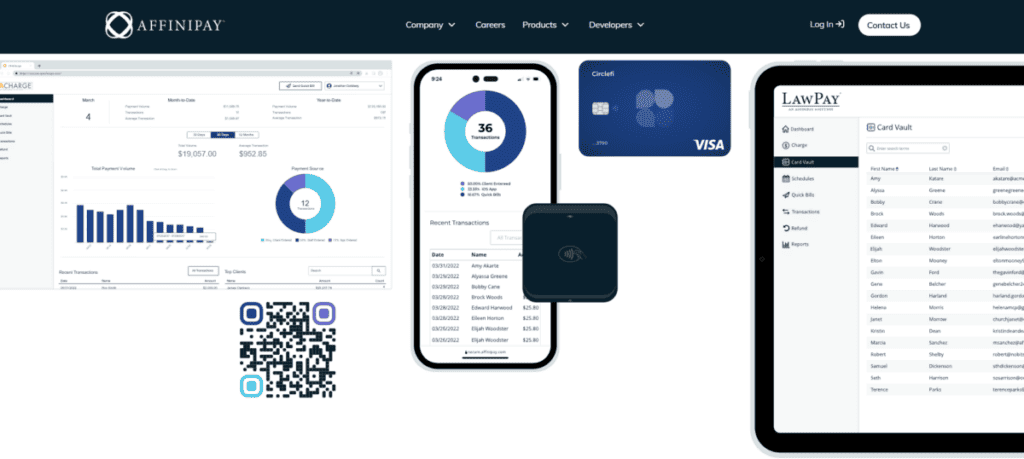
AffiniPay features a clean and modern dashboard where users can:

View real-time transaction data

Track pending and completed payments

Generate custom payment links

Manage client accounts and invoices

The dashboard is designed to be clutter-free, making it easy for professionals who may not be tech-savvy to navigate the platform without a steep learning curve.

Accessibility (Desktop & Mobile)

It is cloud-based, allowing users to access their accounts from any device with an internet connection.

The desktop experience is fully optimized for quick navigation.

The mobile experience, while functional, is not as robust as some competitors like Square or Stripe, which offer dedicated mobile apps.

Onboarding & Setup Process

Getting started with AffiniPay is relatively simple:

Sign up online and provide business details.

Connect bank accounts (including trust accounts for legal professionals).

Start processing payments after verification.

It also offers personalized onboarding assistance, particularly for law firms needing help with trust accounting setup.

Learning Curve

For the majority of users, the platform is plug-and-play; however, professionals who are unfamiliar with trust accounting compliance may need to invest more time in learning the IOLTA-compliant payment flows.

Overall User Experience

Overall, AffiniPay balances functionality and ease of use well, though it may lack some of the intuitive mobile-first features offered by mainstream processors.

Security & Compliance

Security and compliance are two of AffiniPay’s strongest areas, making it a preferred payment processor for law firms and professional service providers that handle sensitive financial transactions. The platform ensures that payments are processed securely while maintaining compliance with trust accounting regulations and PCI standards.

PCI Compliance & Data Encryption

The highest certification level under the PCI DSS is PCI Level 1, which AffiniPay satisfies. This lowers the possibility of fraud and data breaches by guaranteeing that every transaction is tokenized and encrypted. Because the platform employs end-to-end encryption, credit card information is never kept in a manner that leaves it open to cyberattacks.

Fraud Prevention & Risk Management

AffiniPay incorporates multiple layers of fraud prevention, including:

Tokenized transactions to protect customer payment information.

AI-powered fraud detection tools to flag suspicious activities.

Chargeback prevention mechanisms that help businesses resolve disputes efficiently.

These features help law firms and other professionals mitigate the risk of unauthorized transactions and fraudulent chargebacks.

Trust Accounting Compliance

A key differentiator of AffiniPay is its compliance with IOLTA and ABA guidelines. The system automatically ensures that client funds are kept separate from operational funds, preventing ethical violations and accounting errors.

With robust security measures and strict regulatory compliance, AffiniPay provides professionals with a secure, compliant, and reliable payment processing solution.

Customer Support & Service

AffiniPay provides dedicated customer support to assist businesses with payment processing, trust accounting compliance, and technical issues. The company offers support through phone, email, and an online help center, ensuring that users can get assistance when needed.

Professionals in the United States will find phone support convenient as it is available during regular business hours. Although there isn’t round-the-clock assistance, the team is renowned for knowing how to process legal payments and trust accounting rules, which is very beneficial for law firms. There is also email support, though response times might differ based on how complicated the problem is.

AffiniPay has a detailed help center that includes FAQs, step-by-step guides, and troubleshooting articles. Additionally, it offers webinars and training sessions to help businesses better understand payment processing and financial compliance.

Customer feedback on support is generally positive, with many users praising the team’s expertise in legal and professional service payments. However, some customers report delays in responses for non-urgent issues, particularly via email. While AffiniPay provides strong customer support, the lack of 24/7 availability may be a drawback for businesses that require immediate assistance outside of standard hours.

Pros and Cons of AffiniPay

AffiniPay is a specialized payment processor designed for law firms and professional service providers. While it offers several advantages, it may not be the best fit for all businesses. Below is a balanced evaluation of its strengths and weaknesses.

Pros

Designed for professional service firms – AffiniPay is built specifically for law firms, accountants, and consultants, ensuring compliance with industry regulations.

Trust accounting compliance – The platform separates client trust funds from operational funds, preventing ethical violations.

Seamless integrations – Works well with legal practice management software (Clio, MyCase), accounting tools (QuickBooks, Xero), and CRM platforms.

Strong security measures – Offers PCI Level 1 compliance, tokenized transactions, fraud detection, and data encryption, ensuring secure transactions.

No long-term contracts – Users are not locked into lengthy agreements and can cancel anytime without early termination fees.

User-friendly interface – The dashboard is intuitive and easy to navigate, making payment processing simple for professionals.

Cons

Limited to professional services – Businesses in retail, e-commerce, or high-risk industries may find AffiniPay unsuitable.

Higher transaction fees – Compared to Stripe or Square, AffiniPay’s pricing is slightly higher, which may not be cost-effective for all businesses.

No dedicated mobile app – While mobile-friendly, the platform lacks a standalone mobile app for managing payments on the go.

Limited international support – AffiniPay primarily serves U.S.-based businesses, making it less suitable for global operations.

No 24/7 customer support – Support is only available during business hours, which may not be convenient for all users.

While AffiniPay excels in legal compliance and security, businesses outside of professional services may find other payment processors more versatile.

How AffiniPay Compares to Competitors

AffiniPay faces competition from a number of well-known payment processors, such as PayPal, Square, and Stripe. Although it is intended for legal firms and professional service providers, other platforms might provide more features, more extensive industry support, and cheaper costs. Below is a comparison of AffiniPay with its main competitors.

AffiniPay vs. Stripe

Stripe is a versatile payment processor widely used in e-commerce, SaaS, and technology businesses. It offers customizable APIs, advanced reporting, and global payment support. However, it lacks trust accounting compliance, making it unsuitable for law firms.

AffiniPay is better for law firms and professional service providers.

Stripe is better for e-commerce, online platforms, and global businesses.

Fees: AffiniPay (2.95% + $0.20) vs. Stripe (2.9% + $0.30).

AffiniPay vs. Square

Square is ideal for retail and small businesses that need POS hardware, invoicing, and payment processing. Unlike AffiniPay, Square lacks trust accounting compliance and legal software integrations.

AffiniPay is better for law firms needing compliance features.

Square is better for brick-and-mortar businesses requiring in-person payments.

Fees: AffiniPay (2.95% + $0.20) vs. Square (2.6% + $0.10).

AffiniPay vs. PayPal

Although PayPal is popular for peer-to-peer payments and online transactions, professional services find it less appealing due to its limited legal integrations and higher transaction fees.

AffiniPay is better for law firms needing trust accounting compliance.

PayPal is better for online businesses and international transactions.

Fees: AffiniPay (2.95% + $0.20) vs. PayPal (3.49% + $0.49).

Who Should Use AffiniPay?

It is designed for law firms and professional service providers that require secure payment processing with compliance features. While it excels in industries that need trust accounting and financial oversight, it may not be the best fit for all businesses.

Best-Suited Industries

Law Firms – AffiniPay’s IOLTA and ABA compliance ensures that client funds remain separate from operational accounts, making it ideal for attorneys.

Accounting & Financial Services – CPAs and financial consultants benefit from secure invoicing, ACH payments, and seamless integrations with QuickBooks and Xero.

Consultants & Professional Services – Businesses that require custom payment links, automated billing, and secure client transactions will find AffiniPay useful.

Medical & Healthcare Practices – Some healthcare professionals use AffiniPay for HIPAA-compliant payment processing and recurring billing.

Who May Not Benefit?

E-commerce & Retail Businesses – Platforms like Stripe, Square, or PayPal offer better solutions for online stores, point-of-sale transactions, and international sales.

High-Risk Businesses – It does not cater to industries with high chargeback rates or businesses requiring offshore payment processing.

Global Businesses – Since AffiniPay primarily serves U.S.-based professionals, businesses with international customers may face limitations.
AffiniPay Review

Final Verdict: Is AffiniPay Worth It?

For legal firms and professional service providers who require safe, legal payment processing with trust accounting assistance, It is a great option. Businesses outside of these sectors, however, might find more affordable and flexible options like Square or Stripe. The cost is justified by its specialized features for professionals who need to comply with the law.

FAQs

Does AffiniPay support international transactions?

AffiniPay primarily serves U.S.-based businesses and does not support international transactions. While some payment processors like PayPal and Stripe offer global payment acceptance, It is designed for domestic professional service firms that require trust accounting compliance and legal-specific payment solutions. Businesses with clients outside the U.S. may need to consider an alternative provider.

Is there a contract or early termination fee?

AffiniPay does not require users to sign long-term contracts, and there are no early termination fees. This flexibility allows businesses to use the service on a month-to-month basis without being locked into an agreement. Unlike some payment processors that charge cancellation penalties, It provides a transparent pricing structure with no hidden fees.

Can I use AffiniPay for a non-legal business?

Yes, AffiniPay can be used by accountants, consultants, financial advisors, and healthcare providers. However, it is best suited for law firms and professional service businesses that need compliance-focused payment solutions. If you run a retail, e-commerce, or high-risk business, platforms like Stripe, Square, or PayPal may offer more suitable features and lower fees.

WePay Review

WePay Review

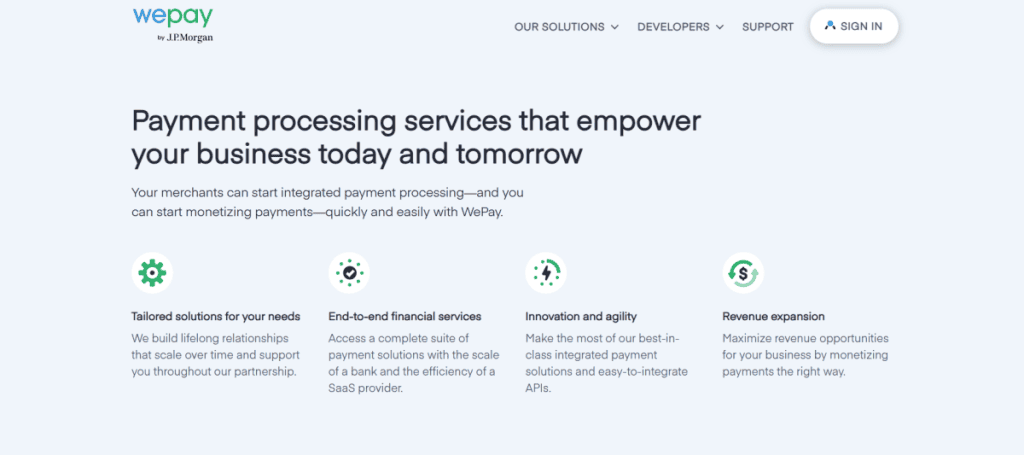
WePay, founded in 2008 by Rich Aberman and Bill Clerico, is a U.S.-based online payment service provider. It offers integrated and customizable payment solutions through its APIs, catering primarily to platform businesses such as crowdfunding sites, marketplaces, and small business software companies. In 2017, WePay was acquired by JPMorgan Chase, enhancing its capabilities and reach within the financial services sector. Lets read more about WePay Review.

In the current digital economy, payment processors such as WePay are essential for enabling smooth electronic transactions between companies and their clients. They allow merchants to receive different types of electronic payments, such as credit and debit cards, along with digital wallets, guaranteeing that money is transferred securely and efficiently from the customer’s account to the merchant’s account.

The significance of payment processors in contemporary business functions cannot be emphasized enough. They offer the framework that enables fast and secure transactions, crucial for upholding customer trust and satisfaction. Payment processors allow businesses to concentrate on their main activities by managing the intricacies of payment authorization, authentication, and settlement, relieving them of the responsibility of handling payment logistics. 

Additionally, payment processors provide improved security features, including encryption and fraud prevention, to safeguard sensitive financial information. This is essential for stopping unauthorized transactions and ensuring adherence to industry standards. Moreover, by enabling various currencies and payment options, payment processors promote international trade, enabling companies to broaden their scope and serve a varied clientele. 

Company Background: Evolution and Growth of WePay | WePay Review

WePay, established in 2008 by Rich Aberman and Bill Clerico, is a U.S.-based online payment service provider. The idea for WePay originated when Aberman faced challenges collecting funds from friends for his brother’s bachelor party, highlighting the need for a more efficient group payment solution. This experience led Aberman and Clerico to develop a platform that simplifies the process of collecting money from multiple individuals.

Initially, WePay focused on facilitating group payments and event ticketing. Over time, the company shifted its strategy to provide integrated payment solutions for platform-based businesses, including crowdfunding sites, marketplaces, and small business software companies. This pivot allowed WePay to cater to a broader range of clients by offering customizable payment services through its APIs.

In October 2017, JPMorgan Chase announced its plan to acquire WePay to enhance its payment processing capabilities for small businesses. The acquisition aimed to enable software providers to offer integrated payments to their small business clients, streamlining the payment process and reducing friction. The deal was reported to be valued at over $220 million, reflecting WePay’s significant growth and potential in the fintech industry.

After the acquisition, WePay remained a separate entity under JPMorgan Chase, functioning as the firm’s payments innovation incubator in Silicon Valley. This setup enabled WePay to preserve its innovative culture while utilizing the vast resources and client network of JPMorgan Chase. The collaboration allowed WePay to provide its partners and their merchants access to Chase’s network of four million small business customers, delivering improved payment solutions and assistance. 

WePay primarily targets platform-based enterprises, offering them tailored and integrated payment solutions. By providing APIs that facilitate the smooth integration of payment processing into diverse platforms, WePay empowers businesses to handle transactions effectively and safely. This strategy has drawn clients like GoFundMe, Meetup, and FreshBooks, who gain from WePay’s customized payment solutions that meet their unique operational requirements.

WePay Review

Key Features: Enhancing Payment Solutions with WePay

It offers a suite of features designed to streamline payment processing for platform-based businesses. These features enhance user experience, ensure security, and provide flexibility for both merchants and customers.

Integrated Payment Processing: WePay enables platforms to embed payment processing directly into their services, allowing users to complete transactions without being redirected to external sites. This seamless integration simplifies the payment process and enhances the overall user experience.

Customizable User Experience: It offers APIs that enable companies to customize the payment experience to match their brand image. This involves personalizing the appearance and tone of checkout pages, emails, and other user engagements, guaranteeing a uniform and branded experience for clients.

Fraud Detection and Risk Management: Security is a top priority for WePay. The platform employs advanced fraud detection systems, including machine learning algorithms, to monitor transactions and identify suspicious activities. By analyzing various data sources, WePay effectively mitigates potential risks, providing a secure environment for transactions.

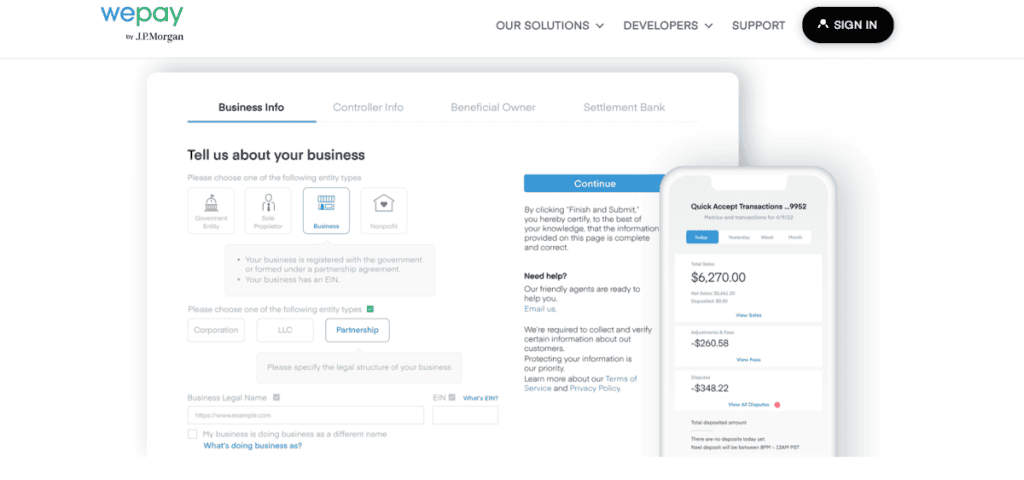
Instant Merchant Onboarding: WePay streamlines the onboarding process for merchants by handling necessary verifications and compliance checks. This efficient process enables merchants to start accepting payments quickly, reducing delays and enhancing operational efficiency.

Flexible Payout Options: Understanding the importance of timely access to funds, It offers flexible payout schedules, including same-day deposits. This feature supports better cash flow management for businesses.

Mobile and Digital Wallet Integration: It facilitates transactions via mobile devices and digital wallets, such as Apple Pay and Android Pay. This feature allows businesses to meet the needs of technology-oriented customers, thereby improving convenience and accessibility. 

Through these strong capabilities, It delivers a complete solution that caters to the various requirements of platform-oriented businesses, providing a safe, adaptable, and accessible payment processing experience. 

Pricing Structure: Understanding WePay’s Cost Framework

WePay offers a tiered pricing structure designed to accommodate various business needs through its three primary products: Link, Clear, and Core.

Overview of Pricing Tiers: Link, Clear, and Core

WePay Link: This entry-level service allows platforms to refer merchants to Chase Integrated Payments. Merchants can begin accepting payments swiftly, with standard pricing set at 2.9% plus $0.25 per transaction. The integration process is straightforward, requiring minimal technical effort.

WePay Clear: Expanding on Link’s features, Clear allows platforms to incorporate payments straight into their services, providing a smoother user experience. This level offers extra customization capabilities and personalized risk management. Pricing is determined by quotes, enabling platforms to set the merchant prices they will impose on users in addition to WePay’s fees.

WePay Core: Designed for large payment facilitators, Core offers extensive customization, granting platforms total control over the user experience and transaction lifecycle. Pricing is aggressive and relationship-based, tailored to the specific needs of the platform.

Transaction Fees: Transaction fees with WePay vary depending on the chosen product tier and the specific agreement between the platform and WePay. For WePay Link, the standard fee is 2.9% plus $0.25 per transaction. For WePay Clear and Core, fees are typically determined through direct consultation, allowing for tailored pricing structures that align with the platform’s business model.

Customizable Pricing for Platform Partners: WePay offers platform partners the ability to determine their own pricing for merchants. This indicates that platforms have the ability to apply a markup to WePay’s standard rates, generating an extra revenue source. This adaptable pricing method allows platforms to match payment processing costs with their specific value propositions and market strategies.

Transparency Concerns: While WePay offers customizable pricing, some users have expressed concerns regarding transparency. The lack of publicly available detailed pricing information, especially for the Clear and Core tiers, necessitates direct consultation with WePay’s sales team. This approach can make it challenging for potential clients to compare WePay’s fees with those of other payment processors.

Integration and Compatibility: Seamless Payment Solutions with WePay

It provides a comprehensive suite of integration options and compatibility features, enabling businesses to seamlessly incorporate payment processing into their platforms. These capabilities are designed to enhance the user experience and support a variety of business models.

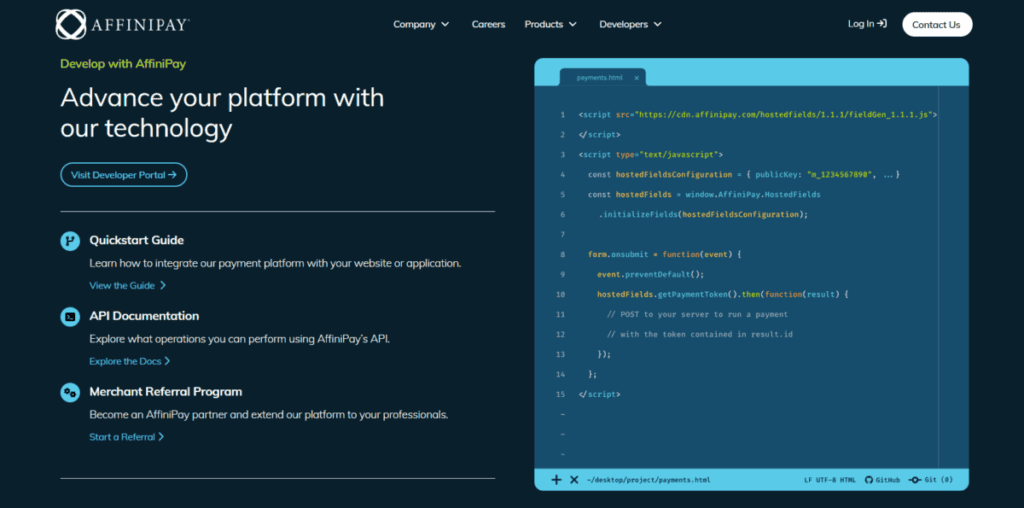
Developer-Friendly APIs: WePay provides powerful APIs that enable the incorporation of payment processing into multiple applications. These APIs are tailored for developers, offering comprehensible documentation and assistance for various programming languages such as PHP, Ruby, Python, Node.js, and Java. This adaptability enables developers to effectively create payment solutions customized to their unique platform needs.

Supported Platforms and Use Cases: WePay’s versatile APIs support a wide range of platforms and use cases, making it suitable for businesses of all sizes, from small enterprises to large corporations. The platform is compatible with both mobile and desktop applications, enabling businesses to offer seamless payment experiences across different devices. This adaptability ensures that WePay can meet the diverse needs of various industries and business models.

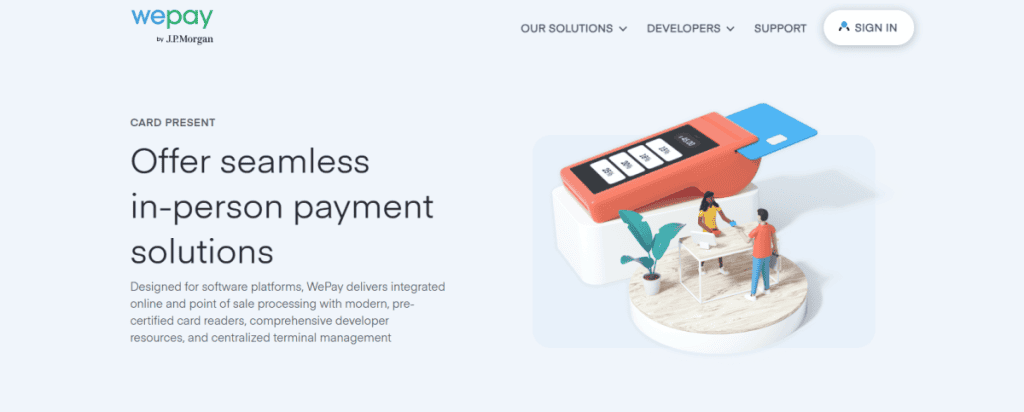
Mobile Point-of-Sale Solutions: To cater to businesses that require in-person payment capabilities, WePay provides mPOS solutions. These solutions enable merchants to accept payments using mobile devices, facilitating transactions in physical locations or on the go. By integrating mPOS functionality, businesses can expand their payment acceptance methods and enhance customer convenience.

Digital Wallet Compatibility: WePay enables integration with widely-used digital wallets, such as Apple Pay and Google Pay. This compatibility enables companies to provide their clients with multiple payment choices, addressing the increasing demand for digital wallet payments. By endorsing these payment methods, It assists businesses in keeping up with consumer trends and enhancing the overall payment experience.

WePay Review

Security and Compliance: Safeguarding Transactions with WePay

WePay prioritizes the security and compliance of its payment processing services, implementing advanced technologies and adhering to industry standards to protect sensitive data and mitigate risks.

Fraud Prevention Technologies: To protect transactions, It utilizes advanced fraud detection systems that observe and assess payment activities as they occur. These systems employ different data sources to detect and block unauthorized transactions, providing a safe atmosphere for merchants and customers alike.

Machine Learning for Risk Management: It utilizes machine learning algorithms to improve its risk management approaches. By examining transaction trends and behaviors, these models can identify anomalies that suggest fraudulent activity. This proactive strategy allows WePay to respond to new threats and constantly enhance its fraud prevention measures.

Compliance with Regulations like PCI DSS: WePay is a certified Level 1 PCI DSS (Payment Card Industry Data Security Standard) Compliant Service Provider, the highest level of certification available. This status requires annual independent security audits of processes and systems to ensure adherence to stringent data protection standards. Compliance with PCI DSS underscores WePay’s commitment to maintaining a secure payment environment.

Data Encryption and Secure Transactions: To protect sensitive information during transmission and storage, It employs state-of-the-art cryptographic algorithms. Data transmitted over networks is secured using HTTPS with RSA 2048-bit keys and SHA-256 certificates, while stored data is encrypted with AES 256-bit encryption, utilizing unique per-row keys. These measures ensure that transaction data remains confidential and secure from unauthorized access.

Customer Support and User Experience: Navigating WePay’s Assistance and Design

WePay offers various support channels and aims to provide a user-friendly experience for both businesses and their customers.

Support Channels: It provides support primarily through email and online documentation. Users can access a comprehensive Help Center on the WePay website, which includes articles and guides on various topics related to account management, payments, and troubleshooting. For technical inquiries, users are encouraged to submit questions via email. The support team, known as the “Customer Delight” team, is available from 6 am to 6 pm PST, Monday through Friday.

Common Feedback on Support Accessibility: Feedback from customers about WePay’s support availability is varied. Certain users value the informative articles found on the internet, as they can help with common problems. Nevertheless, the dependence on email for technical assistance has raised worries regarding response times. The lack of phone assistance can result in delays for users needing immediate help, causing frustration for certain customers. 

Moreover, there have been issues regarding customer support and difficulties in handling payments. Users have pointed out problems like slow resolutions and few communication options as aspects that require enhancement. 

Ease of Use for Businesses and End-Users: WePay is designed to offer a straightforward and intuitive experience for both businesses and their customers. The platform provides developer-friendly APIs, enabling businesses to integrate payment processing seamlessly into their applications. This integration allows end-users to complete transactions without being redirected to external sites, enhancing the overall user experience.

The onboarding process for merchants is streamlined, allowing businesses to start accepting payments quickly. For end-users, the checkout process is designed to be simple and efficient, minimizing the steps required to complete a transaction. This focus on simplicity benefits both merchants and customers by reducing friction during transactions.

Pros and Cons: Evaluating WePay’s Strengths and Weaknesses

WePay offers a range of features tailored to platform-based businesses, presenting both advantages and potential drawbacks.

Pros

Seamless Integration: It provides developer-friendly APIs that facilitate easy embedding of payment processing into platforms, allowing users to complete transactions without being redirected to external sites. This integration enhances the user experience by maintaining consistency and reducing friction during the payment process.

Customizable Solutions: The platform provides a wide range of customization possibilities, allowing companies to personalize the payment experience to match their brand identity. This involves adjusting checkout pages, emails, and various user interactions to provide a unified and branded experience for clients.

No Setup or Monthly Fees: WePay does not charge setup or monthly fees, making it a cost-effective option for businesses, particularly startups and small enterprises. This pricing structure allows businesses to utilize WePay’s services without incurring additional fixed costs.

Cons

Limited Direct Access for Small Businesses: It primarily partners with software platforms and independent software vendors, which means small businesses can only access WePay’s services through these partners. This indirect access may not be ideal for small businesses seeking a direct relationship with their payment processor.

Pricing Transparency Issues: The pricing information for WePay’s Clear and Core products is not available to the public and necessitates direct inquiry. This absence of clarity can hinder businesses from easily comparing WePay’s fees with other payment processors and from grasping the total cost of services in advance.

Customer Support Limitations: WePay’s customer support is primarily conducted via email, with no phone support available for technical inquiries. This reliance on email can lead to slower response times, which may be frustrating for businesses requiring immediate assistance.

Alternatives to WePay: Comparing Key Competitors

When evaluating WePay as a payment processor, it’s essential to consider how it compares to major competitors such as Stripe, PayPal Payments Pro, and Braintree. Each platform offers distinct features, pricing structures, and integration capabilities that cater to various business needs.

Stripe: Stripe is renowned for its developer-centric approach, providing comprehensive APIs that facilitate seamless integration of payment processing into applications. It supports a wide array of payment methods, including credit and debit cards, digital wallets like Apple Pay and Google Pay, and even international options such as Alipay. Stripe’s pricing is straightforward, typically charging 2.9% plus $0.30 per transaction, with no setup or monthly fees. This transparency appeals to businesses seeking clarity in processing costs. Additionally, Stripe offers advanced features like subscription billing, invoicing, and robust fraud prevention tools, making it suitable for businesses ranging from startups to large enterprises.

PayPal Payments Pro: PayPal Payments Pro enhances standard PayPal accounts by providing customizable checkout options and enabling direct payment acceptance on a website without redirecting users. It accommodates major credit and debit cards, PayPal transactions, and digital wallets. The service imposes a monthly fee (usually about $30) along with transaction fees of 2.9% and an additional $0.30. PayPal’s broad international presence and brand awareness can boost customer confidence and possibly raise conversion rates. Nonetheless, the extra monthly charge might be a factor for smaller companies or those with reduced transaction volumes.

Braintree: Acquired by PayPal, Braintree operates as a separate service offering a comprehensive payment platform with support for various payment methods, including credit and debit cards, PayPal, Venmo, Apple Pay, Google Pay, and even Bitcoin. It provides a seamless checkout experience with customizable options and robust security features. Braintree’s pricing aligns with industry standards, charging 2.9% plus $0.30 per transaction without monthly fees. Its integration capabilities and support for multiple payment methods make it a versatile choice for businesses aiming to offer diverse payment options to their customers.

WePay Review

Key Differences and Similarities

Integration and Customization: Stripe and Braintree provide APIs that are friendly for developers, allowing for significant customization of payment processes, which helps businesses craft personalized checkout experiences. PayPal Payments Pro provides customization options but might demand additional effort to reach an equivalent level of seamless integration.

Pricing Structure: Stripe and Braintree have similar transaction fees and do not charge monthly fees, making them cost-effective for businesses with varying transaction volumes. In contrast, PayPal Payments Pro imposes a monthly fee in addition to transaction fees, which could be a consideration for cost-sensitive businesses.

Payment Method Support: Braintree stands out by supporting a wide range of payment methods, including PayPal and Venmo, providing flexibility for customers. Stripe offers extensive international payment options but does not support PayPal payments. PayPal Payments Pro primarily focuses on PayPal and major credit/debit cards.

Global Reach: All three platforms hold a substantial global presence, yet PayPal’s large user base and brand awareness may provide benefits for companies aiming at international clients.

Conclusion

WePay stands out in smooth integration, personalization, and security, making it perfect for platform-oriented companies. Yet, some users might be worried about the lack of transparency in pricing and customer support. Its customized strategy benefits marketplaces and crowdfunding platforms, providing considerable value to companies that emphasize efficiency and a seamless payment process.

FAQs: Addressing Common Questions About WePay

Can individual small businesses use WePay directly?

No, individual small businesses cannot use WePay directly. It primarily partners with software platforms and independent software vendors (ISVs) to provide integrated payment solutions. Small businesses typically access WePay’s services through these partner platforms rather than establishing a direct relationship with WePay.

What platforms integrate best with WePay?

It is designed to integrate seamlessly with various platforms, including crowdfunding sites, online marketplaces, and software platforms that require built-in payment gateways. Its APIs are tailored for ISVs and SaaS providers, enabling them to offer customized payment solutions within their applications.

Does WePay support international transactions?

WePay’s support for international transactions is limited. It primarily serves merchants located in the United States and Canada. While it accepts payments from most domestic and international cards bearing major logos like Visa, Mastercard, and American Express, the ability to support merchants outside the U.S. and Canada varies between partner platforms. Merchants should consult their specific platform to confirm support for their country.