
Tag Archives: POS systems

SumUp Review

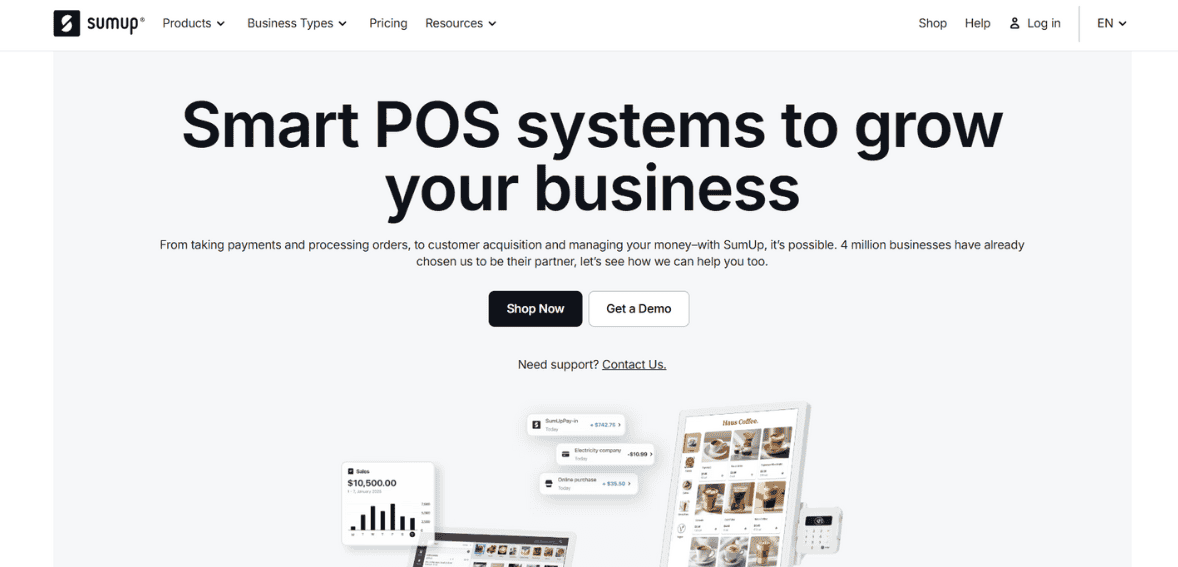
SumUp is a global fintech company that specialises in mPOS and digital payments for small and micro businesses. Founded in 2012 and based in London, SumUp now operates in over 30 countries including major markets in Europe, the US and South America. They are known for providing affordable, no contract payment solutions to make card acceptance more accessible to sole traders, freelancers and small business owners. Lets read more about SumUp Review.

The company started with one goal – to offer businesses an alternative to the traditional payment terminal model that required complex contracts and hidden fees. Over the years SumUp has expanded its product range to include card readers, complete POS systems, invoicing tools, online stores and even business banking services.

Unlike some competitors who focus on medium to large enterprises, SumUp keeps its core audience small merchants who need simplicity, cost transparency and portability. Their card readers are compact, easy to use and have no monthly subscriptions. They have also made efforts to provide broader digital tools so businesses can manage online and offline transactions through one platform.

SumUp has been praised for its streamlined hardware and competitive fees but has been criticized for customer service responsiveness and limited advanced features. But with a low entry barrier it’s a great option for new businesses or mobile vendors looking for a simple way to accept card payments.

Getting Started with SumUp | SumUp Review

Getting started with SumUp is designed to be as simple and frictionless as possible, which aligns well with its target audience of small business owners and sole traders. Registration begins online, where users are required to provide standard business details, a valid email address, and identity verification documents. The sign-up process typically takes less than 10 minutes and doesn’t involve lengthy underwriting or credit checks, which is a significant advantage for new businesses or those without a credit history.

Once registration is complete, users can immediately order their preferred card reader, and shipping is usually quick. The devices arrive ready to pair with the SumUp app, available on both Android and iOS. Activation only requires logging in, linking the hardware via Bluetooth, and running a test transaction to ensure everything functions properly.

The onboarding experience is intuitive and does not demand any technical expertise. There are no contractual obligations or hidden onboarding fees, which makes it ideal for seasonal businesses or pop-up sellers. Unlike many traditional payment providers, SumUp doesn’t require a merchant account setup through a bank. It operates as an all-in-one platform, handling payment processing, settlement, and reporting internally.

That said, some users may find the onboarding documentation limited if they run into specific issues. While the initial process is easy, the absence of guided setup for more complex features like online store configuration or multiple user accounts might require reaching out to support.

Hardware Options: Card Readers and Accessories

SumUp has a range of hardware options to suit different business needs. Its most popular product is the SumUp Air card reader, a small device that connects to smartphones or tablets via Bluetooth and accepts chip, contactless and mobile wallet payments. It’s praised for its affordability, design and durability. With no keypad or screen it relies entirely on the app for transaction input and display.

For more independence SumUp also offers the SumUp Solo, a pocket sized smart terminal with a built-in touchscreen, Wi-Fi and mobile data. Unlike the Air, Solo can process payments without a connected smartphone, making it perfect for on-the-go vendors, delivery drivers and service professionals. Another option is the SumUp 3G, a more basic standalone card reader with a small display and integrated SIM card. It’s for merchants who only need basic card acceptance without app integration. For those who need receipts the 3G+ Printer bundle comes with a dock and receipt printer.

All devices have rechargeable batteries and long standby times. Accessories like charging docks, receipt printers and mounts are available separately. While SumUp’s hardware is competitively priced it doesn’t offer as much customisation or advanced features as more enterprise focused POS systems. But for businesses looking for minimalist, functional devices that are easy to deploy the hardware does the job.

SumUp POS Solutions: Simplifying In-Store Sales

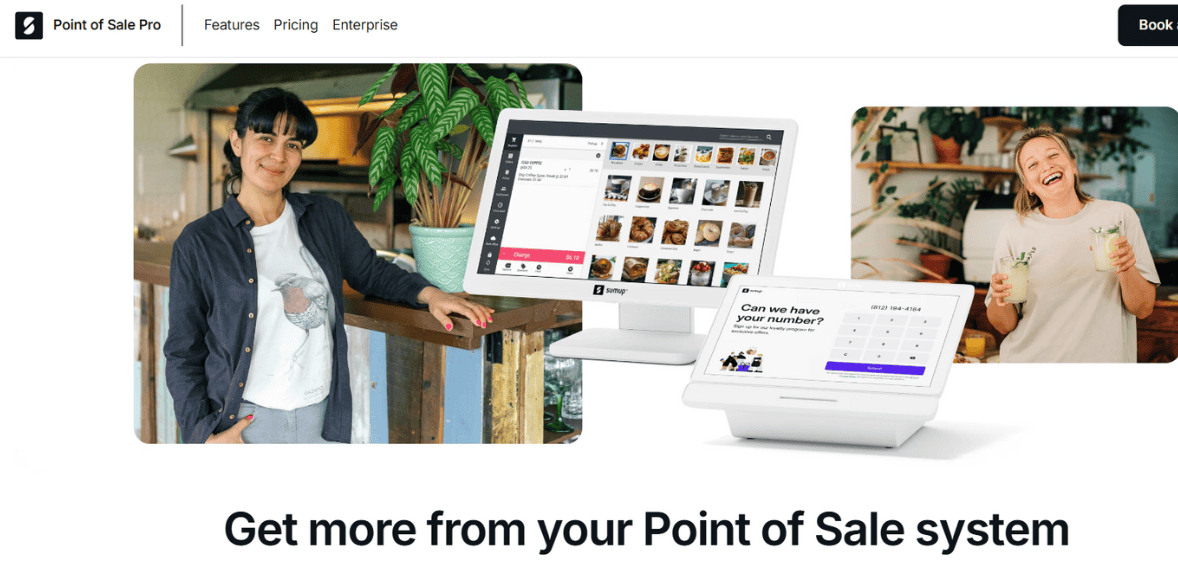
SumUp provides a few POS options tailored to brick-and-mortar businesses. For simple setups, users can rely on the mobile app and a card reader. However, for more advanced sales tracking and inventory management, the company offers the SumUp POS and Lite POS systems.

The SumUp Lite POS is an entry-level solution bundled with a pre-configured tablet and card reader. It’s ideal for small cafés, salons, or market stalls that want a ready-to-use system without building their setup from scratch. It supports product cataloging, tipping, staff management, and receipt printing.

The full SumUp POS is more robust and customizable. It includes a touchscreen tablet, cash drawer, receipt printer, and barcode scanner, giving it the feel of a traditional retail POS system. It allows for deeper sales analysis, multi-user access, and broader inventory controls. This setup is often used by slightly larger retail or hospitality businesses.

However, compared to industry-leading POS providers, SumUp’s software capabilities are basic. It doesn’t yet support features like table management, advanced loyalty programs, or extensive third-party integrations. For small businesses that want something simple and effective, the solution works. But businesses looking to scale or needing sector-specific POS features may find themselves outgrowing the SumUp system over time.
SumUp Review

Payment Acceptance: In-Person, Mobile, and Online

SumUp has gradually expanded its payment acceptance capabilities to include a wide range of transaction types. In-person payments remain its core strength, with support for chip and PIN, contactless cards, and mobile wallets like Apple Pay and Google Pay. This makes the system accessible to a wide audience, especially in cashless environments.

Mobile professionals can easily carry a SumUp card reader with them and pair it with their smartphone or use a standalone reader like the Solo or 3G. These options cater well to beauty technicians, delivery services, mobile mechanics, and vendors at local markets.

SumUp has also made strides in remote payment solutions. The platform allows merchants to send payment links via SMS, email, or social media. Customers can click the link, view the amount, and complete the payment securely using a card or mobile wallet. There’s also an invoicing tool that lets businesses issue branded invoices that customers can pay online.

For e-commerce businesses, SumUp offers a free online store builder, though it’s limited in scope compared to platforms like Shopify or WooCommerce. It’s best suited for micro-merchants who need a simple digital storefront rather than a full-fledged e-commerce system. Overall, SumUp’s flexibility across in-person and remote payments gives small businesses an accessible way to collect funds without investing in complex infrastructure.

SumUp App: Features and Usability

The SumUp app is central to how many businesses interact with the platform, especially those using the Air card reader. The app is available on both Android and iOS and provides a clean, intuitive interface for managing payments, viewing sales, and configuring settings.

Key features include the ability to add products with images and pricing, organize items into categories, and track inventory quantities. The app also allows tipping, tax configuration, and the issuance of digital receipts via SMS or email. Transaction history is available in real time, and users can filter sales by date or payment method for quick reporting.

Merchants can also refund transactions, send payment links, and view insights into daily or weekly earnings. While it doesn’t offer detailed financial reports or integration with accounting software out of the box, the essentials are there for small-scale operators.

For solo users or small teams, the app’s simplicity is a plus. It reduces the learning curve and requires minimal setup. However, some users might find the app limiting if they require deeper analytics, employee tracking, or integrations with loyalty systems and CRMs.

In short, the SumUp app is ideal for businesses that prioritize ease of use over customization. It’s particularly strong for those who work on the move and need an all-in-one mobile terminal in their pocket.

Online Store and Payment Links

SumUp has tools for merchants to accept payments remotely, including an entry level online store and payment link generator. These are for businesses that don’t have a traditional e-commerce platform but want to take card payments beyond face to face.

The online store builder is web based and no coding knowledge is required. Business owners can create a basic catalogue, add products with images and prices and publish the store with a custom URL. While the features are limited – no cart abandonment recovery, advanced shipping setup or multi currency support – it’s good for simple setups like bakeries, craft sellers or service bookings.

Payment links are even more flexible. Merchants can create a custom link for a specific amount and share it via email, social media or messaging apps. This is useful for service based professionals who invoice clients or freelancers who don’t want to use external invoicing software.

Both features have card payment processing, security compliance and receipt issuance. Not a replacement for a full e-commerce platform but SumUp’s remote payment tools give small businesses the ability to sell online without monthly fees or developer support.

Fees and Pricing Structure

One of SumUp’s strongest selling points is its transparent, no-surprise pricing model. Most of the platform operates on a pay-as-you-go basis, with no setup charges, monthly fees, or cancellation penalties. This is particularly beneficial for new businesses, seasonal vendors, and those that are hesitant to commit to long-term contracts.

As of 2025, card-present transactions are typically charged around 1.69%, while remote payments such as links or invoices carry a slightly higher fee of around 2.5%. These rates are competitive compared to other entry-level providers like Square or Zettle.

Hardware is sold upfront at reasonable prices. For example, the SumUp Air is often available for under $50, while the SumUp Solo may cost closer to $100. Bundle deals and occasional promotions further reduce the barrier to entry.

There are no PCI compliance fees or minimum transaction requirements. However, businesses processing larger volumes may find the per-transaction percentage adds up, making other providers with tiered or interchange-plus pricing more cost-effective in the long run. Overall, SumUp’s pricing is designed to appeal to small business owners who value simplicity and predictability over advanced customization or lower marginal fees.

Banking and Business Accounts by SumUp

To go with its payment tools, SumUp now has its own business account and prepaid Mastercard. This integration allows you to receive payments, manage your cash flow and spend your earnings without having to transfer funds to an external bank account.

The SumUp Business Account is free to open and can be activated in the same app you use for payments. Once activated you get a unique IBAN for local transfers and can set up direct debits or payouts. This is especially useful for freelancers and gig workers who want faster access to their earnings without having to wait for external bank settlements.

The SumUp Card gives you real-time access to your funds and can be used online and in-store. It also works with Apple Pay and Google Pay so you can use it for contactless payments. Some plans offer cashback on eligible purchases but this varies by region.

The banking features are convenient but basic. There’s no overdraft facility, interest on balances or integration with accounting tools. But for the target audience it’s a low-friction alternative to business banking. This is all part of SumUp’s vision to be more than a payment processor – it wants to be an all-in-one financial solution for micro-businesses and solo entrepreneurs.

Payout Speed and Settlement Times

Payout speed is a critical factor for small businesses managing tight cash flows, and SumUp performs reasonably well in this area. Typically, funds from card-present transactions are deposited into the linked bank account or SumUp Business Account within 1–2 business days. For many users, this schedule is fast enough to maintain operational continuity.

SumUp also offers an instant payout feature in certain regions, allowing merchants to receive funds within minutes for an additional fee. This is especially useful during peak sales periods or when businesses need liquidity on short notice. For remote payments, such as invoices or payment links, the settlement timeline may extend slightly, often taking 2–3 business days, which is standard industry practice due to additional verification and fraud prevention checks.

Merchants using the SumUp Card can access funds almost immediately after a transaction settles, bypassing the wait associated with external bank transfers. This can be a major advantage for service professionals or mobile businesses that operate on a day-to-day earnings model.

While SumUp doesn’t yet match some competitors that offer same-day bank transfers by default, its options for faster access continue to improve. For most small businesses, the payout timing is reasonable and predictable.

Customer Support and Service Quality

Customer service is often a make-or-break feature for small business tools, and SumUp receives mixed reviews in this department. The company provides multiple support channels, including email, live chat (via the app), and phone support in select regions. There’s also a comprehensive help center on its website that includes guides, FAQs, and troubleshooting instructions.

Users typically find the help center easy to navigate, with clear step-by-step instructions for common issues such as pairing devices, issuing refunds, and processing offline payments. However, response times through live chat and email can vary, and some users have reported delays in resolving technical or account-related problems.

SumUp has also faced criticism for limited weekend support hours, which can be frustrating for vendors operating on weekends or during events. While phone support is available, it may not cover all regions or time zones equally, which leaves a reliance on written communication.

To its credit, SumUp has continued to expand its support resources over time, including video tutorials and better onboarding documentation. Still, for users who prioritize hands-on customer care or have more complex operational needs, SumUp’s support experience may fall short compared to more premium providers.
SumUp Review

Security and Compliance

Security is a vital concern in any payment processing environment, and SumUp has implemented measures to ensure transaction integrity and regulatory compliance. All data transmitted through SumUp devices and apps is encrypted, meeting PCI-DSS requirements.

The platform uses tokenization for sensitive card data, meaning that the actual card information is never stored on the merchant’s device. Transactions are processed on secure servers, and fraud monitoring is performed automatically. This helps protect both the business and the customer from data breaches and unauthorized access.

SumUp is also compliant with KYC and AML regulations, requiring merchants to provide valid documentation when setting up their accounts. These protocols, while sometimes time-consuming during onboarding, contribute to platform security and reduce risk for all users.

From a privacy standpoint, SumUp adheres to GDPR in Europe and similar frameworks in other regions. Users have access to privacy settings, transaction logs, and can export or delete data as needed. Although SumUp lacks more advanced security options like biometric logins or two-factor authentication for transactions, it covers the essential bases well. For small and mid-sized businesses, its security setup is more than adequate for day-to-day operations.

SumUp for Different Business Types

SumUp’s simplicity, low cost, and flexibility make it suitable for a wide variety of small business models. Sole traders, such as tutors, handymen, and photographers, benefit from the mobile card readers and payment links, which require no technical expertise or setup costs.

Food vendors and market sellers appreciate the ability to accept contactless payments on the go using standalone readers like the Solo. For those with physical locations; such as salons, cafés, or boutique stores; SumUp POS provides a functional in-store solution without the complexity of enterprise-level systems.

Freelancers and service providers can take advantage of the invoicing tools and remote payment links to manage client payments. The addition of the SumUp Business Account also helps streamline financial management by consolidating income and spending into one ecosystem.

However, SumUp may not be the best choice for high-volume retail operations, multi-location franchises, or businesses that require sophisticated POS integrations, loyalty programs, or multi-user role controls. Its focus remains on delivering the essentials in a user-friendly package, not offering deep customization or automation. In general, SumUp is most effective for businesses in their early growth stages or those who prefer operational simplicity over advanced functionality.

Pros and Cons Summary

SumUp has carved out a strong reputation in the small business ecosystem by offering a blend of simplicity, mobility, and transparency. One of its biggest advantages is the no-contract, flat-rate pricing, which is easy to understand and budget for. The hardware is lightweight, durable, and ideal for mobile professionals or those with minimal infrastructure.

Another strong point is the integrated app, which allows real-time sales tracking and payment management, along with value-added tools like invoices and payment links. The business account and card offering further round out its ecosystem, reducing dependency on external banking tools.

On the downside, customer support is not always reliable, and the platform’s tools may feel limited for users seeking scalability or deeper integration. The POS software, while sufficient for basic retail, may not suit businesses with complex product catalogs, restaurant-style ordering, or CRM requirements.

Additionally, payout times, while reasonable, aren’t instant by default unless users opt for expedited transfers. And while the online store builder is useful, it lacks many features that established e-commerce platforms provide. Overall, SumUp is best described as a solid, dependable choice for entrepreneurs and microbusinesses that need payment flexibility without long-term commitments or complexity.

FAQs

Q1. Is SumUp suitable for high-volume businesses?

SumUp is best suited for small to medium-volume merchants. While it can technically handle high transaction volumes, businesses that process large amounts monthly may benefit from providers offering lower fees through tiered or interchange-plus pricing and more advanced POS features.

Q2. Does SumUp require a monthly subscription?

No, SumUp operates on a pay-as-you-go model with no mandatory monthly fees. You only pay a fixed percentage per transaction. Optional hardware and POS bundles may carry a one-time or optional monthly fee, but there’s no contract lock-in.

Q3. Can I accept international cards with SumUp?

Yes, SumUp supports most major international debit and credit cards, including Visa, Mastercard, and American Express. It also accepts payments via Apple Pay and Google Pay, making it easy to accommodate international customers.

Shift4 Payments Review

Shift4 Payments Review

Shift4 Payments is a US based fintech company that provides a fully integrated commerce platform to thousands of merchants in hospitality, food and beverage, retail, lodging, stadiums and eCommerce. Founded in 1999 by Jared Isaacman (who started the company at 16) Shift4 has grown into a publicly traded company with a wide range of solutions. As of 2025 the company is led by CEO Taylor Lauber with Isaacman moving into the role of Executive Chairman. Lets read more about Shift4 Payments Review.

Based in Allentown, PA Shift4 owns its full tech stack including the POS systems, payment gateway, merchant acquiring services and value added software tools. This end to end control allows the company to offer a unified commerce experience that reduces reliance on 3rd party vendors and simplifies operations for merchants.

Shift4 has rapidly expanded its footprint through a series of strategic acquisitions. These include VenueNext (stadium and arena technology), 3dcart (rebranded as Shift4Shop for eCommerce), The Giving Block (cryptocurrency donations) and Finaro (international payment processing). These moves have helped Shift4 go from a US centric processor to a global, vertically integrated technology company.

While the company is positioned as an all in one solution provider some businesses have raised concerns about transparency in pricing and contract structures. Overall Shift4 is a powerful solution and a good option for enterprise level merchants looking for centralized, multi channel operations under one vendor.

Core Payment Processing Solutions | Shift4 Payments Review

At its core, It provides secure, full-stack payment processing across a wide range of channels. Whether it’s in-store card-present transactions, online eCommerce sales, or mobile payments, the platform processes billions of dollars annually through its proprietary payment gateway and merchant acquiring infrastructure.

Shift4 supports all major payment types, including EMV chip, magnetic stripe, NFC (Apple Pay, Google Pay), QR-based payments, ACH, and even cryptocurrency via The Giving Block. Businesses that require recurring billing or installment payments will also find built-in support for subscription models and tokenized card storage.

Because Shift4 owns its own gateway and does not rely on third-party processors, it can deliver faster settlements, more robust reporting, and enhanced customization. This vertical integration helps reduce processing latency, prevent data silos, and minimize vendor-related delays.

The system is also built for omnichannel retail. Merchants can unify in-store and online transactions into a single backend environment, streamlining reconciliations and enabling consistent customer experiences. The Shift4Shop platform (formerly 3dcart) provides merchants with a complete web-based storefront solution, including checkout integrations, fraud tools, and custom APIs.

While the platform is powerful, it’s important to note that Shift4 does not publish standard pricing. Rates are customized per client, which means businesses must carefully review all terms before signing up. Nonetheless, for organizations looking for an all-in-one, scalable, and secure payment solution, Shift4’s processing infrastructure is among the most feature-rich on the market.

POS and Hardware Offerings

Shift4 offers a full suite of point-of-sale hardware under the SkyTab brand, designed to serve the unique demands of the hospitality, retail, and entertainment industries. The POS ecosystem includes SkyTab Workstation (fixed terminals), SkyTab Mobile (handheld), SkyTab Glass (Android-based software-only solution), and kitchen display systems. These devices are connected via dual connectivity options; Wi-Fi and 4G LTE; for reliable performance, even in high-traffic environments like stadiums or outdoor events.

SkyTab POS is more than just hardware; it’s a complete business management system. For restaurants, it includes tableside ordering, real-time menu management, modifiers, tipping, and delivery integrations. For retail, it offers barcode scanning, stock alerts, and support for promotional pricing or loyalty rewards.

The interface is modern, responsive, and built on an Android OS. Shift4 pushes over-the-air software updates, allowing businesses to access new features without downtime. The devices support EMV, contactless, and mobile wallets, as well as integrations with gift card and loyalty programs.

A strength of Shift4’s hardware is its seamless integration with the rest of its ecosystem, including payment processing and reporting tools. However, the trade-off is potential vendor lock-in. Since the hardware is tied to Shift4’s software and gateway, switching to another processor in the future may require replacing devices or incurring additional costs.

Still, for businesses looking to unify their tech stack under one provider, the SkyTab POS hardware is a strong, scalable solution backed by enterprise-grade support and flexibility.

Shift4 Payments Review

Software Ecosystem and Integrations

Shift4’s software ecosystem is extensive and continues to grow through both in-house development and acquisitions. Its most notable offering is Shift4Shop, a rebranded version of 3dcart, which allows merchants to build customized online stores with integrated payment capabilities. The eCommerce platform supports product catalogs, SEO optimization, marketing tools, and CRM features; making it a viable alternative to Shopify or BigCommerce.

In addition to eCommerce, Shift4’s POS software includes robust tools for inventory management, employee scheduling, customer analytics, and reporting. The software is tailored by vertical, with restaurant-specific workflows like kitchen routing and modifier tracking, and retail-specific features like barcoding and multi-location syncing.

One of the company’s biggest differentiators is its API and integration layer. Shift4 supports integrations with major third-party platforms like Oracle MICROS, NCR Aloha, Agilysys, and property management systems used in hotels and resorts. These integrations make Shift4 highly adaptable to complex business environments.

Businesses operating in large venues benefit from Shift4’s VenueNext platform, which provides mobile ordering, fan engagement tools, and real-time event analytics. For nonprofits and schools, The Giving Block (part of Shift4) facilitates donation processing in both fiat and crypto currencies, expanding the company’s presence in mission-driven sectors.

Despite the feature depth, some users find the configuration process overwhelming. Businesses with limited IT support may require assistance during setup. Still, the ecosystem is rich and flexible enough to scale with growing operations and changing digital strategies.

Security and Compliance

Shift4 invests big in payment security and compliance, offering enterprise-grade tools to protect sensitive data and shield merchants from liability. We have PCI DSS Level 1 compliant infrastructure and use Point-to-Point Encryption to encrypt card data at the point of entry. Our secure tokenization replaces sensitive card data with random strings, so businesses can store tokens for recurring billing or loyalty purposes without handling real card numbers. Tokenization combined with encryption provides a layered defense against data breaches.

All Shift4 systems are end-to-end encrypted. Whether a transaction occurs through SkyTab, Shift4Shop or an integrated POS partner, cardholder data is encrypted immediately and securely sent to the processor. For extra protection, Shift4 offers Secure Payment Gateway settings that include AVS, CVV validation and fraud scoring. Businesses also get chargeback management tools to detect unusual patterns and submit evidence quickly when disputes arise.

The platform is built to comply with evolving regulations in the US and internationally. With the 2023 acquisition of Finaro, It has expanded its compliance into Europe and Israel and provides GDPR compliant data protection and cross border processing. While Shift4’s security is robust, it still requires implementation and ongoing monitoring. Merchants must still do internal compliance checks and educate staff on secure payment handling. But overall the system is built to meet the highest standards for modern payment environments.

Pricing Structure and Contract Terms

One of the most debated aspects of Shift4 Payments is its pricing model and contract structure. Unlike flat-rate providers like Square or Stripe, It doesn’t publish standard fees on its website. Instead, it offers custom quotes based on business size, transaction volume, and industry.

Shift4 is known for offering “free” hardware and zero-upfront-cost deals for its SkyTab POS systems, but these offers are usually tied to long-term processing contracts (typically 3–5 years). Businesses accepting this hardware are expected to process all transactions through Shift4, or else pay equipment buyout fees or early termination penalties.

Standard fees may include transaction percentages, per-item costs, PCI compliance fees, monthly minimums, and batch processing charges. However, these can vary widely. Some users have reported surprise billing items or difficulty getting clear estimates during the sales process. While custom pricing can benefit larger businesses with negotiating power, smaller merchants may find it difficult to understand the total cost of ownership. This is especially true if they’re upgrading or expanding later; adding more POS terminals or new locations can change the pricing structure.

It’s essential for businesses to ask for a full breakdown of all recurring and non-recurring charges and get the terms in writing. If the company offers “free” hardware, merchants should read the fine print regarding contract duration, processing volume commitments, and service cancellation terms.

Customer Support and Onboarding

Shift4 offers 24/7 customer support, with U.S.-based phone and email assistance available across all plans. Businesses also have access to onboarding guides, video tutorials, and knowledge base articles through Shift4’s online support center.

The onboarding experience generally begins with POS hardware delivery and remote or on-site configuration. For restaurants and retail stores, technicians help set up menu items, inventory, staff accounts, and integrations. Many merchants report smooth onboarding, especially when working with Shift4-approved resellers or local service providers.

However, reviews of customer service are mixed. Larger clients typically receive faster resolution and even dedicated account managers. In contrast, smaller businesses sometimes experience delayed responses, especially for billing inquiries or contract disputes. Some users report being transferred between departments when trying to resolve complex issues.

On the positive side, the SkyTab POS system is intuitive enough that many staff members adapt quickly. The mobile ordering features and cloud-based reporting allow managers to stay productive even during onboarding transitions.

For merchants operating multiple locations or needing custom integrations, onboarding timelines can vary. Clear communication with the implementation team is crucial to avoid service gaps or delays.

In summary, Shift4 provides the necessary infrastructure for successful onboarding and long-term support, but service quality can depend on the support tier and merchant size.

Shift4 Payments Review

Shift4’s Value-Added Features

Beyond payments and POS, It offers a range of value-added services that help businesses improve operations, marketing, and customer engagement. These include loyalty program management, integrated gift card systems, business intelligence tools, and digital marketing features.

The Shift4 Loyalty platform enables businesses to reward repeat customers with point-based systems, discounts, or birthday incentives. Gift cards; both digital and physical; can be created, tracked, and redeemed directly through the POS. For analytics, Shift4’s business dashboard provides insights on sales trends, labor costs, and inventory turnover. Managers can access these dashboards via desktop or mobile devices, enabling quick decision-making from anywhere.

Restaurants can benefit from the online ordering platform built into SkyTab, which supports QR menus, contactless ordering, and delivery coordination. With the growing demand for self-service, these tools help reduce friction and improve table turnover.

Shift4Shop adds even more functionality for online stores, with tools for email campaigns, abandoned cart recovery, and customer segmentation. eCommerce businesses can set up multichannel sales across social media, marketplaces, and direct-to-consumer channels. In a newer vertical, Shift4 also enables cryptocurrency donations and payments through The Giving Block. This tool is targeted at nonprofits, universities, and fundraising platforms seeking to modernize their donor options.

While most of these features are integrated into the core system, some may require activation or subscription upgrades. Businesses should carefully review which features are included in their base plan to avoid surprises.

Pros and Cons of Using Shift4

Pros

Full-stack ownership: Hardware, software, gateway, and acquiring are all handled internally, reducing vendor friction.

Vertical specialization: Tailored tools for hospitality, retail, entertainment, and nonprofits.

Omnichannel ready: Seamless experience for in-store, online, and mobile environments.

Global reach: With Finaro, Shift4 supports multi-currency processing in Europe and beyond.

Advanced features: Loyalty, crypto donations, marketing tools, and deep analytics built in.

Cons

Pricing opacity: No public rates, and “free hardware” often locks businesses into long contracts.

Support inconsistency: Smaller businesses may face longer resolution times.

Hardware dependency: POS systems are tightly integrated, limiting switching flexibility.

Complex setup: The full ecosystem may be overwhelming for startups or low-tech environments.

Shift4 excels when used as a complete solution, but businesses should be clear about their commitment before onboarding.

Ideal Business Types for Shift4

Shift4 is best suited for mid-to-large enterprises operating in complex, high-volume environments. This includes restaurants, hotels, multi-location retailers, sports stadiums, and entertainment venues. With its scalable POS systems, mobile ordering, and analytics, It handles operational demands well.

Event-based merchants benefit from the VenueNext acquisition, which provides tools for ticketing, concessions, and fan engagement. Meanwhile, nonprofits and universities may find value through The Giving Block integration for crypto donations.

Retailers seeking unified eCommerce and in-store tools will appreciate the Shift4Shop and SkyTab combo. And businesses with global ambitions can explore Finaro’s cross-border capabilities. Smaller merchants or solo entrepreneurs may find the setup too complex or contract terms too restrictive. For them, simpler plug-and-play systems with flat-rate pricing might offer a better fit.

FAQs

Q1: Is Shift4 good for small businesses?

Shift4 is more suitable for mid-to-large businesses due to its contract structure, setup complexity, and feature-rich platform. Small businesses may find it overwhelming.

Q2: Can I use Shift4 without buying its POS hardware?

Yes, but only to a limited extent. While integrations exist with Oracle, NCR, and others, Shift4’s platform is most effective when paired with its SkyTab hardware.

Q3: Does Shift4 offer international payments?

Yes. With its 2023 acquisition of Finaro, Shift4 expanded into global eCommerce and supports multi-currency processing across Europe and other markets.

SecureNet Review

SecureNet Review

SecureNet is a payment processing platform for in-store and online transactions. Originally a standalone company, SecureNet was acquired by Worldpay in 2014 and is now part of one of the world’s largest payment companies. Since then it has benefited from Worldpay’s infrastructure while still offering a flexible and developer focused payment experience for businesses of all sizes. Lets read more about SecureNet Review.

At its core SecureNet is built to integrate payment acceptance, reporting and fraud management into one system. It offers the full range of payment solutions – POS systems, mobile payments, e-commerce gateways and APIs. This multi-functional approach is particularly valuable to businesses that don’t want to deal with multiple vendors or clunky third party integrations.

While SecureNet isn’t a household name like Square or Stripe, it’s not well known in the small business segment and adoption is often limited to businesses with existing technical capacity. The platform’s real strength is in delivering a unified experience to merchants who value customization, especially those selling across multiple channels.

In a crowded market of payment service providers SecureNet’s flexibility with enterprise grade support makes it a viable option. But users should consider their technical comfort level and if SecureNet’s architecture fits their existing operations or growth plans.

Core Payment Processing Capabilities | SecureNet Review

SecureNet supports a wide range of payment processing capabilities suitable for both brick-and-mortar and digital-first businesses. It allows merchants to accept all major credit and debit cards, as well as ACH payments and electronic checks. This foundational versatility ensures that businesses can cater to a wide variety of customer preferences without needing to patch together multiple systems.

One of SecureNet’s strengths is its ability to offer true omnichannel processing. Whether transactions are coming from a physical point-of-sale, a mobile app, or an e-commerce site, SecureNet enables merchants to manage everything through a single unified system. This consistency improves operational efficiency and ensures a smooth customer experience across platforms.

The platform supports real-time authorization and batching, along with tools to automate recurring transactions and split settlements. For businesses handling subscriptions or complex billing scenarios, these features can be a significant time-saver. SecureNet also integrates with a variety of third-party processors and shopping carts, although the quality of those integrations may vary.

Transaction speed is generally reliable, and the platform offers customizable options for batch processing schedules and settlement timing. Businesses should, however, confirm how these features are implemented in their region or industry, as SecureNet’s backend may vary slightly depending on its Worldpay affiliation and merchant category.

Overall, SecureNet provides a solid suite of payment processing tools. It’s not necessarily groundbreaking, but it is dependable, efficient, and broad enough in scope to serve businesses that want a centralized solution for managing diverse payment types.

Integration and Developer Tools

SecureNet is often praised for its developer friendly approach to integration. The platform has a range of APIs and SDKs that allow businesses to embed payment functionality into their websites, mobile apps and back office systems. For developers this means more control over the checkout experience and deeper integration with operational workflows.

The SecureNet API suite supports features like tokenization, recurring billing, stored card profiles and secure hosted fields. These tools allow merchants to comply with PCI requirements while still having a branded checkout experience. Mobile SDKs are available for iOS and Android platforms so merchants can add in-app payment functionality with ease.

Hosted payment pages are also an option for businesses that want a simple way to collect payments without taking on the full security burden. These pages are customizable to a degree, so you can add basic branding and layout changes. One limitation is the learning curve for non technical users. SecureNet’s documentation is thorough but not beginner friendly. Businesses without in-house development resources may need external help for advanced customizations.

Sandbox environments and test credentials are available which is a big plus during the development and QA process. SecureNet also has integration plugins for popular platforms like Magento, WooCommerce and others but availability and maintenance of these plugins may vary over time. In summary SecureNet’s integration ecosystem is a big selling point for tech savvy businesses especially those that want to build a custom, scalable payment experience from the ground up.

Security and Compliance Features

SecureNet emphasizes strong security protocols, aligning with industry standards such as PCI DSS to help businesses process payments securely. It offers end-to-end encryption and tokenization, both of which reduce the risk of cardholder data exposure during transmission or storage.

Tokenization is used to replace sensitive data with unique tokens that are useless if intercepted. This allows businesses to store customer payment information securely for future billing without holding actual card data. For merchants with recurring billing needs, this is especially valuable in maintaining PCI compliance while ensuring a smooth customer experience.

The platform also provides tools for fraud prevention, such as AVS and CVV checks. More advanced users can access customizable rules and velocity filters to flag suspicious behavior or transaction patterns. While these tools are useful, they may require some manual setup or fine-tuning, particularly for businesses in high-risk industries.

SecureNet is PCI DSS Level 1 certified, which is the highest level of certification for payment service providers. This ensures that its systems undergo regular audits, vulnerability scans, and infrastructure checks.

One area where SecureNet could improve is proactive communication about emerging security threats or compliance changes. Larger competitors often offer more education or alerts in this area, giving merchants a heads-up on potential updates or new requirements. Still, SecureNet provides a solid foundation of compliance and security tools that meet the needs of most mid-sized businesses and technically adept users who want more granular control.

SecureNet Review

POS and Hardware Options

SecureNet’s in-person payment capabilities extend through integrations with a variety of POS systems and hardware terminals. While it does not manufacture its own proprietary terminals, it supports a wide range of industry-standard devices from brands like Verifone and Ingenico, allowing merchants to choose the setup that best fits their operations.

Merchants can accept chip cards, contactless payments like Apple Pay and Google Pay, and traditional magstripe swipes. Most hardware supported by SecureNet is compatible with these transaction types, ensuring merchants stay compliant and accessible to modern consumer payment habits.

The platform also offers a cloud-based POS software solution that integrates with inventory and customer data. This helps businesses streamline in-store operations and synchronize data across locations. The POS interface is functional and includes basic features like tipping, refunds, and receipt management, but it may lack the polish or advanced options offered by more specialized POS providers.

SecureNet allows flexibility in terminal acquisition; merchants can either buy compatible hardware outright or lease devices through third-party partners. However, it’s important to clarify upfront whether SecureNet or Worldpay will be handling device support, as this can impact the quality and speed of troubleshooting.

For mobile merchants, SecureNet also supports mobile card readers that pair with smartphones or tablets. These can be helpful for event vendors or field sales professionals who need to accept payments on the go. Overall, SecureNet’s hardware and POS options are solid but not revolutionary. They provide the basic functionality needed for face-to-face payments while allowing room for some operational customization.

E-commerce and Subscription Management

SecureNet provides a versatile toolkit for businesses operating online, with particular strengths in supporting recurring billing and e-commerce checkout customization. Merchants can implement secure online payment forms or leverage SecureNet’s hosted pages for a simplified approach.

For subscription-based businesses, the recurring billing engine is a highlight. It allows users to set up billing cycles, trial periods, and automated renewal schedules with relative ease. SecureNet also supports card-on-file transactions and automated retries for failed payments, which help reduce churn caused by billing errors.

The platform’s APIs enable deep integration with e-commerce sites, supporting use cases like donation forms, software licenses, and physical product sales. It also works with several major shopping carts and CMS platforms, although businesses should verify plugin maintenance and compatibility with their current software version.

SecureNet also supports invoicing and email-based payment links, which are useful for service providers and freelancers who want to collect payments without a traditional e-commerce storefront.

While the subscription tools are functional, they may lack some of the user experience enhancements seen in dedicated platforms like Recurly or Chargebee, such as customer self-service portals or usage-based billing. Nonetheless, SecureNet offers enough to meet the needs of most standard subscription models.

For growing online businesses, SecureNet’s e-commerce and billing capabilities provide a secure and flexible foundation. The platform may not be the best fit for highly complex billing scenarios, but it delivers well on standard requirements.

Reporting and Analytics

SecureNet provides a centralized reporting dashboard that gives merchants visibility into their payment activity. The interface includes key financial metrics, such as total sales, average transaction size, refund rates, and customer trends. Reports can be filtered by date range, payment method, location, or terminal ID, offering a flexible way to slice and interpret data. Real-time transaction tracking is also available, allowing businesses to see payments as they are authorized and settled.

Settlement reports help merchants reconcile their books by detailing the payout schedule, fees deducted, and net amounts received. This is particularly helpful for accounting teams and financial controllers who need accurate, auditable data. SecureNet also allows custom report generation for businesses with specific compliance or operational needs. CSV exports and API access to transaction data are available for integration with external analytics platforms or ERP systems.

One limitation is that the user interface may feel dated or less intuitive compared to more modern fintech dashboards. While it’s functional, newer users might require some time to become familiar with navigating the platform and configuring reports. Despite that, SecureNet’s reporting features are thorough and reliable, making it easier for merchants to monitor their financial health and identify opportunities for operational improvement. It’s not the flashiest analytics suite on the market, but it gets the job done with depth and flexibility.

2149149664

Pricing Transparency and Contract Terms

SecureNet follows a custom-quote pricing model, which means rates and fees are tailored based on the merchant’s business type, processing volume, and risk profile. This can result in competitive pricing for high-volume businesses, but it also introduces ambiguity for smaller merchants who prefer upfront clarity. The pricing structure may include a mix of monthly fees, transaction fees (percentage plus per-transaction amount), chargeback fees, and potentially hardware lease costs. Some contracts might also involve early termination fees, so it’s important for merchants to carefully review terms before signing.

Unlike flat-rate providers such as Square or PayPal, SecureNet may operate on an interchange-plus or tiered pricing model. While this can be advantageous for businesses with higher average ticket sizes, it does require a stronger understanding of payment processing fee structures. There’s limited public information about SecureNet’s pricing, and this lack of transparency may be a drawback for businesses trying to compare options quickly. Merchants will likely need to speak with a sales representative to obtain a personalized quote.

Additionally, SecureNet contracts may be underwritten or managed through Worldpay, depending on how the account is set up. This can introduce some complexity in customer service or billing inquiries if responsibilities are split between the two entities. In conclusion, SecureNet’s pricing has the potential to be competitive, but it lacks the straightforwardness that many newer platforms now offer. Businesses should request a full breakdown of fees and terms in writing before committing.

Customer Support and Onboarding Experience

SecureNet provides customer support through phone, email, and online ticketing systems. The quality of support appears to be closely tied to whether the account is handled directly through SecureNet or via Worldpay, which can impact consistency. The onboarding process typically includes application review, documentation verification, and technical setup guidance. For developers or tech-enabled teams, the integration is relatively smooth, especially with the help of sandbox environments and developer documentation.

That said, some users report delays or inconsistencies during the onboarding phase, particularly when dealing with underwriting or compliance checks. These issues may not be unique to SecureNet but are worth noting for businesses on tight launch timelines. Customer service hours may vary depending on the support tier, with premium support often reserved for enterprise accounts. Merchants should clarify whether 24/7 support is available for payment outages or urgent issues.

Documentation is available online, covering topics like integration setup, error codes, and PCI compliance. However, newer users may find the documentation slightly outdated or lacking in step-by-step visuals compared to platforms like Stripe or Square. Overall, SecureNet’s support structure is serviceable but may not be best-in-class. Businesses with in-house IT staff may be better equipped to navigate minor technical issues without heavy reliance on support.

Pros, Cons, and Ideal Business Fit

SecureNet has a robust and flexible payment platform for mid-sized businesses and developers who want custom solutions. Its strengths are multi-channel support, detailed API, strong security and integration with various POS and e-commerce tools. For merchants with in-house development teams or unique business needs, SecureNet offers a lot of flexibility. The ability to unify online and offline payments is a big plus for omnichannel retailers and service providers.

Downside is limited brand visibility, inconsistent onboarding, no transparent pricing and the interface may feel less modern compared to newer fintech platforms which can affect the user experience for non-technical teams. SecureNet is good for businesses that want to customize their payment stack and already have some technical capability in place. Not for solo entrepreneurs or businesses looking for a plug and play solution.

In summary, SecureNet is capability vs complexity. It works for businesses that prioritize control and scalability over simplicity, so it’s a strategic choice for those willing to invest time in configuration and support management.

FAQs

1. Is SecureNet suitable for small businesses?

SecureNet can support small businesses, but its custom pricing, API-driven setup, and limited brand awareness may make it less appealing compared to plug-and-play platforms like Square.

2. How does SecureNet handle recurring payments and subscriptions?

SecureNet offers robust recurring billing tools that support fixed schedules, automated retries, and stored card profiles. It’s a strong option for SaaS, subscription boxes, and membership models.

3. Does SecureNet offer transparent pricing?

SecureNet typically uses a custom quote model, so pricing is not publicly listed. Merchants should request a full fee breakdown and check for long-term contract obligations.

Card Payment Solutions Review

Card Payment Solutions Review

Card Payment Solutions (CPS) is a payment processing company that provides businesses with the tools to accept and manage card transactions efficiently. With a focus on security, reliability, and ease of use, CPS offers a range of services, including payment gateways, POS systems, and mobile payment solutions. The company serves businesses of all sizes, from small retailers to large enterprises, ensuring that transactions are processed smoothly and securely. Lets read more about Card Payment Solutions Review.

CPS aims to simplify payment acceptance by offering seamless integration with e-commerce platforms, robust fraud prevention tools, and industry-compliant security measures. Whether through online transactions, in-store payments, or mobile processing, CPS provides businesses with a flexible and scalable payment infrastructure to enhance their financial operations.

Efficient payment processing is a basic necessity for any business in the modern digital economy. Whether they are shopping online, in-store, or on their mobile devices, customers expect payment methods that are quick, safe, and convenient. Businesses can seamlessly accept a variety of payment methods, such as digital wallets, debit cards, and credit cards, with the help of a reputable payment processor like CPS.

Beyond facilitating transactions, an advanced payment processing system enhances customer experience, improves cash flow, and reduces fraud risks. Secure and compliant payment processing also helps businesses build trust with their customers while maintaining regulatory adherence. As businesses continue to evolve with technological advancements, partnering with a reputable payment solutions provider like CPS can be a strategic move for long-term growth and operational efficiency.

Company Overview | Card Payment Solutions Review

Understanding CPS’s history, market presence, and long-term vision.

Brief History and Background

CPS is a payment processing company that gives companies the tools they need to effectively accept and handle card payments. CPS has established itself as a dependable supplier of payment solutions since its founding, serving a wide range of sectors such as e-commerce, retail, hospitality, and healthcare. As financial technology has advanced, the company has changed to meet the increasing needs of both consumers and businesses by incorporating cutting-edge payment processing tools and modern security measures.

With an emphasis on flexibility and ease of use, CPS offers a suite of services, including payment gateways, POS systems, mobile payment solutions, and e-commerce integrations. By focusing on secure and seamless transactions, CPS continues to expand its market presence and enhance its technological capabilities.

Headquarters and Market Presence

CPS operates from its headquarters in [Location], serving businesses across various regions. The company has built a strong presence in the payment processing industry by offering tailored solutions to businesses of all sizes. Its reach extends beyond domestic markets, with partnerships and integrations that support international transactions, making it a competitive player in the global financial ecosystem.

Mission and Vision

The goal of CPS is to provide companies with cutting-edge, safe, and dependable payment solutions that boost productivity and client happiness. In the company’s ideal future, payment processing will be easy, secure, and available to companies of all sizes. CPS seeks to establish industry standards for payment security and efficiency by placing a high priority on technologically advanced solutions and regulatory compliance.

Card Payment Solutions Review

Services Offered

Exploring the range of payment solutions provided by CPS.

Payment Gateway Solutions

CPS offers a secure and efficient payment gateway that facilitates online transactions for businesses. The gateway ensures seamless connectivity between merchants, banks, and customers, allowing businesses to accept payments through various methods, including credit cards, debit cards, and digital wallets. CPS’s payment gateway is designed with encryption and fraud detection tools to enhance transaction security. It also supports multi-currency processing, making it suitable for businesses that operate internationally.

Point-of-Sale (POS) Systems

For brick-and-mortar businesses, CPS provides advanced POS systems that support multiple payment methods, including chip cards, contactless payments, and mobile wallets. These POS systems integrate smoothly with inventory management and accounting software, helping businesses streamline operations. CPS offers both countertop and mobile POS solutions, ensuring compatibility with various business environments, from retail stores to restaurants.

Mobile Payment Solutions

Recognizing the growing demand for mobile transactions, CPS provides mobile payment solutions that allow businesses to accept payments via smartphones and tablets. These solutions cater to businesses that operate in dynamic settings, such as delivery services, trade shows, and pop-up shops. CPS’s mobile payment solutions come with a user-friendly interface and secure transaction processing, ensuring reliability on the go.

E-commerce Integration

Through plugins and APIs, CPS provides smooth integration with popular e-commerce platforms, allowing companies to integrate safe payment processing into their websites. For online businesses, this integration guarantees a seamless transaction flow, improves the checkout experience, and lowers cart abandonment rates.

Recurring Billing and Subscription Management

For companies with subscription-based revenue streams, CPS offers automated invoicing and recurring billing management tools. By guaranteeing on-time payments and lowering administrative burden, these features assist companies in managing subscription lifecycles effectively.

Technological Infrastructure

Analyzing the technology behind CPS’s payment processing solutions.

Cloud-Based Platform

CPS operates on a cloud-based infrastructure, offering businesses a scalable and flexible payment processing solution. The cloud-based model allows real-time transaction management, enabling businesses to monitor sales, track payments, and generate reports from any location with internet access. This setup ensures minimal downtime, improved data accessibility, and seamless system updates without the need for extensive hardware investments. By leveraging cloud technology, CPS helps businesses maintain efficiency and adaptability in an evolving digital landscape.

API Integration

CPS provides robust API integration, allowing businesses to customize payment processing features according to their specific needs. The developer-friendly API enables smooth integration with existing business systems, including e-commerce platforms, accounting software, and customer management tools. This flexibility makes CPS a viable option for businesses that require tailored payment solutions rather than a one-size-fits-all approach. The API also supports multi-channel transactions, ensuring a cohesive payment experience across different platforms.

Security Protocols

CPS places a high premium on security and keeps transaction data safe by implementing industry-standard procedures. Tokenization and encryption technologies are used to protect payment information, lowering the possibility of data breaches. In order to guarantee that its security procedures meet international regulatory standards, CPS is also PCI DSS compliant. By taking these precautions, companies can increase customer trust and protect sensitive financial data.

Fraud Detection and Prevention

To minimize the risk of fraudulent transactions, CPS integrates AI-driven fraud detection tools into its payment infrastructure. Real-time risk monitoring and machine learning algorithms analyze transaction patterns to identify suspicious activities and prevent fraud before it occurs. These proactive security measures help businesses reduce chargebacks, unauthorized transactions, and potential financial losses.

User Experience

Evaluating CPS’s usability, support, and onboarding process.

Merchant Dashboard

CPS provides merchants with an intuitive and user-friendly dashboard that serves as a central hub for managing transactions. The dashboard offers real-time access to transaction history, sales reports, and customer payment data, helping businesses track financial performance efficiently. Additionally, CPS integrates analytics tools that provide insights into payment trends, helping merchants make informed decisions. The interface is designed for ease of navigation, ensuring that even users with minimal technical expertise can manage their payment processes seamlessly.

Customer Support

Reliable customer support is essential for any payment processor, and CPS offers multiple support channels, including phone, email, and live chat. The company provides 24/7 assistance, ensuring that businesses can quickly resolve payment-related issues without significant disruptions. Response times are generally prompt, and CPS offers dedicated support for technical issues, chargebacks, and transaction discrepancies. Additionally, CPS provides an extensive knowledge base with FAQs, troubleshooting guides, and instructional videos to help users resolve common problems independently.

Onboarding Process

Businesses are able to integrate payment solutions with minimal delays thanks to CPS’s simple onboarding process. For online payment gateways, point-of-sale systems, or mobile payment solutions, the business provides comprehensive documentation and detailed instructions to help with setup. To guarantee a seamless transition, businesses can also access customer support and training materials during onboarding. CPS offers developer-friendly APIs and plugins for e-commerce integrations, which make it simple for retailers to integrate payment processing into their systems.

Card Payment Solutions Review

Pricing Structure

Understanding the costs associated with CPS’s payment solutions.

Transaction Fees

CPS follows a percentage-based transaction fee model, similar to most payment processors in the industry. The exact rates may vary depending on the type of transaction, payment method used, and business category. Typically, CPS charges a flat percentage per transaction, with lower rates for debit card payments and slightly higher rates for credit cards and international transactions. Compared to competitors, CPS’s fees fall within an industry-standard range, making it a viable option for businesses seeking a balance between affordability and service quality. However, businesses with high transaction volumes may want to explore custom pricing options to negotiate better rates.

Monthly Fees

In addition to per-transaction charges, CPS offers subscription-based plans that include additional features such as advanced reporting, fraud protection, and premium customer support. Some plans may be tailored for businesses requiring recurring billing, API integrations, or multi-location payment management. Monthly fees vary depending on the selected service package, with premium features generally reserved for higher-tier plans. While these fees can add to operational costs, businesses that require advanced tools may find them beneficial in optimizing payment operations.

Setup and Maintenance Fees

Depending on the particular services selected, CPS maintains flexibility in its setup and maintenance costs. While some plans provide free setup, others might have a one-time cost, especially for specialized POS hardware or customized solutions. Before committing to a plan, companies should also thoroughly examine any potential hidden costs, such as chargeback fees, PCI compliance fees, or early termination penalties, to guarantee total transparency.

Compliance and Certifications

Ensuring security, data protection, and regulatory adherence in payment processing.

PCI DSS Compliance

CPS complies with the PCI DSS, which is essential for ensuring the security of card transactions. PCI DSS certification means that CPS follows stringent security protocols to protect sensitive payment data from breaches and unauthorized access. The company implements encryption, tokenization, and secure storage practices to safeguard credit card information. Compliance with PCI DSS helps businesses reduce fraud risks, enhance customer trust, and avoid costly penalties associated with non-compliance.

GDPR Compliance

For businesses operating within the European Union, General Data Protection Regulation compliance is crucial. CPS adheres to GDPR requirements, ensuring that customer data is collected, stored, and processed with transparency and consent. The company provides businesses with tools to manage data privacy settings, request user consent, and comply with customer data deletion requests when necessary. By aligning with GDPR regulations, CPS helps businesses avoid potential fines and legal consequences while maintaining ethical data management practices.

Local Regulatory Compliance

CPS guarantees adherence to local laws and financial regulations in the markets it serves, going above and beyond global compliance standards. To keep businesses running smoothly, CPS stays up to date on legal requirements, whether they are related to country-specific payment laws, PSD2 compliance in Europe, or U.S. financial regulations. The integrity of payment processing systems is preserved, secure transactions are guaranteed, and the risk of financial disputes is reduced thanks to regulatory compliance. By putting compliance first, CPS solidifies its standing as a reputable supplier of payment solutions.

Market Position and Competitors

Analyzing CPS’s standing in the payment processing industry and its competitive advantages.

Competitive Landscape

CPS operates in a highly competitive payment processing market alongside industry leaders such as Square, PayPal, Stripe, First Data, and Elavon. These companies offer similar services, including online payment gateways, POS systems, and mobile payment solutions. While CPS caters to a diverse range of businesses, its market share is influenced by competition from established players that provide extensive global coverage, advanced financial technology, and competitive pricing. However, CPS continues to attract businesses looking for a secure and efficient payment processor with flexible service offerings.

Unique Selling Propositions

CPS differentiates itself through customizable payment solutions, strong security measures, and seamless integration options. The company offers a cloud-based infrastructure, real-time fraud monitoring, and compliance with PCI DSS and GDPR standards, ensuring secure transactions. Additionally, CPS provides developer-friendly APIs for businesses that require customized payment solutions. Its mobile payment solutions and e-commerce integrations also cater to businesses of all sizes, making it a competitive choice for companies seeking flexibility in payment processing.

Partnerships and Collaborations

To increase the range of services it offers, CPS has partnered with banks, fintech companies, and technology suppliers. These partnerships facilitate multi-currency transactions, strengthen integration with external business tools, and increase payment security. In order to help businesses maintain a strong position in the rapidly changing digital payment market, CPS collaborates with software providers and financial institutions to guarantee that they have access to a dependable, scalable, and future-ready payment infrastructure.

Pros and Cons

Evaluating the strengths and limitations of CPS’s payment processing services.

Advantages

CPS offers several advantages that make it a reliable choice for businesses looking for secure and efficient payment processing. Security is one of its strongest features, with PCI DSS compliance, encryption, tokenization, and AI-driven fraud prevention ensuring that transactions remain protected from potential breaches. CPS also provides a wide range of services, including payment gateways, POS systems, mobile payments, e-commerce integrations, and recurring billing, making it a flexible option for different business models.

Another key advantage is customer support. CPS provides 24/7 assistance through multiple channels, including phone, email, and live chat. The company also offers an intuitive merchant dashboard with real-time transaction tracking, analytics, and reporting tools to help businesses make informed financial decisions. Additionally, its developer-friendly API integration allows businesses to customize payment processing based on their unique needs.

Disadvantages

Although CPS has many advantages, there are also some disadvantages to take into account. Transparency in pricing is among the primary issues. Although the company uses a percentage-based transaction fee model, some companies might find that the rates are higher than those of rivals that offer interchange-plus pricing that is lower or flat-rate. Furthermore, setup fees and monthly fees could raise the total cost and deter small businesses with limited resources from using it.

Another limitation is that CPS’s availability may be restricted in certain regions, and its international payment support might not be as extensive as some of the larger payment processors. Businesses operating globally should verify the platform’s capabilities before committing.

Card Payment Solutions Review

Conclusion

For retailers, e-commerce companies, and service-based industries, CPS provides a flexible and safe payment processing system. Notable advantages include its robust security, variety of payment options, and customer service. Transparency in pricing, however, might raise issues. Businesses that require scalable and adaptable payment solutions are best suited for CPS.

FAQs

What types of businesses can benefit from CPS?

CPS is designed to cater to a variety of businesses, including retail stores, e-commerce platforms, restaurants, service-based businesses, and subscription-based companies. Its POS systems make it a suitable option for brick-and-mortar stores, while its payment gateway and e-commerce integrations support online businesses. CPS also provides mobile payment solutions, making it beneficial for businesses that operate on the go, such as food trucks, home service providers, and event vendors. Additionally, companies with recurring billing models, such as membership-based services or SaaS businesses, can utilize CPS’s automated invoicing and subscription management features.

How secure is CPS in handling sensitive financial transactions?

Security is a top priority for CPS, and the company follows strict industry standards to protect sensitive payment information. CPS is PCI DSS-compliant, ensuring that all transactions meet high-security standards to prevent fraud and data breaches. It also employs encryption and tokenization to safeguard customer payment details. Furthermore, CPS uses AI-driven fraud detection and real-time risk monitoring, which helps detect suspicious activities and prevent unauthorized transactions. These measures make CPS a reliable and secure payment processor for businesses handling financial transactions.

Does CPS offer integrations with major e-commerce platforms?

Yes, CPS provides seamless integration with major e-commerce platforms through APIs and plugins. Businesses using platforms like Shopify, WooCommerce, Magento, and BigCommerce can integrate CPS’s payment gateway to facilitate secure online transactions. The integration process is user-friendly, allowing businesses to offer a smooth checkout experience while maintaining compliance with security standards.

Electronic Merchant Systems Review

Electronic Merchant Systems Review

EMS is a prominent provider of payment processing solutions catering to businesses of all sizes. Established over three decades ago, EMS has built a strong reputation in the financial technology sector, offering a comprehensive suite of services, including credit card processing, POS systems, mobile payment solutions, eCommerce payment gateways, and merchant funding options. The company’s focus on innovation, security, and customer support has positioned it as a competitive player in the payment processing industry. Lets read more about Electronic Merchant Systems Review.

EMS serves a wide range of industries, including retail, hospitality, healthcare, and eCommerce. The company prides itself on providing customizable payment solutions that integrate seamlessly with various business models. With a customer-first approach, EMS emphasizes reliability, efficiency, and affordability, ensuring that merchants can process transactions securely and efficiently.

EMS’s in-house customer support is one of its best features; it is available around-the-clock to help businesses with technical problems, payment disputes, and system troubleshooting. Furthermore, EMS places a high priority on security by implementing cutting-edge fraud prevention tools and complying with Payment Card Industry Data Security Standards to shield companies from possible threats.

Merchants have given EMS mixed reviews despite its advantages; some have praised its customer service and ease of use, while others have voiced concerns about contract terms and pricing transparency. In order to assist businesses in making an informed decision, this review attempts to present an objective and thorough analysis of EMS, encompassing its services, pricing, reputation, customer support, and general dependability.

Company Background: History, Headquarters, Ownership, and Mission | Electronic Merchant Systems Review

Electronic Merchant Systems is a well-established payment processing company that has been serving businesses since its founding in 1988. With over three decades of experience in the financial technology sector, Electronic Merchant Systems has grown into a reliable provider of payment solutions, helping merchants streamline transactions across multiple industries, including retail, hospitality, healthcare, and eCommerce.

Headquartered in Cleveland, Ohio, EMS operates nationwide, with a strong presence in various cities across the United States. The company supports businesses of all sizes by offering tailored payment processing solutions that integrate with different operational models. Over the years, Electronic Merchant Systems has expanded its reach through regional offices and a network of sales representatives, ensuring its services are accessible to businesses in diverse locations.

Electronic Merchant Systems operates as a privately held company under the ownership of its parent organization, Francis David Corporation. This corporate structure allows EMS to maintain control over its service offerings, technological advancements, and customer relationships without external shareholder influence. The company’s leadership focuses on continuous improvement and innovation to remain competitive in the rapidly evolving payment processing industry.

EMS’s goal is to give companies safe, effective, and user-friendly payment solutions that improve customer satisfaction and operational effectiveness. The company envisions a time when companies of all sizes can use cutting-edge payment technologies to expand and prosper. By putting security, innovation, and exceptional customer service first, EMS hopes to establish enduring relationships with retailers and give them access to dependable and reasonably priced payment processing solutions.

Electronic Merchant Systems Review

Services and Solutions Offered by Electronic Merchant Systems

Electronic Merchant Systems provides a comprehensive suite of payment processing solutions designed to meet the needs of businesses across various industries. Their services cater to retail, hospitality, healthcare, and eCommerce businesses, ensuring seamless transaction processing and enhanced customer experiences.

Payment Processing Services

Electronic Merchant Systems enables merchants to accept major credit and debit cards efficiently. Their payment processing services support EMV (Europay, MasterCard, and Visa) chip card transactions, offering increased security against fraud. Additionally, EMS provides NFC payment solutions, allowing businesses to accept contactless payments from digital wallets like Apple Pay and Google Pay, ensuring faster and more secure transactions.

Point of Sale Systems

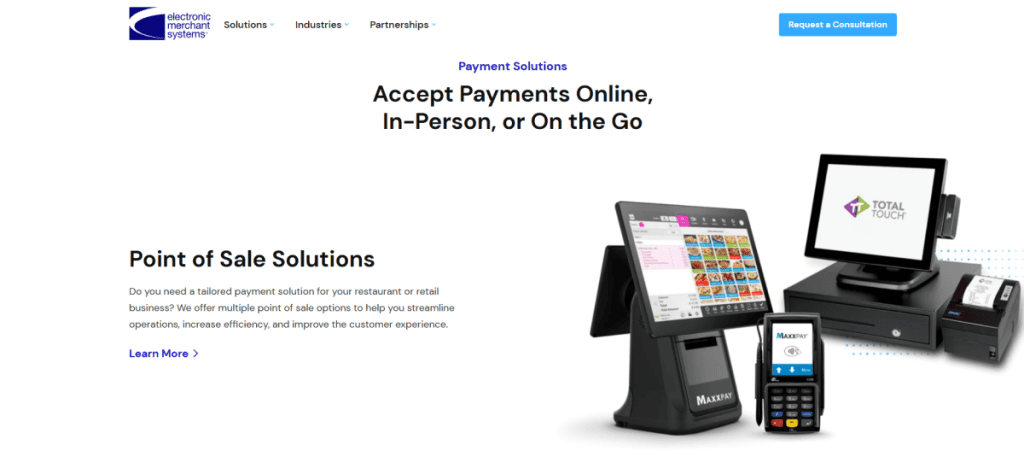
Electronic Merchant Systems offers MaxxPay POS solutions, an all-in-one system designed to streamline operations for small and medium-sized businesses. They also provide Total Touch POS systems, a specialized solution tailored for the restaurant industry, offering features such as table management, order tracking, and seamless payment integration.

Mobile Payment Solutions

Electronic Merchant Systems provides mobile processing apps for businesses that are always on the go, enabling retailers to take payments from smartphones and tablets. By integrating with mobile devices, these solutions give businesses that need to process transactions outside of traditional storefronts flexibility.

eCommerce Solutions

Electronic Merchant Systems supports online businesses with secure payment gateways that enable seamless transaction processing. They also provide shopping cart integrations, allowing businesses to connect their eCommerce platforms with EMS’s payment processing system.

Additional Services

Electronic Merchant Systems extends its offerings with gift and loyalty card programs, helping businesses attract and retain customers. They also offer merchant funding options, providing financial support for business expansion. Additionally, EMS prioritizes payment security and fraud prevention, ensuring compliance with PCI DSS standards to safeguard merchant transactions.

Technology and Infrastructure of Electronic Merchant Systems

Electronic Merchant Systems utilizes a robust technological infrastructure to deliver secure and efficient payment processing solutions. The company continuously invests in its platforms to ensure businesses can process transactions seamlessly across multiple channels, including in-store, mobile, and online environments.

Overview of EMS’s Technological Platforms

Credit and debit card transactions, EMV chip payments, NFC-enabled contactless payments, and eCommerce gateways are all supported by EMS’s integrated payment ecosystem. With the help of their proprietary MaxxPay POS system’s intuitive user interface, businesses can effectively manage transactions, inventory, and customer interactions. Furthermore, EMS’s mobile payment solutions give merchants flexibility by ensuring safe processing via smartphones and tablets.

Security Protocols and Compliance Standards

Security is a top priority for EMS. The company adheres to PCI DSS compliance, ensuring merchants’ payment data is encrypted and safeguarded against cyber threats. EMS employs end-to-end encryption and tokenization to enhance security and prevent unauthorized access to sensitive payment information. Advanced fraud prevention tools further protect merchants from chargebacks and fraudulent transactions.

Reliability and Uptime Statistics

Electronic Merchant Systems aims to provide high system reliability, minimizing downtime for merchants. While specific uptime statistics are not publicly disclosed, EMS claims to offer consistent payment processing with minimal service interruptions. Their cloud-based infrastructure helps maintain transaction continuity, even during peak business hours.

Integration Capabilities with Other Business Systems

Electronic Merchant Systems supports integration with accounting software, customer relationship management platforms, and eCommerce systems. Popular integrations include compatibility with QuickBooks, Shopify, WooCommerce, and other business applications, ensuring merchants can streamline operations without switching between multiple platforms. This flexibility enhances overall business efficiency while maintaining a seamless payment experience.

Customer Support and Service at Electronic Merchant Systems (EMS)

One of the main focuses of EMS service offerings is customer support. To help merchants fix technical problems, handle transactions seamlessly, and maximize the effectiveness of their payment systems for business purposes, the company offers a variety of support options.

Availability of Customer Support

EMS offers 24/7 customer support, ensuring that merchants can receive assistance whenever needed. This around-the-clock availability is particularly beneficial for businesses operating beyond standard business hours, including restaurants, retail stores, and eCommerce merchants.

Support Channels Offered

EMS provides multiple support channels, including phone, email, and live chat. Phone support allows merchants to quickly speak with a representative for urgent concerns, while email support is available for less time-sensitive inquiries. Live chat enables real-time assistance directly through the EMS website, offering a convenient option for quick troubleshooting.

Merchant Onboarding and Training Programs

To help businesses integrate EMS’s payment processing solutions, the company offers merchant onboarding and training programs. These programs guide new customers through the setup process, covering topics such as POS system usage, payment security measures, and transaction best practices. EMS also provides educational materials, including manuals and video tutorials, to ensure merchants fully understand their systems.

Account Management Services

Dedicated account managers are assigned by EMS to help merchants with their ongoing business requirements. By assisting with chargeback resolution, transaction monitoring, and system optimization, these managers make sure that companies process payments as efficiently as possible. EMS sets itself apart from rivals who might only use generic customer service models thanks to this individualized service.

Electronic Merchant Systems Review

Pricing and Contract Terms of Electronic Merchant Systems

EMS offers a range of pricing models and contract structures tailored to different business needs. However, like many payment processors, their pricing details are not fully transparent on their website, and merchants often need to request a custom quote to understand their specific costs.

Overview of Pricing Models

EMS reportedly offers flat-rate pricing and interchange-plus pricing, though the exact rates vary based on business type, transaction volume, and industry. Flat-rate pricing provides merchants with a consistent percentage fee for each transaction, making costs predictable. Interchange-plus pricing, on the other hand, separates the interchange fees charged by card networks from EMS’s processing markup, which can sometimes lead to more competitive rates for high-volume businesses.

Contract Length and Termination Policies

EMS typically requires merchants to sign a long-term contract, often spanning three to five years. Some agreements include an early termination fee if a merchant decides to cancel before the contract ends. Reports suggest that ETF charges vary, and merchants should carefully review the terms before signing.

Fees Associated with Services

Setup fees, monthly service fees, and per-transaction fees are all possible charges from EMS. Chargeback fees, gateway fees for online transactions, and PCI compliance fees are examples of additional expenses. However, merchants should ask for a complete breakdown before committing, as these fees are not made public.

Equipment Leasing or Purchasing Options

EMS provides POS systems and card readers, which merchants can either lease or purchase outright. Leasing may involve long-term commitments with additional costs, while purchasing equipment outright can be a more cost-effective option for businesses planning to use EMS’s services long-term.

Reputation and Reviews of Electronic Merchant Systems (EMS)

EMS has built a reputation as a longstanding payment processor serving businesses across various industries. However, customer and employee reviews reflect a mix of experiences, highlighting both strengths and areas of concern.

Customer Reviews

Summary of Positive Feedback

Many merchants appreciate EMS’s user-friendly payment solutions, 24/7 customer support, and secure transaction processing. Businesses often highlight the reliability of EMS’s POS systems, mobile payment solutions, and eCommerce integrations. Some customers also commend EMS for providing customized solutions tailored to specific business needs.

Summary of Negative Feedback

Some merchants have voiced concerns regarding pricing transparency, long-term contracts, and early termination fees, despite the positive aspects. A prevalent grievance pertains to concealed charges that might not be explicitly revealed during the onboarding process. Some users also complain about having trouble terminating services, pointing to complicated contracts or expensive termination fees. Customer service response times are generally good, but some reviews claim that they have also been erratic.

Employee Reviews

Work Environment and Culture

EMS receives mixed employee reviews. Some employees praise the company for providing growth opportunities, a collaborative work environment, and competitive benefits. However, others mention high-pressure sales tactics, job instability, and challenging sales quotas as potential downsides.

Employee Satisfaction and Retention

While some employees appreciate the structured training programs and team-oriented culture, turnover appears to be relatively high in sales roles, possibly due to performance-based compensation models.

Industry Recognition

Electronic Merchant Systems has earned various awards and certifications, reinforcing its credibility in the payment processing industry. It maintains PCI DSS compliance and has partnerships with major card networks, contributing to its reputation as a secure and reliable merchant service provider.

Competitor Comparison of Electronic Merchant Systems (EMS)

Alongside a number of other reputable companies, Electronic Merchant Systems competes in the payment processing market. Verifone, Ingenico, and TSYS are important rivals, each providing unique solutions to meet different business requirements.

Overview of Key Competitors

Verifone specializes in payment terminals and POS solutions, widely used by retailers and hospitality businesses. Their focus is on hardware innovation, offering secure payment devices.

Ingenico is a global leader in POS systems and contactless payment solutions, serving businesses in over 170 countries. Known for its secure payment technology, Ingenico is a preferred choice for enterprises.

TSYS (Total System Services) provides merchant services, card processing, and payment gateway solutions, catering to banks, large retailers, and small businesses alike. TSYS emphasizes customizable pricing and enterprise-level payment solutions.

Comparison of Services and Pricing

Electronic Merchant Systems competes by offering a comprehensive suite of payment solutions, including credit card processing, mobile payments, POS systems, and eCommerce gateways. Unlike Ingenico and Verifone, which focus on hardware, EMS provides end-to-end merchant services, including 24/7 customer support and business funding options. Compared to TSYS, EMS primarily targets small and mid-sized businesses, whereas TSYS serves a broader range, including financial institutions. Pricing transparency remains a concern for EMS, as many competitors disclose standard rates upfront.

Market Positioning and Differentiators

Electronic Merchant Systems differentiates itself with customized payment solutions, security features, and merchant support. Its PCI DSS compliance, fraud prevention tools, and integration capabilities help it stand out. However, concerns over contract terms and hidden fees may impact its competitive positioning against providers offering more transparent pricing models.

Pros and Cons of Electronic Merchant Systems (EMS)

A variety of payment processing options are available from EMS to assist companies in effectively handling transactions. Potential clients should weigh the company’s disadvantages before using its services, despite the fact that it offers a number of benefits.

Advantages of EMS

Comprehensive Service Offerings
Electronic Merchant Systems provides a full suite of payment solutions, including credit and debit card processing, mobile payments, eCommerce gateways, POS systems, and business funding options. This allows businesses to manage transactions across multiple channels seamlessly.

Technological Capabilities
EMS utilizes secure, PCI-compliant payment platforms with features like EMV chip card processing, NFC payments, and fraud prevention tools. Its POS systems (MaxxPay and Total Touch) offer flexibility and scalability, catering to both retail and restaurant businesses.

Customer Support Quality
EMS offers 24/7 customer support through phone, email, and live chat, which is a significant advantage over some competitors that provide only limited support hours. Additionally, EMS provides merchant training and onboarding assistance, helping businesses get started with their payment solutions.

Disadvantages of EMS

Potential Contract and Fee Concerns
One of the biggest criticisms of Electronic Merchant Systems is lack of pricing transparency. Merchants often need to request a custom quote, and some have reported hidden fees, long-term contracts (3-5 years), and high early termination fees.

Customer Complaints and Resolutions
Some customers have raised concerns about billing disputes, contract cancellation difficulties, and unexpected charges. While EMS does address complaints, the resolution process may take time, leading to frustration among some users.

Electronic Merchant Systems Review

Conclusion

Electronic Merchant Systems provides a wide range of payment options, robust technology, and round-the-clock customer service. Potential customers should, however, thoroughly go over the terms and costs of the contract before committing. EMS is ideal for companies looking for a full-service payment processor, but it should be approached with an eye toward price transparency.

FAQs

What industries does Electronic Merchant Systems serve?

EMS caters to a wide range of industries, including retail, hospitality, healthcare, eCommerce, and service-based businesses. Their payment solutions are designed to accommodate businesses of all sizes, from small shops to large enterprises, offering tailored transaction processing and POS systems.

How does EMS ensure the security of transactions?

EMS prioritizes payment security by adhering to PCI DSS compliance. It employs end-to-end encryption, tokenization, and fraud detection tools to protect sensitive cardholder data and prevent unauthorized transactions.

Can EMS’s payment solutions integrate with existing business systems?

Yes, EMS supports integration with accounting software, CRM platforms, and eCommerce solutions. Businesses using QuickBooks, Shopify, WooCommerce, and other applications can seamlessly connect EMS’s payment processing services for streamlined operations.

American Verification Processing Review

American Verification Processing Review

American Verification Processing Solutions (AVPS) is a payment processing company that provides a range of services to businesses across various industries. Established in 2000 and headquartered in Canoga Park, California, AVPS offers solutions such as credit card processing, ACH processing, and POS systems.

The company caters to both low-risk and high-risk businesses, providing specialized merchant accounts to industries that may face challenges securing traditional payment processing services. AVPS has earned accreditation from the BBB with an A+ rating, which reflects its commitment to customer service and ethical business practices. While it offers a diverse set of payment solutions, customer reviews are mixed, with some users praising its professional service and others raising concerns about pricing transparency and fund withholding. Lets read more about American Verification Processing Review.

Since it allows businesses to securely and effectively accept payments from clients, payment processing is a crucial part of contemporary enterprises. Whether using electronic transfers, debit cards, or credit cards, a dependable payment processing system guarantees smooth transactions and enhances the general customer experience.

Secure and compliant payment solutions are essential for reducing chargebacks, fraud risks, and financial losses for companies that operate online or in high-risk industries. Additionally, in order to stay competitive and satisfy changing customer demands, businesses need flexible and affordable payment processing options. By offering customized solutions that assist companies in navigating complex payment ecosystems, companies such as AVPS seek to close the gap. However, before selecting a payment processor, businesses still need to take into account important factors like pricing transparency, contract terms, and customer support.

Company Overview of American Verification Processing (AVPS) | American Verification Processing Review

AVPS is a merchant services provider that offers payment processing solutions to businesses across various industries. Founded in 2000, AVPS is headquartered in Canoga Park, California. The company provides a range of payment processing services, including credit card processing, ACH payments, high-risk merchant accounts, and POS solutions. It aims to cater to businesses of all sizes, offering customized payment solutions designed to streamline transactions and improve operational efficiency.

AVPS has been accredited by the BBB since 2006 and holds an A+ rating, reflecting its efforts to maintain customer trust and resolve complaints efficiently. The company claims to provide personalized customer support, competitive pricing, and security-driven payment solutions. However, reviews about its services are mixed, with some customers praising its dedicated support, while others highlight concerns about pricing transparency and withheld funds.

The company works with a variety of industries, such as high-risk industries, e-commerce sites, and conventional brick and mortar businesses. Because of stringent banking regulations, high-risk industries like adult entertainment, CBD, e-cigarettes, and travel often find it difficult to secure dependable payment processing. For these companies, AVPS offers customized solutions that assist in chargeback management and industry standard compliance. Unlike other payment processors, it can accommodate both high-risk and low-risk merchants. Before signing a service agreement, potential consumers should carefully examine the terms of the contract, the costs, and customer reviews to make sure AVPS meets their business needs.

American Verification Processing Review

Services Offered by American Verification Processing (AVPS)

It offers a comprehensive suite of payment processing solutions designed to support businesses of all sizes, including high-risk merchants.

Payment Processing Solutions

AVPS enables businesses to accept major credit and debit cards, including Visa, Mastercard, American Express, and Discover. Their payment processing solutions cater to both brick-and-mortar and online businesses, ensuring secure and efficient transactions. It adheres to PCI DSS compliance standards, reducing the risk of fraud and unauthorized transactions.

AVPS provides ACH processing for companies that prefer to accept payments by electronic check. Because it enables direct bank transfers, this service is a dependable choice for companies managing large transactions, subscriptions, and recurring billing. When compared to credit card transactions, ACH payments usually have lower processing fees, making them an affordable option for companies trying to cut costs.

AVPS specializes in high-risk payment processing, providing solutions for industries that often face restrictions from traditional financial institutions. Businesses in sectors like adult entertainment, CBD, e-cigarettes, and travel benefit from AVPS’s customized risk management strategies, chargeback protection, and fraud prevention tools.

Countertop Terminals

AVPS offers traditional countertop payment terminals designed for retail and hospitality businesses. These terminals support chip, swipe, and contactless payments, ensuring seamless transactions for customers.
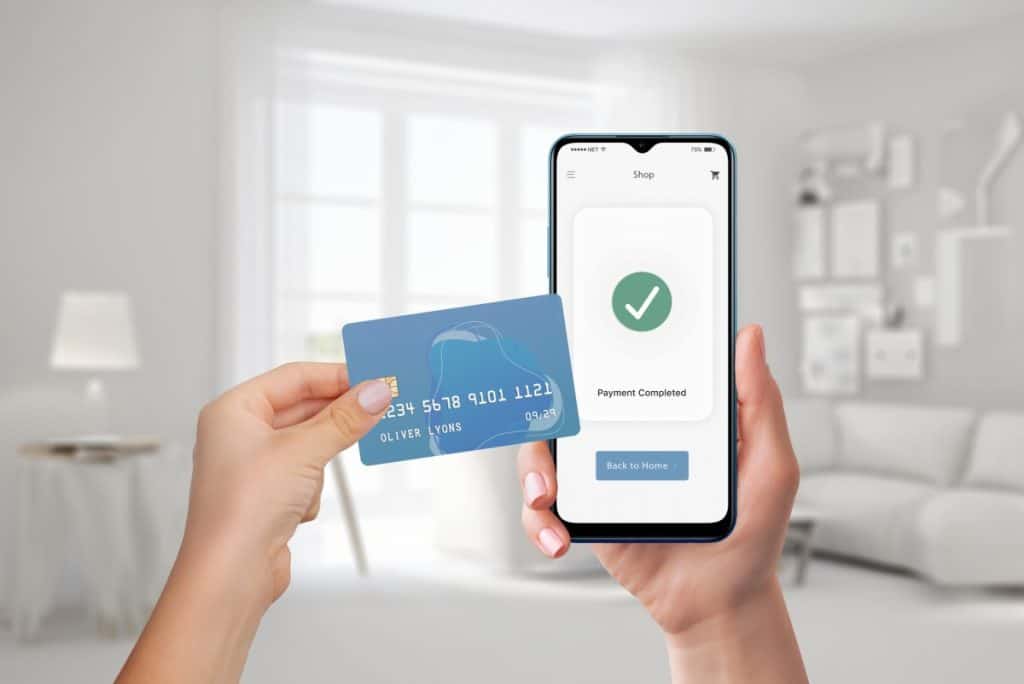
AVPS offers mobile payment solutions that facilitate transactions through smartphones and tablets for companies that need flexible payment options. This feature is perfect for trade shows, delivery services, and businesses that operate on the go.

AVPS’s virtual gateways integrate with e-commerce platforms, allowing businesses to accept online payments securely. These gateways provide encryption and fraud detection features, ensuring a safe and efficient online shopping experience.

Customer Support and Service at American Verification Processing (AVPS)

AVPS offers customer support services to assist businesses with payment processing issues, but feedback on responsiveness and quality is mixed.

Availability and Response Times

AVPS provides customer support through phone, email, and online inquiries. The company claims to offer prompt assistance to merchants, ensuring smooth payment processing operations. However, AVPS does not publicly specify its exact customer service hours or response time guarantees, making it unclear how quickly businesses can expect resolutions.

Customer Feedback on Service Quality

Customer experiences with AVPS’s support team vary. Some users report positive interactions, highlighting knowledgeable representatives and effective problem resolution. In particular, businesses that work closely with AVPS’s account managers have praised the personalized support they receive.

On the other hand, some customers have expressed dissatisfaction with delayed responses and difficulty reaching support representatives. Complaints often involve unresolved issues related to withheld funds, unexpected fees, and contract disputes. The lack of readily available information on service hours and escalation procedures adds to some customers’ frustration.

Areas of Improvement

While it delivers essential customer service, there are areas where the organization could improve. Improving response times and providing 24-hour help could make the service more dependable, especially for high-risk merchants experiencing urgent payment problems. Customers’ frequent worries about fees, fund holds, and contract restrictions should be addressed by increasing transparency in communication. By improving these factors, It could improve its reputation and increase trust with its merchants.

American Verification Processing Review

Pricing and Fees at American Verification Processing (AVPS)

It offers customized pricing for its payment processing services, but a lack of transparent public pricing may be a concern for some businesses.

Transparency of Pricing Structure

One of the primary concerns with AVPS is its lack of publicly available pricing information. Unlike some competitors that provide clear, upfront pricing on their websites, It requires businesses to contact sales representatives for a quote. While this approach allows for tailored pricing based on individual business needs, it also makes it difficult for potential customers to compare costs before engaging with the company. Some users have reported frustration with the lack of transparency regarding contract terms and processing fees.

Potential Hidden Fees

Several customer reviews mention unexpected charges, such as high application fees, fund holds, or additional transaction costs. Some businesses have reported issues with early termination fees and monthly minimums, which may not have been clearly disclosed during onboarding. These concerns suggest that AVPS merchants should thoroughly review contracts and ask detailed questions about pricing before signing any agreements.

Comparisons with Industry Competitors

The pricing structure of AVPS is less clear than that of market leaders like Square, Stripe, or PayPal. It employs a custom pricing strategy, which may be advantageous for certain businesses but inconvenient for those looking for predictable costs. Competitors frequently offer fixed-rate pricing models or tiered transaction fees. Before making a commitment, companies thinking about using AVPS should evaluate its prices, terms of service, and any potential hidden costs contrary to those of other providers. Potential customers may find AVPS more appealing if its pricing structure is more transparent.

Employee Experience at American Verification Processing (AVPS)

Employee satisfaction and company culture can directly influence the quality of customer service and overall business performance.

Insights from Employee Reviews

Employee feedback on AVPS is mixed, with both positive and negative reviews found on job review platforms. Some employees appreciate the structured work environment and professional growth opportunities, while others cite challenges related to management, job security, and compensation. Employees who have worked in sales and customer support roles mention that expectations are high, and the commission-based pay structure may not always be favorable, particularly in a competitive industry.

Work Culture and Company Management

Employees at AVPS have a variety of opinions about the company culture. According to some employees, there is a cooperative atmosphere where team members are motivated to reach sales targets and provide efficient customer service. Other workers, however, have voiced concerns about unclear company policies, inconsistent management, and a lack of job stability. The company’s high turnover rate, as mentioned in a few reviews, may indicate internal difficulties in keeping talented employees. The fast-paced nature of AVPS’s business, like that of many payment processing firms, may not be to everyone’s taste.

Impact on Customer Service Quality

The way a company treats its employees often reflects in its customer service. While some AVPS customers report positive experiences with knowledgeable and helpful support staff, others complain about slow response times and inconsistent service quality. If employees feel undervalued or face job uncertainty, it could affect their ability to provide top-tier service to merchants. Strengthening employee retention and refining management practices could potentially improve AVPS’s customer service reputation.

Reputation and Reviews of American Verification Processing (AVPS)

It has a mixed reputation, with both positive and negative feedback from customers and industry review platforms.

BBB Accreditation and Ratings

AVPS has been accredited by the BBB since 2006 and holds an A+ rating. This rating indicates that it has maintained a commitment to addressing customer concerns and upholding ethical business practices. However, a high BBB rating does not necessarily reflect customer satisfaction, as it primarily evaluates how well a business responds to complaints rather than the overall quality of service.

Customer Reviews from Various Sources

Reviews for AVPS on platforms like BBB, Trustpilot, and industry-specific review sites vary widely. Some customers appreciate the company’s personalized customer service, competitive rates, and high-risk merchant account solutions. Businesses that work with dedicated account managers often report a positive experience with hands-on support.

However, other reviews highlight issues related to pricing transparency, withheld funds, and unexpected fees. Some customers express frustration over long resolution times for disputes and difficulties in canceling contracts or obtaining refunds. Complaints about customer support responsiveness also appear in some reviews.

Common Complaints and Positive Feedback

Flexible payment processing options, the capacity to assist high-risk merchants, and experienced account managers are often mentioned in positive reviews.

Uncertain contract terms, unforeseen costs, delayed fund transfers, and inefficient customer service are among the common grievances. Companies thinking about using AVPS should carefully go over the terms of the contract and make sure the fees match their expectations.

Pros and Cons of American Verification Processing (AVPS)

Like any payment processing provider, AVPS has strengths and weaknesses that businesses should consider before choosing its services.

Key Advantages of AVPS

Diverse Payment Solutions – It offers a range of services, including credit card processing, ACH processing, and high-risk merchant accounts. This makes it a suitable option for businesses of various sizes and industries.

High-Risk Merchant Support – One of AVPS’s standout features is its ability to work with high-risk industries that often struggle to find reliable payment processors. Businesses in sectors like CBD, adult entertainment, and travel can benefit from customized solutions.

POS Options – AVPS provides countertop terminals, mobile payment solutions, and virtual payment gateways, giving businesses flexibility in how they accept payments.

BBB Accreditation and A+ Rating – It has maintained BBB accreditation since 2006 with an A+ rating, indicating a strong effort to resolve customer complaints.

Major Drawbacks and Areas for Improvement

Lack of Transparent Pricing – AVPS does not publicly disclose its pricing structure, requiring businesses to get custom quotes. This can make cost comparisons difficult.

Reports of Withheld Funds – Some customers have complained about delayed or withheld payments, which can be a significant issue for businesses relying on steady cash flow.

Inconsistent Customer Support – While some users report positive interactions with account managers, others mention slow response times and difficulty resolving disputes.

Potential Hidden Fees – Complaints suggest that unexpected charges, early termination fees, and contract disputes are concerns that businesses should carefully review before signing up.

American Verification Processing Review

Conclusion

A variety of payment options are available from AVPS, especially for high-risk companies. Although it has an A+ BBB rating and offers strong support, there are issues with customer service and pricing transparency. Businesses that require specialized solutions can benefit from AVPS, but it is recommended to carefully review contracts. All in all, it’s a decent but not perfect decision.

FAQs

What industries does AVPS serve?

AVPS serves a wide range of industries, including retail, e-commerce, healthcare, and professional services. It also specializes in high-risk industries such as CBD, adult entertainment, travel, and e-cigarettes.

Does AVPS support high-risk merchants?

Yes, It provides tailored solutions for high-risk businesses, offering chargeback protection, fraud prevention tools, and flexible payment processing options to help them manage transactions securely.

How does AVPS compare to other payment processors?

AVPS offers specialized high-risk merchant accounts, but its lack of pricing transparency and mixed customer reviews may make competitors like Square, Stripe, or PayPal more appealing to businesses seeking clear, upfront costs.

Securus Payments

Securus Payments Review

Securus Payments, a division of Securus Technologies, is involved in payment processing, offering a variety of solutions designed for different industries, emphasizing on secure and efficient transactions. The company is a component of the larger Securus network, recognized for its offerings in corrections and public safety. Throughout time, Securus Payments has established itself as a major player in the financial services sector by utilizing the robust technological framework of its parent corporation.

Securus Payments Review

Company Background and History

Securus Technologies, which is the main company of Securus Payments, started in 1986 and has become a well-known provider of technology solutions for the prison industry. Based in Dallas, Texas, Securus Technologies has grown and now has several smaller companies under it, including Securus Payments, which specializes in handling payment services.

Initially established to serve the needs of the corrections industry, Securus Technologies recognized the broader potential of its technological infrastructure and began diversifying its offerings. This led to the creation of Securus Payments, which aims to provide secure, reliable, and scalable payment processing solutions to a wider array of industries.

Securus Payments’ mission closely mirrors that of its parent company, Securus Technologies, focusing on improving security and efficiency through innovative technological solutions. Securus Payments is dedicated to offering advanced payment processing services that go above and beyond their clients’ expectations. The company prioritizes integrity, security, and customer satisfaction, aiming to provide services that are dependable and honest.

Throughout its history, Securus Payments has achieved several key milestones that have solidified its reputation in the payment processing industry. These milestones include the successful integration of advanced security features into its payment platforms, expansion of its services to various sectors, and the continuous development of innovative solutions to meet the evolving needs of its clients.

Securus Payments has excelled in utilizing the technological progress made by Securus Technologies, specifically in the fields of security and compliance. Securus Payments’ ability to provide dependable and strong service has made it a top option for businesses needing secure payment processing solutions.

Services and Solutions Offered

Securus Payments offers a comprehensive range of services designed to meet the needs of businesses across various industries. By leveraging advanced technology and a deep understanding of the payment processing landscape, the company provides solutions that are secure, efficient, and user-friendly. Below is a detailed breakdown of the key services and solutions offered by Securus Payments.

Payment Processing Services

At the core of Securus Payments’ offerings is its payment processing service, which allows businesses to accept and manage payments seamlessly. This service supports various payment methods, including credit and debit cards, ACH transfers, and electronic checks. Securus Payments ensures quick transaction processing times and competitive rates, making it a reliable choice for businesses of all sizes.

POS Systems and Hardware Options

Securus Payments offers a range of POS systems and hardware options designed to meet the unique requirements of retail businesses. These systems are created to seamlessly blend with current business operations, providing functions such as inventory management, customer relationship management (CRM), and sales reporting. The hardware choices consist of mobile card readers, countertop terminals, and advanced touchscreen systems, all have up-to-date technology for secure and efficient transactions.

E-commerce Solutions and Integrations

For businesses operating online, Securus Payments offers robust e-commerce solutions that include payment gateways, shopping cart integrations, and customizable checkout pages. These solutions are compatible with major e-commerce platforms, making it easier for businesses to set up and manage their online stores. The payment gateways are designed to handle high transaction volumes while maintaining top-notch security standards.

Mobile Payment Options

In response to the growing demand for mobile payment solutions, Securus Payments provides mobile payment processing options that enable businesses to accept payments via smartphones and tablets. This service is particularly beneficial for businesses that operate in the field or at events, offering flexibility and convenience.

Fraud Prevention and Security Measures

Securus Payments places a strong emphasis on security, implementing various measures to prevent fraud and protect clients. These consist of encryption, tokenization, and adherence to PCI DSS (Payment Card Industry Data Security Standard). Moreover, Securus Payments provides resources to oversee and identify dubious actions, guaranteeing the safety of businesses and their clients against possible fraud.

Securus Payments Review

Pricing and Contract Terms

Securus Payments is known for offering a variety of pricing plans that cater to different business needs, making it a flexible choice for many merchants. The company provides a pricing structure that is designed to be competitive, though the exact rates can vary depending on the specific services a business requires and the volume of transactions processed.

Overview of Pricing Structure

Securus Payments typically offers both interchange-plus and tiered pricing models. The interchange-plus model involves a fixed markup over the interchange fees set by the credit card networks, offering transparency and predictability in costs. On the other hand, the tiered pricing model categorizes transactions into different tiers, such as qualified, mid-qualified, and non-qualified, each with its own rate. This model can sometimes lead to higher fees depending on the type of transaction, but it may also offer lower rates for businesses with a high volume of qualified transactions.

Explanation of Contract Terms and Length

Securus Payments typically mandates that businesses commit to a contract lasting a few years, typically around three years. This practice is quite common in the payment processing sector, as extended agreements benefit both the processor and the merchant by ensuring better rates. Nevertheless, businesses must meticulously examine the terms, as these agreements frequently contain clauses regarding fees for ending the contract early.

Any Fees Associated with the Services

In addition to the transaction fees, Securus Payments may charge several other fees, including monthly service fees, PCI compliance fees, and fees for additional services like chargeback protection. One significant fee to be aware of is the early termination fee, which applies if a business decides to cancel the contract before its term is up. This fee can vary depending on the specific terms of the agreement.

Comparisons with Industry Standards

When compared to industry standards, Securus Payments’ pricing is generally competitive, though some merchants might find the tiered pricing model less transparent than the interchange-plus model. The early termination fees and other potential hidden charges are also common in the industry, but businesses should weigh these against the services and support offered by Securus Payments. Overall, the company’s pricing and contract terms are in line with what one might expect from a reputable payment processor, though businesses are advised to thoroughly review their contract to ensure it aligns with their financial and operational goals.

User Experience and Interface

Securus Payments has built its platform with the user in mind, focusing on creating an intuitive and straightforward experience for merchants across various industries. The ease of use and accessibility of its interface is a key feature that sets it apart, making it a popular choice for businesses that prioritize efficient and seamless payment processing.

Ease of Use for Merchants

Securus Payments typically mandates that businesses commit to a contract lasting a few years, typically around three years. This practice is quite common in the payment processing sector, as extended agreements benefit both the processor and the merchant by ensuring better rates. Nevertheless, businesses must meticulously examine the terms, as these agreements frequently contain clauses regarding fees for ending the contract early.

Overview of the Dashboard and Management Tools

One of the standout features of Securus Payments is its comprehensive dashboard. The dashboard provides merchants with a centralized view of all their transactions, allowing them to track sales, manage refunds, and generate reports with ease. The management tools are robust yet easy to use, offering detailed insights into transaction data and customer behavior. This level of visibility is crucial for businesses looking to optimize their payment processes and make data-driven decisions.

Customization Options

Securus Payments offers a range of customization options that allow businesses to tailor the platform to their specific needs. Securus Payments offers the flexibility to customize the checkout experience for customers, integrate the payment system with existing business software, and adapt to different business models. This level of customization helps businesses create a consistent brand experience across all customer touchpoints.

Accessibility and Support for Different Business Sizes

Securus Payments is designed to cater to businesses of all sizes, from small startups to large enterprises. The platform scales easily, ensuring that as a business grows, the payment processing system can grow with it. Additionally, Securus Payments offers a range of support options to help businesses at every stage, from initial setup to ongoing maintenance. Their customer support is readily available to assist with any issues, ensuring that businesses can continue to operate smoothly without interruptions.

Customer Support and Service

Securus Payments prioritizes offering strong customer support and service, understanding that the success of its payment processing solutions relies heavily on the level of support provided to its customers. The company provides various support options to ensure businesses have access to assistance at all times.

Types of Customer Support Available

Securus Payments provides a variety of customer support options, including phone support, email, and live chat. These channels are designed to cater to different preferences, allowing customers to choose the method that best suits their needs. Phone support is ideal for immediate assistance, while email and live chat offer convenience for less urgent queries or when detailed documentation is required. This multi-channel approach ensures that businesses can resolve issues quickly, minimizing any potential downtime in their operations.

Availability of Support

The availability of customer support at Securus Payments is one of its strong points. The company offers 24/7 support, which is crucial for businesses that operate outside of regular business hours or in different time zones. This round-the-clock availability ensures that help is always on hand, whether it’s during a busy sales period or in the middle of the night. For less critical issues, there are also options to access support during standard business hours, allowing for flexibility based on the urgency of the situation.

Quality of Service Based on Customer Feedback

Customer feedback on Securus Payments’ support services is generally positive. Many users highlight the responsiveness and professionalism of the support team, noting that issues are typically resolved quickly and efficiently. The support staff is often praised for their knowledge and ability to provide clear, actionable solutions. However, like any service provider, there are occasional reports of longer wait times or issues taking longer to resolve, but these seem to be exceptions rather than the norm.

Educational Resources and Training Offered to Clients

Securus Payments provides not only direct assistance but also various educational materials and training opportunities to assist clients in maximizing their payment processing systems. The resources consist of comprehensive user manuals, online seminars, and training classes aimed at enabling businesses to utilize the platform proficiently. Securus Payments aids businesses in decreasing their need for customer support by offering tools that allow them to address common problems on their own and make the most out of the system.

Security and Compliance

Security and compliance are foundational elements of Securus Payments’ operations, ensuring that both merchants and their customers are protected from potential threats in the digital payment landscape. The company employs a range of advanced security measures designed to safeguard sensitive data and adhere to industry regulations.

Overview of Security Measures in Place

Securus Payments utilizes a multi-layered security approach to protect transaction data. This includes encryption technologies that secure data both in transit and at rest, ensuring that any information exchanged between the merchant, customer, and payment processor remains confidential. Encryption is a critical component of protecting cardholder data and preventing unauthorized access.

Besides using encryption, Securus Payments follows the Payment Card Industry Data Security Standard (PCI DSS). This is a group of security rules made to keep card details safe during and after a money exchange. Being PCI compliant is required for any company that deals with credit card data. Securus Payments makes sure its systems and methods meet or go beyond these strict rules.

How Securus Payments Ensures Data Protection

To further enhance data protection, Securus Payments employs tokenization, a process that replaces sensitive card information with a unique identifier or “token.” This token can be used for transactions without exposing the actual card details, significantly reducing the risk of data breaches. Additionally, the company continuously monitors its systems for any signs of suspicious activity, allowing for swift detection and response to potential threats.

Securus Payments also emphasizes regular security audits and vulnerability assessments, which help identify and mitigate any potential weaknesses in their systems. By staying proactive in their security efforts, the company ensures that both merchants and customers can trust the safety of their transactions.

Steps Taken to Comply with Industry Regulations and Standards

Ensuring adherence to industry regulations is a key focus for Securus Payments. In addition to PCI DSS compliance, the company also follows other applicable regulations and standards, including the GDPR for businesses in the EU. These rules dictate the collection, processing, and storage of personal data to uphold customer privacy.

Securus Payments also keeps abreast of changes in the regulatory landscape, updating its practices and technologies as needed to remain compliant. This commitment to compliance not only protects the company from potential legal repercussions but also provides peace of mind to its clients, knowing that their payment processing partner is operating within the bounds of the law.

Securus Payments Review

Pros and Cons

When considering Securus Payments for your payment processing needs, it’s essential to weigh both the advantages and potential drawbacks of the service. Here’s a breakdown of the key pros and cons:

Advantages of Using Securus Payments:

Strong Security Measures: Securus Payments stands out in ensuring secure transactions by utilizing encryption, tokenization, and adhering to PCI compliance. These characteristics guarantee the protection of sensitive data, lowering the chances of fraud and data breaches.

Comprehensive Service Offering: The platform supports a wide range of payment methods, including credit and debit cards, ACH transfers, and mobile payments. This versatility makes it suitable for businesses of various sizes and types, whether they operate online, in-store, or both.

User-Friendly Interface: The system is created to be user-friendly and effortless, featuring a neatly arranged dashboard that enables companies to handle transactions, monitor sales, and produce reports with little difficulty.

24/7 Customer Support: The availability of round-the-clock customer support ensures that businesses can get help whenever they need it, which is especially crucial for those operating outside of standard business hours.

Potential Drawbacks or Areas for Improvement:

Contractual Commitments: One of the main drawbacks of Securus Payments is the requirement for long-term contracts, typically around three years. This can be a significant commitment for small businesses, particularly if they are uncertain about their future needs.

Early Termination Fees: Early termination fees can discourage businesses in need of flexibility. Terminating the service prior to the contract’s conclusion may lead to substantial fines.

Potential Hidden Fees: While the pricing structure is generally competitive, some users have reported encountering additional fees that were not clearly communicated upfront. These can include PCI compliance fees and other service-related charges, which can add up over time.

Comparison with Competitors:

Security: Compared to many competitors, Securus Payments is on par with the best in terms of security features. Its commitment to PCI compliance and advanced security measures makes it a strong contender in the payment processing industry.

Pricing Flexibility: Although Securus Payments has competitive rates, other rivals may offer more flexible pricing options, especially for businesses that do not want to commit to long-term contracts.

Customer Support: The 24/7 customer support offered by Securus Payments is a significant advantage over some competitors that only offer support during business hours or charge extra for extended support options.

To sum up, Securus Payments provides a secure and complete payment processing solution with an easy-to-use interface and excellent customer assistance. Nevertheless, individuals interested in using the service should thoroughly think about the extended contract obligations and take note of potential undisclosed charges prior to making a commitment.

Customer Reviews and Reputation

When evaluating Securus Payments, it is important to consider the feedback and experiences of customers who have used their services. Customer reviews offer valuable insights into the strengths and weaknesses of the company, providing a well-rounded perspective on its reputation in the industry.

Summary of Customer Feedback from Various Sources

The feedback from customers regarding Securus Payments is diverse, as experiences differ based on individual user needs and expectations. Certain clients value the extensive array of services and the safety measures offered by Securus Payments. They frequently point out the ease of use of the interface and the range of payment choices as key benefits.

Common Praise and Complaints

One of the most common points of praise for Securus Payments is its robust security measures. Many customers feel confident in the safety of their transactions due to the company’s use of encryption, tokenization, and PCI compliance. Additionally, the 24/7 customer support is frequently mentioned as a positive aspect, especially for businesses that require round-the-clock assistance.

However, there are also some recurring complaints among users. A significant number of customers have expressed dissatisfaction with the contractual terms, particularly the long-term commitment required and the associated early termination fees. Some users have additionally experienced unanticipated charges that were not clearly disclosed when they signed up. These problems have caused frustration for companies that prioritize flexibility and transparency.

Overall Reputation in the Industry

Securus Payments is known for being a trustworthy and secure payment processor, especially favored by businesses focused on data security and following regulations. However, its standing is slightly influenced by the issues surrounding its pricing clarity and contract conditions. Compared to rivals, Securus Payments is known for its strong security measures and customer assistance, though it might not be the top pick for companies in need of adaptable and clear pricing options.

Final Verdict

Securus Payments is a dependable option for businesses looking for safe and trustworthy payment processing along with strong customer assistance. It is especially ideal for individuals who value security and are okay with committing to lengthy contracts. Nevertheless, it is important for businesses to thoroughly examine the terms of the contract and associated fees prior to making a commitment.

FAQs

What types of businesses benefit most from using Securus Payments?


Securus Payments is ideal for businesses that prioritize security and require a reliable payment processing solution, such as retail stores, e-commerce platforms, and service providers. It’s particularly suited for those needing a robust system with comprehensive customer support.

How does Securus Payments handle disputes or chargebacks?


Securus Payments has an organized process for resolving disputes that involves communicating clearly with the merchant, investigating the transaction, and assisting with providing the required documentation to resolve the problem quickly.

Are there any hidden fees with Securus Payments?


While Securus Payments is generally transparent, some users have reported encountering fees that were not initially apparent, such as PCI compliance fees and early termination fees. It’s important to carefully review the contract to understand all potential costs.

Tru Blu Pay

Tru Blu Pay Review

Tru Blu Pay is a fresh face in the payment processing sector, having launched in 2019. The company, located in Portland, Oregon, offers various merchant services by reselling contracts from major payment processors such as First Data (Fiserv). Tru Blu Pay offers essential services such as handling payments through credit cards, debit cards, EMV chip transactions, mobile payments, and e-commerce solutions. The company presents itself as a flexible supplier that can serve the requirements of different types of businesses, such as retail, e-commerce, and high-volume sellers.

Tru Blu Pay Review

Tru Blu Pay primarily targets small and medium-sized businesses across a variety of industries. This includes traditional brick-and-mortar stores, e-commerce platforms, and businesses requiring mobile payment solutions. The company also serves industries with higher risks and specific requirements, including businesses in apparel, convenience store, and personal services sectors. Although Tru Blu Pay caters to all types of businesses, its services are especially beneficial for smaller businesses that require affordable, adaptable payment solutions that do not come with the hefty price tags often seen with larger providers.


One of the key selling points of Tru Blu Pay is its ability to offer a wide range of payment processing solutions that are customizable to the specific needs of different businesses. The company emphasizes providing a fully integrated POS system that is both reliable and efficient, making it appealing to businesses looking for streamlined operations. Moreover, Tru Blu Pay’s mobile payment options enable sellers to take payments anywhere, which is especially helpful for companies that operate on the move or participate in trade shows and events.

Another unique selling point is the adaptability of their agreements, however, this can have both positive and negative consequences. Tru Blu Pay’s contracts are typically associated with First Data, so even though they provide extensive services, there are instances of strict contract terms, including lengthy commitments with substantial early termination penalties. Despite these challenges, Tru Blu Pay positions itself as a cost-effective solution by not charging setup fees and offering variable monthly fees, which can be appealing to businesses looking to manage their costs effectively.

Tru Blu Pay Review

Services and Solutions Offered

Tru Blu Pay positions itself as a versatile payment processing provider, offering a range of services tailored to meet the diverse needs of businesses. From traditional retail operations to e-commerce platforms, the company provides a robust infrastructure to handle various payment methods securely and efficiently.

Payment Processing: Tru Blu Pay offers a comprehensive suite of payment processing services designed to accommodate various business needs. Their offerings include credit card processing, debit card processing, ACH payments, and mobile payments. Businesses can process transactions securely through POS systems, e-commerce platforms, or mobile devices. Tru Blu Pay is known for its ability to handle both in-person transactions and online sales, making it suitable for a wide range of business models.

Security Features: Ensuring security is crucial for every business that deals with financial transactions, and Tru Blu Pay tackles this issue by implementing strong security measures. The company adheres to PCI standards to guarantee all payment processing meets industry regulations for data protection. Moreover, Tru Blu Pay utilizes sophisticated encryption protocols to protect confidential data during transactions. Their services include tools for preventing fraud, which assist businesses in identifying and reducing potential risks before they have a negative impact.

Integration Options: Tru Blu Pay provides seamless integration with various e-commerce platforms, POS systems, and accounting software. This flexibility allows businesses to incorporate Tru Blu Pay’s payment processing services into their existing systems with minimal disruption. Tru Blu Pay’s solutions can seamlessly integrate with both popular e-commerce platforms like Shopify and custom POS systems for any business.

Mobile Payment Solutions: Tru Blu Pay offers a range of mobile payment options, including dedicated apps, mobile POS systems, and QR code payments. These solutions allow businesses to accept payments on the go, catering to the growing demand for mobile and contactless payment methods. This flexibility is particularly beneficial for businesses that operate in dynamic environments, such as trade shows or pop-up events.

Recurring Billing and Subscription Management: Tru Blu Pay offers strong solutions for managing subscriptions and recurring billing for businesses that depend on regular payments. Such tools enable companies to streamline the billing procedure, guaranteeing timely payment collection without the need for manual involvement. This particular function is particularly beneficial for businesses that operate on a subscription model, as it enables them to have a consistent income flow while also decreasing administrative costs.

Pricing and Contract Terms

Tru Blu Pay offers a pricing structure that is generally in line with industry standards but has some nuances that potential clients should be aware of. Understanding the pricing and contract terms is crucial for businesses to ensure they are getting the best value without unexpected costs.

Pricing Structure: Tru Blu Pay utilizes a combination of pricing models, including interchange-plus pricing, flat-rate pricing, and tiered pricing. The interchange-plus pricing model is commonly preferred by companies because it adds a consistent extra charge to the fees determined by credit card companies, which makes the expenses clearer. On the other hand, Tru Blu Pay also provides tiered pricing, which groups transactions into different levels (qualified, mid-qualified, and non-qualified) and charges different rates for each level. This model can sometimes result in higher costs for businesses, particularly if many of their transactions fall into the higher-rate tiers. Flat-rate pricing is also available, providing a predictable rate for all transactions, which can be simpler for small businesses with lower transaction volumes.

Transparency: When it comes to pricing transparency, Tru Blu Pay has received mixed reviews. The company does not disclose detailed pricing information on its website, which can make it challenging for businesses to fully understand their costs upfront. Additionally, there have been reports of hidden fees and unexpected charges, particularly related to equipment leases and early termination. This lack of upfront clarity means that businesses should carefully review their contracts and ask detailed questions before signing up. It is advisable to request a full breakdown of fees, including any potential charges that could arise over the course of the contract.

Contract Length and Terms: Tru Blu Pay typically requires a three-year contract, which is common in the payment processing industry. However, businesses should be aware that these contracts often come with a four-year equipment lease, which can be difficult to cancel. The company’s contracts may include early termination fees, which vary depending on the specific terms agreed upon. It is vital for businesses to be certain of their commitment before entering into an agreement, as the fees involved can be significant. Furthermore, the inflexibility of fixed-term contracts may restrict adaptability, especially when a company’s requirements evolve.

Customer Support and Service

Tru Blu Pay offers a range of customer support options designed to assist businesses with any issues they may encounter. However, the quality and availability of this support have been points of contention among users, making it essential to carefully consider these aspects before choosing their services.

Availability: Tru Blu Pay’s customer support operates primarily during standard business hours. Unfortunately, there is no indication that they offer 24/7 support, which can be a significant drawback for businesses that operate outside of typical hours or require immediate assistance during off-peak times. This limited availability may pose challenges, particularly for those who need urgent support during weekends or late-night hours.

Support Channels: The company offers multiple avenues for support, such as telephone assistance, email, and an online form for contact. Nevertheless, the absence of a dedicated live chat feature or a comprehensive online resource library like a detailed FAQ section or user guides hinders the quick and convenient access to assistance. Phone assistance is generally offered during operating hours, though specific information regarding the exact hours or prioritization of various channels is not well-detailed. Email assistance is available as well, though the speed of responses may fluctuate, causing frustration for businesses in need of prompt solutions.

Responsiveness and Quality: Customer feedback on the responsiveness and quality of Tru Blu Pay’s support has been mixed. Some users have reported positive experiences with the support team, noting that their issues were resolved effectively. However, others have expressed dissatisfaction, particularly regarding response times and the resolution of complex issues. There have been instances where users felt that support staff lacked the expertise needed to address their concerns adequately, leading to prolonged issues and frustration.

User Experience and Interface

Tru Blu Pay’s platform is designed to cater to a broad range of users, from small businesses to larger enterprises, with a focus on providing a straightforward and efficient user experience. However, the effectiveness of its interface and the overall user journey can vary depending on the specific needs and expectations of the business.

Ease of Use: The Tru Blu Pay platform is generally regarded as user-friendly, with a clean and intuitive interface that allows users to navigate through various features without much hassle. The dashboard is designed to present key information clearly, enabling users to access important functions such as transaction history, payment processing, and account management with ease. However, some users have noted that while the interface is functional, it lacks advanced customization options that could benefit more tech-savvy users who prefer to tailor their tools to specific business requirements. The simplicity of the interface can be both a strength and a limitation, depending on the complexity of the user’s needs.

Onboarding Process: Tru Blu Pay offers a relatively straightforward onboarding process, designed to get new users up and running quickly. Setting up usually includes a sequence of guided steps that assist users in configuring their payment processing systems, such as setting up a POS terminal, integrating with an e-commerce platform, or enabling mobile payments. Nevertheless, certain users have mentioned that the initial setup process could be more seamless, especially in terms of connecting with external systems. The company provides limited training resources, which may require users to rely on customer support for more complex setups. The onboarding experience is generally positive for straightforward implementations but may present challenges for businesses with more intricate requirements.

Reporting and Analytics: Tru Blu Pay provides a range of reporting tools that are essential for businesses to track their financial performance and gain insights into their operations. The platform includes standard reports such as sales summaries, transaction details, and deposit reports, which can be accessed directly from the dashboard. Users also have the ability to customize these reports to better suit their specific needs, although the level of customization available may not be as advanced as some competitors. The analytics features, while useful, are somewhat basic, focusing on essential metrics without offering deeper, more nuanced insights that some larger businesses might require.

Tru Blu Pay Review

Compliance and Regulatory Adherence

Tru Blu Pay prioritizes adherence to industry regulations to safeguard businesses and customers during transactions. The company’s goal is to offer a safe payment processing environment by following strict standards and utilizing strong security protocols.

PCI Compliance: Tru Blu Pay ensures that its services comply with the Payment Card Industry Data Security Standard (PCI DSS), which is a critical requirement for any business that handles credit card information. PCI DSS compliance involves a series of security measures designed to protect cardholder data, including encryption, secure storage, and regular monitoring of transactions. Tru Blu Pay follows these standards rigorously, ensuring that all transactions processed through its platform are secure. This compliance helps businesses avoid hefty fines and potential breaches that could result in significant financial and reputational damage.

Data Privacy: Data privacy is another key focus for Tru Blu Pay, especially in an era where data breaches and privacy concerns are increasingly prevalent. The company implements strict data privacy policies to protect sensitive customer information. Although specific information regarding their GDPR compliance is not extensively publicized, it is likely that Tru Blu Pay follows relevant regulations, particularly for businesses in the European Union or interacting with EU customers. These measures in the policies are probably data encryption, access controls, and routine audits to make sure customer information is handled responsibly and securely.

Anti-Fraud Measures: To further safeguard businesses and their customers, Tru Blu Pay employs a range of anti-fraud technologies and protocols. These measures include real-time transaction monitoring, which helps detect and prevent fraudulent activities before they can cause harm. The platform likely incorporates tools such as address verification services (AVS), card verification value (CVV) checks, and machine learning algorithms to identify suspicious behavior. These anti-fraud measures are critical in reducing the risk of chargebacks and fraudulent transactions, which can be costly and damaging to businesses.

Pros and Cons

Strengths:

Versatile Payment Options: Tru Blu Pay supports a wide range of payment methods, including credit and debit cards, ACH payments, and mobile transactions. This versatility allows businesses to cater to various customer preferences, enhancing the overall shopping experience.

Integration Capabilities: The platform has good integration with common e-commerce platforms and POS systems, facilitating the incorporation of Tru Blu Pay into businesses’ current operations. This smooth integration minimizes the necessity for significant alterations to existing workflows.

Security and Compliance: Tru Blu Pay is PCI DSS compliant, ensuring that all transactions are secure and meet industry standards. The platform also employs robust anti-fraud measures, such as real-time transaction monitoring and encryption, which help protect businesses and their customers from fraud and data breaches.

Comprehensive Service Range: The company offers a full suite of payment processing services, including recurring billing and subscription management, which is particularly beneficial for businesses with subscription-based models.

Weaknesses:

Lack of Pricing Transparency: One of the main drawbacks of Tru Blu Pay is the lack of clear and upfront pricing information. Many users have reported unexpected fees and charges that were not disclosed during the initial setup. This can make it difficult for businesses to accurately predict their costs and may lead to frustration.

Contractual Obligations: Tru Blu Pay usually asks businesses to commit to lengthy agreements, commonly lasting three years and including fees for ending the contract early. The absence of adaptability can pose a major drawback for companies looking to switch providers or modify services to accommodate changing needs.

Customer Support Limitations: While Tru Blu Pay offers multiple support channels, including phone and email, the quality and responsiveness of their customer service have received mixed reviews. Some users have reported slow response times and difficulties in resolving issues, which can be problematic for businesses that require timely support.

Basic Reporting and Analytics: Although Tru Blu Pay provides essential reporting tools, the level of detail and customization may not meet the needs of businesses seeking more advanced analytics. This limitation could be a drawback for companies that rely heavily on data-driven decision-making.

In conclusion, although Tru Blu Pay provides various advanced features and services, potential customers should consider its pricing system, contractual obligations, and customer service quality. These factors must be carefully considered in relation to the platform’s strengths to see if it fits the company’s specific needs.

Customer Reviews and Reputation

Tru Blu Pay’s reputation in the market is a mixed bag, with customer feedback reflecting both positive and negative experiences. Understanding the broader consensus around the company can help businesses make informed decisions.

Online Reputation:

Tru Blu Pay has garnered a varied online reputation. While it is relatively new to the market, having been established in 2019, it has accumulated both praise and criticism. The company has received an average rating on various review platforms, with some users appreciating its services, while others have raised concerns. The most common feedback points relate to customer service, transparency in pricing, and the overall ease of use of their platform. On the Better Business Bureau (BBB), Tru Blu Pay has a low rating, reflecting some dissatisfaction among its user base.

Common Praise:

Clients who have had good experiences with Tru Blu Pay frequently point out the platform’s flexibility and wide range of services. Numerous users value the extensive selection of payment processing choices such as credit cards, ACH payments, and mobile transactions. Another commonly mentioned benefit is the platform’s capacity to seamlessly connect with different e-commerce platforms and POS systems. Furthermore, certain users have commended the security elements, specifically the adherence to PCI DSS standards, offering reassurance to businesses managing delicate customer information.

Common Complaints:

On the flip side, there are recurring complaints that prospective users should be aware of. A significant number of users have expressed frustration with Tru Blu Pay’s customer support, citing slow response times and difficulties in resolving issues. Another common concern is the lack of transparency in pricing, with several customers reporting unexpected fees that were not clearly outlined during the onboarding process. The rigidity of the contract terms, including long-term commitments and substantial early termination fees, has also been a point of contention for many businesses.

In summary, while Tru Blu Pay offers a range of robust services, potential users should weigh the pros and cons based on the feedback from existing customers. The company’s online reputation suggests that while it may serve the needs of many businesses, there are notable areas where it could improve, particularly in customer service and pricing transparency.

Comparison with Competitors

Tru Blu Pay operates in a highly competitive market, where payment processors vie to offer the most comprehensive services at competitive prices. Understanding where Tru Blu Pay stands relative to its competitors can help businesses decide if it’s the right fit for their needs.

Market Position:

Tru Blu Pay is positioned as a mid-tier payment processing provider, appealing mainly to small and medium-sized businesses. Tru Blu Pay has less recognition and a smaller market share when compared to big industry players such as Square, PayPal, and Stripe. Yet, it competes by providing a wide variety of services, such as credit card processing, ACH payments, and mobile transactions, in line with what bigger competitors offer. Tru Blu Pay’s niche lies in its ability to cater to businesses that need customized payment solutions, particularly those with specific needs in terms of integration and security.

Feature Comparison:

When comparing Tru Blu Pay to its competitors, several key differences emerge. For instance, Square and PayPal are known for their ease of use and transparent pricing models, often with no long-term contracts and no hidden fees. In contrast, Tru Blu Pay requires a long-term contract and has been criticized for its lack of pricing transparency, with reports of hidden fees and complex pricing structures. In contrast, Tru Blu Pay provides specialized integration choices for different e-commerce platforms and POS systems, which may not be as flexible as those offered by some of its top rivals. Moreover, while bigger competitors such as Stripe provide advanced developer tools and extensive global coverage, Tru Blu Pay places a greater emphasis on offering strong security features and adhering to PCI DSS standards, which can be a valuable benefit for businesses handling sensitive information.

Conclusion

Tru Blu Pay provides a diverse selection of payment processing services that come equipped with robust security measures and integration choices, catering to the needs of small to medium businesses. Nevertheless, prospective users need to be careful about its pricing clarity and contractual conditions. Businesses need to thoroughly assess their requirements before making a commitment to Tru Blu Pay.

FAQs

What is the minimum contract length for Tru Blu Pay?


Tru Blu Pay typically requires a minimum contract length of three years, with an associated equipment lease that often extends to four years. Businesses should be aware of early termination fees if they decide to exit the contract prematurely.

Does Tru Blu Pay offer support for international transactions?


Tru Blu Pay mainly centers its attention on transactions within the country. Although it can assist with certain overseas transactions, it is crucial for companies operating on a worldwide scale to verify their exact capabilities with Tru Blu Pay directly.

How does Tru Blu Pay handle chargebacks and disputes?


Tru Blu Pay provides tools for managing chargebacks and disputes, including real-time monitoring and fraud prevention features. Businesses are advised to closely follow the dispute resolution process to minimize financial impacts.

Encore Payment Systems

Encore Payment Systems Review

Encore Payment Systems is a reputable company in the payment processing sector, recognized for its variety of merchant services. Established in 2004 and headquartered in Addison, Texas, Encore Payment Systems gained recognition by offering full payment services to small and medium businesses. The main services provided by the company consist of credit card processing, mobile payments, and point-of-sale (POS) systems, along with other offerings.

Encore Payment Systems Review

Encore operated independently until 2013, when it was acquired by EVO Payments International.Even after being bought by EVO, Encore Payment Systems still uses its own name and keeps its unique identity as part of the EVO group. The company’s mission focuses on delivering reliable and secure payment solutions that are both accessible and efficient for merchants across various industries.

Important points in Encore’s growth include its fast growth in the late 2000s and its strategic purchase by EVO Payments. This acquisition enabled Encore to access a wider variety of resources and global markets, strengthening its position as a flexible and globally connected payment processor. Currently, although the brand is still in use, a lot of its activities are closely connected to EVO’s system, giving customers the collective power of both organizations.

Encore Payment Systems Review

Product and Service Offerings

Encore Payment Systems offers a wide range of products and services designed to meet the diverse needs of businesses across various industries. Their offerings are tailored to provide comprehensive payment processing solutions, making them a one-stop shop for merchants looking to streamline their operations.

Merchant Accounts: Encore Payment Systems provides merchant accounts that are essential for businesses to process credit card payments. These accounts are set up quickly and come with a variety of features that help businesses manage their transactions efficiently.

Payment Processing Solutions: Encore’s payment processing options are created to manage a range of transaction types such as credit and debit card processing. They assist businesses in accepting payments smoothly, whether customers pay in person or online.

Point-of-Sale (POS) Systems: The company offers robust POS systems that are equipped with the latest technology. These systems not only facilitate quick and secure transactions but also come with features that help businesses manage inventory, sales, and customer data effectively.

Mobile Payment Solutions: Understanding the growing need for mobility, Encore provides mobile payment solutions that allow businesses to accept payments via smartphones and tablets. This service is particularly beneficial for businesses that operate on the go or at remote locations.

E-commerce Payment Gateways: Encore’s online payment systems are made to work smoothly with web stores, offering a safe and quick way for companies to handle payments on the internet. These systems accept various ways to pay, making it better for customers.

Virtual Terminals: For businesses that need to process payments without physical card swipes, Encore offers virtual terminals. These allow merchants to manually enter credit card information for processing, making it easier to handle phone or mail orders.

Check Processing Services: Encore also offers check processing services that convert paper checks into electronic transactions. This reduces the time and cost associated with handling checks manually.

Value-Added Services: To improve customer loyalty, Encore offers extra services like gift cards and loyalty programs. These services are meant to help businesses draw in and keep customers by providing them with rewards.

Industry-Specific Solutions: Encore Payment Systems caters to various industries, including retail, hospitality, healthcare, and more. Their solutions are customized to meet the specific needs of each industry, ensuring that businesses have the tools they need to succeed.

Pricing and Fees

Encore Payment Systems offers a pricing structure that, like many payment processors, varies based on the specific needs of the merchant. However, understanding the full scope of costs associated with their services can be challenging due to the lack of transparency often cited by users.

Structure of Pricing Plans: Encore Payment Systems commonly employs a tiered pricing structure, where varying transaction types (such as swiped or keyed-in) incur different fees. This setup could be advantageous for certain companies but might result in increased expenses for others, based on the kinds of transactions they conduct. Moreover, certain merchants might receive interchange-plus pricing options, in which a set markup is included in the interchange rate determined by credit card networks.

Breakdown of Fees: The fees charged by Encore Payment Systems include various components. Transaction fees are applied per transaction and vary depending on the card type and processing method. The company also imposes a monthly fee, which can cover account maintenance, customer support, and other services. Setup fees are generally required upfront, which can be a barrier for some small businesses. Additionally, merchants may encounter an annual PCI compliance fee, which is higher than average in the industry.

Hidden Charges and Additional Costs: One of the common criticisms of Encore Payment Systems is the presence of hidden fees. These may include charges for services like statement fees, batch processing fees, and early termination fees, which can range from $195 to $450 or more. These costs can add up, making it difficult for merchants to accurately predict their monthly expenses.

Comparison with Industry Standards: When compared to industry standards, Encore Payment Systems’ fees tend to be on the higher side, particularly with their PCI compliance and early termination fees. Although they may have competitive rates for specific transactions, the cost-effectiveness of their services as a whole may be uncertain, particularly when taking hidden fees into account. Merchants need to thoroughly examine their contract terms to prevent surprise fees and to make sure the pricing meets their business requirements.

Encore Payment Systems Review

Contract Terms

When working with Encore Payment Systems, merchants should be aware of the contract terms, which can significantly impact their overall experience and cost. Understanding these terms is crucial to avoid unexpected fees and complications.

Contract Length and Auto-Renewal Clauses: Encore Payment Systems typically offers contracts that span three years. This multi-year commitment can be a significant consideration for businesses, especially those that may need flexibility as they grow or change. Additionally, these contracts often include an auto-renewal clause, meaning that if a merchant does not cancel within a specified period before the contract’s end date, the agreement will automatically renew for another term. This can catch businesses off guard, leading to unexpected extensions of their contract.

Termination Process and Associated Fees: The termination of business with Encore Payment Systems is recognized to be quite intricate and expensive. Merchants who wish to end their contract early may incur early termination fees of anywhere between $195 and $450 or higher, depending on the terms of the contract. These fees aim to deter premature departures and may pose a considerable financial challenge for companies looking to change service providers. Ending the contract also necessitates a written notice of cancellation, typically within a limited timeframe prior to the contract’s renewal. Not adhering to the proper process may lead to additional fees and prolonged contracts.

Transparency in Contract Terms: Transparency has been a point of contention with Encore Payment Systems. Many merchants have reported that the full details of the contract terms, including fees and renewal clauses, were not clearly disclosed during the onboarding process. This lack of transparency can lead to merchants being surprised by unexpected fees or difficulties when trying to cancel services. It’s essential for businesses to thoroughly review their contract and seek clarification on any ambiguous terms before committing to ensure they fully understand the obligations and costs involved.

Customer Support and Service

The quality of customer support is a critical aspect of any payment processing service, and Encore Payment Systems offers various channels for customer assistance. However, the effectiveness and responsiveness of these services have received mixed reviews from merchants.

Overview of Customer Support Channels: Encore Payment Systems provides multiple customer support channels, including phone support, email, and live chat. These options allow merchants to reach out for assistance in the way that best suits their needs. Phone support is often the most direct method, allowing merchants to speak with a representative immediately. Email support is available for less urgent queries, and live chat offers a middle ground for real-time assistance without the need for a phone call.

Availability and Response Times: The availability of customer support from Encore Payment Systems is generally limited to standard business hours, which can be a drawback for businesses that operate outside of these times. Response times for phone inquiries are typically faster, with merchants reporting mixed experiences—some receiving quick resolutions, while others face long hold times. Email support, while available, often has slower response times, sometimes taking a day or more to receive a reply. Live chat, when available, offers relatively quick assistance, but its availability can be inconsistent.

Quality of Support: Knowledgeability and Helpfulness: Encore’s customer support staff’s level of expertise is receiving different feedback from customers. A few vendors have stated that their representatives are knowledgeable and supportive, offering precise and efficient resolutions to their issues. Nevertheless, some reviews suggest that the support team might not have the required knowledge or offer inconsistent details, resulting in frustration and lingering problems.

Customer Service Reviews and Feedback: Customer feedback on Encore Payment Systems’ service quality is mixed. While some merchants have had positive experiences, citing helpful and responsive support, others have expressed dissatisfaction, particularly with the clarity and transparency of the information provided. Common complaints include difficulty in resolving issues and a perceived lack of follow-through on promises made by support staff. These factors have led to a generally average reputation for Encore’s customer service in the industry.

Security and Compliance

In the realm of payment processing, security and compliance are paramount, and Encore Payment Systems recognizes the importance of safeguarding sensitive financial data. The company has implemented various measures to ensure that its clients and their customers are protected from potential security threats.

Security Measures Implemented by Encore Payment Systems: Encore Payment Systems employs a range of security measures designed to protect transaction data and prevent unauthorized access. These measures include advanced encryption protocols that secure data during transmission, making it difficult for cybercriminals to intercept and misuse the information. Additionally, the company utilizes tokenization, a process that replaces sensitive card information with a unique identifier or token, further enhancing the security of stored data.

PCI Compliance and Data Protection Standards: Encore Payment Systems adheres to the Payment Card Industry Data Security Standard (PCI DSS), which is a collection of security standards intended to safeguard cardholder data while being processed, stored, and transmitted. All businesses that accept credit card payments must comply with PCI standards, and Encore guarantees that its systems meet or surpass these strict requirements. This adherence gives merchants assurance that their payment processing is done in a safe setting, reducing the chances of data breaches.

Encryption and Fraud Prevention Tools: Encryption is a critical component of Encore’s security strategy, ensuring that all transaction data is securely encrypted before being transmitted over networks. This encryption helps prevent unauthorized access to sensitive information, such as credit card numbers and personal details. Additionally, Encore Payment Systems offers fraud prevention tools, including real-time monitoring and automated alerts, to detect and respond to suspicious activities promptly. These tools are designed to reduce the risk of fraud and protect both merchants and their customers.

Importance of Security in Payment Processing: The importance of security in payment processing cannot be overstated. With the increasing prevalence of cyber threats, businesses must prioritize the protection of their customers’ financial information. Encore Payment Systems’ dedication to security helps to establish trust with merchants by ensuring that their transactions are carried out safely and in compliance with regulations. Encore shows a proactive stance in protecting data by following industry standards and regularly updating security protocols, which is crucial in today’s digital environment.

Integration and Compatibility

In today’s diverse technological landscape, the ability of a payment processing system to integrate seamlessly with various platforms and devices is crucial for businesses. Encore Payment Systems addresses this need by offering robust integration and compatibility features, ensuring that their services can be utilized across multiple platforms and with various point-of-sale (POS) systems.

Compatibility with Various POS Systems and Shopping Carts: Encore Payment Systems provides broad compatibility with numerous POS systems and shopping carts, making it a versatile option for businesses with existing setups. Whether a business uses traditional POS terminals, mobile devices, or e-commerce platforms, Encore ensures that its payment processing services can be integrated smoothly. This compatibility extends to popular POS systems like Verifone, Ingenico, and others, which are widely used in retail and service industries. For e-commerce businesses, Encore’s payment gateways are designed to work with major shopping carts, facilitating easy and secure online transactions.

Ease of Integration with Existing Systems: Encore Payment Systems excels in its ability to seamlessly integrate with current business infrastructures. The company provides easy-to-use solutions that don’t need much technical knowledge, enabling businesses to easily integrate their services without major interruptions. The process of upgrading payment systems or integrating Encore’s services into a new setup is streamlined to reduce downtime and guarantee a seamless transition for businesses.

API Availability and Developer Support: For businesses with more specific needs, Encore Payment Systems provides APIs that allow for custom integrations. These APIs give developers the flexibility to tailor the payment processing system to meet unique business requirements, whether for a custom POS setup or an online platform. Additionally, Encore offers developer support to assist with the integration process, ensuring that technical challenges are addressed promptly and effectively.

Multi-Platform Support (Desktop, Mobile, Tablet): Encore Payment Systems recognizes the importance of multi-platform accessibility in today’s business environment. Their solutions are made to work smoothly on computers, phones, and tablets, giving both businesses and shoppers the ability to use them easily and conveniently. This multi-platform support ensures that businesses can manage transactions and access payment data from any device, whether they are in-store, on the go, or operating online.

Pros and Cons

Strengths of Encore Payment Systems:

Comprehensive Service Range: Encore Payment Systems offers a wide array of payment processing services, including credit card processing, mobile payments, e-commerce gateways, and POS systems. This makes it a versatile option for businesses across various industries.

Integration Capabilities: The company is really good at connecting its services with many different cash register systems and online stores, making it easy and smooth to use on various platforms.

Value-Added Services: Encore provides additional services such as gift cards and loyalty programs, which can enhance customer retention and engagement.

Security Measures: With strong PCI compliance and advanced encryption protocols, Encore Payment Systems prioritizes the security of customer data, which is crucial in today’s digital economy.

Weaknesses and Areas for Improvement:

Lack of Transparency in Pricing: A significant drawback of Encore Payment Systems is its lack of transparency regarding pricing and contract terms. Many merchants have reported hidden fees and unclear cost structures, which can lead to unexpected expenses.

Rigid Contract Terms: The company frequently includes extended obligations and steep penalties for ending contracts early, which may limit options for businesses needing greater adaptability.

Inconsistent Customer Service: While Encore offers multiple customer support channels, the quality of service can be inconsistent. Some users have reported difficulties in getting timely and effective assistance, which can be frustrating for businesses in need of prompt support.

Comparison with Competitors:

Higher Costs: Compared to its competitors, Encore Payment Systems tends to have higher fees, particularly concerning PCI compliance and early termination costs. This makes it less attractive for cost-conscious businesses.

Service Quality: Although Encore offers a wide range of services, its competitors are often preferred by many merchants due to their superior customer support and clearer pricing structures. On the other hand, potential customers may be discouraged from selecting Encore’s services due to the inconsistency in their customer service and the complicated nature of their pricing system.

In general, although Encore Payment Systems provides a comprehensive range of services and solid security features, its lack of transparency in pricing, flexibility in contracts, and quality of customer service could lead some businesses to explore other providers with simpler and more customer-oriented terms.

Conclusion

To sum up, Encore Payment Systems presents a wide variety of services that come with strong integration abilities and security features. Nevertheless, some businesses may have concerns regarding pricing transparency and contract rigidity. Although it may be a good option for some vendors, it is advisable to carefully review the contract terms.

FAQs

Q1: What industries does Encore Payment Systems primarily serve?


Encore Payment Systems serves a wide range of industries, including retail, hospitality, healthcare, food service, and e-commerce. Their solutions are tailored to meet the specific needs of these sectors, providing versatile payment processing options.

Q2: Are there any long-term contracts or hidden fees with Encore Payment Systems?


Yes, Encore Payment Systems typically requires long-term contracts, often three years, with auto-renewal clauses. Additionally, merchants have reported hidden fees, including early termination fees and various service charges.

Q3: How does Encore Payment Systems ensure the security of transactions?


Encore Payment Systems ensures transaction security through PCI compliance, advanced encryption, and fraud prevention tools. These measures help protect sensitive customer data during processing and storage.