
Author Archives: Linda Mae

Card Payment Solutions Review

Card Payment Solutions Review

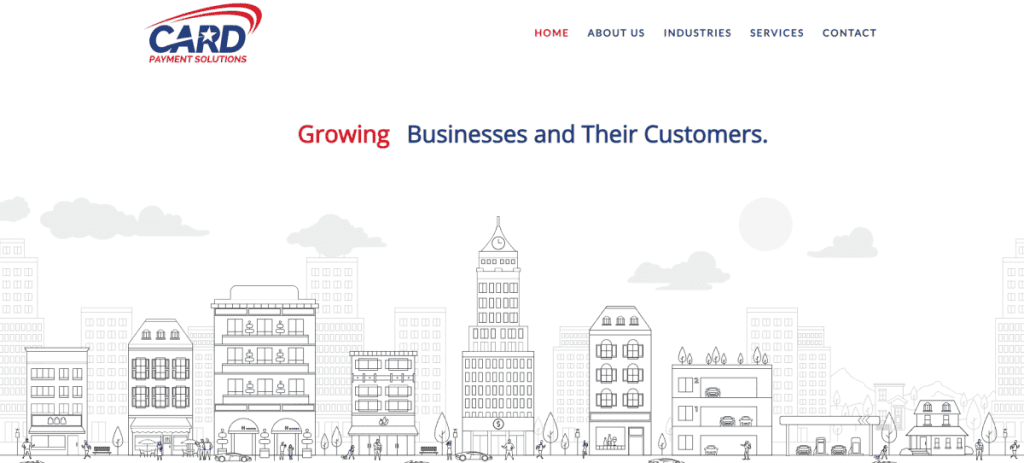
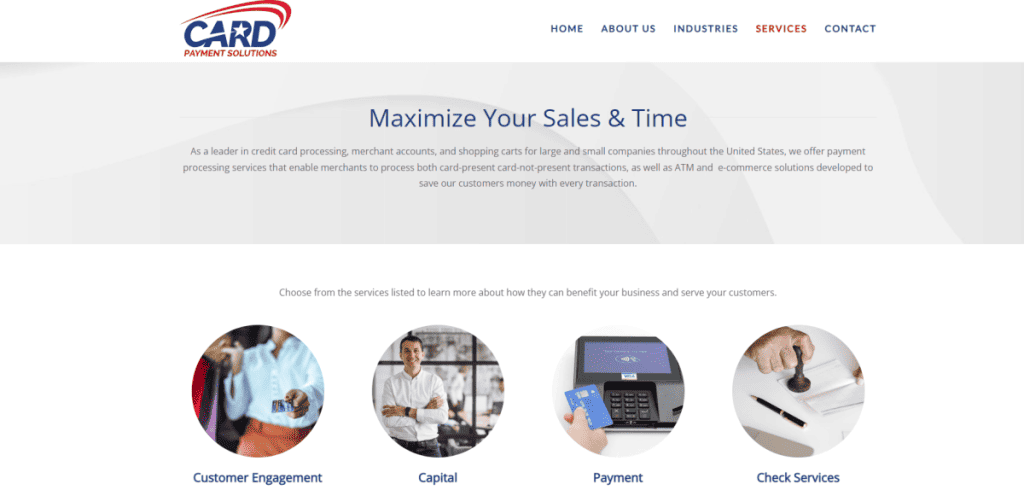
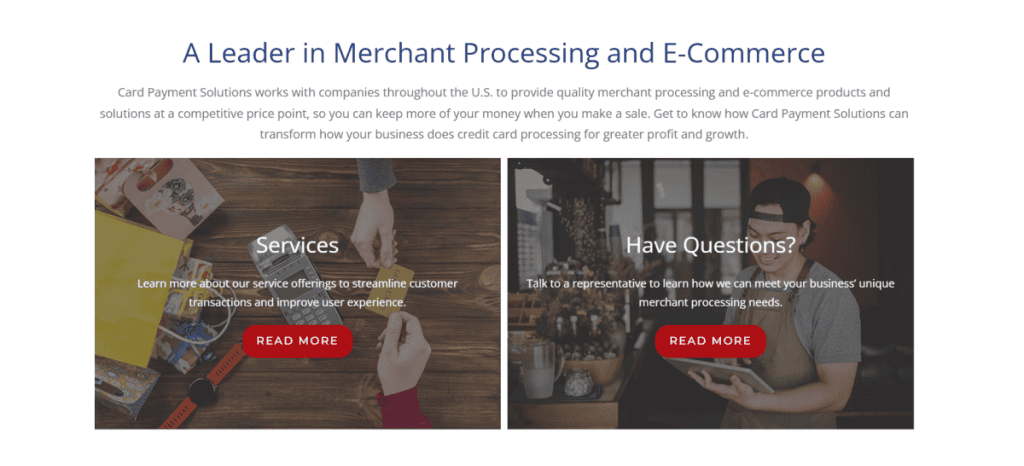
Card Payment Solutions (CPS) is a payment processing company that provides businesses with the tools to accept and manage card transactions efficiently. With a focus on security, reliability, and ease of use, CPS offers a range of services, including payment gateways, POS systems, and mobile payment solutions. The company serves businesses of all sizes, from small retailers to large enterprises, ensuring that transactions are processed smoothly and securely. Lets read more about Card Payment Solutions Review.

CPS aims to simplify payment acceptance by offering seamless integration with e-commerce platforms, robust fraud prevention tools, and industry-compliant security measures. Whether through online transactions, in-store payments, or mobile processing, CPS provides businesses with a flexible and scalable payment infrastructure to enhance their financial operations.

Efficient payment processing is a basic necessity for any business in the modern digital economy. Whether they are shopping online, in-store, or on their mobile devices, customers expect payment methods that are quick, safe, and convenient. Businesses can seamlessly accept a variety of payment methods, such as digital wallets, debit cards, and credit cards, with the help of a reputable payment processor like CPS.

Beyond facilitating transactions, an advanced payment processing system enhances customer experience, improves cash flow, and reduces fraud risks. Secure and compliant payment processing also helps businesses build trust with their customers while maintaining regulatory adherence. As businesses continue to evolve with technological advancements, partnering with a reputable payment solutions provider like CPS can be a strategic move for long-term growth and operational efficiency.

Company Overview | Card Payment Solutions Review

Understanding CPS’s history, market presence, and long-term vision.

Brief History and Background

CPS is a payment processing company that gives companies the tools they need to effectively accept and handle card payments. CPS has established itself as a dependable supplier of payment solutions since its founding, serving a wide range of sectors such as e-commerce, retail, hospitality, and healthcare. As financial technology has advanced, the company has changed to meet the increasing needs of both consumers and businesses by incorporating cutting-edge payment processing tools and modern security measures.

With an emphasis on flexibility and ease of use, CPS offers a suite of services, including payment gateways, POS systems, mobile payment solutions, and e-commerce integrations. By focusing on secure and seamless transactions, CPS continues to expand its market presence and enhance its technological capabilities.

Headquarters and Market Presence

CPS operates from its headquarters in [Location], serving businesses across various regions. The company has built a strong presence in the payment processing industry by offering tailored solutions to businesses of all sizes. Its reach extends beyond domestic markets, with partnerships and integrations that support international transactions, making it a competitive player in the global financial ecosystem.

Mission and Vision

The goal of CPS is to provide companies with cutting-edge, safe, and dependable payment solutions that boost productivity and client happiness. In the company’s ideal future, payment processing will be easy, secure, and available to companies of all sizes. CPS seeks to establish industry standards for payment security and efficiency by placing a high priority on technologically advanced solutions and regulatory compliance.
Card Payment Solutions Review

Services Offered

Exploring the range of payment solutions provided by CPS.

Payment Gateway Solutions

CPS offers a secure and efficient payment gateway that facilitates online transactions for businesses. The gateway ensures seamless connectivity between merchants, banks, and customers, allowing businesses to accept payments through various methods, including credit cards, debit cards, and digital wallets. CPS’s payment gateway is designed with encryption and fraud detection tools to enhance transaction security. It also supports multi-currency processing, making it suitable for businesses that operate internationally.

Point-of-Sale (POS) Systems

For brick-and-mortar businesses, CPS provides advanced POS systems that support multiple payment methods, including chip cards, contactless payments, and mobile wallets. These POS systems integrate smoothly with inventory management and accounting software, helping businesses streamline operations. CPS offers both countertop and mobile POS solutions, ensuring compatibility with various business environments, from retail stores to restaurants.

Mobile Payment Solutions

Recognizing the growing demand for mobile transactions, CPS provides mobile payment solutions that allow businesses to accept payments via smartphones and tablets. These solutions cater to businesses that operate in dynamic settings, such as delivery services, trade shows, and pop-up shops. CPS’s mobile payment solutions come with a user-friendly interface and secure transaction processing, ensuring reliability on the go.

E-commerce Integration

Through plugins and APIs, CPS provides smooth integration with popular e-commerce platforms, allowing companies to integrate safe payment processing into their websites. For online businesses, this integration guarantees a seamless transaction flow, improves the checkout experience, and lowers cart abandonment rates.

Recurring Billing and Subscription Management

For companies with subscription-based revenue streams, CPS offers automated invoicing and recurring billing management tools. By guaranteeing on-time payments and lowering administrative burden, these features assist companies in managing subscription lifecycles effectively.

Technological Infrastructure

Analyzing the technology behind CPS’s payment processing solutions.

Cloud-Based Platform

CPS operates on a cloud-based infrastructure, offering businesses a scalable and flexible payment processing solution. The cloud-based model allows real-time transaction management, enabling businesses to monitor sales, track payments, and generate reports from any location with internet access. This setup ensures minimal downtime, improved data accessibility, and seamless system updates without the need for extensive hardware investments. By leveraging cloud technology, CPS helps businesses maintain efficiency and adaptability in an evolving digital landscape.

API Integration

CPS provides robust API integration, allowing businesses to customize payment processing features according to their specific needs. The developer-friendly API enables smooth integration with existing business systems, including e-commerce platforms, accounting software, and customer management tools. This flexibility makes CPS a viable option for businesses that require tailored payment solutions rather than a one-size-fits-all approach. The API also supports multi-channel transactions, ensuring a cohesive payment experience across different platforms.

Security Protocols

CPS places a high premium on security and keeps transaction data safe by implementing industry-standard procedures. Tokenization and encryption technologies are used to protect payment information, lowering the possibility of data breaches. In order to guarantee that its security procedures meet international regulatory standards, CPS is also PCI DSS compliant. By taking these precautions, companies can increase customer trust and protect sensitive financial data.

Fraud Detection and Prevention

To minimize the risk of fraudulent transactions, CPS integrates AI-driven fraud detection tools into its payment infrastructure. Real-time risk monitoring and machine learning algorithms analyze transaction patterns to identify suspicious activities and prevent fraud before it occurs. These proactive security measures help businesses reduce chargebacks, unauthorized transactions, and potential financial losses.

User Experience

Evaluating CPS’s usability, support, and onboarding process.

Merchant Dashboard

CPS provides merchants with an intuitive and user-friendly dashboard that serves as a central hub for managing transactions. The dashboard offers real-time access to transaction history, sales reports, and customer payment data, helping businesses track financial performance efficiently. Additionally, CPS integrates analytics tools that provide insights into payment trends, helping merchants make informed decisions. The interface is designed for ease of navigation, ensuring that even users with minimal technical expertise can manage their payment processes seamlessly.

Customer Support

Reliable customer support is essential for any payment processor, and CPS offers multiple support channels, including phone, email, and live chat. The company provides 24/7 assistance, ensuring that businesses can quickly resolve payment-related issues without significant disruptions. Response times are generally prompt, and CPS offers dedicated support for technical issues, chargebacks, and transaction discrepancies. Additionally, CPS provides an extensive knowledge base with FAQs, troubleshooting guides, and instructional videos to help users resolve common problems independently.

Onboarding Process

Businesses are able to integrate payment solutions with minimal delays thanks to CPS’s simple onboarding process. For online payment gateways, point-of-sale systems, or mobile payment solutions, the business provides comprehensive documentation and detailed instructions to help with setup. To guarantee a seamless transition, businesses can also access customer support and training materials during onboarding. CPS offers developer-friendly APIs and plugins for e-commerce integrations, which make it simple for retailers to integrate payment processing into their systems.
Card Payment Solutions Review

Pricing Structure

Understanding the costs associated with CPS’s payment solutions.

Transaction Fees

CPS follows a percentage-based transaction fee model, similar to most payment processors in the industry. The exact rates may vary depending on the type of transaction, payment method used, and business category. Typically, CPS charges a flat percentage per transaction, with lower rates for debit card payments and slightly higher rates for credit cards and international transactions. Compared to competitors, CPS’s fees fall within an industry-standard range, making it a viable option for businesses seeking a balance between affordability and service quality. However, businesses with high transaction volumes may want to explore custom pricing options to negotiate better rates.

Monthly Fees

In addition to per-transaction charges, CPS offers subscription-based plans that include additional features such as advanced reporting, fraud protection, and premium customer support. Some plans may be tailored for businesses requiring recurring billing, API integrations, or multi-location payment management. Monthly fees vary depending on the selected service package, with premium features generally reserved for higher-tier plans. While these fees can add to operational costs, businesses that require advanced tools may find them beneficial in optimizing payment operations.

Setup and Maintenance Fees

Depending on the particular services selected, CPS maintains flexibility in its setup and maintenance costs. While some plans provide free setup, others might have a one-time cost, especially for specialized POS hardware or customized solutions. Before committing to a plan, companies should also thoroughly examine any potential hidden costs, such as chargeback fees, PCI compliance fees, or early termination penalties, to guarantee total transparency.

Compliance and Certifications

Ensuring security, data protection, and regulatory adherence in payment processing.

PCI DSS Compliance

CPS complies with the PCI DSS, which is essential for ensuring the security of card transactions. PCI DSS certification means that CPS follows stringent security protocols to protect sensitive payment data from breaches and unauthorized access. The company implements encryption, tokenization, and secure storage practices to safeguard credit card information. Compliance with PCI DSS helps businesses reduce fraud risks, enhance customer trust, and avoid costly penalties associated with non-compliance.

GDPR Compliance

For businesses operating within the European Union, General Data Protection Regulation compliance is crucial. CPS adheres to GDPR requirements, ensuring that customer data is collected, stored, and processed with transparency and consent. The company provides businesses with tools to manage data privacy settings, request user consent, and comply with customer data deletion requests when necessary. By aligning with GDPR regulations, CPS helps businesses avoid potential fines and legal consequences while maintaining ethical data management practices.

Local Regulatory Compliance

CPS guarantees adherence to local laws and financial regulations in the markets it serves, going above and beyond global compliance standards. To keep businesses running smoothly, CPS stays up to date on legal requirements, whether they are related to country-specific payment laws, PSD2 compliance in Europe, or U.S. financial regulations. The integrity of payment processing systems is preserved, secure transactions are guaranteed, and the risk of financial disputes is reduced thanks to regulatory compliance. By putting compliance first, CPS solidifies its standing as a reputable supplier of payment solutions.

Market Position and Competitors

Analyzing CPS’s standing in the payment processing industry and its competitive advantages.

Competitive Landscape

CPS operates in a highly competitive payment processing market alongside industry leaders such as Square, PayPal, Stripe, First Data, and Elavon. These companies offer similar services, including online payment gateways, POS systems, and mobile payment solutions. While CPS caters to a diverse range of businesses, its market share is influenced by competition from established players that provide extensive global coverage, advanced financial technology, and competitive pricing. However, CPS continues to attract businesses looking for a secure and efficient payment processor with flexible service offerings.

Unique Selling Propositions

CPS differentiates itself through customizable payment solutions, strong security measures, and seamless integration options. The company offers a cloud-based infrastructure, real-time fraud monitoring, and compliance with PCI DSS and GDPR standards, ensuring secure transactions. Additionally, CPS provides developer-friendly APIs for businesses that require customized payment solutions. Its mobile payment solutions and e-commerce integrations also cater to businesses of all sizes, making it a competitive choice for companies seeking flexibility in payment processing.

Partnerships and Collaborations

To increase the range of services it offers, CPS has partnered with banks, fintech companies, and technology suppliers. These partnerships facilitate multi-currency transactions, strengthen integration with external business tools, and increase payment security. In order to help businesses maintain a strong position in the rapidly changing digital payment market, CPS collaborates with software providers and financial institutions to guarantee that they have access to a dependable, scalable, and future-ready payment infrastructure.

Pros and Cons

Evaluating the strengths and limitations of CPS’s payment processing services.

Advantages

CPS offers several advantages that make it a reliable choice for businesses looking for secure and efficient payment processing. Security is one of its strongest features, with PCI DSS compliance, encryption, tokenization, and AI-driven fraud prevention ensuring that transactions remain protected from potential breaches. CPS also provides a wide range of services, including payment gateways, POS systems, mobile payments, e-commerce integrations, and recurring billing, making it a flexible option for different business models.

Another key advantage is customer support. CPS provides 24/7 assistance through multiple channels, including phone, email, and live chat. The company also offers an intuitive merchant dashboard with real-time transaction tracking, analytics, and reporting tools to help businesses make informed financial decisions. Additionally, its developer-friendly API integration allows businesses to customize payment processing based on their unique needs.

Disadvantages

Although CPS has many advantages, there are also some disadvantages to take into account. Transparency in pricing is among the primary issues. Although the company uses a percentage-based transaction fee model, some companies might find that the rates are higher than those of rivals that offer interchange-plus pricing that is lower or flat-rate. Furthermore, setup fees and monthly fees could raise the total cost and deter small businesses with limited resources from using it.

Another limitation is that CPS’s availability may be restricted in certain regions, and its international payment support might not be as extensive as some of the larger payment processors. Businesses operating globally should verify the platform’s capabilities before committing.
Card Payment Solutions Review

Conclusion

For retailers, e-commerce companies, and service-based industries, CPS provides a flexible and safe payment processing system. Notable advantages include its robust security, variety of payment options, and customer service. Transparency in pricing, however, might raise issues. Businesses that require scalable and adaptable payment solutions are best suited for CPS.

FAQs

What types of businesses can benefit from CPS?

CPS is designed to cater to a variety of businesses, including retail stores, e-commerce platforms, restaurants, service-based businesses, and subscription-based companies. Its POS systems make it a suitable option for brick-and-mortar stores, while its payment gateway and e-commerce integrations support online businesses. CPS also provides mobile payment solutions, making it beneficial for businesses that operate on the go, such as food trucks, home service providers, and event vendors. Additionally, companies with recurring billing models, such as membership-based services or SaaS businesses, can utilize CPS’s automated invoicing and subscription management features.

How secure is CPS in handling sensitive financial transactions?

Security is a top priority for CPS, and the company follows strict industry standards to protect sensitive payment information. CPS is PCI DSS-compliant, ensuring that all transactions meet high-security standards to prevent fraud and data breaches. It also employs encryption and tokenization to safeguard customer payment details. Furthermore, CPS uses AI-driven fraud detection and real-time risk monitoring, which helps detect suspicious activities and prevent unauthorized transactions. These measures make CPS a reliable and secure payment processor for businesses handling financial transactions.

Does CPS offer integrations with major e-commerce platforms?

Yes, CPS provides seamless integration with major e-commerce platforms through APIs and plugins. Businesses using platforms like Shopify, WooCommerce, Magento, and BigCommerce can integrate CPS’s payment gateway to facilitate secure online transactions. The integration process is user-friendly, allowing businesses to offer a smooth checkout experience while maintaining compliance with security standards.

Electronic Merchant Systems Review

Electronic Merchant Systems Review

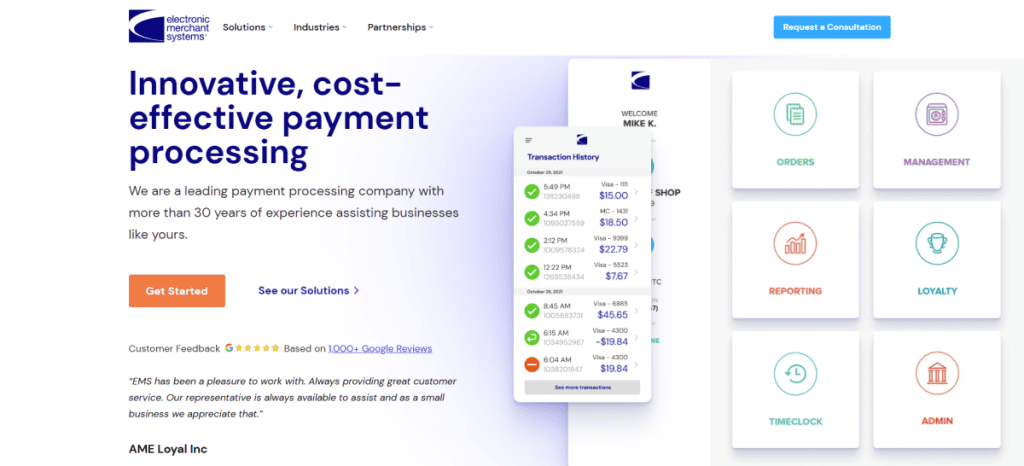
EMS is a prominent provider of payment processing solutions catering to businesses of all sizes. Established over three decades ago, EMS has built a strong reputation in the financial technology sector, offering a comprehensive suite of services, including credit card processing, POS systems, mobile payment solutions, eCommerce payment gateways, and merchant funding options. The company’s focus on innovation, security, and customer support has positioned it as a competitive player in the payment processing industry. Lets read more about Electronic Merchant Systems Review.

EMS serves a wide range of industries, including retail, hospitality, healthcare, and eCommerce. The company prides itself on providing customizable payment solutions that integrate seamlessly with various business models. With a customer-first approach, EMS emphasizes reliability, efficiency, and affordability, ensuring that merchants can process transactions securely and efficiently.

EMS’s in-house customer support is one of its best features; it is available around-the-clock to help businesses with technical problems, payment disputes, and system troubleshooting. Furthermore, EMS places a high priority on security by implementing cutting-edge fraud prevention tools and complying with Payment Card Industry Data Security Standards to shield companies from possible threats.

Merchants have given EMS mixed reviews despite its advantages; some have praised its customer service and ease of use, while others have voiced concerns about contract terms and pricing transparency. In order to assist businesses in making an informed decision, this review attempts to present an objective and thorough analysis of EMS, encompassing its services, pricing, reputation, customer support, and general dependability.

Company Background: History, Headquarters, Ownership, and Mission | Electronic Merchant Systems Review

Electronic Merchant Systems is a well-established payment processing company that has been serving businesses since its founding in 1988. With over three decades of experience in the financial technology sector, Electronic Merchant Systems has grown into a reliable provider of payment solutions, helping merchants streamline transactions across multiple industries, including retail, hospitality, healthcare, and eCommerce.

Headquartered in Cleveland, Ohio, EMS operates nationwide, with a strong presence in various cities across the United States. The company supports businesses of all sizes by offering tailored payment processing solutions that integrate with different operational models. Over the years, Electronic Merchant Systems has expanded its reach through regional offices and a network of sales representatives, ensuring its services are accessible to businesses in diverse locations.

Electronic Merchant Systems operates as a privately held company under the ownership of its parent organization, Francis David Corporation. This corporate structure allows EMS to maintain control over its service offerings, technological advancements, and customer relationships without external shareholder influence. The company’s leadership focuses on continuous improvement and innovation to remain competitive in the rapidly evolving payment processing industry.

EMS’s goal is to give companies safe, effective, and user-friendly payment solutions that improve customer satisfaction and operational effectiveness. The company envisions a time when companies of all sizes can use cutting-edge payment technologies to expand and prosper. By putting security, innovation, and exceptional customer service first, EMS hopes to establish enduring relationships with retailers and give them access to dependable and reasonably priced payment processing solutions.

Electronic Merchant Systems Review

Services and Solutions Offered by Electronic Merchant Systems

Electronic Merchant Systems provides a comprehensive suite of payment processing solutions designed to meet the needs of businesses across various industries. Their services cater to retail, hospitality, healthcare, and eCommerce businesses, ensuring seamless transaction processing and enhanced customer experiences.

Payment Processing Services

Electronic Merchant Systems enables merchants to accept major credit and debit cards efficiently. Their payment processing services support EMV (Europay, MasterCard, and Visa) chip card transactions, offering increased security against fraud. Additionally, EMS provides NFC payment solutions, allowing businesses to accept contactless payments from digital wallets like Apple Pay and Google Pay, ensuring faster and more secure transactions.

Point of Sale Systems

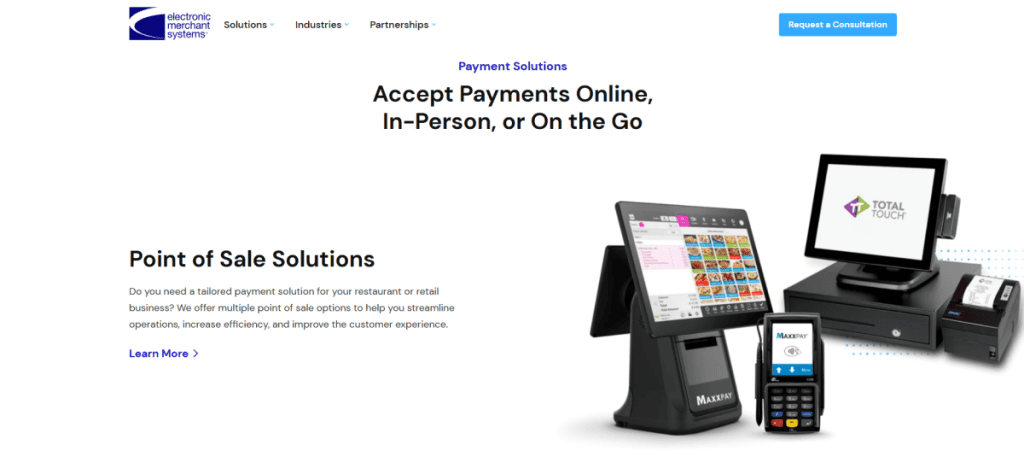
Electronic Merchant Systems offers MaxxPay POS solutions, an all-in-one system designed to streamline operations for small and medium-sized businesses. They also provide Total Touch POS systems, a specialized solution tailored for the restaurant industry, offering features such as table management, order tracking, and seamless payment integration.

Mobile Payment Solutions

Electronic Merchant Systems provides mobile processing apps for businesses that are always on the go, enabling retailers to take payments from smartphones and tablets. By integrating with mobile devices, these solutions give businesses that need to process transactions outside of traditional storefronts flexibility.

eCommerce Solutions

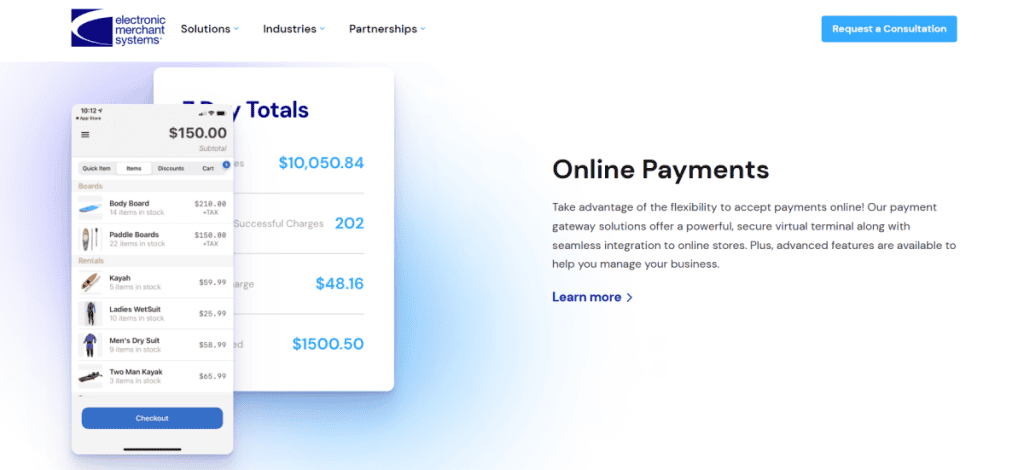
Electronic Merchant Systems supports online businesses with secure payment gateways that enable seamless transaction processing. They also provide shopping cart integrations, allowing businesses to connect their eCommerce platforms with EMS’s payment processing system.

Additional Services

Electronic Merchant Systems extends its offerings with gift and loyalty card programs, helping businesses attract and retain customers. They also offer merchant funding options, providing financial support for business expansion. Additionally, EMS prioritizes payment security and fraud prevention, ensuring compliance with PCI DSS standards to safeguard merchant transactions.

Technology and Infrastructure of Electronic Merchant Systems

Electronic Merchant Systems utilizes a robust technological infrastructure to deliver secure and efficient payment processing solutions. The company continuously invests in its platforms to ensure businesses can process transactions seamlessly across multiple channels, including in-store, mobile, and online environments.

Overview of EMS’s Technological Platforms

Credit and debit card transactions, EMV chip payments, NFC-enabled contactless payments, and eCommerce gateways are all supported by EMS’s integrated payment ecosystem. With the help of their proprietary MaxxPay POS system’s intuitive user interface, businesses can effectively manage transactions, inventory, and customer interactions. Furthermore, EMS’s mobile payment solutions give merchants flexibility by ensuring safe processing via smartphones and tablets.

Security Protocols and Compliance Standards

Security is a top priority for EMS. The company adheres to PCI DSS compliance, ensuring merchants’ payment data is encrypted and safeguarded against cyber threats. EMS employs end-to-end encryption and tokenization to enhance security and prevent unauthorized access to sensitive payment information. Advanced fraud prevention tools further protect merchants from chargebacks and fraudulent transactions.

Reliability and Uptime Statistics

Electronic Merchant Systems aims to provide high system reliability, minimizing downtime for merchants. While specific uptime statistics are not publicly disclosed, EMS claims to offer consistent payment processing with minimal service interruptions. Their cloud-based infrastructure helps maintain transaction continuity, even during peak business hours.

Integration Capabilities with Other Business Systems

Electronic Merchant Systems supports integration with accounting software, customer relationship management platforms, and eCommerce systems. Popular integrations include compatibility with QuickBooks, Shopify, WooCommerce, and other business applications, ensuring merchants can streamline operations without switching between multiple platforms. This flexibility enhances overall business efficiency while maintaining a seamless payment experience.

Customer Support and Service at Electronic Merchant Systems (EMS)

One of the main focuses of EMS service offerings is customer support. To help merchants fix technical problems, handle transactions seamlessly, and maximize the effectiveness of their payment systems for business purposes, the company offers a variety of support options.

Availability of Customer Support

EMS offers 24/7 customer support, ensuring that merchants can receive assistance whenever needed. This around-the-clock availability is particularly beneficial for businesses operating beyond standard business hours, including restaurants, retail stores, and eCommerce merchants.

Support Channels Offered

EMS provides multiple support channels, including phone, email, and live chat. Phone support allows merchants to quickly speak with a representative for urgent concerns, while email support is available for less time-sensitive inquiries. Live chat enables real-time assistance directly through the EMS website, offering a convenient option for quick troubleshooting.

Merchant Onboarding and Training Programs

To help businesses integrate EMS’s payment processing solutions, the company offers merchant onboarding and training programs. These programs guide new customers through the setup process, covering topics such as POS system usage, payment security measures, and transaction best practices. EMS also provides educational materials, including manuals and video tutorials, to ensure merchants fully understand their systems.

Account Management Services

Dedicated account managers are assigned by EMS to help merchants with their ongoing business requirements. By assisting with chargeback resolution, transaction monitoring, and system optimization, these managers make sure that companies process payments as efficiently as possible. EMS sets itself apart from rivals who might only use generic customer service models thanks to this individualized service.

Electronic Merchant Systems Review

Pricing and Contract Terms of Electronic Merchant Systems

EMS offers a range of pricing models and contract structures tailored to different business needs. However, like many payment processors, their pricing details are not fully transparent on their website, and merchants often need to request a custom quote to understand their specific costs.

Overview of Pricing Models

EMS reportedly offers flat-rate pricing and interchange-plus pricing, though the exact rates vary based on business type, transaction volume, and industry. Flat-rate pricing provides merchants with a consistent percentage fee for each transaction, making costs predictable. Interchange-plus pricing, on the other hand, separates the interchange fees charged by card networks from EMS’s processing markup, which can sometimes lead to more competitive rates for high-volume businesses.

Contract Length and Termination Policies

EMS typically requires merchants to sign a long-term contract, often spanning three to five years. Some agreements include an early termination fee if a merchant decides to cancel before the contract ends. Reports suggest that ETF charges vary, and merchants should carefully review the terms before signing.

Fees Associated with Services

Setup fees, monthly service fees, and per-transaction fees are all possible charges from EMS. Chargeback fees, gateway fees for online transactions, and PCI compliance fees are examples of additional expenses. However, merchants should ask for a complete breakdown before committing, as these fees are not made public.

Equipment Leasing or Purchasing Options

EMS provides POS systems and card readers, which merchants can either lease or purchase outright. Leasing may involve long-term commitments with additional costs, while purchasing equipment outright can be a more cost-effective option for businesses planning to use EMS’s services long-term.

Reputation and Reviews of Electronic Merchant Systems (EMS)

EMS has built a reputation as a longstanding payment processor serving businesses across various industries. However, customer and employee reviews reflect a mix of experiences, highlighting both strengths and areas of concern.

Customer Reviews

Summary of Positive Feedback

Many merchants appreciate EMS’s user-friendly payment solutions, 24/7 customer support, and secure transaction processing. Businesses often highlight the reliability of EMS’s POS systems, mobile payment solutions, and eCommerce integrations. Some customers also commend EMS for providing customized solutions tailored to specific business needs.

Summary of Negative Feedback

Some merchants have voiced concerns regarding pricing transparency, long-term contracts, and early termination fees, despite the positive aspects. A prevalent grievance pertains to concealed charges that might not be explicitly revealed during the onboarding process. Some users also complain about having trouble terminating services, pointing to complicated contracts or expensive termination fees. Customer service response times are generally good, but some reviews claim that they have also been erratic.

Employee Reviews

Work Environment and Culture

EMS receives mixed employee reviews. Some employees praise the company for providing growth opportunities, a collaborative work environment, and competitive benefits. However, others mention high-pressure sales tactics, job instability, and challenging sales quotas as potential downsides.

Employee Satisfaction and Retention

While some employees appreciate the structured training programs and team-oriented culture, turnover appears to be relatively high in sales roles, possibly due to performance-based compensation models.

Industry Recognition

Electronic Merchant Systems has earned various awards and certifications, reinforcing its credibility in the payment processing industry. It maintains PCI DSS compliance and has partnerships with major card networks, contributing to its reputation as a secure and reliable merchant service provider.

Competitor Comparison of Electronic Merchant Systems (EMS)

Alongside a number of other reputable companies, Electronic Merchant Systems competes in the payment processing market. Verifone, Ingenico, and TSYS are important rivals, each providing unique solutions to meet different business requirements.

Overview of Key Competitors

Verifone specializes in payment terminals and POS solutions, widely used by retailers and hospitality businesses. Their focus is on hardware innovation, offering secure payment devices.

Ingenico is a global leader in POS systems and contactless payment solutions, serving businesses in over 170 countries. Known for its secure payment technology, Ingenico is a preferred choice for enterprises.

TSYS (Total System Services) provides merchant services, card processing, and payment gateway solutions, catering to banks, large retailers, and small businesses alike. TSYS emphasizes customizable pricing and enterprise-level payment solutions.

Comparison of Services and Pricing

Electronic Merchant Systems competes by offering a comprehensive suite of payment solutions, including credit card processing, mobile payments, POS systems, and eCommerce gateways. Unlike Ingenico and Verifone, which focus on hardware, EMS provides end-to-end merchant services, including 24/7 customer support and business funding options. Compared to TSYS, EMS primarily targets small and mid-sized businesses, whereas TSYS serves a broader range, including financial institutions. Pricing transparency remains a concern for EMS, as many competitors disclose standard rates upfront.

Market Positioning and Differentiators

Electronic Merchant Systems differentiates itself with customized payment solutions, security features, and merchant support. Its PCI DSS compliance, fraud prevention tools, and integration capabilities help it stand out. However, concerns over contract terms and hidden fees may impact its competitive positioning against providers offering more transparent pricing models.

Pros and Cons of Electronic Merchant Systems (EMS)

A variety of payment processing options are available from EMS to assist companies in effectively handling transactions. Potential clients should weigh the company’s disadvantages before using its services, despite the fact that it offers a number of benefits.

Advantages of EMS

Comprehensive Service Offerings
Electronic Merchant Systems provides a full suite of payment solutions, including credit and debit card processing, mobile payments, eCommerce gateways, POS systems, and business funding options. This allows businesses to manage transactions across multiple channels seamlessly.

Technological Capabilities
EMS utilizes secure, PCI-compliant payment platforms with features like EMV chip card processing, NFC payments, and fraud prevention tools. Its POS systems (MaxxPay and Total Touch) offer flexibility and scalability, catering to both retail and restaurant businesses.

Customer Support Quality
EMS offers 24/7 customer support through phone, email, and live chat, which is a significant advantage over some competitors that provide only limited support hours. Additionally, EMS provides merchant training and onboarding assistance, helping businesses get started with their payment solutions.

Disadvantages of EMS

Potential Contract and Fee Concerns
One of the biggest criticisms of Electronic Merchant Systems is lack of pricing transparency. Merchants often need to request a custom quote, and some have reported hidden fees, long-term contracts (3-5 years), and high early termination fees.

Customer Complaints and Resolutions
Some customers have raised concerns about billing disputes, contract cancellation difficulties, and unexpected charges. While EMS does address complaints, the resolution process may take time, leading to frustration among some users.

Electronic Merchant Systems Review

Conclusion

Electronic Merchant Systems provides a wide range of payment options, robust technology, and round-the-clock customer service. Potential customers should, however, thoroughly go over the terms and costs of the contract before committing. EMS is ideal for companies looking for a full-service payment processor, but it should be approached with an eye toward price transparency.

FAQs

What industries does Electronic Merchant Systems serve?

EMS caters to a wide range of industries, including retail, hospitality, healthcare, eCommerce, and service-based businesses. Their payment solutions are designed to accommodate businesses of all sizes, from small shops to large enterprises, offering tailored transaction processing and POS systems.

How does EMS ensure the security of transactions?

EMS prioritizes payment security by adhering to PCI DSS compliance. It employs end-to-end encryption, tokenization, and fraud detection tools to protect sensitive cardholder data and prevent unauthorized transactions.

Can EMS’s payment solutions integrate with existing business systems?

Yes, EMS supports integration with accounting software, CRM platforms, and eCommerce solutions. Businesses using QuickBooks, Shopify, WooCommerce, and other applications can seamlessly connect EMS’s payment processing services for streamlined operations.

PayJunction Review

PayJunction Review

PayJunction is a payment processing company that provides businesses with a range of solutions to accept and manage transactions efficiently. Known for its emphasis on transparency, security, and innovation, PayJunction has positioned itself as a reliable alternative to traditional merchant service providers. The company caters to businesses of all sizes, offering a combination of payment terminals, virtual processing solutions, and automation tools to streamline financial transactions. Lets read more about PayJunction Review.

Founded in 2000, PayJunction has built a strong presence in the payment processing industry over the past two decades. Headquartered in California, the company has grown by focusing on ethical business practices, cutting-edge technology, and customer-centric services. Unlike many processors that lock merchants into long-term contracts with hidden fees, PayJunction follows an interchange-plus pricing model, ensuring cost transparency.

One of PayJunction’s most notable features is its ZeroTouch Terminal, a contactless payment system that improves security and does away with paper receipts. Businesses can easily integrate payment processing without requiring a lot of technical know-how thanks to the company’s No-Code Payments Integration®. PayJunction is renowned for its PCI Level 1 security compliance, which guarantees that companies can process payments while upholding the strictest data security guidelines.

With a reputation for reliable service, transparent pricing, and a commitment to sustainable, paperless transactions, PayJunction has gained traction among merchants seeking a modern and ethical payment processor. This review will take an in-depth look at its offerings, pricing, security, customer support, and overall value to businesses.

Product and Service Offerings | PayJunction Review

PayJunction provides a comprehensive suite of payment processing solutions tailored to businesses of all sizes. The company supports a variety of payment methods, including credit and debit card transactions, as well as ACH payments. By offering both in-person and remote payment solutions, PayJunction enables businesses to process transactions securely and efficiently. Its interchange-plus pricing model ensures transparency, making it a competitive choice for merchants looking for a straightforward cost structure.

One of the standout aspects of PayJunction’s offering is its hardware solutions. The ZeroTouch Terminal is designed to facilitate contactless payments, reducing the need for paper receipts and enhancing transaction security. This terminal allows businesses to store digital signatures, further streamlining payment acceptance while reducing environmental impact. In addition to the ZeroTouch Terminal, PayJunction also offers a Portable Terminal, which provides mobility for businesses that require on-the-go payment processing, such as service providers and delivery businesses.

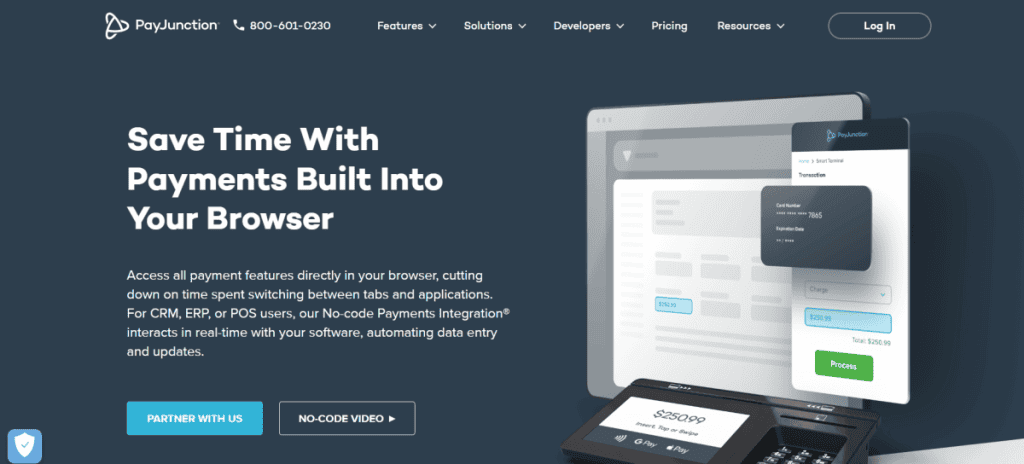
PayJunction offers a Virtual Terminal, which enables transactions to be processed via a web-based interface without the need for physical hardware, for companies that prefer virtual payment solutions. Additionally, companies that wish to incorporate payments into their current systems without requiring a lot of development work can do so more easily with its No-Code Payments Integration®. Additionally, PayJunction helps e-commerce companies by providing hosted checkout options and safe online payment processing solutions.

PayJunction Review

Pricing Structure

The interchange-plus pricing model, which PayJunction uses, is regarded as one of the most open pricing schemes in the payment processing sector. Interchange-plus pricing gives merchants a clear breakdown of processing fees, in contrast to flat-rate pricing, which can result in higher costs for companies with higher transaction volumes. In addition to a small, predefined markup, this model guarantees that businesses are charged the actual interchange rate established by card networks. Businesses are able to know exactly how much they are spending on each transaction thanks to this degree of transparency.

For credit and debit card processing, PayJunction’s transaction fees vary based on the type of card used and the nature of the transaction (card-present or card-not-present). ACH transactions are also supported, and they come with their own fee structure, typically lower than credit card processing rates. Businesses can choose to process ACH payments as a cost-effective alternative, especially for recurring billing or high-ticket transactions.

One aspect that businesses should consider is the monthly fee for low-volume merchants. PayJunction charges a $35 monthly fee for businesses that process less than $10,000 per month in transactions. While this fee may be a drawback for smaller businesses, it is offset by the absence of additional charges that many competitors impose.

PayJunction maintains a transparent pricing policy with no hidden fees. Unlike many processors, it does not charge PCI compliance fees, gateway fees, or early termination fees. This straightforward approach makes PayJunction an appealing choice for businesses seeking a fair and predictable cost structure.

Customer Support and Satisfaction

PayJunction offers multiple support channels to assist merchants with their payment processing needs. The company provides phone support, ensuring that businesses can speak directly with a representative for immediate assistance. In addition, a ticketing system allows merchants to submit inquiries online and receive responses in an organized manner. PayJunction also maintains a comprehensive knowledge base, which includes detailed articles, guides, and FAQs that help users troubleshoot common issues and understand the platform’s features. This self-service resource is beneficial for businesses that prefer finding quick answers without waiting for direct assistance.

The majority of merchants’ reviews of PayJunction’s support service are positive, with many praising the team’s professionalism and promptness. The experienced agents who help with onboarding, integration, and troubleshooting have received high marks from users. The company’s hands-on approach, where support agents assist businesses with setup procedures and effectively resolve technical issues, reflects its dedication to customer service.

One of the standout aspects of PayJunction’s support is its lack of outsourced customer service, which means businesses receive assistance directly from knowledgeable, in-house professionals. This is a key differentiator from many competitors that rely on third-party call centers.

While most reviews indicate a high level of satisfaction, some users have reported occasional delays in response times during peak hours. However, the general sentiment is that PayJunction offers reliable, high-quality customer support. The combination of phone, online, and self-service support options ensures that businesses can get the help they need in a timely manner.

Security and Compliance

PayJunction places a strong emphasis on security and compliance, ensuring that businesses can process payments while protecting sensitive customer data. The company is PCI Level 1 compliant, which is the highest standard of security in the payment processing industry. This compliance means that PayJunction adheres to strict regulations set by the PCI DSS, ensuring that businesses using its services are operating within a secure environment. Maintaining PCI Level 1 compliance helps protect businesses from potential data breaches and fraud-related liabilities.

To further enhance security, PayJunction employs encryption and tokenization to safeguard payment information. Encryption ensures that payment data is securely transmitted, preventing unauthorized access during transactions. Tokenization replaces sensitive cardholder information with a randomly generated token, meaning that actual card details are never stored on a merchant’s system. This reduces the risk of data exposure in the event of a security breach.

The likelihood of fraud and unauthorized transactions is greatly reduced by these advanced security measures. Because PayJunction manages compliance and risk mitigation on their behalf, businesses can take advantage of these protections without having to handle security protocols themselves. By facilitating contactless transactions and digital signatures, the company’s ZeroTouch Terminal further improves security by eliminating the need to handle actual cards and receipts.

By implementing robust security measures and adhering to PCI Level 1 compliance, PayJunction provides businesses with a reliable and secure payment processing solution. These protections ensure both merchants and customers can conduct transactions with confidence, minimizing security risks in the payment process.

PayJunction Review

Integration and Compatibility

PayJunction offers a range of integration options that allow businesses to seamlessly incorporate its payment processing solutions into their existing systems. One of its key strengths is its full-stack API, which provides developers with the flexibility to create custom payment solutions. This API enables businesses to integrate PayJunction’s services directly into their software, POS systems, and customer management platforms. With well-documented API resources, businesses can efficiently build and deploy payment functionalities without unnecessary complexity.

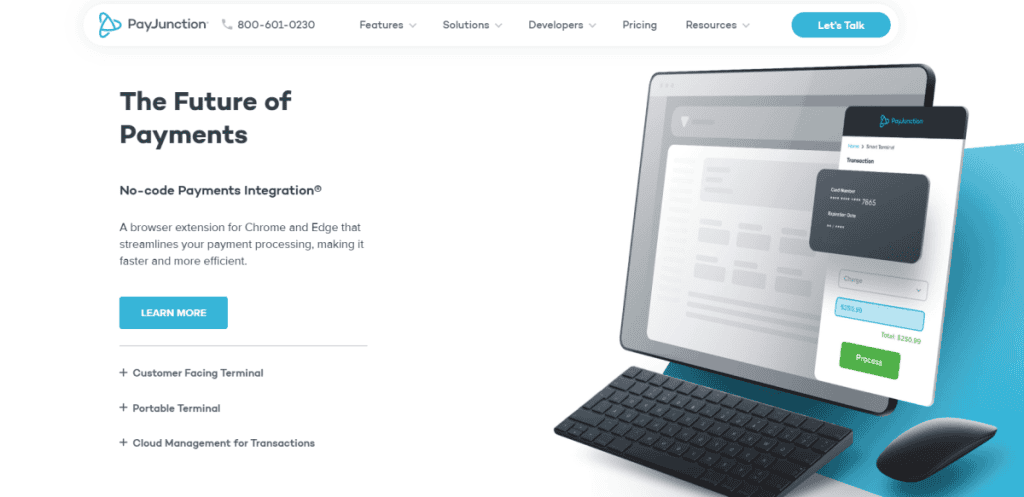
For businesses that require payment processing without extensive coding, PayJunction’s No-Code Payments Integration® offers an alternative solution. This feature allows companies to integrate payments into their systems without the need for advanced technical expertise, making it a convenient option for merchants who want a straightforward setup.

Additionally, PayJunction is made to work with third-party software, so companies can integrate it with accounting programs, CRM tools, and e-commerce platforms. By keeping financial management, sales tracking, and payment processing all in one cohesive system, this degree of compatibility helps businesses streamline operations.

The ease of implementation is another notable advantage. Unlike some processors that require complex onboarding processes, PayJunction’s integration options are designed to be user-friendly. Businesses can connect their systems without facing unnecessary delays, ensuring that payment processing is up and running quickly.

By providing robust API access, no-code integration, and broad software compatibility, PayJunction ensures that businesses can implement payment solutions that fit their specific needs while maintaining operational efficiency.

User Experience and Interface

PayJunction offers a well-designed and intuitive interface that enhances the overall user experience for businesses. Its dashboard provides merchants with a centralized platform to manage transactions, track sales, and access key payment data. The clean and organized layout ensures that users can quickly navigate through various functions without facing a steep learning curve. From processing payments to issuing refunds and managing customer records, all essential tools are easily accessible from the dashboard.

One of the standout features of PayJunction’s platform is its reporting tools and real-time monitoring capabilities. Businesses can generate detailed reports that provide insights into transaction history, sales trends, and payment performance. These reports can be customized to suit different business needs, helping merchants analyze financial data and make informed decisions. Real-time monitoring ensures that businesses can keep track of transactions as they happen, reducing the risk of errors and fraudulent activities.

PayJunction prioritizes mobile accessibility in addition to its web-based dashboard, enabling businesses to handle transactions from any location. The platform is designed to work well on a variety of devices, such as smartphones, tablets, and PCs. Merchants have complete control over their payment processing operations, whether they are handling payments while on the go or remotely reviewing sales data. A consistent and intuitive experience is guaranteed by the smooth device integration.

With its intuitive interface, powerful reporting tools, and mobile-friendly design, PayJunction provides a smooth and efficient payment management experience, making it easy for businesses to stay on top of their financial operations.

Pros and Cons

PayJunction offers several advantages that make it a strong option for businesses seeking a reliable payment processor.

Transparent Pricing – PayJunction follows an interchange-plus pricing model, ensuring businesses have clear visibility into transaction costs. There are no hidden fees, no PCI compliance fees, no gateway fees, and no early termination fees, making it a cost-effective choice for merchants who prioritize straightforward pricing.

No Long-Term Contracts – Unlike many competitors that require multi-year agreements, PayJunction offers month-to-month service, allowing businesses to cancel or switch providers without facing penalties. This flexibility is particularly beneficial for businesses that do not want to be locked into restrictive terms.

Strong Security Measures – PayJunction is PCI Level 1 compliant and employs encryption and tokenization to protect sensitive payment data. These security features help reduce the risk of fraud and unauthorized access, ensuring that transactions remain safe for both businesses and customers.

Quality Customer Support – Businesses have access to phone support, a ticketing system, and a comprehensive knowledge base. Unlike some competitors that outsource support, PayJunction provides in-house customer service, ensuring knowledgeable and responsive assistance.

However, PayJunction does have some potential drawbacks.

Monthly Fees for Low-Volume Businesses – Merchants processing less than $10,000 per month are subject to a $35 monthly fee, which may be a drawback for small businesses or seasonal operations.

Limited Hardware Options – While PayJunction provides high-quality ZeroTouch and Portable Terminals, its range of hardware solutions is not as extensive as some competitors, particularly those offering full-scale POS systems.

Despite these limitations, It remains a strong choice for businesses that value transparent pricing, security, and reliable customer support.

PayJunction Review

Competitor Comparison

PayJunction competes with several major payment processors, including Square and Clover, both of which offer comprehensive payment solutions for businesses. While all three companies provide essential payment processing services, they differ significantly in pricing structures, contract terms, hardware options, and security features.

Pricing and Contracts – PayJunction follows an interchange-plus pricing model, which provides more transparency than Square’s flat-rate pricing. Square charges a fixed percentage per transaction, which can be convenient but may lead to higher costs for businesses with large transaction volumes. Clover offers tiered pricing, which can vary based on the service provider. Unlike Clover, which often requires long-term contracts through resellers, It operates on a month-to-month basis, providing greater flexibility.

Hardware Options – In addition to touchscreen registers and handheld terminals, Square and Clover offer a wider range of POS hardware tailored to the restaurant and retail industries. The ZeroTouch and Portable Terminals from PayJunction, on the other hand, emphasize contactless transactions and digital receipts. Businesses seeking a simplified, environmentally friendly payment solution might favor PayJunction, while those needing advanced POS features might find Square or Clover a better fit.

Security Features – PayJunction is PCI Level 1 compliant and emphasizes security through tokenization and encryption. While Square and Clover also adhere to security standards, PayJunction’s ZeroTouch Terminal provides an extra layer of protection by eliminating the need for physical receipts, reducing the risk of fraud.

Businesses that prioritize transparent pricing, flexible contracts, and strong security features may find PayJunction a better choice. However, companies needing a broader range of POS hardware and built-in industry-specific tools may benefit from Square or Clover.

Conclusion

PayJunction is a great option for companies looking for a dependable payment processor because it provides flexible contracts, robust security, and transparent pricing. It is perfect for companies that prioritize cost transparency, security, and digital-first payment solutions because of its ZeroTouch Terminal, interchange-plus pricing, and PCI Level 1 compliance, even though it lacks a wide range of hardware options.

Frequently Asked Questions 

Does PayJunction require long-term contracts?

No, PayJunction operates on a month-to-month basis, meaning businesses are not locked into long-term contracts. Merchants can cancel the service anytime without facing early termination fees, providing greater flexibility compared to competitors that require multi-year commitments.

Are there any monthly fees for low-volume businesses?

Yes, businesses processing less than $10,000 per month are subject to a $35 monthly fee. While this may be a drawback for small businesses, PayJunction offsets it by eliminating other common charges such as PCI compliance and gateway fees.

What customer support options are available?

PayJunction offers phone support, a ticketing system, and a knowledge base. Unlike many competitors that outsource support, PayJunction provides in-house customer service, ensuring knowledgeable and efficient assistance.

Tidal Commerce Merchant Review

Tidal Commerce Merchant Review

Tidal Commerce is a payment processing company that aims to provide secure and efficient merchant services for businesses of all sizes. The company positions itself as a transparent and customer-focused payment processor, offering a range of solutions, including credit card processing, point-of-sale systems, and e-commerce integrations. Lets read more about Tidal Commerce Merchant Review.

Tidal Commerce was founded with the goal of simplifying payment processing while maintaining high security and transparency. Although the exact founding year is not widely publicized, the company has established itself as a reputable player in the merchant services industry. Over the years, it has evolved by expanding its service offerings, integrating advanced technology, and prioritizing customer service.

The goal of Tidal Commerce is to offer simple, affordable payment options while guaranteeing that merchants are fully informed about costs and terms of contracts. The company wants to help businesses increase their profitability by getting rid of hidden costs and needless markups. Providing safe, dependable, and creative payment processing solutions that can grow with businesses is at the heart of its mission.

Tidal Commerce is committed to maintaining industry compliance and security standards. It follows PCI DSS guidelines to ensure safe transactions. Additionally, it holds accreditation from the Better Business Bureau and has received ratings that reflect its credibility and service quality. The company also meets industry-specific certifications related to secure payment processing, ensuring businesses remain compliant with evolving regulatory requirements.
Services Offered by Tidal Commerce Merchant Services | Tidal Commerce Merchant Review

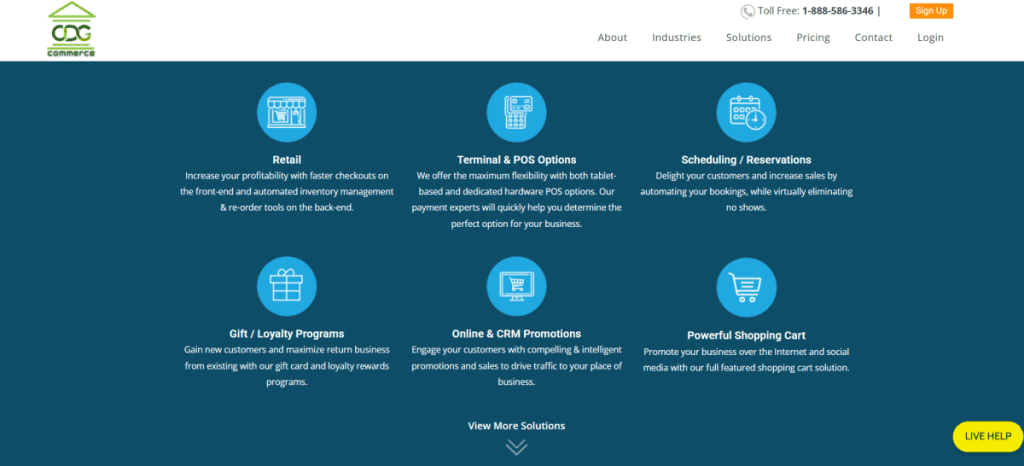
Tidal Commerce provides a variety of payment solutions designed to cater to businesses of all sizes. The company focuses on secure, efficient, and transparent payment processing while offering flexible integration options.

Payment Processing Solutions

It supports credit and debit card processing, enabling businesses to accept payments from all major card networks, including Visa, Mastercard, American Express, and Discover. The company offers both in-store and online processing, making it suitable for brick-and-mortar businesses, e-commerce stores, and service-based merchants.

Online and mobile payment solutions are offered by Tidal Commerce to companies that need flexible or remote payment options. Merchants can use digital invoicing, virtual terminals, and mobile card readers to process payments. Businesses can use secure online portals or mobile devices to accept payments thanks to these features.

Point-of-Sale Systems

Tidal Commerce provides POS systems that are intended to increase business efficiency and streamline transactions. These systems have a number of features and capabilities, including CRM, sales reporting, and inventory management. Additionally, the POS systems are compatible with a wide range of business types, such as retail establishments, restaurants, and service providers, guaranteeing flexibility based on business requirements.

E-commerce Integration

For online businesses, Tidal Commerce provides shopping cart compatibility, allowing seamless integration with platforms like Shopify, WooCommerce, and Magento. Additionally, the company offers API offerings for businesses that require customized payment gateway solutions. This flexibility enables businesses to build tailored payment experiences while ensuring security and compliance.

Tidal Commerce Merchant Review

Pricing and Fees of Tidal Commerce Merchant Services

Tidal Commerce markets itself as a provider of transparent pricing with no hidden fees or complex contracts. However, like most payment processors, the total cost for merchants depends on factors such as transaction volume, business type, and specific services required.

Transparent Pricing Structure

It follows an interchange-plus pricing model, which means merchants pay the actual interchange fee set by card networks (Visa, Mastercard, etc.) plus a markup determined by Tidal Commerce. This pricing structure is generally preferred over flat-rate pricing, as it can be more cost-effective for businesses with high transaction volumes.

The company charges monthly and annual fees, but the exact amounts depend on the type of plan a merchant chooses. Some businesses may need to pay for additional features such as advanced reporting, PCI compliance, or chargeback protection.

Hidden Charges

Tidal Commerce emphasizes its lack of hidden fees, claiming that all costs are disclosed upfront. While most reviews suggest that the company maintains a transparent fee structure, merchants should carefully review their agreements to identify any undisclosed charges, such as fees for chargebacks, non-compliance, or additional services.

Contract Terms

Tidal Commerce’s flexible contract terms are one of its benefits. It provides month-to-month contracts without any obligatory long-term commitments, in contrast to certain processors that demand such commitments. Businesses can terminate their service without incurring penalties because there are no ETFs. Because of this, Tidal Commerce is a viable choice for companies seeking contract flexibility.

Customer Support of Tidal Commerce Merchant Services

Tidal Commerce emphasizes customer service as one of its key differentiators, aiming to provide responsive and knowledgeable support to businesses using its payment processing solutions. The company’s approach to customer service includes multiple communication channels and a focus on transparency.

Availability and Accessibility

It offers 24/7 customer support, ensuring that merchants can receive assistance at any time, including weekends and holidays. This around-the-clock availability is particularly beneficial for businesses that operate outside of standard business hours, such as restaurants, e-commerce stores, and service-based industries.

In terms of response times, Tidal Commerce generally receives positive feedback, with many customers reporting quick resolutions to issues. However, as with any service provider, experiences may vary depending on the complexity of the problem and peak hours of support requests.

Support Channels

It provides multiple ways for merchants to reach out for help, including phone, email, and live chat support. Phone support is ideal for urgent issues, while email and chat options offer convenience for less time-sensitive inquiries. The availability of live chat is an advantage, as it allows businesses to receive real-time assistance without waiting on hold.

Customer Feedback

In general, users have given Tidal Commerce’s support services positive reviews, and many merchants have expressed gratitude for the helpful and kind support staff. Some users have, however, complained about sporadic delays or trouble getting through to a representative during busy times. Overall, the business seems dedicated to offering dependable and easily reachable customer service.

Security and Compliance of Tidal Commerce Merchant Services

Security is a critical factor in payment processing, and Tidal Commerce prioritizes compliance with industry standards to ensure secure transactions. The company implements various measures to protect businesses and customers from fraud and data breaches.

PCI Compliance

Tidal Commerce is PCI DSS compliant, meaning it follows strict guidelines to protect cardholder data. This compliance ensures that merchants using Tidal Commerce meet the necessary security requirements, reducing the risk of data breaches and potential penalties for non-compliance.

Fraud Prevention Measures

It offers a number of fraud prevention tools and procedures to protect transactions. These include CVV checks, AVS, and real-time transaction monitoring to identify suspicious activity. Additionally, companies can minimize industry-specific risks by implementing customizable fraud filters.

The company also offers chargeback management tools, helping merchants dispute illegitimate chargebacks effectively. By providing insights into chargeback trends, Tidal Commerce allows businesses to take proactive measures to prevent disputes before they escalate.

Data Encryption

Tidal Commerce employs end-to-end encryption and tokenization to protect sensitive payment information. With encryption, card details are securely transmitted and stored, reducing the likelihood of unauthorized access. Tokenization replaces actual card numbers with unique tokens, ensuring that even if data is compromised, it remains useless to cybercriminals.

Overall, It integrates industry-leading security measures to protect transactions, making it a reliable choice for businesses that prioritize data security and compliance. However, merchants should still implement additional security best practices to enhance their protection.

Tidal Commerce Merchant Review

Technology and Integrations of Tidal Commerce Merchant Services

Tidal Commerce offers a range of technological solutions that cater to businesses looking for seamless payment processing integration. The company’s focus on software compatibility, developer tools, and hardware flexibility makes it a viable option for businesses that require tailored payment solutions.

Software Compatibility

Tidal Commerce integrates with various accounting and CRM systems, allowing businesses to streamline their financial and customer data. The compatibility with platforms like QuickBooks, Salesforce, and other business management tools helps merchants manage their sales, reporting, and customer insights more efficiently. This level of integration reduces manual work, minimizes errors, and improves overall business operations.

Developer Resources

Tidal Commerce offers API access and documentation for companies in need of specialized payment solutions. Through the company’s API, developers can incorporate payment processing into unique digital platforms such as mobile apps and websites. The availability of resources that are clear and well-documented guarantees that companies can apply payment solutions in accordance with their particular needs without facing significant technical difficulties.

Hardware Offerings

Tidal Commerce supports both proprietary and third-party hardware solutions, providing flexibility for businesses that already have existing payment terminals. Merchants can choose from a variety of POS systems, mobile card readers, and countertop terminals, ensuring that their payment setup aligns with their specific needs. This compatibility allows businesses to scale without being locked into expensive proprietary hardware.

Overall, Tidal Commerce offers a robust suite of integrations and technology-driven solutions that enhance payment processing efficiency. However, businesses should verify compatibility with their existing systems before implementation.

Reputation and Reviews of Tidal Commerce Merchant Services

Tidal Commerce has established a notable presence in the payment processing industry, earning recognition for its customer service and transparent practices.​

Customer Testimonials

Customers have said that Tidal Commerce’s services are satisfactory. One Yelp reviewer wrote, for example, “I would highly recommend Tidal Commerce! My employer recently switched to Tidal for our processing, and we are really happy about it. Positive experiences are also highlighted in testimonials on the official Tidal Commerce website. According to Pivot 10 Results President and CEO Gina Trimarco, “They saved us a lot of money for both our companies and their customer service rocks.” The Chicagoland Chamber of Commerce’s Senior Director of Accounting, Jill Synoga, also praised their customer service for being helpful and attentive.​

While these testimonials appear genuine, it’s important to approach them with a discerning eye, as businesses often showcase favorable reviews. Prospective clients should seek out additional feedback from various sources to form a well-rounded perspective.​

Third-Party Reviews

Tidal Commerce holds an A+ rating from the BBB, reflecting its commitment to resolving customer complaints and maintaining trustworthiness. However, some platforms, like Serchen, indicate a lack of user reviews, suggesting limited feedback on certain review sites.​

Overall, Tidal Commerce maintains a positive reputation, particularly regarding customer service and transparent pricing. Prospective clients are encouraged to consult multiple sources and consider their specific business needs when evaluating Tidal Commerce’s services.

Partnerships and Affiliations of Tidal Commerce Merchant Services

Tidal Commerce has strategically developed partnerships and affiliations to enhance its service offerings and strengthen its position in the payment processing industry.

Industry Partnerships

Tidal Commerce collaborates with various service providers to deliver comprehensive payment solutions. Notably, the company has established partnerships with banks, credit unions, associations, ISOs, referral partners, and ISVs. These collaborations enable Tidal Commerce to offer tailored merchant services, integrating seamlessly with existing financial and technological infrastructures.

Additionally, It is recognized as a Shopify Plus Partner, reflecting its expertise in headless and composable commerce technologies. This partnership allows the company to provide advanced e-commerce solutions to businesses seeking scalable and customizable platforms.

Memberships

Tidal Commerce actively engages with industry groups and associations to stay abreast of industry trends and best practices. The company collaborates with associations to offer exclusive discounted processing rates and other benefits to their members, thereby enhancing the value proposition for both the associations and their constituents.

Clientele

Retail, restaurants, hotels and hospitality, and nonprofits are just a few of the industries that Tidal Commerce serves. Merchants looking for mobile and tablet-based terminals, point-of-sale systems, and customized payment processing solutions are served by the company’s modular payment platform. Notable customers include companies like Framar and October’s Very Own, demonstrating Tidal Commerce’s ability to manage complex e-commerce requirements.

Pros and Cons of Tidal Commerce Merchant Services

Like any payment processor, It has strengths and weaknesses that businesses should consider before signing up. While the company offers competitive pricing and a wide range of services, some areas may require improvement based on customer feedback.

Advantages

One of Tidal Commerce’s biggest advantages is its competitive pricing. The company uses an interchange-plus pricing model, which is often more transparent and cost-effective than flat-rate pricing. Additionally, merchants benefit from no early termination fees, making it a flexible option for businesses that want to avoid long-term commitments.

Its comprehensive service offerings are an additional significant advantage. It facilitates e-commerce integrations, point-of-sale systems, mobile payments, and credit and debit card processing. Businesses that require specialized payment solutions can also access the company’s APIs, PCI compliance assistance, and fraud prevention tools. It is a flexible payment processor that can be used by clients of all sizes.

Disadvantages

While Tidal Commerce offers many advantages, there are some potential areas of improvement. Some customers have reported occasional delays in customer service response times, particularly during peak hours. Although the company offers 24/7 support, not all users have experienced quick resolutions to their issues.

Another concern among some users is the lack of detailed pricing information upfront. While the company emphasizes transparency, merchants may need to request a quote to get precise pricing, which can be inconvenient for those comparing providers.

Tidal Commerce Merchant Review

Conclusion

Strong security features, a variety of payment options, and competitive pricing are all provided by Tidal Commerce. However, some users complain about limited upfront pricing information and sporadic delays in customer service. It works best for companies looking for flexible, transparent payment processing. Before committing to the service, merchants should assess their unique requirements.

Frequently Asked Questions

  1. What industries does Tidal Commerce serve?

Tidal Commerce caters to a variety of industries, including retail, hospitality, healthcare, professional services, and e-commerce. Its payment solutions are designed for businesses of all sizes, from small startups to large enterprises.

  1. How does Tidal Commerce handle chargebacks and disputes?

Tidal Commerce provides merchants with chargeback management tools, real-time transaction monitoring, and fraud prevention measures. Businesses receive guidance on responding to disputes and can track chargebacks through the merchant portal.

  1. Are there any long-term contracts or cancellation fees?

Tidal Commerce offers month-to-month contracts with no early termination fees, providing flexibility for businesses that want to avoid long-term commitments.

American Verification Processing Review

American Verification Processing Review

American Verification Processing Solutions (AVPS) is a payment processing company that provides a range of services to businesses across various industries. Established in 2000 and headquartered in Canoga Park, California, AVPS offers solutions such as credit card processing, ACH processing, and POS systems.

The company caters to both low-risk and high-risk businesses, providing specialized merchant accounts to industries that may face challenges securing traditional payment processing services. AVPS has earned accreditation from the BBB with an A+ rating, which reflects its commitment to customer service and ethical business practices. While it offers a diverse set of payment solutions, customer reviews are mixed, with some users praising its professional service and others raising concerns about pricing transparency and fund withholding. Lets read more about American Verification Processing Review.

Since it allows businesses to securely and effectively accept payments from clients, payment processing is a crucial part of contemporary enterprises. Whether using electronic transfers, debit cards, or credit cards, a dependable payment processing system guarantees smooth transactions and enhances the general customer experience.

Secure and compliant payment solutions are essential for reducing chargebacks, fraud risks, and financial losses for companies that operate online or in high-risk industries. Additionally, in order to stay competitive and satisfy changing customer demands, businesses need flexible and affordable payment processing options. By offering customized solutions that assist companies in navigating complex payment ecosystems, companies such as AVPS seek to close the gap. However, before selecting a payment processor, businesses still need to take into account important factors like pricing transparency, contract terms, and customer support.

Company Overview of American Verification Processing (AVPS) | American Verification Processing Review

AVPS is a merchant services provider that offers payment processing solutions to businesses across various industries. Founded in 2000, AVPS is headquartered in Canoga Park, California. The company provides a range of payment processing services, including credit card processing, ACH payments, high-risk merchant accounts, and POS solutions. It aims to cater to businesses of all sizes, offering customized payment solutions designed to streamline transactions and improve operational efficiency.

AVPS has been accredited by the BBB since 2006 and holds an A+ rating, reflecting its efforts to maintain customer trust and resolve complaints efficiently. The company claims to provide personalized customer support, competitive pricing, and security-driven payment solutions. However, reviews about its services are mixed, with some customers praising its dedicated support, while others highlight concerns about pricing transparency and withheld funds.

The company works with a variety of industries, such as high-risk industries, e-commerce sites, and conventional brick and mortar businesses. Because of stringent banking regulations, high-risk industries like adult entertainment, CBD, e-cigarettes, and travel often find it difficult to secure dependable payment processing. For these companies, AVPS offers customized solutions that assist in chargeback management and industry standard compliance. Unlike other payment processors, it can accommodate both high-risk and low-risk merchants. Before signing a service agreement, potential consumers should carefully examine the terms of the contract, the costs, and customer reviews to make sure AVPS meets their business needs.

American Verification Processing Review

Services Offered by American Verification Processing (AVPS)

It offers a comprehensive suite of payment processing solutions designed to support businesses of all sizes, including high-risk merchants.

Payment Processing Solutions

AVPS enables businesses to accept major credit and debit cards, including Visa, Mastercard, American Express, and Discover. Their payment processing solutions cater to both brick-and-mortar and online businesses, ensuring secure and efficient transactions. It adheres to PCI DSS compliance standards, reducing the risk of fraud and unauthorized transactions.

AVPS provides ACH processing for companies that prefer to accept payments by electronic check. Because it enables direct bank transfers, this service is a dependable choice for companies managing large transactions, subscriptions, and recurring billing. When compared to credit card transactions, ACH payments usually have lower processing fees, making them an affordable option for companies trying to cut costs.

AVPS specializes in high-risk payment processing, providing solutions for industries that often face restrictions from traditional financial institutions. Businesses in sectors like adult entertainment, CBD, e-cigarettes, and travel benefit from AVPS’s customized risk management strategies, chargeback protection, and fraud prevention tools.

Countertop Terminals

AVPS offers traditional countertop payment terminals designed for retail and hospitality businesses. These terminals support chip, swipe, and contactless payments, ensuring seamless transactions for customers.

AVPS offers mobile payment solutions that facilitate transactions through smartphones and tablets for companies that need flexible payment options. This feature is perfect for trade shows, delivery services, and businesses that operate on the go.

AVPS’s virtual gateways integrate with e-commerce platforms, allowing businesses to accept online payments securely. These gateways provide encryption and fraud detection features, ensuring a safe and efficient online shopping experience.

Customer Support and Service at American Verification Processing (AVPS)

AVPS offers customer support services to assist businesses with payment processing issues, but feedback on responsiveness and quality is mixed.

Availability and Response Times

AVPS provides customer support through phone, email, and online inquiries. The company claims to offer prompt assistance to merchants, ensuring smooth payment processing operations. However, AVPS does not publicly specify its exact customer service hours or response time guarantees, making it unclear how quickly businesses can expect resolutions.

Customer Feedback on Service Quality

Customer experiences with AVPS’s support team vary. Some users report positive interactions, highlighting knowledgeable representatives and effective problem resolution. In particular, businesses that work closely with AVPS’s account managers have praised the personalized support they receive.

On the other hand, some customers have expressed dissatisfaction with delayed responses and difficulty reaching support representatives. Complaints often involve unresolved issues related to withheld funds, unexpected fees, and contract disputes. The lack of readily available information on service hours and escalation procedures adds to some customers’ frustration.

Areas of Improvement

While it delivers essential customer service, there are areas where the organization could improve. Improving response times and providing 24-hour help could make the service more dependable, especially for high-risk merchants experiencing urgent payment problems. Customers’ frequent worries about fees, fund holds, and contract restrictions should be addressed by increasing transparency in communication. By improving these factors, It could improve its reputation and increase trust with its merchants.

American Verification Processing Review

Pricing and Fees at American Verification Processing (AVPS)

It offers customized pricing for its payment processing services, but a lack of transparent public pricing may be a concern for some businesses.

Transparency of Pricing Structure

One of the primary concerns with AVPS is its lack of publicly available pricing information. Unlike some competitors that provide clear, upfront pricing on their websites, It requires businesses to contact sales representatives for a quote. While this approach allows for tailored pricing based on individual business needs, it also makes it difficult for potential customers to compare costs before engaging with the company. Some users have reported frustration with the lack of transparency regarding contract terms and processing fees.

Potential Hidden Fees

Several customer reviews mention unexpected charges, such as high application fees, fund holds, or additional transaction costs. Some businesses have reported issues with early termination fees and monthly minimums, which may not have been clearly disclosed during onboarding. These concerns suggest that AVPS merchants should thoroughly review contracts and ask detailed questions about pricing before signing any agreements.

Comparisons with Industry Competitors

The pricing structure of AVPS is less clear than that of market leaders like Square, Stripe, or PayPal. It employs a custom pricing strategy, which may be advantageous for certain businesses but inconvenient for those looking for predictable costs. Competitors frequently offer fixed-rate pricing models or tiered transaction fees. Before making a commitment, companies thinking about using AVPS should evaluate its prices, terms of service, and any potential hidden costs contrary to those of other providers. Potential customers may find AVPS more appealing if its pricing structure is more transparent.

Employee Experience at American Verification Processing (AVPS)

Employee satisfaction and company culture can directly influence the quality of customer service and overall business performance.

Insights from Employee Reviews

Employee feedback on AVPS is mixed, with both positive and negative reviews found on job review platforms. Some employees appreciate the structured work environment and professional growth opportunities, while others cite challenges related to management, job security, and compensation. Employees who have worked in sales and customer support roles mention that expectations are high, and the commission-based pay structure may not always be favorable, particularly in a competitive industry.

Work Culture and Company Management

Employees at AVPS have a variety of opinions about the company culture. According to some employees, there is a cooperative atmosphere where team members are motivated to reach sales targets and provide efficient customer service. Other workers, however, have voiced concerns about unclear company policies, inconsistent management, and a lack of job stability. The company’s high turnover rate, as mentioned in a few reviews, may indicate internal difficulties in keeping talented employees. The fast-paced nature of AVPS’s business, like that of many payment processing firms, may not be to everyone’s taste.

Impact on Customer Service Quality

The way a company treats its employees often reflects in its customer service. While some AVPS customers report positive experiences with knowledgeable and helpful support staff, others complain about slow response times and inconsistent service quality. If employees feel undervalued or face job uncertainty, it could affect their ability to provide top-tier service to merchants. Strengthening employee retention and refining management practices could potentially improve AVPS’s customer service reputation.

Reputation and Reviews of American Verification Processing (AVPS)

It has a mixed reputation, with both positive and negative feedback from customers and industry review platforms.

BBB Accreditation and Ratings

AVPS has been accredited by the BBB since 2006 and holds an A+ rating. This rating indicates that it has maintained a commitment to addressing customer concerns and upholding ethical business practices. However, a high BBB rating does not necessarily reflect customer satisfaction, as it primarily evaluates how well a business responds to complaints rather than the overall quality of service.

Customer Reviews from Various Sources

Reviews for AVPS on platforms like BBB, Trustpilot, and industry-specific review sites vary widely. Some customers appreciate the company’s personalized customer service, competitive rates, and high-risk merchant account solutions. Businesses that work with dedicated account managers often report a positive experience with hands-on support.

However, other reviews highlight issues related to pricing transparency, withheld funds, and unexpected fees. Some customers express frustration over long resolution times for disputes and difficulties in canceling contracts or obtaining refunds. Complaints about customer support responsiveness also appear in some reviews.

Common Complaints and Positive Feedback

Flexible payment processing options, the capacity to assist high-risk merchants, and experienced account managers are often mentioned in positive reviews.

Uncertain contract terms, unforeseen costs, delayed fund transfers, and inefficient customer service are among the common grievances. Companies thinking about using AVPS should carefully go over the terms of the contract and make sure the fees match their expectations.

Pros and Cons of American Verification Processing (AVPS)

Like any payment processing provider, AVPS has strengths and weaknesses that businesses should consider before choosing its services.

Key Advantages of AVPS

Diverse Payment Solutions – It offers a range of services, including credit card processing, ACH processing, and high-risk merchant accounts. This makes it a suitable option for businesses of various sizes and industries.

High-Risk Merchant Support – One of AVPS’s standout features is its ability to work with high-risk industries that often struggle to find reliable payment processors. Businesses in sectors like CBD, adult entertainment, and travel can benefit from customized solutions.

POS Options – AVPS provides countertop terminals, mobile payment solutions, and virtual payment gateways, giving businesses flexibility in how they accept payments.

BBB Accreditation and A+ Rating – It has maintained BBB accreditation since 2006 with an A+ rating, indicating a strong effort to resolve customer complaints.

Major Drawbacks and Areas for Improvement

Lack of Transparent Pricing – AVPS does not publicly disclose its pricing structure, requiring businesses to get custom quotes. This can make cost comparisons difficult.

Reports of Withheld Funds – Some customers have complained about delayed or withheld payments, which can be a significant issue for businesses relying on steady cash flow.

Inconsistent Customer Support – While some users report positive interactions with account managers, others mention slow response times and difficulty resolving disputes.

Potential Hidden Fees – Complaints suggest that unexpected charges, early termination fees, and contract disputes are concerns that businesses should carefully review before signing up.

American Verification Processing Review

Conclusion

A variety of payment options are available from AVPS, especially for high-risk companies. Although it has an A+ BBB rating and offers strong support, there are issues with customer service and pricing transparency. Businesses that require specialized solutions can benefit from AVPS, but it is recommended to carefully review contracts. All in all, it’s a decent but not perfect decision.

FAQs

What industries does AVPS serve?

AVPS serves a wide range of industries, including retail, e-commerce, healthcare, and professional services. It also specializes in high-risk industries such as CBD, adult entertainment, travel, and e-cigarettes.

Does AVPS support high-risk merchants?

Yes, It provides tailored solutions for high-risk businesses, offering chargeback protection, fraud prevention tools, and flexible payment processing options to help them manage transactions securely.

How does AVPS compare to other payment processors?

AVPS offers specialized high-risk merchant accounts, but its lack of pricing transparency and mixed customer reviews may make competitors like Square, Stripe, or PayPal more appealing to businesses seeking clear, upfront costs.

CDG Commerce Review

CDG Commerce Review

Choosing the right payment processor is a critical decision for businesses of all sizes. CDG Commerce is a well-established provider in the merchant services industry, offering a range of solutions tailored to different business needs. Known for its transparent pricing, security features, and customer-centric approach, CDG Commerce appeals to businesses looking for reliable and cost-effective payment processing. In this review, we will explore its offerings, target audience, strengths, and potential drawbacks to provide an unbiased perspective. Lets read more about CDG Commerce Review.

CDG Commerce was established in 1998 and has been a major force in the payment processing sector for more than 20 years. The business offers POS systems, payment gateways, credit card processing, and fraud prevention resources. It is renowned for having a clear pricing structure free of exorbitant fees and long-term contracts, in contrast to many traditional merchant service providers. It is a flexible option for companies with a range of payment requirements because its services support both online and in-person transactions. Furthermore, CDG Commerce places a strong emphasis on security, providing tools like chargeback management, PCI protection, and EMV compliance to assist companies in reducing risks.

CDG Commerce serves a broad spectrum of industries, including retail, e-commerce, hospitality, and professional services. Small to medium-sized businesses (SMBs) benefit from its cost-effective pricing, while high-risk merchants may also find tailored solutions to meet their needs. With a focus on user-friendly technology and strong customer support, CDG Commerce appeals to startups, growing businesses, and established enterprises looking for a dependable payment processing partner.

Company Overview | CDG Commerce Review

CDG Commerce is a long-standing payment processing company that has been serving businesses since 1998. Over the years, it has built a reputation for providing transparent pricing, flexible solutions, and strong security features. Unlike many traditional merchant service providers, CDG Commerce takes a customer-centric approach, focusing on affordable and straightforward payment processing. The company offers a wide range of services, including credit card processing, point-of-sale solutions, payment gateways, and fraud prevention tools.

Founding and History

CDG Commerce was founded in 1998 with the goal of simplifying payment processing for businesses of all sizes. The company started as a small, independent merchant services provider and gradually expanded its offerings to include modern payment technology and security features. With more than two decades in the industry, CDG Commerce has adapted to changing market trends, incorporating advanced payment solutions while maintaining a commitment to transparent pricing and reliable service.

Mission and Core Values

The company’s goal is to give companies affordable, safe, and easily accessible payment processing solutions. In its strategy, CDG Commerce prioritizes integrity, openness, and customer service. In contrast to many of its rivals, it stays away from long-term agreements, unstated costs, and intricate pricing schemes in favor of giving its customers value and confidence.

Market Position and Customer Base

CDG Commerce primarily serves small to medium-sized businesses across various industries, including retail, e-commerce, hospitality, and professional services. While it may not be as widely recognized as some larger payment processors, it maintains a strong market presence due to its customer-friendly pricing and security-focused solutions.

CDG Commerce Review

Products and Services

CDG Commerce offers a comprehensive range of payment processing solutions designed to meet the needs of businesses operating in various industries. Its services cater to in-person, online, and mobile transactions, making it a flexible option for merchants looking for an all-in-one payment processor.

Payment Processing Solutions (In-Person, Online, Mobile)

For companies that operate in e-commerce, mobile, and physical retail settings, CDG Commerce offers dependable and secure credit and debit card processing. To ensure smooth cross-platform transactions, merchants can take payments through mobile devices, online shopping carts, or conventional terminals.

E-Commerce Integration

For online businesses, CDG Commerce integrates with major shopping carts and e-commerce platforms, enabling merchants to accept payments through a secure and user-friendly interface. The company supports various APIs and plug-ins, making it easy to connect with platforms like Shopify, WooCommerce, and Magento.

Mobile Payment Processing

CDG Commerce offers mobile payment solutions that allow businesses to process transactions using smartphones or tablets. This feature is particularly useful for service-based businesses, pop-up shops, and on-the-go merchants.

Point-of-Sale Systems

The company provides a selection of POS systems suitable for retail and hospitality businesses. These systems come with essential features such as inventory management, customer tracking, and real-time reporting.

Recurring Billing and Invoicing

CDG Commerce supports subscription-based businesses with automated recurring billing and invoicing tools, helping merchants streamline payment collection and improve cash flow.

Security and Fraud Prevention Features

Security is a major focus for CDG Commerce, with built-in fraud protection tools such as EMV compliance, PCI DSS certification, chargeback management, and encryption to safeguard transactions.

Payment Gateway Options

With the variety of payment gateway options that CDG Commerce provides, retailers can select the one that best suits their needs. These gateways offer dependable and safe transaction processing for payments made in person as well as online.

Pricing and Contract Terms

CDG Commerce stands out for its transparent pricing structure, offering multiple pricing models to accommodate different business needs. Unlike some payment processors that enforce complex fee structures or hidden costs, it provides clear, upfront pricing with no long-term commitments.

Flat-Rate Pricing

CDG Commerce provides flat-rate pricing, in which merchants pay a set percentage for each transaction, for companies seeking simplicity. Small businesses with low transaction volumes or those who would rather have fixed costs without having to worry about exchange rate fluctuations will benefit from this model.

Interchange-Plus Pricing

Merchants processing higher transaction volumes can opt for interchange-plus pricing, which provides more cost savings compared to flat-rate pricing. This model involves paying the actual interchange fee set by card networks plus a fixed markup. While slightly more complex, interchange-plus pricing is often more transparent and cost-effective for businesses with larger processing needs.

Subscription-Based Pricing

CDG Commerce also offers a subscription-based pricing model where merchants pay a fixed monthly fee in exchange for lower per-transaction rates. This option is particularly appealing to businesses with consistent transaction volumes, as it helps reduce overall processing costs.

No Long-Term Contracts and Early Termination Fees

One of CDG Commerce’s biggest advantages is its no long-term contract policy. Merchants can cancel their accounts at any time without facing early termination fees, offering greater flexibility and reduced financial risk.

Additional Fees

Even though CDG Commerce maintains a fairly simple pricing structure, companies should still account for extra expenses like monthly service fees, chargeback fees, and optional security and advanced feature add-ons. Despite these possible expenses, many businesses find CDG Commerce to be a competitive choice because it doesn’t have long-term contracts or hidden fees.

CDG Commerce Review

Equipment and Technology

CDG Commerce offers a variety of payment processing equipment and technology solutions designed to support businesses across different industries. From traditional countertop terminals to mobile card readers and fully integrated POS systems, the company provides flexible options to accommodate both in-store and on-the-go payment needs.

Terminal Placement Program (Free Terminals, Fees Involved)

The free terminal placement program offered by CDG Commerce, which enables businesses to use a credit card terminal without paying anything up front, is one of its most notable features. For small businesses that wish to avoid investing in pricey hardware, this can be a compelling alternative. Despite the fact that the terminal is free, merchants who choose to discontinue their service are required to return it. They might incur a non-return fee if they are not returned. Furthermore, some merchants may still be charged for terminal upgrades or add-ons even though CDG Commerce does not enforce long-term contracts.

Mobile Card Readers

For businesses that require mobility, CDG Commerce provides mobile card readers that can be connected to smartphones and tablets. These devices enable merchants to accept chip, swipe, and contactless payments on the go, making them ideal for food trucks, trade shows, or service providers operating in the field.

POS System Integrations and Capabilities

CDG Commerce supports point-of-sale system integrations, allowing merchants to connect with popular third-party POS solutions. The company offers both proprietary and third-party POS compatibility, ensuring seamless transaction processing, inventory management, and customer tracking. These integrations help businesses streamline operations while maintaining security and efficiency in payment processing.

Customer Support and User Experience

CDG Commerce places a strong emphasis on customer support and user experience, offering multiple support channels and a reputation for responsive service. With 24/7 customer support, businesses can reach out for assistance at any time, which is particularly valuable for merchants operating outside standard business hours.

24/7 Customer Support Availability

One of CDG Commerce’s key advantages is its round-the-clock support. Unlike some providers that limit their service hours, CDG Commerce ensures that merchants can access help whenever they need it. This is especially useful for businesses that operate in different time zones or handle transactions late at night and on weekends.

Support Channels (Phone, Email, Live Chat)

Live chat, email, and phone are just a few of the support channels that CDG Commerce offers. Because it enables merchants to speak with a representative directly, phone support is frequently the recommended option for urgent issues. Live chat is a practical way to receive prompt answers without calling, and email support is available for non-urgent questions. The fact that these choices are available guarantees that companies can select the support method that best meets their requirements.

User Feedback and Common Experiences

Customer reviews of CDG Commerce’s support are generally positive, with many users praising the company’s responsive and knowledgeable representatives. However, like any service provider, there are occasional complaints regarding long wait times or difficulty resolving complex issues. Overall, most merchants find CDG Commerce’s customer support to be reliable and helpful, contributing to a positive user experience.

Security and Compliance

CDG Commerce places a strong emphasis on security and compliance, ensuring that merchants and their customers are protected from fraud and data breaches. The company provides industry-standard security measures, including PCI DSS compliance, encryption, tokenization, and chargeback management tools, to help businesses safeguard sensitive payment data and reduce financial risks.

PCI DSS Compliance

As a provider that complies with PCI DSS, CDG Commerce makes sure that all retailers follow the security guidelines when managing cardholder information. PCI compliance lowers the risk of fraud, helps prevent data breaches, and shields companies from possible fines or penalties. To help retailers stay in compliance with PCI, CDG Commerce offers resources and advice.

Encryption and Tokenization

To enhance payment security, CDG Commerce uses encryption and tokenization technologies to protect customer data during transactions. Encryption secures card details at the point of sale, while tokenization replaces sensitive data with unique tokens, preventing unauthorized access to payment information. These security measures reduce the likelihood of data breaches and ensure a safer payment environment.

Chargeback Management Tools

Chargebacks can be a major challenge for businesses, leading to financial losses and account suspensions. CDG Commerce provides chargeback management tools to help merchants monitor, prevent, and respond to disputes effectively. By offering early detection, alerts, and fraud prevention tools, CDG Commerce enables businesses to minimize chargeback risks and maintain a healthy merchant account.

Pros and Cons

CDG Commerce offers several advantages that make it a competitive payment processing provider, but it also has some limitations that businesses should consider. Below is a balanced look at its strengths and areas for improvement.

Strengths of CDG Commerce

Transparent Pricing Options – CDG Commerce provides multiple pricing models, including flat-rate, interchange-plus, and subscription-based pricing, allowing businesses to choose what works best for them.

No Long-Term Contracts – Merchants can cancel their service at any time without facing early termination fees, offering flexibility and reduced financial risk.

Free Terminal Placement Program – Businesses can receive a free credit card terminal, which reduces upfront costs, though the terminal must be returned upon cancellation.

24/7 Customer Support – Round-the-clock availability via phone, email, and live chat ensures merchants can get assistance whenever needed.

Strong Security Features – PCI DSS compliance, encryption, tokenization, and chargeback management tools help protect businesses from fraud and data breaches.

E-commerce and POS Integrations – CDG Commerce supports popular e-commerce platforms and POS systems, making it a versatile solution for online and brick-and-mortar businesses.

Areas for Improvement

Limited Global Processing – CDG Commerce primarily serves U.S.-based merchants, limiting options for international businesses.

Free Terminal Restrictions – While terminals are offered for free, merchants must return them upon cancellation or face potential fees.

Additional Fees – Some merchants may encounter monthly service fees, chargeback fees, and optional add-on costs that can increase overall expenses.

User Experience Variability – While customer support is generally well-rated, some users report occasional long wait times or difficulties resolving specific issues.

Overall, CDG Commerce is a strong option for small to medium-sized businesses looking for flexible, secure, and cost-effective payment processing, but potential users should carefully evaluate fees and limitations before committing.

CDG Commerce Review

Final Verdict

With its clear pricing, no long-term commitments, robust security features, and round-the-clock support, CDG Commerce is a good option for small and medium-sized enterprises, e-commerce merchants, and service providers. Although its flexibility and security are excellent, companies should consider the possible costs. Overall, a trustworthy payment processor with options that are competitive.

FAQs

Does CDG Commerce support international payments?

CDG Commerce primarily serves U.S.-based businesses and does not specialize in international payment processing. Merchants operating globally may need to seek alternative providers that support multi-currency and cross-border transactions.

What are the costs associated with CDG Commerce’s services?

CDG Commerce offers flat-rate, interchange-plus, and subscription-based pricing. While there are no long-term contracts or early termination fees, merchants may incur monthly service fees, chargeback fees, and optional security add-on costs.

How does CDG Commerce compare to other payment processors?

CDG Commerce stands out for transparent pricing, free terminals, and strong security features, but it lacks global payment support and has limited hardware flexibility compared to larger providers like Square or Stripe.

KeyBank Merchant Services Review

KeyBank Merchant Services Review

KeyBank Merchant Services is a payment processing service provided by KeyBank, which is among the largest financial entities in the United States. The service aims to assist businesses in accepting different payment methods, such as credit and debit cards, mobile payments, and ACH transactions. In collaboration with Fiserv, a prominent payment technology provider, KeyBank intends to provide a smooth and secure payment processing experience for enterprises in various sectors. Their offerings include POS systems and online payment processing, equipped with features designed for both small businesses and larger companies. Lets read more about KeyBank Merchant Services Review.

In today’s competitive marketplace, efficient payment processing is critical for business success. Customers expect fast, secure, and convenient payment options, whether they are shopping in-store or online. A reliable merchant services provider ensures smooth transactions, reduces fraud risk, and enhances customer satisfaction. Additionally, businesses require flexible payment solutions that integrate with their existing operations, whether through POS systems, mobile payment terminals, or e-commerce platforms.

KeyBank Merchant Services positions itself as a comprehensive payment processing partner by offering a mix of traditional and modern solutions. However, as with any merchant services provider, it is essential to assess factors such as pricing, contract terms, customer support, and security features before making a decision. This review will explore KeyBank Merchant Services in detail, providing an unbiased assessment of its features, costs, benefits, and potential drawbacks to help businesses determine whether it is the right fit for their payment processing needs.

Overview of Services | KeyBank Merchant Services Review

KMS provides various payment processing solutions aimed at assisting businesses in managing transactions effectively and securely. Their offerings serve multiple sectors, delivering resources that facilitate in-person, online, and mobile transactions. In collaboration with Fiserv, KMS incorporates cutting-edge payment technology to address the changing demands of contemporary businesses. 

Payment Processing Solutions

KMS enables businesses to accept a variety of payment methods, including credit and debit cards, contactless payments, and ACH transactions. Their payment processing solutions are designed to work with different types of businesses, from brick-and-mortar retail stores to e-commerce platforms. The service supports EMV chip transactions, mobile wallets like Apple Pay and Google Pay, and traditional magnetic stripe card payments.

Integrated Payment Solutions

To improve operational efficiency, KMS offers integrated payment solutions that connect with existing business software and systems. These integrations allow businesses to streamline payment acceptance, automate invoicing, and manage sales data seamlessly. Whether through POS terminals, online checkout solutions, or mobile payment options, KeyBank provides businesses with tools to simplify transaction management.

Industry-Specific Solutions

KMS tailors its payment processing services for different industries, including retail, healthcare, professional services, and restaurants. Their industry-specific solutions provide customized features, such as online appointment payments for healthcare providers or digital invoicing for service-based businesses.

Risk Mitigation and Compliance Support

Security is a critical concern in payment processing, and KMS helps businesses maintain PCI-DSS compliance to protect sensitive customer data. The service also offers fraud prevention tools, chargeback management support, and encryption technologies to minimize the risk of payment fraud and data breaches.

KeyBank Merchant Services Review

Pricing Structure

Understanding the pricing structure of KMS is crucial for businesses looking to optimize their payment processing costs. Like most merchant service providers, KMS charges transaction fees, monthly service fees, and additional costs for equipment, security, and chargebacks.

Transaction Fees

KMS applies transaction fees depending on the payment method used. For card-present transactions (swiped, dipped, or tapped), businesses generally face lower rates compared to card-not-present transactions (like online or manually entered payments). The standard fees comprise a percentage of the transaction sum along with a set fee for each transaction. Nonetheless, these rates may fluctuate based on the type of business, the level of industry risk, and the volume of processing. 

Monthly Fees

Most businesses using KMS are subject to a monthly service fee, which covers access to its payment processing platform and basic account maintenance. This fee may include PCI compliance support and account reporting tools. While the exact cost depends on the specific plan and services chosen, businesses should verify whether additional features like premium customer support or advanced fraud protection incur extra charges.

Additional Costs

Beyond standard processing and monthly fees, businesses may face additional costs for equipment rentals or purchases, chargeback fees, and security features. KMS provides POS systems, including Clover® terminals, which may require upfront investment or ongoing leasing costs. Chargeback fees apply when a customer disputes a transaction, and businesses may also need to pay for enhanced fraud prevention tools or PCI compliance services. Understanding these costs is essential for making an informed decision about using KeyBank Merchant Services.

Point-of-Sale Solutions

KMS provides various Clover® POS solutions designed for businesses across multiple sizes and sectors. These systems offer adaptability, safe payment processing, and extra business management functionalities. Regardless of whether a business runs a retail shop, eatery, or service-oriented firm, KMS offers a Clover®-powered solution aimed at simplifying transactions. 

Clover® Go (Portable Payments)

Clover® Go is a lightweight, mobile payment solution ideal for businesses that need to accept payments on the go. It connects via Bluetooth to smartphones or tablets and supports chip, swipe, and contactless transactions, including Apple Pay and Google Pay. This option is well-suited for businesses that frequently attend events, pop-up shops, or provide mobile services.

Clover® Flex (Versatile Mobile POS)

Clover® Flex is a handheld POS device that allows businesses to accept payments anywhere within their store or at off-site locations. It features a built-in receipt printer, barcode scanner, and touchscreen display, making it a great all-in-one solution for businesses that require mobility without compromising on full POS functionality.

Clover® Mini (Compact Countertop POS)

Clover® Mini is a small but powerful countertop POS system designed for businesses with limited space but high transaction needs. It offers tap, swipe, and chip payments, supports loyalty programs and inventory tracking, and integrates with back-office tools to streamline operations.

Clover® Station Solo & Duo (Full-Featured POS for High-Volume Businesses)

Clover® Station Solo and Duo are advanced, high-performance POS systems designed for businesses with a high transaction volume. The Solo version is a single-screen setup, while the Duo includes a customer-facing display for an enhanced checkout experience. Both options offer employee management, inventory control, and robust reporting tools to optimize business efficiency.

Industry-Specific Solutions

KMS provides industry-specific payment solutions tailored to meet the unique needs of businesses across various sectors. These customized solutions ensure seamless transactions, improve customer experience, and enhance operational efficiency.

Retail Payment Solutions

KMS provides extensive payment processing services for retail businesses, enabling them to accept credit cards, debit cards, mobile payments, and contactless transactions. Using integrated POS systems such as Clover®, retailers can oversee inventory, monitor sales, and simplify checkout procedures. Moreover, aspects like loyalty schemes and gift card alternatives assist companies in maintaining customers and promoting repeat purchases. 

Healthcare Payment Integration

For medical practices, KMS provides secure payment solutions that integrate with electronic medical records and practice management systems. This allows healthcare providers to accept co-pays, process insurance payments, and set up recurring billing for patient accounts. The system ensures HIPAA-compliant transactions and offers online payment portals for convenient patient payments, reducing administrative burdens for medical offices.

Professional Services Billing

Businesses in the legal, accounting, and consulting fields can benefit from KMS’s digital invoicing and recurring billing options. These solutions enable professionals to send secure online invoices, accept electronic payments, and automate billing cycles. With features like automated reminders and detailed reporting, businesses can efficiently manage cash flow while providing clients with convenient payment options.

Restaurant Payment Systems

KMS’s restaurant-focused payment solutions support tableside ordering, online reservations, and mobile payment acceptance. Clover® POS systems integrate with menu management tools, delivery platforms, and tip processing, allowing restaurants to streamline operations. Features such as split payments, tab management, and digital receipts enhance customer satisfaction while improving efficiency in fast-paced dining environments.

Customer Support & Service

Reliable customer support is a critical aspect of any merchant services provider, as businesses require prompt assistance to resolve transaction issues, technical problems, and account-related concerns. KMS offers multiple support channels, including phone, email, and online chat, to assist businesses with their payment processing needs.

Availability and Support Channels

KMS offers round-the-clock customer support, guaranteeing that businesses can get help whenever they face a problem. Their committed support staff can be reached through toll-free phone lines, email communication, and online chat options. Furthermore, companies can find self-assistance tools such as FAQs and troubleshooting manuals on KeyBank’s website. Merchant account representatives are accessible for businesses that need more tailored assistance with account setup, resolving disputes, or integrating systems. 

Customer Feedback on Support Quality

Customer experiences with KeyBank Merchant Services’ support vary. Some businesses praise the accessibility of 24/7 assistance, stating that issues are resolved efficiently and that representatives are knowledgeable about payment processing and technical support. However, negative feedback highlights occasional delays in response times and inconsistent service quality, particularly when dealing with complex issues such as chargeback disputes or POS system malfunctions. Some users have also reported difficulties navigating automated phone support before reaching a live representative.

While KMS offers a comprehensive range of support options, businesses considering this service should evaluate customer feedback on responsiveness and issue resolution. As with any merchant services provider, the quality of customer support can significantly impact a business’s payment processing experience.

KeyBank Merchant Services Review

User Feedback & Reviews

User feedback for KMS is mixed, with businesses highlighting both positive and negative aspects of their experience. As with most payment processors, opinions vary depending on factors such as customer service interactions, pricing, and ease of use.

Positive Experiences

Numerous companies value the simplicity and dependability of KMS’s payment processing solution. The Clover® POS systems are praised for their user-friendly interfaces, fast transaction processing, and capacity to connect with different business applications. Users also appreciate the variety of industry-specific functions, especially for retail, healthcare, and restaurant sectors. 

Several customers have remarked on the attentive customer support, particularly for general questions and account creation. The constant availability of support is advantageous for companies needing prompt solutions for transaction problems. Furthermore, the security protocols and compliance assistance offered by KMS are positively regarded, as they aid companies in upholding PCI-DSS compliance and safeguarding against fraud. 

Common Complaints

Despite its strengths, KMS has received criticism regarding pricing and contract terms. Some users report higher-than-expected processing fees, particularly for card-not-present transactions and additional service charges. Monthly fees and early termination fees have also been points of concern for businesses that were unaware of contract requirements.

Another common complaint involves service issues and response times. While some users report good experiences with support, others mention delays in resolving technical issues, difficulty disputing chargebacks, and challenges with contract cancellations. These concerns make it essential for businesses to carefully review pricing, contract terms, and customer service policies before committing to KMS.

Risk Mitigation & Compliance

Security and compliance are critical considerations for any business handling electronic payments. KMS provides a range of risk mitigation tools and compliance support to help businesses protect sensitive customer data and minimize financial risks. By offering PCI-DSS compliance assistance and fraud prevention solutions, KMS aims to enhance security and reduce the likelihood of data breaches or fraudulent transactions.

PCI-DSS Compliance Assistance

PCI-DSS comprises a series of security protocols aimed at safeguarding cardholder data. Companies that handle, store, or transmit credit card information must follow PCI standards to guarantee safe transactions. KMS assists merchants in attaining and sustaining PCI-DSS compliance by offering advice, self-evaluation resources, and security assistance. Adhering to regulations minimizes the chances of data breaches and possible fines for failing to comply. Nonetheless, certain businesses might face PCI non-compliance charges if they do not adhere to the necessary security standards, highlighting the importance for merchants to remain informed about compliance obligations. 

Fraud Prevention Tools and Security Measures

To help businesses prevent fraudulent transactions, KMS offers security features such as encryption, tokenization, and EMV chip technology. These tools safeguard payment data from unauthorized access and reduce exposure to fraud-related chargebacks. Additionally, real-time fraud monitoring and risk assessment solutions enable businesses to detect suspicious transactions before they lead to financial losses. While these security measures enhance protection, businesses should evaluate whether additional fraud prevention tools—such as AI-driven fraud detection or two-factor authentication—are necessary for their specific needs.

Conclusion

KeyBank Merchant Services provides various payment processing options, comprising POS systems, fraud deterrence tools, and tailored services for specific industries. Though it offers security and integration solutions, companies must thoroughly evaluate costs, contract conditions, and the dependability of customer support prior to making a commitment. Assessing requirements and weighing options is crucial for making an informed decision. 

KeyBank Merchant Services Review

FAQs

What types of payments can I process with KeyBank Merchant Services?

Credit and debit card payments, ACH transfers, e-commerce payments, and mobile wallet transactions (Apple Pay, Google Pay, and Samsung Pay) are all supported by KeyBank Merchant Services. Clover® POS systems allow businesses to accept contactless payments, EMV chip cards, and conventional swipe transactions.

Are there additional fees beyond transaction and monthly fees?

Yes, companies may have to pay for equipment, chargebacks, early termination fees, and PCI compliance expenses. Reviewing the contract specifics is crucial since enhanced security features, payment gateway services, and software integrations may incur additional costs.

How does KeyBank assist with PCI-DSS compliance?

KeyBank offers security monitoring, self-assessment tools, and guidance to help with PCI-DSS compliance. Merchants are given support in adhering to security guidelines to safeguard cardholder information, but failure to do so may incur further costs.

Payrix Payfac Review

Payrix Payfac Review

Digital payments are evolving and companies are progressively seeking seamless, scalable, and efficient solutions for payment processing. Payrix, a division of FIS (Fidelity National Information Services), is a significant participant in the payment facilitation sector, providing embedded payment solutions designed for software platforms and independent software vendors. By allowing companies to embed payment processing directly into their systems, Payrix offers a complete range of services that simplify merchant onboarding, compliance oversight, and transaction handling. Lets read more about Payrix Payfac Review.

Payrix distinguishes itself through its flexible PayFac-as-a-Service model and a full PayFac® solution, allowing software companies to choose between a simplified, managed approach or a fully integrated, self-managed payment facilitation experience. The platform supports various payment methods, including credit and debit cards, ACH transactions, and digital wallets, making it a versatile solution for businesses operating across multiple industries.

As a contemporary PayFac provider, Payrix focuses on automation, risk management, and scalability. It primarily serves SaaS platforms and tech-oriented businesses aiming to monetize payments while preserving oversight of the user experience. Featuring a developer-friendly API and white-label options, Payrix allows businesses to integrate payments seamlessly, avoiding the complications tied to conventional merchant accounts. 

In this review, we will explore Payrix’s offerings in detail, evaluating its features, pricing, compliance measures, and overall value proposition. By examining both its strengths and potential limitations, this unbiased analysis will help businesses determine whether Payrix is the right payment facilitation solution for their needs.

Company Background | Payrix Payfac Review

Payrix was established with the goal of making payment facilitation easier for businesses and software platforms aiming to integrate payments smoothly into their services. Acknowledging the increasing demand for integrated financial solutions, Payrix created an all-encompassing payment system that allows software providers to act as payment facilitators without the challenges of handling compliance, underwriting, and risk independently. 

In 2021, Payrix was acquired by FIS, a global leader in financial technology solutions. This acquisition further strengthened Payrix’s capabilities by providing access to FIS’s extensive network, resources, and expertise in payment processing and financial services. As a result, Payrix has been able to scale its offerings, enhance security features, and expand its global reach.

Mission and Vision

Payrix aims to enable software platforms with effortless and scalable payment solutions, enabling businesses to incorporate payments as a fundamental aspect of their services. The organization imagines a future in which embedded payments are seamless, safe, and highly adaptable, allowing software vendors to improve user experiences while creating new revenue streams. 

Key Milestones and Achievements

Founding and Early Growth: Developed as a specialized payment facilitator designed for SaaS platforms.

Acquisition by FIS (2021): Marked a significant expansion in resources and capabilities.

Expansion of PayFac Models: Launched both PayFac-as-a-Service and full PayFac® solutions to cater to different business needs.

Strengthened Compliance & Security: Enhanced fraud prevention and risk management tools.

Global Expansion: Extended payment services to new markets, broadening accessibility for international software providers.

With these milestones, Payrix has positioned itself as a strong contender in the embedded payments industry, offering businesses a robust and flexible PayFac solution.

Payrix Payfac Review

Payrix PayFac Solutions

Payrix offers two primary solutions for businesses looking to integrate payment facilitation: PayFac-as-a-Service and the full PayFac® model. Both are designed to provide software platforms and ISVs with the ability to process payments seamlessly, but they differ in terms of control, complexity, and responsibility.

PayFac-as-a-Service

PayFac-as-a-Service is a comprehensive, managed payment facilitation option that enables companies to integrate payments into their platforms without assuming the entire regulatory and compliance responsibility. Using this model, Payrix manages underwriting, compliance, risk assessment, and merchant onboarding, allowing software firms to profit from payments without significant operational burdens. It serves as a perfect option for platforms aiming to offer integrated payments swiftly without dealing with the challenges of registering as a PayFac. 

Full PayFac® Model

The full PayFac® model is designed for businesses that want to take full ownership and control of their payment processing. This solution provides companies with the infrastructure to become a registered payment facilitator, giving them direct control over onboarding, merchant relationships, risk management, and pricing structures. However, this approach requires significant investment in compliance, fraud prevention, and operational resources.

Comparison of Both Models

Ease of Implementation: PayFac-as-a-Service is faster and simpler, while full PayFac® requires a more involved setup.

Control & Customization: Full PayFac® offers complete control, whereas PayFac-as-a-Service outsources key processes to Payrix.

Risk & Compliance: Full PayFac® demands in-depth regulatory compliance, while PayFac-as-a-Service minimizes liability.

Target Audience

PayFac-as-a-Service: Ideal for SaaS platforms, startups, and businesses that want embedded payments without regulatory burdens.

Full PayFac® Model: Best suited for larger, established businesses looking to own the entire payment experience and maximize revenue.

By offering these two solutions, Payrix provides flexibility to businesses at different stages of growth, allowing them to choose the level of control and responsibility that aligns with their strategy.

Features and Functionality

Payrix provides an extensive array of features aimed at streamlining payment processing for software platforms. With adaptable payment acceptance and strong risk management features, its capabilities are customized to fulfill the requirements of companies looking for integrated payment solutions. 

Payment Acceptance

Payrix supports a variety of payment methods, including credit and debit cards, ACH transfers, and digital wallets like Apple Pay and Google Pay. Its omnichannel capabilities enable businesses to process transactions across multiple touchpoints, whether online, in-person, or through mobile applications. Additionally, Payrix provides developer-friendly APIs that allow for seamless integration into existing software platforms, ensuring a smooth payment experience for end users.

Merchant Onboarding

A notable feature of Payrix is its automated underwriting and risk evaluation, which speeds up merchant approval while ensuring compliance. Companies can develop personalized onboarding processes designed to meet their specific operational requirements. The duration for activating a merchant differs according to risk evaluation, yet Payrix strives for fast, seamless onboarding. 

Risk and Compliance Management

Security and compliance are critical in payment processing, and Payrix offers fraud detection and prevention tools to minimize transaction risks. The platform is PCI-compliant, ensuring adherence to industry security standards. Tokenization and encryption further protect sensitive payment data from breaches.

Reporting and Analytics

Payrix provides real-time transaction monitoring, allowing businesses to track payments and detect anomalies instantly. Its customizable reporting dashboards offer in-depth insights into payment trends and customer behavior, helping businesses optimize their financial strategies.

White-Labeling and Customization

Payrix provides white-label payment solutions, allowing businesses to preserve their brand image while delivering integrated payment services. Users have the ability to tailor the interface and user experience to match their brand. Furthermore, the platform provides adaptable fee structures and pricing models, allowing businesses to manage their revenue sources. 

With its robust feature set, Payrix provides businesses with the tools needed to manage payments efficiently while maintaining security, compliance, and brand consistency.

Implementation Process

Incorporating Payrix into a current system requires a methodical approach aimed at facilitating seamless implementation and reducing interruptions to business activities. Regardless of employing PayFac-as-a-Service or the complete PayFac® model, companies must adhere to a series of essential steps to effectively execute Payrix’s payment solutions. 

Steps Involved in Integration

Initial Assessment & Account Setup – Businesses must first determine which Payrix model suits their needs. After registration, Payrix provides credentials for access to its API and platform.

API Integration & Customization – Payrix offers developer-friendly APIs that allow seamless integration with existing software. Businesses can customize payment flows, UI components, and merchant onboarding workflows.

Merchant Onboarding & Testing – The next phase includes setting up merchant accounts, configuring risk settings, and conducting sandbox testing to ensure transactions are processed correctly.

Compliance & Security Setup – Businesses must ensure PCI compliance, enable fraud prevention mechanisms, and implement tokenization to safeguard payment data.

Go-Live & Optimization – Once testing is complete, the system goes live. Continuous monitoring and optimization are necessary to improve transaction performance and user experience.

Typical Timelines and Phases of Deployment

Basic Integration (1-2 weeks): Suitable for businesses using PayFac-as-a-Service with minimal customization.

Moderate Customization (4-6 weeks): Requires API integrations, UI adjustments, and branding.

Full PayFac® Deployment (3-6 months): Businesses opting for full payment facilitation need extensive compliance, underwriting, and risk management setup.

Resources and Support During Implementation

Payrix provides extensive developer documentation, API references, and SDKs to facilitate integration. Businesses can access dedicated support teams, training materials, and compliance guidance to ensure a successful launch. For complex implementations, Payrix offers technical consultations and troubleshooting support, ensuring businesses have the necessary assistance throughout the deployment process.

Payrix Payfac Review

Pricing and Revenue Models

Payrix provides a customizable pricing model designed to meet various business requirements, regardless of whether a company chooses PayFac-as-a-Service or the complete PayFac® solution. Costs fluctuate depending on elements like transaction volume, risk degree, and necessary features. Nonetheless, Payrix does not openly provide a set pricing structure, which means companies must reach out to their sales team for a tailored estimate. 

Overview of Pricing Structures

PayFac-as-a-Service: Businesses using this model typically pay a per-transaction fee, which may include interchange fees, processing costs, and a markup. Since Payrix handles compliance, underwriting, and merchant onboarding, there may also be monthly platform fees or additional costs for advanced risk management tools.

Full PayFac® Model: Companies opting for full payment facilitation bear the costs of regulatory compliance, underwriting, and fraud prevention. They may pay licensing fees, compliance costs, and operational expenses, but they gain full control over pricing and revenue distribution.

Revenue-Sharing Opportunities for Partners

Payrix allows software platforms, ISVs, and SaaS providers to earn income via payment processing markups. Companies have the ability to establish their own pricing structures, either by implementing a fixed charge for each transaction or opting for a commission based on a percentage. Payrix’s white-label offering enables businesses to market and provide payment services under their own brand while profiting from every transaction. 

Cost-Benefit Analysis for Potential Clients

Pros: Low upfront costs for PayFac-as-a-Service, seamless merchant onboarding, and minimal compliance burden.

Cons: Full PayFac® requires significant investment in compliance and risk management.

Who Benefits? Startups and SaaS companies benefit from PayFac-as-a-Service, while established enterprises with high transaction volumes may find Full PayFac® more profitable in the long run.

Customer Support and Resources

Effective customer support is a crucial factor when evaluating a payment facilitation provider, and Payrix offers multiple support channels to assist businesses during onboarding, integration, and ongoing operations. While the company provides essential support resources, the overall responsiveness and availability may vary based on the service model and the level of customization required by businesses.

Availability and Responsiveness of Customer Support

Payrix offers regular support via email, telephone, and an online ticketing platform. For firms utilizing PayFac-as-a-Service, customer support is more proactive, as Payrix oversees merchant onboarding, compliance, and risk management. Nonetheless, for companies choosing the complete PayFac® model, a higher degree of self-administration is necessary, indicating they might have to depend more on documentation and developer tools instead of direct assistance. 

Some users report delays in response times, especially for complex issues, while others find the service satisfactory for routine inquiries. Higher-tier clients may have access to dedicated account managers, which can improve response times and service quality.

Training Programs and Educational Materials

To support its users, Payrix provides training materials, webinars, and guides to help businesses understand payment facilitation, compliance, and risk management. These resources are particularly useful for software platforms that want to educate their teams on payment infrastructure.

Access to Developer Resources and Documentation

Payrix offers comprehensive API documentation, SDKs, and sandbox environments for developers to test integrations before going live. The documentation is well-structured, making it easier for software teams to implement Payrix’s solutions.

Pros and Cons

As a payment processing provider, Payrix delivers various functionalities aimed at assisting software platforms in seamlessly integrating payments. Nonetheless, like any option, it presents both benefits and disadvantages that companies ought to weigh before selecting the platform. 

Advantages

Comprehensive Suite of Features – Payrix provides an extensive set of tools, including payment acceptance, risk management, reporting, and white-labeling options. These features make it a strong choice for businesses looking for an all-in-one payment facilitation solution.

Flexibility in Service Models – With both PayFac-as-a-Service and the full PayFac® model, businesses can choose a solution that aligns with their needs. Startups and SaaS platforms can benefit from the managed approach, while larger enterprises can take full control with the full PayFac® model.

Strong Security and Compliance Measures – Payrix ensures PCI compliance, fraud prevention, tokenization, and data encryption, making it a secure choice for handling sensitive payment information. Automated risk assessment further helps businesses mitigate fraudulent transactions.

Disadvantages

Potential Challenges for Smaller Businesses – While Payrix offers a managed PayFac solution, smaller businesses with low transaction volumes may find the service too complex or costly compared to standard merchant accounts or traditional payment processors.

Complexity in Full PayFac® Implementation – Businesses that opt for the full PayFac® model must navigate regulatory requirements, merchant underwriting, and risk management, which can be overwhelming for those without experience in the payments industry.

Pricing Considerations for Startups – Payrix does not publicly disclose pricing, and the cost structure may not be ideal for startups with tight budgets. Additional fees for compliance, fraud prevention, and customization may increase overall expenses.

Competitor Comparison

Payrix functions within a competitive environment together with prominent payment facilitation companies such as Stripe, Stax Connect, Adyen, and WePay. All of these platforms provide integrated payment solutions designed for software platforms and SaaS providers. Although Payrix offers a strong range of features, it possesses both benefits and aspects where rivals might excel. 

Comparison with Other Payment Facilitation Providers

Stripe Connect: Known for its developer-friendly APIs and global reach, Stripe Connect is often a preferred choice for businesses looking for a highly scalable, customizable solution. It offers fast onboarding, extensive documentation, and seamless international payment support, making it ideal for global SaaS platforms.

Stax Connect: Unlike Payrix, which offers PayFac-as-a-Service and full PayFac®, Stax Connect follows a subscription-based pricing model, which can be cost-effective for businesses with high transaction volumes.

Adyen: Adyen provides an end-to-end acquiring solution, eliminating the need for third-party processors. Its strength lies in global compliance and omnichannel capabilities, making it a strong competitor to Payrix for enterprise-level businesses.

WePay (Chase): WePay offers seamless banking integrations with Chase, making it attractive for businesses that prefer direct banking partnerships. However, its customization options are more limited compared to Payrix.

Unique Selling Points of Payrix

Flexible PayFac Models – Businesses can choose between PayFac-as-a-Service (managed solution) or full PayFac® (complete ownership), providing different levels of control.

White-Label Customization – Payrix allows businesses to brand and monetize payment services, unlike some competitors that retain branding control.

Strong Compliance & Risk Management – Automated underwriting, PCI compliance, and fraud prevention tools make it a secure choice for embedded payments.

Areas Where Competitors May Have an Edge

Ease of Integration – Stripe Connect and Adyen offer more streamlined onboarding and API documentation, making integration faster for developers.

Global Reach – Payrix primarily focuses on the U.S. market, while Stripe and Adyen have better international payment support.

Transparent Pricing – Competitors like Stax Connect and Stripe offer more straightforward pricing structures, while Payrix requires businesses to contact sales for a customized quote.

Payrix Payfac Review

Conclusion

Payrix provides a strong payment facilitation service featuring adaptable models, robust security, and customizable white-label options. Though it shines in compliance and integrated payments, its complexity and pricing model may not be ideal for every business. Firms aiming for scalability and oversight should look into Payrix, while new businesses might investigate easier options. 

Frequently Asked Questions

What types of businesses benefit most from Payrix’s PayFac solutions?

Payrix is ideal for SaaS platforms, ISVs, and marketplaces looking to integrate embedded payments. Businesses seeking white-label payment solutions or revenue-sharing models can benefit from its flexible PayFac offerings.

How does Payrix ensure compliance with payment industry regulations?

Payrix maintains PCI DSS compliance, offers fraud detection and risk management tools, and adheres to KYC and AML regulations to ensure secure transactions.

What support does Payrix offer during the integration process?

Payrix provides API documentation, developer resources, sandbox environments, and customer support to assist businesses with smooth integration.

Evolv Merchant Services Review

Evolv Merchant Services Review

Evolv Merchant Services is a payment processing provider that offers a comprehensive suite of solutions tailored to businesses of all sizes. Originally known as Approval Payment Solutions, the company rebranded as Evolv in 2021 to reflect its commitment to innovation and growth in the financial technology sector. With a strong focus on security, efficiency, and customer support, Evolv provides a range of services, including credit and debit card processing, ACH payments, point-of-sale systems, and e-commerce payment solutions. Lets read more about Evolv Merchant Services Review.

A major strength of Evolv is its flexibility across different sectors, including retail, hospitality, healthcare, and e-commerce. The firm collaborates with prominent financial institutions, such as United Bankers Bank, Community First Bank, and Republic Bank, to improve its service offerings and ensure secure, dependable transactions for merchants. 

Beyond payment processing, Evolv offers value-added services such as gift card programs, QuickBooks integration, and digital marketing solutions to help businesses streamline operations and drive customer engagement. Its pricing model is designed to accommodate businesses at different growth stages, though the transparency of fees and contract terms is an important factor potential customers should evaluate.

Although Evolv establishes itself as a strong contender in the merchant services sector, customer experiences differ. Some commend its quick customer support and smooth integrations, while others have raised issues regarding contract conditions and concealed charges. In this review, we will assess Evolv Merchant Services from various perspectives, delivering an unbiased evaluation of its advantages, drawbacks, and overall worth for merchants in search of a dependable payment processing partner. 

Company Background: History and Evolution of Evolv | Evolv Merchant Services Review

Evolv Merchant Services has its roots in Approval Payment Solutions, a payment processing company that served businesses across various industries. Established to provide secure and efficient transaction solutions, APS gradually expanded its services, adapting to the evolving needs of merchants in an increasingly digital economy.

In 2021, the organization experienced a major change, renaming itself to Evolv Merchant Services. This transformation involved more than merely a new name—it symbolized a strategic move toward updating its services and establishing itself as an innovative payment solutions provider. The rebranding sought to showcase Evolv’s dedication to innovation, smooth payment experiences, and customer-focused solutions. 

Evolv aims to enable companies with dependable, transparent, and scalable payment processing options. The company aims to streamline payment acceptance while maintaining security, efficiency, and adherence to industry standards. Through collaborations with recognized financial organizations such as United Bankers Bank, Community First Bank, and Republic Bank, Evolv seeks to provide strong transaction functionalities customized for the specific requirements of merchants. 
At its core, Evolv values integrity, innovation, and customer success. The company emphasizes transparency in pricing, strong security measures, and dedicated customer support to build long-term relationships with merchants. However, like many payment processors, customer feedback on contract terms and fees varies, making it essential for businesses to carefully assess whether Evolv aligns with their specific needs.

As the payments landscape continues to evolve, Evolv Merchant Services seeks to stay ahead of industry trends, offering merchants flexible and future-proof payment solutions to navigate the ever-changing business environment.

Evolv Merchant Services Review

Service Offerings: What Evolv Merchant Services Provides

Evolv Merchant Services offers a comprehensive range of payment processing solutions designed to cater to businesses of all sizes and industries. One of its core services is credit and debit card processing, enabling merchants to accept payments securely through traditional card readers, mobile payment systems, and online transactions. Additionally, Evolv supports ACH and check processing, allowing businesses to process electronic bank transfers for recurring payments or large transactions. The company also extends its services to high-risk merchants, offering tailored solutions for businesses that may struggle to secure payment processing due to industry regulations or high chargeback rates.

For in-person transactions, Evolv provides POS systems with a variety of options, including in-store payment terminals, mobile and wireless solutions, and integration capabilities with existing business software. This flexibility ensures that businesses can choose a system that aligns with their operational needs, whether they require a simple countertop terminal or a more advanced mobile payment solution.

E-commerce businesses can benefit from Evolv’s online payment solutions, which include secure payment gateways, online invoicing, and seamless integration with major e-commerce platforms. These features help merchants streamline digital transactions while ensuring security and compliance with industry standards.

In addition to payment processing, Evolv offers value-added services like gift and loyalty card programs, integration with QuickBooks, and digital marketing solutions. These extra services assist businesses in not just overseeing transactions but also improving customer interaction and financial monitoring. 

Although Evolv provides a variety of services, companies ought to assess pricing models and contract conditions to confirm they meet their unique requirements prior to making a commitment. 

Partnerships and Collaborations: Strengthening Merchant Services

Evolv Merchant Services has established strategic partnerships with financial institutions and industry associations to enhance its service offerings and provide merchants with secure, efficient, and scalable payment solutions. These alliances help Evolv stay competitive in the fast-evolving payments industry while ensuring that its clients have access to reliable transaction processing, financial security, and compliance with banking regulations.

A significant partnership for Evolv is with United Bankers Bank, Community First Bank, and Republic Bank. These financial organizations are essential in enhancing Evolv’s payment processing framework, enabling companies to enjoy quicker transactions, enhanced fraud protection, and superior financial management. Through partnerships with established banks, Evolv can provide merchants a degree of trust and dependability that independent payment processors might find difficult to achieve. 

In addition to banking partnerships, Evolv collaborates with multiple industry organizations to broaden its presence and improve its merchant support services. These partnerships allow Evolv to provide customized financial solutions, lower processing fees, and access to unique banking tools that assist businesses in enhancing their payment operations. 

For merchants, these partnerships translate into greater financial stability, enhanced customer service, and a broader range of payment acceptance options. Businesses can take advantage of more secure transactions, improved reporting tools, and better integration with banking systems. However, like any financial service provider, it is essential for businesses to assess how these partnerships directly impact fees, service quality, and overall value before committing to Evolv Merchant Services.

Customer Support and Resources: Evaluating Evolv’s Merchant Assistance

Customer support is a crucial factor when choosing a payment processor, and Evolv Merchant Services offers 24/7 customer service to ensure businesses receive assistance whenever needed. This around-the-clock availability is particularly beneficial for merchants who operate outside regular business hours, as payment processing issues can lead to lost sales and frustrated customers. However, while Evolv advertises continuous support, some user reviews suggest response times and issue resolution efficiency can vary, making it important for businesses to evaluate real customer feedback before committing.

To assist clients in optimizing the utilization of its services, Evolv offers training programs aimed at educating merchants about its payment systems, POS solutions, and online processing tools. These training sessions can be especially beneficial for new companies or those moving from a different provider, facilitating a seamless transition and reducing interruptions to everyday activities. Nonetheless, the reach and availability of these programs vary based on the merchant’s individual plan and service contract. 

Furthermore, Evolv provides a variety of online resources and documentation, such as user manuals, FAQs, and troubleshooting guides. These resources assist merchants in swiftly addressing small problems without requiring direct assistance. Although having self-help tools is beneficial, certain companies might still opt for more tailored onboarding and account management assistance, which may not always be easily available. 

Overall, Evolv provides a solid foundation for customer assistance, but as with any service provider, the actual experience may vary based on specific needs and expectations. Businesses should assess how well Evolv’s support aligns with their operational requirements before making a decision.

Pricing and Contract Terms: Understanding the Cost of Evolv Merchant Services

Pricing is a key consideration when choosing a merchant services provider, and Evolv Merchant Services offers a range of pricing models designed to accommodate businesses of different sizes and industries. While the company does not publicly disclose standardized pricing on its website, it typically provides customized pricing plans based on a business’s transaction volume, industry, and specific processing needs. This flexibility can be beneficial for merchants looking for tailored solutions, but it also means potential clients need to request a quote to get a clear idea of costs.

A significant aspect to take into account is the duration of the contract and policies for termination. Certain merchant service providers necessitate long-term contracts with early termination fees, which may pose a disadvantage for companies seeking greater flexibility. Although Evolv’s contract conditions may not be completely transparent at the outset, companies must thoroughly examine their contract to be aware of any cancellation charges, auto-renewal terms, or required minimum monthly payments. 

Transparency in pricing is another critical aspect. Many payment processors include hidden fees such as statement fees, batch processing fees, PCI compliance charges, or non-qualified transaction fees. Evolv’s fee structure may include similar costs, so businesses should ensure they receive a detailed breakdown of all potential charges before signing a contract.

Evolv Merchant Services Review

Customer Feedback and Reviews: What Merchants Say About Evolv Merchant Services

Customer feedback plays a crucial role in evaluating any merchant services provider, and Evolv Merchant Services receives a mix of positive and negative reviews. Many businesses appreciate the company’s range of payment solutions, flexible integration options, and 24/7 customer support. Merchants who have had positive experiences often highlight Evolv’s ability to provide tailored payment processing solutions, seamless setup, and helpful customer service representatives. Some users also praise the company’s partnerships with reputable financial institutions, which add a layer of trust and security to its services.

Nonetheless, some merchants also express shared grievances and worries. A frequent problem pertains to concealed fees and contract conditions that might not always be completely transparent. Certain companies report unforeseen expenses, including early termination fees, monthly minimum charges, or compliance-related costs that were not explicitly stated initially. Negative reviews have also highlighted billing disputes and challenges in canceling accounts. Furthermore, although Evolv provides round-the-clock customer support, certain users report that response times can inconsistent, and complicated problems might require more time to fix. 

When it comes to company responsiveness to customer concerns, Evolv appears to address complaints but may not always provide quick resolutions, particularly in cases involving billing disputes or contract disagreements. While some businesses find their support team helpful, others feel that communication could be improved.

Pros and Cons: Evaluating Evolv Merchant Services

Similar to any payment processor, Evolv Merchant Services has its strengths as well as aspects that could be enhanced. Although it provides multiple solutions customized for various business requirements, there are also certain issues that prospective clients should think about prior to making a commitment. 

Strengths of Evolv Merchant Services

Comprehensive Payment Solutions – Evolv provides a wide range of services, including credit and debit card processing, ACH payments, high-risk merchant solutions, and e-commerce payment gateways. This versatility makes it suitable for various industries.

Flexible POS and Online Payment Options – The company offers in-store payment terminals, mobile and wireless solutions, and e-commerce integrations, giving businesses multiple ways to accept payments.

Strong Banking Partnerships – Evolv collaborates with United Bankers Bank, Community First Bank, and Republic Bank, ensuring secure transactions and access to additional financial services.

24/7 Customer Support – Around-the-clock customer service is a major plus, especially for businesses that operate outside standard business hours.

Value-Added Services – Features like QuickBooks integration, digital marketing support, and gift/loyalty card programs enhance business operations beyond payment processing.

Potential Areas for Improvement

Lack of Transparent Pricing – Evolv does not publicly list its pricing, requiring businesses to request a quote. Some users report hidden fees or unexpected costs.

Contract Terms and Fees – There have been complaints about early termination fees and unclear cancellation policies. Businesses should carefully review their contract before signing.

Inconsistent Customer Support Experience – While 24/7 support is available, some merchants report slow response times and unresolved billing disputes.

Billing and Compliance Issues – Some users have raised concerns over unexpected charges, PCI compliance fees, and monthly minimums.

Comparative Analysis: How Evolv Stacks Up Against Competitors

When evaluating Evolv Merchant Services against other merchant service providers, it holds its own in terms of comprehensive payment solutions and financial institution partnerships. Evolv offers standard features like credit/debit card processing, POS systems, e-commerce payment gateways, and ACH payments, which are comparable to those provided by major players such as Square, Stripe, Clover, and PayPal. However, Evolv differentiates itself with a more personalized approach tailored to businesses of different sizes and industries.

A distinctive feature of Evolv is its collaborations with financial entities such as United Bankers Bank, Community First Bank, and Republic Bank. These partnerships strengthen its security, dependability, and financial stability, which are areas where some rivals fall short. Moreover, Evolv provides high-risk merchant services, a capability that is not consistently offered by mainstream providers such as Stripe or PayPal, which often impose tighter regulations on high-risk enterprises. 

Nonetheless, Evolv falls short in pricing transparency when compared to rivals such as Square and PayPal, which provide straightforward, flat-rate pricing. With Evolv, companies need to seek a personalized quote, complicating the process of comparing prices initially. Furthermore, contract conditions, undisclosed charges, and early cancellation policies may place it at a disadvantage relative to suppliers that provide month-to-month agreements without cancellation fees. 

In terms of market positioning, Evolv is best suited for businesses seeking customized payment solutions and strong banking partnerships. However, companies prioritizing pricing clarity and contract flexibility may find alternatives like Square or Stripe more appealing.

Evolv Merchant Services Review

Conclusion

Evolv Merchant Services provides an extensive array of payment options, robust banking collaborations, and round-the-clock assistance. Nonetheless, pricing transparency and contract conditions continue to be issues. Companies looking for tailored payment processing might gain advantages, but those focusing on transparent pricing and flexible contracts should evaluate options before making a decision. A thorough review is advised. 

FAQs

What industries does Evolv Merchant Services cater to?

Evolv serves a wide range of industries, including retail, hospitality, healthcare, e-commerce, and high-risk businesses. Its solutions are designed to accommodate both brick-and-mortar and online merchants.

Are there any hidden fees associated with Evolv’s services?

Some customers report unexpected charges such as early termination fees, PCI compliance fees, and monthly minimums. It’s essential for businesses to carefully review their contract and request full pricing details before signing.

How does Evolv ensure the security of transactions?

Evolv uses encryption, fraud prevention tools, and PCI compliance measures to protect merchant and customer data. Its banking partnerships also enhance transaction security.

Flow Payment Credit Card Review

Flow Payment Credit Card Review

Businesses need dependable, safe, and affordable payment processing solutions in an increasingly digital environment. Offering customized credit card processing solutions, Flow Payments is a specialized merchant service provider that mostly serves high-risk businesses. Regardless of whether a company works in retail, e-commerce, or a high-risk, regulated industry, Flow Payments promises to offer tailored processing options with affordable prices and a focus on security and compliance. Lets read more about Flow Payment Credit Card Review.

Flow Payments is known for its expertise in serving high-risk merchants—businesses that often struggle to find reliable payment processing solutions due to regulatory scrutiny or high chargeback rates. The company provides a range of services, including credit and debit card processing, cashless ATM solutions, e-check and ACH processing, and secure payment gateway integrations. By partnering with multiple acquiring banks and processors, Flow Payments aims to offer flexible and scalable solutions tailored to the specific needs of different industries.

The payment processing sector is very competitive, featuring many providers delivering different tiers of service. What distinguishes Flow Payments is its emphasis on high-risk merchants, a group that frequently lacks adequate support from conventional processors. Numerous popular payment providers enforce strict limitations or completely decline to partner with companies in sectors such as CBD, adult entertainment, or online gaming. Flow Payments addresses this need by providing tailored underwriting, chargeback management, and fraud prevention solutions, allowing businesses in these industries to function effectively. This specialization establishes the company as an important participant in the wider payment processing arena. 

Company Background | Flow Payment Credit Card Review

Flow Payments was established to address the growing need for specialized payment processing solutions, particularly for high-risk businesses. Unlike mainstream merchant service providers that often decline high-risk merchants due to regulatory complexities and higher chargeback rates, Flow Payments was designed to offer tailored solutions to businesses that struggle to obtain traditional payment processing. While exact details about its founding date and headquarters location are not widely publicized, the company has positioned itself as a reliable partner for industries such as CBD, adult entertainment, and online gaming, which face stringent banking restrictions.

Mission and Core Values

Flow Payments aims to deliver secure, adaptable, and affordable payment solutions for businesses frequently neglected by conventional financial institutions. The company values transparency, providing merchants with straightforward pricing models free of hidden charges or limiting agreements. A service that prioritizes customers, prevents fraud, and adheres to industry regulations lies at the heart of its operational strategy. Flow Payments also highlights technological advancement, guaranteeing that businesses benefit from cutting-edge payment gateways, enhanced security features, and smooth integrations with e-commerce platforms. 

Leadership and Management Team

While Flow Payments does not widely publicize its leadership team, the company is known for working closely with industry professionals who have extensive experience in merchant services, banking, and financial technology. The team’s expertise in high-risk payment processing enables them to navigate complex regulatory landscapes and offer customized solutions for businesses facing compliance challenges. Their hands-on approach to customer support further differentiates Flow Payments from larger, more impersonal processors in the industry.

Services Offered

Flow Payments offers an extensive range of payment processing services tailored to cater to the requirements of both conventional and high-risk enterprises. The company’s services are designed for enterprises that need adaptable, safe, and compliant payment solutions, facilitating smooth transactions on various platforms. 

Credit and Debit Card Processing

Flow Payments supports businesses by enabling them to accept all major credit and debit cards, including Visa, Mastercard, American Express, and Discover. Whether processing transactions in-store, online, or via mobile payment solutions, the company ensures fast and secure processing. Businesses operating in high-risk sectors benefit from specialized underwriting and chargeback management tools, reducing the risk of sudden account closures or withheld funds.

Cashless ATM Solutions

Flow Payments provides cashless ATM solutions for businesses in sectors with strict banking regulations, like cannabis dispensaries. This system enables customers to execute card transactions resembling ATM withdrawals, offering a lawful and compliant way for non-cash payments and minimizing cash-handling risks for merchants. 

E-Check and ACH Processing

Flow Payments enables businesses to accept e-checks and ACH transfers. This service is particularly beneficial for high-ticket transactions, recurring billing, and industries where credit card acceptance may be limited. ACH processing reduces processing fees compared to traditional card transactions, making it a cost-effective option.

Point-of-Sale (POS) Systems

The company provides sophisticated POS solutions, such as countertop terminals and mobile payment devices, enabling businesses to process payments in-store or while traveling. These systems are intended for efficiency, facilitating contactless payments, EMV chip transactions, and also QR code-based payments. 

E-Commerce Integrations

For online merchants, Flow Payments provides secure payment gateways that integrate seamlessly with major e-commerce platforms like Shopify, WooCommerce, and Magento. These integrations ensure smooth online transactions while incorporating essential fraud prevention measures, such as tokenization and encryption, to protect sensitive customer data.

By offering a diverse range of services, Flow Payments ensures businesses in various industries have access to reliable and secure payment processing solutions tailored to their specific needs.

Specialization in High-Risk Merchants

In the payment processing sector, companies are frequently categorized as high-risk because of elements like regulatory oversight, elevated chargeback rates, or the type of their offerings. Industries generally viewed as high-risk encompass CBD and cannabis, adult entertainment, online gaming, travel agencies, firearms sales, and subscription services. Businesses in these sectors often encounter challenges securing payment processing services from conventional banks and mainstream providers because of possible legal issues, fraud threats, or irregular income sources. 

Flow Payments’ Approach to High-Risk Processing

Flow Payments specializes in providing tailored payment solutions for high-risk businesses by partnering with multiple acquiring banks and payment networks. Unlike standard processors that often impose restrictive policies or outright deny service to high-risk businesses, Flow Payments offers customized underwriting, allowing merchants to find processing solutions suited to their industry-specific risks. The company also provides chargeback mitigation tools, fraud prevention mechanisms, and compliance support to help businesses navigate complex regulations. Additionally, Flow Payments offers stable payment processing with minimal disruptions, ensuring business continuity for merchants who may otherwise struggle with sudden account terminations from traditional providers.

Success Rate and Industry Reputation

Flow Payments has established a solid reputation in the high-risk merchant sector by providing dependable and clear processing solutions. Although exact success rates are not disclosed, customer testimonials indicate that numerous high-risk enterprises experiencing regular rejections elsewhere have successfully secured merchant accounts via Flow Payments. Its position in the industry is strengthened by favorable feedback regarding its responsive customer support, reasonable pricing models, and proactive risk management approaches. The emphasis on high-risk merchants positions Flow Payments as an important choice for companies seeking a reliable and compliant payment processing service. 

Pricing and Fee Structure

Understanding the costs associated with payment processing is crucial for businesses, especially those in high-risk industries. Flow Payments aims to provide transparent and competitive pricing while ensuring businesses are not burdened with unnecessary fees or restrictive contracts.

Transparency in Pricing

One of the key concerns for businesses when choosing a payment processor is understanding the pricing structure. Flow Payments emphasizes transparency by providing customized pricing based on business type, risk level, and transaction volume. Unlike some processors that offer flat-rate pricing, Flow Payments typically structures its fees using interchange-plus or tiered pricing models. This means merchants receive a breakdown of actual interchange costs along with the processor’s markup, allowing for better cost analysis. However, since Flow Payments primarily caters to high-risk merchants, pricing can vary significantly depending on the business category and associated risks.

Comparison with Industry Standards

Flow Payments offers competitive pricing in the high-risk payment processing market. Although prominent services like Square and Stripe provide reduced rates for typical businesses, they frequently decline high-risk merchants or impose considerably higher fees if they choose to accept them. Flow Payments offers more consistent and dependable solutions for high-risk businesses, eliminating the threat of abrupt account closures. In comparison to other high-risk processors, its rates typically align with industry standards, but exact pricing is not available publicly, necessitating businesses to seek a tailored quote. 

Absence of Hidden Fees and Processing Minimums

High-risk merchants often face unexpected charges, making cost management difficult. Flow Payments differentiates itself by eliminating hidden fees and processing minimums, ensuring businesses pay only for the services they use. Many competitors impose monthly minimum processing requirements, early termination fees, or non-compliance charges, increasing overall costs. Flow Payments claims to operate with full transparency, but businesses should carefully review their contracts to confirm all associated costs.

Application and Onboarding Process

Setting up a merchant account with a payment processor can often be a complex and time-consuming process, especially for high-risk businesses. Flow Payments aims to streamline the application and onboarding experience by offering a structured and transparent process. While approval timelines may vary based on business risk levels, the company provides dedicated support to guide merchants through each step.

Steps to Apply for Services

The Flow Payments application process starts with an online request, in which businesses submit fundamental information about their industry, transaction volume, and processing requirements. After the inquiry is submitted, a representative usually reaches out to talk about particular needs and possible pricing options. Following the initial consultation, the merchant must submit a formal application that encompasses business and financial information. The application is subsequently evaluated by underwriting teams to determine risk and compliance prior to obtaining final approval. 

Required Documentation

As a high-risk payment processor, Flow Payments requires detailed documentation to verify the legitimacy of a business and assess potential risks. Merchants typically need to provide:

A valid business license or incorporation documents

A government-issued ID of the business owner(s)

Recent bank statements (usually 3–6 months)

Processing history (if applicable)

A detailed business plan (for some high-risk industries)

A refund and chargeback policy

Timeline for Approval and Setup

The approval timeline depends on factors such as the business type, financial history, and industry risk classification. Standard approvals may take anywhere from a few days to a week, while high-risk businesses may face longer underwriting times. Once approved, integration with payment gateways or POS systems is typically completed within a few days, allowing merchants to begin processing transactions without significant delays.

Technology and Integrations

A reliable payment processing system must offer seamless integration with various platforms while ensuring security and compliance. Flow Payments provides merchants with a range of payment gateway options, e-commerce compatibility, and industry-standard security measures to facilitate smooth transactions while safeguarding sensitive data.

Payment Gateway Options

Flow Payments offers various payment gateway solutions, enabling businesses to select the option that aligns best with their operational requirements. These gateways enable online transactions, recurring payments, and mobile payments while guaranteeing compatibility with high-risk sectors. The company collaborates with multiple third-party payment gateways while providing its own unique solutions, allowing merchants the flexibility to integrate their chosen payment processing system. Capabilities like real-time transaction reporting, automated billing, and fraud detection tools improve business productivity. 

Compatibility with E-Commerce Platforms

For online businesses, Flow Payments provides seamless integration with popular e-commerce platforms, including Shopify, WooCommerce, Magento, and BigCommerce. This ensures that merchants can accept credit card payments without significant modifications to their existing website infrastructure. Additionally, the company offers API-based solutions for custom website integrations, allowing businesses to tailor the payment experience according to their specific requirements.

Security Measures and PCI Compliance

Security is a top priority in payment processing, particularly for high-risk merchants who may face increased fraud threats. Flow Payments ensures that all transactions are protected through encryption, tokenization, and advanced fraud detection tools. The company maintains full PCI DSS compliance, ensuring that businesses adhere to strict security protocols to protect customer payment data. These measures help minimize chargebacks, reduce fraud risks, and ensure a secure payment environment.

Customer Support and Service

Dependable customer support is an essential element when selecting a payment processor, particularly for high-risk merchants who frequently need tailored help. Flow Payments prioritizes delivering attentive and informed assistance to guarantee that businesses encounter minimal interruptions in their payment processing operations. 

Availability and Responsiveness

Flow Payments offers customer support during standard business hours, with some reports suggesting extended availability for urgent issues. While the company does not explicitly advertise 24/7 support, it claims to provide timely responses to merchant inquiries. Response times generally depend on the complexity of the issue, with technical and underwriting-related concerns taking longer to resolve. Many high-risk merchants rely on quick issue resolution to prevent account holds or processing interruptions, making responsiveness a key factor in service quality.

Dedicated Account Management

One of the standout features of Flow Payments’ customer service is its dedicated account management for merchants. Unlike larger payment processors that rely on automated responses and generic support teams, Flow Payments assigns account managers to businesses, particularly those in high-risk industries. This personalized approach helps merchants navigate underwriting processes, compliance requirements, and chargeback mitigation strategies. Having a direct point of contact can significantly improve the overall experience, especially for businesses that require customized payment solutions.

Support Channels Offered

Flow Payments offers various options for customer support, such as phone, email, and an online inquiry platform. Although live chat support doesn’t seem to be a main feature, the company guarantees that merchants can reach representatives via conventional communication channels. Moreover, educational resources like FAQs and knowledge base articles might be available to assist businesses in resolving typical payment processing problems on their own. 

Pros and Cons

Like any payment processor, Flow Payments has its strengths and weaknesses. While it offers specialized solutions for high-risk merchants, certain limitations may impact businesses depending on their specific needs. Evaluating both the advantages and potential drawbacks can help merchants make an informed decision.

Advantages of Choosing Flow Payments

High-Risk Merchant Specialization – Flow Payments stands out for its ability to serve industries that are often rejected by mainstream payment processors. Businesses in sectors like CBD, adult entertainment, and online gaming benefit from customized underwriting and stable processing solutions.

Multiple Payment Solutions – The company provides a wide range of payment processing services, including credit and debit card acceptance, e-check and ACH processing, cashless ATM solutions, and POS system integrations.

Flexible Pricing and No Hidden Fees – Unlike some competitors, Flow Payments claims to offer transparent pricing without hidden fees or long-term contractual obligations. This allows businesses to understand their costs upfront.

Strong Security and Compliance – The company ensures PCI DSS compliance and implements encryption, tokenization, and fraud detection tools to protect merchant and customer data.

Dedicated Account Management – Merchants receive personalized service through dedicated account managers, helping them navigate onboarding, compliance, and chargeback prevention.

Potential Drawbacks or Limitations

Limited Public Pricing Information – Flow Payments does not provide standardized pricing on its website, requiring businesses to request a custom quote. This can make cost comparisons challenging.

Approval Process Can Be Lengthy – High-risk merchants often face extended underwriting times, and while Flow Payments aims to expedite approvals, processing times may still be longer than those of mainstream providers.

No Clear 24/7 Support – While Flow Payments offers multiple support channels, the absence of explicitly advertised 24/7 support may be a drawback for businesses requiring round-the-clock assistance.

While Flow Payments is a strong contender for high-risk businesses, companies in lower-risk categories may find more cost-effective and faster alternatives with mainstream payment processors.

Conclusion

Flow Payments offers a dependable option for high-risk merchants in need of consistent payment processing. Featuring customized underwriting, various payment methods, and robust security protocols, it distinguishes itself in its sector. Nonetheless, companies need to evaluate pricing transparency and the availability of support prior to making a commitment. It’s a reliable option for individuals requiring specialized high-risk processing services. 

FAQs

What industries does Flow Payments consider high-risk?

Flow Payments serves businesses in industries often classified as high-risk, including CBD and cannabis, adult entertainment, online gaming, firearms sales, travel services, and subscription-based businesses. These industries face higher chargeback rates or regulatory scrutiny, making it difficult to secure traditional payment processing.

Are there any long-term contracts or cancellation fees?

Flow Payments claims to offer flexible contracts without long-term commitments or hidden cancellation fees. However, specific terms may vary based on the merchant’s risk profile, so businesses should carefully review their agreements before signing.

How does Flow Payments ensure the security of transactions?

Flow Payments maintains PCI DSS compliance and implements security measures such as encryption, tokenization, and fraud detection tools. These protections help safeguard sensitive payment data, reducing the risk of fraud and chargebacks for merchants.