Author Archives: Linda Mae

Payment Alliance International Review

Payment Alliance International Review

Payment Alliance International (PAI), founded in 2005 and headquartered in Louisville, Kentucky, is a prominent provider of electronic payment processing and ATM services. The company offers a comprehensive suite of financial solutions, including credit and debit card processing, electronic check authorization, and ATM network management. PAI serves a diverse clientele, encompassing merchants, financial institutions, and independent ATM deployers. Let’s delve deeper into the Payment Alliance International Review.

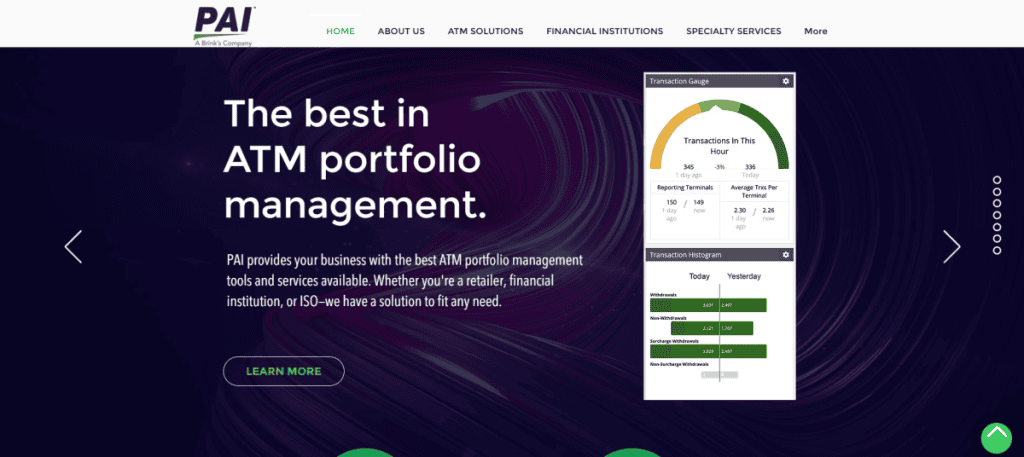
A core component of PAI’s offerings is its ATM Services Group, which delivers end-to-end solutions for businesses seeking to deploy and manage ATMs. This includes the provision of hardware, software, maintenance, and cash management services, ensuring seamless operation and enhanced customer convenience. The company’s proprietary portfolio management tool, PAI Reports, provides clients with real-time insights and control over their ATM networks, facilitating efficient management and optimization.

In the field of payment processing, PAI has traditionally offered services like credit and debit card handling, electronic check approval, and mobile payment options. These services aim to meet the varied requirements of small and medium enterprises from different sectors. It is important to highlight that in 2017, Clearent acquired PAI’s merchant services division, resulting in a strategic emphasis on their ATM services.

Financially, It has shown strong performance, with yearly revenues projected to be between $100 million and $500 million. The firm has around 284 employees, indicating its significant role in the financial services industry.

In April 2021, The Brink’s Company, a worldwide leader in comprehensive cash management, secure logistics, and payment solutions, acquired PAI. This purchase sought to improve PAI’s abilities and broaden its range of services, utilizing Brink’s vast resources and knowledge.

Company Profile | Payment Alliance International Review

PAI, established in 2005 and headquartered in Louisville, Kentucky, has become a leading provider of electronic payment processing and ATM services in the United States. The company offers a comprehensive suite of financial solutions, including credit and debit card processing, electronic check authorization, and extensive ATM network management.

PAI’s core expertise lies in delivering end-to-end ATM services. This encompasses the provision of hardware, software, maintenance, and cash management, ensuring seamless operation for businesses and enhanced convenience for customers. The company’s proprietary portfolio management tool, PAI Reports, offers clients real-time insights and control over their ATM networks, facilitating efficient management and optimization.

In the payment processing sector, it has traditionally offered services like credit and debit card transactions, electronic check verification, and mobile payment systems. These services address the varied requirements of small and medium enterprises in different sectors. In 2017, Clearent acquired PAI’s merchant services division, leading to a strategic emphasis on their ATM services.

Organizationally, it functions as a privately owned firm. In April 2021, The Brink’s Company, a worldwide leader in complete cash management, secure logistics, and payment services, purchased PAI for around $213 million. This acquisition was intended to bolster Brink’s ability in the ATM services field, creating a platform of proprietary offerings and broadening its presence to more than 100,000 ATM service sites across the U.S. The incorporation of PAI’s services into Brink’s current operations is anticipated to deliver a more complete and tech-savvy selection of bundled ATM services to U.S. retailers, banks, and credit unions, thus enhancing the value of their ATM networks.
Payment Alliance International Review

Service Offerings

PAI has established itself as a leading provider of comprehensive ATM services and payment processing solutions, catering to a diverse clientele that includes retailers, financial institutions, and independent sales organizations (ISOs).

ATM Services

PAI offers a full spectrum of ATM services designed to meet the varied needs of its clients:

Full-Service Solutions: PAI offers comprehensive ATM solutions that include hardware sourcing, software integration, cash management, transaction handling, bank sponsorship, maintenance, and cash-in-transit services. This comprehensive strategy guarantees smooth functioning and improved customer ease.

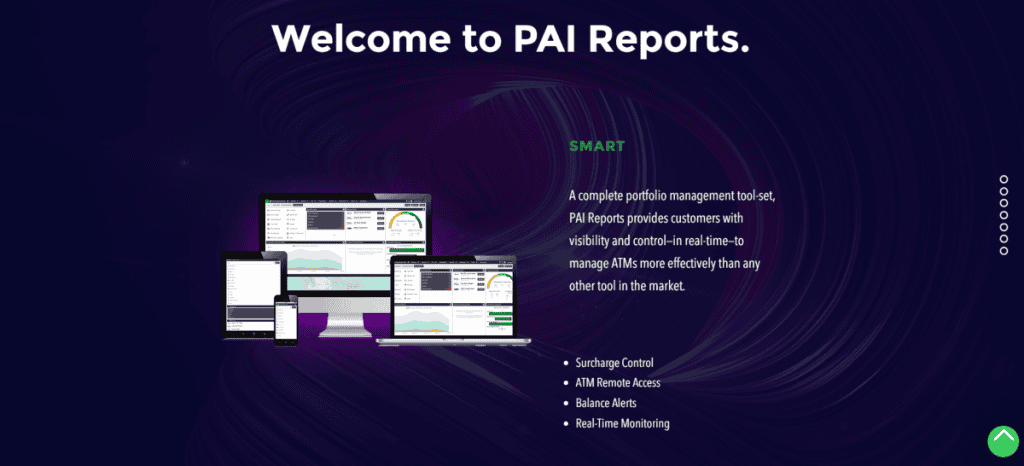
Proprietary Tools: A standout feature of PAI’s service offering is its proprietary portfolio management tool, PAI Reports. This platform delivers real-time visibility and control over ATM networks, enabling clients to monitor performance, manage cash levels, and optimize operations effectively. The tool includes features such as automated alerts, cash management tools, surcharge pricing control, and remote terminal management access, all accessible via a user-friendly interface.

Merchant Services (Pre-Acquisition by Clearent)

Prior to the acquisition of its merchant services division by Clearent in 2017, PAI offered a range of payment processing services:

Payment Processing Capabilities: PAI provided credit and debit card processing, electronic check approvals, and mobile payment options, meeting the varied requirements of small and medium-sized enterprises across multiple sectors.

Specialized Solutions for High-Risk Industries: Demonstrating a commitment to inclusivity, PAI extended its services to high-risk industries, such as firearm vendors. The company offered tailored solutions that addressed the unique challenges faced by these sectors, including specialized fraud prevention measures and compliance support.

Unique Services and Differentiators

PAI distinguishes itself in the competitive landscape through several unique services and features:

Vantage Technical Services: This proprietary service offers disruptive ATM cash-in-transit and maintenance solutions, delivering both lower costs and improved service levels. Staffed by industry veterans, Vantage is designed to meet the unique requirements of the ATM space, providing on-demand routing for cash loading and superior parts availability to reduce ATM downtime.

Mobile Application: PAI offers a mobile application that delivers advanced ATM reporting, allowing clients to utilize maintenance and monitoring tools while on the move. The application is compatible with both iOS and Android devices, allowing clients to remain updated and oversee their ATM portfolios efficiently from anywhere.

Customized Partner Programs: Itoffers industry-leading, revenue-generating, value-added solutions and customized partner programs that increase customer profitability, reduce operational expenses, and maximize uptime. These programs are designed to provide flexibility and tailored solutions to meet the specific needs of each client.

Financial Performance

Founded in 2005, PAI has shown remarkable financial growth and stability throughout the years. Based in Louisville, Kentucky, it has established itself as a prominent provider of electronic payment processing and ATM services across the United States.

Annual Revenue and Growth Trajectory

PAI’s annual revenues are estimated to be between $100 million and $500 million, reflecting its substantial presence in the financial services industry. This revenue range indicates a strong market position and consistent growth over time. The company’s ability to maintain such revenue levels showcases its effectiveness in meeting the demands of its diverse clientele, including merchants, financial institutions, and independent ATM deployers.

Employee Count and Company Size

According to the most recent data, PAI has around 284 employees. The size of this workforce highlights the organization’s ability to oversee its large-scale operations and provide extensive services nationwide. The varied skills of its staff allow PAI to provide an extensive array of financial services, including ATM network administration and payment processing solutions.

Key Financial Milestones and Investments

PAI has achieved several significant financial milestones that have contributed to its growth trajectory:

Acquisition by The Brink’s Company: In April 2021, It was acquired by The Brink’s Company, a global leader in total cash management and secure logistics, for approximately $213 million. This strategic acquisition aimed to enhance Brink’s capabilities in the ATM services sector, providing a platform of proprietary services and expanding its reach to over 100,000 ATM service locations in the U.S. The integration of PAI’s services with Brink’s existing operations is expected to offer a more comprehensive and technology-rich range of bundled ATM services to U.S. retailers, banks, and credit unions, thereby increasing the value of their ATM networks.

Strategic Acquisitions: PAI has broadened its range of services and market presence via targeted acquisitions. Significant acquisitions consist of TouchPoint 21 in February 2022, which improved PAI’s technological expertise, and ATM USA in April 2024, further reinforcing its standing in the ATM services sector. These acquisitions have allowed PAI to expand its customer base and provide more extensive services.
Payment Alliance International Review

Customer Experience

PAI has garnered a diverse array of customer experiences, reflecting both commendations and areas for improvement.

Positive Customer Feedback

Numerous clients value PAI’s reliable ATM services, emphasizing the firm’s dedication to ensuring operational effectiveness. The dependability of PAI’s ATM network guarantees steady access to cash, essential for both businesses and consumers. Moreover, users perceive PAI’s tools and interfaces as straightforward and easy to use, enabling smooth navigation and efficient handling of their financial transactions. For example, the PAI Reports platform provides live tracking and management, enabling clients to effectively manage their ATM portfolios.

Common Customer Complaints

Despite the positive feedback, some customers have reported concerns in specific areas:

Hidden Fees: A number of clients have expressed dissatisfaction with unexpected fees that were not clearly disclosed during the initial agreement. These unforeseen charges can lead to financial strain and erode trust between the company and its customers.

Cancellation and Refund Issues: Some users have encountered challenges when attempting to cancel services or obtain refunds. Reports indicate that the cancellation process can be cumbersome, with delays in processing refunds, causing frustration among customers.

Customer Service Concerns: There have been instances where clients felt that customer support was unresponsive or unhelpful in addressing their issues. Timely and effective communication is vital in resolving customer concerns, and lapses in this area can significantly impact customer satisfaction.

It’s important to note that PAI’s merchant services division was acquired by Clearent in 2017. Consequently, some of the complaints related to merchant services may pertain to the period before this acquisition. Post-acquisition, Clearent has taken over the servicing of PAI’s existing merchants, which may have influenced the nature and volume of customer feedback.

Industry Standing

It has positioned itself as an important participant in the financial services sector, especially in the areas of ATM portfolio management and payment processing solutions. Its market role, distinctive service provisions, and competitive environment are crucial for grasping its industry status.

Market Position Compared to Competitors

PAI is acknowledged as a top privately-owned ATM provider in the United States, delivering a complete range of services that meet the needs of various clients, such as financial institutions, retailers, and independent operators. The company’s broad network and service abilities give it a competitive edge in the ATM and payment processing industries.

Key Differentiators

Several factors distinguish PAI from its competitors:

Comprehensive ATM Services: It provides end-to-end ATM solutions, encompassing hardware procurement, software integration, transaction processing, maintenance, and cash management. This holistic approach ensures seamless operation and enhanced customer convenience.

Proprietary Tools: The company’s portfolio management tool, PAI Reports, offers clients real-time insights and control over their ATM networks, facilitating efficient management and optimization.

Customized Partner Programs: It offers revenue-generating, value-added solutions and tailored partner programs designed to increase customer profitability, reduce operational expenses, and maximize uptime.

Competitor Analysis

In the competitive landscape, PAI contends with several notable companies:

SumUp: Founded in 2012, SumUp is a London-based provider of mPOS solutions and card readers for offline retailers. With substantial funding and a strong presence in the mPOS market, SumUp focuses on empowering small businesses with easy-to-use payment solutions.

GreenBox POS: Established in 2016 in San Diego, GreenBox POS offers software and hardware point-of-sale solutions that enable businesses to accept cryptocurrency payments. As a public company, it leverages blockchain technology to provide secure and efficient payment processing services.

Ingenico: Founded in 1980 and headquartered in Suresnes, France, Ingenico specializes in POS hardware and software solutions for businesses. With a global footprint, Ingenico has been a longstanding player in the payment solutions industry, offering a wide range of products and services to merchants worldwide.

Every one of these rivals contributes unique advantages to the market. SumUp specializes in mobile payment options for small businesses, GreenBox POS emphasizes the incorporation of cryptocurrency transactions, and Ingenico provides a wide range of POS hardware and software solutions. It sets itself apart with its extensive ATM offerings, unique management solutions, and tailored partner initiatives, serving a wide array of clients while sustaining a strong foothold in the financial services sector.

Recent Developments

It has recently undertaken significant strategic initiatives to enhance its service offerings and expand its market presence.

Acquisition by Brink’s and Its Implications

In April 2021, The Brink’s Company, a worldwide leader in comprehensive cash management and secure logistics, purchased PAI for around $213 million. This purchase intended to enhance Brink’s strengths in the ATM services field, incorporating PAI’s vast network and technological knowledge. The merger was projected to produce approximately $30 million in adjusted EBITDA for 2021, highlighting its financial importance. Through the collaboration of resources, Brink’s and PAI aimed to provide a more complete array of services to banks, credit unions, and retailers in the U.S., thus increasing the value of their ATM networks.

Other Notable Acquisitions

PAI has pursued additional acquisitions to strengthen its market position:

TouchPoint 21: In February 2022, It acquired Texas-based TouchPoint 21, a company specializing in ATM and cash management outsourcing for financial institutions. This acquisition expanded PAI’s service model by incorporating TouchPoint 21’s expertise in advanced ATM and Interactive Teller Machine terminals, along with its in-house servicing and armored teams. The integration aimed to support financial institutions in their growth and retail branch transformation efforts.

ATM USA: In April 2024, PAI acquired ATM USA, LLC, one of the largest independent owners and providers of ATM managed services in the southeastern United States. This strategic move further solidified PAI’s presence in the region and expanded its portfolio of managed ATMs, enhancing its ability to deliver comprehensive services to a broader customer base.

Technological Advancements and Service Updates

PAI continues to innovate and update its services to meet evolving industry demands:

PAI Reports: The company offers PAI Reports, a market-leading technology platform that provides real-time visibility and control over ATM portfolios. This tool enables clients to maximize the effectiveness and profitability of their ATM networks by offering insights into transaction data, cash management, and terminal performance.

Mobile Application: PAI has created a mobile app that enables users to oversee essential ATM operations from a distance. This advancement allows clients to manage their ATM operations remotely, improving efficiency and responsiveness in operations.

Employee Insights

It has cultivated a workplace environment that elicits a range of employee experiences, highlighting both commendable aspects and areas necessitating improvement.

Positive Aspects of Working at PAI

Employees often praise PAI for its encouraging workplace environment and the friendship among coworkers. The organization promotes a familial environment, where colleagues work together efficiently and support each other in reaching shared objectives. This feeling of belonging fosters a supportive and interactive workplace.

Career Growth Opportunities

It offers avenues for career advancement, with some employees noting the potential for professional development within the organization. The company provides training and resources aimed at enhancing employees’ skills and competencies, thereby facilitating career progression. However, experiences regarding advancement opportunities appear to vary among employees.

Supportive Work Culture

The organization’s focus on work-life balance is clear through its ample paid leave policies and adaptable scheduling. Workers value the management’s recognition and flexibility regarding personal obligations, promoting a harmonious equilibrium between work and personal life. Moreover, it conducts events and initiatives that foster employee engagement and morale, thereby enriching the workplace culture.
Payment Alliance International Review

Areas for Improvement Based on Employee Reviews

Despite the positive aspects, certain areas have been identified for improvement:

Communication: Some employees have reported challenges with internal communication, citing instances where information flow between management and staff could be enhanced. Improving transparency and ensuring timely dissemination of information are crucial for organizational cohesion.

Workload Distribution: There are indications that workload distribution is uneven at times, leading to periods of high stress for certain employees. Addressing this issue by implementing effective workload management strategies can help in mitigating burnout and maintaining employee well-being.

Conclusion

PAI stands out in delivering extensive ATM services and creative solutions but encounters difficulties with customer transparency and the responsiveness of its services. Through calculated acquisitions and technological progress, PAI is poised for expansion. Its dedication to improving services guarantees a competitive position in the changing payment services sector.

FAQs

What core services does Payment Alliance International provide?

PAI specializes in comprehensive ATM solutions, including hardware, software, cash handling, maintenance, and transaction processing. It also offers proprietary tools like PAI Reports for portfolio management.

How has the acquisition by Brink’s influenced PAI’s operations?

The acquisition by Brink’s enhanced PAI’s capabilities, leveraging Brink’s resources to expand service reach, improve operational efficiencies, and deliver bundled solutions to financial institutions and retailers.

What are the common challenges faced by PAI customers?

Some customers report hidden fees, challenges with service cancellations, refund delays, and occasional customer support concerns, highlighting areas for potential improvement.

WePay Review

WePay Review

WePay, founded in 2008 by Rich Aberman and Bill Clerico, is a U.S.-based online payment service provider. It offers integrated and customizable payment solutions through its APIs, catering primarily to platform businesses such as crowdfunding sites, marketplaces, and small business software companies. In 2017, WePay was acquired by JPMorgan Chase, enhancing its capabilities and reach within the financial services sector. Lets read more about WePay Review.

In the current digital economy, payment processors such as WePay are essential for enabling smooth electronic transactions between companies and their clients. They allow merchants to receive different types of electronic payments, such as credit and debit cards, along with digital wallets, guaranteeing that money is transferred securely and efficiently from the customer’s account to the merchant’s account.

The significance of payment processors in contemporary business functions cannot be emphasized enough. They offer the framework that enables fast and secure transactions, crucial for upholding customer trust and satisfaction. Payment processors allow businesses to concentrate on their main activities by managing the intricacies of payment authorization, authentication, and settlement, relieving them of the responsibility of handling payment logistics. 

Additionally, payment processors provide improved security features, including encryption and fraud prevention, to safeguard sensitive financial information. This is essential for stopping unauthorized transactions and ensuring adherence to industry standards. Moreover, by enabling various currencies and payment options, payment processors promote international trade, enabling companies to broaden their scope and serve a varied clientele. 

Company Background: Evolution and Growth of WePay | WePay Review

WePay, established in 2008 by Rich Aberman and Bill Clerico, is a U.S.-based online payment service provider. The idea for WePay originated when Aberman faced challenges collecting funds from friends for his brother’s bachelor party, highlighting the need for a more efficient group payment solution. This experience led Aberman and Clerico to develop a platform that simplifies the process of collecting money from multiple individuals.

Initially, WePay focused on facilitating group payments and event ticketing. Over time, the company shifted its strategy to provide integrated payment solutions for platform-based businesses, including crowdfunding sites, marketplaces, and small business software companies. This pivot allowed WePay to cater to a broader range of clients by offering customizable payment services through its APIs.

In October 2017, JPMorgan Chase announced its plan to acquire WePay to enhance its payment processing capabilities for small businesses. The acquisition aimed to enable software providers to offer integrated payments to their small business clients, streamlining the payment process and reducing friction. The deal was reported to be valued at over $220 million, reflecting WePay’s significant growth and potential in the fintech industry.

After the acquisition, WePay remained a separate entity under JPMorgan Chase, functioning as the firm’s payments innovation incubator in Silicon Valley. This setup enabled WePay to preserve its innovative culture while utilizing the vast resources and client network of JPMorgan Chase. The collaboration allowed WePay to provide its partners and their merchants access to Chase’s network of four million small business customers, delivering improved payment solutions and assistance. 

WePay primarily targets platform-based enterprises, offering them tailored and integrated payment solutions. By providing APIs that facilitate the smooth integration of payment processing into diverse platforms, WePay empowers businesses to handle transactions effectively and safely. This strategy has drawn clients like GoFundMe, Meetup, and FreshBooks, who gain from WePay’s customized payment solutions that meet their unique operational requirements.

WePay Review

Key Features: Enhancing Payment Solutions with WePay

It offers a suite of features designed to streamline payment processing for platform-based businesses. These features enhance user experience, ensure security, and provide flexibility for both merchants and customers.

Integrated Payment Processing: WePay enables platforms to embed payment processing directly into their services, allowing users to complete transactions without being redirected to external sites. This seamless integration simplifies the payment process and enhances the overall user experience.

Customizable User Experience: It offers APIs that enable companies to customize the payment experience to match their brand image. This involves personalizing the appearance and tone of checkout pages, emails, and other user engagements, guaranteeing a uniform and branded experience for clients.

Fraud Detection and Risk Management: Security is a top priority for WePay. The platform employs advanced fraud detection systems, including machine learning algorithms, to monitor transactions and identify suspicious activities. By analyzing various data sources, WePay effectively mitigates potential risks, providing a secure environment for transactions.

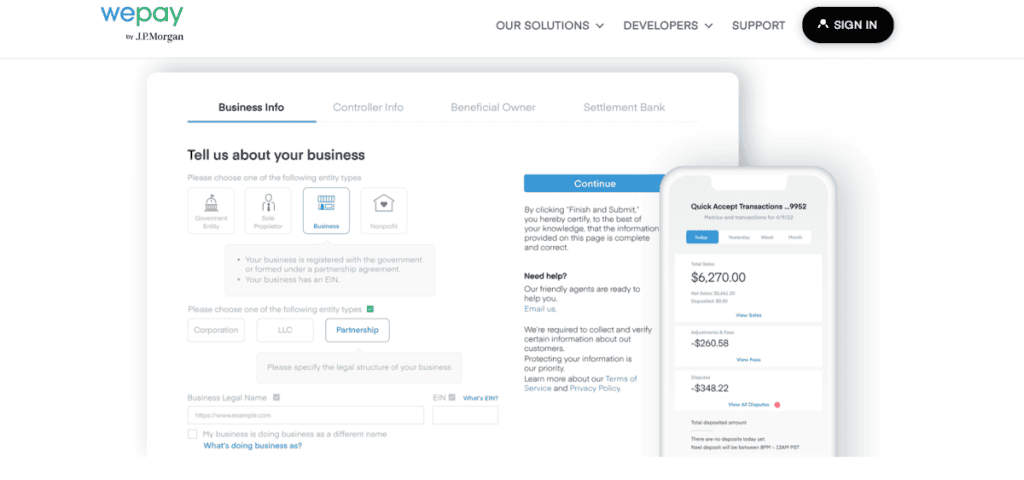
Instant Merchant Onboarding: WePay streamlines the onboarding process for merchants by handling necessary verifications and compliance checks. This efficient process enables merchants to start accepting payments quickly, reducing delays and enhancing operational efficiency.

Flexible Payout Options: Understanding the importance of timely access to funds, It offers flexible payout schedules, including same-day deposits. This feature supports better cash flow management for businesses.

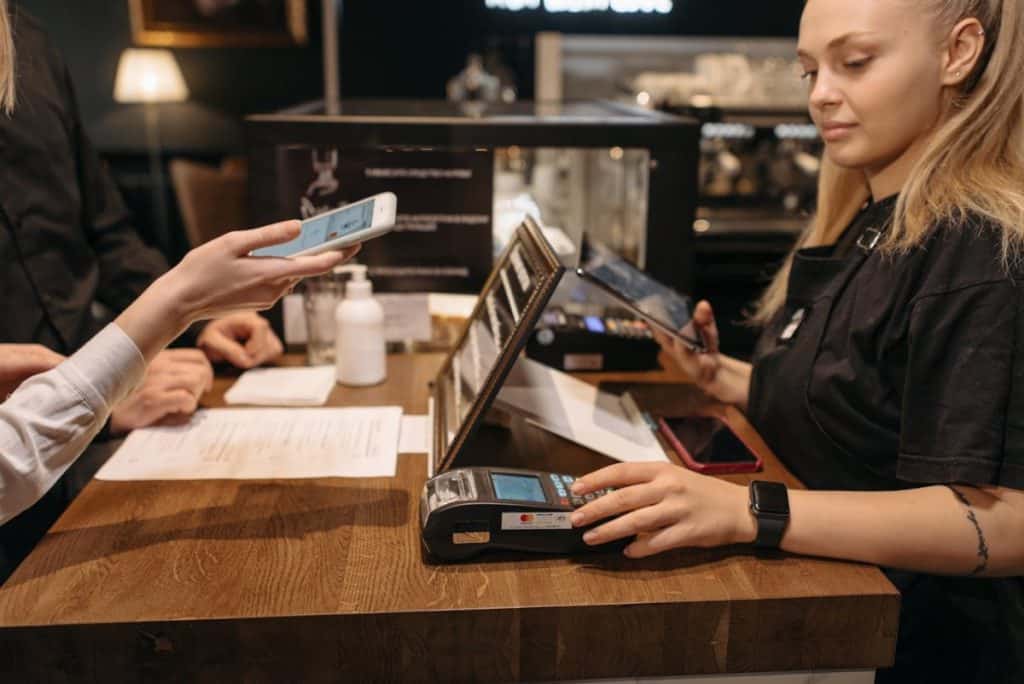
Mobile and Digital Wallet Integration: It facilitates transactions via mobile devices and digital wallets, such as Apple Pay and Android Pay. This feature allows businesses to meet the needs of technology-oriented customers, thereby improving convenience and accessibility. 

Through these strong capabilities, It delivers a complete solution that caters to the various requirements of platform-oriented businesses, providing a safe, adaptable, and accessible payment processing experience. 

Pricing Structure: Understanding WePay’s Cost Framework

WePay offers a tiered pricing structure designed to accommodate various business needs through its three primary products: Link, Clear, and Core.

Overview of Pricing Tiers: Link, Clear, and Core

WePay Link: This entry-level service allows platforms to refer merchants to Chase Integrated Payments. Merchants can begin accepting payments swiftly, with standard pricing set at 2.9% plus $0.25 per transaction. The integration process is straightforward, requiring minimal technical effort.

WePay Clear: Expanding on Link’s features, Clear allows platforms to incorporate payments straight into their services, providing a smoother user experience. This level offers extra customization capabilities and personalized risk management. Pricing is determined by quotes, enabling platforms to set the merchant prices they will impose on users in addition to WePay’s fees.

WePay Core: Designed for large payment facilitators, Core offers extensive customization, granting platforms total control over the user experience and transaction lifecycle. Pricing is aggressive and relationship-based, tailored to the specific needs of the platform.

Transaction Fees: Transaction fees with WePay vary depending on the chosen product tier and the specific agreement between the platform and WePay. For WePay Link, the standard fee is 2.9% plus $0.25 per transaction. For WePay Clear and Core, fees are typically determined through direct consultation, allowing for tailored pricing structures that align with the platform’s business model.

Customizable Pricing for Platform Partners: WePay offers platform partners the ability to determine their own pricing for merchants. This indicates that platforms have the ability to apply a markup to WePay’s standard rates, generating an extra revenue source. This adaptable pricing method allows platforms to match payment processing costs with their specific value propositions and market strategies.

Transparency Concerns: While WePay offers customizable pricing, some users have expressed concerns regarding transparency. The lack of publicly available detailed pricing information, especially for the Clear and Core tiers, necessitates direct consultation with WePay’s sales team. This approach can make it challenging for potential clients to compare WePay’s fees with those of other payment processors.

Integration and Compatibility: Seamless Payment Solutions with WePay

It provides a comprehensive suite of integration options and compatibility features, enabling businesses to seamlessly incorporate payment processing into their platforms. These capabilities are designed to enhance the user experience and support a variety of business models.

Developer-Friendly APIs: WePay provides powerful APIs that enable the incorporation of payment processing into multiple applications. These APIs are tailored for developers, offering comprehensible documentation and assistance for various programming languages such as PHP, Ruby, Python, Node.js, and Java. This adaptability enables developers to effectively create payment solutions customized to their unique platform needs.

Supported Platforms and Use Cases: WePay’s versatile APIs support a wide range of platforms and use cases, making it suitable for businesses of all sizes, from small enterprises to large corporations. The platform is compatible with both mobile and desktop applications, enabling businesses to offer seamless payment experiences across different devices. This adaptability ensures that WePay can meet the diverse needs of various industries and business models.

Mobile Point-of-Sale Solutions: To cater to businesses that require in-person payment capabilities, WePay provides mPOS solutions. These solutions enable merchants to accept payments using mobile devices, facilitating transactions in physical locations or on the go. By integrating mPOS functionality, businesses can expand their payment acceptance methods and enhance customer convenience.

Digital Wallet Compatibility: WePay enables integration with widely-used digital wallets, such as Apple Pay and Google Pay. This compatibility enables companies to provide their clients with multiple payment choices, addressing the increasing demand for digital wallet payments. By endorsing these payment methods, It assists businesses in keeping up with consumer trends and enhancing the overall payment experience.

WePay Review

Security and Compliance: Safeguarding Transactions with WePay

WePay prioritizes the security and compliance of its payment processing services, implementing advanced technologies and adhering to industry standards to protect sensitive data and mitigate risks.

Fraud Prevention Technologies: To protect transactions, It utilizes advanced fraud detection systems that observe and assess payment activities as they occur. These systems employ different data sources to detect and block unauthorized transactions, providing a safe atmosphere for merchants and customers alike.

Machine Learning for Risk Management: It utilizes machine learning algorithms to improve its risk management approaches. By examining transaction trends and behaviors, these models can identify anomalies that suggest fraudulent activity. This proactive strategy allows WePay to respond to new threats and constantly enhance its fraud prevention measures.

Compliance with Regulations like PCI DSS: WePay is a certified Level 1 PCI DSS (Payment Card Industry Data Security Standard) Compliant Service Provider, the highest level of certification available. This status requires annual independent security audits of processes and systems to ensure adherence to stringent data protection standards. Compliance with PCI DSS underscores WePay’s commitment to maintaining a secure payment environment.

Data Encryption and Secure Transactions: To protect sensitive information during transmission and storage, It employs state-of-the-art cryptographic algorithms. Data transmitted over networks is secured using HTTPS with RSA 2048-bit keys and SHA-256 certificates, while stored data is encrypted with AES 256-bit encryption, utilizing unique per-row keys. These measures ensure that transaction data remains confidential and secure from unauthorized access.

Customer Support and User Experience: Navigating WePay’s Assistance and Design

WePay offers various support channels and aims to provide a user-friendly experience for both businesses and their customers.

Support Channels: It provides support primarily through email and online documentation. Users can access a comprehensive Help Center on the WePay website, which includes articles and guides on various topics related to account management, payments, and troubleshooting. For technical inquiries, users are encouraged to submit questions via email. The support team, known as the “Customer Delight” team, is available from 6 am to 6 pm PST, Monday through Friday.

Common Feedback on Support Accessibility: Feedback from customers about WePay’s support availability is varied. Certain users value the informative articles found on the internet, as they can help with common problems. Nevertheless, the dependence on email for technical assistance has raised worries regarding response times. The lack of phone assistance can result in delays for users needing immediate help, causing frustration for certain customers. 

Moreover, there have been issues regarding customer support and difficulties in handling payments. Users have pointed out problems like slow resolutions and few communication options as aspects that require enhancement. 

Ease of Use for Businesses and End-Users: WePay is designed to offer a straightforward and intuitive experience for both businesses and their customers. The platform provides developer-friendly APIs, enabling businesses to integrate payment processing seamlessly into their applications. This integration allows end-users to complete transactions without being redirected to external sites, enhancing the overall user experience.

The onboarding process for merchants is streamlined, allowing businesses to start accepting payments quickly. For end-users, the checkout process is designed to be simple and efficient, minimizing the steps required to complete a transaction. This focus on simplicity benefits both merchants and customers by reducing friction during transactions.

Pros and Cons: Evaluating WePay’s Strengths and Weaknesses

WePay offers a range of features tailored to platform-based businesses, presenting both advantages and potential drawbacks.

Pros

Seamless Integration: It provides developer-friendly APIs that facilitate easy embedding of payment processing into platforms, allowing users to complete transactions without being redirected to external sites. This integration enhances the user experience by maintaining consistency and reducing friction during the payment process.

Customizable Solutions: The platform provides a wide range of customization possibilities, allowing companies to personalize the payment experience to match their brand identity. This involves adjusting checkout pages, emails, and various user interactions to provide a unified and branded experience for clients.

No Setup or Monthly Fees: WePay does not charge setup or monthly fees, making it a cost-effective option for businesses, particularly startups and small enterprises. This pricing structure allows businesses to utilize WePay’s services without incurring additional fixed costs.

Cons

Limited Direct Access for Small Businesses: It primarily partners with software platforms and independent software vendors, which means small businesses can only access WePay’s services through these partners. This indirect access may not be ideal for small businesses seeking a direct relationship with their payment processor.

Pricing Transparency Issues: The pricing information for WePay’s Clear and Core products is not available to the public and necessitates direct inquiry. This absence of clarity can hinder businesses from easily comparing WePay’s fees with other payment processors and from grasping the total cost of services in advance.

Customer Support Limitations: WePay’s customer support is primarily conducted via email, with no phone support available for technical inquiries. This reliance on email can lead to slower response times, which may be frustrating for businesses requiring immediate assistance.

Alternatives to WePay: Comparing Key Competitors

When evaluating WePay as a payment processor, it’s essential to consider how it compares to major competitors such as Stripe, PayPal Payments Pro, and Braintree. Each platform offers distinct features, pricing structures, and integration capabilities that cater to various business needs.

Stripe: Stripe is renowned for its developer-centric approach, providing comprehensive APIs that facilitate seamless integration of payment processing into applications. It supports a wide array of payment methods, including credit and debit cards, digital wallets like Apple Pay and Google Pay, and even international options such as Alipay. Stripe’s pricing is straightforward, typically charging 2.9% plus $0.30 per transaction, with no setup or monthly fees. This transparency appeals to businesses seeking clarity in processing costs. Additionally, Stripe offers advanced features like subscription billing, invoicing, and robust fraud prevention tools, making it suitable for businesses ranging from startups to large enterprises.

PayPal Payments Pro: PayPal Payments Pro enhances standard PayPal accounts by providing customizable checkout options and enabling direct payment acceptance on a website without redirecting users. It accommodates major credit and debit cards, PayPal transactions, and digital wallets. The service imposes a monthly fee (usually about $30) along with transaction fees of 2.9% and an additional $0.30. PayPal’s broad international presence and brand awareness can boost customer confidence and possibly raise conversion rates. Nonetheless, the extra monthly charge might be a factor for smaller companies or those with reduced transaction volumes.

Braintree: Acquired by PayPal, Braintree operates as a separate service offering a comprehensive payment platform with support for various payment methods, including credit and debit cards, PayPal, Venmo, Apple Pay, Google Pay, and even Bitcoin. It provides a seamless checkout experience with customizable options and robust security features. Braintree’s pricing aligns with industry standards, charging 2.9% plus $0.30 per transaction without monthly fees. Its integration capabilities and support for multiple payment methods make it a versatile choice for businesses aiming to offer diverse payment options to their customers.

WePay Review

Key Differences and Similarities

Integration and Customization: Stripe and Braintree provide APIs that are friendly for developers, allowing for significant customization of payment processes, which helps businesses craft personalized checkout experiences. PayPal Payments Pro provides customization options but might demand additional effort to reach an equivalent level of seamless integration.

Pricing Structure: Stripe and Braintree have similar transaction fees and do not charge monthly fees, making them cost-effective for businesses with varying transaction volumes. In contrast, PayPal Payments Pro imposes a monthly fee in addition to transaction fees, which could be a consideration for cost-sensitive businesses.

Payment Method Support: Braintree stands out by supporting a wide range of payment methods, including PayPal and Venmo, providing flexibility for customers. Stripe offers extensive international payment options but does not support PayPal payments. PayPal Payments Pro primarily focuses on PayPal and major credit/debit cards.

Global Reach: All three platforms hold a substantial global presence, yet PayPal’s large user base and brand awareness may provide benefits for companies aiming at international clients.

Conclusion

WePay stands out in smooth integration, personalization, and security, making it perfect for platform-oriented companies. Yet, some users might be worried about the lack of transparency in pricing and customer support. Its customized strategy benefits marketplaces and crowdfunding platforms, providing considerable value to companies that emphasize efficiency and a seamless payment process.

FAQs: Addressing Common Questions About WePay

Can individual small businesses use WePay directly?

No, individual small businesses cannot use WePay directly. It primarily partners with software platforms and independent software vendors (ISVs) to provide integrated payment solutions. Small businesses typically access WePay’s services through these partner platforms rather than establishing a direct relationship with WePay.

What platforms integrate best with WePay?

It is designed to integrate seamlessly with various platforms, including crowdfunding sites, online marketplaces, and software platforms that require built-in payment gateways. Its APIs are tailored for ISVs and SaaS providers, enabling them to offer customized payment solutions within their applications.

Does WePay support international transactions?

WePay’s support for international transactions is limited. It primarily serves merchants located in the United States and Canada. While it accepts payments from most domestic and international cards bearing major logos like Visa, Mastercard, and American Express, the ability to support merchants outside the U.S. and Canada varies between partner platforms. Merchants should consult their specific platform to confirm support for their country.

Venmo Review

Venmo Review

Venmo is a mobile payment service that enables users to transfer funds seamlessly through a smartphone application. Designed primarily for peer-to-peer transactions, Venmo allows individuals to split bills, share expenses, and make payments to friends and family with ease. Its user-friendly interface and social media-like features, such as transaction feeds and the ability to add notes or emojis to payments, have contributed to its widespread popularity. Lets read more about Venmo Review.

Established in 2009 by Andrew Kortina and Iqram Magdon-Ismail, Venmo was founded with the goal of making it easier for friends to split expenses. The payment processing firm, Braintree, purchased the company for $26.2 million in 2012. In 2013, PayPal acquired Braintree for $800 million, which resulted in Venmo becoming owned by PayPal. Since that time, it has functioned as a branch of PayPal, taking advantage of its wide infrastructure and resources. 

Venmo has broadened its offerings under PayPal’s ownership to go beyond just person-to-person transactions. The platform currently provides functions such as the Venmo Debit Card, enabling users to use their Venmo balance at Mastercard-accepting merchants, and the option to make purchases through approved partner apps and websites. These advancements have strengthened Venmo’s standing as a flexible and convenient payment option in the digital era. 

Getting Started with Venmo | Venmo Review

Venmo is a widely used mobile payment service that simplifies peer-to-peer transactions, making it easy to send and receive money among friends and family. Getting started with Venmo involves a straightforward process encompassing account creation, linking financial accounts, and implementing security measures.

Account Creation Process

To start using Venmo, get the app from either the App Store or Google Play Store. Access the application and choose how to sign up, either by providing your email or through Facebook. You must make a strong password that is between 8 and 20 characters long, and it must contain at least one number or symbol. Once you have created your password, confirm your phone number and email address in order to finish the initial setup.

Linking Bank Accounts and Cards

Once your account is set up, linking a bank account or card is essential for transactions. Navigate to the “Me” tab in the app, then to the “Wallet” section, and tap “Add a bank or card.” You can choose to add a bank account or a debit/credit card. For bank accounts, it offers two verification methods: instant and manual. Instant verification requires you to log in to your bank through the app, while manual verification involves Venmo sending microtransfers to your account, which you confirm by entering the exact amounts in the app. This process ensures that you have access to the linked bank account.

User Verification and Security Measures

Venmo places importance on user security by putting in place multiple measures. The application utilizes encryption to safeguard your financial details and provides two-factor authentication to protect your account. It is recommended for users to create a PIN code or activate biometric features such as Face ID or fingerprint recognition to enhance security. Moreover, it gives you the ability to personalize privacy preferences for transactions, allowing you to choose who has access to your payment history.

Venmo Review

Core Features of Venmo

Venmo offers a range of features that make peer-to-peer financial transactions simple and engaging. Its core functionalities include sending and receiving payments, a social feed for transaction sharing, bill splitting and group payments, and managing balances with bank transfers.

Sending and Receiving Payments

It allows users to easily send and receive money without any hassle. Users can send money to others through their username, phone number, or email by connecting their bank account, debit card, or credit card. Transactions are usually immediate, enabling fast monetary transfers between loved ones.

Social Feed and Transaction Sharing

A distinctive aspect of Venmo is its social feed, where users can share their transactions with friends. Each payment can include a note or emoji, adding a personal touch to financial exchanges. Users have control over their privacy settings, choosing to make transactions public, visible to friends, or private.

Splitting Bills and Group Payments

It simplifies splitting expenses among multiple people. Users can request payments from several contacts simultaneously, making it easy to divide costs for shared activities like dining out or group trips. This feature ensures transparency and convenience in managing group expenses.

Venmo Balance and Bank Transfers

Money received via Venmo is kept in the user’s Venmo account. Customers have the option to use this remaining amount for upcoming purchases or move it to a connected bank account. Regular bank transfers do not cost anything and usually require one to three business days to be completed. It provides quick transfers to qualifying bank accounts or debit cards for a small fee to enable instant access.

Additional Services Offered by Venmo

Beyond its core functionalities, it offers additional services that enhance user experience and expand its utility. These services include the Venmo Debit Card, Venmo Credit Card, cryptocurrency transactions, and integration with businesses and online merchants.

Venmo Debit Card: Features and Benefits

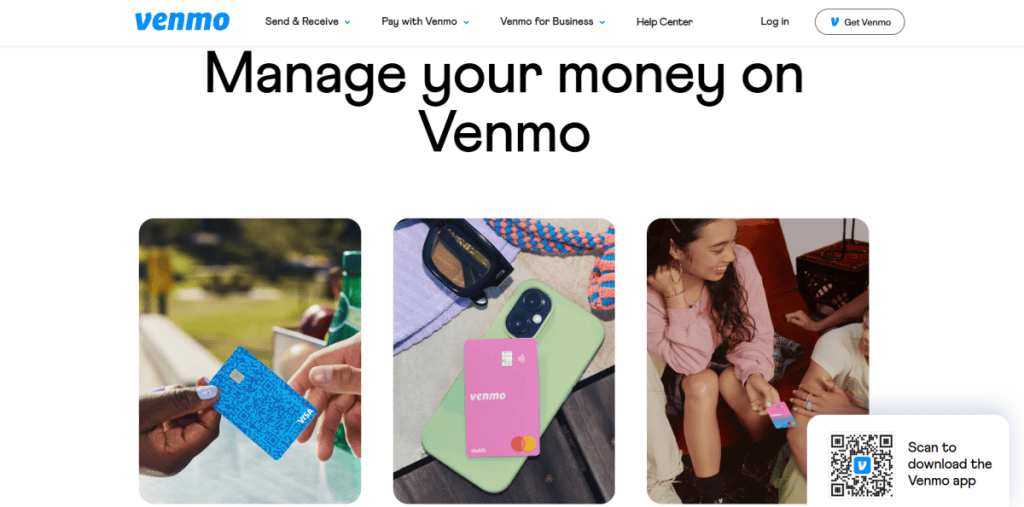
The Venmo Debit Card, linked directly to a user’s Venmo balance, allows for in-store and online purchases wherever Mastercard is accepted. Users can personalize their cards by choosing from various color options. The card supports contactless payments, enabling quick and secure transactions. Additionally, it offers fee-free withdrawals at over 40,000 MoneyPass ATMs across the U.S. However, withdrawals from non-MoneyPass ATMs may incur fees. The card also provides cashback rewards at select merchants, with offers that can be activated through the Venmo app.

Venmo Credit Card: Rewards and Usage

The Venmo Credit Card, provided by Synchrony Bank, provides a specialized cashback scheme. Customers receive a 3% cashback reward for their most frequented spending type, 2% for the next highest category, and 1% for all other transactions. Types range from groceries to dining, travel, and beyond. Cashback rewards are added to the user’s Venmo account balance automatically at the conclusion of each statement period. The card has a distinctive QR code on the front, making it simple to make payments and send friend requests on Venmo. The Venmo Credit Card does not have an annual fee.

Cryptocurrency Transactions within Venmo

It enables users to buy, sell, and hold cryptocurrencies directly within the app. Supported cryptocurrencies include Bitcoin, Ethereum, Litecoin, and Bitcoin Cash. Users can start with as little as $1 and monitor their crypto portfolio through the app.

Fees and Costs of Venmo

It is a popular mobile payment service that offers various features to its users. Understanding the associated fees is essential for effective financial management.

Standard Transaction Fees

Sending money with a Venmo personal account is free when using a linked bank account, debit card, or Venmo balance. Nevertheless, a 3% charge applies when transferring funds with a connected credit card. Getting money into your Venmo account is free, no matter what payment method the sender chooses to use.

Instant Transfer Fees

It offers two types of bank transfers: standard and instant. Standard transfers are free and typically take 1-3 business days to complete. For immediate access to funds, it provides instant transfers to eligible bank accounts or debit cards, which usually occur within 30 minutes. This service incurs a 1.75% fee per transaction, with a minimum fee of $0.25 and a maximum fee of $25.

Fees Associated with Debit and Credit Card Usage

Utilizing a debit card for transferring money via Venmo does not incur any fees. Nevertheless, there is a 3% fee for each transaction when transferring money with a credit card. Furthermore, certain credit card companies might categorize Venmo transactions as cash advances, resulting in possible extra charges and increased interest rates. It’s recommended to contact your credit card provider to clarify any additional fees that could be incurred.

Comparison with Competitors’ Fee Structures

When compared to other peer-to-peer payment services, Venmo’s fee structure is competitive. For instance, Cash App charges a 3% fee for sending money using a credit card and offers instant transfers with fees ranging from 0.5% to 1.75%. PayPal charges a 2.9% fee plus $0.30 per transaction for credit card payments and has similar instant transfer fees. Zelle, on the other hand, charges no fees but lacks the social features Venmo provides.

Venmo Review

Security and Privacy on Venmo

Venmo, a widely used mobile payment platform, emphasizes security and privacy to protect its users’ financial information. Understanding its data encryption methods, privacy settings, historical security challenges, and best practices for user safety is essential for informed usage.

Data Encryption and Security Protocols

It utilizes strong security measures to protect user data. The system uses encryption to safeguard transactions and personal details, guaranteeing that sensitive data is securely stored and transmitted. Furthermore, it provides multifactor authentication as an extra security measure, making users confirm their identity through various methods before gaining account access.

Privacy Settings and User Control

It provides users with control over their transaction visibility. By default, transactions are public, allowing others to view payment details. However, users can adjust privacy settings to make transactions visible only to friends or entirely private. It’s advisable to review and modify these settings to align with personal privacy preferences.

Past Security Incidents and Company Responses

In previous times, It has been criticized for its automatic public transaction settings, causing worries about privacy. In reaction, the company improved user awareness about privacy controls and modified settings for increased transparency and user control. Moreover, it has tackled concerns about unauthorized transactions by introducing more stringent security measures and offering users tools to oversee and protect their accounts.

Recommendations for Enhancing User Security

To maximize security while using Venmo, consider the following practices:

Enable Multifactor Authentication: Activate MFA in your account settings to add an extra verification step during login.

Adjust Privacy Settings: Set your transactions to “Friends” or “Private” to limit visibility.

Monitor Account Activity: Regularly review your transaction history for any unauthorized activity.

Use Strong, Unique Passwords: Create complex passwords and avoid reusing them across multiple platforms.

Be Cautious with Public Wi-Fi: Avoid conducting transactions over unsecured networks to reduce the risk of data interception.

By implementing these measures, users can enhance their security and privacy while utilizing Venmo’s services.

User Experience on Venmo

It has become a popular choice for peer-to-peer transactions, largely due to its user-friendly design and social features. Evaluating its mobile app interface, customer support, user feedback, and accessibility considerations provides a comprehensive view of the user experience.

Mobile App Interface and Usability

The mobile app of Venmo has been created with simplicity and user-friendliness as top priorities. The layout of the interface is simple and easy to navigate, making it simple for users to seamlessly send and receive payments. The main page shows a social stream of activities, promoting a feeling of belonging among members. Still, a few users have observed that the social feed’s visibility could cause distractions, prompting requests for a streamlined method to prioritize financial transactions over social interactions.

Customer Support and Service Quality

It provides customer assistance through multiple avenues, such as an in-app help center, email support, and a detailed FAQ section on their website. Although these resources address various subjects, some users have experienced delays in getting answers to their questions. The lack of live chat or phone support may hinder users looking for immediate help. Improving customer support’s responsiveness and availability can boost overall user satisfaction.

User Feedback and Satisfaction Ratings

User feedback on Venmo is generally positive, with many appreciating the convenience and speed of transactions. The app’s integration with social features adds a unique dimension to financial interactions. However, concerns have been raised regarding privacy settings, as transactions are public by default. Users are advised to adjust their privacy settings to control the visibility of their transactions and maintain privacy.

Accessibility and Inclusivity Considerations

Venmo’s interface is largely intuitive, but improvements in accessibility features, such as better support for screen readers, could make the app more inclusive for users with disabilities. Addressing these considerations would further enhance Venmo’s user experience.

Limitations and Drawbacks of Venmo

While it offers a convenient platform for peer-to-peer transactions, it has certain limitations that users should be aware of.

Geographic Restrictions (U.S. Only)

It is only accessible for individuals located in the United States. This restriction prevents people outside the U.S from creating or using Venmo accounts, and international transactions are not permitted. Alternative platforms such as PayPal or TransferWise might be a better option for users needing international money transfers.

Transaction Limits and Caps

Venmo imposes transaction limits to mitigate potential fraud and ensure security. For unverified accounts, the weekly spending limit is $299.99. Upon identity verification, this limit increases to $4,999.99 per week for person-to-person payments and $6,999.99 per week for authorized merchant payments. These caps may be restrictive for users needing to transfer larger sums, necessitating the use of other financial services for substantial transactions.

Potential for Scams and Fraud

Even with security measures in place, it is still vulnerable to scams and fraudulent activities. Phishing attempts and overpayment scams are popular fraud schemes, with scammers pretending to be Venmo to obtain personal details and tricking users into refunding money for fake transactions. To reduce these risks, users should be careful, double-check recipient information, and refrain from interacting with unknown individuals.

Dependency on Internet Connectivity

It operates entirely online, requiring a stable internet connection for all transactions. In areas with limited or unreliable internet access, users may face challenges in sending or receiving payments. This dependency can be inconvenient during travel or in regions with poor connectivity, potentially hindering timely financial exchanges.

Comparison with Competitors

It operates in a competitive landscape alongside major players like PayPal, Cash App, and Zelle. Understanding how it compares to these alternatives can help users choose the platform that best suits their needs.

Overview of Major Competitors

PayPal: A global online payment system facilitating transactions between individuals and businesses.

Cash App: A mobile payment service by Block, Inc., allowing users to send money, invest in stocks, and buy cryptocurrency.

Zelle: A peer-to-peer payment network integrated with many U.S. banks, enabling instant transfers between bank accounts.

Feature-by-Feature Comparison

Transaction Speed:

Venmo: Standard transfers take 1-3 business days; instant transfers are available for a fee.

PayPal: Similar to Venmo, with standard and instant transfer options.

Cash App: Offers instant transfers for a fee; standard transfers are free.

Zelle: Provides instant transfers at no cost.

Fees:

Venmo: Charges 3% for credit card transactions; instant transfers incur a 1.75% fee.

PayPal: Charges 2.9% plus $0.30 for credit card transactions; instant transfers have a 1.75% fee.

Cash App: Charges 3% for credit card transactions; instant transfers have a fee ranging from 0.5% to 1.75%.

Zelle: No fees for sending or receiving money.

Additional Features:

Venmo: Social feed for transactions, Venmo Debit and Credit Cards, cryptocurrency transactions.

PayPal: Supports international transactions, extensive merchant services, PayPal Credit.

Cash App: Offers stock and Bitcoin investments, Cash Card for spending.

Pros and Cons Relative to Alternatives

Venmo: Social features and ease of use stand out but lack international reach.

PayPal: Comprehensive for global transactions but has higher fees.

Cash App: Unique investment options but fewer banking integrations.

Zelle: Free and instant but lacks additional features like debit cards or social interactions.

Market Position and User Base Analysis

It remains a favorite for social, peer-to-peer transactions among younger demographics, whereas competitors like PayPal cater to a broader, global audience. Cash App is ideal for users interested in financial growth tools, while Zelle dominates bank-linked transfers.

Venmo Review

Conclusion

Venmo provides a convenient platform for individuals to easily send money to each other, along with special social functions, low fees, and additional offerings such as debit and credit cards. Even though it has constraints related to geography and privacy, its usefulness and incorporation make it beneficial for users in the United States. Ideal for individuals looking for smooth, interactive, and reliable payment options.

Frequently Asked Questions

Is Venmo safe to use for financial transactions?

Yes, Venmo is secure, using encryption to protect user data and offering multifactor authentication for added security. Best practices include enabling privacy settings, using strong passwords, and avoiding public Wi-Fi for transactions.

Are there any fees for sending money through Venmo?

Sending money from a linked bank account or debit card is free, while credit card transactions incur a 3% fee. Instant transfers to bank accounts or debit cards cost 1.75%, while standard transfers are free.

Can I use Venmo for international transactions?

No, Venmo is available only in the U.S. For international transfers, consider alternatives like PayPal or Wise.

LevelUp Review

LevelUp Review

LevelUp, established in 2011 by Boston-based startup SCVNGR, emerged as an innovative mobile payment and ordering platform designed to streamline transactions between consumers and merchants. By allowing users to link their credit or debit cards to a unique QR code within the LevelUp app, it enabled quick and secure payments at participating businesses. This approach not only simplified the payment process but also integrated customer loyalty programs, offering users incentives such as “First-Time Visit Specials” and credits for repeat purchases. Lets read more about LevelUp Review.

In 2018, LevelUp was acquired by Grubhub for $390 million, marking a significant development in the mobile payment industry. This acquisition aimed to enhance Grubhub’s capabilities by incorporating LevelUp’s technology, thereby improving the ordering and payment experiences for both restaurants and customers.

LevelUp’s importance in the mobile payment sector is attributed to its easy-to-use interface and the incorporation of customer engagement features into payment processing. Through providing merchants with in-depth analytics and reporting, it gave them valuable information on customer behavior to help customize marketing strategies effectively. Moreover, LevelUp’s feature for ordering ahead enabled customers to place their orders ahead of time, decreasing wait times and improving overall satisfaction.

Despite its innovative contributions, the LevelUp app was discontinued on September 30, 2021. However, its legacy persists through the integration of its technology into Grubhub’s platform, continuing to influence the mobile payment landscape by offering seamless and efficient transaction solutions.

Company Background: History and Evolution of LevelUp | LevelUp Review

LevelUp, founded in 2011 by Boston-based startup SCVNGR, emerged as a pioneering mobile payment and ordering platform aimed at enhancing transactions between consumers and merchants. Initially, it operated as a daily deals platform but swiftly transitioned to focus exclusively on mobile payments, reflecting its adaptability to market demands.

The LevelUp app enabled users to connect their credit or debit cards to a special QR code, making it easy and safe to make payments at select stores. This new development not just made paying easier, but also incorporated customer loyalty initiatives like “First-Time Visit Specials” and rewards for repeat buying, making it more appealing. By 2013, it had amassed about 200,000 users and established partnerships with 3,000 companies, showcasing its increasing impact in the mobile payment industry.

In July 2018, Grubhub, a leading online food delivery platform, announced its acquisition of LevelUp for $390 million. This strategic move aimed to enhance Grubhub’s integration with restaurants, particularly by incorporating LevelUp’s technology into its point-of-sale systems. The acquisition enabled Grubhub to offer a more comprehensive ordering and fulfillment solution, benefiting both restaurants and customers through improved efficiency and user experience.

Post-acquisition, LevelUp’s technology was integrated into Grubhub’s platform, leading to the discontinuation of the standalone LevelUp app on September 30, 2021. This integration allowed Grubhub to leverage LevelUp’s expertise in mobile payments and customer engagement, thereby strengthening its position in the competitive food delivery and mobile payment industries. The merger exemplifies how strategic acquisitions can drive innovation and enhance service offerings in the rapidly evolving digital marketplace.

LevelUp Review

Core Features of LevelUp

LevelUp offers a suite of features designed to enhance the payment experience for both consumers and merchants.

Mobile Payment Solutions: LevelUp enables users to link their credit or debit cards to a unique QR code within its app, facilitating quick and secure payments at participating businesses. This method streamlines transactions, allowing customers to pay by simply scanning their QR code at the point of sale.

Customer Engagement Tools: Beyond payment processing, it provides tools to boost customer engagement. Merchants can implement loyalty programs, offering incentives such as “First-Time Visit Specials” and credits for repeat purchases. These features encourage customer retention and foster brand loyalty.

Data Analytics and Reporting: LevelUp provides merchants with in-depth analytics and reporting features. Businesses obtain important information about purchasing habits by monitoring customer behavior and transaction patterns. This approach using data allows merchants to customize marketing tactics and efficiently improve operations.

Order Ahead and Digital Ordering Capabilities: The platform’s order-ahead functionality allows customers to place orders in advance through the app, reducing wait times and enhancing convenience. This feature is particularly beneficial for busy establishments, as it streamlines the ordering process and improves overall customer satisfaction.

Integration with POS Systems: It integrates seamlessly with various POS systems, enabling businesses to incorporate mobile payments without overhauling existing infrastructure. This compatibility ensures a smooth transition to digital payment solutions, minimizing disruptions and facilitating efficient operations.

User Experience of LevelUp

It has been recognized for its user-friendly interface and seamless integration into daily transactions.

Interface Design and Usability

The LevelUp app features a clean and intuitive design, allowing users to link their payment methods and generate a unique QR code for transactions effortlessly. This straightforward approach simplifies the payment process, enabling quick and secure payments at participating businesses. The app’s layout is designed to minimize cognitive load, ensuring that users can navigate through its features without confusion.

Customer Feedback and Satisfaction Levels

In general, users have been satisfied with the convenience and efficiency of LevelUp. The capacity to easily make payments and access loyalty rewards via the app has been greatly valued. Nonetheless, some users have experienced technical problems like periodic malfunctions or challenges with scanning QR codes, affecting their overall experience. In spite of these worries, the general feedback skews positive, emphasizing the app’s ability to simplify payment procedures.

Merchant Experiences and Testimonials

Merchants have found LevelUp beneficial in enhancing customer engagement and streamlining operations. The integration of mobile payments with loyalty programs has enabled businesses to attract and retain customers more effectively. Additionally, the detailed analytics provided by LevelUp offer valuable insights into customer behavior, assisting merchants in tailoring their services and marketing strategies. Some merchants have noted challenges with customer support and technical issues, but many acknowledge the platform’s positive impact on their business operations.

Security Measures of LevelUp

Ensuring the security of financial transactions is paramount for any mobile payment platform. It has implemented several measures to protect user data and maintain trust among its users and merchants.

Data Encryption and Storage Practices

LevelUp employs robust encryption protocols to safeguard sensitive information during transmission and storage. By utilizing advanced encryption standards, the platform ensures that user data, including payment details, is securely transmitted between devices and servers. This approach minimizes the risk of data breaches and unauthorized access. Additionally, it adopts secure storage practices, ensuring that sensitive information is stored in encrypted formats, further enhancing data protection.

Compliance with Industry Standards

Following industry standards is essential to uphold a secure payment environment. It adheres to the Payment Card Industry Data Security Standard (PCI DSS), which sets out security criteria for companies that deal with credit card data. LevelUp shows its dedication to safeguarding user information and ensuring a secure payment process by meeting these criteria. Adhering to PCI DSS includes putting in place actions such as securing networks, safeguarding cardholder information, and consistently monitoring and testing networks.

Measures Against Fraud and Unauthorized Transactions

To combat fraud and unauthorized transactions, LevelUp has implemented several security measures:

Tokenization: This process replaces sensitive payment information with unique tokens, rendering the original data inaccessible to unauthorized parties. Even if intercepted, these tokens are meaningless without the corresponding decryption mechanism.

Multi-Factor Authentication: LevelUp incorporates MFA to verify user identities, adding an extra layer of security. This approach requires users to provide multiple forms of verification before accessing their accounts or completing transactions, reducing the likelihood of unauthorized access.

Real-Time Monitoring: The platform continuously monitors transactions for unusual patterns or behaviors that may indicate fraudulent activity. This proactive approach enables the swift detection and prevention of potential security threats.

It aims to offer a safe and dependable mobile payment experience to its users and merchants by incorporating these security measures. The dedication of the platform to safeguarding data and preventing fraud highlights its focus on upholding trust and integrity in the mobile payment sector.

LevelUp Review

Pricing and Fees

LevelUp offers a competitive pricing structure designed to appeal to merchants seeking cost-effective mobile payment solutions.

Transaction Fees for Merchants: LevelUp charges merchants a flat transaction fee of 1.95% per transaction, which is lower than the industry average. This rate is particularly advantageous for businesses with high transaction volumes, as it reduces the overall cost of payment processing. Additionally, LevelUp operates on a month-to-month service agreement without any cancellation fees, providing flexibility for merchants.

Costs Associated with Hardware and Setup: To facilitate mobile payments, LevelUp requires merchants to invest in specific hardware. The company offers a LevelUp scanner for $50 or a LevelUp tablet for $100. These are one-time costs, and there are no equipment leasing fees. This straightforward pricing model allows merchants to adopt LevelUp’s system without significant upfront expenses.

Comparison with Competitors in the Mobile Payment Sector: LevelUp’s pricing is competitive in comparison to other mobile payment providers. For example, typical credit card processors typically impose a fee of about 2.9% per transaction, in addition to a set fee. On the other hand, LevelUp’s low 1.95% fee provides significant cost reduction. Furthermore, LevelUp stands out from competitors by not having monthly or annual fees and offering flexible service agreements, giving customers more benefits.

Market Reach and Adoption

LevelUp has established a significant presence in the mobile payment industry, marked by a substantial number of participating merchants and widespread geographic distribution.

Number of Participating Merchants and Locations

As of 2014, LevelUp was accepted at over 14,000 locations, indicating a broad adoption among businesses seeking to enhance their payment systems. This extensive network includes a diverse range of merchants, from local cafes to larger restaurant chains, reflecting LevelUp’s versatility and appeal across various business sizes and types.

Geographic Distribution and Market Penetration

LevelUp’s services have been implemented in multiple major cities across the United States. Key markets include Boston, Chicago, New York City, San Francisco, and Philadelphia, among others. This strategic geographic distribution has enabled LevelUp to penetrate diverse markets, catering to both urban centers and suburban areas. The platform’s adaptability to different market needs has contributed to its widespread acceptance and utilization.

User Base Statistics and Growth Trends

In 2013, around 200,000 users had joined LevelUp, showing an increasing interest among consumers in mobile payment options. The growth of the platform’s merchant network paralleled the expansion of its user base, demonstrating a direct link between merchant acceptance and consumer engagement. This upward trend highlights the growing need for convenient and efficient payment options among consumers.

Customer Support and Service

It has established a comprehensive customer support system to assist both users and merchants, aiming to ensure a seamless experience with its mobile payment platform.

Availability and Responsiveness of Support Channels

It provides various support options, such as phone assistance and an online customer service form, to quickly handle inquiries and problems. A dedicated account manager is assigned to every client, offering personalized assistance with a direct point of contact. This setup enables quick problem-solving and effective communication, demonstrating LevelUp’s dedication to delivering high-quality service.

Quality of Assistance Provided to Users and Merchants

The support quality offered by LevelUp is typically highly regarded. Merchants receive support on loyalty programs and effective business strategies, increasing their involvement with the platform. Users value the quick replies and efficient answers provided by the support team. Nevertheless, certain feedback highlights difficulties in contacting support agents during busy periods, implying the need for better management of high-volume periods.

Analysis of Common Complaints and Resolutions

While LevelUp maintains a positive reputation, certain complaints have been noted:

Technical Glitches: Some users have reported issues such as app crashes or difficulties during transactions. It addresses these by providing troubleshooting assistance and releasing timely updates to enhance app stability.

Customer Service Delays: A few merchants have experienced delays in receiving support during busy periods. It is working to improve response times by expanding its support team and optimizing internal processes.

Billing Issues: Instances of incorrect charges have been reported. It investigates these cases thoroughly, offering refunds or adjustments as necessary to resolve billing discrepancies.

Pros and Cons of LevelUp

LevelUp, as a mobile payment platform, offers a range of benefits to both consumers and merchants, while also presenting certain limitations that warrant consideration.

Advantages for Consumers

Convenience: It allows users to connect their credit or debit cards to a distinct QR code in the application, making it easier to make fast and safe payments at participating establishments. This simplifies the payment procedure by removing the requirement to have physical cards or cash on hand.

Loyalty Rewards: The platform integrates customer engagement tools, allowing consumers to earn rewards and discounts through loyalty programs offered by merchants. This incentivizes repeat business and enhances customer satisfaction.

Order Ahead Feature: LevelUp’s order-ahead functionality permits users to place orders in advance, reducing wait times and improving the overall dining or shopping experience.

Advantages for Merchants

Enhanced Customer Engagement: Merchants can implement customizable loyalty programs and targeted incentives, fostering stronger relationships with customers and encouraging repeat visits.

Data Analytics: It offers in-depth analytics and reporting tools, giving insights into customer behavior and transaction patterns. This information enables companies to make educated choices and customize marketing tactics successfully.

Integration with POS Systems: The platform integrates seamlessly with various point-of-sale systems, allowing merchants to incorporate mobile payments without overhauling existing infrastructure.

Limitations and Areas for Improvement

Limited Merchant Adoption: Despite its benefits, LevelUp’s acceptance is confined to participating merchants. Consumers may find it challenging to use the app universally, limiting its utility compared to more widely accepted payment methods.

Technical Issues: A few users have experienced intermittent technical issues, like trouble scanning QR codes or app crashes. These problems have the potential to disturb the payment procedure and might discourage users from using it further.

Customer Support Challenges: Feedback indicates that reaching support representatives during peak times can be challenging, leading to delays in issue resolution. Enhancing customer support responsiveness is an area for potential improvement.

LevelUp Review

Conclusion

LevelUp has positioned itself as a groundbreaking mobile payment platform by providing convenience, customer engagement features, and data-oriented insights. Although its partnership with Grubhub has increased its reach, there is room for improvement in technical stability and merchant adoption. In general, it continues to be a beneficial option, impacting the changing mobile payment environment.

Frequently Asked Questions

How does LevelUp ensure the security of transactions?

LevelUp uses advanced encryption and tokenization to secure transaction data. It complies with PCI DSS standards, ensuring sensitive payment information is protected during transmission and storage. Real-time monitoring and fraud detection further enhance security.

What are the costs involved for merchants to integrate LevelUp?

Merchants pay a flat transaction fee of 1.95%. Hardware costs include a LevelUp scanner ($50) or tablet ($100), with no additional setup fees. The pricing is transparent and competitive.

How can consumers find merchants that accept LevelUp payments?

Consumers can use the LevelUp app to locate participating merchants through the in-app directory or map feature.

Clearent Review

Clearent Review

Clearent, founded in 2005, is a payment solutions provider based in Creve Coeur, Missouri that offers a range of services. The corporation provides a complete range of payment processing services, such as credit and debit card processing, online payment solutions, and mobile payment choices. Clearent’s unique payment platform is created to improve business operations through efficient and secure transaction processing. Lets read more about Clearent Review.

In February 2021, Clearent merged with Transaction Services Group to form Xplor Technologies, a global platform integrating software, payments, and commerce-enabling solutions. This merger expanded Clearent’s reach, allowing it to serve over 82,000 businesses across 158 countries, processing more than $27 billion in payments annually. The combined entity, Xplor Technologies, is headquartered in Atlanta, Georgia, with operations spanning North America, Australasia, Europe, and the United Kingdom.

Clearent’s commitment to transparency and customer service has positioned it as a trusted partner for businesses seeking reliable payment processing solutions. By leveraging advanced technology and maintaining a focus on client needs, Clearent continues to support businesses in managing their payment processing requirements effectively.

Company Background of Clearent

Established in 2005, Clearent is based in Creve Coeur, Missouri, and has become a significant presence in the payment processing sector. Throughout its history, the company has shown notable growth and flexibility by extending its offerings and expanding its market presence. 

During its initial stages, Clearent’s main focus was to provide transparent and efficient payment processing solutions to businesses of all sizes. The company’s dedication to innovation resulted in the creation of a unique payment platform, improving transaction processing abilities and offering clients immediate data insights. 

Clearent’s growth strategy included strategic acquisitions to broaden its service offerings and enter new markets. Notably, in 2018, Clearent acquired SPOT Business Systems LLC, a provider of point-of-sale software for the dry-cleaning industry. This acquisition enabled Clearent to integrate payment processing with industry-specific software solutions, offering a more comprehensive service to its clients.

A pivotal moment in Clearent’s history occurred in February 2021 when it merged with Transaction Services Group, a global provider of business management software and integrated payments for the subscription economy. This merger resulted in the formation of Xplor Technologies, a global platform integrating software, payments, and commerce-enabling solutions. The combined entity serves over 82,000 businesses across 158 countries, processing more than $27 billion in payments annually. Xplor Technologies is headquartered in Atlanta, Georgia, with operations spanning North America, Australasia, Europe, and the United Kingdom.

Clearent Review

Services Offered by Clearent | Clearent Review

Clearent provides a comprehensive suite of payment processing solutions tailored to meet the diverse needs of businesses across various industries.

Payment Processing Solutions

Credit and Debit Card Processing: Clearent allows businesses to accept all major credit and debit cards, guaranteeing secure and effective transactions. Their clear pricing structure and ability to receive funds the next day improve the management of cash flow.

EBT and Gift Card Acceptance: Merchants can process EBT transactions and offer gift card programs, providing customers with flexible payment options and fostering customer loyalty.

Support for High-Risk Industries: It expands its offerings to industries deemed high-risk, such as firearms and CBD, providing customized solutions for unique regulatory and processing hurdles.

E-commerce and Online Payments

Virtual Terminal and Payment Gateway Options: Clearent’s online terminal enables businesses to accept payments without the need for physical card readers, making it perfect for phone or mail transactions. Their payment gateway fits smoothly with e-commerce platforms, enabling safe online transactions.

Integration Capabilities with Various Platforms: Clearent offers robust APIs and developer tools, enabling smooth integration with existing point-of-sale systems, shopping carts, and other business software, streamlining operations and enhancing efficiency.

Mobile Payment Solutions

Mobile Processing Options for Smartphones and Tablets: Clearent’s mobile options enable businesses to take payments using smartphones and tablets, offering convenience for transactions while on the move. This is especially advantageous for businesses located in distant areas or providing delivery services.

Features and Benefits for Businesses on the Go: The mobile app supports various payment methods, including contactless payments, and offers real-time reporting, helping businesses manage sales and inventory effectively while on the move.

Additional Services

ACH and Electronic Check Processing: Clearent facilitates ACH and electronic check processing, offering cost-effective alternatives to card payments and catering to customers preferring direct bank transfers.

Recurring Billing and Subscription Management: Clearent offers tools for companies that use subscription models to establish and oversee recurring billing, guaranteeing punctual payments and lessening administrative duties.

Loyalty Programs and Gift Card Solutions: Clearent assists businesses in implementing loyalty programs and managing gift card offerings, enhancing customer retention and encouraging repeat business.

Technology and Integration

It offers a robust suite of technological solutions designed to streamline payment processing and enhance business operations.

Proprietary Payment Technology and Platform

At the core of Clearent’s offerings is its proprietary payment platform, Quest™, which provides a comprehensive and secure environment for processing transactions. This platform supports various payment types, including credit and debit cards, ACH transfers, and mobile payments, ensuring versatility for businesses. Quest™ is engineered for reliability and speed, facilitating swift transaction processing and minimizing downtime. Additionally, it offers real-time reporting and analytics, enabling businesses to monitor transactions, track sales trends, and make informed decisions.

API Offerings for Developers and ISVs

Clearent provides a range of APIs tailored for developers and Independent Software Vendors seeking to integrate payment processing into their applications. These REST-based APIs are designed for ease of use, allowing developers to embed payment functionalities seamlessly. The Payment Gateway API, for instance, enables processing of various transaction types, including authorizations, captures, voids, and refunds. It also offers a Recurring Payments API, facilitating the setup and management of subscription-based billing, and a Mobile Payments SDK, allowing integration of payment acceptance into mobile applications. Comprehensive documentation and support accompany these APIs, assisting developers throughout the integration process.

Integration with Existing POS Systems and Software

Understanding the significance of compatibility, Clearent guarantees that its solutions seamlessly blend with a diverse range of current POS systems and business software. Businesses can integrate Clearent’s payment processing capabilities without needing to completely change their existing systems due to this flexibility. Clearent’s semi-integrated solutions, like the Cloud EMV API, allow POS systems to provide merchants with various payment device choices while keeping the integration process efficient. This method decreases the extent of PCI compliance for companies, improving security and streamlining operations. Clearent helps businesses enhance their payment processing workflows and boost efficiency and customer satisfaction by offering flexible integration options.

Pricing and Contract Terms

Clearent offers a transparent pricing structure designed to accommodate various business needs.

Overview of Pricing Models

Clearent mainly uses an interchange-plus pricing model, which distinguishes the interchange fees established by card networks from the processor’s markup. This method allows merchants to see the true costs of every transaction, increasing transparency and helping businesses better comprehend their payment processing costs.

Details on Fees

Setup Fees: Clearent typically does not charge setup fees, allowing businesses to initiate services without incurring upfront costs.

Monthly Fees: Merchants may encounter monthly fees, which can vary based on the services selected. These fees often cover account maintenance and access to Clearent’s suite of tools and resources.

Transaction Fees: Every transaction that goes through is subject to a fee, which includes the interchange rate as well as an established markup. The specific rates are influenced by elements like transaction volume, business category, and risk evaluation.

Additional Fees: Merchants should be aware of potential additional charges, including:

Annual Fees: An annual fee, typically around $49.95, may be applied for regulatory compliance and account maintenance.

PCI Compliance Fees: While Clearent emphasizes PCI compliance, fees may be assessed for non-compliance or for services assisting in maintaining compliance.

Early Termination Fees: If a merchant terminates the contract before the agreed-upon term, an early termination fee of $395 per location or the maximum amount allowed by state law may apply.

Contract Length and Termination Policies

Clearent’s regular contract duration is set at three years, and includes automatic renewal provisions that will prolong the agreement for one-year intervals unless termination notice is provided. Merchants need to thoroughly examine the contract terms in order to grasp the renewal process and any related responsibilities.

Clearent Review

Customer Support and Service

Clearent emphasizes robust customer support to ensure seamless payment processing for its clients.

Availability of Customer Support Channels

Clearent offers multiple support channels to address merchant inquiries and issues:

Phone Support: Available daily from 7:00 AM to 11:00 PM Central Time, providing real-time assistance for immediate concerns.

Email Support: Merchants can reach out via [email protected] for non-urgent matters, with responses typically within one business day.

Online Support Portal: The support.clearent.com portal provides merchants with resources like FAQs, guides, and troubleshooting articles for solving problems on their own.

Quality of Support Based on Customer Feedback

Customer feedback on Clearent’s support services is mixed:

Positive Feedback: Some users commend the helpfulness and professionalism of support representatives, noting their willingness to assist and resolve issues promptly.

Negative Feedback: Other users are facing obstacles, like struggling to contact representatives and feeling unhappy with issue resolution.

These varied experiences suggest that while many find Clearent’s support satisfactory, there is room for improvement in consistency and responsiveness.

Resources Provided for Troubleshooting and Assistance

Clearent equips merchants with several resources to facilitate troubleshooting:

Comprehensive Knowledge Base: Accessible through the online support portal, it includes articles on common issues, setup guides, and best practices.

System Status Updates: Traders have the ability to keep track of system performance and get alerts regarding maintenance or outages, which helps in managing issues in advance.

Training Materials: Clearent offers training sessions and materials to help merchants effectively use their payment processing tools and understand industry standards.

Security and Compliance

Clearent places a strong emphasis on security and compliance to protect both merchants and their customers during payment processing.

PCI Compliance Measures and Assistance

Clearent adheres to the PCI DSS, a set of requirements designed to ensure that all companies processing, storing, or transmitting credit card information maintain a secure environment. To assist merchants in achieving and maintaining PCI compliance, It provides resources such as guidance on completing necessary questionnaires and tools to simplify the compliance process. This support helps businesses navigate the complexities of PCI DSS requirements, reducing the risk of data breaches and associated penalties.

Data Security Protocols and Fraud Prevention Tools

In order to protect confidential data, Clearent uses strong data security measures such as encryption and tokenization. Encryption secures data during transactions from unauthorized parties, while tokenization substitutes sensitive card details with random codes, making the original information unreachable. Furthermore, It provides fraud prevention tools that monitor transactions for any suspicious activity, aiding in the detection and prevention of fraudulent transactions prior to their occurrence. Collectively, these actions improve the security of payment processing, safeguarding merchants and consumers against possible risks.

Additional Security Features Offered to Merchants

Beyond standard security measures, Clearent provides merchants with additional features to bolster their security posture. These include point-to-point encryption, which encrypts card data from the point of entry to the payment processor, further reducing the risk of data breaches. It also offers breach protection programs that provide financial assistance and support in the event of a data breach, helping businesses mitigate potential losses and recover more swiftly. By offering these comprehensive security solutions, Clearent demonstrates a commitment to maintaining a secure payment environment for its clients.

User Experience and Interface

It emphasizes delivering a user-friendly experience through its merchant dashboard and reporting tools.

Ease of Use of the Merchant Dashboard and Reporting Tools

Clearent’s merchant dashboard is designed for intuitive navigation, allowing users to access transaction data, manage accounts, and generate reports with ease. The interface presents information in a clear, organized manner, facilitating efficient monitoring of sales and financial metrics. Reporting tools offer customizable options, enabling merchants to tailor reports to their specific needs, which aids in informed decision-making and streamlined operations.

Accessibility and Navigation of Online Portals

Clearent’s online portals can be accessed on different devices such as desktops, tablets, and smartphones, providing users with flexibility. The adaptable design adjusts to varying screen sizes, while still keeping its functionality and readability. Finding features and information is easy due to the simple navigation provided by clearly labeled menus and sections. The gateways also blend effortlessly with current systems, reducing interruptions and improving the overall user experience.

Feedback on User Experience from Various Industries

Feedback from users across different industries indicates a generally positive experience with Clearent’s interface. Merchants in retail, e-commerce, and service sectors appreciate the platform’s simplicity and efficiency. The ability to access real-time data and comprehensive reports is frequently highlighted as a valuable feature. However, some users have noted that while the platform is robust, there is a learning curve for those less familiar with digital tools. It addresses this by offering training resources and customer support to assist users in maximizing the platform’s capabilities.

Customer Reviews and Reputation

Clearent, a payment processing company, has garnered a range of feedback from its users, reflecting both strengths and areas for improvement.

Summary of Positive Feedback from Users

Many users commend Clearent for its transparent pricing structure, particularly the interchange-plus model, which provides clarity on transaction costs. The user-friendly interface of the merchant dashboard and reporting tools is frequently highlighted, with merchants appreciating the ease of accessing and managing transaction data. Additionally, the company’s commitment to security and compliance, including adherence to PCI standards, has been positively received by businesses prioritizing data protection.

Common Complaints and Issues Raised by Customers

Although there are benefits, some clients have encountered difficulties with Clearent’s services. Unexpected fees, like early termination charges, are a common worry for merchants and have taken some by surprise. Concerns regarding customer service have been raised as well, with some customers facing delays in receiving assistance or struggles in resolving particular issues. Additionally, some customers have experienced difficulties when ending their contracts, showing a necessity for improved communication regarding terms and conditions of the agreement.
Analysis of Reviews from Platforms like BBB, Capterra, and Others

On the Better Business Bureau platform, Clearent holds an A+ rating, reflecting a strong commitment to resolving customer complaints. However, the company has received a number of customer reviews averaging 1 out of 5 stars, with common themes including issues with billing and collection, problems with product or service, and dissatisfaction with customer support. On Capterra, it has garnered a more favorable average rating of 4.7 out of 5 stars, based on 18 reviews. Users on this platform often praise the helpfulness and professionalism of the support team, as well as the ease of use of the software. These mixed reviews suggest that while many customers have positive experiences with Clearent, there are areas, particularly in customer service and fee transparency, that could benefit from further attention.

Clearent Review

Pros and Cons of Clearent

Pros:

Transparent Pricing Model: Clearent’s interchange-plus pricing provides clarity, enabling businesses to understand transaction costs and manage expenses effectively.

User-Friendly Interface: The intuitive dashboard and reporting tools allow merchants to easily track transactions and view real-time analytics.

Comprehensive Services: Clearent offers a wide range of payment processing solutions, including credit and debit card processing, ACH, e-commerce, and mobile payments, catering to various business needs.

Security Features: Strong data security measures, including encryption, tokenization, and support for PCI compliance, guarantee safe and secure payment processing.

Support for High-Risk Industries: Clearent serves high-risk industries like CBD and firearms, offering tailored solutions for businesses that may struggle to find processing partners.

Cons:

Fee Transparency Issues: Some clients experience unanticipated fees, such as charges for ending a contract early and costs related to compliance, which can result in discontent.

Customer Support Concerns: While many find Clearent’s support helpful, others cite slow response times and difficulty resolving issues.

Contract Lengths: Clearent’s standard three-year contracts with automatic renewals can be restrictive, especially for businesses looking for more flexibility.

Learning Curve for New Users: Certain merchants, specifically those who are not very familiar with technology, face difficulties when setting up and using tools for the first time.

Conclusion

Clearent provides trustworthy payment processing with clear pricing, strong security, and easy-to-use tools. Despite being highly praised for its versatility and industry backing, obstacles such as lack of fee transparency and inconsistent customer support still remain. Businesses looking for complete solutions should carefully examine contracts to ensure they match their operational requirements and expectations.

FAQs

What industries does Clearent cater to?

Clearent caters to a broad array of sectors, comprising retail, e-commerce, healthcare, as well as high-risk areas like firearms and CBD. Its custom-made solutions address the distinct requirements of these companies, guaranteeing smooth payment processing.

Are there any hidden fees associated with Clearent’s services?

While Clearent emphasizes transparent pricing, some users have reported unexpected fees. Merchants are encouraged to thoroughly review contract terms, including potential setup, monthly, and termination fees, to avoid surprises.

How does Clearent handle PCI compliance?

Clearent offers a full range of tools to help businesses achieve and uphold PCI compliance. This consists of tools, assistance filling out necessary forms, and extra help to improve data protection.

Vend POS Review

Vend POS Review

Vend POS, now known as Lightspeed Retail (X-Series), is a cloud-based point-of-sale and retail management system designed to streamline operations for inventory-centric retailers. Established in 2010 in Auckland, New Zealand, Vend has evolved into a comprehensive platform that integrates sales, inventory, and customer management functionalities. Lets read more about Vend POS Review.

The system functions smoothly on different devices such as iPads, Macs, and PCs, providing retailers with flexibility. Tasks like processing transactions, managing inventory, and creating detailed reports are made easier by its easy-to-use interface. One important aspect is its ability to function offline, enabling businesses to operate even without internet access, with data synchronizing automatically upon reconnection.

Vend’s inventory management tools are robust, enabling retailers to track stock levels, manage product variants, and set up automatic reordering to prevent stockouts. The platform also supports customer loyalty programs, facilitating the creation of personalized experiences to enhance customer retention.

In 2021, Vend was acquired by Lightspeed, a leading provider of cloud-based commerce solutions. This acquisition expanded Vend’s resources and capabilities, integrating it into Lightspeed’s suite of retail solutions. As part of Lightspeed, Vend continues to offer its core features while benefiting from enhanced support and development resources.

Vend’s pricing structure includes multiple subscription plans to cater to different business sizes and needs. The Lean plan starts at $69 per month when billed annually, offering essential features suitable for smaller retailers. The Standard plan, at $119 per month billed annually, includes advanced reporting and e-commerce integrations. For larger enterprises, the Advanced plan is available at $199 per month billed annually, providing comprehensive features such as loyalty programs and premium API access.

Company Background: History and Evolution of Vend | Vend POS Review

Vend, established in 2010 by New Zealand entrepreneur Vaughan Rowsell, began as a pioneering cloud-based point-of-sale (POS) system aimed at modernizing retail operations. Its inception marked a significant shift from traditional POS systems, offering retailers a more flexible and accessible solution.

In its early years, Vend experienced rapid growth. By 2013, the company secured NZD 8 million in funding from investors in Australia and New Zealand, enabling expansion into international markets. The following year, Vend raised an additional USD 20 million in Series B funding, co-led by Peter Thiel and Square Peg Capital, further accelerating its global reach. This period also saw the opening of offices in Toronto and London, reflecting its commitment to serving a diverse, worldwide clientele.

Vend’s growth was characterized by forming strategic partnerships and improving their products. In the year 2015, Vend Ecommerce was introduced by the company, enabling retailers to smoothly combine online and in-store sales. Partnerships with payment providers such as iZettle and Mercury (now Vantiv) broadened its range of services, increasing the platform’s flexibility. The launch of the inventory management app, Counter (later changed to Scanner by Vend), in 2016, demonstrated Vend’s commitment to meeting the operational requirements of retailers.

A significant milestone in Vend’s journey occurred in March 2021 when it was acquired by Lightspeed POS Inc., a leading provider of cloud-based, omnichannel commerce platforms. The acquisition, valued at approximately USD 350 million, was a strategic move to strengthen Lightspeed’s global retail base and reinforce its position in the Asia-Pacific region. This merger aimed to combine Vend’s innovative retail solutions with Lightspeed’s comprehensive commerce offerings, providing retailers with enhanced tools to manage and grow their businesses.

Post-acquisition, Vend’s integration into Lightspeed’s ecosystem has been pivotal in delivering advanced commerce capabilities to retailers worldwide. The combined expertise and resources have empowered businesses to navigate the evolving retail landscape, offering robust solutions that cater to both online and offline sales channels. This evolution underscores Vend’s commitment to innovation and its role in shaping the future of retail technology.

Vend POS Review

Key Features of Vend POS

Vend POS, now operating as Lightspeed Retail (X-Series), offers a comprehensive suite of features tailored to meet the diverse needs of modern retailers.

Sales and Payment Processing: Vend supports a variety of payment methods, including cash, credit and debit cards, gift cards, and mobile payments like Apple Pay and Google Pay. It integrates seamlessly with numerous third-party payment processors, such as PayPal, Square, and Vantiv, allowing businesses to choose their preferred provider. This flexibility ensures smooth and efficient transactions, enhancing the customer experience.

Inventory Management: The centralized product catalog by Vend makes it easy to manage products, syncing seamlessly across all sales channels. Retailers have the ability to conveniently include, modify, and classify products, including options such as size and color. The system provides strong stock management tools, offering immediate insight into stock levels. Automated reordering helps to keep popular items in stock, avoiding possible sales losses from running out of stock.

Customer Relationship Management (CRM): Vend enables the creation of detailed customer profiles, capturing purchase history and preferences. This data allows retailers to personalize marketing efforts and improve customer service. The platform also supports loyalty programs and promotions, encouraging repeat business and fostering customer loyalty through targeted rewards and discounts.

Reporting and Analytics: Comprehensive sales reports and performance metrics are readily accessible, offering insights into sales trends, product performance, and employee productivity. Vend provides customizable reporting options, allowing businesses to tailor reports to their specific needs, facilitating informed decision-making and strategic planning.

E-commerce Integration: Vend works with commonly used e-commerce platforms such as Shopify and WooCommerce, allowing retailers to effectively oversee both online and offline sales channels. This coordination guarantees uniform inventory levels, pricing, and customer data on all platforms, simplifying operations and offering a cohesive shopping experience for customers.

Employee Management: The system offers user roles and permissions, allowing businesses to control access to sensitive information and functions. Time tracking and performance monitoring features help manage staff schedules and assess individual performance, contributing to efficient workforce management and operational efficiency.

Hardware Compatibility: Vend is compatible with various devices, including iPads, Macs, and PCs, providing flexibility in hardware choices. It supports peripherals such as barcode scanners, receipt printers, and cash drawers, ensuring a complete and efficient point-of-sale setup tailored to specific business requirements.

Pricing Plans

Vend POS, now operating as Lightspeed Retail (X-Series), offers a range of pricing plans designed to accommodate various business sizes and needs. The primary plans include Lean, Standard, Advanced, and Enterprise, each providing a distinct set of features to support retail operations effectively.

Lean Plan: The Lean plan is tailored for small retailers seeking essential POS functionalities. It includes real-time inventory management, secure cloud backup, and support for unlimited products and users. This plan is priced at $69 per month when billed annually. It’s ideal for businesses with a single location and a monthly turnover up to $20,000.

Standard Plan: Targeting expanding companies, the Standard plan includes everything from the Lean plan, plus more features like advanced reporting and analytics, accounting integrations, and e-commerce channel support. It additionally provides support for various locations and allows for unlimited turnover. You can get the Standard plan for $119 per month if you choose to pay annually.

Advanced Plan: The Advanced plan is designed for larger retailers requiring comprehensive tools. It includes all features of the Standard plan, plus loyalty program functionalities, advanced reporting and analytics, and serialization for product tracking. This plan is priced at $199 per month when billed annually. It’s suitable for businesses with complex operations and multiple outlets.

Enterprise Plan: For large-scale retailers with specialized needs, the Enterprise plan offers all features of the Advanced plan, along with customized onboarding, premium API access, and a dedicated account manager. Pricing for this plan is customized based on specific business requirements and is available upon request.

Cost Analysis and Value Proposition: Vend offers a tiered pricing system that enables businesses to choose a plan that suits their operational requirements and budget. The Lean plan offers small retailers an affordable option with necessary features at a fair price. As companies grow, transitioning to the Standard or Advanced packages provides access to advanced features that can improve productivity and facilitate expansion. The Enterprise package provides a customized option for big retailers, guaranteeing they get the essential help and resources to oversee intricate tasks.

User Experience

Vend POS, now operating as Lightspeed Retail (X-Series), is renowned for its user-friendly interface, comprehensive onboarding resources, and responsive customer support, all of which contribute to a positive user experience.

Interface Design and Usability

The platform features an intuitive and clean interface, designed to facilitate ease of use for retailers. Its layout is straightforward, allowing users to navigate through sales, inventory, and customer management functions with minimal effort. The system’s design emphasizes efficiency, enabling quick access to essential features, which is particularly beneficial in fast-paced retail environments. The interface is consistent across various devices, including iPads, Macs, and PCs, ensuring a seamless experience regardless of the hardware used.

Onboarding Process and Training Resources

Vend provides a organized onboarding procedure to help new users in efficiently configuring and using the system. This consists of guided platform tours, help with uploading product SKUs, and setting up settings, taxes, and payment types. Vend offers businesses extended onboarding services for additional support, including thorough training on system usage and data integrity checks. Furthermore, Vend provides a strong support center with an extensive knowledge base, containing in-depth articles and tutorials covering different features of the POS system. These tools are intended to enable users to make full use of the platform’s features and handle common questions on their own.

Customer Support Availability and Responsiveness

Vend is committed to providing exceptional customer support, with a team available 24/7 to assist users via phone, live chat, and email. This round-the-clock availability ensures that retailers can receive timely assistance, regardless of their operating hours or time zone. The support team is known for its responsiveness and dedication to resolving issues promptly, contributing to minimal downtime and sustained business operations. For enterprise-level clients, Vend offers customized onboarding and dedicated account management, providing personalized support tailored to the specific needs of larger retailers.

Vend POS Review

Pros and Cons

Vend POS, now operating as Lightspeed Retail (X-Series), offers a range of features designed to enhance retail operations. However, like any system, it has its advantages and potential drawbacks.

Advantages of Using Vend POS

User-Friendly Interface: Vend POS is known for its intuitive and clean design, making it easy for users to navigate and perform tasks efficiently.

Comprehensive Inventory Management: The platform provides robust tools for tracking stock levels, managing product variants, and automating reordering processes, which helps prevent stockouts and overstocking.

Flexible Payment Processing: Vend supports various payment methods, including cash, credit and debit cards, and mobile payments like Apple Pay and Google Pay. It also integrates with multiple third-party payment processors, allowing businesses to choose their preferred provider.

E-commerce Integration: The system seamlessly integrates with popular e-commerce platforms such as Shopify and WooCommerce, enabling retailers to manage online and offline sales channels cohesively.

Customer Relationship Management (CRM): Vend allows the creation of detailed customer profiles, capturing purchase history and preferences. This data facilitates personalized marketing efforts and supports loyalty programs to encourage repeat business.

Scalability: With various pricing plans, Vend caters to businesses of different sizes, offering features that can scale as the business grows.

Potential Drawbacks and Limitations

Pricing: Some users find Vend’s pricing to be on the higher side, especially for small businesses or startups. The cost may increase with the addition of advanced features or multiple locations.

Limited Advanced Features: While Vend offers comprehensive tools for standard retail operations, it may lack some advanced features required by specific industries or larger enterprises, such as intricate inventory management or specialized reporting capabilities.

Hardware Compatibility: Vend is compatible with iPads, Macs, and PCs but does not support Android devices. This limitation could be a drawback for businesses that prefer or already use Android hardware.

Dependence on Internet Connectivity: Although Vend offers offline capabilities, some features may be limited without an internet connection. Consistent connectivity is essential to fully utilize all functionalities.

Comparative Analysis

Vend POS, now operating as Lightspeed Retail (X-Series), is a prominent point-of-sale system in the retail sector. To understand its position in the market, it’s essential to compare it with other leading POS systems like Square, Shopify, and Lightspeed.

Comparison with Other POS Systems

Square POS: Square is renowned for its simplicity and affordability, making it a popular choice among small businesses and startups. It offers a free POS software option with essential features and charges per transaction fees. However, Square’s functionalities may be limited for larger retailers requiring advanced inventory management and reporting capabilities.

Shopify POS: Shopify is highly skilled at integrating e-commerce, offering a smooth experience for businesses that operate in both online and offline environments. The POS system is especially advantageous for retailers who have a substantial online presence. Nevertheless, some users have pointed out that Shopify’s capabilities for in-store retail are not as strong as its online features.

Lightspeed POS: As Vend POS is now part of the Lightspeed family, it’s pertinent to compare it with Lightspeed’s original offerings. Lightspeed POS is known for its comprehensive features tailored for various industries, including retail and hospitality. It offers advanced inventory management, analytics, and multi-store capabilities. Vend POS complements this by providing a user-friendly interface and flexibility, particularly appealing to small to medium-sized retailers.

Unique Selling Points and Differentiators

Flexible Payment Processing: Unlike some POS systems that require the use of their in-house payment processors, Vend allows integration with multiple third-party payment providers. This flexibility enables businesses to choose processors that best suit their needs and potentially negotiate better transaction rates.

User-Friendly Interface: Vend is praised for its intuitive and clean design, facilitating ease of use for staff and reducing the learning curve during onboarding. This simplicity is advantageous for businesses seeking a straightforward POS solution without sacrificing functionality.

Offline Capability: Vend POS provides strong offline capabilities, enabling retailers to process sales without needing an internet connection. After connection is reestablished, the system will sync data automatically, guaranteeing smooth operations without any loss of data.

Comprehensive Inventory Management: Vend POS provides advanced inventory management features, including real-time tracking, automated reordering, and the ability to manage multiple product variants. These capabilities are particularly beneficial for retailers with extensive and diverse product lines.

Security and Compliance

Ensuring robust security and compliance is crucial for any point-of-sale system, and Vend POS, now operating as Lightspeed Retail (X-Series), is designed with these priorities in mind.

Data Protection Measures

Vend POS employs several strategies to safeguard sensitive information:

Encryption: All data transmitted through the system is encrypted, ensuring that customer payment details and business information are protected during transactions.

Secure Cloud Backup: The platform offers secure cloud backup, allowing businesses to store their data safely and access it as needed.

Access Controls: Vend POS provides customizable user roles and permissions, enabling businesses to control access to sensitive information and critical functions within the system.

Regular Updates: The system is regularly updated to address potential vulnerabilities and enhance security features, keeping the platform resilient against emerging threats.

Compliance with Industry Standards and Regulations

Vend POS adheres to key industry standards to ensure compliance:

Payment Card Industry Data Security Standard (PCI DSS): Vend POS does not directly hold, handle, or transfer any cardholder information. Instead, it depends on third-party service providers that are PCI-compliant to manage transactions, guaranteeing that payment processing meets strict security standards.

Data Privacy Regulations: While specific compliance may vary by region, Vend POS is designed to align with general data protection principles, helping businesses meet their obligations under various data privacy laws.

By implementing these data protection measures and adhering to industry standards, Vend POS provides a secure and compliant environment for retailers to manage their operations and process transactions confidently.

Vend POS Review

Conclusion

Vend POS, now known as Lightspeed Retail (X-Series), provides strong capabilities such as inventory management, flexible payment options, and CRM tools, catering to retail companies of all sizes. Its easy-to-use interface and robust security measures are noteworthy. Ideal for retailers looking to grow their business and improve productivity, this adaptable solution is perfect for addressing today’s retail obstacles.

Frequently Asked Questions

What types of businesses are best suited for Vend POS?

Vend POS is ideal for small to medium-sized retail businesses, including boutiques, apparel stores, homeware shops, and specialty retailers. Its comprehensive inventory management and customer relationship features cater to retailers seeking efficient point-of-sale solutions.

Does Vend POS support offline transactions?

Yes, Vend POS offers offline capabilities, allowing businesses to process sales even without an internet connection. Transactions are securely stored and automatically synced once connectivity is restored, ensuring uninterrupted operations.

How does Vend POS handle multi-store management?

Vend POS offers strong multi-store management capabilities, allowing retailers to monitor inventory, sales, and customer information at various locations through one platform. This centralized method helps with smooth stock transfers, stable pricing, and cohesive reporting, making operations easier for businesses with numerous locations.

SunTrust Merchant Services Review

SunTrust Merchant Services Review

SunTrust Merchant Services, a division of SunTrust Banks, provided businesses with payment processing solutions, including credit and debit card transactions, POS systems, and e-commerce integration. These services were designed to facilitate seamless payment experiences for both merchants and customers. Lets read more about SunTrust Merchant Services Review.

SunTrust Banks and BB&T Corporation combined in December 2019 to create Truist Financial Corporation, with its headquarters situated in Charlotte, North Carolina. This combination formed the United States’ sixth-largest bank, combining vast financial knowledge and resources. After the merger, SunTrust Merchant Services joined Truist’s full range of financial services.

Presently operating under the Truist name, the company still offers merchant services, supplying a range of payment processing options to fulfill the requirements of various businesses. These services consist of sophisticated POS systems, mobile payment choices, and secure e-commerce platforms, all aimed at boosting operational effectiveness and enhancing customer contentment.
The integration of SunTrust Merchant Services into Truist’s operations reflects the company’s dedication to delivering innovative financial solutions. Leveraging the combined strengths and resources of both legacy institutions, Truist aims to offer robust and reliable merchant services that empower businesses to grow and adapt in an ever-changing market landscape.

Key Features and Offerings of SunTrust Merchant Services | SunTrust Merchant Services Review

SunTrust Merchant Services, now operating under the Truist brand, offers a comprehensive suite of payment processing solutions tailored to meet the diverse needs of businesses.

Payment Processing Options: Merchants can accept a variety of payment methods, including major credit and debit cards, ensuring flexibility for customers. The service also supports mobile payment options like Apple Pay and Google Pay, catering to the growing preference for contactless transactions.

POS Solutions: Truist provides advanced POS systems designed to enhance transaction efficiency. These systems are customizable to suit various industries, offering features such as inventory management, sales tracking, and customer relationship management. The integration of these functionalities aims to streamline business operations and improve the overall customer experience.
E-commerce Integration: Truist provides strong e-commerce solutions for online businesses to make secure and efficient online transactions. These services consist of payment gateways that work with different shopping cart platforms, allowing smooth integration with current websites. Furthermore, Truist also enables businesses to coordinate in-store and online sales through an integrated system, supporting omnichannel sales strategies.

Mobile Payments: Recognizing the importance of mobility in modern business, Truist provides mobile payment processing options. Merchants can process payments using smartphones or tablets equipped with compatible card readers, making it convenient to accept payments on the go. This flexibility is particularly beneficial for businesses that operate outside traditional retail environments, such as food trucks, market vendors, or service providers.

SunTrust Merchant Services Review

Security Measures and Compliance of SunTrust Merchant Services

SunTrust Merchant Services, now operating under the Truist brand, places a strong emphasis on security and compliance to protect both merchants and their customers.

Data Security: To safeguard transaction and customer data, Truist employs advanced encryption technologies that secure sensitive information during transmission and storage. This approach ensures that cardholder data remains confidential and protected from unauthorized access. Additionally, Truist implements robust firewalls and intrusion detection systems to monitor and defend against potential security threats.

PCI Compliance: Truist follows the Payment Card Industry Data Security Standard (PCI DSS), which is a list of security rules created to safeguard cardholder information. These criteria cover multiple factors, such as ensuring secure networks, safeguarding cardholder information, and enforcing powerful access control measures. Truist shows its dedication to ensuring a secure payment environment for clients by adhering to PCI DSS.

Fraud Prevention: To minimize the risk of fraudulent activities, Truist offers a suite of fraud prevention tools and features. These include real-time transaction monitoring, which analyzes transactions for unusual patterns or behaviors that may indicate fraud. Additionally, Truist provides merchants with access to fraud detection services that utilize machine learning algorithms to identify and prevent suspicious activities. By integrating these tools into their payment processing solutions, Truist helps merchants proactively manage and mitigate fraud risks.

Pricing Structure and Fees of SunTrust Merchant Services

Understanding the pricing structure and associated fees of SunTrust Merchant Services, now operating under the Truist brand, is essential for businesses considering their payment processing solutions.

Contract Terms: SunTrust Merchant Services typically offers multi-year contracts, often spanning three years. These agreements may include early termination fees, which can be as high as $495, should a business decide to cancel the service before the contract’s end date. It’s crucial for merchants to thoroughly review contract terms to understand the implications of early termination and any associated penalties.

Monthly Fees: Merchants may encounter various monthly fees, including account maintenance charges, which can range from $5 to $21. Additionally, there may be fees for services such as PCI compliance, which could be around $19.95 per month. Other potential monthly charges might include fees for statement processing and access to specific features or tools.

Transaction Fees: The pricing model for transaction fees is frequently structured in tiers. For companies with up to $50,000 in monthly transactions, swiped purchases may result in a fee of about 2.69% and $0.19 per transaction, while keyed-in purchases could be approximately 3.69% and $0.19 per transaction. If you process more than $50,000 per month, the swiped rates could go down to around 2.29% plus $0.19, while keyed-in rates could be 3.29% plus $0.19. The rates may differ depending on the business’s type and processing volume.

Hidden Costs: Merchants should be vigilant for potential hidden fees, which might include charges for batch processing, annual fees, or fees for non-compliance with PCI standards. Some users have reported unexpected fees appearing on their statements, underscoring the importance of carefully reviewing all terms and conditions.

Hardware and Software Support of SunTrust Merchant Services

SunTrust Merchant Services, now operating under the Truist brand, offers a range of hardware and software solutions to meet diverse business needs.

Equipment Options: Truist provides various point-of-sale hardware options, including traditional countertop terminals, mobile card readers, and integrated POS systems. These devices are designed to handle multiple payment methods, such as credit and debit cards, contactless payments, and mobile wallets. The selection aims to cater to different business environments, from retail stores to service-based industries.

Software Compatibility: Truist’s software solutions are designed to blend well with their hardware, offering features such as sales tracking, inventory management, and customer relationship management. Moreover, these software programs work well with different third-party apps, enabling companies to tailor their processes to meet specific needs. This means that merchants can keep their current processes while still improving their features.

Integration Flexibility: Truist emphasizes the ease of integrating their systems with existing business infrastructures. Whether a business operates a physical storefront, an online platform, or both, Truist’s solutions are designed to unify payment processing across channels. This flexibility simplifies operations, reduces the need for multiple systems, and provides a cohesive experience for both merchants and customers.

SunTrust Merchant Services Review

Customer Support and Service of SunTrust Merchant Services

SunTrust Merchant Services, now operating under the Truist brand, offers customer support through various channels to assist businesses with their payment processing needs.

Availability: Truist provides customer support via phone and email. For general inquiries, clients can contact 844-4TRUIST (844-487-8478) during business hours: Monday through Friday, 8 a.m. to 8 p.m. ET, and Saturday, 8 a.m. to 5 p.m. ET. For merchant services-specific support, the client support line is 877-672-4228. These channels aim to offer timely assistance to address various concerns.

Response Time and Quality: Although Truist aims to deliver fast and efficient customer service, certain users have experienced difficulties such as extended waiting periods and problems in resolving their issues. These instances show differences in how quickly responses are given and the quality of service provided, showing possible areas for enhancing customer support.

Support for Dispute Resolution: Truist offers assistance with chargebacks and transaction disputes, providing guidance on the necessary steps to address such issues. However, some merchants have reported dissatisfaction with the support received during dispute resolution processes, highlighting the importance of clear communication and effective assistance in these situations.

Ease of Use and Setup of SunTrust Merchant Services

SunTrust Merchant Services, now operating under the Truist brand, emphasizes a streamlined and user-friendly experience for businesses adopting their payment processing solutions.

Onboarding Process: The initial account setup with Truist is designed to be straightforward. Businesses begin by submitting an application detailing their operations and processing needs. Upon approval, Truist provides the necessary hardware and software, assisting with installation and configuration to ensure seamless integration with existing systems. This approach aims to minimize downtime and facilitate a smooth transition to their services.

User-Friendliness: Truist’s payment processing systems are created with a focus on user-friendly design. The interfaces are neat and well-structured, enabling users to easily move through different functions like transaction processing, reporting, and account management. The systems can be used on different devices like desktops, tablets, and smartphones, giving businesses the flexibility to oversee operations from different places.

Employee Training: Recognizing the importance of effective utilization, Truist offers comprehensive training resources for business staff. These resources include detailed user manuals, online tutorials, and access to customer support for real-time assistance. Additionally, Truist provides guidance on best practices for payment processing and security protocols, ensuring that employees are well-equipped to handle transactions efficiently and securely.

Truist aims to equip businesses with the tools and support needed for effective management of their payment processing needs through a streamlined onboarding process, user-friendly systems, and comprehensive training resources. Truist’s dedication to improving its clients’ operational efficiency is emphasized by its commitment to providing user-friendly features and extensive support.

Pros and Cons of SunTrust Merchant Services

SunTrust Merchant Services, now operating under the Truist brand, offers a range of payment processing solutions for businesses. Evaluating its advantages and potential drawbacks can help businesses make informed decisions.

Pros:

Comprehensive Payment Solutions: Truist provides a variety of payment processing options, including credit and debit card acceptance, mobile payments, and e-commerce integration, catering to diverse business needs.

Advanced Security Measures: The service emphasizes data security, employing encryption and adhering to PCI DSS to protect sensitive information.

Integration Flexibility: Truist’s systems are created to smoothly connect with current business structures, backing up both physical and online sales outlets.

Customer Support Availability: Multiple support channels, including phone and email, are available to assist businesses with their payment processing needs.

Cons:

Complex Fee Structure: Some users have reported that the fee structure can be intricate, with various charges such as monthly fees, transaction fees, and potential hidden costs, making it challenging to predict overall expenses.

Contractual Obligations: Frequently, the service entails multi-year agreements with potential early termination fees, possibly restricting flexibility for businesses exploring other choices.

Customer Service Variability: Feedback indicates inconsistencies in customer service quality, with some users experiencing delays or difficulties in resolving issues.

Limited Online Account Management: Certain account management features may not be fully accessible online, necessitating direct contact with customer service for specific tasks.

Comparison to Competitors of SunTrust Merchant Services

SunTrust Merchant Services, now operating under the Truist brand, offers a range of payment processing solutions. When compared to major competitors in the merchant services industry, several unique selling points and potential drawbacks emerge.

Square: Square is renowned for its user-friendly interface and transparent, flat-rate pricing, making it particularly appealing to small businesses and startups. Unlike Truist, which often requires multi-year contracts, Square offers month-to-month agreements with no long-term commitments. However, Square’s flat-rate fees may be higher for businesses with larger transaction volumes, whereas Truist’s tiered pricing could offer more cost-effective solutions for such enterprises.

PayPal: PayPal stands out in the realm of online payment handling, offering smooth integration with e-commerce websites and a reputable name that can boost consumer trust. While Truist provides e-commerce options, it does not have the same online visibility and worldwide reach as PayPal. In contrast, Truist offers a wider range of face-to-face payment options, such as advanced POS systems, which could benefit traditional businesses.

Helcim: Helcim is recognized for its transparent interchange-plus pricing and absence of long-term contracts, appealing to businesses seeking flexibility and clear cost structures. Truist’s pricing model, which may include various fees and potential hidden costs, could be less predictable. However, Truist offers a broader range of banking services, which might be beneficial for businesses looking for an all-in-one financial solution.

Stax by Fattmerchant: Stax offers subscription-based pricing with direct cost pass-through, which can be cost-effective for businesses with high transaction volumes. In contrast, Truist’s tiered pricing model may not provide the same level of savings for high-volume merchants. However, Truist’s extensive banking infrastructure and additional financial services could offer added value that Stax does not provide.

SunTrust Merchant Services Review

Final Verdict

SunTrust Merchant Services, now known as Truist, provides robust payment processing functions, extensive banking assistance, and secure options. Nevertheless, not all businesses may find its multi-year contracts and complicated fee structure suitable. Small enterprises could gain from its dependable assistance, while bigger enterprises may see worth in its strong, adaptable offerings.

FAQs

What are the contract terms for SunTrust Merchant Services?

SunTrust Merchant Services, now operating under the Truist brand, usually provides contracts that last multiple years, typically spanning three years. These contracts might contain cancellation fees that reach up to $495 if a company chooses to end the service before the contract’s expiration. Merchants must carefully examine contract terms to grasp the consequences of ending early and any related penalties.

Does SunTrust provide support for mobile payments?

Yes, Truist supports mobile payment processing, allowing businesses to accept payments via smartphones or tablets equipped with compatible card readers. This flexibility is particularly beneficial for businesses that operate outside traditional retail environments, such as food trucks, market vendors, or service providers.

How secure is SunTrust Merchant Services for transaction processing?

Truist employs advanced encryption technologies to secure sensitive information during transmission and storage. Additionally, Truist adheres to the PCI DSS, a set of security requirements designed to protect cardholder data. These standards encompass various aspects, including maintaining secure networks, protecting cardholder information, and implementing strong access control measures. By complying with PCI DSS, Truist demonstrates its commitment to maintaining a secure payment environment for its clients.

Appstar Financial Review

Appstar Financial Review

Founded in 2002, Appstar Financial is a company located in San Diego that focuses on merchant services for small to medium enterprises. Their services encompass credit and debit card processing, point-of-sale systems, online commerce solutions, and gift and loyalty initiatives. Through the provision of these services, Appstar Financial allows businesses to accept multiple payment options, improving customer convenience and satisfaction. Lets read more about Appstar Financial Review.

In today’s digital economy, reliable payment processing is crucial for business success. Efficient payment systems ensure smooth transactions, fostering customer trust and encouraging repeat business. They also help businesses manage cash flow effectively by providing timely access to funds. Moreover, secure payment processing protects sensitive customer information, reducing the risk of fraud and data breaches. Implementing robust payment solutions can streamline operations, improve financial management, and support business growth.

By offering comprehensive payment processing services, Appstar Financial plays a vital role in helping businesses navigate the complexities of modern commerce. Their solutions are designed to meet the diverse needs of various industries, ensuring that businesses can provide their customers with secure and efficient payment options.

Company Overview of Appstar Financial | Appstar Financial Review

Appstar Financial, founded in 2002 and headquartered in San Diego, California, specializes in providing merchant services to small and medium-sized businesses. Over the years, the company has established itself as a reliable partner for businesses seeking efficient payment processing solutions.

Appstar Financial provides a wide range of services aimed at addressing various business requirements. These services encompass credit and debit card processing, allowing businesses to effortlessly accept different payment methods. The company offers POS systems that enable seamless in-store transactions and e-commerce solutions to enhance online sales. Furthermore, Appstar provides gift and loyalty card initiatives to assist businesses in improving customer interaction and retention. To guarantee safe transactions, the company highlights adherence to industry standards and offers strong security measures.

The primary focus of Appstar Financial is on small to medium-sized retail, home-based, and internet merchants. By tailoring their services to the unique requirements of these businesses, Appstar aims to deliver flexible and scalable solutions that support growth and operational efficiency. Their commitment to customer service and technological innovation has positioned them as a trusted provider in the payment processing industry.

Appstar Financial Review

Payment Processing Solutions of Appstar Financial

Appstar Financial offers a comprehensive suite of payment processing solutions tailored to meet the diverse needs of businesses. Their services encompass various transaction methods, ensuring flexibility and efficiency in handling payments.

Overview of Payment Processing Options

Appstar provides businesses with the ability to process credit and debit card transactions, including Electronic Benefits Transfer (EBT) and check processing. This versatility allows merchants to accept multiple payment forms, catering to a broad customer base and enhancing the overall transaction experience.

Point-of-Sale Terminals

Appstar offers a range of POS terminals designed to facilitate seamless in-store transactions. These terminals support magnetic stripe, EMV chip, and contactless payments, ensuring compatibility with various card technologies. The FD150 terminal, for instance, is an economical option that enables businesses to accept virtually every payment type. These devices are user-friendly, reliable, and equipped with security features to protect sensitive cardholder information.

Mobile Payment Options and Integrations

Acknowledging the increasing demand for mobility, Appstar offers mobile payment solutions that enable businesses to conduct transactions while on the move. Through the use of mobile card readers and compatible apps, merchants are able to accept payments through smartphones or tablets, providing flexibility for businesses that function outside conventional retail spaces. This feature is especially advantageous for service providers, vendors at events, or any company needing mobile payment processing.

E-commerce and Online Payment Capabilities

For businesses with an online presence, Appstar delivers e-commerce solutions that integrate seamlessly with existing websites. These solutions include virtual terminals and payment gateways, enabling secure online transactions. Merchants can manage payments, monitor sales, and access transaction reports through a centralized dashboard, streamlining online sales operations. This integration supports the expansion of businesses into the digital marketplace, accommodating the increasing consumer preference for online shopping.

Key Features and Benefits of Appstar Financial

Appstar Financial offers a range of features and benefits designed to support businesses in managing their payment processing needs effectively.

Security and Compliance

Appstar Financial emphasizes the importance of security and compliance in payment processing. The company adheres to the Payment Card Industry Data Security Standard (PCI DSS), which sets requirements for protecting cardholder data. By complying with these standards, Appstar Financial helps businesses safeguard sensitive information and reduce the risk of data breaches. Additionally, the company employs encryption technologies to secure transaction data during transmission, further enhancing the security of payment processing.

Customer Support Services

Acknowledging the demand for dependable assistance, Appstar Financial offers customer service to help businesses with their payment processing questions. The company provides a toll-free customer service line, enabling merchants to get help whenever necessary. This support framework seeks to resolve problems swiftly, guaranteeing minimal interference with business activities.

Flexibility in Payment Options

Appstar Financial offers a variety of payment processing options to accommodate different business models. Merchants can accept credit and debit card payments, including EBT and check processing. The company also provides POS systems for in-store transactions, mobile payment solutions for on-the-go processing, and e-commerce capabilities for online sales. This flexibility enables businesses to meet diverse customer payment preferences and expand their reach across multiple sales channels.

Merchant Dashboard and Analytics Tools

To aid in making informed decisions, Appstar Financial provides merchant dashboards that come with analytics tools. These platforms give companies access to transaction information, sales reports, and additional pertinent metrics. Through examining this data, retailers can obtain insights into sales patterns, consumer habits, and operational effectiveness. This data-focused method helps companies enhance their strategies and boost overall effectiveness.

Appstar Financial’s POS Systems

Appstar Financial offers a variety of POS systems designed to meet the diverse needs of businesses. These systems aim to streamline transactions, enhance customer experiences, and improve overall operational efficiency.

Types of POS Systems Available

Appstar provides several POS solutions, including:

Countertop Terminals: Traditional devices suitable for fixed locations, supporting magnetic stripe, EMV chip, and contactless payments.

Mobile POS Devices: Portable systems that enable businesses to process payments on the go, ideal for service providers and vendors operating outside traditional storefronts.

Integrated POS Solutions: Comprehensive systems combining hardware and software to manage sales, inventory, and customer data seamlessly.

Key Functionalities and Features

Appstar’s POS systems offer various functionalities, such as:

Payment Processing: Acceptance of multiple payment methods, including credit and debit cards, contactless payments, and mobile wallets.

Inventory Management: Tools to track stock levels, manage orders, and monitor product performance.

Employee Management: Features for tracking employee hours, managing schedules, and monitoring sales performance.

Customer Engagement: Capabilities to implement loyalty programs, issue gift cards, and gather customer feedback.

Compatibility with Other Systems and Software

Appstar’s POS systems are intended to connect with different business software and systems, such as accounting programs, online shopping platforms, and customer relationship management tools. This compatibility guarantees a unified operation, enabling data to move smoothly through various facets of the business.

Pros and Cons of Appstar’s POS Offerings

Pros:

Versatility: A range of POS options caters to different business models and sizes.

Comprehensive Features: Integrated tools for payment processing, inventory, and customer management.

Scalability: Systems that can grow with the business, accommodating increased transaction volumes and additional functionalities.

Cons:

Contractual Obligations: Some users have reported concerns regarding contract terms and potential hidden fees.

Customer Support: While support is available, some customers have experienced challenges in responsiveness and issue resolution.

Appstar Financial’s POS systems offer a range of solutions with robust features and integration capabilities. However, businesses should carefully review contract terms and assess support services to ensure alignment with their operational needs.

Contract and Pricing Structure of Appstar Financial

Appstar Financial offers merchant services with specific contract terms and a defined pricing structure. Understanding these elements is crucial for businesses considering their services.

Overview of Contract Terms and Conditions

Appstar Financial generally offers a typical three-year agreement that automatically extends for one-year terms. To prevent automatic renewal, merchants need to provide a cancellation notice within a designated period, typically 90 days prior to the end date of the contract. Not canceling within this timeframe could lead to the automatic renewal of the contract.

Details on Fees

Merchants may encounter various fees, including:

Transaction Fees: Swiped transactions are often charged at 1.59% plus $0.10 per transaction, while keyed-in transactions may incur a fee of 2.19% plus $0.10.

Monthly Fees: These can include a statement fee of approximately $5.95 and a monthly minimum fee around $15.00.

Annual Fees: An annual fee, such as $95.00, may apply.

PCI Compliance Fees: Merchants might be charged a monthly PCI compliance fee, for example, $3.42, to ensure adherence to security standards.

Early Termination Fee (ETF): If a merchant terminates the contract early, an ETF of $495.00 may be imposed.

It’s important to note that these fees can vary based on the specific agreement and services utilized.

Transparency in Pricing

Some merchants have reported concerns regarding undisclosed fees and charges, including early termination fees and PCI compliance fees. To mitigate potential misunderstandings, it’s advisable for businesses to thoroughly review the contract and seek clarification on all terms before signing.

Comparison with Industry Standards

In comparison to industry benchmarks, Appstar Financial’s fees and contract conditions are typically aligned with those of other merchant service providers. Nevertheless, the early termination fee of $495.00 is deemed above average, since numerous providers set ETFs between $200 and $400. Furthermore, the automatic renewal provision is a typical practice in the sector, yet the necessity for a 90-day cancellation notice is quite strict.

Appstar Financial Review

Application and Setup Process of Appstar Financial

Establishing a merchant account with Appstar Financial involves a structured process designed to integrate their payment solutions into your business operations efficiently.

Steps Involved in Setting Up an Account

The initial step is to contact Appstar Financial to discuss your business’s specific payment processing needs. Following this, you’ll complete an application form providing essential business information, including ownership details, financial data, and processing history. Appstar then reviews the application to assess eligibility and determine appropriate services. Upon approval, a merchant agreement outlining terms and conditions is provided for your review and signature.

Average Approval Time for New Accounts

The approval process’s duration can vary based on factors such as the completeness of the application and the nature of the business. Typically, businesses can expect a response within a few business days. However, more complex applications or those requiring additional verification may experience longer processing times.

Ease of Installation and Setup of Equipment

After approval, Appstar Financial provides the essential equipment, including POS terminals or mobile card readers. These devices are made for easy installation, usually needing little technical knowledge. Detailed instructions come with the equipment, leading you through the setup process. In numerous situations, devices come pre-set, enabling plug-and-play capabilities, which promotes a quick shift to processing payments.

Onboarding Support Provided by Appstar

Appstar Financial emphasizes customer support during the onboarding phase. They offer assistance through various channels, including phone support and online resources, to address any questions or challenges encountered during setup. Additionally, training materials and tutorials are available to help you and your staff become proficient with the new payment systems. This support aims to ensure a smooth integration of Appstar’s services into your business operations, minimizing downtime and facilitating a seamless transition.

Customer Reviews and Reputation of Appstar Financial

Appstar Financial has garnered a range of customer feedback, reflecting both positive and negative experiences.

Common Themes in Customer Reviews

Positive reviews frequently emphasize Appstar Financial’s extensive payment processing solutions and the range of services provided. Certain clients value the versatility in payment methods and the integration features of their systems. Nevertheless, unfavorable reviews often highlight issues related to concealed charges, contract agreements, and the promptness of customer service. Concerns like unanticipated fees and challenges in ending contracts are frequently mentioned.

Appstar Financial’s BBB Rating and Reputation

As of the latest reports, Appstar Financial holds an A+ rating with the BBB. Despite this high rating, the company has received a number of customer complaints. Over the past three years, there have been 29 complaints filed, with 14 closed in the last 12 months. These complaints often pertain to billing issues and problems with products or services.

Trustpilot and Other Review Site Insights

On platforms like Trustpilot, Appstar Financial has a mix of reviews. Some users commend the company’s services and support, while others express dissatisfaction with fees and contract terms. The overall sentiment is varied, indicating that customer experiences can differ significantly.

Customer Experiences with Service Reliability

Concerning service reliability, customers have shared both favorable and unfavorable experiences. Certain companies consider the payment processing services reliable and effective, aiding in seamless operations. On the other hand, some customers have faced problems like unanticipated outages or technical challenges, affecting their capability to execute transactions efficiently.

Pros and Cons of Appstar Financial

Appstar Financial offers a range of payment processing solutions tailored to meet the needs of various businesses. Evaluating the advantages and disadvantages of their services can help determine their suitability for your operations.

Major Advantages

Security: Appstar Financial adheres to the PCI DSS, ensuring that transactions are processed securely. This compliance helps protect sensitive customer information and reduces the risk of data breaches.

Customer Support: The company offers customer support to help businesses with their payment processing questions. This support framework is designed to tackle problems quickly, guaranteeing limited interference with business activities.

Flexibility: Appstar Financial offers a variety of payment processing options, including credit and debit card processing, POS systems, mobile payment solutions, and e-commerce capabilities. This flexibility enables businesses to meet diverse customer payment preferences and expand their reach across multiple sales channels.

Key Drawbacks

Contract Terms: Appstar Financial typically provides a standard three-year contract that automatically renews for one-year periods. To avoid automatic renewal, merchants must submit a cancellation notice within a specified window, usually 90 days before the contract’s end date. Failure to cancel within this period may result in the contract renewing automatically.

Potential Hidden Fees: Certain merchants have expressed worries about undisclosed fees and charges, such as early termination costs and PCI compliance fees. To avoid potential misunderstandings, it’s wise for companies to carefully examine the contract and ask for clarification on all terms prior to signing.

Who Would Benefit Most from Appstar’s Services

Appstar Financial’s services are particularly beneficial for small to medium-sized retail, home-based, and internet merchants seeking comprehensive payment processing solutions. Businesses that require a variety of payment options and value security and customer support may find Appstar’s offerings align well with their operational needs. However, it’s essential for potential clients to carefully review contract terms and be aware of possible fees to ensure the services meet their expectations.

Competitor Comparison of Appstar Financial

In the competitive landscape of payment processing, Appstar Financial stands alongside several notable providers. Understanding how Appstar compares with its competitors can help businesses make informed decisions.

Comparison with Similar Providers

Appstar Financial primarily competes with Electronic Merchant Systems, US Merchant Systems, and Card Payment Solutions. These firms provide various payment processing solutions, such as credit and debit card handling, point-of-sale systems, and online commerce options. Although all these providers strive to enable smooth transactions for companies, their service options and pricing structures differ.

Unique Selling Points of Appstar Versus Competitors

Appstar Financial distinguishes itself through a comprehensive suite of services tailored to small and medium-sized businesses. The company emphasizes personalized customer support and offers flexible payment options, including mobile and e-commerce solutions. Additionally, Appstar provides various POS systems designed to integrate with existing business operations, aiming to enhance efficiency and customer experience.

Price and Feature Comparison for Major Competitors

When evaluating prices, it’s crucial to take into account transaction fees, monthly charges, and any extra costs. For example, Appstar Financial offers competitive transaction fees, with swiped transactions usually costing 1.59% plus $0.10 for each transaction. Nonetheless, certain customers have expressed worries regarding undisclosed charges and agreement conditions. In comparison, rivals such as Square provide clear, flat-rate pricing without the need for long-term agreements, which could attract businesses looking for straightforward options.

Feature-wise, Appstar provides a range of POS systems, mobile payment solutions, and e-commerce capabilities. Competitors such as Stripe focus heavily on online payment processing and offer robust developer tools for customization. Meanwhile, companies like PayPal provide extensive integration options and a broad user base, facilitating easy adoption for businesses and customers alike.

Industry Compliance and Security at Appstar Financial

In the payment processing industry, maintaining stringent security measures and adhering to industry standards are paramount. Appstar Financial places a strong emphasis on data protection and compliance to ensure the safety of both merchants and their customers.

PCI Compliance and Data Protection Policies

Appstar Financial complies with PCI DSS, a series of security standards designed to safeguard cardholder information. Adhering to PCI DSS requires the adoption of strategies including ensuring secure networks, safeguarding cardholder data, and consistently monitoring and testing networks. By adhering to these standards, Appstar Financial intends to reduce risks linked to data breaches and unauthorized access.

Steps Appstar Takes to Ensure Data Security for Merchants

To safeguard sensitive information, Appstar Financial employs several security protocols:

Encryption: Utilizing advanced encryption methods, Appstar ensures that data transmitted during transactions is secure and inaccessible to unauthorized parties.

Tokenization: This process replaces sensitive card information with unique identifiers, reducing the risk of data exposure during storage and processing.

Regular Security Assessments: Conducting periodic evaluations of their systems allows Appstar to identify and address potential vulnerabilities promptly.

Employee Training: Educating staff on security best practices ensures that all team members are equipped to handle data responsibly and recognize potential threats.

Compliance with Industry Standards

In addition to PCI DSS, Appstar Financial adheres to various other applicable industry standards and regulations to ensure a secure payment environment. This involves following the guidelines established by card networks and financial organizations, along with remaining informed on changing security measures. By adhering to regulations, Appstar shows its dedication to delivering secure and dependable payment processing solutions.

Appstar Financial Review

Who Should Consider Appstar Financial

Appstar Financial offers a range of payment processing solutions tailored to meet the needs of various businesses. Understanding which business types and industries align best with their services can help determine suitability.

Ideal Business Types and Sizes for Appstar’s Services

Appstar Financial primarily caters to SMEs seeking comprehensive payment processing solutions. Their offerings are designed to support businesses that require:

Flexible Payment Options: Companies that require the ability to accept multiple payment options, such as credit and debit cards, mobile payments, and online transactions, can take advantage of Appstar’s flexible solutions.

POS Systems: Companies looking for integrated POS systems to streamline operations and enhance customer experience may find Appstar’s products advantageous.

Scalable Solutions: Growing businesses that anticipate increased transaction volumes and require scalable payment processing capabilities can leverage Appstar’s services to accommodate expansion.

Specific Industries That Might Benefit Most

Certain industries are particularly well-suited to Appstar Financial’s services:

Retail: Brick-and-mortar stores can utilize Appstar’s POS systems and payment processing solutions to manage sales efficiently and offer diverse payment options to customers.

Restaurants and Hospitality: Businesses in the food service and hospitality industries can gain from Appstar’s customized solutions that enable rapid transactions, efficient table management, and seamless integration with reservation systems.

Healthcare: Medical practices and healthcare providers can use Appstar’s secure payment processing to handle patient payments, ensuring compliance with industry standards.

E-commerce: Online retailers can take advantage of Appstar’s e-commerce payment gateways and virtual terminals to process transactions securely and efficiently.

Final Verdict

Appstar Financial offers powerful payment processing systems featuring excellent security and adaptability, ideal for small to medium enterprises in diverse sectors. Although it is strong in customer service and offers flexible payment choices, possible downsides involve contract conditions and potential undisclosed charges. In general, Appstar is a practical choice for companies that value secure and adaptable processing.

FAQs

What types of businesses benefit from Appstar Financial?

Appstar Financial primarily serves SMEs across various sectors, including retail, hospitality, healthcare, and e-commerce. Their services are tailored to businesses seeking flexible payment processing solutions, such as POS systems, mobile payment options, and e-commerce capabilities.

Are there hidden fees in Appstar’s pricing structure?

Some customers have reported concerns about undisclosed fees, including early termination fees and PCI compliance charges. It’s advisable for businesses to thoroughly review contract terms and seek clarification on all fees before engaging their services.

How secure is Appstar’s payment processing?

Appstar Financial adheres to the PCI DSS, implementing measures like encryption and tokenization to protect sensitive information. Regular security assessments and employee training further enhance their commitment to data security.

Paysafe Group Review

Paysafe Group Review

Paysafe Group is a prominent global payments platform with more than 25 years of expertise in the online payment sector. The company provides an extensive range of services aimed at enabling smooth transactions between businesses and consumers across the globe. Lets read more about Paysafe Group Review.

Key Services and Solutions Offered: Paysafe’s offerings encompass several core areas:

Payment Processing: The company provides robust solutions for processing credit and debit card payments, catering to both online and in-store transactions.

Digital Wallets: Through brands like Skrill and NETELLER, Paysafe offers digital wallet services that enable users to store funds securely and make swift online payments.

eCash Solutions: Products such as paysafecard allow consumers to make online purchases using prepaid vouchers, offering an alternative to traditional banking methods.

These services are tailored to meet the needs of various industries, including iGaming, e-commerce, and financial services.

Market Position and Industry Relevance: Paysafe occupies an important role in the worldwide payments sector. In 2023, the firm announced revenues of $1.6 billion, indicating a 7% rise compared to the prior year. This expansion highlights Paysafe’s increasing impact and flexibility in a competitive landscape. The firm’s vast network links businesses and consumers through over 260 payment types in 40+ currencies, showcasing its worldwide presence and adaptability. Paysafe’s dedication to security and innovation has established its reputation as a reliable provider in the payments industry.

Range of Payment Solutions Offered by Paysafe Group | Paysafe Group Review

Paysafe Group offers a comprehensive suite of payment solutions designed to facilitate seamless transactions for both consumers and businesses. Their diverse offerings include digital wallets, prepaid solutions, and online and mobile payment services.

Digital Wallets

Paysafe’s digital wallet services, notably Skrill and NETELLER, enable users to store funds securely and conduct online transactions with ease. These platforms support multiple currencies and provide features such as instant money transfers, payment processing for merchants, and integration with various online services. Users can also access prepaid cards linked to their digital wallets, allowing for convenient in-store and online purchases.

Prepaid Solutions

Paysafecard, a prepaid payment option provided by Paysafe, enables users to shop online without requiring a bank account or credit card. Consumers can acquire a paysafecard voucher featuring a 16-digit PIN from various retail stores and utilize it for payments at participating online vendors. This option is especially advantageous for those who choose not to share financial details online or do not have access to conventional banking services.

Online and Mobile Payments

Paysafe provides robust online and mobile payment processing solutions that cater to the evolving needs of businesses and consumers. Their services support a wide range of payment methods, including credit and debit cards, direct bank transfers, and alternative payment options. The platform is designed to be mobile-friendly, ensuring accessibility and ease of use for on-the-go payments.

Global Reach and Scalability of Paysafe Group

Paysafe Group has established itself as a prominent player in the global payments industry, offering a wide array of services that cater to diverse markets worldwide. Its extensive international operations, adaptability to various regional markets, and strategic partnerships underscore its commitment to providing seamless payment solutions across the globe.

Overview of International Operations

Functioning in more than 120 nations, Paysafe handles transactions in various currencies, enabling international trade for both companies and consumers. The firm’s digital wallets, prepaid offerings, and online payment services are designed to address the specific requirements of each market, guaranteeing adherence to local regulations and cultural preferences. This worldwide presence allows Paysafe to assist an extensive network of merchants and users, promoting financial inclusion and accessibility.

Adaptability to Various Global Markets

Paysafe’s success in diverse markets stems from its ability to adapt its services to local requirements. By understanding regional payment behaviors and preferences, the company customizes its offerings to align with the specific demands of each market. For instance, in regions where cash remains a dominant payment method, Paysafe’s eCash solutions, such as paysafecard, provide a bridge between cash-based consumers and the digital economy. This flexibility ensures that Paysafe remains relevant and competitive across different geographies.

Regional Partnerships and Integrations

Strategic collaborations play a crucial role in expanding Paysafe’s reach and enhancing its service offerings. By partnering with local financial institutions, technology providers, and merchants, Paysafe integrates its payment solutions into existing infrastructures, facilitating smoother transactions and broader acceptance. These alliances not only bolster Paysafe’s market presence but also contribute to the development of innovative payment solutions that cater to the evolving needs of global consumers.

Paysafe Group Review

Technology and Security Standards at Paysafe Group

Paysafe Group places a strong emphasis on technology and security standards to ensure the safety and integrity of its payment solutions. By implementing robust security protocols, advanced fraud prevention tools, and stringent data protection measures, Paysafe maintains a secure environment for both businesses and consumers.

Security Protocols

Paysafe complies with the Payment Card Industry Data Security Standard (PCI DSS), attaining Level 1 compliance—the top standard in the industry. This adherence includes strict security protocols, such as encrypting cardholder data, to safeguard sensitive information while being transmitted and stored. Routine audits and evaluations are performed to uphold and improve these security measures.

Fraud Prevention and Risk Management Tools

To combat fraudulent activities, Paysafe employs a suite of sophisticated tools and technologies. These include real-time transaction monitoring systems that detect and flag suspicious activities, machine learning algorithms that analyze transaction patterns to identify anomalies, and multi-factor authentication processes to verify user identities. Additionally, Paysafe collaborates with global fraud prevention agencies to stay ahead of emerging threats and continuously updates its risk management strategies.

Data Protection and Customer Privacy Measures

Protecting customer data is a cornerstone of Paysafe’s operations. The company implements comprehensive data protection policies that comply with international regulations, such as the General Data Protection Regulation (GDPR). Measures include data encryption, secure storage solutions, and strict access controls to prevent unauthorized access. Paysafe also provides transparency regarding data collection and usage, ensuring customers are informed and in control of their personal information.

User Experience and Interface of Paysafe Group

Paysafe Group prioritizes delivering a seamless and intuitive user experience across its payment platforms, ensuring both consumers and businesses can navigate and utilize its services with ease.

Platform’s Ease of Use

Paysafe’s platforms are built for ease of use, incorporating simple interfaces that enable fast and effective transactions. The registration and onboarding processes are simplified, enabling users to create accounts and start transacting quickly. Easily navigable menus and readily available support materials improve the overall user experience, reducing the learning curve for new users.

Mobile and Desktop Compatibility

Recognizing the importance of accessibility, Paysafe ensures its services are fully compatible with both mobile and desktop devices. The platforms are responsive, adapting seamlessly to various screen sizes and operating systems, providing a consistent experience regardless of the device used. Mobile applications for services like Skrill and NETELLER offer full functionality, enabling users to manage their accounts, perform transactions, and access support directly from their smartphones or tablets.

Customization Options for Business Accounts

For business clients, Paysafe offers a range of customization options to tailor the payment experience to specific operational needs. Merchants can integrate Paysafe’s payment solutions into their existing systems through APIs, allowing for personalized checkout experiences that align with their brand identity. Additionally, businesses have access to detailed analytics and reporting tools, enabling them to monitor transactions, assess performance, and make informed decisions. The flexibility to configure payment settings, manage multiple accounts, and set user permissions further empowers businesses to optimize their payment processes.

Merchant Services and Support by Paysafe Group

Paysafe Group provides an extensive range of merchant services aimed at ensuring smooth payment processing and delivering strong support to companies of all sizes. Their services include a streamlined onboarding experience, various POS and payment processing solutions, as well as specialized customer support and account management assistance.

Merchant Onboarding Process

Paysafe’s merchant onboarding is structured to be swift and user-friendly. Prospective merchants can initiate the process by submitting an online application, providing essential business information. Upon approval, merchants receive guidance from dedicated account managers to set up their payment processing infrastructure, ensuring a smooth transition to accepting payments. This personalized approach facilitates a tailored onboarding experience, accommodating the unique needs of each business.

Range of POS and Payment Processing Options

Paysafe delivers a versatile array of POS solutions and payment processing services to cater to various business models:

In-Store Payments: For brick-and-mortar establishments, Paysafe offers POS systems capable of processing credit and debit card transactions, including contactless payments. These systems are designed to integrate seamlessly with existing business operations, enhancing efficiency at the point of sale.

Online Payments: E-commerce companies can utilize Paysafe’s online payment solutions, which accommodate various payment options and currencies. The platform guarantees safe and effective handling of online transactions, catering to an international clientele.

Mobile Payments: Recognizing the growing trend of mobile commerce, Paysafe provides solutions that enable businesses to accept payments via mobile devices, offering flexibility and convenience to both merchants and customers.

This extensive range of options allows businesses to select and customize payment solutions that align with their specific operational requirements.

Customer Support and Account Management

Paysafe emphasizes robust customer support and proactive account management to foster strong merchant relationships:

Dedicated Account Managers: Each merchant is assigned an account manager who serves as a primary point of contact, assisting with account setup, addressing inquiries, and providing ongoing support to optimize payment processing operations.

Technical Support: A dedicated technical support team is available to assist with integration, troubleshoot issues, and ensure the smooth functioning of payment systems.

Resource Centers: Paysafe offers comprehensive online resources, including FAQs, guides, and tutorials, empowering merchants to effectively manage their accounts and troubleshoot common issues independently.

In conclusion, Paysafe Group’s merchant services feature a streamlined onboarding procedure, a wide range of POS and payment processing choices, along with focused customer support and account management. These components together create a strong and trustworthy payment processing experience for companies in different sectors.

Integration and API Flexibility of Paysafe Group

Paysafe Group offers a robust and flexible integration framework, enabling developers and businesses to seamlessly incorporate its payment solutions into various platforms and workflows. This adaptability is evident through its comprehensive APIs, compatibility with numerous e-commerce platforms, and support for custom development needs.

Available API Integrations for Developers

Paysafe provides a suite of APIs designed to facilitate diverse payment processing requirements. These APIs are REST-based, utilizing resource-oriented URLs and JSON-encoded responses, which simplify integration and enhance developer experience. Key APIs include:

Payments API: Allows processing of multiple payment methods through a single endpoint, supporting credit and debit cards, direct debits, and alternative payment options.

Customer Vault API: Facilitates safe storage and administration of customer payment details, aiding businesses in managing recurring payments and ensuring adherence to data security regulations.

Hosted Payments API: Offers a customizable, secure, and PCI-compliant hosted payment page, reducing the burden of handling sensitive payment data directly.

These APIs are accompanied by detailed documentation and developer resources, ensuring a smooth integration process.

Compatibility with E-commerce Platforms

Paysafe’s payment solutions are compatible with a wide range of e-commerce platforms, facilitating easy integration for online merchants. The company provides plugins and extensions for popular platforms such as WooCommerce and Magento, enabling businesses to incorporate Paysafe’s payment gateway without extensive development efforts. This compatibility ensures that merchants can offer secure and efficient payment options to their customers, enhancing the overall shopping experience.

Support for Custom Development and Workflows

Acknowledging that companies possess distinct operational requirements, Paysafe endorses tailored development and workflow setups. The APIs are created to be adaptable, enabling developers to customize payment procedures to fit particular business models. Moreover, Paysafe provides Software Development Kits (SDKs) in multiple programming languages such as Java, PHP, and .NET, simplifying the development procedure. Extensive support materials, including API reference manuals and integration tutorials, are accessible to help developers create and enhance tailored payment solutions.

Paysafe Group Review

Compliance and Regulatory Standards of Paysafe Group

Paysafe Group is committed to maintaining high standards of compliance and regulatory adherence across its global operations. This dedication encompasses strict adherence to international regulations, transparency in fees and charges, and proactive adaptation to evolving regulatory landscapes.

Compliance with Global Regulations

Operating in multiple jurisdictions, Paysafe ensures compliance with a wide array of international laws and financial regulations. The company holds licenses and authorizations from various regulatory bodies, including the Central Bank of Ireland and the Financial Conduct Authority in the UK. These credentials enable Paysafe to offer services such as e-money issuance, payment processing, and digital wallet provisions across different regions. By adhering to Anti-Money Laundering and Counter-Terrorist Financing (CTF) regulations, Paysafe implements stringent customer verification processes and transaction monitoring to prevent illicit activities.

Transparency in Fees and Charges

Paysafe prioritizes clear and transparent fee structures. The company offers comprehensive details about the fees linked to its services, such as transaction fees, currency exchange rates, and maintenance charges. For example, although creating a myPaysafe account is free of charge, some fees could be applicable for particular services like refunds or inactivity. This open strategy allows customers to make well-informed choices and builds confidence in Paysafe’s offerings.

Regulatory Updates and Adaptations

Paysafe proactively monitors and adapts to changes in the regulatory environment to ensure ongoing compliance. The company maintains a dedicated compliance department tasked with overseeing adherence to external regulations and internal controls. This team works to meet key regulatory objectives, protect the business, investors, and customers, and identify and address potential risks. By staying abreast of regulatory developments, Paysafe can implement necessary changes to its policies and procedures, ensuring continuous alignment with legal requirements.

Transaction Fees and Pricing Structure of Paysafe Group

Paysafe Group offers a range of payment solutions, each with its own fee structure tailored to different services and business needs. Understanding these fees is crucial for businesses to assess the value and cost-effectiveness of Paysafe’s offerings.

Breakdown of Fees for Different Services

Paysafe’s fee structure varies across its services:

Digital Wallets (Skrill, NETELLER): These platforms typically charge transaction fees for money transfers and currency conversions. For instance, transferring funds to a bank account may incur a fee, and currency conversion rates are applied when transacting in different currencies.

Prepaid Solutions (paysafecard): Acquiring a paysafecard voucher typically does not include any extra charges apart from its stated value. Nevertheless, following a specific duration of inactivity, a maintenance charge might be taken from the remaining balance. Furthermore, currency conversion charges are incurred when the card is used in a currency that differs from the one it was originally issued in.

Merchant Services: For businesses, Paysafe Group offers payment processing solutions with fees that may include transaction fees, monthly service charges, and setup fees. The exact rates often depend on factors such as transaction volume, business type, and the specific services utilized.

Comparative Analysis with Industry Peers

When compared to industry peers, Paysafe’s fees are generally competitive. For example, transaction fees for digital wallets are comparable to those of other major providers. However, some users have reported concerns about transparency, noting that certain fees are not clearly disclosed upfront. This has led to dissatisfaction among some customers who encountered unexpected charges.

Value for Money for Small to Large Businesses

For small businesses, Paysafe’s solutions can be advantageous due to the flexibility in choosing services that match their budget and needs. Larger businesses with higher transaction volumes may find Paysafe’s pricing favorable, especially if they negotiate customized rates based on volume. Overall, Paysafe Group offers value for money across different business sizes, although transparency in all fees would enhance customer satisfaction.

Competitive Advantages of Paysafe Group

Paysafe Group distinguishes itself in the payment solutions industry through several competitive advantages that set it apart from other providers. These strengths include a diverse range of services, a global presence, and specialized features tailored to various business needs.

Key Strengths Over Competitors

A core advantage of Paysafe is its extensive range of payment solutions. In contrast to numerous rivals that concentrate exclusively on particular services, Paysafe provides digital wallets, prepaid options, online cash dealings, and merchant acquiring solutions. This wide-ranging portfolio allows businesses and consumers to utilize various payment methods under a single framework, improving convenience and flexibility.

Additionally, Paysafe’s global reach is a significant advantage. Operating in over 200 countries and territories and supporting more than 40 currencies, Paysafe facilitates cross-border transactions and caters to a diverse customer base. This international footprint allows businesses to expand their operations seamlessly, reaching customers worldwide.

Unique Selling Points in Payment Solutions

Paysafe’s digital wallets, such as Skrill and NETELLER, offer unique features that enhance user experience. These wallets support multiple currencies and provide instant money transfers, catering to both individual users and businesses. The prepaid solution, paysafecard, allows consumers to make online purchases without the need for a bank account or credit card, appealing to those who prefer cash-based transactions.

Moreover, Paysafe’s focus on security and compliance sets it apart. The company adheres to stringent regulatory standards and employs advanced fraud prevention measures, ensuring safe and secure transactions for its users.

Special Features and Tools for Businesses

For companies, Paysafe provides a variety of tailored tools aimed at enhancing payment processing. The company offers customizable payment gateways that smoothly integrate with different e-commerce platforms, enabling businesses to personalize the payment experience according to their brand. Moreover, Paysafe provides comprehensive analytics and reporting features, allowing businesses to track transactions, evaluate performance, and make well-informed choices.

Paysafe also supports multiple payment methods, including credit and debit cards, direct debits, and alternative payment options, catering to the diverse preferences of customers. This versatility helps businesses enhance customer satisfaction and expand their market reach.

Limitations and Drawbacks of Paysafe Group

While Paysafe Group offers a comprehensive suite of payment solutions, users have reported certain limitations and challenges that warrant attention. Addressing these concerns is essential for enhancing user satisfaction and maintaining a competitive edge.

Common User Complaints or Challenges

Several users have expressed dissatisfaction with Paysafe’s fee structures, citing hidden or unexpected charges. For instance, some customers have reported being unaware of inactivity fees associated with certain services, leading to unexpected deductions from their accounts. Additionally, there have been complaints regarding the clarity of transaction fees, with users finding it challenging to understand the exact costs involved in specific transactions.

Another aspect that raises concern is the responsiveness of customer support. Certain users have reported waiting longer for help or deemed the support offered as insufficient in addressing their problems. This has caused irritation, especially when handling urgent issues like transaction conflicts or access difficulties.

Potential Areas for Improvement

To address these challenges, Paysafe Group could consider the following enhancements:

Enhanced Fee Transparency: Providing clear, upfront information about all applicable fees, including those related to inactivity and specific transactions, would help users make informed decisions and reduce instances of unexpected charges.

Improved Customer Support: Investing in training for support staff and implementing more efficient support channels could lead to quicker response times and more effective issue resolution, thereby improving overall customer satisfaction.

User-Friendly Interfaces: Simplifying the user interface across platforms can make it easier for customers to navigate services, understand their account details, and manage their transactions effectively.

Transparency in Addressing User Feedback

Paysafe has demonstrated its dedication to responding to user feedback through the introduction of ongoing enhancement initiatives. For instance, the firm has collaborated with consulting agencies to improve operational effectiveness and innovative potential using methods such as Lean Six Sigma. These efforts seek to foster a culture of ongoing improvement within the organization, concentrating on quantifiable advancements in operational efficiency and innovation.

Paysafe Group Review

Future Growth and Innovation at Paysafe Group

Paysafe Group has shown a dedication to expansion and innovation by launching new services, broadening its international presence, and adopting new technologies. These initiatives illustrate the company’s strategic vision to improve its products and adjust to changing market trends.

Recent Updates and New Service Launches

In recent years, Paysafe has focused on strategic partnerships to strengthen its market position. A notable partnership with Deutsche Bank aims to enhance cash accessibility for Deutsche Bank’s customers, leveraging Paysafe’s extensive payment network.

Additionally, Paysafe Group has made key appointments, such as adding experienced professionals to its board, to contribute to its strategic direction and governance. These appointments bring expertise in finance, auditing, and brand building, supporting the company’s growth ambitions.

Vision for Future Developments and Expansion

Paysafe Group envisions expanding its services by forming strategic partnerships and entering new markets. The company is focused on enhancing its digital payment solutions to cater to a broader audience, including underserved markets. By leveraging its expertise in payment processing, Paysafe aims to provide secure and efficient payment options globally.

The company is also investing in its technological infrastructure to support scalability and adaptability. This includes upgrading its platforms to handle increased transaction volumes and integrating advanced technologies to improve service delivery.

Focus on Emerging Trends: AI and Blockchain

Paysafe Group is actively exploring the integration of AI and blockchain technologies to enhance its services. The company recognizes the potential of AI in improving fraud detection, optimizing payment processes, and providing personalized customer experiences. By analyzing transaction patterns and customer behavior, AI can help identify and mitigate fraudulent activities more effectively.

Blockchain technology is being considered for its ability to provide transparent and secure transaction records. Paysafe Group is exploring how blockchain can be utilized to enhance the security and efficiency of its payment solutions, particularly in cross-border transactions. The immutable nature of blockchain records can help reduce fraud and ensure transaction integrity.

Conclusion

Paysafe Group stands out for its diverse payment solutions, global reach, and commitment to security, although it could improve fee transparency and customer support. Overall, Paysafe Group maintains a strong market position as a reliable payment provider. For businesses seeking versatile and secure payment options, Paysafe is a commendable choice.

FAQs

What fees does Paysafe Group charge?

Paysafe Group’s fees vary based on the service utilized. For instance, digital wallets like Skrill and NETELLER may charge transaction and currency conversion fees. Prepaid solutions such as paysafecard might impose maintenance fees after a period of inactivity. Merchant services can include transaction fees, monthly charges, and setup costs, depending on factors like transaction volume and business type.

Is Paysafe suitable for international businesses?

Yes, Paysafe operates in over 200 countries and supports more than 40 currencies, making it well-suited for international businesses. Its global reach facilitates cross-border transactions and caters to a diverse customer base, enabling businesses to expand their operations seamlessly.

How secure is Paysafe Group’s platform?

Paysafe prioritizes security by adhering to stringent regulatory standards and employing advanced fraud prevention measures. The company implements robust encryption protocols and complies with industry standards to ensure safe and secure transactions for its users.